Browsed by
Category: Vintage Treasures

Vintage Treasures: Worldmakers and Supermen, edited by Gardner Dozois

Vintage Treasures: Worldmakers and Supermen, edited by Gardner Dozois

Worldmakers SF Adventures in Terraforming Supermen Tales of the Posthuman Future-small

Back in December I talked about a few of my favorite anthologies, The Good Old Stuff (1998) and The Good New Stuff (1999), which collected some of the best adventure SF from the last century, alongside Gardner Dozois’ detailed and affectionate commentary. Dozois followed up with another fine pair of anthologies focused on deep space exploration and the far future, Explorers: SF Adventures to Far Horizons and The Furthest Horizon: SF Adventures to the Far Future, both published in 2000. All four were released in trade paperback from St. Martin’s/Griffin, and the set is the equivalent of a Master’s level course in SF of the 20th Century.

In 2001/02, Dozois produced a final two anthologies in this format, exploring two more common themes in 20th Century SF, terraforming and advanced human evolution:

Worldmakers: SF Adventures in Terraforming (459 pages, December 2001, $17.95) — cover by Chesley Bonestell
Supermen: Tales of the Posthuman Future (463 pages, January 2002, $17.95) — cover by Nick Stathopoulos

Like the first volumes, they include Dozois’ lengthy and highly informative intros to each story. Together with the first four, these books form the basis of a very solid library of 20th Century science fiction.

Read More Read More

The Galaxy Science Fiction $6,500 Novel-Writing Sham

The Galaxy Science Fiction $6,500 Novel-Writing Sham

Galaxy Science Fiction March 1953-smallIn the March, 1953 issue of Galaxy Science Fiction, H. L. Gold announed a novel contest. Simon and Schuster and Galaxy partnered together to offer a $6,500 prize, “guaranteed to the author of the best original science fiction novel submitted.”

The $6,500 was only a minimum for the first world serial and TV rights. It was the largest cash prize offered to date for a science fiction novel. Other details were that the contest closed October 15, 1953, and the novel had to be between 60,000 and 75,000 words. Anyone could enter, with the following caveats:

…except employees of the Galaxy Publishing Corp. and of Simon and Shuster, Inc., and their families; AND authors who are ineligible because of contractual obligations to their present publishers… which means, in effect, that contestants will NOT be competing with most of the established ‘big names’ of science fiction.

When you consider that cars could be purchased for about $2,000 in 1953, this was an enormous prize. And let’s face it: how many of us would still be happy to sell a novel in today’s market for $6,500?

Given that the contest ended long ago, I had to find out who won. The winner was Edson McCann, whose novel Preferred Risk was serialized in Galaxy in 1955 and later published by Simon and Schuster that same year. Congratulations, Edson!

Oh… except there never was an Edson McCann.

Read More Read More

Marooned Spacemen, Forgotten Planets, and Alien Dragons: Rich Horton on Rocannon’s World/The Kar-Chee Reign

Marooned Spacemen, Forgotten Planets, and Alien Dragons: Rich Horton on Rocannon’s World/The Kar-Chee Reign

Rocannon's World-small The Kar-Chee Reign-small

The Ace Doubles were a fairly low-paying market by most measures, and they didn’t always attract top authors. But they did publish early books by many writers who would go on to become top authors. Such is the case with the pairing of Rocannon’s World, the first novel by the great Ursula K. LeGuin, and The Kar-Chee Reign, an early novel by SF master Avram Davidson.

Rich Horton examined both novels as part of his ongoing series of Ace Double reviews at his blog Strange at Ecbatan. Here’s what he said, in part:

Seeing that Ursula K. Le Guin’s first novel was an Ace Double came as a mild surprise to me, some time back when I encountered this pairing. Since then I’ve realized that that wasn’t really that rare, for example, Samuel R. Delany also had early novels published as Ace Doubles, as did many other great writers…

Rocannon’s World is a curious novel. It is a “Hainish” novel, thus fitting into Le Guin’s main “future history,” but it doesn’t seem wholly consistent with novels like The Left Hand of Darkness and The Dispossessed. What it mainly is is a fantasy novel with SF trappings. Except for the prose, which is excellent as one might expect from Le Guin, it feels strikingly pulpish. The plot and feel would not have been out of place in an early 50s issue of Planet Stories

Read More Read More

The Books of David G. Hartwell: The Early Horror Paperbacks

The Books of David G. Hartwell: The Early Horror Paperbacks

The Screaming Skull and Other Great American Ghost Stories-small Bodies of the Dead and Other Great American Ghost Stories

We lost David Hartwell on January 20th. This is our third article in a series that looks back at one of the most important editors in our industry.

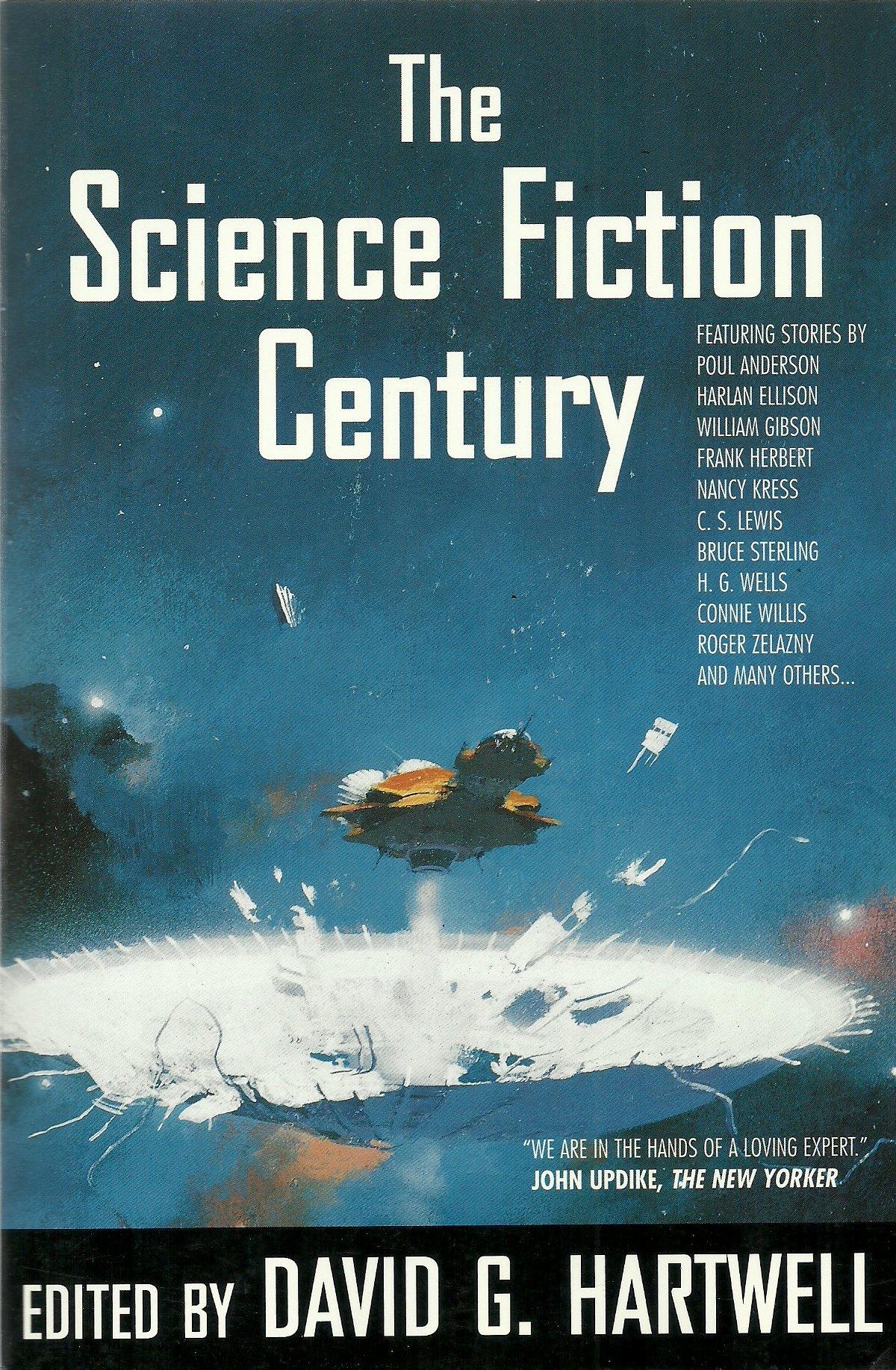
When I think of David Hartwell, I think chiefly of his forte — the massive retrospective anthologies like Foundations of Fear and The Science Fiction Century that gave deep insight into the changing nature of our field. But David also produced a small number of mass market paperback anthologies, especially early in his career. The two I want to look at today are The Screaming Skull and Other Great American Ghost Stories (1994) and Bodies of the Dead and Other Great American Ghost Stories (1995), both published by Tor.

Mass market anthologies like this really don’t exist today, chiefly because modern audiences weren’t raised on short stories the way I was. But I’m very glad they did when I was a young reader haunting bookstore shelves in the 80s and 90s. Cheap enough to be a quick impulse buy, they were a great way to get introduced to a wide variety of authors — and a lot of fun to read, I might add.

Read More Read More

Goth Chick News: What’s the Worst Thing You’ve Ever Done? Miss Out on This News, That’s What…

Goth Chick News: What’s the Worst Thing You’ve Ever Done? Miss Out on This News, That’s What…

Ghost Story-smallBack as a starving college student when I haunted the used book stores, I came across a dusty hardcover edition of Peter Straub’s Ghost Story, thus discovering the only book that ever scared the crap out of me.

Of course as a lifelong devotee of the horror genre, I had certainly read stories that gave me the creeps before then. But with Ghost Story I was introduced to a whole new threshold of terrifying. Why? Because Straub had the ability to turn a beautiful, sunny day in December, or an ordinary afternoon in a grocery store parking lot, into scenes more blood-curling than any in a crumbling graveyard on a moonlit night in October.

Since that initial introduction, Ghost Story is my go-to read every fall, getting me in the perfect mood for Halloween.

And I confess. It still scares the crap out of me.

Apparently I am far from alone in this as — if we forget about the film version (and please do) — the novel continues to appear on “best of” lists to this day, being widely considered one of the greatest horror novels of all time.

So I was particularly excited to learn that this week Berkley Books is releasing Ghost Story in a new trade paperback edition, as well as in eBook format for the very first time.

Read More Read More

Frank Kelly Freas Illustrates A. Bertram Chandler’s “The Far Traveller”

Frank Kelly Freas Illustrates A. Bertram Chandler’s “The Far Traveller”

Frank Kelly Freas The Far Traveller-small Frank Kelly Freas The Far Traveller b&w-small

Analog August 1976-smallI thought I’d go back to Frank Kelly Freas today, and post one that most folks won’t be familiar with, at least as it looks in the original. This was an interior illustration by Freas for the August 1976 issue of Analog, illustrating A. Bertram Chandler’s “The Far Traveller” (click on the images above for full-size versions). This was one of the tales in Chandler’s Commander Grimes series. The Analog cover, by John Schoenherr, is at right.

Since it was an interior, it was printed in black and white (which you can see above), but the original was in color. I assume Freas did that for the shading effects he’d get when it was reproduced in black and white, but perhaps one of my artist friends can chime in with their thoughts on that.

Art from the SF digests during that period holds a special place for me. This was the summer when, as a 12 year old, I discovered that SF digests were still being published. A few months earlier, I’d found my first SF digests (primarily F&SF from the 1950’s and early 1960’s) at a garage sale in a large barn. But in May 1976, I was spending the day at my dad’s office, and after lunch I went to the drugstore across the street.

There I found the June 1976 issues of both F&SF and Analog, and snapped them up in a heartbeat. After that, I bought them and the other couple of digests then being published religiously. I was fortunate enough many years ago to acquire the cover to that June 1976 Analog (which I’ll post at some point), but the cover for the June 1976 F&SF continues to elude me. But one day!

Discovering Robert E. Howard: Howard Andrew Jones and Bill Ward Re-Read “The Black Stranger”

Discovering Robert E. Howard: Howard Andrew Jones and Bill Ward Re-Read “The Black Stranger”

The Conquering Sword of Conan-smallHoward Andrew Jones and Bill Ward are wrapping up their re-read of The Conquering Sword of Conan by Robert E. Howard, the third and final omnibus volume collecting the complete tales of Conan, with what Howard calls “my most pleasant surprise so far during the re-read,” the story “The Black Stranger.” It was never published during Robert E. Howard’s lifetime, appearing for the first time in Karl Edward Wagner’s anthology Echoes of Valor in 1987. Here’s Bill:

Like “Beyond the Black River” which precedes it, “The Black Stranger” is a tale set in the Pictish wilderness of Hyboria that sees a vulnerable outpost of civilization overrun by the wild men of the wood. But this time around the threat of the Picts — still an Amerindian analog — serve as more of a backdrop to the infighting and machinations of pirate captains, an exiled nobleman, and a cagey Conan. Again REH draws on the American frontier for inspiration, but it isn’t the dominant theme of the piece, which also manages to end on a far more up tempo note despite the carnage. Wild battles, double-crossing, pirate treasure, and a mysterious demonic stranger are all skillfully woven together into a complex but nonetheless fast-paced adventure that stands solidly alongside the better Conan stories.

Read the complete exchange here.

Read More Read More

Vintage Treasures: Science Fiction Carnival, edited by Fredric Brown and Mack Reynolds

Vintage Treasures: Science Fiction Carnival, edited by Fredric Brown and Mack Reynolds

Science Fiction Carnival paperback-small Science Fiction Carnival paperback-back-small

In the early 50s, everyone was busy trying to prove how grown up science fiction was. That it wasn’t just kid’s stuff, pulp tales of alien invasions that only appealed to fourteen year-old boys. The earliest genre anthologies on the market — like Groff Conklin’s The Best of Science Fiction (1946) and Healy and McComas’ Adventures in Time and Space (1946) — strained to show the ambitious side of SF, its respect for science and the unique way it examined the future.

In 1953, Fredric Brown and Mack Reynolds decided to take a very different approach, displaying instead the fun side of SF in their classic anthology Science Fiction Carnival. It collected stories showing “a sharply sardonic view of our future” from Murray Leinster, Richard Matheson, William Tenn, Henry Kuttner and C. L. Moore, Eric Frank Russell, and many others.

Read More Read More

Despair All The Way Down: The Illearth War by Stephen R. Donaldson

Despair All The Way Down: The Illearth War by Stephen R. Donaldson

oie_2471841952aAlf9

“You’re determined to make this hard, aren’t you? You’re determined to make it hard for everyone.”

                                                                  Hile Troy to Thomas Covenant

If Lord Foul’s Bane (go here for my review) with its rapist leper hero is a trip into the Black Hole of Calcutta, its sequel, The Illearth War (1978) is an unremitting journey into the blackest space over the event horizon. Where the first book offered hope to its characters with the successful completion of their quest, this one holds out no hope even in victory. At the best of times there is only a stay of certain execution. Mostly, though, there is loss, deep and devastating loss.

It’s also a book that almost defeated me. For three weeks it defied my efforts to put into words what I thought was going on in it and what I thought of it. It’s not that it’s super complicated, but it’s a shadowy thing that required more work than I’m used to to understand its guts.

The Illearth War is a story steeped in existential dread. Both inaction and action in the face of soul-crushing evil seem to lead to disastrous ends. To believe or not to believe? To fight or not to fight? To kill or to be killed? Does it make any difference? This is heady stuff for fantasy and bound to put off more casual readers, but Donaldson takes on the debate with conviction and seriousness.

The dilemma is addressed primarily by contrasting Thomas Covenant’s attitude toward the Land with that of a new character from our world, Hile Troy. Covenant refuses to accept the magical Land, its healing properties, or to lift a finger to save it, while Troy fully embraces it and is completely dedicated to its survival. Each man is convinced of the rightness of his path, and both suffer calamitous losses for their convictions. Covenant scoffs at Troy for thinking he can thwart Lord Foul while Troy berates Covenant for refusing to fight. Donaldson plays these titans, inaction versus action, against each other like musical counterpoints. Each reflects off the other, exposing its opponent’s dangers and rewards. This is the heart of The Illearth War.

It’s not an argument made lightly or with straw men. Donaldson digs deeply into each man’s mind and character, exploring the complex motives and reasoning behinds their choices.

Read More Read More

Witch Doctors and Mind-Reading Sleuths: Richard Powers’ Interior Art for 1950s Men’s Adventure Magazines

Witch Doctors and Mind-Reading Sleuths: Richard Powers’ Interior Art for 1950s Men’s Adventure Magazines

Richard Powers White Witch Doctor men 1957 01-small

In going through several hundred issues of men’s adventure magazines for this year’s upcoming Jerry Weist estate auction at the Windy City Pulp and Paper Convention, I came across the interior illo above by Richard Powers. It’s from the January 1957 issue of Men.

I was actually surprised how many great artists appeared in the issues of Men that I went through, including Bama, Saunders, De Soto, Belarski and many, many more. Some really great art in there!

Read More Read More