Browsed by
Category: Series Fantasy

Writing a Fantasy Series

Writing a Fantasy Series

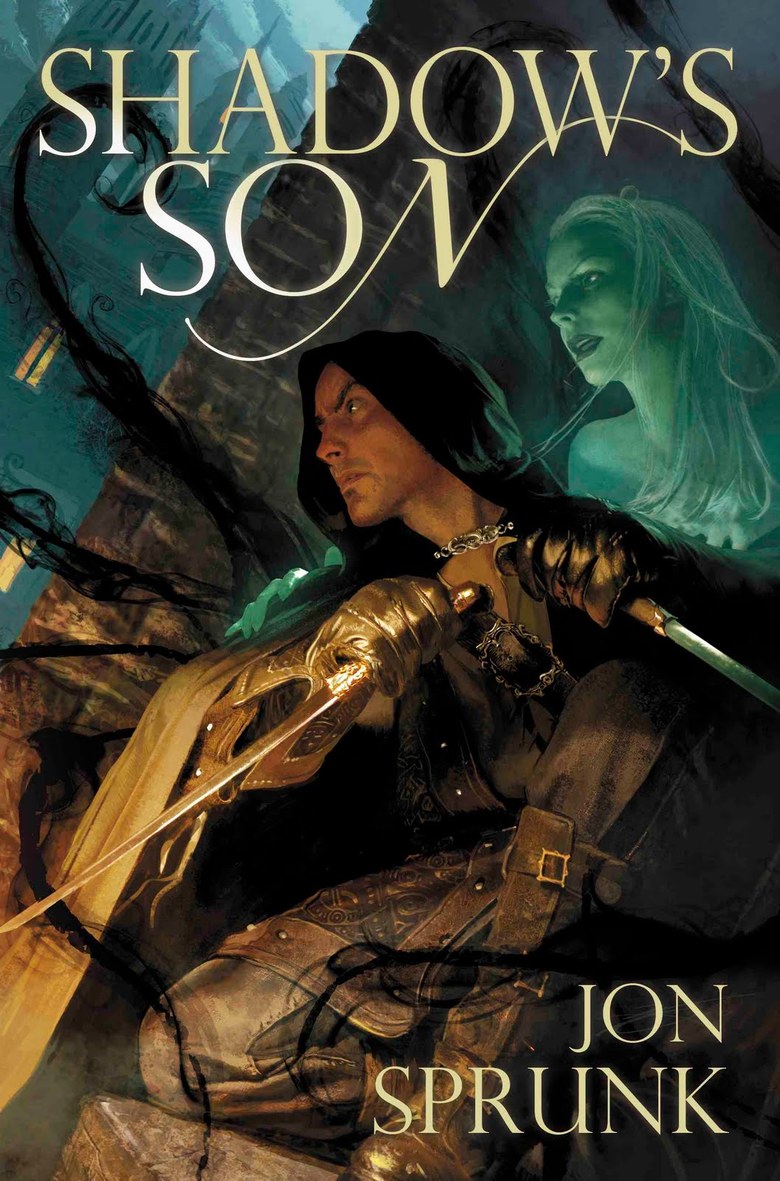
Shadows Son Jon Sprunk-smallThe fantasy genre loves series (especially trilogies.) As a fantasy reader, I love them, too.

However, my first published novel, Shadow’s Son, was originally written as a stand-alone. I suppose I had an idea that publishers would be more inclined to take a chance on a single book from an unknown writer, so I was shocked when my agent came back with a deal for a three-book series that would become the Shadow Saga. I’m not ashamed to admit I was also a wee bit terrified.

How in the seven hells was I going to write a trilogy? I had never written anything longer than a single book before.

And each of the sequels has a contractually-agreed deadline? AND they want outlines for books two and three right away? Gulp.

Despite my trepidations, the adventure of reaching out into unknown territory was also thrilling, so I dove in head-first. What was the big deal, right? Writing a series is probably just like writing three separate books, isn’t it?

Well, yes and no.

My personal philosophy is that every novel must contain a complete story. That means my books each have their own plot that begins and ends within those pages. However, with a series there is also a series arc in play, another plot (super plot?) that starts in the first book and continues to develop through each subsequent novel to the very end.

Read More Read More

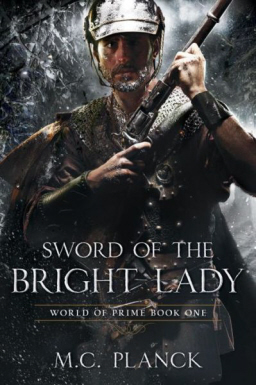
The Series Series: Sword of the Bright Lady by M.C. Planck

The Series Series: Sword of the Bright Lady by M.C. Planck

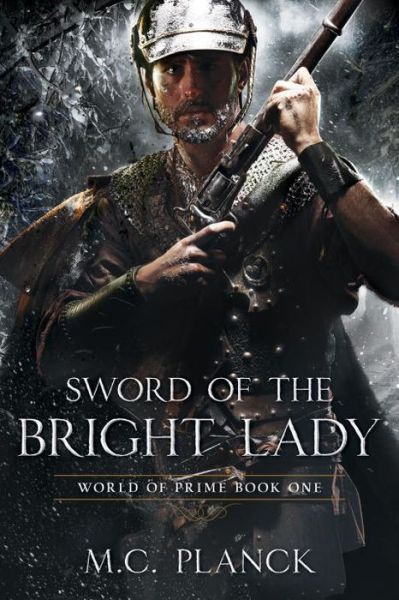
sword-of-the-bright-lady-mc-planck-smallIf you liked Eric Flint’s 1634 books, if you liked The Chronicles of Narnia, if you liked… Well let’s just start with those two, because Sword of the Bright Lady deals in surprising juxtapositions of familiar tropes.

At times I wondered whether it dealt in anything deeper. I’ve concluded that it does. This is a fun book and it feels like it was fun to write. The author’s acknowledgments note that it took three months to write and ten years to revise. Am I churlish to wish the revision had gone one step further?

What works here works beautifully. Less than a day after I finished reading, I had to go back and prove to myself that the narration was in the third person, because I remembered Christopher’s adventures with first-person clarity, as if they had happened to me.

Christopher went out to walk his dogs one Arizona night and woke up in the snowy hinterlands of another world. His rescuers, an earthy old churchman and his orphaned servant girl, nurse him back to health, though they have no common language with him. When he’s well enough to pick up some of the household work, he tries practicing kata from his martial arts practice back home. Before he knows it, he’s challenged to a duel by a local nobleman, blessed by a language spell that allows him to understand exactly how much danger he’s in, and claimed by the local war god.

At first, Christopher insists that he’s an everyman, not famous back home nor expected to be famous by anyone who knew him there. But as he begins to see how he can help the people who have saved him, he accepts the identity the villagers thrust on him: “Crazy Pater Christopher, who never means what everyone else means.” He sets about industrializing his feudal neighbors — who all have lively personalities and complex lives — preparing them for the spring’s military campaign, because the war god Marcius has promised to return Christopher home to his beloved wife… um… what was her name again?

And that brings us to a sticking point I have to talk about. It’s not that M.C. Planck has done anything uncommonly wrong here, but rather that he’s fallen into a classic blunder that I see committed all over the place, but that nobody seems to talk about.

Let’s call it the Precious Ming Vase Problem.

Read More Read More

New Treasures: One Night in Sixes by Arianne ‘Tex’ Thompson

New Treasures: One Night in Sixes by Arianne ‘Tex’ Thompson

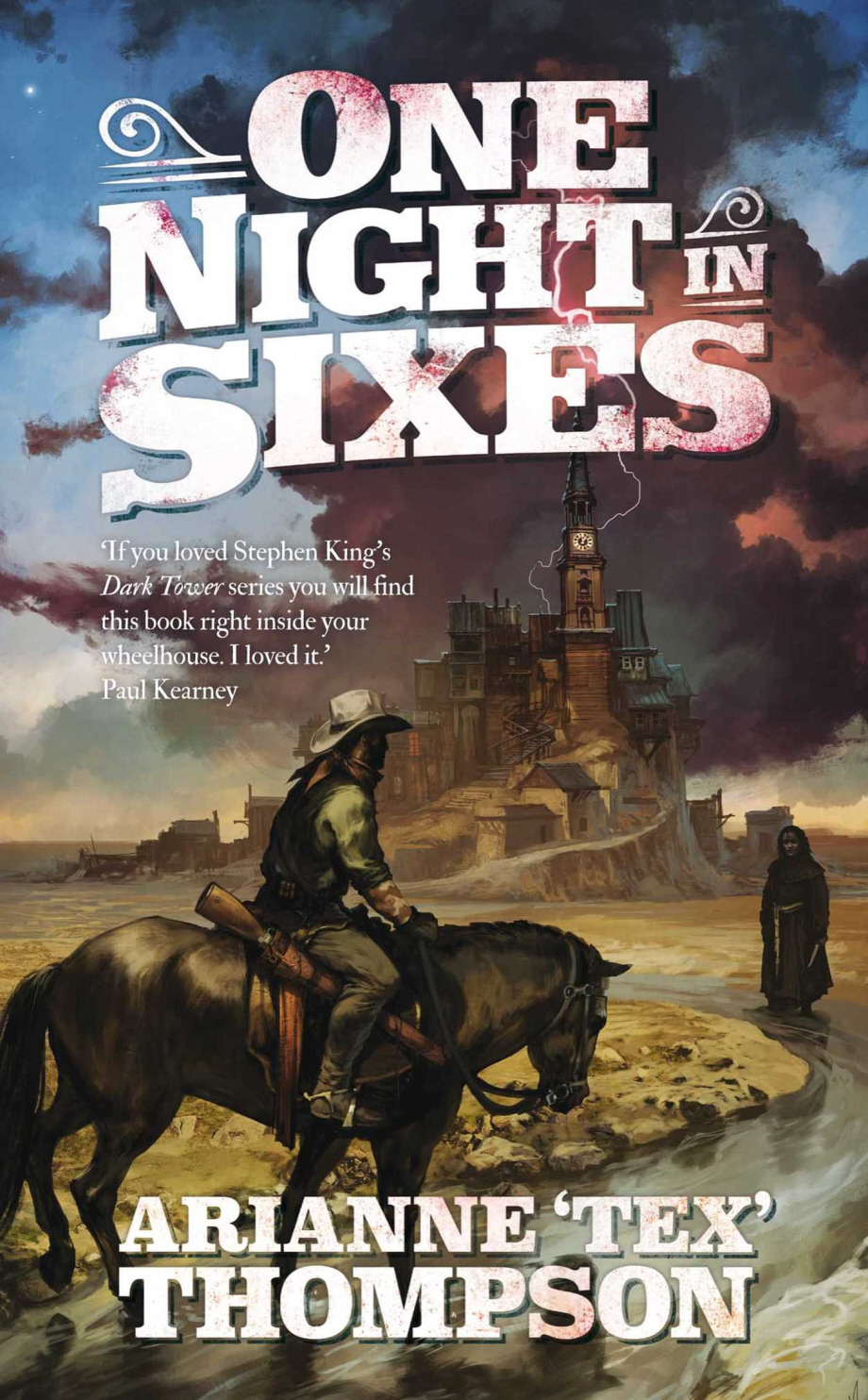
One Night in Sixes-smallWe get a lot of review copies every month here at the Chicago rooftop headquarters of the Black Gate global publishing empire. You know what else we get? Press releases, pre-release galleys, PDFs, free Kindle books, stuff like that. We could never leave the office, and still keep you decently posted on the newest fantasy every month.

But we don’t aim for decent. We aim to keep you completely informed on the very best in the genre. And that means putting feet on the street, talking to folks in the industry, and visiting to bookstores. Lots and lots of bookstores. Like yesterday, where I found a copy of a fascinating “rural fantasy” from new writer Arianne ‘Tex’ Thompson. I would never have discovered her first novel if I hadn’t been wandering the aisles at B&N, and believe me, it deserves your attention.

The border town called Sixes is quiet in the heat of the day. Still, Appaloosa Elim has heard the stories about what wakes at sunset: gunslingers and shapeshifters and ancient animal gods whose human faces never outlast the daylight.

And the daylight is running out. Elim’s so-called ‘partner’ — that lily-white lordling Sil Halfwick –- has disappeared inside the old adobe walls, hell-bent on making a name for himself among Sixes’ notorious black-market traders. Elim, whose worldly station is written in the bastard browns and whites of his cow-spotted face, doesn’t dare show up home without him.

If he ever wants to go home again, he’d better find his missing partner fast. But if he’s caught out after dark, Elim risks succumbing to the old and sinister truth in his own flesh – and discovering just how far he’ll go to survive the night.

One word of warning: One Night in Sixes is the kind of novel that has a 10-page glossary and 11-page “People and Place” reference in the back. If that scares you, go back to reading E. Nesbit and the Ranger’s Apprentice books. Lightweight.

One Night in Sixes was published on July 29, 2014 by Solaris Books. It is 439 pages (plus all those glossaries and stuff), priced at $7.99 in paperback and $6.99 for the digital edition. The moody and effective cover is by Tomasz Jedruszek.

New Treasures: Broken Souls by Stephen Blackmoore

New Treasures: Broken Souls by Stephen Blackmoore

Broken Souls Stephen Blackmoore-smallI covered Stephen Blackmoore’s first hard-boiled detective zombie novel, Dead Things, last February. It was an obvious candidate for a series, and 17 months later a sequel has finally appeared.

This isn’t the first time Blackmore’s written about LA undead. His first novel, City of the Lost (January 2012), featured Joe Sunday, killed by the rival of his crime boss and returned as a zombie to carry on as LA lowlife. If you’re a fan of necromancers, crime novels, or the darker side of LA, Stephen Blackmoore is definitely your guy.

Sister murdered, best friend dead, married to the patron saint of death, Santa Muerte. Necromancer Eric Carter’s return to Los Angeles hasn’t gone well, and it’s about to get even worse.

His link to the Aztec death goddess is changing his powers, changing him, and he’s not sure how far it will go. He’s starting to question his own sanity, wonder if he’s losing his mind. No mean feat for a guy who talks to the dead on a regular basis. While searching for a way to break Santa Muerte’s hold over him, Carter finds himself the target of a psychopath who can steal anyone’s form, powers, and memories. Identity theft is one thing, but this guy does it by killing his victims and wearing their skins like a suit. He can be anyone. He can be anywhere.

Now Carter has to change the game — go from hunted to hunter. All he has for help is a Skid Row bruja and a ghost who’s either his dead friend Alex or the manifestation of Carter’s own guilt-fueled psychotic break. Everything is trying to kill him. Nothing is as it seems. If all his plans go perfectly, he might survive the week.

He’s hoping that’s a good thing.

Broken Souls will be published on Tuesday by DAW Books. It is 264 pages, priced at $7.99 in paperback and $6.99 for the digital version.

Gonji: Fortress of Lost Worlds by T. C. Rypel

Gonji: Fortress of Lost Worlds by T. C. Rypel

oie_2924853GW8NECCJBack in January, I reviewed the first three books of T. C. Rypel’s Gonji series. Though thirty-odd years old, the books are exemplars of what heroic fantasy should be: exciting, wildly inventive, well-written, and — above all — starring a heroic protagonist. Exiled half-caste samurai Gonji Sabatake, try as he might, is unable to avoid fighting evil or behaving courageously. This stuff is why I still read S&S.

While the first three books (actually, one big book chopped into three parts by the original publisher, Zebra) are a complete story, they are also the introduction to a much wider and wilder tale. Gonji’s adventures start anew in Fortress of Lost Worlds (1985), republished this past May by Wildside Press. The fifth book, A Hungering of Wolves, should be rereleased pretty soon by Wildside as well.

At the end of the previous book, Deathwind of Vedun, Gonji left his surviving companions in order to pursue the werewolf, Simon Sardonis. He had been told years before by a Shinto priest that his destiny lay with something or someone called the Deathwind, which he discovered to be Simon. But driven by his own fears and burdens, Simon wants little to do with the Easterner and cares even less for their supposed entwined fate, so he keeps moving to prevent Gonji from finding him.

Fortress of Lost Worlds’ main story picks up two years into Gonji’s trek to find Simon. He and his party of soldiers have been savaged and chased to the feet of the Pyrenees by an unknown band he calls the Dark Company. As his last companion is lost in the frigid night, the samurai makes his escape into caverns in the mountainside. While the caves possess magical properties that both warm the nearly frozen warrior and his horse and fill their bellies, they turn out also to have occupants: ogres.

That sets the stage for Gonji’s monster-filled journey from the mountains to the town of Barbaso. He’d been warned that evil was loose in the valley, but having decided to travel to Toledo to settle an old debt, the straightest route lay through the valley, and Barbaso.

Read More Read More

The Ballantine Adult Fantasy Series: The Sorcerer’s Ship by Hannes Bok

The Ballantine Adult Fantasy Series: The Sorcerer’s Ship by Hannes Bok

The Sorcerer's Ship 001The Sorcerer’s Ship
Hannes Bok
Ballantine, 205 p., December 1969, $0.95
Cover Art by Ray Cruz

First, I’d like to apologize to John and everyone else who reads these posts for taking so long to get this one done. I was on the road quite a bit from the end of May up through the Fourth, but I thought I would be able to get this particular post done quickly. Then things started happening. Car repairs, then house repairs, and then more car repairs. (This has necessitated bank account repairs.) Then last night, one of the wires in my son’s braces snapped loose. If anything else happens, I’m going to snap.

I don’t mean to kvetch. As you can see, I’ve been a bit distracted and apologize for the delay. I’ve already started the next book I’ll read for this series.

Anyway, on to something a little different than what we’ve seen in the Ballantine Adult Fantasy series up to this point. Rather than something deep and complex, with complicated writing (The Wood Beyond the World) or bizarre imagery (Lilith) or even not-so-subtle innuendo (The Silver Stallion), The Sorcerer’s Ship is almost a children’s story.

It’s not intended to be, but this is one that might hold a younger person’s interest. There’s certainly nothing in it that most parents would find objectionable for a child capable of reading a book of this length.

Hannes Bok is best remembered for his art, but as Lin Carter discusses in his introduction, Bok was also a more than capable writer. Carter chose this volume and The Golden Stair for inclusion in the BAF line. The Sorcerer’s Ship was originally published by John Campbell (not the world’s easiest sell by any means) in Unknown in December 1942. After Weird Tales, Unknown is arguably the greatest fantasy pulp in the history of the field.

Read More Read More

The Start Of A Grand Adventure Goblin Moon by Teresa Edgerton

The Start Of A Grand Adventure Goblin Moon by Teresa Edgerton

oie_2254425vQLXHqXWMatthew David Surridge reviewed Teresa Edgerton’s Goblin Moon (1991) here at Black Gate early last year, and here I am to write about it again. It’s a book that, though recently reprinted, I suspect most readers are unaware of, so I want to shine another spotlight on it. Also, since reading Tim Powers’s The Drawing of the Dark, my itch for swashbuckling adventure got itchier.

I read this when it first came out and my memory of it was very pleasant. I remembered loving the dry humor and also the tremendous detail. Now my friend Carl, on the other hand, said he hated any book that spent as much time as it did describing characters’ clothes. My response was, if I recall correctly, that he was missing the point or something like that.

On rereading Goblin Moon this past week, I was happy to find that, one, the book held up very well and two, yes, Carl missed the point or something. Actually, the point he missed was that Teresa Edgerton created a deliriously detailed world, down to the clothing, that is richer than just about any other in fantasy.

There are a host of things that make Goblin Moon a fun read. The elaborate world-building, the intricate plot, and the colorful characters, to name an important triumvirate, are exactly the sorts of things you want to find in a book with its roots in Stevenson, Thorndike, and Sabatini. Add a lively pace and clever writing and you’ve got the perfect way to while away several lazy hours amidst floating coffins, decadent diabolists, a vengeful fairy, and an interlude with pirates.

Goblin Moon opens with a pair of river scavengers, Jed Braun and his uncle Caleb, drawing a coffin out of the waters of the River Lunn. The casket bears the strangely undecayed body of a man and several tomes of dark magic. Their discovery leads Caleb back to an old companion, the bookseller and one-time alchemist Gottfried Jenk, and consequently leaves young Jed in need of a new way to support himself.

Read More Read More

New Treasures: Seeker’s Bane by P.C. Hodgell

New Treasures: Seeker’s Bane by P.C. Hodgell

Seeker's Bane-smallSometimes it’s handy being editor of Black Gate. For one thing, it sure keeps you in-the-know on great books. I was editing Fletcher Vredenburgh’s enthusiastic review of P. C. Hodgell’s God Stalk last October, which begins thusly:

Out of the haunted north comes Jame the Kencyr to Rathilien’s greatest city, Tai-Tastigon. From the hills above, the city appears strangely dark and silent. She arrives at its gates with large gaps in her memory and cat claws instead of fingernails. She’s carrying a pack full of strange artifacts, including a ring still on its owner’s finger… and she’s been bitten by a zombie. Wary, but in desperate need of a place to heal, Jame enters the city. So begins God Stalk, the first book in P.C. Hodgell’s Kencyrath series and one of my absolute, bar none, don’t-bother-me-if-you-see-me-reading-it, favorite fantasy novels…

I’m so grateful Carl gave me this book thirty years ago. P.C. Hodgell seems so far below the general fantasy radar, I don’t know if I would have ever heard of her at all, which is pretty darn shameful.

Ha, I thought smugly, looking at my bookcase. Maybe she’s below the radar for most folks, but I’ve got my copy right here. Fletcher continued:

Following God Stalk came the 1985 sequel, Dark of the Moon… It’s taken nearly thirty years for the next four books to appear: Seeker’s MaskTo Ride a RathornBound in Blood, and Honor’s Paradox.

Wait, what? There are sequels? Like, five sequels? How did I not know? Are they out of print? Gahhh!

Fortunately, Baen Books to the rescue. Baen has collected the first four novels in two handsome mass market paperbacks: The God Stalker Chronicles (January 2010) and Seeker’s Bane (August 2010), both still in print. They’re a great way to get started on this terrific series, which Hodgell and Baen are continuing — I note the seventh volume, The Sea of Time, was just published last month. I just bought Seeker’s Bane and it’s a fabulous bargain: 1168 pages, priced at $7.99 in paperback and $6.99 for the digital version. The covers are by Clyde Caldwell. Check ’em out.

Future Treasures: Resurrection, by Mandy Hager

Future Treasures: Resurrection, by Mandy Hager

Resurrection Mandy Hager-smallThere’s no question that the hottest trend in fiction right now isn’t vampire romances, zombies, or even superheroes. It’s young adult dystopias. The trend didn’t begin with The Hunger Games, but for sure that’s the series that kicked it into high gear. Wander the young adult section of your local bookstores and you’ll see what I mean — you’ll find dozens of volumes advertising a grim future for our young folk. It would be depressing, except for the cheery sound of a cash register ringing.

There’s been such a flood of new dystopian fantasy that it’s made it tough for a quality new series to get noticed. Mandy Hager’s Blood of the Lamb trilogy — beginning with The Crossing (January 2013) and Into the Wilderness (January 2014) — has quietly been accumulating excellent reviews and new readers, and the arrival of the third book next month is sure to launch this one into the spotlight. Pick up the first two books now, while there’s still time.

When Maryam arrives back at Onewēre and tries to loosen the Apostles’ religious stranglehold by sharing the miraculous remedy for Te Matee lai, she finds herself captured once again — prey to the Apostles’ deadly game. The ruling elite manipulate her return by setting in motion a highly orchestrated ritual before a hysterical and brain-washed crowd. Somehow Maryam must get the islanders to listen to her plea that they start thinking for themselves — hoping to stir the independence in their hearts, even as she finds herself on the brink of death.

Resurrection will be published on August 12 by Pyr Books. It is 365 pages, priced at $17.99 in hardcover and $11.99 for the ebook.

The Series Series: The Night of the Swarm by Robert V.S. Redick

The Series Series: The Night of the Swarm by Robert V.S. Redick

The Night of the Swarm Robert VS RedickIt’s one of the classic dilemmas all fantasy readers face: When the last volume in a series finally comes out, do you go back and reread from the start so you can reach the end with all the grace notes and loose ends fresh in memory as the author ties them off? Or do you dive in immediately because you’ve been longing to resolve the suspense of the last volume’s cliffhangers?

If you’ve been reading Robert V.S. Redick’s delightful series, The Chathrand Voyage, you face this decision again with the arrival of the final book, The Night of the Swarm. The opening volume, The Red Wolf Conspiracy, was Redick’s debut novel, so we’ve never seen him bring a series to closure before. The first three books were delicious, but will he pull off the conclusion well enough to justify the time it takes you to reread the whole set?

Yes. Do it. Go find your copy of The Red Wolf Conspiracy, or buy a new one if you’ve mislaid it. I’ve just finished The Night of the Swarm, which I dove into without reacquainting myself with the earlier books, and though it was immensely satisfying, I will definitely be rereading the whole series.

And if you’re a newcomer to The Chathrand Voyage, oh, you are in for such a treat. Get all four books at once, turn the ringer off on your phone for a few weeks, and set up an auto-response for your email, because you won’t want to leave the battered, glorious world of Alifros until you’ve seen its struggles through.

Our young heroes Pazel, Thasha, and Neeps — along with a ship’s company of fanciful, and sometimes frightening, supporting characters that Charles Dickens might have come up with if he’d been trying to adapt his favorite techniques from George R.R. Martin — have only been at sea for a year, but what perils they have weathered! They have resisted a madman whose army of followers worship him as a god, rescued Thasha from political assassination, fled by sailing ship across an almost unimaginably large and wild ocean, and rediscovered civilizations no one from their continent has seen in centuries.

Read More Read More