Browsed by
Category: Series Fantasy

Future Treasures: The Cobbler of Ridingham by Jeffrey E. Barlough

Future Treasures: The Cobbler of Ridingham by Jeffrey E. Barlough

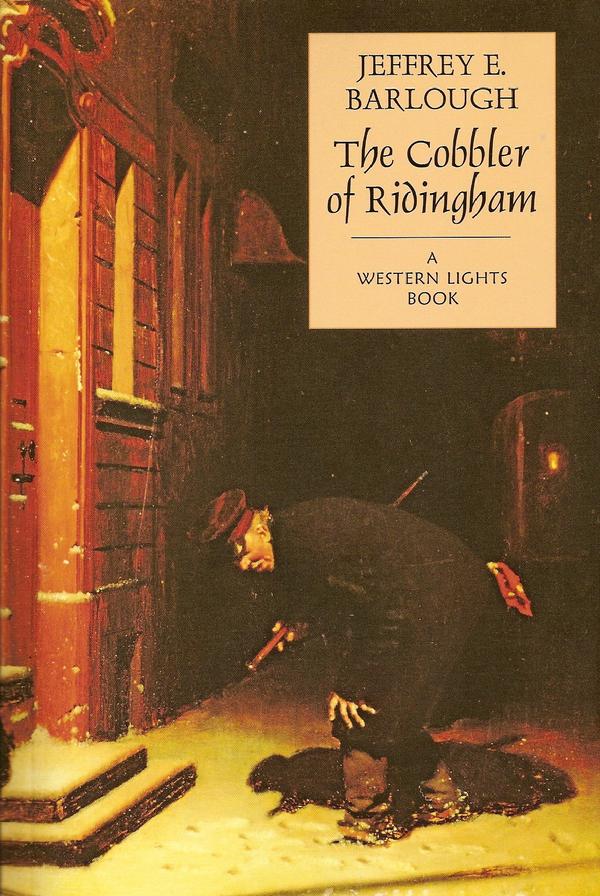
The Cobbler of Ridingham-smallJeffrey E. Barlough is one of the most gifted and ambitious fantasists at work today and his seven volume Western Lights series is unlike anything else on the shelves. In his review of the fifth volume, Anchorwick, Jackson Kuhl sums up events as follows:

Eugene Stanley has come to the university at Salthead (a parallel Seattle? Vancouver?) to assist his professor uncle in preparing a book manuscript. One night, while working in a deserted turret room at the college…  Stanley is accosted by a phantasmal form. This ignites a definitive search for the missing don as Stanley and friends uncover lost civilizations, ancestral curses, whole companies of ghosts, monsters from Greek myth, and a few red herrings, all told in rich, dryly humorous style. It’s P.G. Wodehouse with woolly mammoths.

Those who complain that there’s nothing new in fantasy today aren’t looking hard enough. And they’re definitely not reading Jeffrey E. Barlough.

The eighth volume in the Western Lights series, The Cobbler of Ridingham, will be released in November and it features Richard Hathaway, who previously appeared in Bertram of Butter Cross and the short story “Ebenezer Crackernut” (from A Tangle in Slops).

A creeping shadow, a bump in the night, a thing in the trees — these are but a few of the surprises lurking in the pages of The Cobbler of Ridingham… The new work relates a curious adventure that befell Richard Hathaway while visiting at Haigh Hall, the home of a family acquaintance, Lady Martindale, on the marshes outside the picturesque old country town of Ridingham.

Read More Read More

Future Treasures: Clariel, The Lost Abhorsen, by Garth Nix

Future Treasures: Clariel, The Lost Abhorsen, by Garth Nix

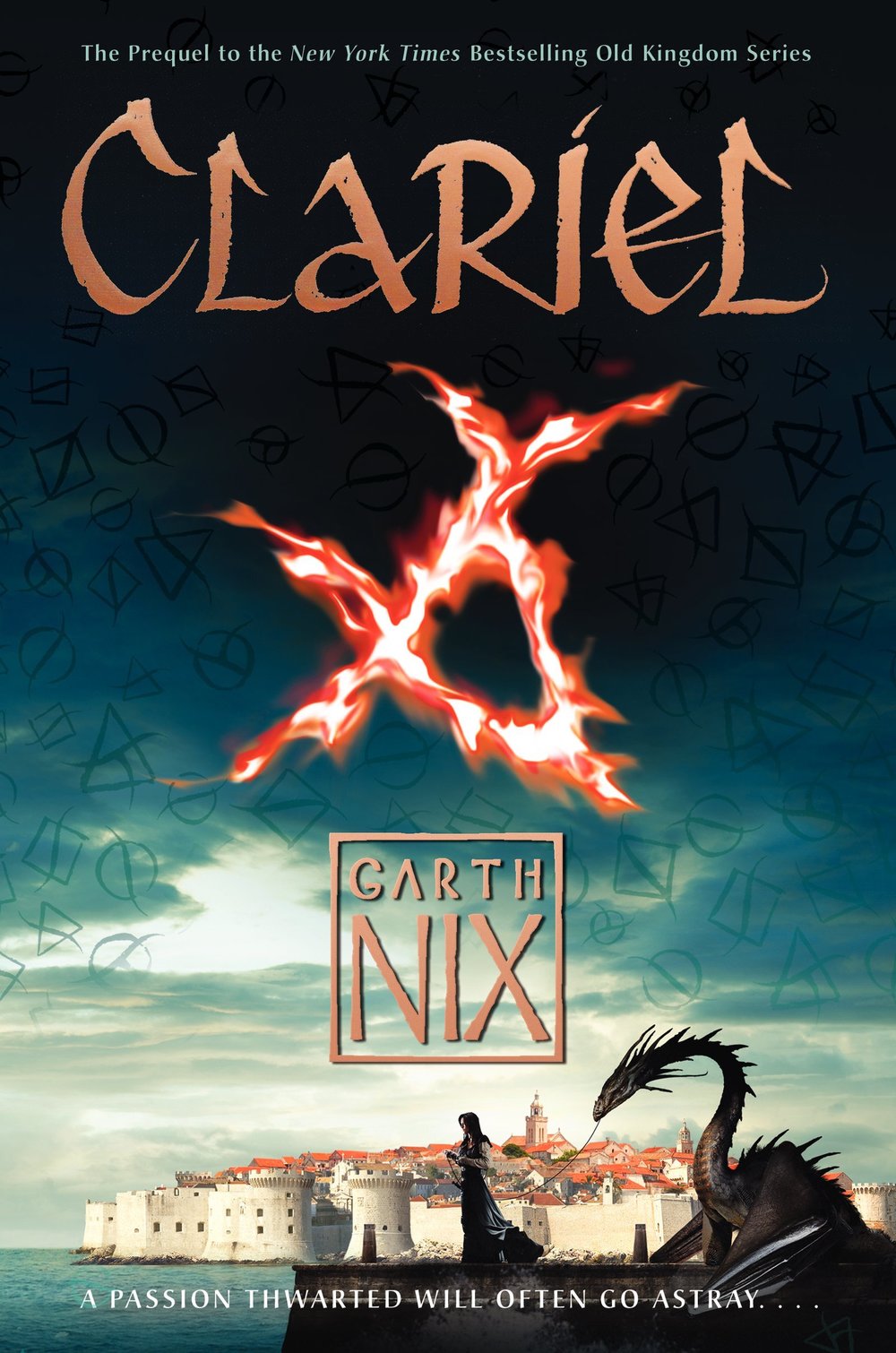
Clariel Garth Nix-smallGarth Nix is one of my favorite young adult writers. I was tremendously impressed with his dark, gritty, and fast-paced Shade’s Children — talk about your dystopian settings! — and I’ve heard great things about his Seventh Tower series.

But it was his Abhorsen series — Sabriel (1997), Lirael (2002), and Abhorsen (2004) — that really made a splash in this house. My kids absolutely loved them, especially my oldest, Tim. So when the advance proof of Clariel: The Lost Abhorsen arrived last month, it was barely on my desk 24 hours before my kids ran off with it. It’s taken me this long to get it back so I can write about it.

Clariel is a prequel to the earlier volumes, returning to the Old Kingdom for a tale of dark magic, royalty, dangerous action, a strong heroine, and Nix’s usual superb world-building.

Clariel is the daughter of one of the most notable families in the Old Kingdom, with blood relations to the Abhorsen and, most important, to the King. She dreams of living a simple life but discovers this is hard to achieve when a dangerous Free Magic creature is loose in the city, her parents want to marry her off to a killer, and there is a plot brewing against the old and withdrawn King Orrikan. When Clariel is drawn into the efforts to find and capture the creature, she finds hidden sorcery within herself, yet it is magic that carries great dangers. Can she rise above the temptation of power, escape the unwanted marriage, and save the King?

Clariel will be published by HarperCollins on October 14, 2014. It is 400 pages, priced at $18.99 in hardcover and $10.99 for the digital edition.

See all of our upcoming book reports here.

New Treasures: Full Fathom Five by Max Gladstone

New Treasures: Full Fathom Five by Max Gladstone

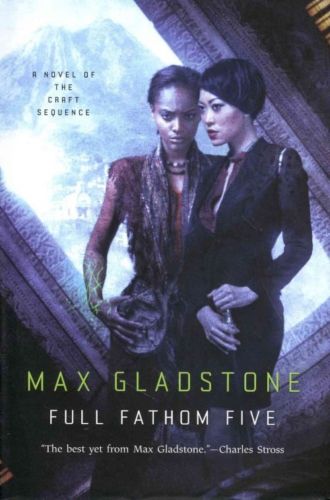
Full Fathom Five Max Gladstone Tor-smallBack in June, I reported on the second novel in Max Gladstone’s Craft Sequence. And just in time, too… the third, Full Fathom Five, arrived barely a month later, and I don’t wanna appear behind the times (any more than usual, anyway.)

The best description of this series I’ve found so far is from Elizabeth Bear (no surprise), who says at her blog:

The Craft Sequence books are all about ancient necromancers in charge of corporations; liches running litigation; court battles fought by means of sorcerous contests; deities dueling by means of legal proxies and stock trading souls.

I have several narrative hot buttons when shopping for fantasy and that description punches every one of them. If John Grisham wrote zombie novels, we might have plots as cool as Max Gladstone’s. Maybe.

I wrote about the first book in the sequence, Three Parts Dead, in 2012, and Two Serpents Rise in June. The fourth, Last First Snow, is not yet scheduled. Max describes it as follows:

Last First Snow, as the (working) title suggests, is set a bit earlier along the series timeline, and shows the older generation’s history. Dresediel Lex teeters on the edge of a knife, riven by protest over controversial zoning legislation, while a younger Elayne Kevarian confronts a tangle of conspiracies, revolutionaries, personal demons, and dead gods.

I can see I’m going to have to set some time aside for that one, too.

Read More Read More

The Huffington Post on Fantasy Series Better Than Harry Potter

The Huffington Post on Fantasy Series Better Than Harry Potter

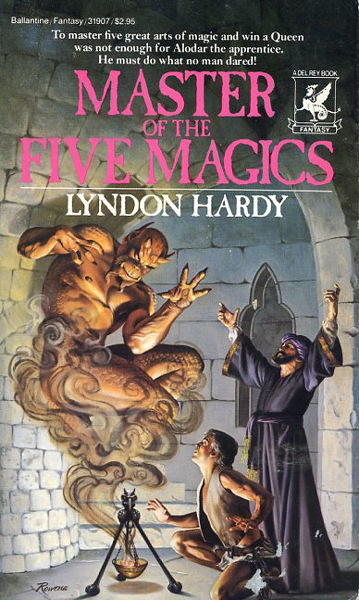
Master of the Five Magics-smallOver at The Huffington Post, author Jeff Somers (The Digital Plague, The Ustari Cycle) holds forth on fantasy worlds that are more appealing than the mega-successful Harry Potter series.

I was surprised to see his list consisted exclusively of vintage paperbacks, including Jack L. Chalker’s Midnight at the Well of Souls (1980), Piers Anthony’s first Xanth novel A Spell for Chameleon (1977), L. Frank Baum’s The Magic of Oz (1919), and Master of the Five Magics (1980) by Lyndon Hardy. Perhaps not coincidentally, all are part of a fantasy series. Here he is on the latter book:

I read this book as a kid, and the magic system Hardy creates remains one of the more interesting and entertaining ones out there. He imagines a universe that has (initially) five magical disciplines: Thaumaturgy, Alchemy, Magic, Sorcery, and Wizardry. Each form of magic has a clear set of rules that govern how it works. For example, Wizardry is the discipline that summons demons, and it has two rules: the Law of Ubiquity, which states that flame permeates all (making it a gateway between worlds), and the Law of Dichotomy, which states that once a demon is summoned it must either dominate the summoner or be dominated. All in all, a logical system that requires the protagonist to actually study and learn and think critically about the magic, instead of waking up one morning with the ability to turn people into newts or something.

Lyndon Hardy wrote two sequels to Master of the Five Magics: Secret of the Sixth Magic (1984) and Riddle of the Seven Realms (1988). He has not returned to fantasy since. Outside of fantasy, he is perhaps best known as the mastermind of the 1961 Great Rose Bowl Hoax.

Read Somers’ complete article here.

The Series Series: Quintessence by David Walton

The Series Series: Quintessence by David Walton

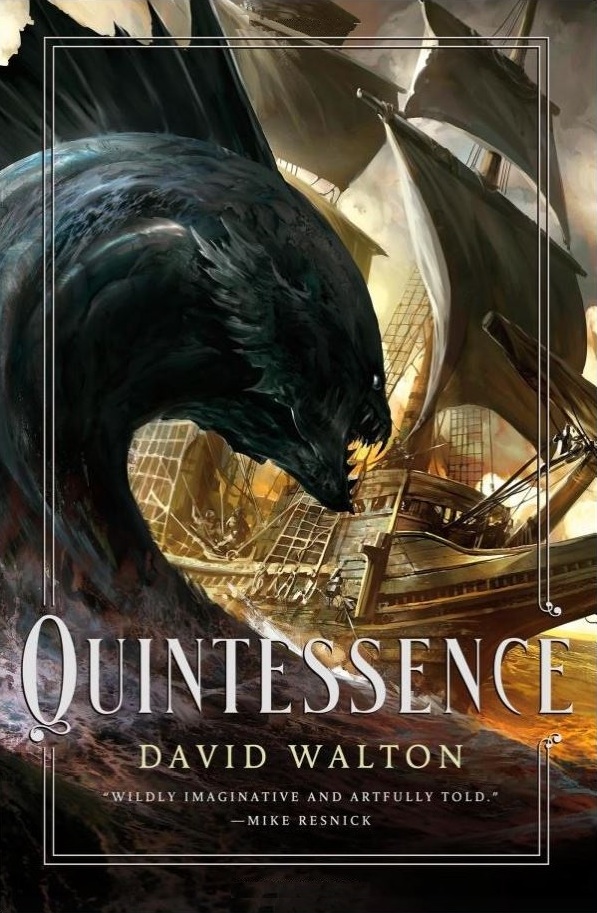
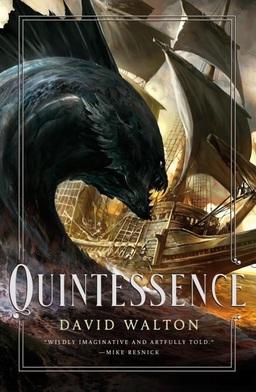
Quintessence David Walton-smallQuintessence is a story of the Age of Exploration, as it might have unfolded on a literally flat Earth where some of the wilder alchemists’ ideas were right. Here there be dragons. If you list all the cool stuff in this book, it looks like a sure bet for most fantasy readers: voyages at sea (doomed and desperate), houses of solid diamond, heresy, plucky young people changing the world, and monsters. Lots and lots of monsters.

In attitude, character, and pacing, however, the book feels more like science fiction in the tradition of John W. Campbell. I grew up reading that stuff — odds are that you did, too — so I found a great deal to enjoy in Quintessence. Just not quite the things I came to the book hoping to enjoy.

David Walton’s bestiary is worth the price of admission. The man knows how to fill a fanciful ecosystem, and if he had found some comic artist to collaborate with and had published a volume of the characters’ field notes, it would have been its own weird hit.

Perhaps if the creatures had been less gloriously inventive, the characters would have felt more vivid. As the book stands, the characterization falls far enough behind the worldbuilding for the characters to feel at times like types out of Commedia Dell’Arte. That is, if Commedia Dell’Arte had been invented by John W. Campbell.

We have our earnest scientist and our mad one. We have our plucky maiden and her plucky suitor, both brilliant engineers whose talents for tinkering had gone unnoticed back in England. We have a sort of Greek chorus of thinking men whom the earnest scientific hero forms into a discussion society for brainstorming and peer review. For villains, we have a smarmy politician and a religious fanatic, who care nothing for science.

Read More Read More

Future Treasures: The Slow Regard of Silent Things by Patrick Rothfuss

Future Treasures: The Slow Regard of Silent Things by Patrick Rothfuss

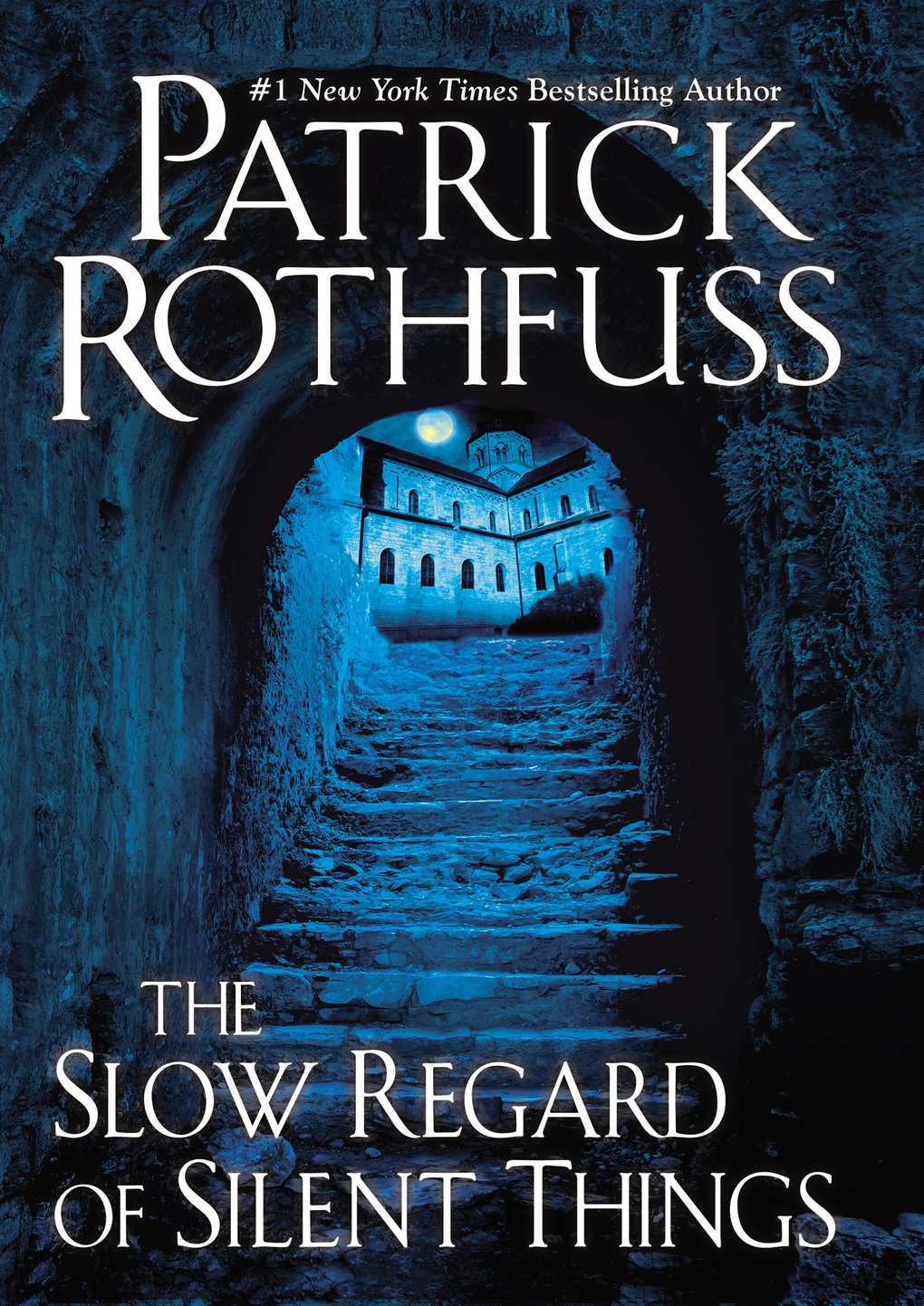
The Slow Regard of Silent Things-smallPatrick Rothfuss’s The Kingkiller Chronicle includes only two volumes so far — The Name of the Wind, reviewed for us by Robert Rhodes, and the Gemmel Award winner The Wise Man’s Fear — which doesn’t make it much of a chronicle by fantasy standards, really. But it has already vaulted into the front rank of modern fantasy, with great critical acclaim and a growing body of fans. Expectations are high for the third volume.

Now comes word that Rothfuss’s next book, featuring a character from the previous novels, is not the long-awaited third volume in The Kingkiller Chronicle. Instead it’s a novella featuring Auri, former student at The University, titled The Slow Regard of Silent Things.

This is the second of three novellas set in Temerant (known as the Four Corners of Civilization in the novels) that Rothfuss reportedly has planned. The first, “The Lightning Tree,” was centered on Bast and was recently published in Rogues, the massive heroic fantasy anthology edited by George R.R. Martin and Gardner Dozois. The third, a very lengthy (100,000-120,000 words) volume featuring Laniel Young-Again, has not yet been officially announced.

The upcoming third volume in The Kingkiller ChronicleThe Doors of Stone, has a title but no firm release date.

The Slow Regard of Silent Things will be released as a standalone hardcover by DAW this October. Here’s the book description.

Read More Read More

Bloody Battles, Espionage, Dark and Beautiful Prose, & Lovecraftian Horror: A Review of Karl Edward Wagner’s Dark Crusade

Bloody Battles, Espionage, Dark and Beautiful Prose, & Lovecraftian Horror: A Review of Karl Edward Wagner’s Dark Crusade

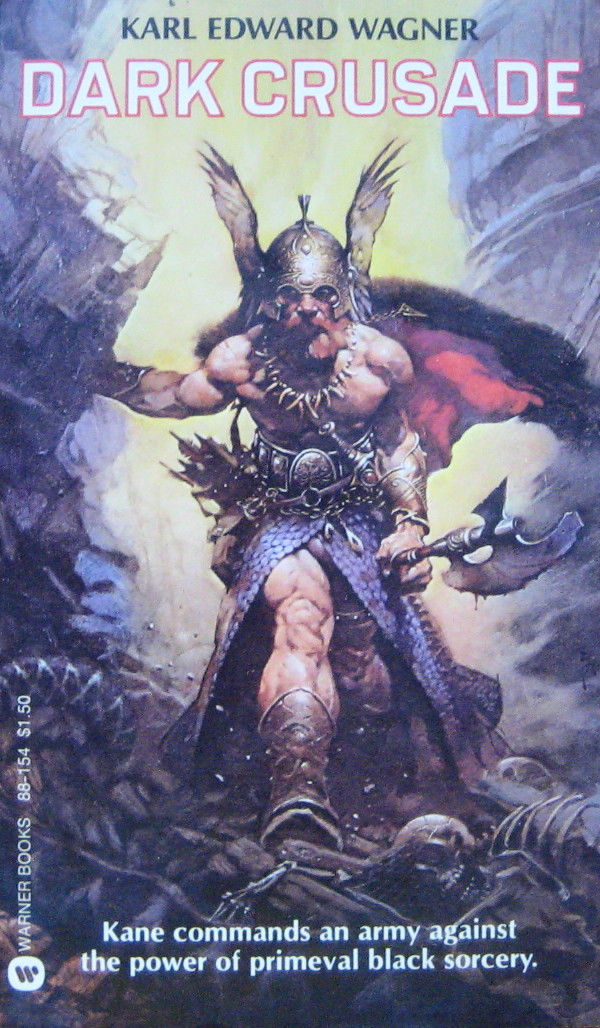
Dark Crusade Karl Edward Wagner-smallYou guys are going to love for me for this. So very much. Someone, somewhere might have mentioned this already, but whatever, now it’s my turn.

All of the Kane books, both the novels and short story collections, have been released on Kindle for four or five bucks each, which is a mere three pounds if you live in England. It’s kind of bittersweet actually, because it means all that time I spent rummaging around in the musty corners of used bookshops looking for Bloodstone (which I reviewed, by the way) has kind of gone to waste, and anyone that spent around 100 bucks for a copy of Gods in Darkness or Midnight Sun is going to want to curl up in a big ball over there in the corner and have a little cry. So whilst you do that, I’m going to get on with the review, if you don’t mind.

Dark Crusade revolves around the rise of the dark Cult of Sataki, its meteoritic domination of the kingdom of Shapeki, the brutal regime it establishes and its enigmatic and mysterious prophet Orted something or other. When Orted’s fanatical cult of peasants try to seize the southern kingdoms, they are swiftly and brutally quelled by a superior military force, and that’s when Kane, a mercenary, steps in to help.

Kane really is the star of the show here, as anyone familiar with the series will tell you, but for anyone not in the know, Kane is a prince cursed with immortality who has wandered the world for eternity, plumbing its secrets, learning grim and interdicted sorceries, seeking out mysteries and conflicts and battle and war, and just generally trying to entertain himself during the course of his unending life.

Read More Read More

New Treasures: Downfall by Rob Thurman

New Treasures: Downfall by Rob Thurman

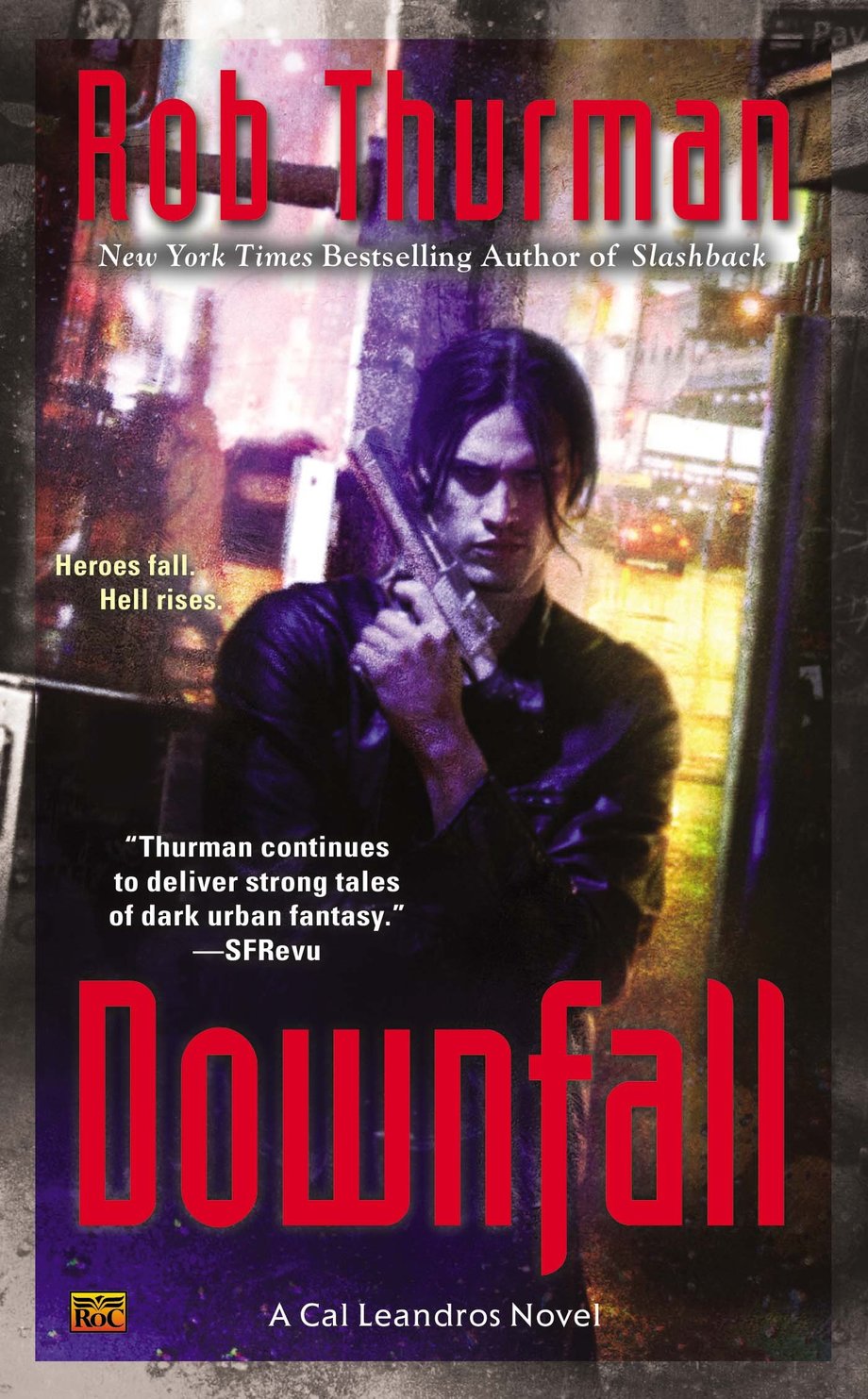
Downfall Rob Thurman-smallI first met Rob (Robyn) Thurman at Dragon*Con back in 2010, when she had a booth right next to the chaotic and busy Black Gate booth in the Dealer’s Room. As Howard put it in his con report, hanging out with Rob was one of the highlights of the con for us — she was charming and funny, and told hilarious tales of cosplay misadventures in a knockout Deadpool costume.

Turns out Rob is also a terrific writer, as I discovered when I finally had a chance to pick up one of her popular Cal Leandros dark urban fantasy novels. The series began with Nightlife in 2006; since then she’s published one per year. The ninth and most recent, Downfall, arrived earlier this month. It’s not too late to discover this New York Times bestselling series — if you haven’t already.

I let it go — all of it. Everything I’d been saving up all my life, building and growing inside me, too much to hold in one half-human body. It pushed and fought to be free with a force that turned me into a bomb with a timer vibrating on zero. I was free.

But so was everything I’d fought so hard not to be….

Brothers Cal and Niko Leandros know trouble when they see it — and then proceed to wipe the floor with it. But now it seems their whole world is falling to pieces. Cal’s nightmarish monster side is growing ever stronger, changing Cal physically as well as mentally. Which is exactly what Grimm — Cal’s savage doppelgänger — wants. And when a covert supernatural organization decides that it’s time to put Cal down before he threatens pretty much everything else in existence, the brothers find themselves in a fight they actually might lose. But the dark temptations Cal has denied all his life may prove to be exactly what can save them.

Even if he must fall forever…

Downfall was published on August 5, 2014 by Roc Books. It is 338 pages, priced at $7.99 in paperback and $6.99 for the digital edition. The cover is by Chris McGrath.

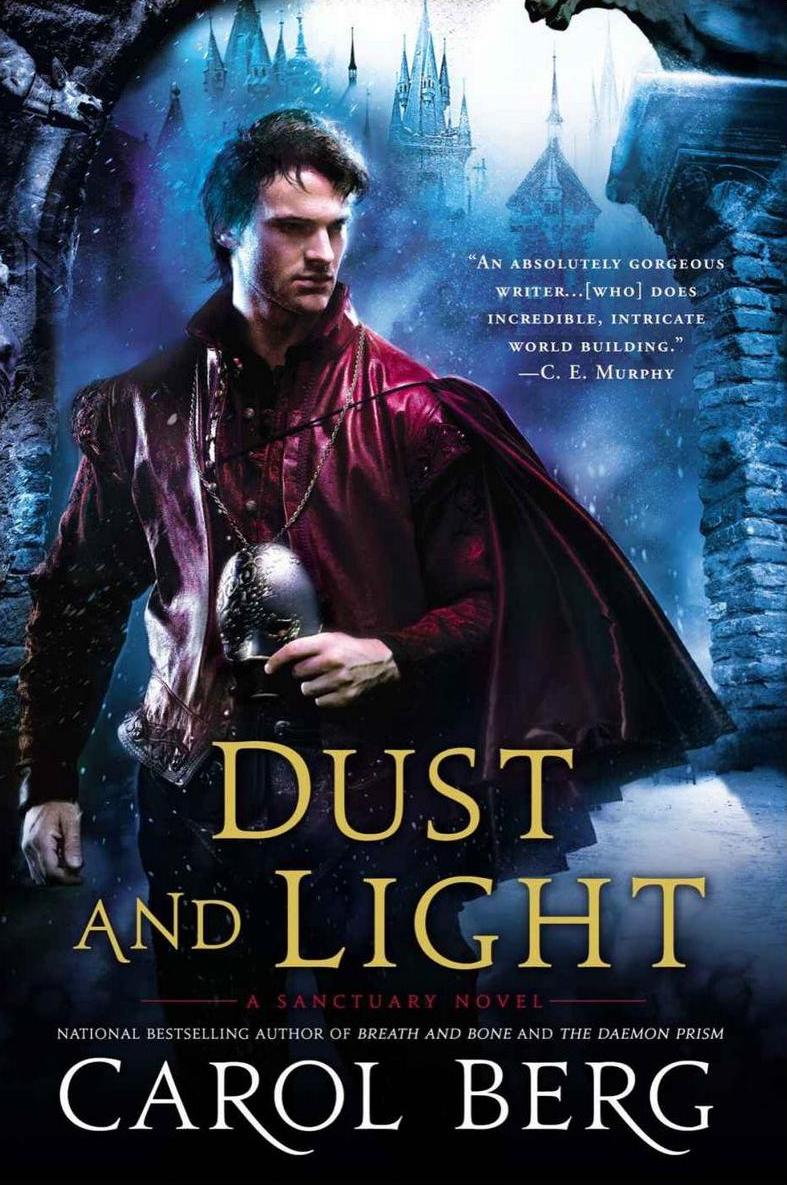
New Treasures: Dust and Light by Carol Berg

New Treasures: Dust and Light by Carol Berg

Dust and Light-smallCarol Berg’s first novel was Transformation, a Roc midlist paperback, in August 2000. It was a success and it became the first novel of the Rai-Kirah trilogy.

Some fourteen epic fantasy novels followed, including four in The Bridge of D’Arnath series and the Collegia Magica trilogy. There were a couple standalone titles in there as well, including Song of the Beast (2003), and the story “Unmasking,” in the 2007 Elemental Magic collection.

The two novels in The Lighthouse Duet, Flesh and Spirit (2007) and Breath and Bone (2008), were set in the world of Sanctuary. Now Berg returns to Sanctuary with her latest novel, the first installment of a new duology.

How much must one pay for an hour of youthful folly? The Pureblood Registry accused Lucian de Remeni-Masson of “unseemly involvement with ordinaries,” which meant only that he spoke with a young woman not of his own kind, allowed her to see his face unmasked, worked a bit of magic for her… After that one mistake, Lucian’s grandsire excised half his magic and savage Harrowers massacred his family. Now the Registry has contracted his art to a common coroner. His extraordinary gift for portraiture is restricted to dead ordinaries — beggars or starvelings hauled from the streets.

But sketching the truth of dead men’s souls brings unforeseen consequences. Sensations not his own. Truths he cannot possibly know and dares not believe. The coroner calls him a cheat and says he is trying to weasel out of a humiliating contract. The Registry will call him mad — and mad sorcerers are very dangerous…

Dust and Light was published by Roc Books on August 5. It is 445 pages, priced at $16 in trade paperback and $9.99 for the digital edition. The cover is by Gene Mollica.

The 1939 Retro Hugo Award Winners Announced

The 1939 Retro Hugo Award Winners Announced

The Sword in the Stone T. H. White-smallBack in April, we told you about the nominees for the 1939 Retro Hugo Awards, for the best science fiction and fantasy first published 75 years ago.

The Hugos were first awarded at the 11th World Science Fiction Convention in 1953. The 1939 Retro Hugo Awards celebrate the finest work published in 1938, which fans would have voted on at the very first Worldcon in New York in 1939 (if the Hugos had existed in 1939).

The Retro Hugos were awarded at Luncon 3, the The 72nd World Science Fiction Convention, held from Thursday, August 14th through Sunday, August 17th, in London, England. The 2014 (non-Retro) Hugos will be awarded tomorrow in a ceremony just before the close of the convention.

The Retro Hugo awards were presented by Mary Robinette Kowal and Rob Shearman.

Without further ado, here are the winners:

Best Novel:

The Sword in the Stone by T. H. White (Collins)

Best Novella:

“Who Goes There?” by Don A Stuart [John W. Campbell] (Astounding Science-Fiction, August 1938)

Read More Read More