October Is Hammer Country: Twins of Evil (1971)
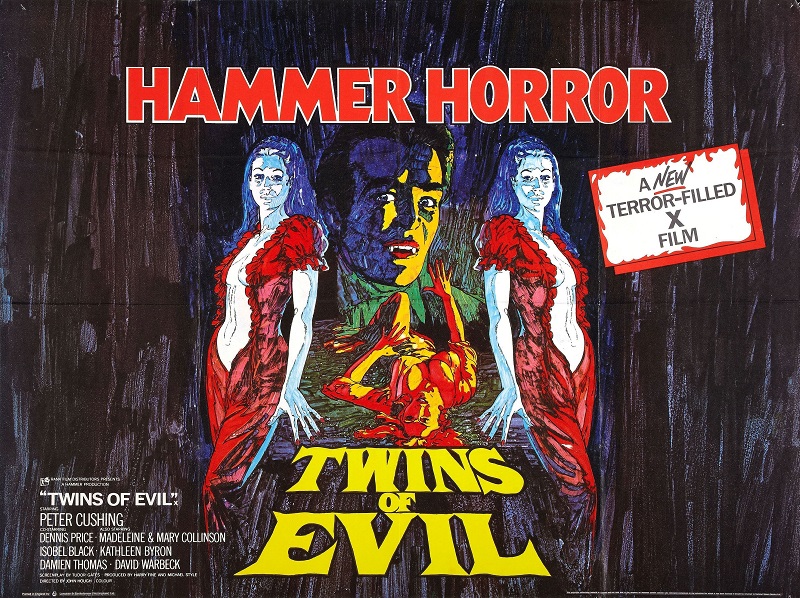 I loitered in the early ‘60s for my first two Hammer movies of October. Now it’s time to shift to a different era in the fortunes of the British studio that redefined Gothic cinema: the sexy, violent, and financially troubled early 1970s. Hammer Film Productions didn’t make it out of the decade, releasing their last film in 1978, but this period of independent producers and escalating R-rated material left behind some enjoyable decadence. Twins of Evil is late-period Hammer sexploitation with a basic high concept: sexy twin vampire girls! But the film ends up far better than the exploitation lure would lead you to expect. A good portion of this success has to do with Peter Cushing delivering a top-tier career performance as basically an aging, less tolerant Solomon Kane.
By 1970, the close-knit Hammer family was scattering. The in-house producers had left, so chairman James Carreras turned to outside producers. A small company called Fantale Films, consisting of producers Michael Fine and Harry Styles and writer Tudor Gates, brought Hammer a proposal to film Sheridan Le Fanu’s vampire novella “Carmilla.” This led to a loose trilogy of films about the Karnstein clan: The Vampire Lovers and Lust for a Vampire (both 1970) and Twins of Evil. Filled with nudity and overt lesbianism — at least in the first movie — the Karnstein series was a hit for Hammer at a time when the studio struggled to keep up with changing tastes in horror.
Twins of Evil is nebulously a prequel to the first two Karnstein films, showing how Count Karnstein (Damien Thomas) became one of the undead when he raised the vampire of sixteenth-century Countess Mircalla (Katya Wyeth) from her tomb. The heart of the story, however, is the Brotherhood: a band of puritan crusaders under the leadership of the fanatic Gustav Weil (Peter Cushing). The Brotherhood executes suspected witches and devil worshippers across Karnstein’s domains, although they cannot touch the count himself.


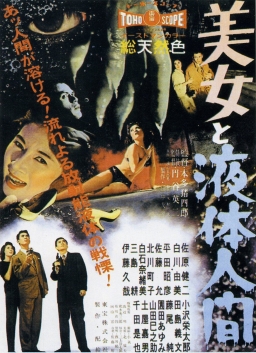 Sunday, July 23, I was down at Fantasia’s De Sève Theatre before noon to see a screening of the 1958 film The H-Man (Bijo To Ekatai-Ningen). I intended to follow that up with another vintage movie, the Shaw Brothers–produced 1983 film Bastard Swordsman (Tian can bian). Finally, I’d wrap up the day with a contemporary movie, the manga adaptation Gintama, which promised a mix of action and comedy. I liked the variety the films seemed to represent, and I was especially curious about The H-Man, which had been directed by Ishiro Honda, director of Godzilla.