Browsed by
Category: Movies and TV

Goth Chick News: Revisiting Hemlock Grove for Halloween

Goth Chick News: Revisiting Hemlock Grove for Halloween

Hemlock Grove-small Hemlock Grove-back-small

Hemlock Grove by Brian McGreevy (FSG Originals, April 16, 2013)

When Netflix first premiered Hemlock Grove back in April 2013, it was originally aimed at an audience of teenage horror fans. The cast was ridiculously good-looking, twenty-somethings playing high schoolers living in an insanely quaint and beautiful New England town. It might have been The Addams Family meets 90210, or at the time, a darker alternative to the anxiety-ridden vampires du jour of the Twilight series.

What we got instead, at least in Season 1, was an intricate and blood-soaked modern retelling of pretty much every classic monster imaginable. Hemlock Grove is a tale well worth you visiting (or revisiting) this Halloween season.

An American horror/thriller from executive producer Eli Roth (Grindhouse and Hostel) and developed by Brian McGreevy and Lee Shipman, Hemlock Grove is based on McGreevy’s 2012 novel of the same name. It examines the strange happenings in a fictional town in Pennsylvania where a teenage girl is brutally murdered, sparking a hunt for her killer. Roman Godfrey, heir to the town’s wealthy Godfrey family, befriends the town’s newcomer and gypsy outcast, Peter Rumancek and the two work together to shed light on the case while also concealing their own dark secrets.

I managed to find Hemlock Grove’s one and only red band trailer which should make you at least a little curious to check it out.

Read More Read More

Fantasia Extra: 1BR

Fantasia Extra: 1BR

1BRLast year I almost reviewed a movie at Fantasia called 1BR. But exhaustion got to me as the festival wore on, and I passed on the film. I’m never happy about having to compromise with fatigue, though, and since 1BR recently came to Netflix — where for a while it was among their 10 most-streamed movies, at one point even reaching the top 5 — I decided to rectify last year’s omission and take a look at it now.

Written and directed by David Marmor, his first feature film, it follows Sarah (Nicole Brydon Bloom), a young woman who feels estranged from her father (Alan Blumenfeld). Working in Los Angeles as a temp with aspirations to become a costume designer, she finds her first apartment as the film opens. Though the plumbing makes strange noises, her neighbours seem nice and Sarah befriends an old former actress named Edie (Susan Davis) while being drawn to the handsome Brian (Giles Matthey). But creepy one-eyed Lester (Clayton Hoff) keeps trying to push a weird old book about community. And Sarah’s got a secret: she moved in with her cat, Giles, even though building manager Jerry (Taylor Nichols) told her there were no pets allowed.

In fact things are worse than Sarah imagines. It turns out the book about community’s a bible for the apartment block — and that all the residents are part of a cult-like group prepared to force Sarah to join them. Acts of physical and psychological torture follow. Sarah is broken down and slowly builds herself back up, and it all builds remorselessly to a powerfully symbolic final shot.

The movie works because it pays so much attention to Sarah’s character, as well as the people around her. Bloom brings out Sarah’s flaws as well as her strengths. She is thoughtless enough to sneak the cat into a pet-free building without thinking about other people’s allergies. And she is weak-willed, unformed in certain ways as the film starts. The story has a strong subtext investigating her feelings about her father and unconscious search for replacement father figures; it’s a horror-thriller as bildungsroman, building to an overtly Freudian choice with an icepick.

The movie’s tone and visuals bring this out quite nicely. The film’s drenched with warm sunlight in its exterior shots, presenting a kind of warmth that echoes the self-image of the residents of the apartment block. Interiors of Sarah’s apartment emphasise bare white walls and wooden floors, the unyielding emptiness of unfurnished rooms. There’s a lovely moment early on as Sarah tries to sleep in her new apartment, which I think captures the dislocation of the experience of the first night in a new home. Conversely, later in the film all the homier scenes become unreal, as the rules and philosophy of the community become more detailed. The imagery of the building interiors ironically underscore the extreme rejection of the outer world and the unreality of the residents’ world-view, the willed aversion to external fact they push on Sarah.

Read More Read More

Fantasia 2020, Part XLIV: Final Thoughts

Fantasia 2020, Part XLIV: Final Thoughts

Fantasia 2020Every year I wrap up my coverage of Fantasia with a last post looking back at the festival, reflecting on the experience. This year’s edition of Fantasia calls for reflection even more than most. I have a couple of posts still to come taking care of loose ends from previous years, but here are a few final thoughts on the all-streaming 2020 Fantasia Film Festival.

First, as always, thanks go out to the team of people who made the festival possible. This time out I want to especially thank the social media team who kept a Discord channel going through the festival, answering questions and maintaining a group space for talking about movies, particularly Social Media Strategist Alyssia Duval-Nguon. The festival was always going to suffer from the inability to hang out with friends in person, but Fantasia’s people did the best they could under the circumstances.

Which I think sums things up for this year. I have no idea what things were like behind the scenes, but from my perspective as viewer and critic the Festival was the best I could imagine it being given the state of the pandemic. Technologically, my experience was as smooth as I could reasonably hope. It’s unfortunate that the festival lasted only two-thirds as long as usual, but the films had the level of quality I’ve come to expect. It seemed to me there fewer big-budget movies, but the range of smaller films meant I didn’t miss them much.

Still, it is clearly obvious that a theatre environment would have been a better way to watch these movies. Some of them, like Hunted, seemed to aim at using sensory power to overwhelm the viewer in a specific way; but all of them would have gained by the theatrical experience. It’s not just a question of the size of the image and the loudness of the sound system, but of the details that come out when you see the picture blown up and when you hear the sensitivity of the speakers. And in my experience films are only helped by watching them along with a Fantasia audience.

I also have to say that while the technological side of the event was run flawlessly by Fantasia, I personally had a couple of issues due to the equipment I was using. My laptop’s not the newest, and had a tendency to stop once or twice per film to buffer for a few seconds. Generally the streaming experience shifts some of the burden of keeping things running onto the audience. Usually to be sure of watching a movie I want to watch, I just have to make sure I’m in the right line at the right time. Watching a stream means I have to be sure that my computer’s not feeling temperamental, which is hard to guarantee; for example, I almost missed Jesters: The Game Changers because my firewall acted up. So there was a bit of unusual stress involved in watching the scheduled movies.

Read More Read More

Fantasia 2020, Part XLIII: Fried Barry

Fantasia 2020, Part XLIII: Fried Barry

Fried BarryMy final film of Fantasia 2020 promised to be weird, and therefore the perfect way to wind down the festival. It was a take on a particular sub-genre of science fiction film: the alien visitor walking among us. The Day The Earth Stood Still, The Man Who Fell to Earth, Starman, E.T., technically I suppose Superman — all stories about a lone extraterrestrial on Earth dealing with humans. It’s a story form that lends itself to reflection on what it means to be human. But just because a form points in a certain direction doesn’t mean every instance of that form will be concerned with grand themes.

Consider Fried Barry, the debut feature from Ryan Kruger. It follows Barry (Gary Green), an abusive drug dealer in Cape Town who’s abducted by aliens and has an inhuman intelligence planted into his body. Returned to Earth, the alien in Barry’s form wanders about learning of human ways. These ways include, in no particular order, drug use, prostitution, sex, violence, fatherhood, and stranger things.

And that’s more or less the movie. There isn’t much plot beyond loose connections from one escapade to the next. Barry, or the alien inhabiting Barry, doesn’t develop much — the alien’s not established as a character to start with, so it’s impossible to see how the creature changes through the course of the story. Supporting human characters, notably Barry’s wife Suz (Chanelle de Jager) get to develop a little but not really enough to give the tale any kind of centre.

For better or worse, this is a picaresque journey through the bad side of town and of humanity. It’s entertaining, as far as that goes, and unpredictable. There’s a convincing grittiness to the city Barry-the-alien explores, not so much a realism as a reality consistently distorted yet recognisable. The underbelly of Cape Town is believable, at least for the sake of the film, in part because it’s inhabited by cartoons. This is a story about a hapless and mute protagonist falling into one damn thing after another, and not obviously learning from it; so the quality of the scrapes the alien gets into is key to the story, and in that respect the movie doesn’t disappoint. It may or may not be enough for any given viewer, but it’s a film that has its own specific wavelength and will reward viewers tuned into that frequency.

I suspect there are good reasons why the film’s built the way it is. To start with, while Gary Green’s expressive and rubber-faced and a distinctive visual presence, he’s not a formally trained actor. He’s a long-time extra in South African films (so I have learned from an excellent question-and-answer panel with Kruger and producer James C. Williamson), and in 2017 was cast in a short film Kruger was making about a heroin addict freaking out after a hit. That 3-minute piece was titled “Fried Barry,” and drew such a strong reaction Kruger decided to expand it into a feature, designing a story around Green’s presence.

Read More Read More

Fantasia 2020, Part XLII: Sayo

Fantasia 2020, Part XLII: Sayo

SayoIn covering a film festival, one does not always select the films one sees out of a pure love of cinema. Or even love of genre. Scheduling plays a part, and sometimes delivers to you an unexpected delight. Fantasia 2020 had fewer happy accidents of scheduling due to its all-virtual nature, but as the festival’s final day wound down I found myself with just under three hours until all the movies would go offline — meaning I had time for the film I’d wanted to watch, plus an hour or very slightly more. Glancing over the schedule I found a movie I’d considered looking at which was listed at 61 minutes, and decided I should give it a shot.

Jeremy Rubier’s Sayo was scheduled with two shorts that I would not have time to watch, but it was intriguing enough on its own. A Japanese woman named Nagisa (Nagisa Chauveau) is mourning her twin sister, Sayo, whose last letter she’d never answered. After a ceremony at a Shinto temple in Tokyo, a strange taxi driven by a demigod (Jai West) takes her on a trip to the breathtaking landscape that is the land of the dead. There, she will face her grief even more intensely and perhaps come to some kind of peace.

Rubier, a Quebecois director living in Japan, wrote and directed the film after Chauveau recounted to him the true story of her twin Sayo. He worked out the story while reading Sayo’s letters, watching home movies of her (some of which appear in his film), and listening to her music (again, some of which is heard in the feature). In January of this year, according to Rubier in a fascinating question-and-answer session, he heard about the COVID-19 pandemic emerging and, having lived in China, at once guessed at what was coming and insisted on shooting the film right away; he finished the script in January and shot it (over six days) a couple months later.

It’s stunning to think that this film was entirely shot and finished in less than nine months. It’s beautiful, measured, and thought-through. The narrative is rudimentary, but the emotional content is powerful, and emerges through the visuals in a purely cinematic way.

It is true that this is mostly a mood piece, but it’s a mood piece that works. Given the short running time, the narrative framework’s as detailed as it needs to be. Nagisa moves through different places and different phases of grief, and what she’s feeling at any given moment is perfectly clear and comprehensible. She encounters temples and religious ceremonies as well as surreal moments, and has flashbacks of memories of her sister, and you have the feeling of her moving along a journey of coping with grief.

Chauveau does a remarkable job here, acting for the most part not against other actors but on her own against the landscape, sharing the screen with the beauty of woods or shoreline. Still, she brings out what her character feels at every moment. It is true that the nature photography is excellent, whether seen from her perspective or overhead through stately drone footage. But her acting means we see more than the elegance of pretty pictures; Chauveau gets across her character’s emotion in isolation so well, the landscape becomes a reflection of her and is animated by her grief.

Read More Read More

The Public Life of Sherlock Holmes: At the Movies with Basil (Rathbone)

The Public Life of Sherlock Holmes: At the Movies with Basil (Rathbone)

RathboneColor_RathboneeditedI started writing a regular column for Black Gate in March of 2014. I’ve covered a lot of ground, but today we’re going to try something new. Earlier this year, I was watching Casablanca (yet AGAIN) on TCM, and I decided to do do a running commentary about it on my FB page. I know a LOT about that movie. TCM showed it again a little over a month later, so I did it again. It was fun.

I decided to do the same thing with a Basil Rathbone Sherlock Holmes movie. But I watched it on Youtube, which let me pause it while I typed comments, and took screenshots. That worked satisfactorily. During Casablanca, I was so busy (mis)typing comments, I missed half of the movie.

So, this is a mix of my running commentary, with more information and fun stuff added in during composition of the essay. It’s a hybrid, but not as detailed as I normally write. We’ll see how it goes as we look at two films: Terror By Night, and The Scarlet Claw. I already wrote a full post on the second movie. I just felt like watching it again.

Of course, all fourteen Holmes films starring Basil Rathbone and Nigel Bruce were black and white. But colorized versions, both official and not, have been around for a while. I watched colorized versions of both films, via Youtube. Terror By Night was done by TCC (Timeless Classics now in Color). They’ve got a bunch of movies on their website. And the quality of this one was excellent. The best colorized Holmes I’ve seen. The Scarlet Claw was by ATC, and it was muddy.

TERROR BY NIGHT

We start with number eleven of twelve in the Universal Pictures series. Only one more Holmes movie remained, as Rathbone, tired of being typecast, walked away from the franchise (and the associated radio show).

Read More Read More

Fantasia 2020, Part XLI: A Costume For Nicolas

Fantasia 2020, Part XLI: A Costume For Nicolas

A Costume For NicolasCritic Farah Mendlesohn introduced the term ‘portal fantasy’ in her 2008 book Rhetorics of Fantasy to describe stories in which a protagonist leaves their home and enters a new, larger, magical world. I’ve seen the term used often to refer to a specific subtype of these fantasies, in which a protagonist from conventional reality passes through a portal to a fictional realm and proceeds to quest about and have adventures. The rise of this more specific definition is not entirely surprising, given how common that kind of story is, perhaps especially with younger protagonists. Either sort of portal fantasy can present a character, confronted with a new and strange world, with an opportunity to grow and change. Or, instead, can be about reification of the character’s previous identity — a locking-in of who they are, after the success of a quest that aims to stop a bad change form occurring.

Such is A Costume For Nicolas, an animated film from Mexico. It’s directed by Eduardo Rivero and written by Miguel Uriegas, based on the book Pablo y El Baúl by Jaime Mijares (there’s an English version and a Spanish version, Un Disfraz para Nicolas; Fantasia presented the English version). The studio that made it, Fotosintesis Media, has a mission to create positive “social impact,” and so this film is a fantasy following Nicolas, a young boy with Down syndrome, voiced by a young actor with Down syndrome, Fran Fernández.

The condition’s not named onscreen, but informs the character: 10-year-old Nicolas is who he is, a happy child raised by his mother (voice of pop star Paty Cantú), who makes him costumes and tells him stories about a fantasyland where a powerful but mysterious wizard dispelled nightmares at a high cost. When Nicolas must go to live with his grandparents and his cousin David, he not only has to fit in at a new home and a new school, he also must stop the monster feeding on David’s nightmares — which leads both boys into the fantasy world of Nicolas’ mother’s stories. There, his costumes become a magic which gives them a hope of completing a quest to save the world and free David from nightmare.

It’s a lovely film that fundamentally works. It’s colourful and imaginative, the 2D animation always bright and energetic. The designs are excellent, particularly in the fantasyworld with its castles and magic. The human characters are good pieces of design, too, with expressive faces and figures a little like the adult humans of Calvin & Hobbes.

The story’s a little oddly structured, in that it’s a bit slow to get to the fantasyworld, and once it does it takes place almost entirely in that other realm. In other words, it doesn’t try to balance the two realities. But this works surprisingly well — Rivero and Uriegas perhaps understand that once we get fully into a story’s fantasy world, returning to a mimetic world can be a hard sell. The delayed gratification of the fantasy here may be tough for young children, clearly the primary audience of the film, who must wait for the really wondrous parts. But then again, it also means the film builds to its most spectacular moments, giving us a chance to get used to its visual style and to live with the characters.

Read More Read More

Fantasia 2020, Part XL: Fugitive Dreams

Fantasia 2020, Part XL: Fugitive Dreams

Fugitive DreamsThe Fantasia Film Festival usually runs around three weeks, but 2020 and its myriad of challenges meant this year’s festival lasted only two-thirds of that. Time moves fast, faster still during Fantasia, and so it came about that with a sudden shock I found myself in the final hours. I had three on-demand movies still to watch that I hadn’t gotten to, and only one on a fixed schedule, my first of the last day.

That film was called Fugitive Dreams, and it was directed and scripted by Jason Neulander from a play by Caridad Svich. It opens in an abandoned gas station where a Black woman, Mary (April Matthis) is about to slit her wrists in the ladies’ room. At which point a White man named John (Robbie Tann) bursts in, grabs some toilet paper, and almost incidentally stops her suicide attempt. The two of them, neither entirely mentally healthy, become squabbling comrades as they set out across what appears to be an empty midwestern America, sometimes riding the rails like hobos in old movies.

The exact era of the story’s difficult to pin down; after drive-in movies have been around a while, but probably before cell phones and the internet. On their journey John and Mary meet other drifters, including the menacing Israfel (Scott Shepherd) and his mute mother Providence (O-Lan Jones). Interleaved with this story are dreams, visions, and memories — along with lies and questions, notably about John’s background and parentage. It all makes for a surreal road movie without a real destination.

Most of the movie is stunning high-contrast black-and-white, and it’s quite striking — like an older film in its lighting, but a modern one in its visual storytelling. Some dreamlike segments are in colour, and while they look fine, other than a recurring image of a poppy field none of them quite match the stark beauty of the wide-open monochrome spaces, or of a nighted conversation in a shuddering boxcar. The acoustic soundtrack’s a fine match for the imagery, emphasising the way the film aims at evoking classic Americana. Old movies are referred to in dialogue, a kind of imagined paradise for John, and the sense of a road-trip film is very strong.

So are the religious overtones, visible in the names of the characters, and in the choice of an abandoned church for the film’s climax. But to what end is less clear. The empty church echoes the empty landscapes of the film, and hints at the characters’ abandonment by God; if you see them as searching for the divine, it’s certainly a downbeat symbol. But it’s a little unclear what the characters actually are seeking. A home, perhaps, but that’s left underdeveloped.

Read More Read More

Fantasia 2020, Part XXXIX: Lapsis

Fantasia 2020, Part XXXIX: Lapsis

LapsisScience fiction has strong historical links to the adventure genre, but ideas-oriented science fiction tends to move away from adventure. Adventure fiction typically focusses on individual protagonists doing world-altering things, and a science fiction backdrop makes for a fictional world susceptible to alteration. But much actual social change is driven by organisations and groups, and science fiction that wants to talk about ideas usually acknowledges that. At the extreme you get something like Asimov’s early Foundation stories: tales in which the inevitable working-out of sociological forces are at the centre of the story, not the actions of a single hero. It’s not impossible to balance a quest-story about a single protagonist with a realistic portrayal of a world defined by its social structures, but tales that pull off both aspects are worth noting.

Which brings me to writer-director Noah Hutton’s Lapsis, an excellent near-future science fiction film that does both things very well indeed. Not too long from now, the quantum internet connects the world. To make the quantum computing systems work, cablers need to connect long cables between large cube-shaped nodes. These nodes are built in wilderness areas, so cablers have to walk through the woods trailing a wire behind them. They get paid well for this, in gig-economy fashion: if you have a cabler medallion, you log into an account, select a path, and take your cable along the path. You have to hurry to get the cable laid before a bot passes you by and steals the route, though, for if that happens you don’t get the points that’ll give you your payout.

Ray (Dean Imperial) is a blue-collar deliveryman whose boss gets busted, necessitating a search for a new job. Ray’s got a brother, Jaimie (Babe Howard) who he loves dearly but who suffers from a terrible fatigue-related condition, and to pay for an experimental treatment Ray strikes a deal with an underworld connection to get an under-the-counter cabling medallion. Cabling’s harder work than Ray expected, but things get really weird when he logs in to the account associated with the medallion — and finds a hoard of points already there. And finds other cablers grow hostile at the mention of his account’s name. Ray’s got to solve the mystery of the account, support his brother’s treatment, stay out of jail, and succeed at laying cable through a forest filled with people who seem to get stranger the farther he goes.

This is an excellent set-up, and Hutton explores it with profound intelligence and creativity. He has a background in documentary film, including two films about the oil industry and an ongoing project about an attempt to build a computerised simulation of a human brain; this perhaps helped him develop a future world that feels so deeply real. Lapsis is a thorough and solid extrapolation of the modern world, not just in terms of the macro scale of the class system and the gig economy, but in smaller stuff like the cheerful interface for the cablers’ accounts. Or the way the sharing economy has expanded to the point people rent storage space in their garage.

Read More Read More

Ellsworth’s Cinema of Swords: Laughing Cavaliers

Ellsworth’s Cinema of Swords: Laughing Cavaliers

The Court Jester

The Court Jester (Paramount 1956)

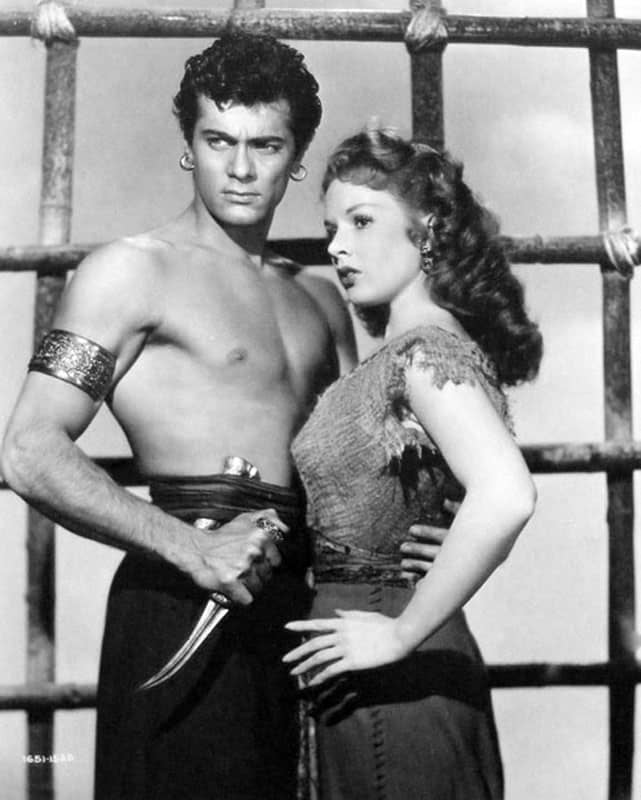
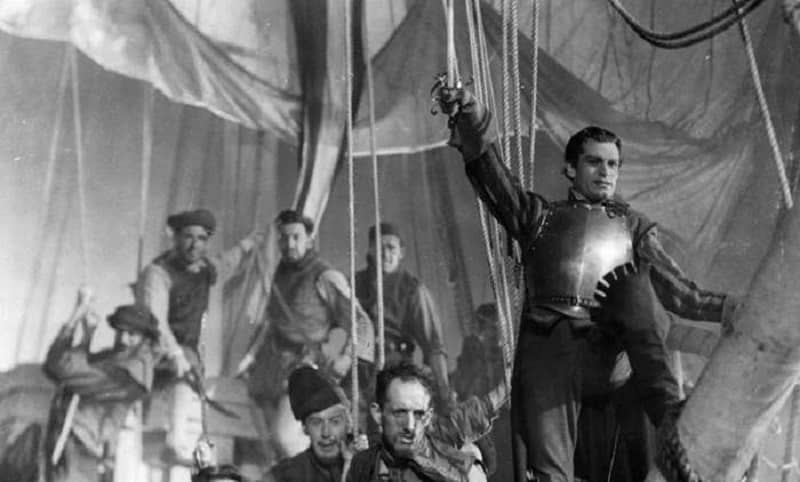
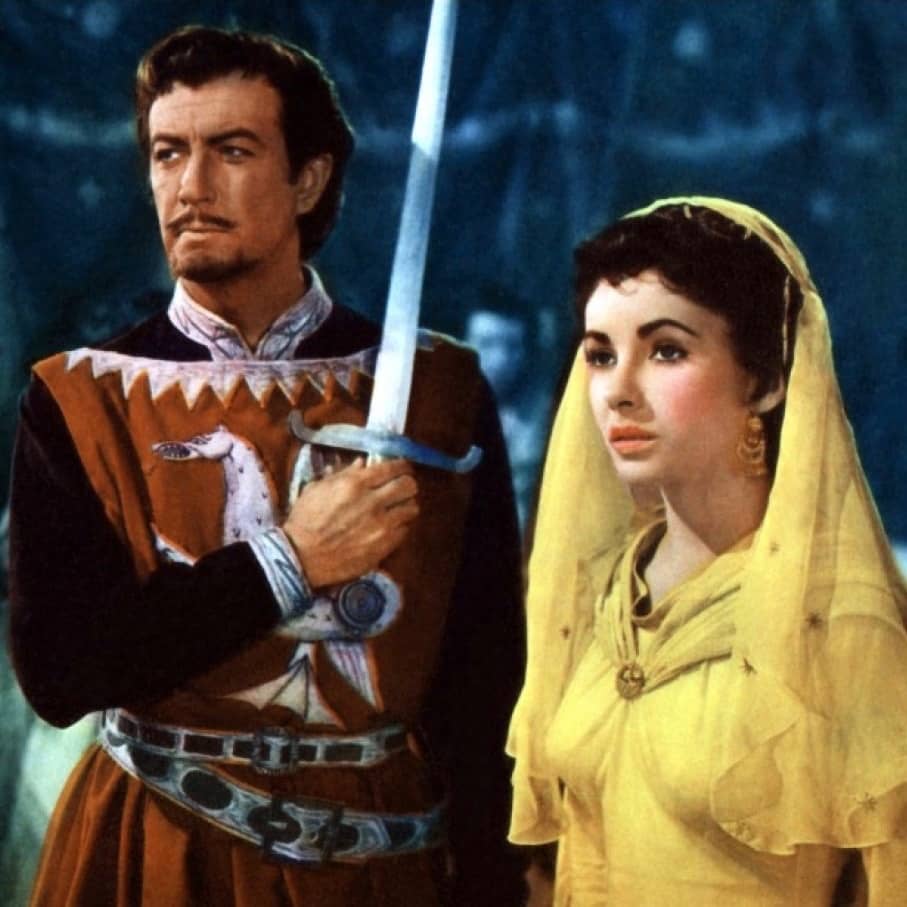
Swashbuckler heroes tend to be boisterous and aggressively cheerful, embracing whatever life throws at them, not reacting so much as over-reacting to every joy and challenge, happy to be outside the constraints that keep normal folk like us from picking up apples in the grocery by impaling them on the points of our swords. Swashbuckler films often have comic overtones because it fits the character of their devil-may-care protagonists. And some swashbuckler movies take the plunge into outright parody. Here are two of the latter, plus an immediate predecessor that helped pave the way.

The Flame and the Arrow

Rating: ****
Origin: USA, 1950
Director: Jacques Tourneur
Source: Warner Bros. DVD

Burt Lancaster burst onto the Hollywood scene in 1946 playing a tender tough guy in The Killers, a dark film noir based on a Hemingway story, and he soon earned a reputation for excelling at edgy, dramatic roles. But before Hollywood, and before his service in World War II, Lancaster had been… a circus performer. In the 1930s he was one-half of Lang & Cravat, a comical acrobatic act with his diminutive partner and lifelong friend Nick Cravat, who, as part of his shtick, never said a word, leaving all the snappy patter to Lancaster.

Read More Read More