Browsed by
Category: Movies and TV

Goth Chick News: The Kids Who Put You Off Kids – Where Are They Now?

Goth Chick News: The Kids Who Put You Off Kids – Where Are They Now?

Danny Torrance and the twins back then

By this time, it’s no surprise to any of you that The Shining is one film I just can’t get enough of. I like the source material of course, but the movie version never gets old and I can say that with some authority, having seen it about a gazillion times (and written about it here a fair amount as well).

Back in 2010, inspired by a then-recent documentary on the Stanley Hotel (the real Overlook) I did some of my best ever cyber-stalking on a quest to find little Danny Torrance; or really the 38 year-old Danny Lloyd he is today.

Back then, I did manage to track down “Professor Lloyd” at the university in Kentucky where he now teaches, only to be entirely ignored. Not surprising, considering his students posted comments about the verbal smack down you’re likely to receive if you ever brought up the good professor’s past life.

But you know what? A little taste of fame, no matter how brief or how long ago, will inevitably leave you craving more at some point in the future. And apparently that future for Danny Lloyd was the publishing of King’s Shining sequel Doctor Sleep.


Read More Read More

Death Knight Love Story: WMA meets WTF

Death Knight Love Story: WMA meets WTF

Tauren Ninja
…ninja Minotaurs (my idea, apparently)

About ten years ago, I tried to stab this crazy Goth guy and he threw me through a pile of chairs.

Fortunately, we were doing WMA — Western Martial Arts and the daggers were blunt and we were wearing body armor. The chairs however, were real, but the impact fixed my shoulder, which had been painful for the previous month or so. I took this as a good omen and Hugh Hancock and I have been close friends ever since.

hughhancock
Hugh is an independent animator, think Ed Wood does Machinima but actually good.

Hugh is an independent animator, think Ed Wood does Machinima but actually good.

That’s how, years later, I ended up in a warehouse clad in skintight spandex and clutching a plastic sword.

Hugh had had this slightly bonkers idea. He would take the Death Knights from World of Warcraft and use them to make a love story.

Read More Read More

Observations: The Return of the King Movie

Observations: The Return of the King Movie

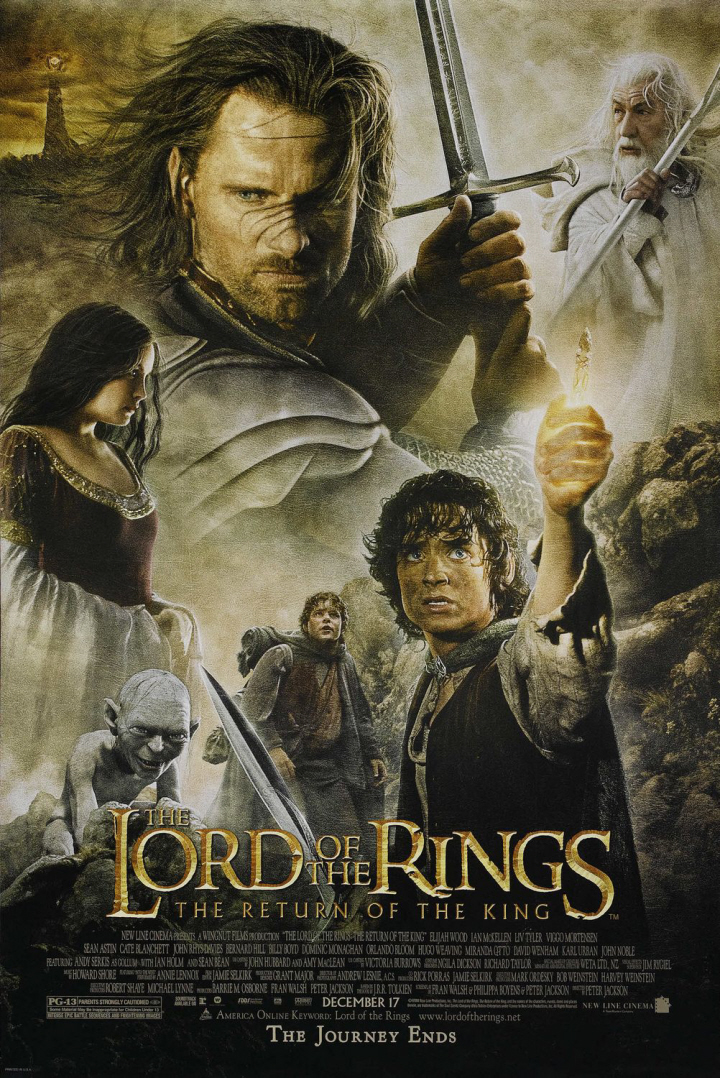
The Return of the King poster-smallHey, folks. Today I’m wrapping up my series about The Lord of the Rings movies with the third installment: The Return of the King (following The Fellowship of the Ring and The Two Towers).

The third film begins with Gollum’s origin tale, telling how he came to be, well, Gollum. Smeagol and his friend Deagol are fishing when Deagol falls in the river and accidentally discovers the One Ring. Smeagol kills Deagol for it and afterward is exiled, forced to live a miserable existence under the Misty Mountains. The main point of this scene is to show us (again) the Ring’s power to inspire intense desire in anyone who sees it.

We then move to Frodo, gazing at the Ring while Sam sleeps. The desire is obvious in his eyes, a reminder that the Ring is taking control. Gollum wakes them to get moving. In a cute exchange that reveals he’s the only remaining optimist in the group, Sam is rationing their food so they have enough for the journey back home.

Aragorn and company (now with Gandalf, King Theoden, and Eomer) ride to Isengard. Merry and Pippin are there to greet them, being silly with the pipeweed. In previous viewings, I missed that this mini-scene is important because it marks the starting place for the two young hobbits, smoking and feasting and drinking. They will never be this naïve and carefree again.

I also love how Treebeard greets Gandalf as “young master Gandalf,” like he’s a little kid. My grandfather used to greet me the same way (without the ‘Gandalf,’ obviously) and it still makes me smile.

Read More Read More

Godzilla Interruption: All Monsters Attack… Because Nobody Talks about It Much

Godzilla Interruption: All Monsters Attack… Because Nobody Talks about It Much

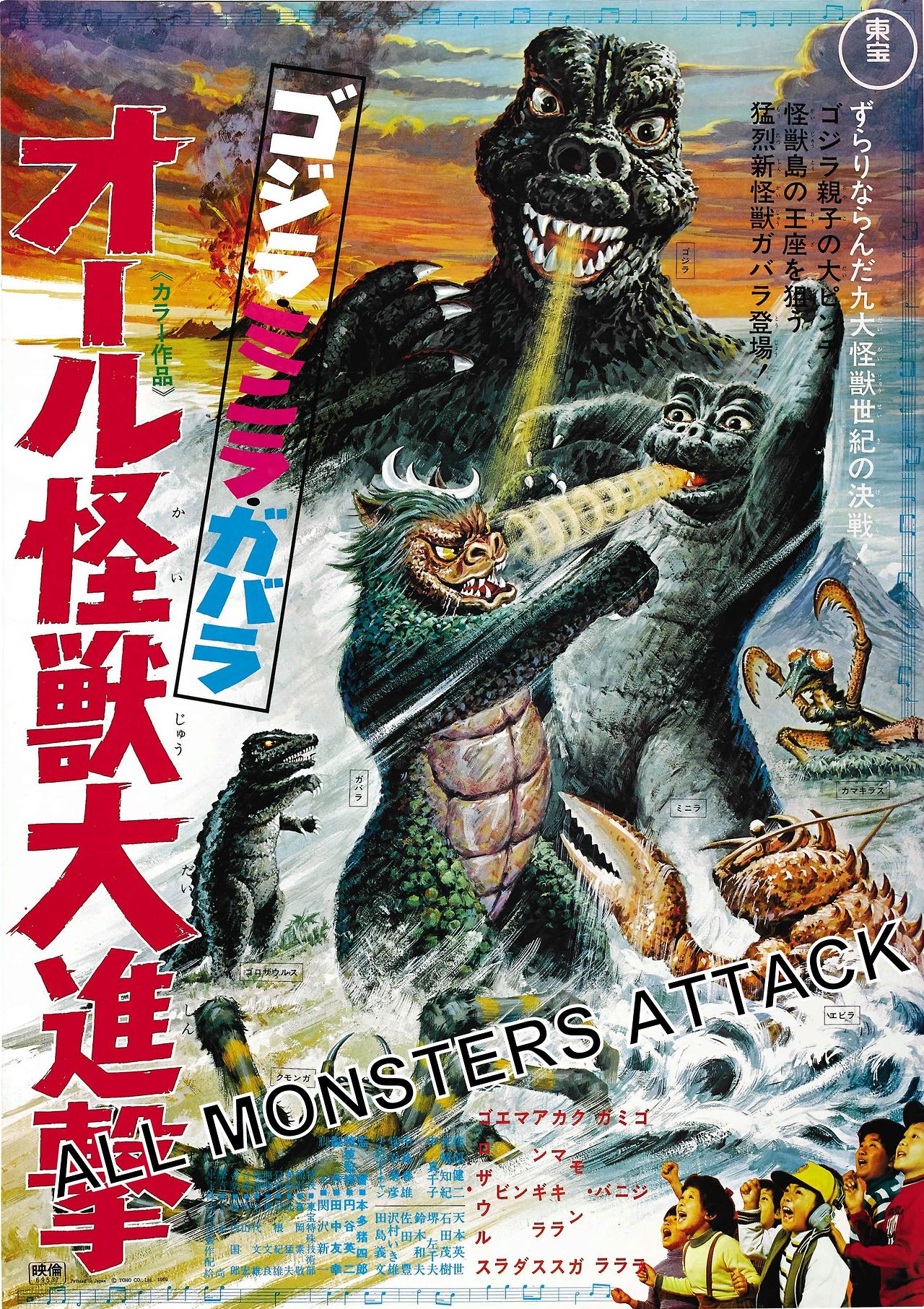
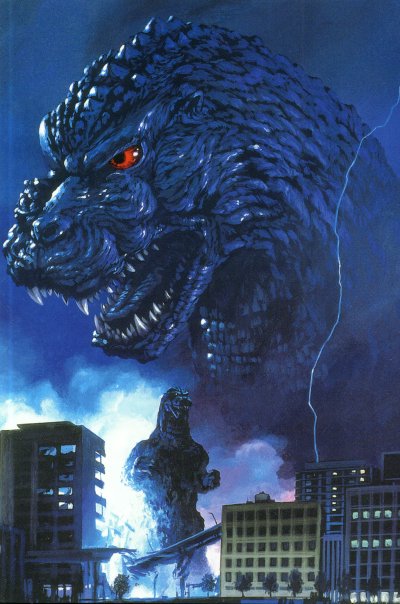
All Monsters Attack Poster with captionI now interrupt my continuing “History of Godzilla on Film” to bring you an Up Close and Personal look at one particular movie: 1969’s All Monsters Attack, also known as Godzilla’s Revenge.

It seems like an out-of-left field pick, since this movie has a poor reputation among the kaiju fans. As film historian Richard Pusateri says on the audio commentary for the current DVD: “Fans cannot decide if this is the worst movie of the series, or the second worst.”

However, I picked this movie for spotlight attention because it rarely receives any attention. Most Godzilla fans have seen it all the way through only once — probably in the English-dubbed version — and then left it on the shelf. With its chunks of stock footage lifted from earlier Godzilla films, fantasy elements that relegate the monsters to existence only in the imagination, and a target audience of third- and fourth-grade children, ­All Monsters Attack is easy for adult viewers to dismiss.

However, the movie contains elements unique among the classic Godzilla series that make it worthy of discussion. And for good or bad, it does have SF legend Ishiro Honda in the director’s chair in his penultimate Godzilla movie.

So let us go pay a visit to late-1960s industrialized Japan and meet a bullied latchkey kid with dreams of monsters.

The Background of All Monsters Attack

Toho Studios planned to conclude the Godzilla series with 1968’s epic Destroy All Monsters. But their resolution did not hold for long. Although the studio system would not collapse for another year, Toho’s movies were doing less business because of television’s popularity. When the studio heads decided to make another Godzilla movie, it was because they devised a way to make it as inexpensively as possible.

Rival studio Daiei’s 1968 movie Gamera vs. Viras inspired Toho’s choice. The Gamera film (released in the U.S. as Destroy All Planets) used battle footage from two previous Gamera movies to expand the running time and reduce the budget, and it used child heroes for direct appeal to the kiddie crowd. Toho gave instructions to producer Tomoyuki Tanaka to create a Godzilla film for children that made extensive use of existing special effects footage.

Read More Read More

Adventure On Film: Paperhouse

Adventure On Film: Paperhouse

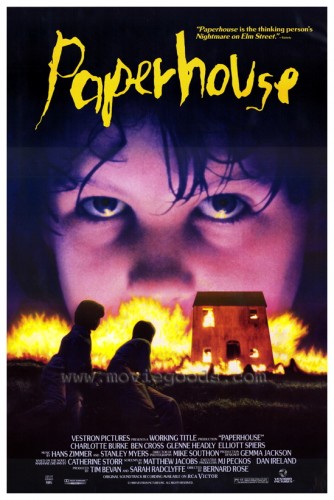
By and large, if I had to drop one decade from the annals of cinema, it would be the eighties,SK-Paperhouse-1-334x500 but that period did come up with its share of winners.

One of the eighties’ forgotten gems is the fantasy-horror hybrid, Paperhouse (1988), a British release that did its best to compete with flicks like Heathers for Cineplex space, and failed. U.S. gross, according to the internet movie database, was just over $241 thousand. Sad. Paperhouse deserved better, much better.

Spoiler-free, the plot follows Brit tween Anna, curious about lipstick but not yet ready for boys, as she succumbs to a severe case of glandular fever.  The disease leaves her prone to vivid dreams, all of which stem from Anna’s crayon drawing of a bleak, lonely house. Whatever Anna adds to the house manifests itself in her dreams, and what starts out as a bit of a lark (think Harold and the Purple Crayon) quickly turns sour. Hardly twenty minutes in and it becomes clear that Anna may well have planted (or drawn) the seeds of her own destruction.

Having just read Violette Malan’s piece on John Gardner (On Moral Fiction) right here at Black Gate not a week before sitting down to re-watch Paperhouse, I couldn’t help but be struck by the film’s parallels to Gardner’s own arguments in favor of “moral” art and criticism. But what Gardner posits in his book he pursues by Socratic argument, in essay form; Paperhouse cleverly crafts those same questions into a cohesive dramatic whole.

Yes, the movie can be enjoyed on a purely surface level, without ever ceding the floor to philosophy, but make no mistake, this little chiller has a great deal more on its mind than things that go bump in the night, which is why it holds up so well, twenty-five years on.

Read More Read More

Revisiting A.B. Mitford’s The 47 Ronin: Japanese Tales of Vampires, Ghosts, and Renegade Samurai

Revisiting A.B. Mitford’s The 47 Ronin: Japanese Tales of Vampires, Ghosts, and Renegade Samurai

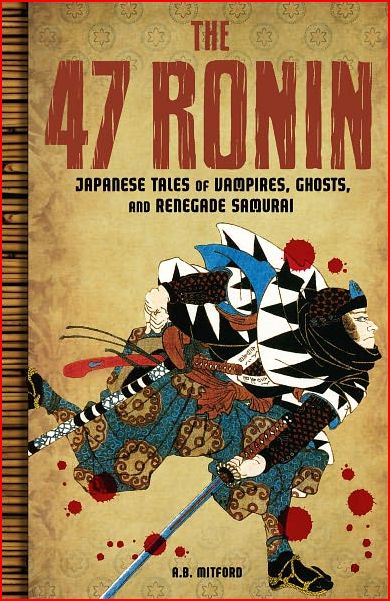
The 47 Ronin-smallTwo weeks ago I reviewed the film 47 Ronin, which Universal Pictures labeled a flop only a day after its U.S. release.

At that point the picture had earned about $85 million worldwide. That take has now increased to $116 million (according to BoxOfficeMojo), still well shy of its $175 million budget. Whether or not Universal’s premature announcement doomed the film, it’s now clear they weren’t wrong about its ultimate fate.

While browsing the remainder tables at Barnes & Noble yesterday, I stumbled on a curious title: The 47 Ronin: Japanese Tales of Vampires, Ghosts, and Renegade Samurai, by A.B. Mitford. I assumed it was a guerrilla tie-in; a cheap reprint timed to capitalize on the release of the movie. Except it was published nearly two years ago, in 2012, and there’s nothing cheap at all about the beautiful design, with striking endpapers and gorgeous color art on nearly every page.

I was right about at least one thing though: it is a reprint. It was originally published as Tales of Old Japan in 1871, one of the very first tomes to bring tales of Japanese monsters to Western shores.

Algernon Bertram Mitford was a British diplomat who later became Baron Redesdale. He developed a keen interest in Japanese folk tales while serving as attaché to the British delegation in Japan from 1866 – 1870 where, among other things, he witnessed the dissolution of the last feudal Japanese military government — the Tokugawa shogunate, ruled by the shoguns of the Tokugawa clans at Edo Castle — and the founding of a modern nation-state under Emperor Meiji.

Mitford was writing at a time when Japan was beginning to open to the West for the first time, less than 20 years after American Commodore Matthew Perry infamously sailed into Tokyo Bay with modern steam ships and explosive shell guns, gave the Japanese two white flags, and told them to hoist the flags when they wanted him to cease shelling the city and surrender. Perry forced the opening of Japan with the Convention of Kanagawa, and Mitford, writing a decade later, is a textbook case of white-guy-stupid, especially in how he’s perpetually surprised that the Japanese don’t greet Westerners with open arms and a bottle of warm saki.

Read More Read More

Goodbye, Professor

Goodbye, Professor

Gilligan's Island ProfessorRussell Johnson, who played the Professor on Gilligan’s Island, died yesterday at the age of 89.

The news reporter for WXRT here in Chicago, Mary Dixon, wryly noted during her morning show that the Professor was the only eligible male on Gilligan’s Island. Watching the show as a young girl, “it was all about the professor,” she said.

For me, a young nerd in Junior High, the professor embodied a little more than that (not that being a brainy sex symbol wasn’t a major accomplishment in itself). Everyone looks for role models at that age, and Russell Johnson’s good-humored, everyman brainiac was perhaps the finest role model on the airwaves in the mid 70s for young science enthusiasts — and I can’t help but wonder who will be cast in the role in the upcoming remake.

There was no shortage of smart characters on television at the time, from Spock to Bruce Bixby’s David Banner (The Incredible Hulk) to Peter Falk’s genius detective Columbo. But none of them was as likable — or as endlessly inventive — as Russell Johnson’s easy-going Professor, who could build a lie detector and a sewing machine out of coconuts. Johnson’s Professor wasn’t just smart… he was funny and charming, and week after week he showed that over-the-top enthusiasm for science didn’t have to be a social liability if you didn’t want it to be. You could be both smart and well-liked; it didn’t have to be a choice.

It was obvious that, in the microcosm of civilization that was Gilligan’s Island, the Professor was the one individual who kept everything running. His was a thankless role. He was constantly taken for granted, many of his ideas failed, and not a single one of his inventions ever got them off the island. But Johnson filled that role with a character who was noble, kind, and constantly upbeat. Here was a man of science who fit in; who was admired and, yes, loved.

Goodbye, professor.

Observations: The Two Towers Movie

Observations: The Two Towers Movie

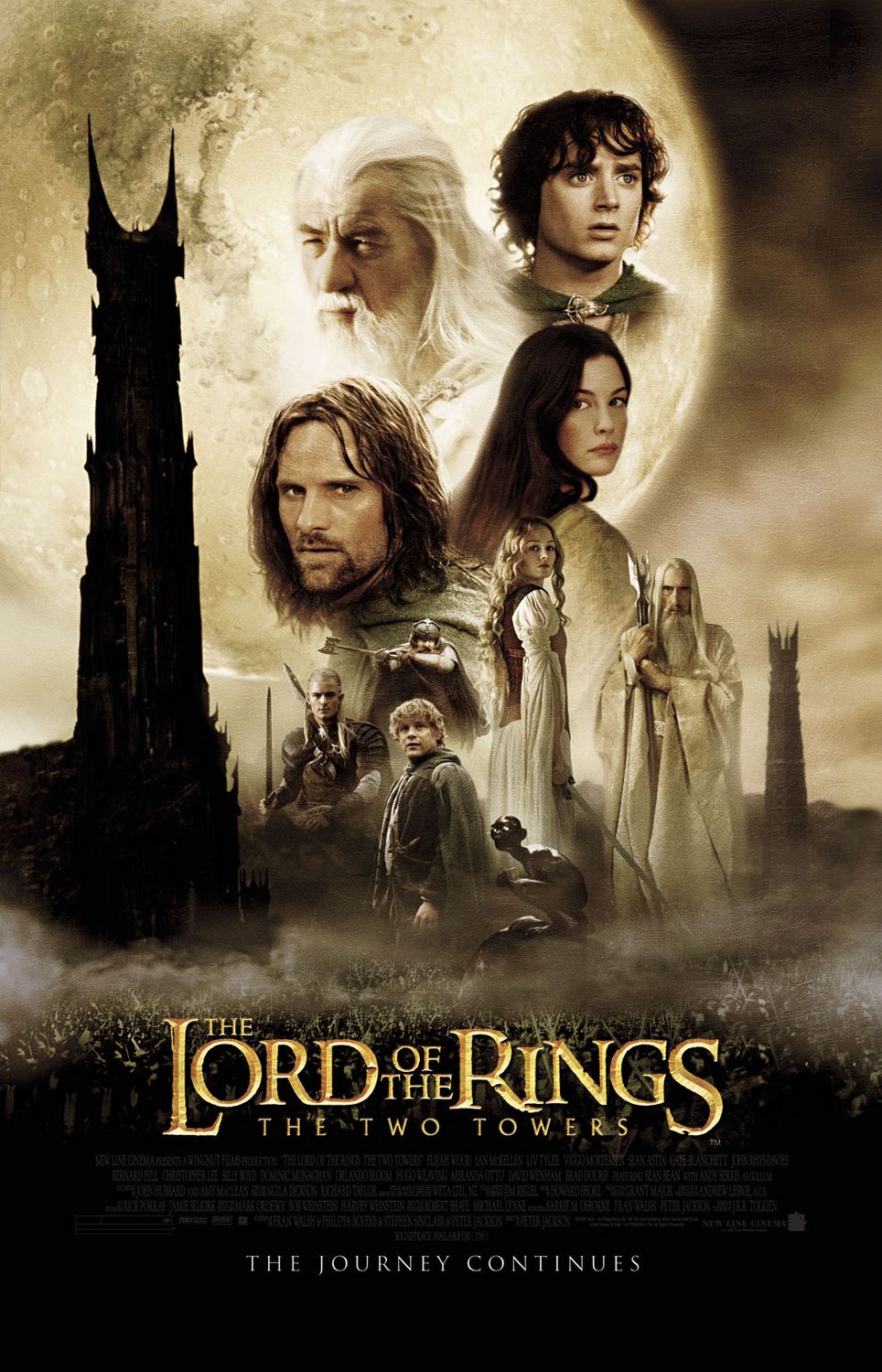
The-Lord-of-the-Rings-The-Two-Towers-poster-smallLast week I wrote about The Fellowship of the Ring movie, and this week I follow up with the sequel, The Two Towers.

One of the first things I noticed about this film was the short, choppy sequencing of scenes. This mainly occurred in the first hour, and it made for a slightly disjointed viewing experience.

The movie picks up right where Fellowship left off, starting with a gorgeous panorama shot of snow-capped mountains. Then we relive Gandalf’s fall from the bridge of Khazad Dum, but this time we get to see more of his battle with the Balrog, which is sheer awesomeness.

The perspective switches (get ready for a lot of this) to Frodo and Sam, tired and lost, as they make their way through the razor cliffs of Emyn Muil. We see that the Ring is getting heavier for Frodo, who feels its pull more than ever before, and certainly more than old Bilbo ever seemed to exhibit (except for brief spells.) This wandering phase is rather dull until the arrival of Gollum, who has been following the hobbits with plans to steal back the Ring. They catch him in the act and truss him up with elven rope. Frodo decides to free Gollum in exchange for leading them to Mordor; Sam doesn’t trust him (with good reason).

I want to pause a moment here to say that the portrayal of Gollum by actor Andy Serkis is – without a doubt — the highlight of this movie. The Two Towers has always been my least favorite book of the trilogy, sometimes tedious in its depression, but Gollum elevates this movie to being almost as good as the first one. A vicious little beast who can turn so sweet and cute, he is a masterstroke of acting and CGI genius.

Read More Read More

A History of Godzilla on Film, Part 3: Down and Out in Osaka (1969–1983)

A History of Godzilla on Film, Part 3: Down and Out in Osaka (1969–1983)

Godzilla01Other Installments

Part 1: Origins (1954–1962)
Part 2: The Golden Age (1963–1968)
Part 4: The Heisei Era (1984–1997)
Part 5: The Travesty and the Millennium Era (1996–2004)
Addendum: The 2014 Godzilla

Sayanora, Tsubaraya — and Sayanora, Golden Age of Japanese Cinema

The end of the Golden Age of Japanese Giant Monster movies coincided with the end of the most productive era for the Japanese film industry. Starting in the early 1950s, the country’s film industry experienced a meteoric rise. The major studios released a combined average of 450 movies to theaters each year. But the growth of television in the 1960s started to erode film attendance. In the late-‘60s, audience levels dropped precipitously, numerous theaters closed, and the studios faced cutbacks. Contract directors and stars were released, departments were scaled down or eliminated, and the studio responsible for the “Gamera” and “Daimajin” films, Daiei, was forced out of business entirely.

Science-fiction and monster movies had it particularly rough because of the growth of television. Popular superhero TV shows offered a cheaper alternative for young audiences to get their giant monster fix. The children who increasingly made up the viewership for Godzilla movies could now see kaiju action daily from their living rooms.

Ironically, the person most responsible for the growth of SF television was Eiji Tsubaraya, Toho Studio’s master of visual effects and one of the four “Godzilla Fathers.” Tsubaraya formed his own independent company, Tsubaraya Productions, in 1963 to create special-effects television programs. The 1966 hit show Ultra Q led to the monumental success of Ultraman the next year. Each week, Ultraman pitted its giant-sized title hero against a new monster. Clone shows sprouted everywhere, and the monsters of cinema screens started to bring in less money.

Read More Read More

New Year’s Resolutions of Oz

New Year’s Resolutions of Oz

one million yearsAfter about ten months of uninterrupted weekly posts, I’m taking a bit of a breather this week. Today, instead of new content, I’ll take inventory and look ahead to what I hope to deliver Black Gate readers in 2014. Perhaps I can couch it in a “New Year’s Resolutions” list — most of us allow for a bit of leeway on those overly optimistic proclamations, anyway…

1. Lose about twenty pounds, preferably at a blackjack table in Derbyshire.

2. Cut back on tobacco consumption, especially my wife’s.

3. Drink more alcohol. (It fell way off in 2013. Obviously I need to get to more conventions.)

And blah blah blah. Okay, let’s get to the stuff that someone else reading this might actually be curious about…

Read More Read More