Alex Bledsoe Writes a Love Letter to Carl Kolchak
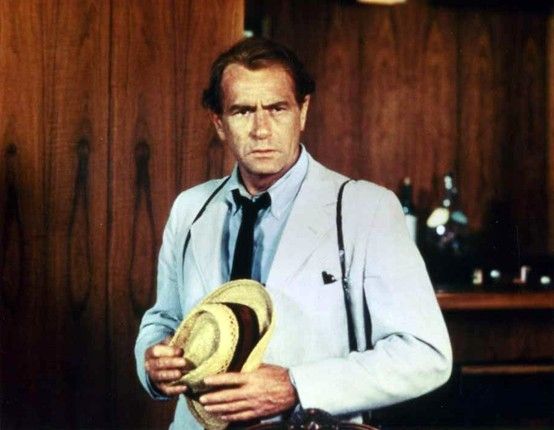 Over at Tor.com, occasional Black Gate blogger Alex Bledsoe has written a Love Letter to Carl Kolchak. As brilliantly portrayed by Darren McGavin in a single season of Kolchak: The Night Stalker (1974-75), Carl Kolchak was one of the greatest supernatural sleuths of all time — and a personal hero of mine when I was 10 years old. (And for much of my 30s and 40s, now that think about it.)
So get your eyes off him, Alex. He’s all mine.
I already had vague notions of writing my own stories, but as a lonely geek in small-town Tennessee, being a writer seemed about as likely as getting a date.
But when I saw Kolchak, everything changed. So what if girls ignored me? I could ignore them just like Carl did. What did it matter if there was nothing in my small town to make me look forward to the future? The Truth, long before the X-Files, was out there somewhere, in a big city like Chicago where monsters could lurk with impunity. All I needed were a few pieces of gear, like a portable cassette recorder (these were cutting edge at the time), a 110 camera … and that most glorious of inventions, the typewriter, featured in the show’s credits.
Alex Bledsoe is the author of five Eddie LaCrosse novels (including The Sword-Edged Blonde, and the latest, He Drank, and Saw the Spider), Blood Groove, The Girls with Games of Blood, and the Tufa novels, The Hum and the Shiver and Wisp of a Thing. His last article for us was Pacific Rim and the Culture of Rip-Off Vs. Homage.
Read the complete article here.
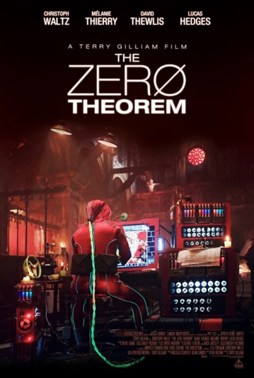 Before continuing my Fantasia diary with a look at the movies I saw last Sunday, I want to focus in on one specific film that struck me as an utterly brilliant piece of science-fiction satire. I think it divided the audience; I’ve heard and seen reactions from people who were left cold by it as well as from people who loved it as much as I did. Perhaps that’s not surprising. The movie is The Zero Theorem, directed by Terry Gilliam from a script by Pat Rushin, and it is as idiosyncratic and persistently individual as you’d expect from Gilliam.
 To my mind, if you’re a critic of any integrity, sooner or later the criticism you write will lead you to challenge your views of yourself as well as your views of the art you experience. That’s the nature of much truly effective art: it makes you look at yourself and think about yourself in new ways. If you’re trying to articulate your reaction and assessment of such a work, honesty will compel some self-examination as well. Powerful art requires an acknowledgement of one’s subjective response.
 Saturday was my first really big day at Fantasia. On weekdays, the festival usually starts its screenings at 5 or 6, with the occasional matinée at 3. Weekend days kick off around noon, meaning many more movies are on offer. Which also incidentally increases the risk of losing track of the need for a meal. I ended up seeing five movies last Saturday, with a dinner break after the first three. So this post will cover those first three films and I’ll have another up shortly looking at the next two. (In general it seems like I’m going to have more Fantasia posts than I’d thought, as I try to keep up with the films I’ve watched.)
 On Friday night, the cats came out at Fantasia.