Heroscape Wave 10: Valkrill’s Gambit
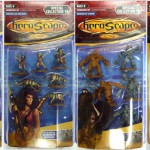 One of the things I most enjoy about Heroscape is the great variety of figures in the expansions. Because I was introduced to the game years after it first debuted, I’ve missed out on a number of the earlier sets. I’ve been trying out all of the recent expansion sets, though. What I didn’t know when Wave 10 arrived was that half of it was a reprint from Wave 5t — now very hard to find — that another quarter of it reprinted some hard-to-find special release figures, and that the final quarter recast earlier molds with different colors and rules. I don’t mean that to sound like a complaint, because 3/4 of those figures are nearly impossible to lay hands on and the other quarter, those recasts, are now among my favorite squads.
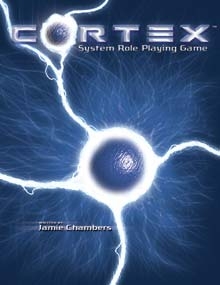 There are a lot of things to commend this book to an experienced gamer. The rules are fairly simple yet cover a lot of ground. I like how the abilities are not really tied into specific stats that are sometimes hard to justify - this system is much more fluid. It also is not conducive to rules lawyering and if there is one thing I hate, it is rules-lawyering, so this is a positive for me. I can see where the OCD crowd who wants a rule for everything could be irritated with it, but I game by the principle that story precedes rules, and this rule set is made for that mindset.
 Risus: The Anything RPG
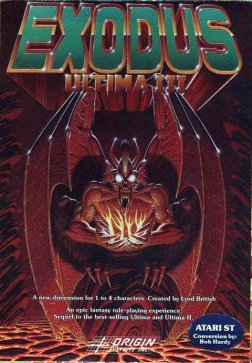
 If a single positive resulted from the work of that woefully misinformed but correctly acronymed organization BADD (Bothered about Dungeons & Dragons), a group that waged a crusade to stop children from jumping into the Bags of Holding that they learned to construct from an $11.99 hardcover rulebook purchased at a hobby store, it was the computer RPG
 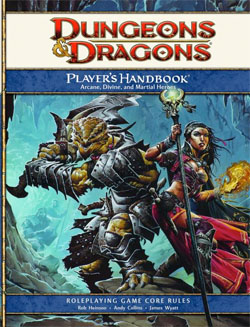 Fourth Edition Dungeons and Dragons has been with us for about a year now; long enough for the gaming community to get a pretty good taste of it. I’ve been hearing various reports from gamer friends about the system, and opinions of it have fallen across a roughly tripartite spectrum, from favorable to neutral to negative. Among these views, though, there is agreement that this isn’t the same old Dungeons and Dragons. Fans of Fourth Edition sometimes call it a “transformation,” or point out, “This time around they didn’t have any sacred cows. They were ready to change anything.” Critics have generally agreed that “It might be a game some people like, but it’s no longer D&D.”
 The death of Gary Gygax, co-creator of Dungeons & Dragons, marks the passing of an era. Gygax changed the face of fantasy like no other since J.R.R. Tolkien or Robert E. Howard. D&D brought people together, forged lasting friendships, and introduced a whole new generation to classic fantasy — in the process firing imaginations, heavily influencing the fledgling computer and video game markets, and laying the foundation for the billion-dollar online RPG industry. Just as importantly Gygax invited — indeed, demanded — that his readers become creators themselves, and the young fans he inspired eventually became some of today’s bestselling authors, including Raymond E. Feist, Margaret Weis and Tracy Hickman, R. A. Salvatore, Ed Greenwood, and dozens of others.