Browsed by
Category: Pulp

“The Fire of Asshurbanipal”: The First Time I Met Robert E. Howard

“The Fire of Asshurbanipal”: The First Time I Met Robert E. Howard

Today’s is Robert E. Howard’s birthday—I’ve always felt pleased that it lies so close to mine, as January is a lonely month in which to have your birthday—and for my gesture to commemorate the Great Lord of Blood, Thunder, and Thick Mountain Accents, I’m going to take a short glance back at my first encounter with him, in the story “The Fire of Asshurbanipal.”

Okay, I lied. It’s not short . . .

Read More Read More

The Ship of Ishtar

The Ship of Ishtar

ship-of-ishtar-piazoThe Ship of Ishtar
A. Merritt (Paizo Publishing, 2009)

I first read The Ship of Ishtar in a 1960s Avon paperback I found in a used bookstore in Phoenix. This copy is so brittle that I have to specially brace the book each time I open it or else the spine will separate like the San Andreas fault and the pages flutter down in a yellow autumn fall.

What I’m saying is . . . I’m extremely glad that Paizo Publishing has brought my favorite A. Merritt novel back into print in an edition that doesn’t make me afraid of the physical act of reading it. (Go buy it here.)

It’s strange that Abraham Merritt, one the biggest sellers in the history of speculative fiction, should need an introduction at all today, but sadly he does. Merritt was a journalist by vocation, the editor of The American Weekly, but his forays into writing ornate “scientific romances” starting with The Moon Pool in 1918–19 made him one of the most popular authors of the first half of the twentieth century. Today, he’s the realm of specialists, collectors, and his work is found in volumes from university publishers and small presses. In his introduction to Merritt’s breakthrough novel, The Moon Pool, Robert Silverberg pondered this turn of events that made Merritt obscure. What happened?

Silverberg offers up his own wonderings, ultimately finding the author’s eclipse inexplicable; but I think Merritt’s unusual mixture of two-fisted stalwart heroes in epic action with grandiose, mind-bending worlds of wonder painted in prose arabesques (and millions of exclamation marks!) makes him an author who doesn’t speak to mainstream genre readers today, even if he invented the clichés of countless contemporary fantasy authors. Clark Ashton Smith started as a specialty author and has remained there. Abraham Merritt was a mainstream writer who managed to Clark Ashton Smith himself after his death, ending up as a specialty author as well. Unfortunately, such is often the way of unusual talents. At least The Ship of Ishtar is now only a few clicks away for you to purchase and enjoy.

Read More Read More

Howard’s Forgotten Redhead: Dark Agnes

Howard’s Forgotten Redhead: Dark Agnes

sword-womanIt’s strange that Robert E. Howard’s most famous female character is one he didn’t actually create: Red Sonja, the work of comic book writer Roy Thomas and artist Barry Windsor-Smith, based on the historic adventuress Red Sonya from the story “The Shadow of the Vulture.” Red Sonja has been erroneously credited to Howard for years; even the movie Red Sonja lists him as the creator on the main credits.

This accidental attribution might explain the scant attention given to a fierce, red-haired, sword-swinging woman that Howard did create: Dark Agnes of Chastillon, sometimes called Agnes de le Fere. She appears in two stories and a fragment, and if Howard had sold the stories during his lifetime he might have written far more about her. She’s much-neglected in discussions of the author, and none of her stories have been in print since Ace’s 1986 printing of Sword Woman, which was first published by Zebra in 1977 and then re-printed by Berkley in 1979.

Another reason for the general obscurity of the abbreviated Dark Agnes cycle is that the stories are lesser pieces that feel rough alongside Howard’s classics. But their content is worth examining to see the author exploring the first-person female point of view. Detractors who consider Robert E. Howard—and sword-and-sorcery in general—misogynistic will discover a genuine surprise in Dark Agnes.

Read More Read More

DC Comics Goes Back to the Pulps

DC Comics Goes Back to the Pulps

batman-pulpThe comic book superhero was born in the late 1930s, during the time when the dominant form of popular culture reading was the pulp magazine. During the next decade, the pulps would start their slow demise: wartime paper shortages that forced the publishers to cut back on the more risky material to focus on the steady sellers, the paperback influx competed on the genre scene and were popular with soldiers overseas, and the rise of the comic book took away much of the younger readers. That the comic book should play such a large part in the end of the pulp magazine industry is an ironic reversal, since the hero pulps fueled the creation of those first four-color superheroes. No Batman without the Shadow. No Superman without Doc Savage.

The comic book industry is now doing some payback to the long-vanished cheap paper fiction magazines. DC Entertainment Inc. has an upcoming project where they are going to let their characters revert back to the 1930s and turn into true pulp heroes once more. It’s an alternate universe version of the DC Universe with no super-powered characters, set firmly in the 1930s. And it will not only feature their own creations like Batman, but also genuine pulp stars Doc Savage and the Avenger, to whom DC owns the comic book rights. The first publication in the new setting is next month’s Batman/Doc Savage Special, written by Brian Azzarello and illustrated by Phil Noto.

That’s all you need to get my blood a’ rushing. I rarely buy DC or Marvel monthly comics, since I think their indulgence in crossover mega-events has reached a level of mania/boredom, but this… oh, I am all over this in so many ways. Just having Doc Savage back in comics is enough, but Batman is also going to get pulled back to the decade of his nativity. I love comic book superheroes (Batman in particular), but since my mid-twenties I’ve turned more toward the pulp characters (The Shadow in particular), and seeing them get a whole corner of the universe of one of the two big comic book publishers is like a five-Red Bull high. And behold the Bama-influenced Doc Savage on the cover!

Read More Read More

My Favorite Robert E. Howard story: “Pigeons from Hell”

My Favorite Robert E. Howard story: “Pigeons from Hell”

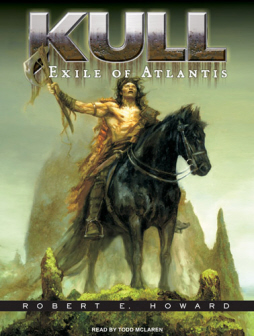
pigeon-from-hellWhen other genre-lovers find out I’m a fan of Robert E. Howard, they often ask me what my favorite of his stories is. They probably expect I’ll name one of the Conan yarns, or perhaps a Solomon Kane or Kull story. (Kull is, indeed, my favorite Howard character.) If they already know something of my background in history, they may think I’ll name one of the Crusader stories that appeared in Magic Carpet Magazine.

But instead I say, without hesitation, “Pigeons from Hell.” And, after an inevitable moment of surprise, they always answer back: “Oh, that’s a great story! I had almost forgotten about that one!”

The irony of my love for “Pigeons from Hell” isn’t lost on me: I praise Howard for his foundational contribution to sword-and-sorcery and historical action tales, and yet my personal favorite story he wrote is a contemporary America-set horror story. But “Pigeons from Hell” is quintessentially Robert E. Howard from first word to last; Howard was an author who knew how to transform naturalism into the “weird tale,” and who also took great inspiration from the folklore of his small world of rural central Texas.

Read More Read More

Targetted Book Recommendations #2

Targetted Book Recommendations #2

Part One of this enthralling series is here.

Finally, I shut my big mouth and show a few cards. Novels are what it’s all about, but not just any novels. We want something immediate. We want action and adventure. And although introspection and other, more literary qualities won’t be run out of town with the imprint of my boot on their buttocks, they must never, ever slow the story down. In short, we’re after books that embody the spirit of Black Gate.

Got it? Let’s see then…

Read More Read More

Targetted Book Recommendations for Non-Existent Readers

Targetted Book Recommendations for Non-Existent Readers

You and Me

Once upon a time, I met a guy who only ever ate fries*. Anything else, it was claimed, would make him violently ill. Now, he looked healthy enough and suffered no heart attacks while I was watching him, so who knows? Maybe it worked out well for him. But it’s rare in life to find an adult whose belly is so cantankerous that it rejects even pizza with such colourful speed. And it is equally rare to meet an adult reader who only wants Sword and Sorcery, or Flying Carpet Wonder tales. Or whatever.

Most people, enjoy a bit of variety. Personally, I feast at many tables — historical fiction, mysteries, SF hard and soft; fantasy high, low, light and dark. I love it all depending on my mood, and I imagine that most of you will have similar lists, maybe replacing the SF with Romance, or the mysteries with Great American Novels. The only thing we can be sure of having in common, is a penchant for character-driven SFF adventure stories — i.e. the type of thing that BG does best. You probably wouldn’t be reading this otherwise.

Targeted Book Recommendations

Recommending books, as we all know, is a bit like giving presents to a loved one. You can give something that you would like, or, if you’re feeling more generous, you can take their tastes into consideration too.

I remember one particular disaster when a friend of mine suggested George R.R. Martin’s A Game of Thrones to One-Footed Jimmy, even though everybody knew poor Jimmy has had an aversion to swords since that time the display came loose during his visit to a museum… OFJ wouldn’t touch Black Gate with a barge-pole, but imagine, if you will, that you had to buy a book for somebody who loved the magazine. What would you pick? You’re not trying to educate this person, you’re not allowed to show-off. The one thing you know about your victim’s diet is that he or she drools twice a year over the brown envelope that Mr. O’Neill sends from Chicago.

What would you choose? Why?

I’ll be putting up my answers to these questions some time next week.

* In Ireland, we refer to them as “chips”. Do NOT be confused.

Tarzan Swing-By: Tarzan and “The Foreign Legion”

Tarzan Swing-By: Tarzan and “The Foreign Legion”

Tarzan and Foreign Legion 1st edI would like to step forward at this moment to address the audience before the curtain rises on our feature book review presentation so that I may make a personal observation about Edgar Rice Burroughs. Specifically, I would like to explain why I’ve written so many posts about his work in the last few weeks.

Burroughs needs no excuse for discussion in a magazine dedicated to heroic fantasy and planetary romance. Adventure literature as we know it springs from the influence of Burroughs in the early twentieth century. Although pulp magazines existed before Burroughs published Under the Moons of Mars (later titled A Princess of Mars) and Tarzan of the Apes, this double-punch in 1912 changed the style of this publishing medium for the remainder of its lifetime, and the influence continued into the paperback revolution and on into our era. Burroughs looms as one of the Titans of genre literature. But the true question is: Why am I re-reading so much of his work right now, in concentrated doses that I usually reserve for no author?

One answer is that I enjoy writing about Burroughs almost as much as I enjoy reading him. For an author who supposedly crafted straightforward entertainment, Edgar Rice Burroughs’s novels contain a remarkable breadth of ideas for debate and consideration. But a deeper reason for such current copious reading of Burroughs is that his work always gives me a unique uplift. In times of uncertainty and concern, I find that no author can temporarily re-energize me than ERB. Even a violent and embittered book, such as the one I’m about to discuss, provides an energy boost like a literary vodka with Red Bull. Burroughs knows how to make life seem wild, colorful, and far removed from the petty concerns of the everyday. It isn’t strictly “escapism,” a word I dislike, but a form of romantic empowerment. Burroughs’s daydreams on paper enhance our yearning for that which is beyond what we have to struggle with in day-to-day life.

End of psychological exegesis. The curtain now rises on today’s Tuesday Topic: one of Burroughs’s most unusual books, one that few people have read because — let’s face facts — how many but the most dedicated fans manage to reach Book #22 in any long-running series?

Read More Read More

Caspak Victorious: The Land That Time Forgot

Caspak Victorious: The Land That Time Forgot

First Edition Cover“You have read the opening paragraph, and if you are an imaginative idiot like myself, you will want to read the rest of it; so I shall give it to you here…”

I often refer to Edgar Rice Burroughs as an “excuse” author. It seems readers or critics can’t discuss him without qualifiers to excuse reading him. A typical statement: “Edgar Rice Burroughs wasn’t a good writer but he had a vast imagination.”

I not-so-respectfully object to the assessment of Burroughs as a poor writer. In his best works, he pulls me along and engrosses me far more than most bestselling “thriller” authors published today. I can pick apart objective deficiencies in his style, criticize his dips into awkward phrasing, but this ultimately doesn’t matter in his overall style, which reads fast, involving, and exciting. His prose style matches the types and tones of the stories he wants to tell, fits them so well that I can’t imagine another style that would work with them. That, in my reader’s eyes, makes Edgar Rice Burroughs a great writer.

Read More Read More

Read Planet: Kline’s The Swordsman of Mars

Read Planet: Kline’s The Swordsman of Mars


I read The Swordsman of Mars out of a sense of obligation, which is probably the worst way to read anything, and with the firm conviction that it would suck. That’s the word on the virtual street about Otis Adelbert Kline: he’s a poor man’s Edgar Rice Burroughs. So I was thinking: ERB, without that mellifluous prose style and brilliant plotting. Urk.

Well, I was completely wrong. I enjoyed the book enormously, but that’s not all. You can enjoy almost any piece of writing if you approach it with the lowest possible expectations (and, yes, I am thinking of Lin Carter‘s multifarious pastiches here). I came away from it with considerable respect for Otis Adelbert Kline as a writer of fantastic fiction.

Read More Read More