The Black Coats: An Introduction
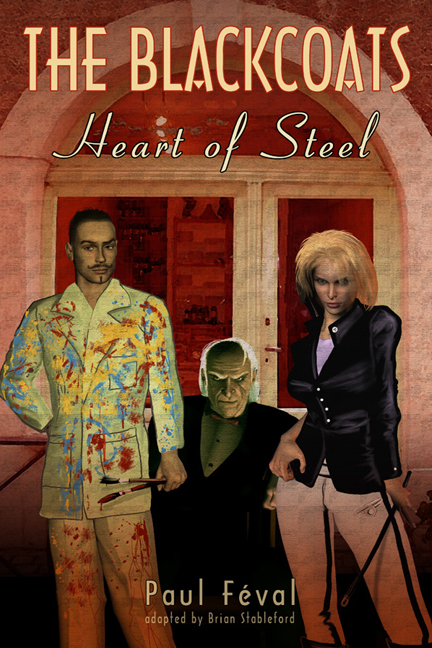 Les Habits Noirs is a series of seven landmark novels in pulp fiction history that have sadly been neglected outside of their native France. A fair degree of skepticism among modern readers is to be expected. Translations of obscure French novels can be a spotty affair and the verbose literary style of Victorian literature with its lengthy philosophical or historical passages are often wearying for a 21st Century audience. For every Fantomas that still captures modern imaginations, there are countless Dumas or Hugo pastiches whose only redeeming quality is their historical value to the avid student of fantastic fiction. Happily, Les Habits Noirs is one of those rare treasures that are as enthralling today as it was 140 years ago.
Paul Feval wrote all seven books in the series. He was an amazingly prolific author who turned out swashbucklers, vampire tales, crime fiction and religious works of vastly varying quality. Brian Stableford has spent much of the last decade translating his works into English for publication by Jean-Marc Lofficier’s Black Coat Press, a pulp specialty publisher who chose the English-language title for Les Habits Noirs for their imprint. Many critics have compared Les Habits Noirs to Mario Puzo’s Godfather series. My own best comparison would be to consider it the antecedent to Norbert Jacques’ Doctor Mabuse, the Gambler and especially the three films Fritz Lang made from that seminal work. Like Lang’s three masterpieces of crime, Les Habits Noirs bridges the gap between Pulp and Art.
The seven books in the series were published between 1863 and 1875 and concern members of a secret society headed by a crime family led by the patriarchal Colonel Bozzo-Corona. The first book, entitled Les Habits Noirs in France, was re-titled The Parisian Jungle by Black Coat Press for their English translation. The book introduces the criminal brotherhood, The Black Coats as a cross between the Mafia and the Illuminati. Modern readers weaned on Dan Brown’s intriguing if hopelessly hackneyed neo-pulp thrillers will marvel at what a true master of the conspiracy thriller sub-genre is capable of crafting. Colonel Bozzo-Corona is as beguiling a criminal mastermind as any in fiction. A feeble grandfather figure that can strike as quick as a cobra, Bozzo-Corona is always portrayed as displaying an uncommon brilliance. His fatal flaw is his borderline Messianic complex which promises to be his ultimate undoing.
Like his creation, Feval was possessed of a similar fatal flaw in his inability to maintain the high standard of quality that he demonstrated with this series. Too much of his non-series work was derivative and, after leaving his fiction works behind following a dramatic religious conversion, he doomed his reputation to be little more than a literary footnote. From that perspective, Black Coat Press and Brian Stableford’s work seems little short of evangelical in its mission to bring Les Habits Noirs to a wider audience who will appreciate this seminal work for its richness and mesmerizing tone.
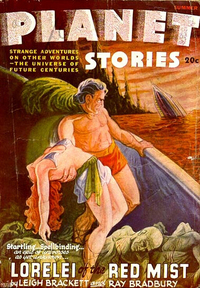
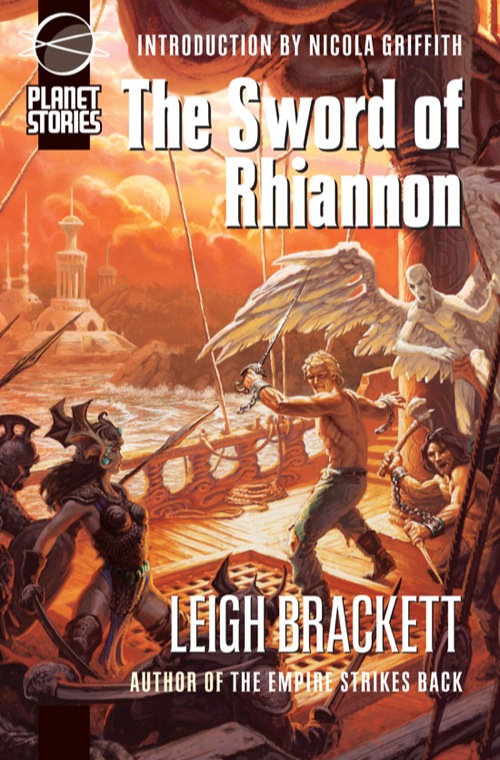 I committed a major heresy, in public and on record, against the sword-and-sorcery community when I stated on the recording for a podcast that, in the realm of “sword-and-sorcery” fiction, I prefer Leigh Brackett over Robert E. Howard. Although at least one participant on the podcast seconded my opinion, I do understand why most sword-and-sorcery readers cannot go with me on this. Howard is, after all, the Enthroned God of the genre. And, strictly speaking, Brackett did not write fantasy or historicals. Her specialty was action-oriented science fiction with heavy fantasy influences, the sub-genre of science-fantasy known as “planetary romance.” (Sometimes called “sword-and-planet.” I hate that term.)
 I’m a nut about the trivia of dates, so the moment I heard about the birth of my second nephew, A. Dean Martin (yes, really), I had to look up the famous people who share his birthday of June 16. The list includes philosopher Adam Smith, legendary film comedian Stan Laurel, and Apache leader Geronimo. Oh, and some fellow named Murray Leinster.