Browsed by
Category: New Treasures

New Treasures: Introducing Garrett, P.I.

New Treasures: Introducing Garrett, P.I.

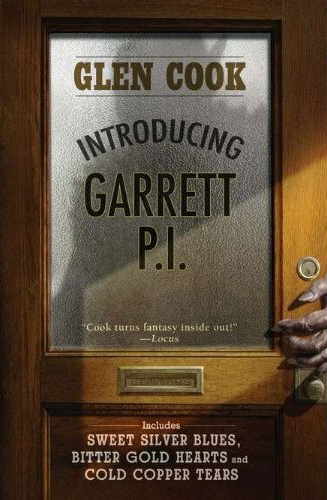
Introducing Garrett P.I.-smallWhen I started reading fantasy, I wanted every book I read to be The Lord of the Rings. High stakes, epic in scope, and at least one guy had to have a bitchin’ magic ring.

That’s the only decent explanation I can come up with for why I steadfastly ignored Glen Cook’s Garrett, P.I. novels for so many years. And that took some doing, too — in the 24 years since Sweet Silver Blues appeared, Cook has written no less than thirteen, with one more on the way. I’d probably still be ignorant of this highly readable and fast paced series if the charming Tina Jens hadn’t discovered this glaring omission in my fantasy education at Worldcon, and arrived at our booth the next morning with a brand new copy of Sweet Silver Blues, inscribed to me by Glen Cook.

Long story short, it wasn’t long before I was a fan. So you can imagine how delighted I was to open my mail yesterday and find a review copy of Garrett For Hire, a handsome omnibus collection of Deadly Quicksilver Lies, Petty Pewter Gods, and Faded Steel Heat, novels 7, 8, and 9 in the series.

I know what you’re thinking. Who does an omnibus of novels 7, 8 and 9? Unless…

A quick Internet search proved what I should have been able to figure out for myself: there are two previous collections. Introducing Garrett, P.I. was published August 2011, and Garrett Takes the Case in February 2012. Not sure how the hell I managed to miss them both. Clearly my detection skills are no match for my new hero, Garrett. Well, at least I’ve got one thing figured out: what books I’m going to be tracking down and reading this weekend.

Read More Read More

The Pop Culture Class of 1960 – 1969: Marvel Firsts: The 1960s

The Pop Culture Class of 1960 – 1969: Marvel Firsts: The 1960s

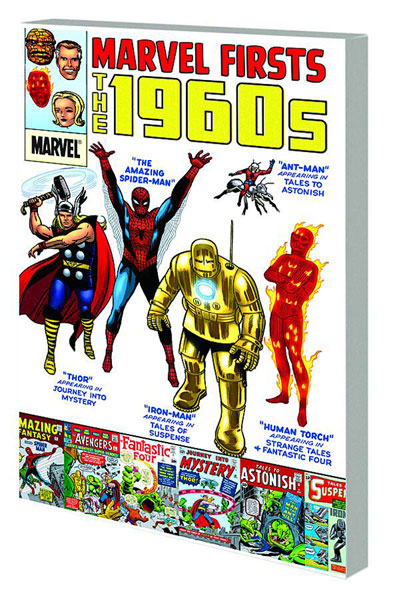
Marvel Firsts The 1960s-smallI remember the first time I read Origins of Marvel Comics, Stan Lee’s seminal 1974 anthology collecting the first appearances of the Fantastic Four, the Hulk, Spider-Man, Thor, and Doctor Strange. It was memorable because, for one thing, Stan’s bombastic introductions were frequently more entertaining than the comics themselves, and for another… the comics sure looked old.

Stan knew that, and he also knew a collection of first issues didn’t necessarily reflect Marvel Comics at its best. So alongside each origin story he also reprinted a tale that did showcase what made these characters special, including the FF’s epic battle with the Silver Surfer (from issue #55), Spider-Man’s tussle with the Shocker (issue #72), and others classic stories from the late 60s.

It made for a terrific book — and a great seller. Stan followed it a year later with Son of Origins of Marvel Comics, and then Bring on the Bad Guys; all told Marvel produced a total of 24 different books in similar format with publishing partner Fireside Books.

Origins of Marvel Comics hasn’t been in print in nearly three decades (ignoring the oddity with the same title released last May, which condenses the origin of each of the Marvel’s most popular characters into a single page), which is a shame. However, Marvel finally rectified this oversight late in 2011, kicking off an ambitious program to collect the first appearances of virtually every one of its major and minor characters.

This is a massive undertaking, and while I miss the partner tales Stan included alongside his selections, it’s an understandable sacrifice for the sake of completeness. While another reprinting of The Fantastic Four #1 or Amazing Fantasy #15 wouldn’t normally get me to crack open my wallet, an omnibus volume that also collects The Rawhide Kid #17 (from 1955), Daredevil #1 (1964), Western comic The Ghost Rider #1 (1967) and numerous others was definitely worth a look.

Read More Read More

New Treasures: Children of the Night by Dan Simmons

New Treasures: Children of the Night by Dan Simmons

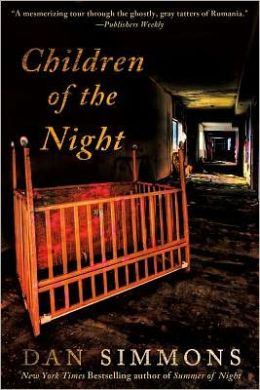
Children of the NightDan Simmons wrote two of my favorite horror novels, Carrion Comfort and Summer of Night, and the audio version of his novel, The Terror, kept me riveted for many weeks during the long winter commute between Champaign and St. Charles last year. When Simmons talks horror, I listen.

Children of the Night was originally published in 1992, when Communist states were collapsing all across Europe and the airwaves were filled with stories of the desperate last days of Communist dictators. Romania, home to the classic fears of Transylvania, became synonymous with horror of a very different kind when western film crews entered bleak Romanian orphanages to expose the cruelty and neglect there. In Children of the Night, Simmons married modern horror and a far more ancient terror:

In a desolate orphanage in post-Communist Romania, a desperately ill infant is given the wrong blood transfusion — and flourishes rather than dies. For immunologist Kate Neuman, the infant’s immune system may hold the key to cure cancer and AIDS. Kate adopts the baby and takes him home to the States. But baby Joshua holds a link to an ancient clan and their legendary leader — Vlad Tşepeş, the original Dracula – whose agents kidnap the child. Against impossible odds and vicious enemies– both human and vampire – Kate and her ally, Father Mike O’Rourke, steal into Romania to get her baby back.

Children of the Night was published on December 11, 2012 by St. Martin’s Griffin. It is 464 pages in trade paperback, priced at $15.99 ($9.99 for the digital edition), and this edition features a brand new introduction by the author.

You can see all of our recent New Treasures articles here.

Rue Morgue Magazine’s 200 Alternative Horror Films You Need to See

Rue Morgue Magazine’s 200 Alternative Horror Films You Need to See

Rue morgues magazine's 200 alternative horror filmsI had a clever title in mind for this post, something about a book you need to see, but the name of the book was so long nothing else would fit. Rue Morgue Magazine’s 200 Alternative Horror Films You Need to See. See what I mean? Damn near had to start a new paragraph just to say it again.

200 Flicks (which we’ll be calling it going forward) is a marvelous little treasure I found on the B&N magazine rack while digging around for the latest issue of Fantasy & Science Fiction. I’m vaguely aware of Rue Morgue magazine (and should probably be moreso, granted), but that wasn’t what caught my eye. No, it was the title, and the fact that this perfect bound “magazine” is an impressive 162 pages.

I flipped through it, and was sold instantly. This is the kind of invaluable reference work I’ll be drawing on for years. It’s packed to the brim with text, with plenty of color stills and crisp reproductions of 200 movie posters and DVD covers. The heart of the book is the carefully-selected collection of well written and informative reviews of overlooked horror films.

A quick check showed many of my favorites are here, including a guilty pleasure or two: Session 9, Let the Right One In, Psycho II, Something Wicked This Way Comes — and plenty more that I’m not familiar with. And isn’t the joy of discovery the true reason you lay your money down for this kind of thing?

The entries are organized alpahbetically, but it’s really something you browse rather than read cover-to-cover. It has numerous lists: 10 Made for TV Terrors You Need to See, 10 Foreign Zombie Films You Need to See, plus lists covering vampire flicks, foreign zombie movies, family fright fests, gore films, slashers, and many more. There are also interviews with directors and film personalities like Guillermo del Toro, Tobe Hooper, Roger Corman, Fred Dekker, Larry Cohen, Stuart Gordon, and others.

The book is so inexpensive (a criminally low $9.99, or $4.99 for the digital version) and so packed with content that the only way it can possibly be a money-making venture is if it’s primarily recycled material from Rue Morgue magazine. Which is fine by me — if the magazine is a fraction as interesting and entertaining, I’ll be getting a subscription.

Read More Read More

New Treasures: IDW’s Popeye

New Treasures: IDW’s Popeye

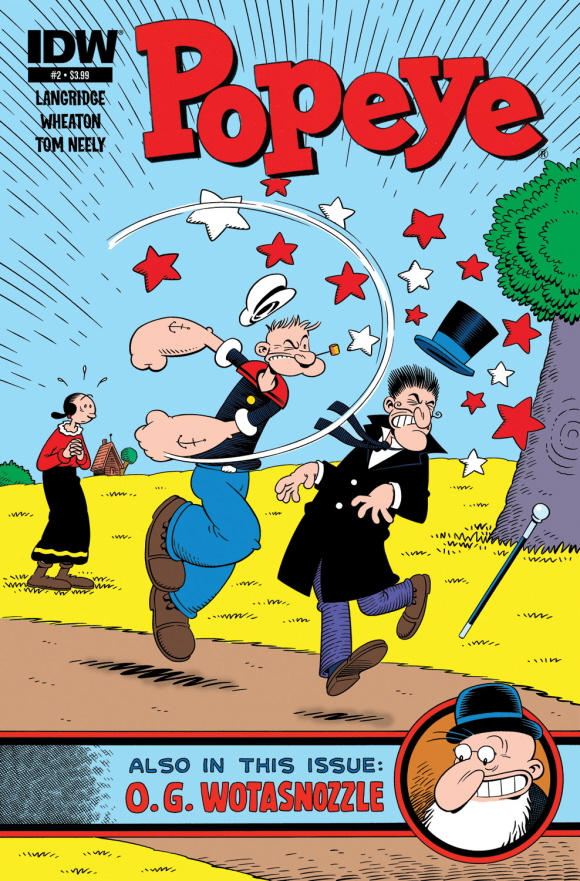
Popeye Issue 2Okay. I’m fully aware that Popeye was not what you expected on a Monday morning here at your online radar for all that’s great and new in modern fantasy. But please, indulge me for a moment.

I buy comics on Saturday, on my way home from the post office. Finally finished with a busy Saturday morning packing and mailing back issues, I reward myself by browsing the stacks of new arrivals at Graham Crackers Comics in St. Charles. My point here is that, when I’m purchasing comics, I’m a bit more prone to impulse buys than I am with other forms of entertainment.

It was just such an impulse that caused me to pick up the first two issues of IDW’s new Popeye comic. Certainly it wasn’t any special affection for E.C. Segar’s character — in fact, I can’t really recall the last time I read Popeye, unless it was in the pages of Rick Norwood’s excellent Comics Revue two decades ago. Probably Bruce Ozella’s clean and dynamic art style in the first issue didn’t hurt — flipping through the pages reminded me immediately of Carl Barks and Don Rosa, and that’s a good thing.

The first issue, a 22-page epic featuring a dangerous quest to a lost island, mysterious fog, a Sea Hag, pirates, and witchcraft, reads like a Carl Barks Uncle Scrooge story too. Except here it doesn’t quite work. It’s funny, sorta, and the art is great, but the whole affair doesn’t really come off.

Fortunately, the second issue is a huge improvement. In fact, it’s a mini-masterpiece. This one is split into two tales — the first a complete farce, as Popeye discovers his girlfriend Olive Oyl is being courted by the smooth-talking Willy Wormwood. Popeye’s crazed attempts to one-up Wormwood — for example, uprooting a 100-year-old elm tree to present to Olive when Wormwood offers her flowers — reveal the essential core of his relationship with Olive. Their love and friendship, such as it is, is based almost wholly on mutual misunderstanding.

The second story, “John Sappo and Prof. O.G. Wotasnozzle and Saffer’s Wife Myrtle,” is even better. In fact, it is a small slice of genius. All three title characters live together in a small house, and all three have simple ambitions: Sappo wants to be left alone to read his paper; Myrtle wants to unceasingly nag her husband; and Prof. O.G. Wotasnozzle desires only to quietly work on his inventions and best his hated rival Prof. Finkelsnop. Naturally, only one can be satisfied at any moment. When Sappo asks Wotasnozzle for an invention that will block out his wife’s nagging, and a peeved Myrtle asks for something to nullify Sappo’s new Jar of Solitude, the result is an ever-escalating battle of invention and counter-invention that leads to hilariously catastrophic results. This is a comic that had me laughing on virtually every page.

Popeye is published by IDW, individual issues are priced at $3.99. Issue #1 was written by Roger Langridge and drawn by Bruce Ozella; Issue 2 was written by Langridge and drawn by Ken Wheaton and Tom Neely. Check it out at a comic shop near you.

New Treasures: Dead Things by Stephen Blackmoore

New Treasures: Dead Things by Stephen Blackmoore

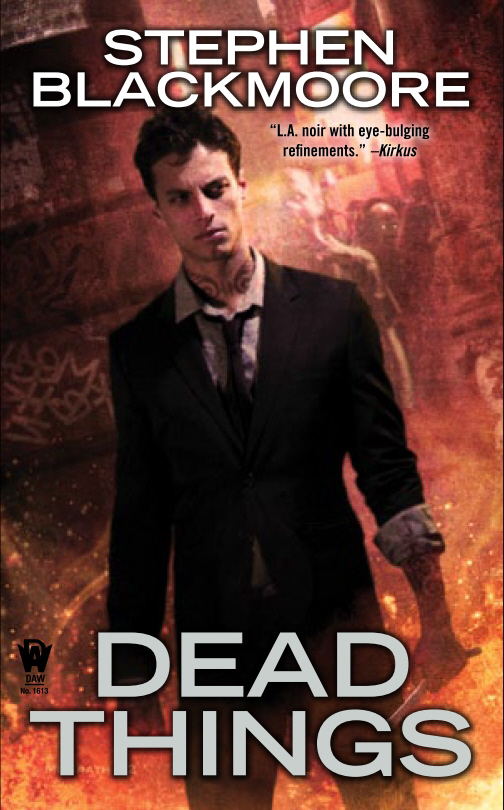
Dead Things-smallI talked about genre mash-ups Monday in my post on The Last Policeman. There’s an obvious one I forgot: hard-boiled detective zombie novels.

Not sure how I spaced on that one. Three titles I’ve covered as New Treasures in the last few months alone have been undead crime novels: Stefan Petrucha’s Dead Mann Running, Tim Waggoner’s The Nekropolis Archives, and Chris F. Holm’s Dead Harvest. As trends go, this one is a little more welcome than most, at least for me. Necromancers and tough-talking private eyes… what can I say, they go together.

The latest entrant into this crowded sub-sub-genre, Stephen Blackmoore’s Dead Things, sounds like it will fit in nicely:

Necromancer is such an ugly word, but it’s a title Eric Carter is stuck with.

He sees ghosts, talks to the dead. He’s turned it into a lucrative career putting troublesome spirits to rest, sometimes taking on even more dangerous things. For a fee, of course. When he left LA fifteen years ago, he thought he’d never go back. Too many bad memories. Too many people trying to kill him.

But now his sister’s been brutally murdered and Carter wants to find out why. Was it the gangster looking to settle a score? The ghost of a mage he killed the night he left town? Maybe it’s the patron saint of violent death herself, Santa Muerte, who’s taken an unusually keen interest in him. Carter’s going to find out who did it, and he’s going to make them pay.

As long as they don’t kill him first.

Dead Things will be published by DAW Books on Feb 5, 2013. It is 295 pages, and priced at $7.99 for both the paperback and digital editions.

Myke Cole’s Shadow Ops: Fortress Frontier On Sale This Week

Myke Cole’s Shadow Ops: Fortress Frontier On Sale This Week

Shadow Ops Fortress FrontierMyke Cole is a class act. Before he launched a career as an internationally celebrated novelist, he did the decent thing: he apprenticed at Black Gate first.

His story “Naktong Flow” appeared in BG 13, and Dave Truesdale at Tangent Online called it “Thoroughly professional… Think Martin Sheen in Apocalypse Now and you’re on the right track.” We attempted to lure him back to our pages with insanely generous offers — his own dressing room, and fresh flowers delivered daily — and even sent the lovely Patty Templeton to interview him, but it was all to no avail. Life as a novelist offered him the one thing Black Gate couldn’t: real money. And respect. And fame. And accolades. And a ton of other stuff, but let’s not dwell on that.

In his essay “Selling Shadow Point,” Myke talks about what it took to submit and sell his first novel, saying “You have to have guts… you have to bite the bullet and take it out to market.” In his case it certainly paid off — his first novel was Shadow Ops: Control Point, which Peter V. Brett called “Black Hawk Down meets the X-Men… military fantasy like you’ve never seen it before.” It was an immediate hit, and the reading public clamored for more. Now Cole has delivered and the second volume of Shadow Ops arrives in book stores this week.

The Great Reawakening did not come quietly. Across the country and in every nation, people began to develop terrifying powers — summoning storms, raising the dead, and setting everything they touch ablaze. Overnight the rules changed… but not for everyone.

Colonel Alan Bookbinder is an army bureaucrat whose worst war wound is a paper-cut. But after he develops magical powers, he is torn from everything he knows and thrown onto the front-lines. Drafted into the Supernatural Operations Corps in a new and dangerous world, Bookbinder finds himself in command of Forward Operating Base Frontier — cut off, surrounded by monsters, and on the brink of being overrun.

Now, he must find the will to lead the people of FOB Frontier out of hell, even if the one hope of salvation lies in teaming up with the man whose own magical powers put the base in such grave danger in the first place — Oscar Britton, public enemy number one…

Shadow Ops: Fortress Frontier was published by Ace Books on January 29, 2013. It is 368 pages and priced at $7.99 for both the paperback and digital versions.

New Treasures: The Last Policeman, by Ben H. Winters

New Treasures: The Last Policeman, by Ben H. Winters

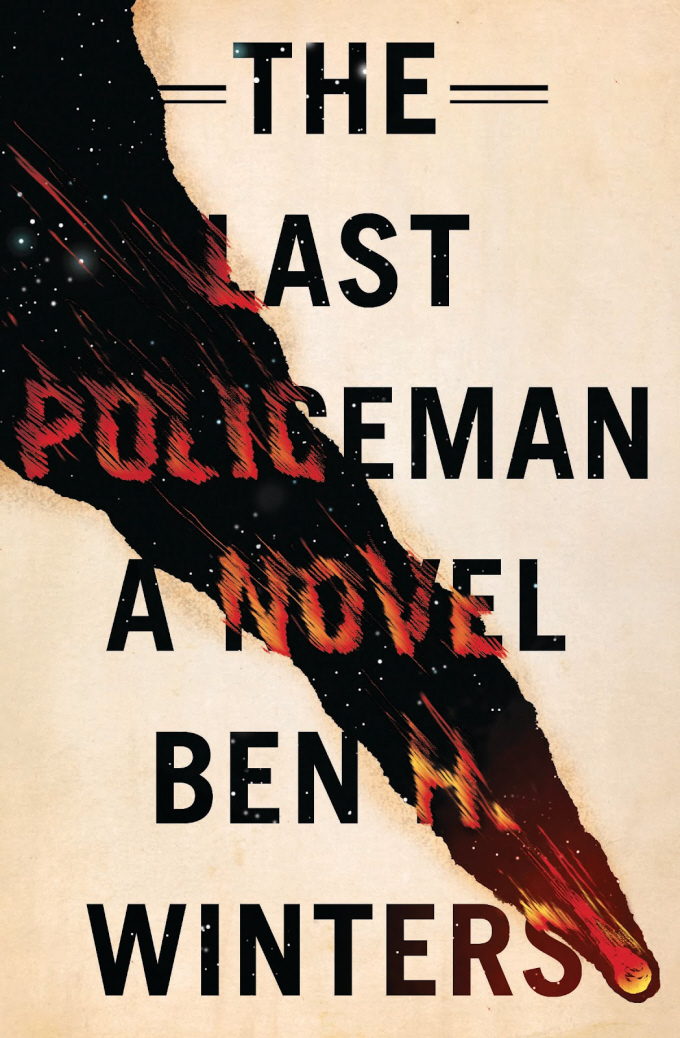
The-Last-PolicemanI enjoy genre mash-ups.  When done right, they highlight the strengths of both genres, and that’s a hard thing to pull off. Think horror-comedies like Ghostbusters or Zombieland, or science fiction mysteries like Asimov’s I, Robot stories. Or zombie westerns like the Bloodlands novels, or Dead Reckoning.

Not every mash-up succeeds, of course. (Did anyone see Seeking A Friend For the End of the World, Steve Carell’s romantic comedy cum apocalypse movie from 2012? No? That’s what I thought.)

But sometimes a mash-up is so brilliant I have to buy it immediately  That’s what happened with The Last Policeman, a police procedural set in Earth’s last days.

What’s the point in solving murders if we’re all going to die soon, anyway?

Detective Hank Palace has faced this question ever since asteroid 2011GV1 hovered into view. There’s no chance left. No hope. Just six precious months until impact.

The Last Policeman presents a fascinating portrait of a pre-apocalyptic United States. The economy spirals downward while crops rot in the fields. Churches and synagogues are packed. People all over the world are walking off the job — but not Hank Palace. He’s investigating a death by hanging in a city that sees a dozen suicides every week — except this one feels suspicious, and Palace is the only cop who cares.

The first in a trilogy, The Last Policeman offers a mystery set on the brink of an apocalypse. As Palace’s investigation plays out under the shadow of 2011GV1, we’re confronted by hard questions way beyond “whodunit.” What basis does civilization rest upon? What is life worth? What would any of us do, what would we really do, if our days were numbered?

Now there’s an original use for an apocalyptic setting. Give me a impending extinction-level event and a relentless investigator too stubborn to give up, and you have my attention. I bought this book after reading the first two paragraphs of the plot summary, and for a jaded book purchaser like me, that’s saying something.

Ben H. Winters is a New York Times best-selling author and an Edgar Award nominee. His last novel was BedbugsThe Last Policeman was published by Quirk Books in trade paperback July 2012. It is 316 pages and priced at $14.95 ($14.95 for the digital edition).

New Treasures: Pirate Freedom by Gene Wolfe

New Treasures: Pirate Freedom by Gene Wolfe

Pirate Freedom-smallI love bargain books. I love pirate books. And I love Gene Wolfe books. So I don’t need to tell you how I feel about bargain pirate novels by Gene Wolfe.

Pirate Freedom was released in hardcover in November 2007, and in trade paperback three years later. It’s a swashbuckling adventure novel — Sci-Fi Weekly called it “straight up adventure in the mold of Robert Louis Stevenson, Rafael Sabatini, or even the Pirates of the Caribbean films” — but as you’d expect from Wolfe, he adds an unexpected twist or two.

It begins in a monastery in Cuba the day after tomorrow, where a boy named Chris realizes he’s not meant for the priesthood, and sets out for the streets of Havana. From there it becomes a tale of time travel and fantasy adventure. The San Francisco summed it up thusly:

Plenty of action, romance, and historical color. Nearly every pirate cliche is given a new spin, from mutinous crews to cursed ships, from beautiful women in disguise to treasure beyond imagining.

Still, I hadn’t gotten around to picking up a copy until this week, when I noticed that Amazon had marked down the price by 60% — to $9.98 for the hardcover, and just $6.40 for the trade paperback. If you’re interested in a copy, act quickly; there are only about half a dozen left.

Pirate Freedom was published by Tor Books. It is 320 pages, and was originally priced at $24.95 for the hardcover, and $15.95 for the trade paperback. The gorgeous cover is by David Grove (click on the image at right for a larger version).

New Treasures: The Complete John Thunstone, by Manly Wade Wellman

New Treasures: The Complete John Thunstone, by Manly Wade Wellman

The Complete John Thunstone-smallIf you’ve been reading Josh Reynolds’s excellent series The Nightmare Men here at Black Gate (And if you haven’t, what’s your deal? It’s packed with monsters, ghosts, and ghoulies, and the stalwart men who face them in dark corridors. I swear, every column is like The Exorcist re-made as an Indiana Jones movie), you know he covered Manly Wade Wellman’s supernatural sleuth John Thunstone last February. Here’s a snippet:

Big and blocky, with a well-groomed moustache and eyes like flint, Thunstone is an implacable and self-described ‘enemy of evil’. He hunts it with the verve of a Van Helsing and strikes with the speed and viciousness that puts Anton Zarnak to shame.

Well read and well-armed against vampires, werewolves and all things dark and devilish, Thunstone seeks out malevolent occult menaces in a variety of locales. The sixteen stories and two novels have settings which range from the steel and glass corridors of Manhattan to the mountains of the rural South, or the pastoral fields of England. He faces off against Inuit sorcerers, demonic familiars and worse things in the name of protecting the Earth and all its peoples from the hungry shapes in the dark that would otherwise devour it and them.

I bet you’re sorry you missed it now. Anyway, Josh also plugged the upcoming volume The Complete John Thunstone from Haffner Press, which he noted would contain “both the short stories AND the two Thunstone novels.”

Sweet! That was worth haunting the Haffner Press website for (not that I wasn’t doing it anyway).  I checked on a daily basis… for months. Man, not for nothing did Stephen Haffner earn his rep as a painstaking craftsman and perfectionist. Just when I’d resigned myself to slipping peacefully into old age without seeing it, two review copies landed on my doorstep (with an impressive thud). Good timing too, as old age is a few weeks away at most.

John Thunstone first appeared in “The Third Cry to Legba” in the November 1943 issue of Weird Tales. This volume collects that story and 15 others, along with the novels What Dreams May Come (1983) and The School of Darkness (1985). It’s a gorgeous package, and I can finally settle in and read Thunstone’s exploits against vampires, werewolves, the diabolical sorcerer Rowley Thorne, and the enigmatic shonokins, a race who claim to have ruled North America before the coming of humans.

The Complete John Thunstone is edited by Stephen Haffner, and was published December 22, 2012. It is 640 pages, and priced at $40. Stay tuned to the Black Gate website, where we’ll announce a contest in which you can win a copy in the next two weeks. In the meantime, you can read additional details at Haffner Press.