Browsed by
Category: New Treasures

New Treasures: Assail by Ian C. Esslemont
New Treasures: Assail by Ian C. Esslemont

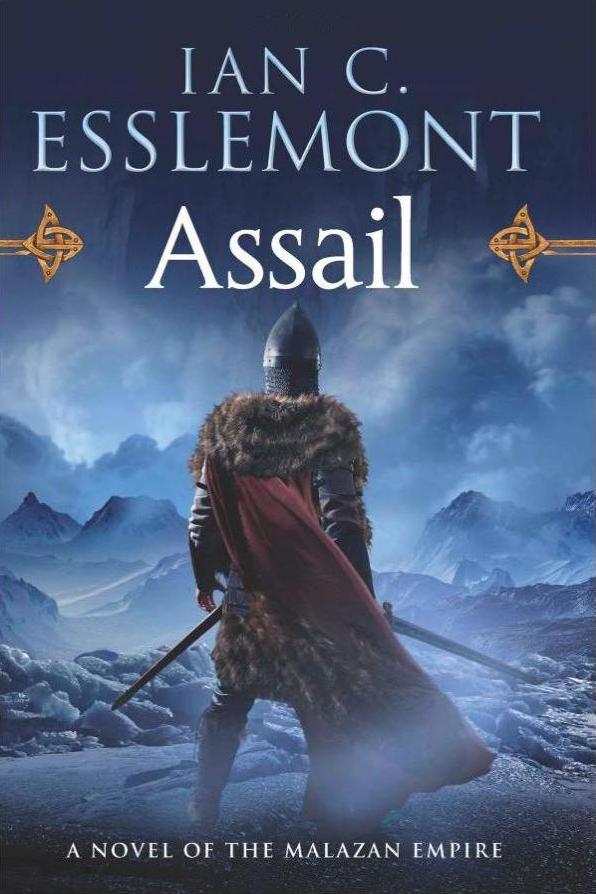
Assail Ian C Esslemont-smallSteven Erikson made a name for himself with his 10-volume Malazan Book of the Fallen series, acclaimed by many as the finest heroic fantasy series of the last few decades. He co-created the world of Malaz with a member of his gaming group, Manitoba author Ian C. Esslemont, who for the past four years has been writing his own novels in the same setting, starting with Night of Knives (2010).

Esslemont has built his own fan base over the years, and the sixth and final novel in his Malazan series, Assail, arrived in hardcover and trade paperback last week.

Tens of thousands of years of ice is melting, and the land of Assail, long a byword for menace and inaccessibility, is at last yielding its secrets. Tales of gold discovered in the region’s north circulate in every waterfront dive and sailor’s tavern, and now countless adventurers and fortune-seekers have set sail in search of riches. All these adventurers have to guide them are legends and garbled tales of the dangers that lie in wait — hostile coasts, fields of ice, impassable barriers and strange, terrifying creatures. But all accounts concur that the people of the north meet all trespassers with the sword. And beyond are rumoured to lurk Elder monsters out of history’s very beginnings.
Read More Read More

New Treasures: Lightspeed Magazine: Women Destroy Science Fiction! Special Issue

New Treasures: Lightspeed Magazine: Women Destroy Science Fiction! Special Issue

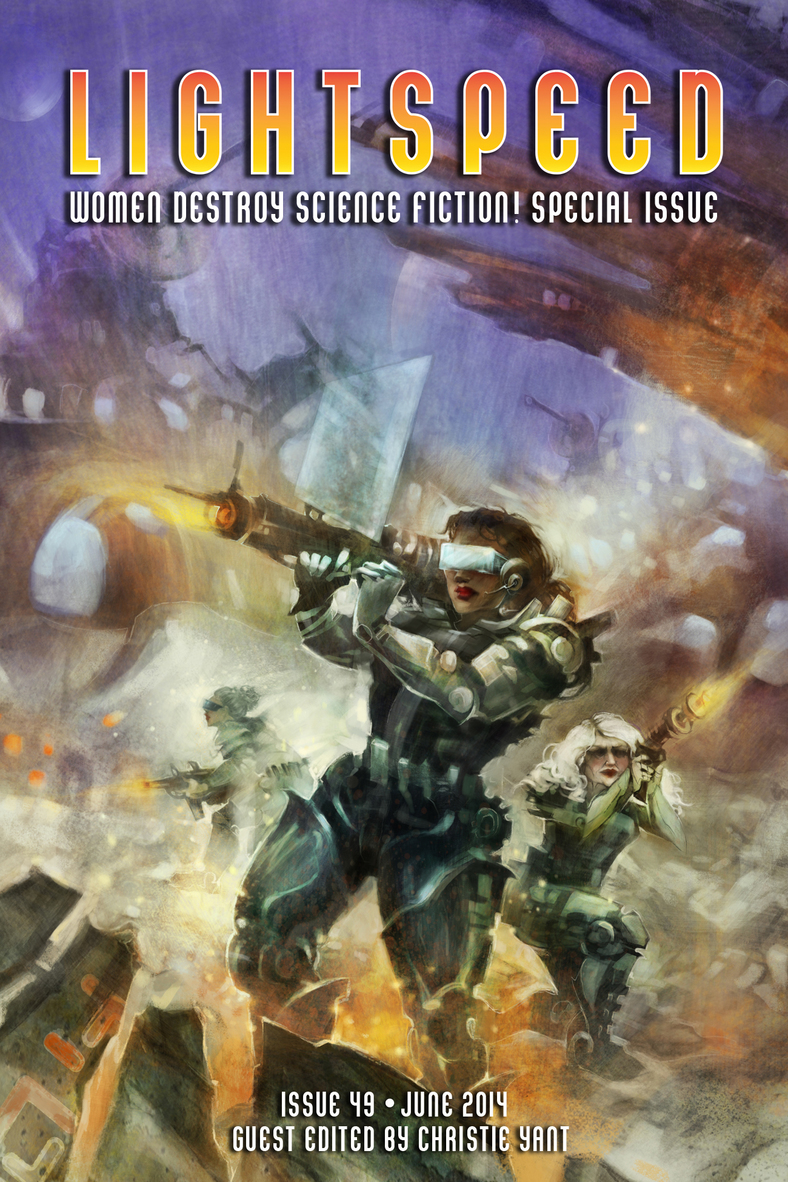
Lightspeed Women Destroy Science Fiction-smallBack in February, John Joseph Adams’s Lightspeed magazine held one of the most successful genre Kickstarter campaigns of the year, raising money for a special Women Destroy Science Fiction! issue. With a modest $5,000 goal, the magazine ended up raising $53,136 before the campaign ended on February 15.

Ambitious Kickstarter projects frequently have a reputation for being late — and I’m not sure I’ve seen many as ambitious as this one. But the issue shipped right on time in early June, and we reported here on the details back on June 5th. Lightspeed is a digital magazine and, as you’d expect, this groundbreaking issue was first made available in digital format. I’m not much of a digital magazine reader, truth be told — I like to read magazines curled up in my big green chair — but I thought I’d eventually make an exception for this one.

But about a week later, on June 14th, I saw a Facebook post from contributor (and occasional Black Gate blogger) Amal El-Mohtar, showing off the print version of the magazine.

Wait, what? There’s a print version? I want it. How do I get it? Amal’s description was tantalizingly cryptic:

My physical copy of Lightspeed Magazine’s Women Destroy Science Fiction arrived! It’s gorgeous, and huge, and I love it so much and can’t seem to stop petting it. It contains “The Lonely Sea in the Sky,” my first (and hopefully not last) piece of science fiction… The print copy contains everything — the interviews, essays, editorials, reprints, flash fiction, and originals. You can’t quite tell from the photo but the book is about 2 inches thick. It really is more of an anthology at this point than it is an issue of a magazine. To reiterate: TWO INCHES THICK.

I knew that I had to have a copy. And as it turned out, it wasn’t very hard to get one: Amazon has them in stock, discounted to $12.77 — less than the cost of an average trade paperback. I ordered a copy on July 3rd and it arrived a week later.

Read More Read More

Future Treasures: The Midnight Queen by Sylvia Izzo Hunter

Future Treasures: The Midnight Queen by Sylvia Izzo Hunter

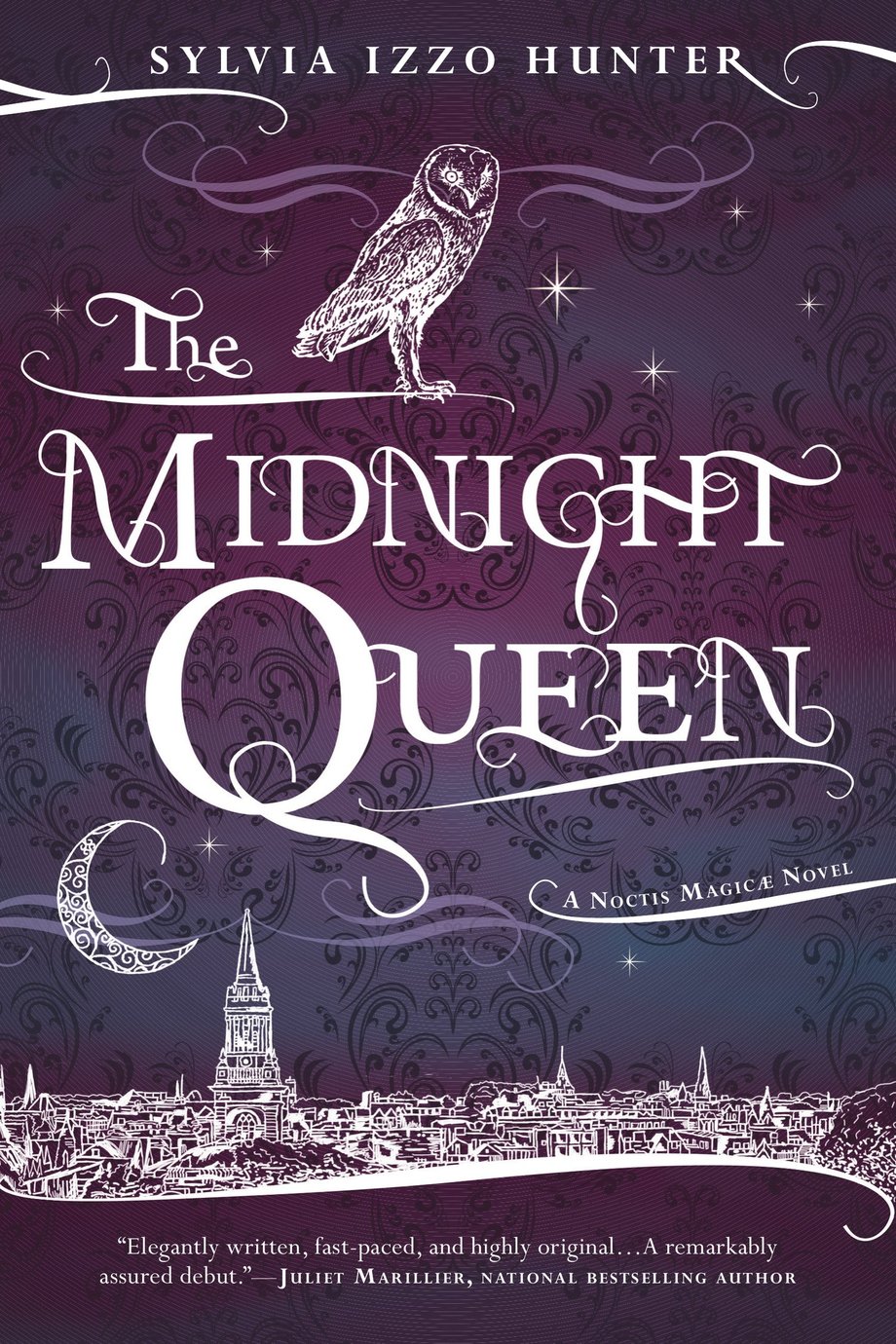
The Midnight Queen-smallIn these post Harry Potter days, it takes a certain authorial courage to set a fantasy novel in a wizarding school. Sylvia Izzo Hunter has done exactly that with her first novel The Midnight Queen, the opening book in the Noctis Magicae series, released next month. I’m intrigued by the book blurb, which hints at an older target audience than Rowling’s series, as well as a hint of romance.

In the hallowed halls of Oxford’s Merlin College, the most talented — and highest born — sons of the Kingdom of Britain are taught the intricacies of magickal theory. But what dazzles can also destroy, as Gray Marshall is about to discover…

Gray’s deep talent for magick has won him a place at Merlin College. But when he accompanies four fellow students on a mysterious midnight errand that ends in disaster and death, he is sent away in disgrace — and without a trace of his power. He must spend the summer under the watchful eye of his domineering professor, Appius Callender, working in the gardens of Callender’s country estate and hoping to recover his abilities. And it is there, toiling away on a summer afternoon, that he meets the professor’s daughter.

Read More Read More

New Treasures: Neil Gaiman’s The Graveyard Book, Volume One, Adapted by P. Craig Russell

New Treasures: Neil Gaiman’s The Graveyard Book, Volume One, Adapted by P. Craig Russell

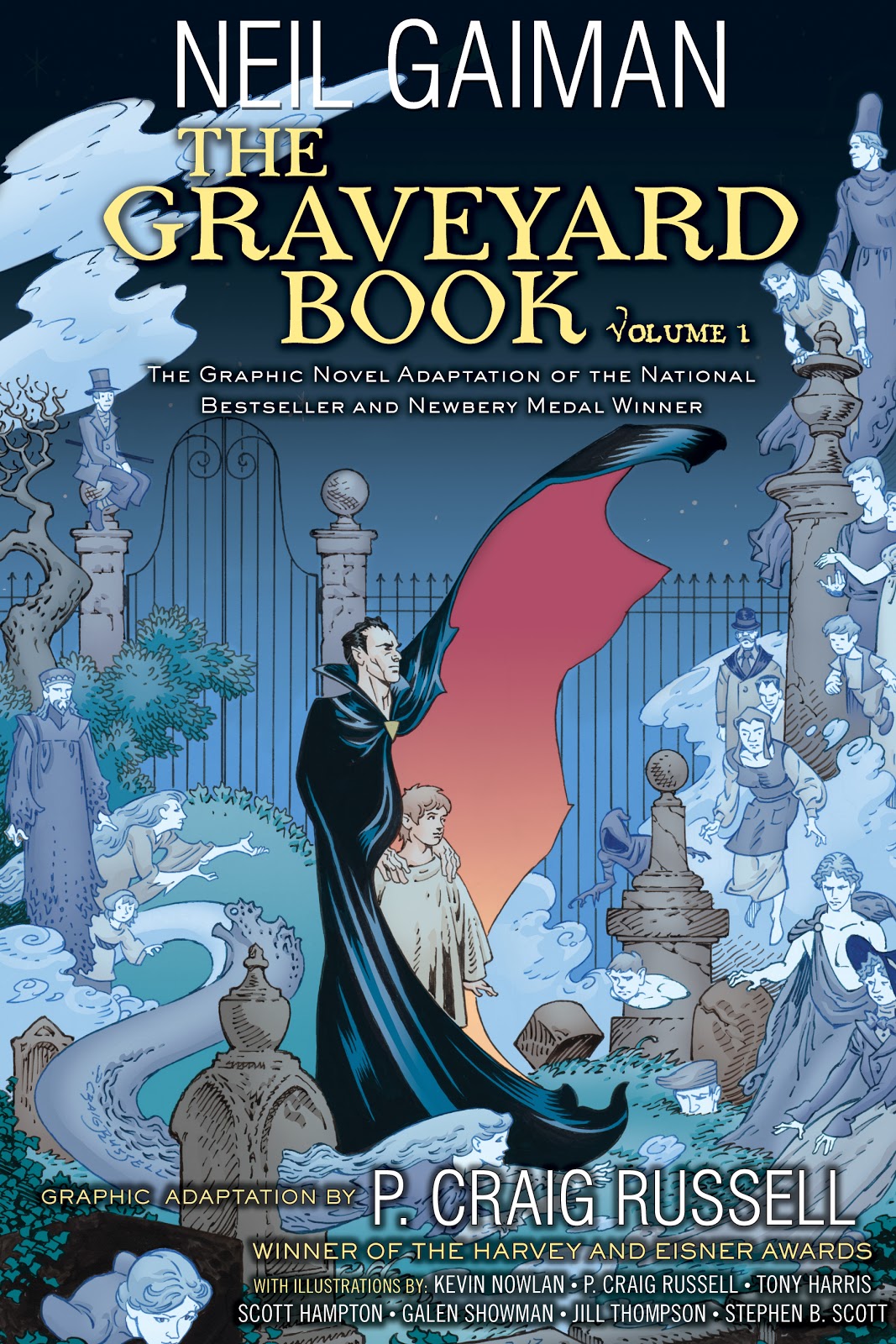
The Graveyard Book Volume One-smallI’ve been a fan of P. Craig Russell’s comic work since his adaptation of Michael Morcock’s Elric: The Dreaming City first appeared in Epic magazine way back in 1979.

Russell did a lot of attention-getting work for Marvel, including Doctor Strange Annual #1 (1976) and a lengthy run on Killraven (1974–1976), before branching out as an independent artist. He returned to Elric several times, first with While the Gods Laugh (Epic, 1981), and Elric of Melniboné (1982–84), a limited series scripted by Roy Thomas from Pacific Comics.

He brought the character to First Comics with Elric: Weird of the White Wolf, and in 1993-95 he worked directly with scripter Michael Moorcock on Elric: Stormbringer (Dark Horse Comics). He also worked with my friend Mark Shainblum on The Chronicles of Corum, an ongoing series from First Comics, in the late 80s.

Russell’s first collaborations with Neil Gaiman were the famous “Ramadan” issue of Sandman (issue #50, 1992), which helped inspire Howard Andrew Jones to create Dabir & Asim, and a story in the Sandman graphic novel Endless Nights. That led to Russell’s first graphic adaptation for Gaiman, his novel Coraline (2008).

Now he’s produced his most ambitious collaboration with Gaiman yet: a two-volume graphic adaptation of The Graveyard Book, the tale of a boy who’s raised by ghosts in a graveyard. The first volume, just released, contains Chapter One through the Interlude, while the upcoming Volume Two contains Chapter Six through to the end.

Here’s the book description.

Read More Read More

New Treasures: The Year’s Best Science Fiction: Thirty-First Annual Collection

New Treasures: The Year’s Best Science Fiction: Thirty-First Annual Collection

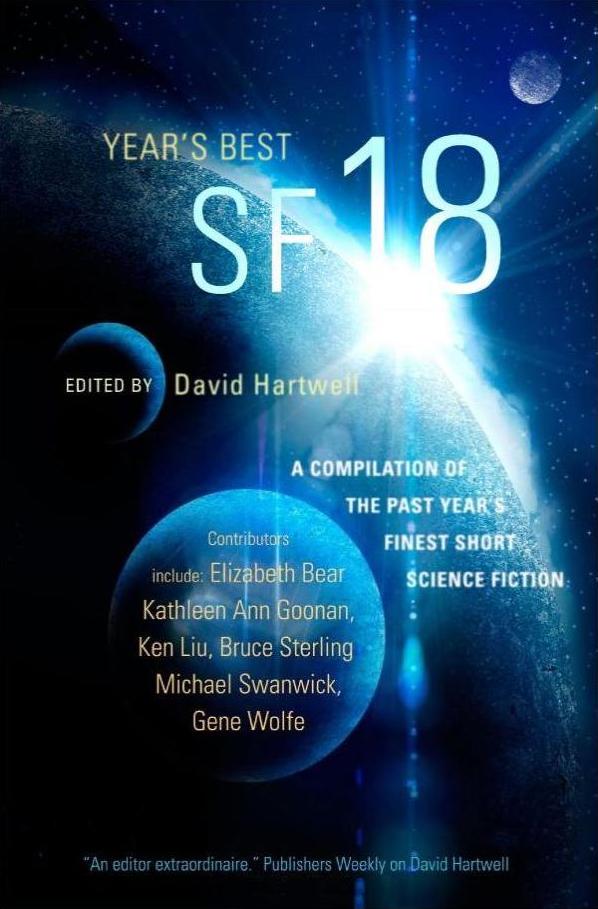
The Year's Best Science Fiction 31-smallIt’s that time of year again. I’ve been reporting here on the annual crop of Year’s Best SF and Fantasy anthologies as they’ve arrived over the summer — including Rich Horton’s sixth (published in June), the eighth volume from Jonathan Strahan (May), and David Hartwell’s eighteenth volume (December 2013).

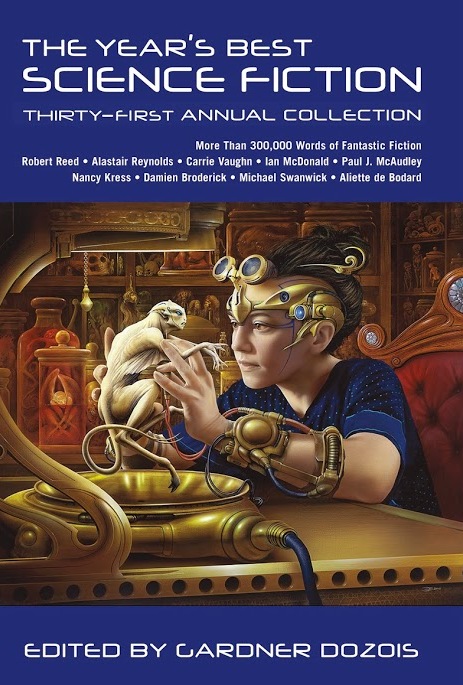
And now at last the great granddaddy of them all arrives: Gardner Dozois’s The Year’s Best Science Fiction: Thirty-First Annual Collection. Arguably the most essential of the lot, it is certainly the most comprehensive and the most irreplaceable. Gardner, the Hugo Award-winning editor of Asimov’s SF for two decades, has been compiling and editing this volume every year without fail since 1984, and his richly detailed annual summation is required reading for anyone who expects to really understand science fiction.

In the new millennium, what secrets lay beyond the far reaches of the universe? What mysteries belie the truths we once held to be self evident? The world of science fiction has long been a porthole into the realities of tomorrow, blurring the line between life and art. Now, in The Year’s Best Science Fiction: Thirty-First Annual Collection the very best SF authors explore ideas of a new world in the year’s best short stories.

This venerable collection brings together award winning authors and masters of the field such as Robert Reed, Alastair Reynolds, Damien Broderick, Elizabeth Bear, Paul McAuley and John Barnes. And with an extensive recommended reading guide and a summation of the year in science fiction, this annual compilation has become the definitive must-read anthology for all science fiction fans and readers interested in breaking into the genre.

The Year’s Best Science Fiction: Thirty-First Annual Collection was published by St. Martin’s Press on July 15. It is 750 pages, priced at $40 in hardcover, $22.99 in trade paperback, and $10.99 for the digital edition. The cover is by Jim Burns.

New Treasures: One Night in Sixes by Arianne ‘Tex’ Thompson

New Treasures: One Night in Sixes by Arianne ‘Tex’ Thompson

One Night in Sixes-smallWe get a lot of review copies every month here at the Chicago rooftop headquarters of the Black Gate global publishing empire. You know what else we get? Press releases, pre-release galleys, PDFs, free Kindle books, stuff like that. We could never leave the office, and still keep you decently posted on the newest fantasy every month.

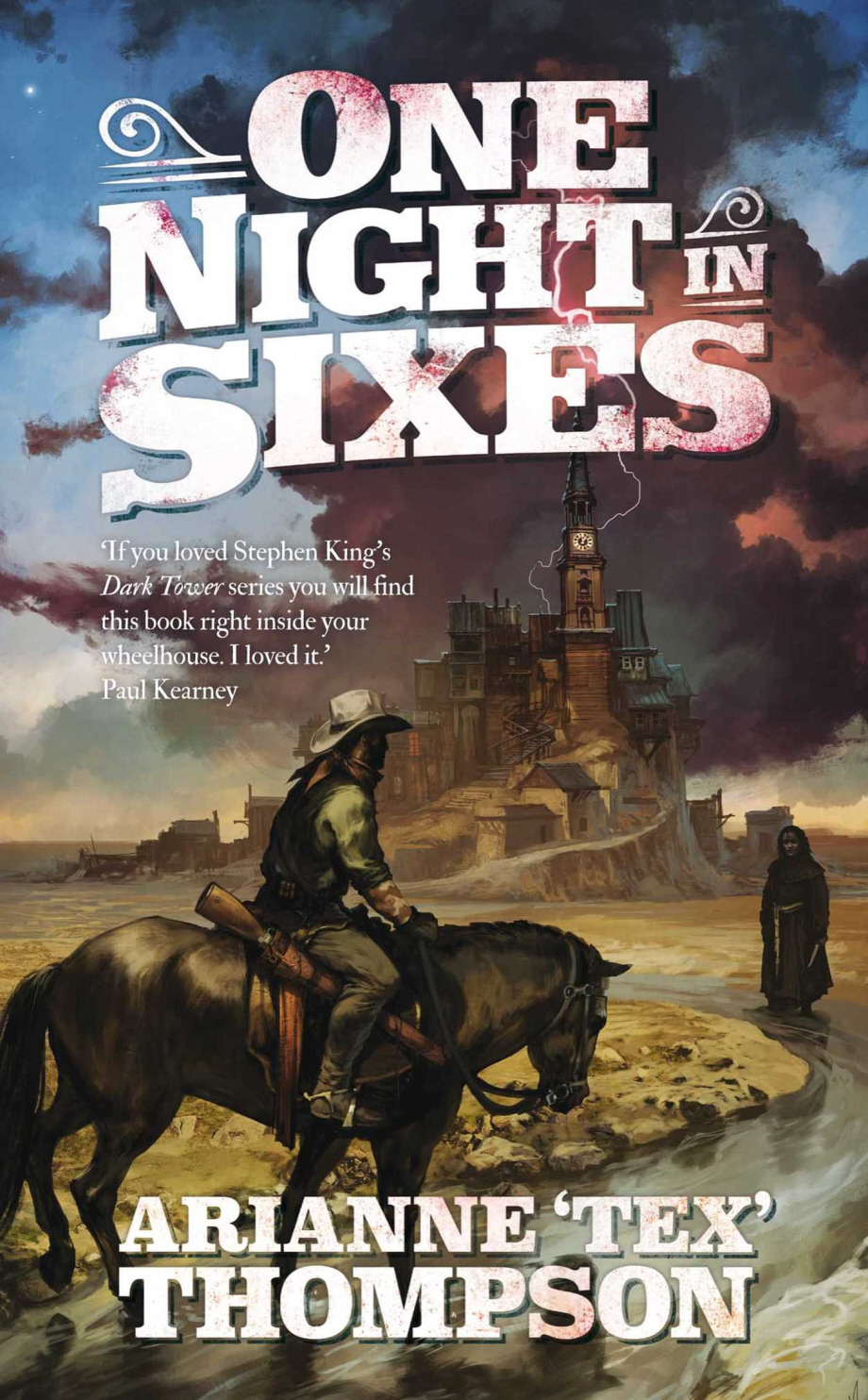
But we don’t aim for decent. We aim to keep you completely informed on the very best in the genre. And that means putting feet on the street, talking to folks in the industry, and visiting to bookstores. Lots and lots of bookstores. Like yesterday, where I found a copy of a fascinating “rural fantasy” from new writer Arianne ‘Tex’ Thompson. I would never have discovered her first novel if I hadn’t been wandering the aisles at B&N, and believe me, it deserves your attention.

The border town called Sixes is quiet in the heat of the day. Still, Appaloosa Elim has heard the stories about what wakes at sunset: gunslingers and shapeshifters and ancient animal gods whose human faces never outlast the daylight.

And the daylight is running out. Elim’s so-called ‘partner’ — that lily-white lordling Sil Halfwick –- has disappeared inside the old adobe walls, hell-bent on making a name for himself among Sixes’ notorious black-market traders. Elim, whose worldly station is written in the bastard browns and whites of his cow-spotted face, doesn’t dare show up home without him.

If he ever wants to go home again, he’d better find his missing partner fast. But if he’s caught out after dark, Elim risks succumbing to the old and sinister truth in his own flesh – and discovering just how far he’ll go to survive the night.

One word of warning: One Night in Sixes is the kind of novel that has a 10-page glossary and 11-page “People and Place” reference in the back. If that scares you, go back to reading E. Nesbit and the Ranger’s Apprentice books. Lightweight.

One Night in Sixes was published on July 29, 2014 by Solaris Books. It is 439 pages (plus all those glossaries and stuff), priced at $7.99 in paperback and $6.99 for the digital edition. The moody and effective cover is by Tomasz Jedruszek.

New Treasures: Broken Souls by Stephen Blackmoore

New Treasures: Broken Souls by Stephen Blackmoore

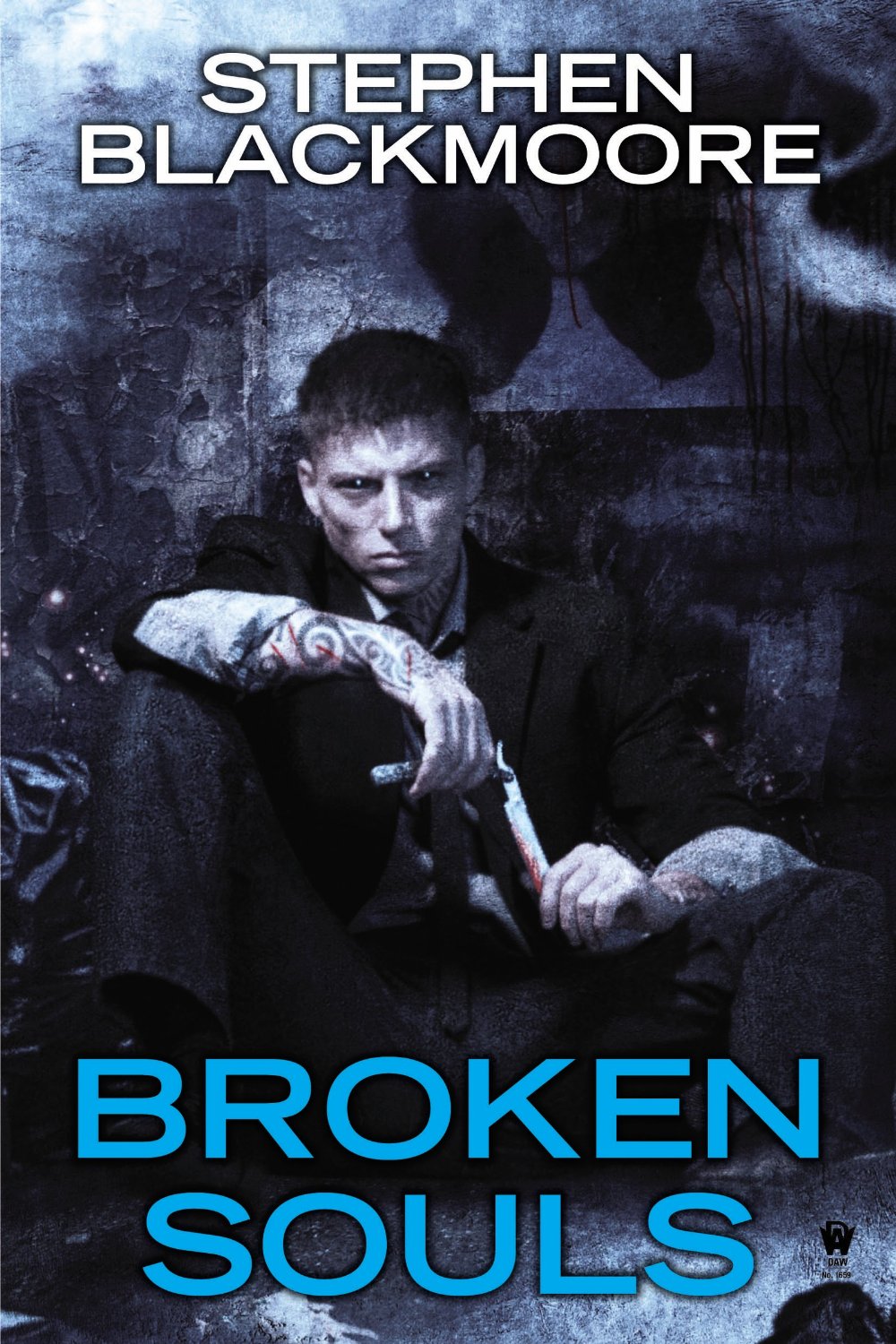
Broken Souls Stephen Blackmoore-smallI covered Stephen Blackmoore’s first hard-boiled detective zombie novel, Dead Things, last February. It was an obvious candidate for a series, and 17 months later a sequel has finally appeared.

This isn’t the first time Blackmore’s written about LA undead. His first novel, City of the Lost (January 2012), featured Joe Sunday, killed by the rival of his crime boss and returned as a zombie to carry on as LA lowlife. If you’re a fan of necromancers, crime novels, or the darker side of LA, Stephen Blackmoore is definitely your guy.

Sister murdered, best friend dead, married to the patron saint of death, Santa Muerte. Necromancer Eric Carter’s return to Los Angeles hasn’t gone well, and it’s about to get even worse.

His link to the Aztec death goddess is changing his powers, changing him, and he’s not sure how far it will go. He’s starting to question his own sanity, wonder if he’s losing his mind. No mean feat for a guy who talks to the dead on a regular basis. While searching for a way to break Santa Muerte’s hold over him, Carter finds himself the target of a psychopath who can steal anyone’s form, powers, and memories. Identity theft is one thing, but this guy does it by killing his victims and wearing their skins like a suit. He can be anyone. He can be anywhere.

Now Carter has to change the game — go from hunted to hunter. All he has for help is a Skid Row bruja and a ghost who’s either his dead friend Alex or the manifestation of Carter’s own guilt-fueled psychotic break. Everything is trying to kill him. Nothing is as it seems. If all his plans go perfectly, he might survive the week.

He’s hoping that’s a good thing.

Broken Souls will be published on Tuesday by DAW Books. It is 264 pages, priced at $7.99 in paperback and $6.99 for the digital version.

New Pulp Delivers its own Occult Anti-Hero in Magee

New Pulp Delivers its own Occult Anti-Hero in Magee

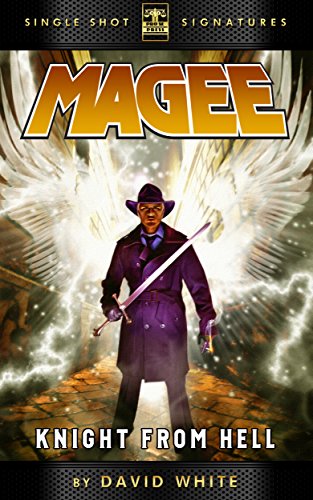
22ca6069f22a20114e9bdbb1f223deb7f3ce43c715119I’ll come right out and admit I have mixed feelings about ebooks. I travel considerably for my day job and don’t mind having portable versions of books I own for quick reference, but the idea of owning books that cannot be found in print editions on my shelves at home irks me. That said, I recognize the market for digital-only titles is steadily growing, particularly among small press publishers. This, of course, is having its impact on the “New Pulp” community. Witness Pro Se Press’s decision earlier this year to discontinue their pulp magazine, Pro Se Presents and replace it with their Single Shot Signatures line of short stories available exclusively as ebooks.

My first sampling of the above is the newly published Magee, Volume One – “Knight from Hell” by David White. At first glance, I was struck by the apparent illustration of publisher Tommy Hancock on the cover, but on second glance I determined it was actually author David White wearing one of Tommy’s trademark hats. Of course, I was wrong on both counts since the illustration actually depicts the anti-hero of the piece, Magee.

Magee, it transpires, is actually the fallen angel Malachi who was exiled from Heaven after a fight over a woman with the archangel Michael. We’ll pause right here and note that David White is not a theologian and plays fast and loose with Christian tradition on such celestial matters. Following that disclaimer, we’ll make mention of the fact that Michael likewise banished the archangel Lucifer from Heaven following a similar fight. It seems that God is an absentee deity in these proceedings as He has abandoned Heaven to putter around in the Garden of Eden for several thousand years now.

Read More Read More

New Treasures: Midnight Thief by Livia Blackburne

New Treasures: Midnight Thief by Livia Blackburne

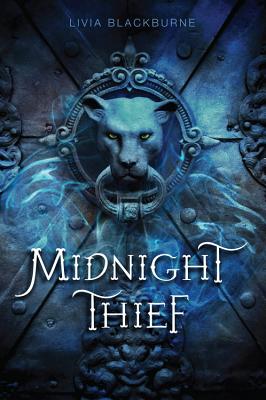
Midnight_thiefMy friend Livia has recently released her first novel, Midnight Thief, with Disney’s Hyperion imprint. I first met Livia at MIT, where she was studying the brain science of reading. She blogs on the topic at her blog, A Brain Scientist’s Take on Writing.

I’ve always been impressed with how much effort she makes to understand the how and why of what makes stories work (see, for example, this post on the anatomy of a death scene), and to use that in her own writing, so it doesn’t surprise me that she’s gone on to sign with a major publisher.

Midnight Thief is a YA novel set in a secondary world of assassins, barbarians, and demon cats:

Growing up on Forge’s streets has taught Kyra how to stretch a coin. And when that’s not enough, her uncanny ability to scale walls and bypass guards helps her take what she needs.

But when the leader of the Assassins Guild offers Kyra a lucrative job, she hesitates. She knows how to get by on her own, and she’s not sure she wants to play by his rules. But he is persistent — and darkly attractive — and Kyra can’t quite resist his pull.

Midnight Thief is available now at Amazon ($13 hard cover and $9.99 ebook), Barnes & Noble (at an identical price), and independent book sellers.

New Treasures: The Great Glass Sea by Josh Weil

New Treasures: The Great Glass Sea by Josh Weil

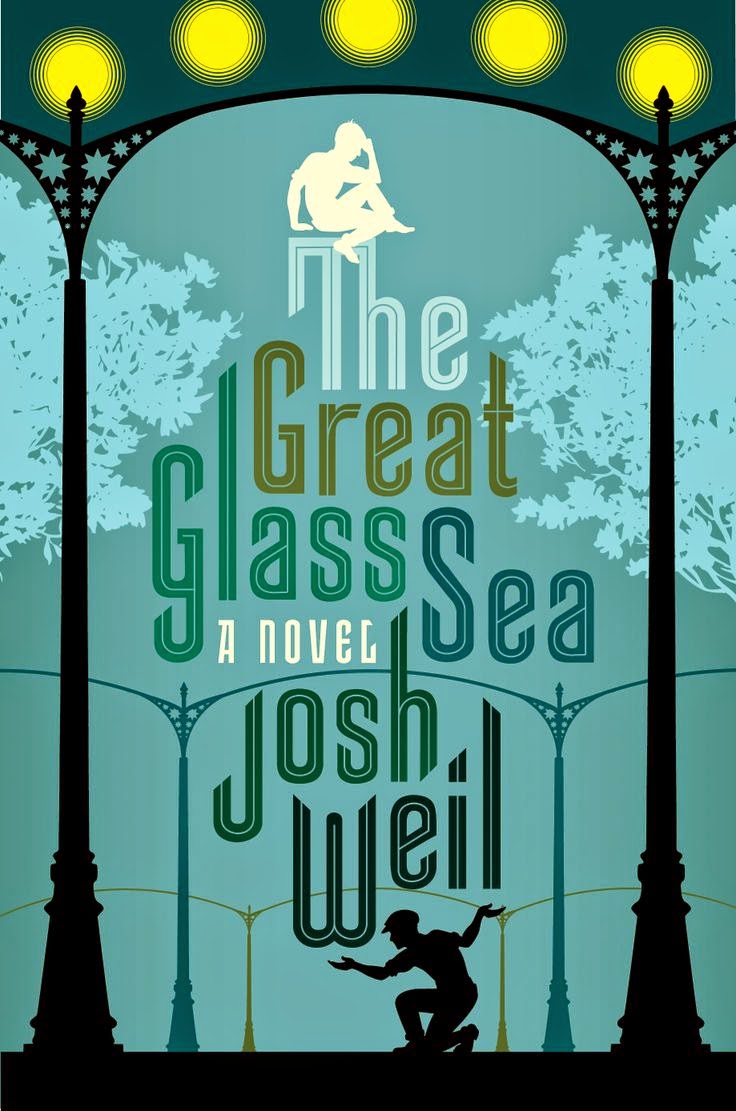
The Great Glass Sea Josh Weil-smallIn his first novel, acclaimed short story writer Josh Weil draws on tales of Slavic folklore to tell the story of two brothers in a near-future dystopian Russia. Lauren Groff, author of The Monsters of Templeton, said “The Great Glass Sea is our world made uncanny; the Russian countryside of folktale and literature turned darkly luminous, menacing, and brittle.” Sounds promising to me.

Twins Yarik and Dima have been inseparable since childhood. Living on their uncle’s farm after the death of their father, the boys once spent their days helping farmers in fields, their nights spellbound by their uncle’s tales. Years later, they labor together at the Oranzheria, a sea of glass erected over acres of cropland and lit by space mirrors that ensnare the denizens of Petroplavilsk in perpetual daylight. Now the twins have only work in common — stalwart Yarik married with children, oppressed by the burden of responsibility; dreamer Dima living alone with his mother, wistfully planning the brothers’ return to their uncle’s land.

But an encounter with the Oranzerhia’s billionaire owner changes their lives forever and soon both men find themselves poster boys for opposing ideologies that threaten to destroy not only the lives of those they love but the love that has bonded them since birth.

Josh Weil is the author of the the novella collection The New Valley, which won the Sue Kaufman Prize for First Fiction and a “5 Under 35” Award from the National Book Foundation. His fiction has appeared in Granta, Esquire, Agni and One Story. He lives in the foothills of the Sierra Nevadas.

The Great Glass Sea was published by Grove Press on July 1, 2014. It is 474 pages, priced at $27 in hardcover and $14.99 for the digital edition.