Browsed by
Category: Movies and TV

Adventure on Film: Navigator: A Medieval Odyssey

Adventure on Film: Navigator: A Medieval Odyssey

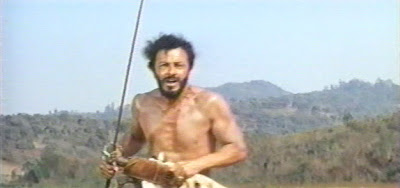
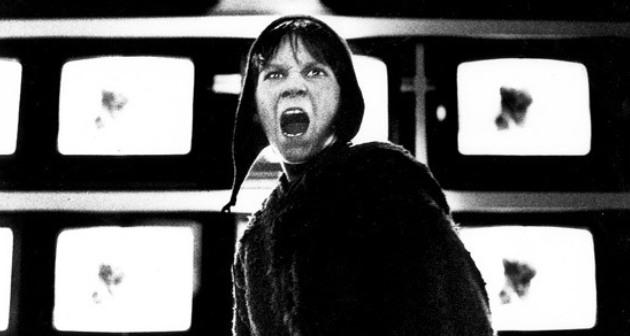
Under a fearsome black-and-white moon, a boy, perhaps twelve, enters a fever dream of navigator2orange-fired torches whirling down infinite chasms, of men clambering up a towering church steeple, of skies moving too quickly for thought. The boy’s careworn, grubby face melts into black and white rippling water, and the nightmare — if nightmare it is — comes to a sudden end.

Welcome to Fourteenth Century Cumbria, a snowy, monochromatic waste, all bare rock and snowdrifts and blackwater lakes. In a hardscrabble mining village, young Griffin, plagued by his apocalyptic visions, waits for his idol, Connor, to return from a visit to the wider world. But even before Connor’s return, all talk is of death, for the Plague is come, marching inexorably closer.  The villagers quickly convince themselves that only a holy quest can save them, and on the slimmest of evidence — Griffin’s disjointed prognostications — Connor, Griffin and four other men set off, bound for a mineshaft so deep (it is said) that it leads straight to the other side of the world. Griffin’s band brings a copper cross that they hope to mount to a titanic cathedral as an offering, a Cumbrian plea to stave off death itself.

Griffin finds the mineshaft right enough, together with a mechanical battering ram with which the men bore a hole to the far side of reality. And what do they find once there?  Twentieth century New Zealand.

Read More Read More

Goth Chick News: Stand by With the Defibrillator Paddles: We’re Flatlining Again…

Goth Chick News: Stand by With the Defibrillator Paddles: We’re Flatlining Again…

flatlinersOkay, follow me on this one for a minute…

It’s 1990 and you, along with a small group of your fellow-medical-student friends (the majority of whom are smoking hot by the way) start daring each other to prove the claims made by patients who have had near-death experiences.  You figure the best way to do this is to take turns being brought medically to the brink of death in your underwear, then being shocked and mouth-to-mouthed back into existence by your friends.

If you can now imagine that two of your friends are a pre-24, post Lost Boys Keifer Sutherland and a pre-Eat, Pray, Love, post Pretty Woman Julia Roberts, then this next bit will come as no surprise.

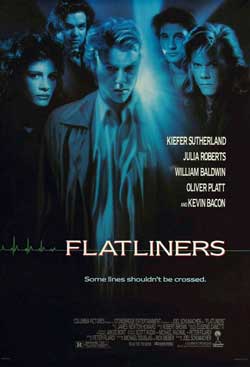
This week reports started springing up all over that the latest film to get laid out on the cinematic operating table and given a Hollywood defibrillation is Joel Schumacher’s 1990 supernatural horror Flatliners.

The original film followed medical students played by Keifer Sutherland, Julia Roberts, William Baldwin, Oliver Platt and Kevin Bacon, all of whom were overly interested in seeing what happens during the afterlife, but whose experimentation dragged a bunch of supernatural baggage into the here-and-now.

On the positive side, this reboot has attracted the talent of Swedish filmmaker Niels Arden Oplev (of the original, sub-titled version of The Girl With the Dragon Tattoo).  Oplev will be working from a script written by Ben Ripley, who is better known for his Source Code screenplay than the latter two Species sequels.

With that talent, a Flatliner remake will likely equal — if not surpass — the 1990 version.  As much as I love the original, it’s more for the abundance of eye-candy than the campy, often painful storyline and dialog.

Read More Read More

The Real Argo: The Lord of Light Film and the Lost Jack Kirby Sketches

The Real Argo: The Lord of Light Film and the Lost Jack Kirby Sketches

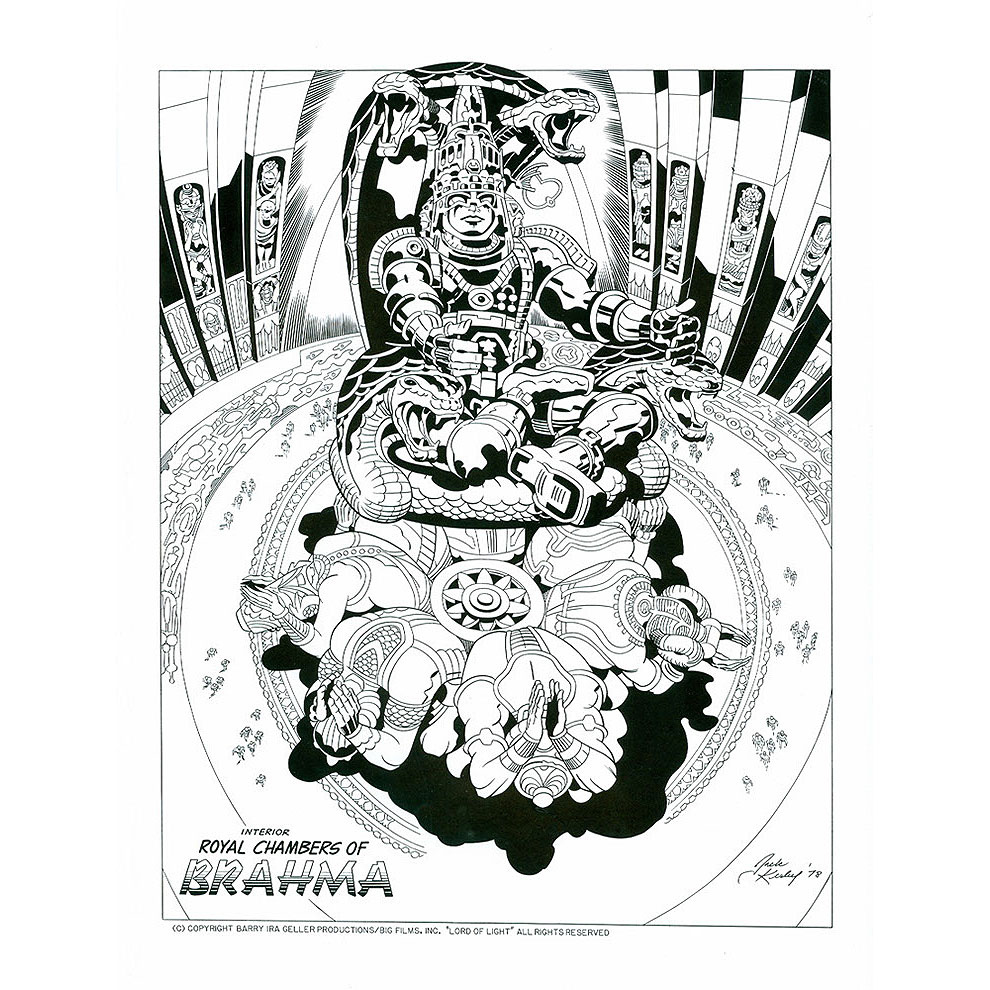
Kirby-Lord-of-LightI was pleased to see Ben Affleck’s Argo win the Academy Award for Best Picture last night. It was the best film I saw last year, although I admit I didn’t see all the nominees.

But I was a little annoyed during parts — especially scenes which included dialog from the fake movie, Argo. It’s clear that Affleck (and his characters) have little respect for science fiction, as the script and its source material are portrayed as utterly terrible sci-fi at its pretentious worst.

Which was particuarly annoying because the source material in question — the script used by real-life CIA agent Tony Mendez, the man portrayed by Affleck — is based on my all-time favorite SF novel, Roger Zelazny’s brilliant Lord of Light. The man who wrote the original Wired article that inspired Argo, Joshua Bearman, explains it this way:

Argo was the name Tony gave to a script that was in turnaround and sitting in a pile at [makeup artist John] Chambers’ house. That script was called Lord of Light and had been adapted from a successful Roger Zelazny science-fantasy novel of the same name. A small-time self-starting dreamer… named Barry Geller had optioned Zelazny’s book himself and raised money to get the project started. He hired Jack Kirby to do concept art and Chambers to make the alien masks. But the whole project fell apart…

It was hard to see the script for Lord of Light merciliessly skewered for laughs in Argo. Still, something good has come out of it all. As a result of the recent spotlight on the film, Jack Kirby’s original sketches — thought lost for years — have come to light.

BuzzFeed has reproduced eleven of the sketches in an article by Richard Rushfield. If you’re a Kirby fan, or a fan of Zelazny’s SF masterpiece, they are well worth a look. Check them out here.

Adventure on Film: Mirror, Mirror

Adventure on Film: Mirror, Mirror

Stand back, comrades, the gloves are off.mirror-mirror-440

I hate this movie.

Unfortunately — and somewhat confusingly — I also love it.

Help.  I’m so confused!

Riddle me this: why exactly did Mirror, Mirror’s good king have to marry the wicked stepmother queen? Perhaps it’s because she’s so smartly played by Julia Roberts, but no: the reason given, in a sassy prologue, is that the king discovered certain things (martial skills) that he could not teach his daughter. Therefore, he had to marry anew, his first wife having conveniently died giving birth to Snow White.

Let’s stop right there. This is an example of what we Black Gate critics call GLOSSING OVER. In certain circles, it’s also called DELIBERATE OBFUSCATION.

The information that the king must remarry is presented so fast, and with all the confidence of a logical fait accompli, that we are supposed to ignore its hypocrisy, stupidity, and outright vapidity and quickly move on.

Well. This lil’ critic ain’t fallin’ for it.

Read More Read More

Goth Chick News: The Vatican Tapes – We’re Nothing If Not Timely

Goth Chick News: The Vatican Tapes – We’re Nothing If Not Timely

image004Earlier this week, we learned Pope Benedict XVI resigned his post, reportedly due to “advanced age.”

But could the real reason have anything to do with a misplaced video of a botched exorcism?

Okay, probably not. But as a new pope must be found, so too has a new director been recruited for a long-awaited exorcism tale from Lakeshore Entertainment.

Tuesday Lakeshore released a statement indicating Mark Neveldine, one half of the directing duo behind Gamer, Ghost Rider: Spirit of Vengeance and the two Crank films, will be at the helm of Lakeshore’s possession project, The Vatican Tapes, but without his usual co-director Brian Taylor. James Marsh (Man on a Wire) was in the director’s chair for a while, but dropped out for unknown reasons; advanced age perhaps?

It’s been nearly three years since I’ve heard anything new about the movie, but as far as I can determine the plot line remains the same. The Vatican Tapes follows a series of events depicted on a tape leaked from the Vatican displaying an exorcism that goes horribly wrong. Christopher Borrelli (Con Air, Armageddon) is scripting based on a story envisioned by he and Chris Morgan, but no cast is attached yet and IMDB still lists it as “in development.”

Read More Read More

The Last Dinosaur Chomps Your Nostalgia on Warner Archive DVD

The Last Dinosaur Chomps Your Nostalgia on Warner Archive DVD

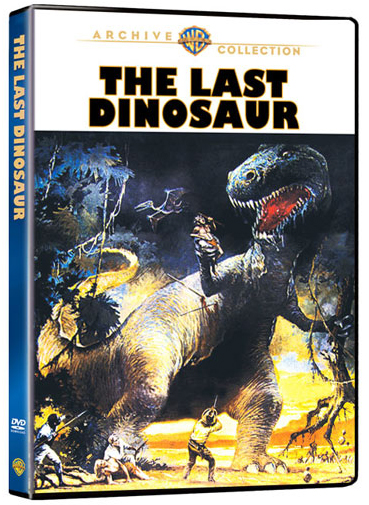
Last Dinosaur Warner Archive DVDIt follows that if I write about The Bermuda Depths and its manufacture-on-demand DVD release, I must also write about its sister film, the dinosaur-hunting marvel of a Saturday afternoon dreamland, 1977’s The Last Dinosauralso available on MOD DVD from Warner Archive. “Richard Boone vs. a T. Rex in a Primeval World.” You don’t need a large marketing team to work on your movie if you have a tagline like that.

The Last Dinosaur is a 1950s giant monster movie filmed in the 1970s and filtered through the visual effects style of 1960s Japanese special effects (tokusatsu) films. If that sentence gives you a frisson of joy, then the movie won’t disappoint. And The Last Dinosaur is a touch better than that description suggests, with a solid script and an excellent main character who can carry the outrageousness of a giant monster movie and make it seem like Moby Dick.

Touring around the ‘net looking for reviews of The Last Dinosaur will mostly unearth “bad movie snark” having a laugh over its economical special effects. You won’t find much of that here: I think The Last Dinosaur is a top-shelf B-budgeted “lost world” film that delivers all it should, occasional chuckles and groans included. Make all the sly comments you want about the “man-in-suit” monster effects — and there are some amusing moments — they still offer far more creativity and fun than most CGI-driven contemporary movies. Compare The Last Dinosaur to anything from SyFy and you’ll see the talent we lost when the Machines won the war.

Shot in Japan at the same time Amicus Productions in the U.K. was making their Edgar Rice Burroughs adaptations (The Land That Time Forgot, At the Earth’s Core, The People That Time Forgot), The Last Dinosaur sports a similar style that captures the spirit of ERB within a contemporary setting. It’s the best Edgar Rice Burroughs adaptation not actually based on one of his novels; if Burroughs were alive and writing in the 1970s, he might have written something just like this.

Read More Read More

Did Entertainment Weekly Reveal that Benedict Cumberbatch is Playing Khan?

Did Entertainment Weekly Reveal that Benedict Cumberbatch is Playing Khan?

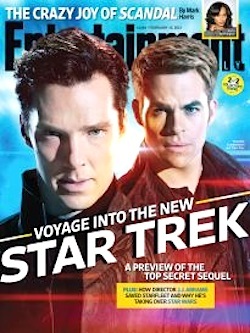
Entertainment Weekly Star TrekIn a sharp-eyed bit of investigative reporting, Tor.com has reproduced screenshots from the Entertainment Weekly Back Issues store that name the villain in the upcoming J.J. Abrams film Star Trek Into Darkness as Khan.

As we reported back in December, speculation has been rampant around just whom Benedict Cumberbatch will be playing in the new film. IMDB originally listed his character as Gary Mitchell, the Enterprise officer who becomes an all-powerful psychic loonie in one of the show’s earliest and best episodes, “Where No Man Has Gone Before.” Rumors that he was playing Khan, the genetically-engineered supervillain originally portrayed by Ricardo Montalban in the episode “Space Seed” and the film Star Trek II: The Wrath of Khan, eventually led the otherwise tight-lipped Cumberbatch to deny it.

As shown by Tor.com however, screen captures for the February 15 cover-dated issue of Entertainment Weekly allow you to select one of two covers, the “Spock & Kirk” cover, or the “Kirk & Khan” version.

EW hastily deleted the notations, and the latest version of the page gives no such identifiers.

In its current cast list, IMBD now lists Cumberbatch as playing “Khan (rumored),” and Alice Eve as playing Dr. Carol Marcus, Kirk’s ex-flame and baby mama from Star Trek II.

The latest Super Bowl TV trailer for the film has been posted on YouTube. Star Trek Into Darkness is directed by J. J. Abrams, and is set for release on May 17, 2013. As we reported in January, Abrams was also selected as the director for the next Star Wars film.

Meanwhile, there’s no truth to the rumor floating in fan circles that J.J. Abrams will also be tapped as the new pope.

Rue Morgue Magazine’s 200 Alternative Horror Films You Need to See

Rue Morgue Magazine’s 200 Alternative Horror Films You Need to See

Rue morgues magazine's 200 alternative horror filmsI had a clever title in mind for this post, something about a book you need to see, but the name of the book was so long nothing else would fit. Rue Morgue Magazine’s 200 Alternative Horror Films You Need to See. See what I mean? Damn near had to start a new paragraph just to say it again.

200 Flicks (which we’ll be calling it going forward) is a marvelous little treasure I found on the B&N magazine rack while digging around for the latest issue of Fantasy & Science Fiction. I’m vaguely aware of Rue Morgue magazine (and should probably be moreso, granted), but that wasn’t what caught my eye. No, it was the title, and the fact that this perfect bound “magazine” is an impressive 162 pages.

I flipped through it, and was sold instantly. This is the kind of invaluable reference work I’ll be drawing on for years. It’s packed to the brim with text, with plenty of color stills and crisp reproductions of 200 movie posters and DVD covers. The heart of the book is the carefully-selected collection of well written and informative reviews of overlooked horror films.

A quick check showed many of my favorites are here, including a guilty pleasure or two: Session 9, Let the Right One In, Psycho II, Something Wicked This Way Comes — and plenty more that I’m not familiar with. And isn’t the joy of discovery the true reason you lay your money down for this kind of thing?

The entries are organized alpahbetically, but it’s really something you browse rather than read cover-to-cover. It has numerous lists: 10 Made for TV Terrors You Need to See, 10 Foreign Zombie Films You Need to See, plus lists covering vampire flicks, foreign zombie movies, family fright fests, gore films, slashers, and many more. There are also interviews with directors and film personalities like Guillermo del Toro, Tobe Hooper, Roger Corman, Fred Dekker, Larry Cohen, Stuart Gordon, and others.

The book is so inexpensive (a criminally low $9.99, or $4.99 for the digital version) and so packed with content that the only way it can possibly be a money-making venture is if it’s primarily recycled material from Rue Morgue magazine. Which is fine by me — if the magazine is a fraction as interesting and entertaining, I’ll be getting a subscription.

Read More Read More

The Weird of Oz Gabs About Groundhog Day

The Weird of Oz Gabs About Groundhog Day

groundhog dayIn this day-after-Groundhog-Day edition of “The Weird of Oz,” I’ll consider how — and why — the 1993 film Groundhog Day has quietly joined the ranks of American classics.

First, let me quickly situate this film with regard to how it warrants discussion on a website devoted to fantasy media (an interesting issue David E. Harris raised in his post of December 26, 2012). Although billed as a comedy, and by no means a traditional fantasy or supernatural tale, it does fall under the umbrella of speculative fiction.

Tolkien, in his essay “On Fairy-Stories,” noted that all imaginative fiction begins by posing a question: “What if?” He offers the example of someone imagining a green sun: “To make a Secondary World inside which the green sun will be credible, commanding Secondary Belief, will probably require labour and thought, and will certainly demand a special skill, a kind of elvish craft.”*

How would the world be different given the changed variable(s)? The “what if” question puts the speculative into speculative fiction. What if ghosts are real? What if werewolves existed? What if a ghost, a werewolf, and a vampire shared a flat? What if corpses began rising from the dead? What if an alien lord traveled through time and space in a British police call box?

Groundhog Day’s premise is that the protagonist wakes one morning to discover the day he just lived is repeating itself. What if a person were caught in a time loop so that he kept living the same day over and over, never aging yet retaining all his memories?

Read More Read More

Poetry in Action: The Return of the Mucker by Edgar Rice Burroughs

Poetry in Action: The Return of the Mucker by Edgar Rice Burroughs

Return of the Mucker FrazettaThis upfront: The Return of the Mucker is less effective a novel than last week’s topic, The Mucker. The strange genre-mashings of the first book give way to the more familiar settings of the American southwest and northern Mexico. The Return of the Mucker plays as an outright Western for most of its length, and offers nothing as lunatic as samurai cannibals. As a story, it doesn’t hold together as well as The Mucker, getting weighed down with too much plot “business” while the first book stripped away extraneous aspects the farther the story advanced until it came down to only the hero and heroine, Billy Byrne and Barbara Harding.

Yet The Return of the Mucker is still a strong work that glosses over its shaky plot elements with a breakneck action finale, fitting developments of Billy Byrne’s personality that merge together his extremes, and one of Burroughs’s most intriguing characters: a hobo-poet hero named Bridge.

Burroughs’s working title for The Mucker’s sequel was Out There Somewhere, the name of a poem that inspired the character of Bridge. (More about that later.) Burroughs submitted the novel to All Story in March 1916, soon after completing it. Editor Thomas Newell Metcalf purchased the story immediately, and the first of five installments appeared two months later under its more marketable title. The Return of the Mucker was published in hardcover in 1921 from A. C. McClurg as Part II of a volume simply called The Mucker.

When the story begins, Billy Byrne is no longer “the mucker.” ERB makes that clear as a cloudless blue sky in the second paragraph: “Billy Byrne was no longer the mucker.” Barbara Harding cured Byrne of his criminal life and coarse ways: everything that defines the now outdated slang term “mucker.” But Billy Byrne surrendered his love for Barbara so she could marry William Mallory at the conclusion of the first book, and he’s now a man without direction — or a complete personality. If he isn’t the mucker, and he’s not with the woman who changed him, what is he?

Read More Read More