Browsed by
Category: Movies and TV

The Worst Fantasy Films of All Time

The Worst Fantasy Films of All Time

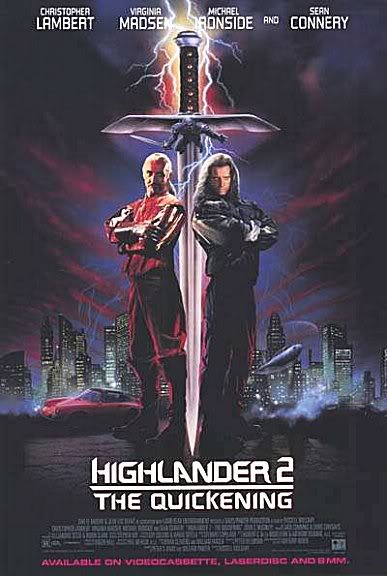
Highlander II The Quickening-smallWatch out, my friends. This weekend there is a storm a’blowing! The Hobbit: The Desolation of Smaug is in theaters, and I don’t know if I’ve ever seen so much angst among the fantasy lovers of the world.

Personally, I really enjoyed both Hobbit movies, just as I loved The Lord of the Rings movies. Hell, at this point Peter Jackson could make a movie about the struggles of union workers in ancient Moria and I’d go see it.

I understand every movie (and every book) has flaws, but some people are absolutely livid about Jackson’s rendition of The Hobbit on the big screen. I feel it’s my duty as a fellow fantasy-phile to point out how awful these movies could have been under different management.

There is an entire industry of bad fantasy movies out there. Maybe if we take a stroll back through history, we’ll gain a little perspective. So here I give you, my list of Least Best Fantasy Movies.

Read More Read More

A History of Godzilla on Film, Part 1: Origins (1954–1962)

A History of Godzilla on Film, Part 1: Origins (1954–1962)

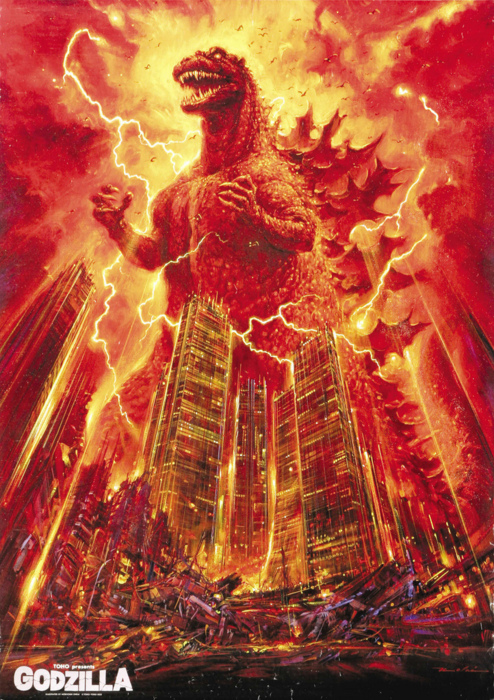
Return of Godzilla 1984 PosterOther Installments

Part 2: The Golden Age (1963–1968)
Part 3: Down and Out in Osaka (1969–1983)
Part 4: The Heisei Era (1984–1997)
Part 5: The Travesty and the Millennium Era (1996–2004)
Addendum: The 2014 Godzilla

With the release of the teaser trailer for the upcoming Godzilla from Warner Bros. and Legendary Pictures, a decade of cinematic silence has come to an end. Godzilla last appeared in 2004 in the Japanese movie Godzilla: Final Wars, which Toho Studios intended as the monster’s final bow before going on sabbatical. It’s the longest break in the iconic monster’s career, and regardless of what happens next, the forthcoming Godzilla ’14 is a reason for G-fans to celebrate. Maybe stomp a few cities. The trailer makes San Francisco look particularly stomp-able.

At this point, we only know as much about Godzilla ’14 as we’ve seen in the teaser. But it was an exciting glimpse that at least assured fans the new movie would not repeat the horrible mistakes of the first American attempt at a stateside Godzilla, the 1998 Roland Emmerich disaster.

This is the first of five (projected) installments covering the history of Godzilla on film, written and condensed for a broad audience. I hope these articles will help readers who have only a passing relationship with Godzilla — the general knowledge from pop culture osmosis — see the unusual variety of one of the longest and most durable film franchises in history. Many Black Gate readers are probably familiar with much of the information I’ll provide in these articles, but since I’ll also sling around my own opinions about the movies mixed in with the history, Godzilla fans may find parts of this worthwhile … if perhaps only to ignite arguments.

Read More Read More

The Cartoon Revolution Will No Longer Be Televised

The Cartoon Revolution Will No Longer Be Televised

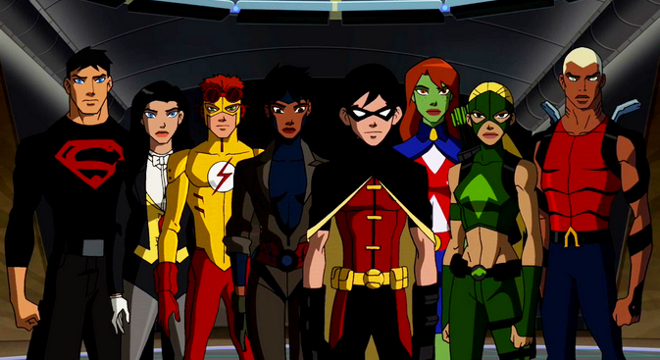
Young-JusticeI hadn’t really kept up on children’s TV cartoon programming, not since I was part of the target demographic for it back in the ‘80s. As a young adult, I checked out the Batman series now and again, impressed by how well done it was. I became minorly obsessed with The Tick, because that was just a wonderful parody send-up of the whole superhero milieu I grew up in. The Simpsons crossed my radar, of course. But that’s about it.

I’ve been watching a lot of cartoons lately, because I have a daughter who’s almost five and a son who’s nearly three. And I’ve been pleasantly surprised. It turns out that television programming for kids has enjoyed something of a Renaissance in the last decade or so, similar to its counterpart programming for mature audiences.

But enjoy it while you can, because that era may be coming to an end…

Read More Read More

Everything Bad Makes a Puzzle: Some Thoughts on Everything Bad is Good For You

Everything Bad Makes a Puzzle: Some Thoughts on Everything Bad is Good For You

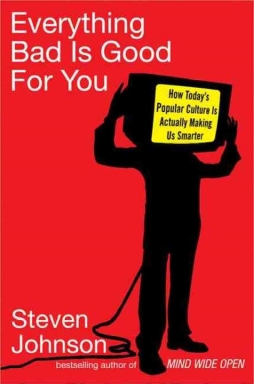
Everything Bad Is Good For YouThere’s a certain kind of structure I’ve lately begun to notice in certain novels. These books read like puzzles, telling one story directly and overtly while implying a second story, or highly variant reading of the first story, through carefully-placed gaps, contradictions, and seemingly-irrelevant details. Throwaway references in highly-disparate points of the book might imply a completely different way to read at least the plot and often the tone or theme. It’s something Gene Wolfe does a lot; other examples I’ve noticed lately are Joyce Carol Oates’ The Accursed, Helen Oyeyemi’s White is For Witching, and Caitlín Kiernan’s The Red Tree. I’d been trying to work out what to make of this ‘puzzlebook’ technique, when as it happened I read a completely different book that seemed to have something to say about this structure — among many other things.
Steven Johnson’s 2005 non-fiction book Everything Bad Is Good For You is an argument about the structure and cognitive benefits of popular culture. Johnson suggests that video games, for example, sharpen certain kinds of problem-solving skills, and in general that the experience of games, TV shows, the internet, and to an extent film represents an engagement with increasing complexity. Most fascinating to me were his discussions of TV and of the way TV’s grown more structurally complex over the past few decades. He seems to me to have not only accurately identified how televised stories have changed but also by extension to have suggested how storytelling generally may be changing. And that in turn perhaps implies a broader context for the ‘puzzlebooks’ I seem to be coming across more and more often.

Read More Read More

Goth Chick News: Godzilla Geek Out – More on the First Trailer for 2014 Remake

Goth Chick News: Godzilla Geek Out – More on the First Trailer for 2014 Remake

Godzilla 2014 Poster 2-smallFifteen years ago a horrific monstrosity was loosed on an unsuspecting public. It was huge and ghastly and made you want to avert your eyes.

And it starred Matthew Broderick.

Yes, I am referring to the 1998 “American” remake of Godzilla, which outraged fans nicknamed  G.I.N.O., an acronym for “Godzilla in Name Only,” to ensure it would never be confused with the original source material.

To be fair, there were two good things about the film. One, even with an estimated budget of $130M it did at least break even in the US, pulling in $136M. Second, TriStar Pictures was able to keep all the velociraptor special effects guys employed (they had recently been laid off following the release of Jurassic Park: Lost World in 1997).

However what happened this week may finally eradicate the revulsion from our collective memories.

As my co-worker Ryan Harvey announced on Tuesday (by jumping up and roaring “out loud with him at the top of my lungs”… while at work), Legendary and Warner Brothers released the trailer for their 2014 Godzilla reboot and it looks pretty epic. Considering how long it took me to actually access it, there is clearly a whole lot of interest in seeing what will happen with the iconic monster this time around.

Monsters‘ special effects guru, Gareth Edwards writes the story and directs an eclectic cast including Elizabeth Olsen (Kill Your Darlings), Bryan Cranston (Breaking Bad), Aaron Johnson (Kick-Ass) and Juliette Binoche (The English Patient).

Read More Read More

My Favorite Dragons

My Favorite Dragons

Dragonslayer poster-smallDragons.

These creatures of legend have captivated our imaginations from the dawn of time. A staple of fantasy literature and culture, they embody power, majesty, and perilous danger.

I’d like to share with you some of my favorites, in no particular order.

Smaug (The Hobbit, J.R.R. Tolkien)

Ah, old Smaug. Wrecker of dwarven homes and stealer of treasures. I can still remember the rapture with which I read this book as a child, with all Bilbo’s misadventures leading him toward an epic confrontation with this ancient wyrm.

Without a doubt, Smaug triggered a fascination with dragons that has lasted my entire life. And now with The Hobbit movies coming out, I can re-live that joy in its full splendor on the big screen.

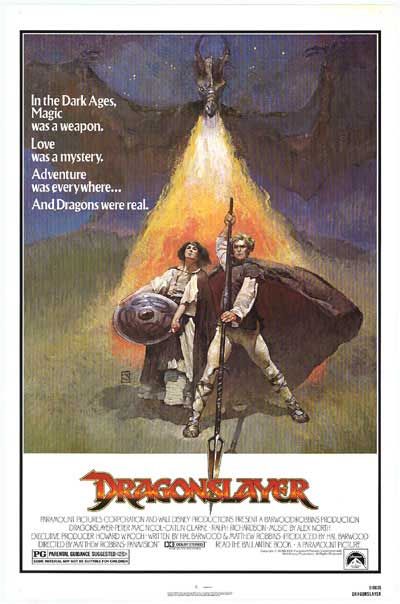
Vermithrax Pejorative (Dragonslayer, Touchstone Pictures)

I saw this movie as a kid, fresh off my love-affair with Smaug. Even though we see precious little of the beast until the final act, just the sounds of its breath rising from the ground and the reactions of the various characters to its presence fill the movie with a wonderful sense of anticipation.

And the final battle between wizard and dragon is pretty damned good for its time. Definitely, a diamond in the rough.

Read More Read More

Roar for Victory! The Godzilla ’14 Trailer Is Here and Life Is Good

Roar for Victory! The Godzilla ’14 Trailer Is Here and Life Is Good

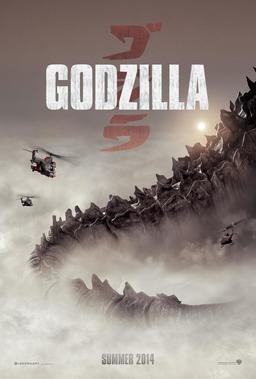
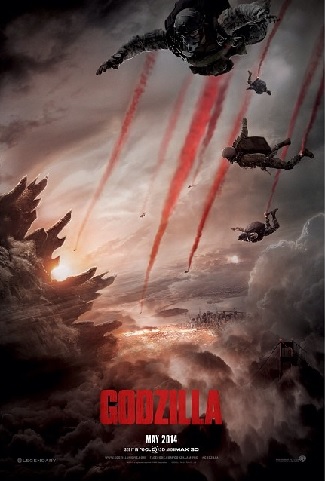
godzilla 2014 poster-smallTHE TRAILER IS HERE AND YOU SHOULD BE WATCHING IT.

You might not have noticed it, because I’ve only had a few opportunities to discuss it at Black Gate (here and here), but Godzilla is sort of a huge big damn bloody deal to me.

Well, Godzilla is just plain huge to anybody, especially if you are in its way.

That’s why I hovered over my keyboard today at 10 a.m., hands palsied, awaiting the premiere of the first teaser trailer for the new Hollywood Godzilla from director Gareth Edwards. And… when the camera at last found the great lengths of the Japanese leviathan looming through the rubble of its devastation, and the beast let loose the legendary roar… I also roared out loud with him at the top of my lungs.

I was at work, mind you. Some impulses cannot be stopped. We’re a loose workplace, fortunately. They expect weird actions from their writers.

There’s no need to describe the trailer further — you can behold it for yourself — except to say that using György Ligeti’s “Requiem for Soprano, Mezzo-Soprano, 2 Mixed Choirs and Orchestra” for the HALO-drop opening is perfect. This music is best known for its use as the “monolith theme” in 2001: A Space Odyssey, and is anything more monolithic than Godzilla? (As a hardcore Stanley Kubrick fan as well, this slammed my geek-meter up to “Do Not Pull This Lever Again.”)

Although the trailer leaves many open questions, as any early teaser trailer should (will Walter White have to move the cook now that a monster has stomped it?), it does show that Gareth Edwards and company have created a genuine interpretation of the figure of Godzilla.

This is crucial: there are many different Godzilla interpretations since the beast first crashed onto Japanese screens in 1954. Godzilla has served as a nuclear metaphor, a force of nature, a butt-kicking anti-hero, a child friendly superhero, and a near-demonic force. All of these are legitimate interpretations of Godzilla, who can absorb many concepts and channel many human emotions. I prefer some versions to others, but as a dedicated G-fan, I can find some enjoyment in all of them.

Read More Read More

Star Trek: Nemesis, One Generation’s Final Frontier

Star Trek: Nemesis, One Generation’s Final Frontier

NemesisposterLet it be known that I missed the release of Star Trek: Nemesis because, in 2002, I was busy shepherding the next generation of science fiction fans into this wondrous, weary world. Eleven years later, I finally have the time to rectify that deficiency.

If the initial appeal of Star Trek (the TV series) was interstellar adventure coupled with wear-it-on-your-sleeve humanism, the long term attraction has proven to be much like that of visiting extended family, the kind of affable clan where reunions are always a treat.  Even if the vehicle in question is a stinker (Star Trek: The Motion Picture et al), a certain pleasure remains simply in spending a few hours in the company of trusted, far-flung friends.

Sure enough, good company is the chief pleasure of the Next Generation’s final outing. Nemesis proves to be a convoluted, shadowy film that trots out any number of sci-fi standbys (baddies in stiff vinyl costumes, fearsome ships much larger than the Enterprise, and diplomatic missions fraught with duplicity and danger), but it’s not by any means a disaster. Gone are the bright scarlet and black uniforms of old; now that the crew has aged a bit, a more somber black-and-heather-blue attire holds sway. Perhaps this is metaphorical? More than a few of our old friends do seem to be feeling the miles. Two exceptions: newlyweds Deanna Troi and Will Riker both look better than ever. Actors Mirina Sirtis and Jonathan Frakes are lucky people; age has brought out a rugged sturdiness to their familiar faces.

Read More Read More

This Will Be On The Test

This Will Be On The Test

Treasure IslandI don’t know whether it’s the controversy over the character Turiel in the upcoming The Hobbit: The Desolation of Smaug, but there’s been a big swell of interest lately in the Bechdel Test. You know what that is, right? Generally applied to movies and TV shows, it determines whether women are represented equitably. In order to pass the test,  there must be two female characters who have names; they must at some point speak to each other; they must speak about something other than men. Seems simple.

I remember my father once telling me that Treasure Island had no women in it. He seemed to think this was a good thing. He was wrong, of course, except that he was also right. What he didn’t realize was that the film he was familiar with had no women, but that wasn’t also true of the book. Jim Hawkins does have a mother.  We could argue, however, that the film guys got it right, since Mrs. Hawkins does little or nothing to forward the plot.

So Treasure Island, whether print or celluloid, fails the Bechdel Test.

Most films/shows don’t pass the test, even the ones we fantasy and SF lovers love the most. Big Bang Theory doesn’t pass, even though there are three named female characters (and not because Penny, as my friend Jim Hines has pointed out, has no last name). Stargate passes, at least SG1 – they were smart to make the doctor a woman, since that gives plenty of room for non-guy related conversation. It’s been a while, but I believe that Star Trek: Voyager passes (between Captain Janeway, B’lanna Torres, and Seven-of-Nine) and TNG as well – remember, the doctor’s a woman.

Read More Read More

The Resurrection of Dr. Mabuse

The Resurrection of Dr. Mabuse

DRMABUSEDVDDRMABUSEONESHEETNorbert Jacques’s Weimar Republic criminal mastermind, Dr. Mabuse has proven a potent allegorical figure for communicating the chaos of socio-economic collapse.

From the original Roaring Twenties figure of Jacques’s fiction and Fritz Lang’s epic two-part silent film and its Depression-era sequel to the character’s rebirth, which book-ended the rise and fall of the Berlin Wall and the beginning of the modern police state with its intricate and intrusive surveillance systems, Mabuse’s long cinematic history incorporates Expressionism, film noir, krimi, Euro-trash, and now modern independent film.

Ansel Faraj is the ambitious young man who has brought Dr. Mabuse into the twenty-first century. A mere twenty-one years old, Faraj has already written and directed twenty-five independent films for his Hollinsworth Productions over the past seven years. Dr. Mabuse, newly released on DVD, shows a surprising polish and sense of artistry rarely found in the work of young filmmakers.

Most surprising is how well Faraj makes use of his modest budget to the film’s overall advantage, instead of its detriment. The Spartan production values assist in creating the dreamlike quality of the film. This can best be appreciated by watching the film in its entirety. Judging the results by the trailer fails to do justice to the neo-Expressionistic mood Faraj has managed to capture here.

Read More Read More