Browsed by
Category: Role Playing Games

MASHED: A Korean War MASH RPG

MASHED: A Korean War MASH RPG

Mashed Mark Plemmons-small

“Keep in mind that you can’t take that many well-educated, highly intelligent people and restrict them to live in an area the size of a football field and not expect some very odd and unusual things to happen.”

So said former Korean War helicopter pilot Ed Ziegler, in a quote that starts off MASHED’s early Gameplay section and gives a hint of what the following pages hold in store.

‘MASH’ is a historical acronym that stands for ‘Mobile Army Surgical Hospital,’ though it was popularized by the M*A*S*H film and television series, which may very well be where you first learned of it. The game acknowledges M*A*S*H as a good source of inspiration for your table, but is not based directly on it, thus avoiding any messy trademark or copyright issues. Instead, MASHED content comes from dozens of historical works and military manuals. Fortunately, since they are the same sources as those used by the M*A*S*H producers, the ‘feel’ of the game can be very much like that of the show itself, mixing light comedy, gallows humor, and mature situations.

The core rules are based on Vincent and Meguey Baker’s Apocalypse World (Meguey is also credited as a developmental editor on this book), and inspired by other Powered by the Apocalypse games such as Jason Morningstar’s Night Witches. If you’re familiar at all with the PbtA engine, you’ll have a good idea of how the rules work.
Read More Read More

Modular: Fox Trot Plays Dungeons & Dragons

Modular: Fox Trot Plays Dungeons & Dragons

FoxTrot_OrlandoBill Amend’s Fox Trot is a comic strip that ran daily from 1988 into 2006, then switched to a Sunday-only format. Still around today, it tells the story of the Fox family. Dad Roger is a loveable goober who wishes he was better at golf and chess. Mom Andy is the common sense core of the family unit. Sixteen year old Peter is a wannabe athlete, with fourteen year old Paige a typical teenage girl. And ten year old Jason lives to torment Paige and is a school geek. He’s got a pet iguana named Quincy who acts like, well, an iguana, but can really be the center of a strip.

The dynamics and shifting alliances of the three kids are instantly relatable to anyone who grew up with at least one sibling. as Calvin and Hobbes’ creator Bill Watterson wrote in the introduction to the first collection:

Fox Trot particularly captures the Machiavellian nature of adolescents. The balance of power between Peter, 16, Page, 14 and Jason 10, is a constantly bartered commodity, and alliances are fragile and short-lived. No collusion will survive an opportunity to get a sibling in trouble, and hesitant parents are goaded with the cry of, ‘Punish him! Punish him! Ground him! Ground him!’

Meanwhile, the challenges of parenting and marriage are amply represented by Roger and Andy. It’s one of my all-time favorite strips and with my nine year old son going through all my collections, I’m enjoying the Fox family all over again.

Jason is a Black Gate kid. His interests are all over pop culture: Star Wars, Star Trek, Lord of the Rings, horror (he loves Halloween, to his family’s pain), Christmas lists, Indiana Jones (even Young Indiana Jones) and cultural tropes such as westerns and Sherlock Holmes. Naturally, being a brainy geek, he’s into Dungeons and Dragons, usually playing with his best friend, Marcus. One rainy spring break, Paige found herself lured into playing D&D with Jason.

Read More Read More

Modular: Tabletop Terror in the Tomb of Annihilation

Modular: Tabletop Terror in the Tomb of Annihilation

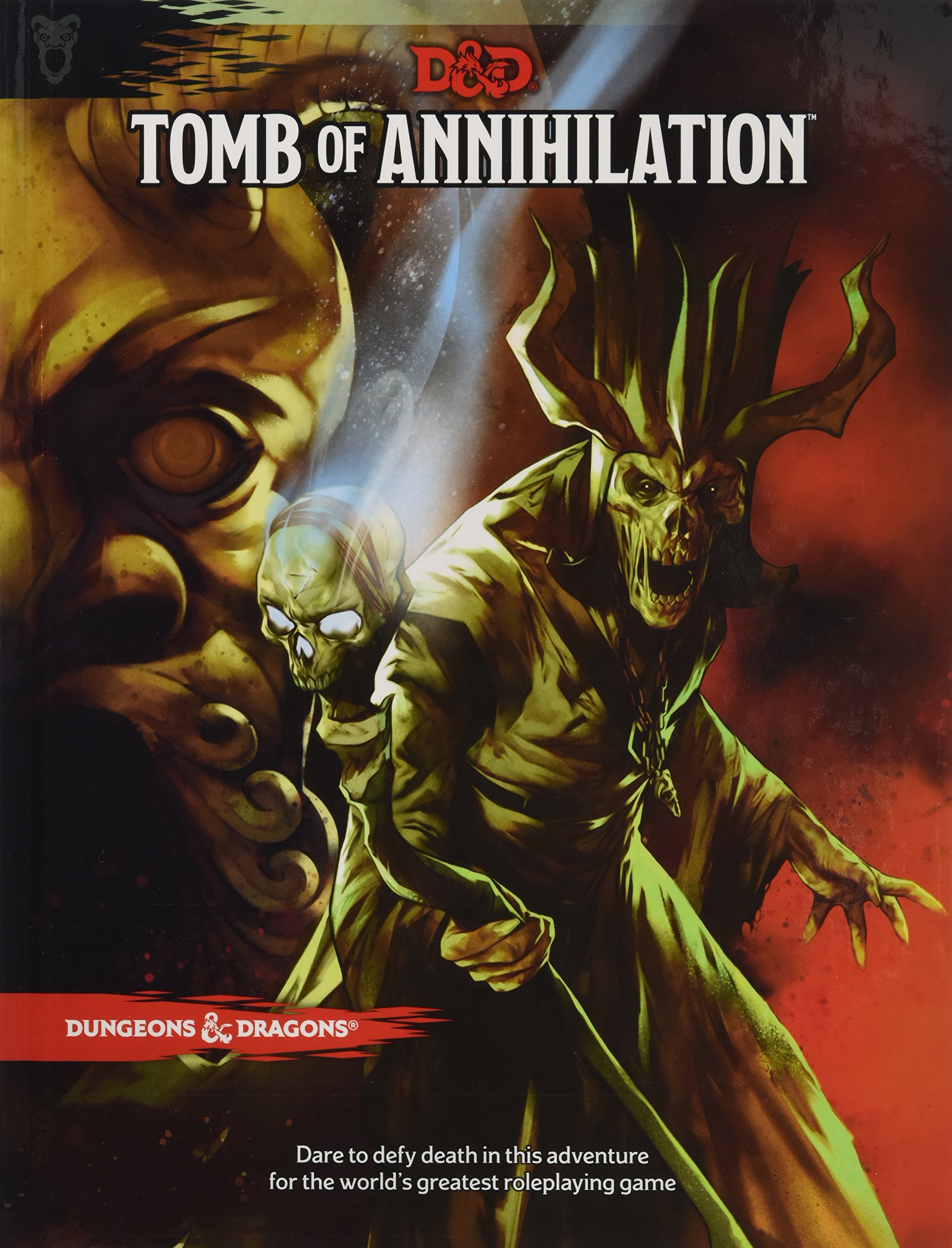
Tomb of Annihilation-smallAs the season of ghosts and ghouls is upon us, it’s a good time to have a terror-filled gaming experience. The most recent Dungeons & Dragons 5th edition adventure book, Tomb of Annihilation (Amazon), provides a good framework for a unleashing undead horrors upon a group of innocent fantasy adventurers.

Tomb of Annihilation is set in the land of Chult, an Africa-inspired continent setting in the Forgotten Realms. The players begin in a thriving metropolis, Port Nyanzaru, in which adventurers can race dinosaurs for fun and profit. As they move deeper into the jungles of Chult, investigating a powerful death curse that affects resurrected people throughout the world, they eventually come upon an ancient temple that is under the sway of a powerful archlich. Along the way, the players will interact with tribal shamans, zombie dinosaurs, and flying monkeys.

This isn’t the first 5th edition adventure that fits well thematically with a horror-based mood. Curse of Strahd (Amazon) re-invents the gothic horror of the Ravenloft setting, while Out of the Abyss (Amazon) explores demonic enemies spreading throughout the Underdark. The collection of deadly dungeons Tales of the Yawning Portal (Amazon) contains the chapters Dead in Thay and Tomb of Horrors.

Read More Read More

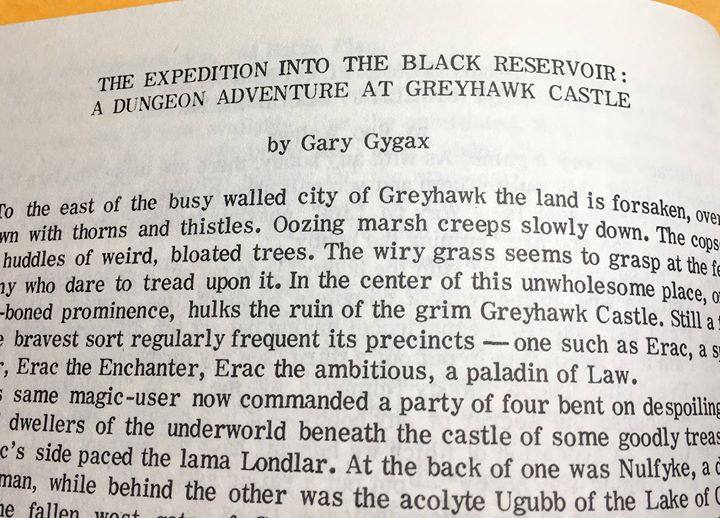
The Expedition Into the Black Reservoir: A Dungeon Adventure at Greyhawk Castle by Gary Gygax

The Expedition Into the Black Reservoir: A Dungeon Adventure at Greyhawk Castle by Gary Gygax

The Expedition Into the Black Resevoir Gary Gygax

The early days of D&D have been chronicled many times, in Shannon Appelcline’s excellent Designers and Dragons books, Michael Witwer’s Empire of Imagination, David Kushner and Koren Shadmi’s Rise of the Dungeon Master: Gary Gygax and the Creation of D&D, and a rapidly growing corpus of gaming history texts. When an era you lived through in your teens now has its own shelf in the history section, you’re getting old.

Still, there are plenty of unchronicled tidbits of gaming history out there, and I stumbled on one this weekend. In 1974 Gary Gygax, strapped for marketing cash for his just-released adventure game Dungeons and Dragons, agreed to contribute two articles to issue 12 of El Conquistador, a Chicago small press magazine devoted to play-by-mail Diplomacy leagues and general wargaming, in exchange for a full-page D&D ad. The first article was “Postal Brotherhood,” a short piece on play-by-mail gaming, a pastime that was already dying (and was fully dead less than two decades later).

The second was vastly more interesting: a four-page story that’s believed to be the first Greyhawk tale ever published.

Read More Read More

Modular: A First Look at Elite Dangerous Role Playing Game

Modular: A First Look at Elite Dangerous Role Playing Game

256 New COREBOOK Mockup
Clearly a labor of love

Yes, you read that right!

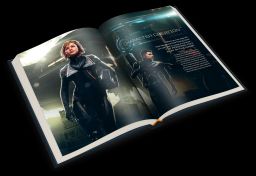
Elite Dangerous, the current incarnation of the granddaddy of all immersive video games, now has its own tabletop roleplaying game, and I’m sitting here with a review copy.

The problem with the video game is that, even with the new ability to land on airless worlds and trundle around in AFVs, it’s essentially space exploration on the radio. You don’t get to land on the worlds with interesting cultures and brawl with gangsters or tread the mean streets, or avoid being the main course at a barbaric religious ceremony. A tabletop roleplaying game has the potential to supply those missing experiences. But does the franchise really need its own game? (As you’ll see, “Yes, actually.”)

EDRPG 256 Book Spread 1
Well written, beautifully illustrated

Frankly, I half-expected Elite Dangerous Role Playing Game (EDRPG) to be a cynically put together I can’t believe it’s not Traveller-lite (please don’t send round lawyers with pulse lasers) with a detailed trade mini-game. Instead I found myself reading what’s clearly a labor of love that emulates a different corner of the Star Punk genre, and does so with an emphasis  — in the core rules — on what you do when you’re not trading. It’s also loaded with material pitched for beginner GM’s, but — again in the core rules — assumes some familiarity with the computer game; not disastrous, but  confusing if you haven’t played Elite seriously in four decades (I’m told there will be free material on the website to help with this).

Given Elite Dangerous has 2-3 million players, and a cult of enthusiasts who enjoy the “shared” part of “shared escapism,” Elite Dangerous Roleplaying Game promises to be an instant modern classic. It’s a good thing, then, that the game mechanics are elegant, but more refined than innovative, which is what you want in something obviously intended as a workhorse to support happy years of sandbox gaming.

Let me unpack some of that.

Read More Read More

Support an Exciting New Magazine of Sword & Sorcery: Tales From the Magician’s Skull

Support an Exciting New Magazine of Sword & Sorcery: Tales From the Magician’s Skull

Tales from the Magician's Skull-small

Here’s the best news I’ve heard all month: Goodman Games, publisher of the excellent Dungeon Crawl Classics line of old-school RPG adventures, has launched a brand new magazine of Sword & Sorcery, Tales From the Magician’s Skull. The editor chosen to helm this groundbreaking project? None other than our very own Howard Andrew Jones. Here’s Howard with the scoop.

A gong shivers…
The mists part to reveal a grisly object lying upon a mound of rubble, a browned and ancient head with one glowing, malefic eye…
It speaks, in a voice of cold command: “Silence, mortal dogs! It is time now for
TALES FROM THE MAGICIAN’S SKULL!
Goodman Games [has launched] the Kickstarter for the exciting new sword-and-sorcery magazine inspired by Appendix N. I am mightily pleased to be the magazine’s editor, and I’ve had a blast assembling it with Joseph Goodman. We’ve been working together for almost a year, and I’ve got to tell you that the result is GLORIOUS. Just check out that Jim Pavalec cover.

The first issue, with stories by James Enge, John C. Hocking, Chris Willrich, Howard Andrew Jones, C.L. Werner and others, truly is a knockout. The Kickstarter funded in less than 24 hours, and continues to gather momentum. Make a pledge, and make sure you get your copy of the the first issue of what’s sure to be one of the most important magazine launches of the decade. And check back here this week for a 3-way interview with publisher Joseph Goodman, Howard Andrew Jones, and the grinning skull itself!

The Past Remembered

The Past Remembered

oie_945629XusRtgBBLast week I attended the funeral for my friend Densel’s wife, Sheryl. As these things tend to, it spawned a reunion of friends who don’t see each other anymore. Densel was a major hub of roleplaying on Staten Island, and our love for our friend, and each other, grew from our meeting together to play Dungeons and Dragons. Only in recent years have I learned that while he was gaming with me and my group, he was moonlighting with other groups all across the Island. He is single-handedly responsible for more people playing D&D on Staten Island than any other person I know.

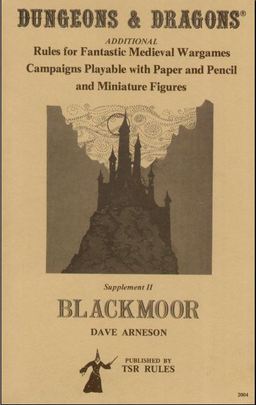
The first time I met Densel was when his friend, Desmond, brought him to Boy Scouts to play violin for us and join our troop. He was a six-foot-four, sixteen-year-old black kid and I was a five-foot-four, eleven-year-old white kid. Though five years older than I, we hit it off. What really connected us were the three wildly illustrated pamphlets he brought on a camping trip: Dungeons & Dragons, Greyhawk, and Blackmoor. One of his older brothers had gone to school in Wisconsin and brought the game back to Staten Island with him. When we saw Densel reading them, a couple of us younger guys asked him what they were. When he asked if we had read Moorcock or Tolkien and we said yes, he then asked if we would like to play a game where we could be knights and rangers. Without hesitation, we said yes.

We didn’t play the game properly. Mostly, it was just us talking about the characters we wanted to play and then Densel talking us through adventures. It didn’t matter that I wasn’t really learning the game; I was hooked by the idea of roleplaying. The illustrations from those original books are a major part of what I believe fantasy should look like. The thought of getting caught up in playing someone like Elric or Aragorn blew my eleven-year-old mind.

Densel aged out of scouts and I didn’t see him again for a couple of years. I was still finishing grade school and he was getting ready to enter college. It was then that I started playing D&D for real with my immediate circle of friends. Both my neighbor and I got the boxed Basic Set for Christmas. For two years we played relentlessly; and I mean relentlessly. For anyone who played the game in that first flush of its popularity in the late 1970s, you know what I mean. Every free weekend was spent playing, and the days between designing dungeons and drawing maps. Soon I was building up a shelf of hardcover Advanced D&D manuals. Almost any money I earned or got as a gift was plowed into the game.

Read More Read More

Modular: Starfinder Alien Archive — Clark Ashton Smith meets Douglas Adams (with visuals by Ray Harryhausen)

Modular: Starfinder Alien Archive — Clark Ashton Smith meets Douglas Adams (with visuals by Ray Harryhausen)

256 Starfinder Alien Archive
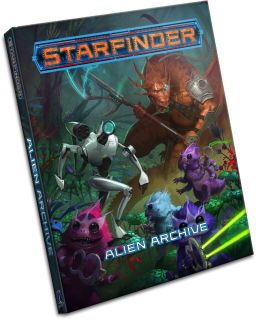
Starfinder Alien Archive — due  October 18th
256 Kurtzhau the GM
“Kurtzhau,” 13, our local Starfinder GM

Though writers are notoriously not always the best parents, I’m a Good Dad right now. I got us a preview copy of the forthcoming Starfinder Alien Archiveit’s due out October 18th.

Kurtzhau, my 13 year old son who’s currently GMing the game for his mates, rates it as “Awesome.”

I concur.

80+ new aliens (depends on how you count), 20 playable races (some delightfully nuts ), lots of alien tech, each entry a rich adventure seed in its own right and rules for building your own NPC aliens.

Lovely illustrations. Good writing. And it’s got a sort of creative gravitas. Nothing here is throwaway.

Take the Void Hag.

Read More Read More

Modular: Starfinder Under the Hood – Character Creation

Modular: Starfinder Under the Hood – Character Creation

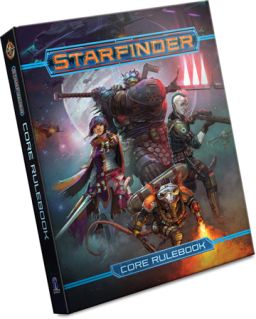
256 Starfinder CoreWhen playing Dungeons & Dragons or other fantasy RPGs, have you ever wanted to play a space wizard? A gnome with a jet pack? Or a fighter with a flaming laser sword and a force field?

These options are all available to you in the new Starfinder RPG (Paizo, Amazon). Paizo has built the new science fantasy game to explore the distant future of their Pathfinder universe. Though I’ve been excited about it for over a year, since it was first announced, I’ve only just gotten the opportunity to play a full game of it.

So now that the game is more than an abstraction … now that I’ve actually rolled the dice and taken some damage … does it still hold up like I was hoping? Honestly: Even better.

But rather than just singing the praises of the game (which I’ve and others have already done here and here and elsewhere), I’m going to dive a bit deeper into how the game is similar – and different – from the Pathfinder game that we know and love.

Read More Read More

Modular: Successful Adventuring — Or, Staying Alive & Getting the Gold

Modular: Successful Adventuring — Or, Staying Alive & Getting the Gold

Adventuring1_GloamholdCreighton Broadhurst is the founder and head honcho of Raging Swan Press, one of Pathfinder‘s leading third party publishers. His Shadowed Keep on the Borderlands is the spiritual successor to the old moat house in The Village of Hommlet. Creighton plays Pathfinder, but he approaches the rules-heavy game with an old school style, which is something I’ve been trying to figure out for myself.

His blog features lots of lists: GM advice, player tips, favorite modules, etc.. I broke his 25 Dungeon Delving tips into Parts One and Two and added my own comments (nothing like letting somebody else do the heavy lifting for a good post!). It seemed to work and Creighton didn’t mind, so I’m going to write some more Modular posts along those lines, like this one.

The Principles and bolded text below are Creighton’s, followed by my comments. Please share your thoughts on these principles and definitely go check out Creighton’s blog: it’s got a lot of great stuff for both players and GMs. And if you’re looking for some products to help out with your game, head on over to Raging Swan Press.

Selection and Maintenance of the Goal

A single, unambiguous goal is the keystone of a successful foray. Selection and maintenance of the goal is the master principle of adventuring. Do not get sidetracked or distracted; that way, disaster lies.

This is the opposite of the “Ooh, shiny object” approach. It’s so easy to get off track and chase after the ‘thing of the moment.’ Rumor of a dragon in the mountains, let’s go get him! Treasure in a cave outside of town? We’re on it! Heard a sound down that tunnel, turn left.

Read More Read More