Browsed by
Category: Editor’s Blog

The blog posts of Black Gate Managing Editor Howard Andrew Jones and Editor John O’Neill

The Top 50 Black Gate Blog Posts in February
The Top 50 Black Gate Blog Posts in February

DSC_1027February is cold here in Chicago. Stay-at-home-or-you’ll-die cold. A good time to gather inside with friends and family, put hot cocoa on the stove, slip a movie in the Blu-ray player, and then forget all of that because there’s something fascinating on the Internet.

We had plenty of fascinating things to offer here at the Black Gate blog in February. Scott Taylor took at serious look at the downside of collecting in “The Weight of Print,” Matthew David Surridge examined Shirley Jackson’s The Haunting of Hill House, Mark Rigney revealed the surprising results of the John Piece Experiement as applied to fantasy, author Violette Malan explained How to Put the Sword in Sword & Sorcery, and Sarah Avery offered up another installment in her popular Teaching and Fantasy Literature series with “Weird Things My Students Have Been Told About Writers.”

And that’s only the Top Five. The complete list of the Top 50 posts in February follows. Enjoy — but not so much that you neglect your houseguests, please. Or let hot chocolate overboil on the stove.

  1. Art of the Genre: The Weight of Print
  2. Shirley Jackson’s The Haunting of Hill House
  3. Genre 2013: The John Pierce Experiment
  4. How to put the sword in Sword and Sorcery
  5. Teaching and Fantasy Literature: Weird Things My Students Have Been Told
  6. Howard and Sandra Tayler discuss being mercenary…
  7. New Treasures: Wilderlands of High Fantasy
  8. Dungeon Board Game from Wizards of the Coast
  9. Echoes of the Goddess: Schweitzer’s Newest Classic
  10. Self-published books: Review of Noggle Stones the Goblin’s Apprentice
     

    Read More Read More

Gardner Dozois on the 2013 Hugo Nominations

Gardner Dozois on the 2013 Hugo Nominations

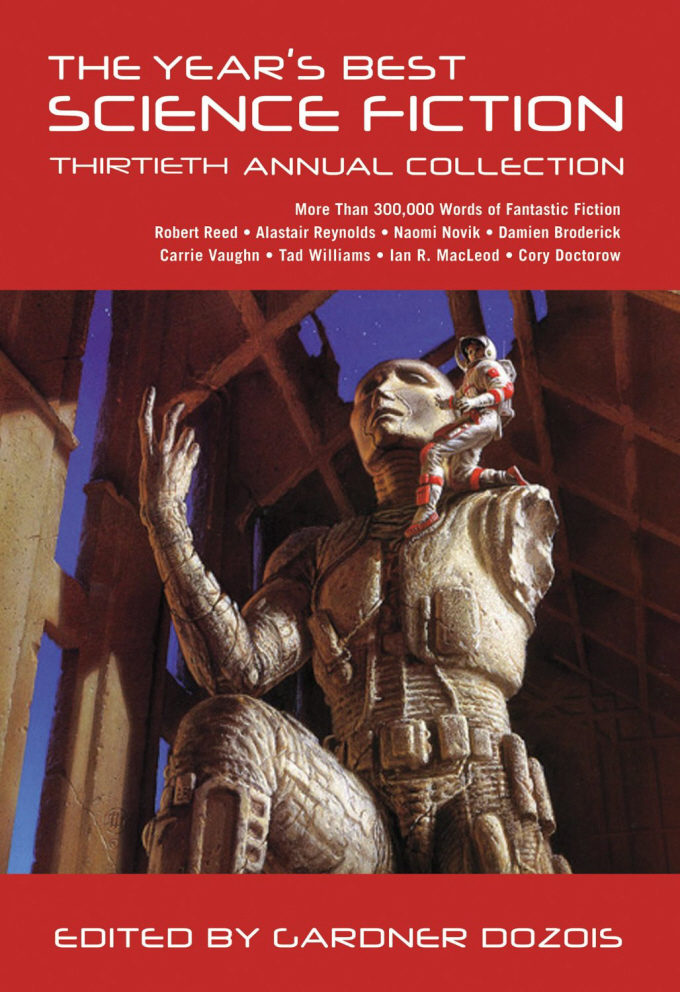
Year's Best SF 30Gardner Dozois, editor of the upcoming The Year’s Best Science Fiction: Thirtieth Annual Collection (and about a billion other science fiction and fantasy anthologies), offered some astute and telling observations on the 2013 Hugo Awards nominations this week.

In case you haven’t noticed, I thought that I’d point out that this year’s Hugo Award ballot represents a historic shift in demographics. This has been coming on for a couple of years now, but this year a tipping point has been passed.

In the fiction categories, only Nancy Kress, Pat Cadigan, Kim Stanley Robinson, and Lois McMaster Bujold come from the literary generation that came to prominence in the ’80s. Everybody else is from a younger literary generation (which doesn’t always mean that they’re younger, although that’s usually the way to bet it; literary generations are different from actual generations). There’s only one story, Jay Lake’s, from a traditional genre market, Asimov’s, and only one story from a trade SF anthology, Cadigan’s. Only six out of the thirteen shorter works even come from PRINT publications, and four of those were novellas published in chapbook form by small presses; all the rest are from online publications. Only two of the five people nominated for Best Editor, Short Form, work at traditional print magazines; the rest edit online publications. ALL of the nominees for Best Semiprozine are online publications.

This is not going to change back. This is the way things will be from now on.

We discussed the complete Hugo ballot here on Monday.

Vintage Treasures: The Blind Spot, by Austin Hall and Homer Eon Flint

Vintage Treasures: The Blind Spot, by Austin Hall and Homer Eon Flint

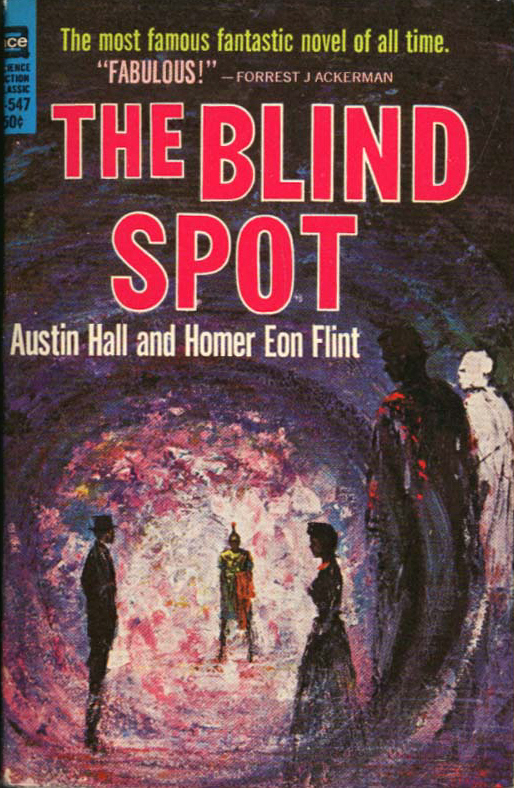
The Blind SpotAll right. Listen up, all you young fantasy punks. I know you’re out there, devouring contemporary fantasy by the truckload, while I’m trying to school you on the forgotten classics of the past. I know you’re not listening, because I rarely paid attention to the crotchety old-timers who tried to get me to read forgotten fantasy classics 30 years ago. I was too busy with Lord of Light, Bridge of Birds, Watership Down, and Swords Against Death.

Eventually, of course, I learned the error of my ways. I began to listen to my elders, and appreciate the glory of the pulp era of fantasy. I read the books they passed to me, and gradually became wiser, more worldly, healthier, and better looking, with fuller and more lustrous hair and better posture.

Mostly. I didn’t read, like, everything they foisted on me. Because Star Trek was on in the afternoon, and Dr. Who in the evenings (the Tom Baker episodes, naturally), and a lad needs some down time.

Now, these Vintage Treasures articles are my vehicle to pass along the accumulated knowledge and wisdom of a fabulously well-read generation (i.e. old people) to the eager and outstretched hands of the readers of tomorrow (you lot). That’s admittedly harder to do with the great classics of fantasy I haven’t read yet. Theoretically though, it might be possible to duck some of my personal responsibility by passing them along instead.

In short, skipping a generation and cutting out the middleman. Now pay attention, because this is where you come in.

I am tasking you with a sacred undertaking, upon which the very future of our beloved genre rests: to read, appreciate  and evangelize the great works of 20th Century pulp fantasy. The ones I never got around to, anyway. So I can get back to that Season Two Star Trek DVD which arrived last week. Appreciate it.

Let’s start with The Blind Spot, by Austin Hall and Homer Eon Flint. What’s it about? I have no idea. If you were paying attention, you’d have clued in to that. But right there on the cover Ace Books calls it “The most famous fantastic novel of all time,” and the esteemed Forrest J. Ackerman shouts out the word “Fabulous!” That should be good enough for you.

The Blind Spot was published in 1921 as a serial in Argosy-All Story Weekly, and reprinted by Ace Books in 1964, with a doubtlessly fascinating and informative introduction by Ackerman that would have made writing this post a lot easier if I’d known about it 15 minutes ago. It is 318 pages in paperback for 50 cents. Finding a copy is left as an exercise to the reader (I got my copy on eBay for under a buck.) And get a move on, the cultural heritage of fantasy is at stake. But no pressure.

2013 Hugo Award Nominees Announced

2013 Hugo Award Nominees Announced

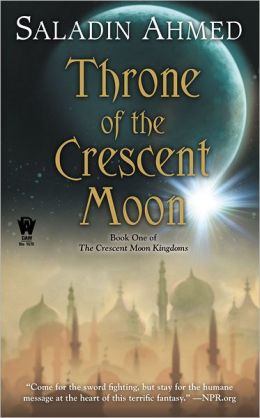
Throne of the Crescent MoonThe nominees for the 2013 Hugo Awards were announced this weekend. There’s a lot of great reading on this list and, if you’re like me, you’re still planning to get to most of it.

It’s not too late — and if you finish your reading before voting closes, you can help decide the winners. Voting is open to all attendees of LoneStarCon 3, the 2013 World Science Fiction Convention, and the winners will be announced at the convention on Sunday, September 1, 2013.

One odd thing about this year’s ballot? There are only three nominees for short story (usually there are five). The adminstrators state this is “due to a 5% requirement under Section 3.8.5 of the WSFS constitution.” No, I don’t know what that means either. I’m sure it will be much discussed, and somebody will explain it to me.

The nominees for the 2013 Hugo Awards are:

Best Novel

2312 by Kim Stanley Robinson (Orbit)
Blackout by Mira Grant (Orbit)
Captain Vorpatril’s Alliance by Lois McMaster Bujold (Baen)
Redshirts: A Novel with Three Codas by John Scalzi (Tor)
Throne of the Crescent Moon by Saladin Ahmed (DAW)

Best Novella

After the Fall, Before the Fall, During the Fall, by Nancy Kress (Tachyon Publications)
The Emperor’s Soul by Brandon Sanderson (Tachyon Publications)
On a Red Station, Drifting, by Aliette de Bodard (Immersion Press)
San Diego 2014: The Last Stand of the California Browncoats, by Mira Grant (Orbit)
“The Stars Do Not Lie,” by Jay Lake (Asimov’s SF, Oct-Nov 2012)

Read More Read More

The Top 12 Black Gate Fiction Posts in February

The Top 12 Black Gate Fiction Posts in February

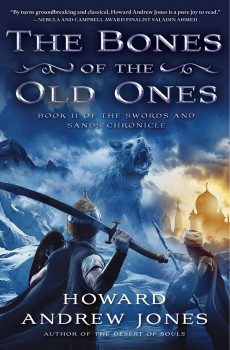
bones-of-the-old-onesHoward Andrew Jones held on to the top spot this month, with the excerpt from his second novel, The Bones of the Old Ones. Giving him a run for his money were new stories by C.S.E. Cooney, Vaughn Heppner, and Gregory Bierly, and a reprint from Joe Bonadonna.
If you haven’t sampled the adventure fantasy stories offered through our new Black Gate Online Fiction line, you’re missing out. Every week, we present an original short story or novella from the best writers in the industry, all completely free.

Here are the Top Twelve most read stories in February, for your enjoyment:

  1. An excerpt from The Bones of the Old Ones, by Howard Andrew Jones
  2. Life on the Sun,” by C.S.E. Cooney
  3. The Pit Slave,” by Vaughn Heppner
  4. The Moonstones of Sor Lunarum,” by Joe Bonadonna
  5. A Princess of Jadh,” by Gregory Bierly
  6. The Find” by Mark Rigney
  7. The Whoremaster of Pald,” by Harry Connolly
  8. The Poison Well,” by Judith Berman
  9. The Gunnerman,” by Jason E. Thummel
  10. The Trade,” by Mark Rigney
  11. Godmother Lizard,” by C.S.E. Cooney
  12. The Terror in the Vale,” by E.E. Knight

The complete catalog of Black Gate Online Fiction, including stories by Aaron Bradford Starr, John R. Fultz, David C. Smith and Joe Bonadonna, Dave Gross, Harry Connolly, and others, is here. The most popular Black Gate fiction from January is here.

We’ve got plenty more fiction in the coming months, so stay tuned!

New Treasures: Gygax Magazine, Issue #1

New Treasures: Gygax Magazine, Issue #1

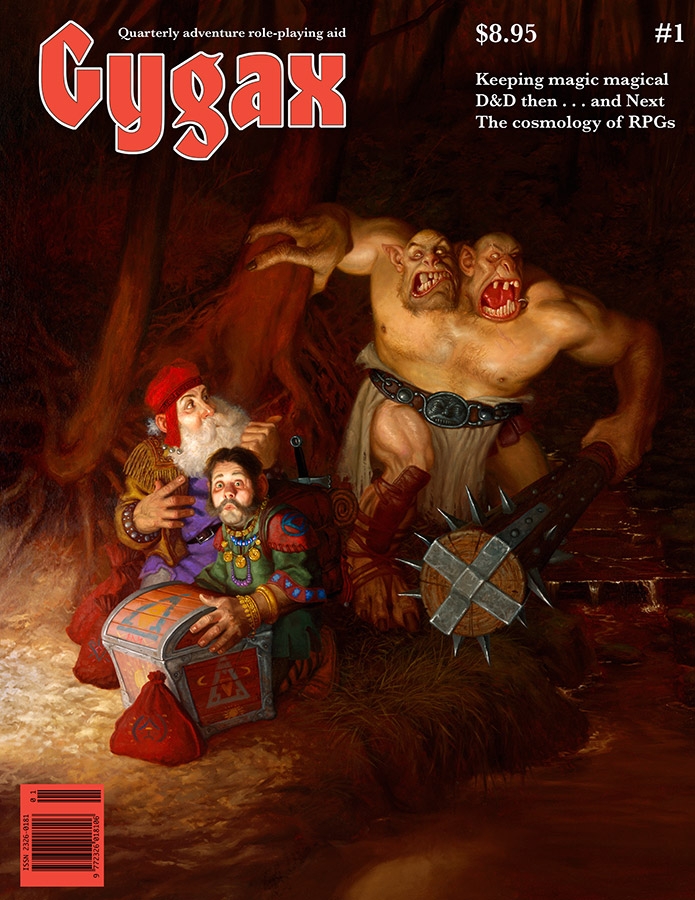
Gygax Magazine 1I don’t think it’s an exaggeration to say that the hottest thing in role playing at the moment  is the rise of OSR. The Old School Renaissance has captured the interest of thousands of players — many returning to gaming for the first time in decades — and fostered the birth of a fresh generation of dynamic new companies. We’ve featured some of the best products here on the BG blog, including Carcosa, Astonishing Swordsmen & Sorcerers of Hyperborea, Dungeon Crawl Classics, Labyrinth Lord, and even the first edition Premium AD&D reprints from WotC. But truthfully this is just a small sample, and more exciting products are arriving daily.

In fact, even though the number of OSR players is still fairly small, in a strange way that’s part of the appeal. The size of the market, and the out-sized level of excitement and productivity associated with it, reminds players of the early days of D&D in the mid-70s, when only a core group of gamers were tuned in to the new phenomenon that would soon sweep the country. That was a tremendously exciting and dynamic time, and in some ways it feels like it’s happening all over again.

One thing that’s been lacking from this generation’s gaming renaissance though is a clear center. Ask old-school gamers what the center of the genre used to be, and most will give you the same answer: Tim Kask’s The Dragon, the print magazine published by TSR (and later WotC and Paizo) from 1976 to 2007, and published online since 2007. Launched to help nurture the rapidly growing fandom around Dungeons & Dragons, Dragon gradually became the publication for role-players of all persuasions. The magazine embraced the entire genre, and accepted advertising from virtually everyone, publishing news, unbiased reviews, and articles of interest to everyone in the hobby. To read Dragon was to be informed of everything of real importance to the industry, especially in the early days.

Dragon was essential to the growth of adventure gaming. The creators driving the fledgling OSR industry have managed to capture the spirit of original D&D, and the excitement it spawned, surpassingly well, and that’s led many to wonder: would it be possible to re-create the magic of the early Dragon as well? As the folks behind Gygax magazine — including Ernie and Luke Gygax, and The Dragon‘s founding editor, Tim Kask — have proven with their first issue, it is possible. The similarities with its spiritual parent magazine don’t end with the familiar name of the publisher: TSR, Inc.

Read More Read More

Unearthed Adventures: Announcing the Winners of the Best One-Paragraph D&D Adventures

Unearthed Adventures: Announcing the Winners of the Best One-Paragraph D&D Adventures

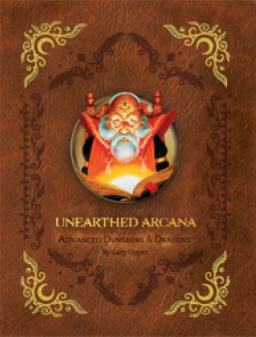
unearthed arcanaLast month we announced a contest seeking the best one-paragraph descriptions of your favorite D&D characters.

Because we’re awesome (and because we’re tight with Wizards of the Coast, who are even more awesome), we secured a very special reward for four lucky winners: a copy of the brand new Unearthed Arcana 1st Edition Premium Reprint — which we first examined here. Those four names were drawn at random from the ten best entries, as selected by our judges.

Before we get to the winners, let’s enjoy some of the best entries. First up is Daniel J. Davis:

When I created my first character, a Minotaur warrior named Glokk Maghorn, I rolled an 18/00 for strength. I couldn’t have been happier. At the time, I was an almost perfect stereotype of the “typical” D&D player. I was smaller and weaker than most kids my age. I was uncoordinated, awkward, and bullied. But in the land of Krynn, I was going to be an 8-foot tall mercenary beast man with a battle-axe and a loose definition of “fair play.” I didn’t care one whit about my low charisma score. I spent most of my waking life trying to compromise and bargain with people big enough to wipe the floor with me. This was D&D, and I was going to bash some heads for a change. I retired him at 15th level, after his crowning moment of awesome: Failing a saving throw against a white dragon’s breath weapon, surviving with a single hit point, and finishing it off with a critical hit on my very next action.

Any story involving an 8-foot Minotaur whose name rhymes with Foghorn Leghorn is an instant classic in our book. Nice one, Daniel.

Next up is John Burt, who found a more noble motivation for his character: petty larceny.

Read More Read More

New Star Trek Into Darkness Trailer Features More ‘Splosions

New Star Trek Into Darkness Trailer Features More ‘Splosions

The trailers are coming fast and furious now. This one reveals a bit more of the plot, including a high-level Federation meeting, some shots of 23rd Century London, and a chilling scene in the last few seconds.

We last reported on Star Trek Into Darkness when we asked “Did Entertainment Weekly Reveal that Benedict Cumberbatch is Playing Khan?” here, and in “Star Trek Into Darkness Poster Fuels Gary Mitchell Speculation” (here).

Star Trek Into Darkness is directed by J. J. Abrams, and written by Alex Kurtzman, Damon Lindelof and Roberto Orci. It is the twelfth feature-length Star Trek film and the sequel to 2009′s Star Trek. It is set for release on May 17, 2013.

Tomb of Horrors Gets a Fourth Edition Makeover

Tomb of Horrors Gets a Fourth Edition Makeover

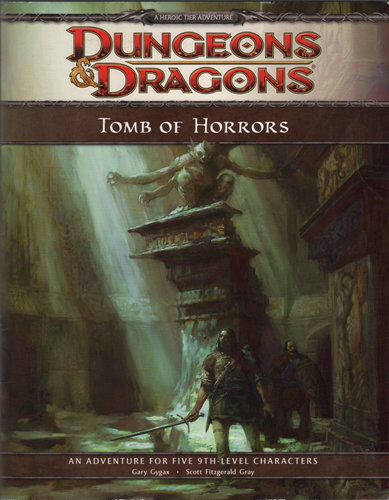
Tomb of Horrors 4th EditionOne of the more intriguing treasures I brought home from the Paris Fashion Week of Games last week was the compact new edition of Gary Gygax’s famous player-killer Tomb of Horrors.

Now, if you don’t play role playing games yet still find the name Tomb of Horrors oddly familiar, it’s probably because it’s a touchstone of considerable significance in geek culture and you’ve come across one of the many modern references to it. Most recently, for example, it featured in Ernest Cline’s best-selling novel Ready Player One, which is set in a virtual reality world created by a fan of Tomb of Horrors. Or maybe your older brother’s beloved 10th-level paladin was killed by an unspeakable thing 20 minutes after he set foot inside the Tomb, and he’s been suffering from PTSD ever since, muttering the name Acererak and shuddering uncontrollably.

The original Tomb of Horrors was released in 1978; it’s one of the best-selling Dungeons and Dragons adventure modules of all time. I’m not sure why, to be completely honest. You don’t have fun playing Tomb of Horrors, exactly. And it has certainly killed far, far more player characters than it has rewarded. You know the phrase “Bad things happen to good people?” It was first spoken by the few, shell-shocked survivors of Tomb of Horrors.

Despite — or perhaps because of — its killer rep, the module is still highly regarded today, and has been remade and expanded several times, most recently as a 4th Edition hardcover by Ari Marmell and Scott Fitzgerald Gray in July 2010. This isn’t that version. This is a bare-bones conversion of the original adventure for 4th Edition rules, written by Scott Fitzgerald Gray and mailed out to members of the RPGA as part of the DM Rewards program. Instead of the separate art booklet — one of the most famous features of the original release, which allowed players to gawk in wonder at detailed renderings of the horrific things that had just killed them — this edition incorporates most of the original art into the body of the module. The cover is also recycled from the 2002 Greyhawk novel of the same name by Keith Francis Strohm (which we last discussed in “The Seven Greyhawk Classics of the Ancient World,” here).

For all that, it’s still fun to sit down and re-read Gygax’s original sadistic masterpiece again. The layout is clean and attractive, and the map of Acererak’s tomb has been given new life as a detailed color fold-out. Since it was never offered to retailers it’s a little tricky to find, however, and prices vary widely. As it was originally offered for free, some folks re-sell it at a reasonable price; but the average asking price I found on eBay was just over $50. I paid $7 for a shrinkwraped copy at auction.

Tomb of Horrors, by Gary Gygax and Scott Fitzgerald Gray, was published by Wizards of the Coast in 2010. It is a 4th Edition Dungeons & Dragons adventure for five 9th-level characters. It is 36 pages in softcover, with a loose cardstock cover and a fold-out color map. It has no price.

Vintage Treasures: Was Morlock Night by K.W. Jeter the First True Steampunk novel?

Vintage Treasures: Was Morlock Night by K.W. Jeter the First True Steampunk novel?

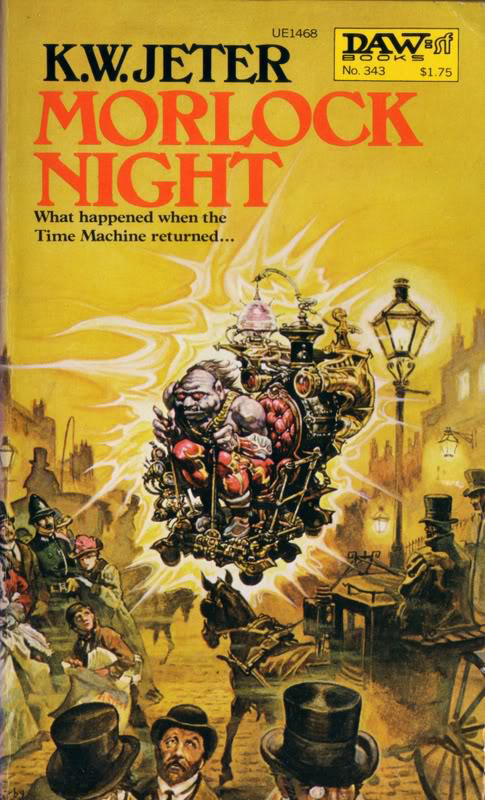
Morlock nightI have vivid memories of watching George Pal’s science fiction thriller The Time Machine — based on the classic novel by H.G. Wells — in a theater, even though it came out in 1960, four years before I was born. Likely I saw it in an auditorium during a Cub Scouts movie night, or something. In any event, I remember the Morlocks. Scary, scary dudes.

In the last ten years there’s been an explosion of sequels to classic fiction. You don’t have to look far to find examples; not with Oz the Great and Powerful playing in theaters, and shelves and shelves of Sherlock Holmes and Jane Austin sequels crowding bookstores.

Typically, however, K.W. Jeter — the man who created the word “Steampunk” — was there first, with the novel Morlock Night in 1979. Morlock Night explores what might have happened if the Time Traveler’s wonderful machine fell into the hands of the Morlocks and they used it to return to Victorian England and turn London into their new hunting ground.

Morlock Night is full of surprises, as the premise becomes the launching point for a fast-paced fantasy involving King Arthur and Merlin, Excalibur, an ancient Atlantean submarine, and the fabric of the Cosmos being torn to the ripping point by the paradoxes of time travel… standard steampunk fare by today’s standards, but that was pretty wild stuff in 1979.

In his now-famous letter to Locus in April 1987, Jeter was the first to use the word “steampunk” to describe this book, and the strange and exciting new sub-genre of retro-adventure fantasy also being written by Tim Powers and James Blaylock:

Personally, I think Victorian fantasies are going to be the next big thing, as long as we can come up with a fitting collective term… like “steampunks,” perhaps…

Morlock Knight was out of print for over three decades, until Angry Robot reprinted it in a handsome new edition in April, 2011. It was originally published in paperback by DAW in June 1979, with a vivid (and very yellow) cover by Josh Kirby, who later became renowned for his Discworld covers (click the image for a bigger version). It is 156 pages, originally priced at $1.75; the new edition is $7.99 ($6.99 for the digital version).