Browsed by
Category: Editor’s Blog

The blog posts of Black Gate Managing Editor Howard Andrew Jones and Editor John O’Neill

Bill Ward’s four-part story “The Box” begins at Pathfinder Tales

Bill Ward’s four-part story “The Box” begins at Pathfinder Tales

pathfindertalesBlack Gate Reviews Editor Bill Ward is a multi-talented gent.

Not only is he one of the most energetic editors in the field, with an almost encyclopedic knowledge of Who’s Who in modern fantasy, but he’s also a very talented writer in his own right.

And Paizo Publishing has given him an opportunity to show off some of that talent by commissioning him to write a story for their Pathfinder Tales Web Fiction line — a weekly presentation of multi-part adventures featuring the exploits of daring denizens of the Pathfinder world.

Bill’s 4-part story is entitled “The Box,” and here’s what he tells us about it:

When a supposedly easy theft goes bad, Kostin Dalackz finds himself caught up in a deadly criminal conspiracy centered on a mysterious, magically locked box. Enlisting the aid of a diverse group of adventurers and rogues, Kostin strikes out to settle accounts — and re-acquire the twice-stolen property. ‘The Box’ is a journey through the seedy underbelly of the city of Magnimar, part of the Pathfinder world setting of Golarion.

Pathfinder Tales Web Fiction are completely free adventure tales that provide a taste of the thrills in Pathfinder Tales novels. Past contributors to their growing online library include Howard Andrew Jones, Dave Gross, Ed Greenwood, Elaine Cunningham, Robin D. Laws, Erik Mona, Monte Cook, and many others.

Part I of “The Box” appeared on Wednesday, Sept 28; Part II is scheduled to be posted tomorrow.  The tale awaits you here.

Eat Flaming Laser Death: An Evening of RoboRally

Eat Flaming Laser Death: An Evening of RoboRally

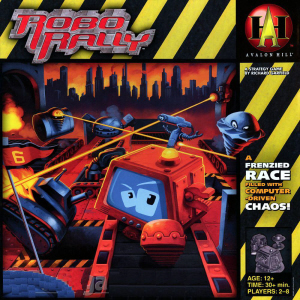
roborallyThese are good times for board gamers.

After the death of Avalon Hill as an independent game publisher (its remnants were purchased by Hasbro in 1998), it sure seemed like the era of the board game was over.  SPI, FASA, Task Force Games, GDW, Yaquinto, West End Games, Fantasy Games Unlimited, Mayfair Games, TSR, and finally Avalon Hill… the leading lights of board game design in the 20th Century had all perished by the end of the 90s. It looked like those of us who loved to move cardboard counters around abstract hex grids were relegated to paying ridiculous prices for out-of-print copies on eBay.

But that was before Fantasy Flight proved there was still life in board games yet, with a stellar line up of beautifully produced — and profitable — titles. Mayfair Games returned from the dead, phoenix-like, with the English language rights to the blockbuster Settlers of Catan. Wizards of the Coast purchased TSR and built on their rich tradition with D&D-inspired board games like The Conquest of Nerath (read Scott Taylor’s terrific review here). And, surprise of surprises, Hasbro has kept the Avalon Hill name alive, putting out high quality games like Battle Cry and Axis and Allies.

So on a Sunday night when I’ve managed to pull Tim and Drew, my two teenage sons, away from Gears of War 3 and sit them down at the gaming table, I find I actually have a choice of intriguing modern games to offer them. Should we go for complex and fascinating, like Axis and Allies? Colorful and fun, like Descent: Journeys in the Dark? Quick and light, like Cheapass Games’ Kill Doctor Lucky?

Rhetorical question, of course. When one of the choices involves lasers, killer robots, and blowing each other up in a frenetic race for mechanized glory, the answer is pretty much a foregone conclusion. It was RoboRally in a landslide.

Read More Read More

Tangent Online reviews Matthew David Surridge’s “The Word of Azrael”

Tangent Online reviews Matthew David Surridge’s “The Word of Azrael”

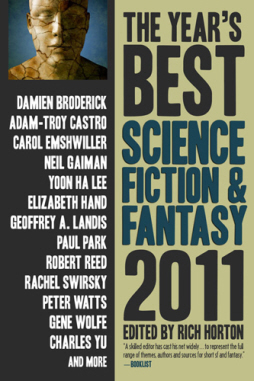
yearsbest2011Reviewer Nader Elhefnawy at Tangent Online offers a detailed review of the latest volume of Rich Horton’s The Year’s Best Science Fiction and Fantasy 2011, including Matthew David Surridge’s story from Black Gate 14, “The Word of Azrael.”

In Matthew David Surridge’s “The Word of Azrael” (which first appeared in the Winter issue of Black Gate magazine, an excerpt of which can be read on the magazine’s web site), warrior Isrohim Vey encounters the Angel of Death on the battlefield. Having seen the Angel’s smile once, he spends the rest of his life pursuing another glimpse of it – a colorful, wide-ranging, action- and adventure-filled epic journey in the tradition of Conan the Cimmerian and Elric of Melnibone. The resulting piece is one of the strongest heroic fantasies I have seen in years.

Fine praise indeed, for a terrific story that’s been one of the most acclaimed pieces we’ve published in recent years.

You can read the excerpt from “The Word of Azrael” here, and the complete Black Gate 14 Table of Contents is here.

And you can read more about Rich’s excellent The Year’s Best Science Fiction and Fantasy 2011 here.

Sara Douglass, June 2, 1957 — Sept 27, 2011

Sara Douglass, June 2, 1957 — Sept 27, 2011

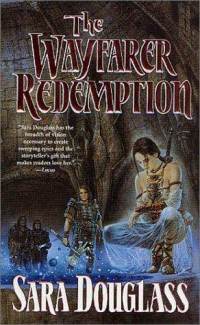
wayfarer-redemptionSara Warneke, the Australian fantasy author who wrote under the name Sara Douglass, died of ovarian cancer on September 27, 2011, at the age of 54.

Sara wrote a total of 19 novels, beginning with the first book of what became The Axis Trilogy, BattleAxe, in 1995.

All told she wrote five major fantasy series: The Axis Trilogy, The Wayfarer Redemption, The Crucible, The Troy Game, and Darkglass Mountain.

Outside of Australia, The Axis Trilogy and The Wayfarer Redemption were combined into a single six-book series, called simply Wayfarer Redemption.

Sara also wrote Beyond the Hanging Wall (1996), Threshold (1997), The Devil’s Diadem (2011), and the non-fiction The Betrayal of Arthur. The Hall of Lost Footsteps, a collection of short stories, is due from Ticonderoga Publications this year.

Sara was born in Penola, South Australia, and attended Annesley College in Wayville. She became a registered nurse, and eventually completed her Ph.D. in early modern English History. She was a lecturer in medieval history at La Trobe University in Bendigo, where she completed her first novel, BattleAxe, in 1995.

Her Wikipedia entry, with a complete listing and links for her novels, is here.

She lived in Tasmania, and was first diagnosed with ovarian cancer in 2008. She underwent successful treatment that year, but the cancer returned in 2010.

Star Trek: Where No Comic Has Gone Before

Star Trek: Where No Comic Has Gone Before

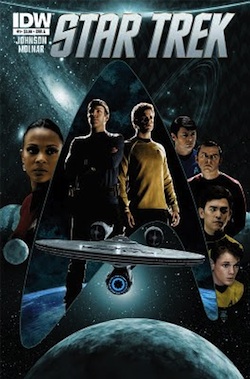
star-trek-1And here I had grand ambitions to write a quick post or two about some recent magazine acquisitions tonight. Instead I’m dropping all that to tell you about a comic book I’ve never even seen (and is reportedly already sold out). Blame Tor.com, where I stumbled across this story.

Now I know you saw 2009’s Star Trek reboot, staring Chris Pine and Zachary Quinto, and directed by J.J. Abrams. Whether you loved it or hated it, I’m pretty sure your mind went the same place mine did after exiting the theater: HuhI wonder how that fresh crew of punks would handle The Doomsday Machine. Or that nasty Klingon captain Kor from “Errand of Mercy.” Is that Quinto guy even old enough to grow a beard for  a “Mirror Mirror” remake?

We’ll have to wait until at least 2012 to see how (or even if) J.J. Abrams chooses to answer those questions in the coming sequel. But now IDW, the company behind the excellent Star Trek: Year Four comic series, has teamed up with Star Trek writer/producer Roberto Orci to launch a new comic that explores those very questions.

From the IDW website:

The adventures of the Starship Enterprise continue with the new cast from the film as they embark on missions that re-imagine select stories from the original television series, along with new threats and characters never seen before.

Under the creative direction of Orci, fan-favorite Star Trek writer Mike Johnson and artist Stephen Molnar bring this alternate universe to life and begin the countdown to the highly anticipated Star Trek sequel. The series kicks off with a dramatic new envisioning of The Original Series second pilot, “Where No Man Has Gone Before.” The conclusion of this reimagined episode will be available in October. In November, the adventures of the new Enterprise crew continue with a new take on the classic episode “The Galileo 7,” as Mr. Spock finds himself in command of a stranded shuttle crew fighting for survival.

Yeah, that sounds pretty damn cool.  IDW has already announced that a second printing, with a variant cover, will be available soon. Worth a trip to the comic shop, anyway. I’ll be the guy in line in front of you, haggling for a free mylar bag.

The Seven Greyhawk Classics of the Ancient World

The Seven Greyhawk Classics of the Ancient World

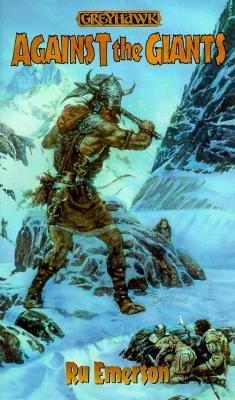
against-the-giants1I’ve been pretty hard on Greyhawk novels. They’ve been the butt of more than a few jokes — both mine and others — from those of us who enjoy reviewing and talking about the fantasy genre.

I’m generally pretty forgiving, especially with novels of adventure fantasy. What can I tell you — I’m a fan.  But when books can’t be bothered to clamber over the very low bar of my expectations, I’m as capable of a harsh review as anyone.

The novels of Gary Gygax — and in particular his Greyhawk books — routinely limboed under that bar with room to spar, and I’ve said as much in print several times over the years.

Now, I’m second to none in my admiration of Gygax. I consider the man one of the great creative minds of the 20th Century, full stop.

I believe his work with D&D and Advanced D&D — especially the original hardback rules, and the incredibly inventive adventure modules that accompanied them, such as Descent into the Depths of the Earth and The Temple of Elemental Evil — was directly responsible for the mainstream acceptance of fantasy, as manifested in modern role playing obsessions like World of Warcraft and Warhammer.

But his novels?  Poo poo.

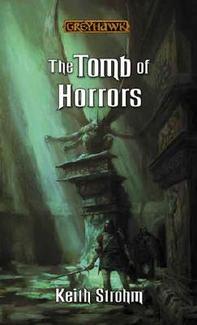
tomb-of-horrorsHowever, Gygax wasn’t the only one to pen Greyhawk novels.

Some of them — especially the so-called Greyhawk Classics published in honor of TSR’s 25th anniversary — are remembed quite fondly.

Written by Paul Kidd, Ru Emerson, Keith Francis Strohm, and Thomas M. Reid, and based on some of TSR’s most famous adventure modules, including Against the Giants, Tomb of Horrors, and Keep on the Borderlands, the seven Greyhawk Classic novels formed a nostalgic return to some of the most fondly-remembered adventure settings in gaming.

They were published in mass market paperback by TSR (later Wizards of the Coast) between July 1999 and February 2002, beginning with Against the Giants and ending with Tomb of Horrors.

Here’s the other thing you need to know about the Greyhawk Classic novels: you can’t have them.

They’re among the most collectible D&D novels ever published, and that’s saying something.

Read More Read More

New Treasures: The Monster’s Corner

New Treasures: The Monster’s Corner

monstersMonsters!

I have a weakness for monsters.  And who doesn’t, really? I have a theory that sword & sorcery readers all loved monster movies as a kid. We talk about a fondness for the literature of the rugged individual, but secretly we just want to read about monsters.

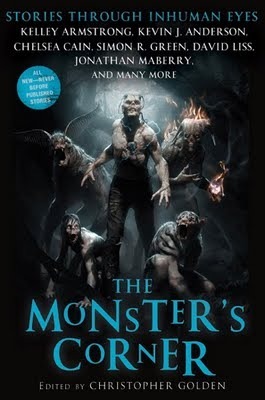
But enough about me.  The topic at hand is monsters.  And the book at hand, compliments of today’s mail and the publicity department at St. Martin’s Press, is The Monster’s Corner, an anthology of all-new stories edited by Christopher Golden.

All new monster stories, I hasten to point out. 19 tales of classic and original creepy-crawlies, all told from the point of view of the monster. Here’s the marketing blurb:

Demons and goblins, dark gods and aliens, creatures of myth and legend, lurkers in darkness and beasts in human clothing… these are the subjects of The Monster’s Corner, an anthology of never-before published stories assembled by Bram Stoker Award-winning author Christopher Golden.

With contributions by Lauren Groff, Chelsea Cain, Simon R. Green, Sharyn McCrumb, Kelley Armstrong, David Liss, Kevin J. Anderson, Jonathan Maberry, and many others, this is the ultimate anthology on the dark heart of a monster.

I like it. I also like the author line-up: a fine mix of names I admire — including David Moody, Tananarive Due, Michael Marshall Smith, Gary A. Bruanbeck, and the marvelous Tom Piccirilli — and a terrific sampling of up-and-coming novelists whose work I have not yet tried. A great way to survey the horror field while enjoying some fine monster fiction, I think.

Christopher Golden’s previous anthology for St. Martin’s Press was The New Dead, which I quite enjoyed (when my teenage sons finally let me have it back, anyway). The Monster’s Corner is 389 pages in trade paperback, with a cover price of $14.99. The official on-sale date is Sept. 27.

Little Lulu Volume 25: The Burglar-Proof Clubhouse and Other Stories

Little Lulu Volume 25: The Burglar-Proof Clubhouse and Other Stories

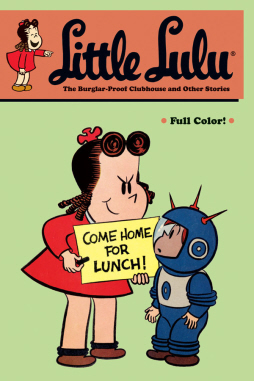
little-luluDuring my heyday as a young comic collector — from maybe 1973-1977 — I primarily chased Marvel titles, with the occasional DC offering like Legion of Super-Heroes, and a smattering of Charlton comics such as Blue Beetle. Like most ten-year-old collectors I scorned kid’s comics, of course.

At least in public. Behind closed doors, I loved virtually all comics, and read whatever I could get my hands on: Archie, Uncle Scrooge, Casper the Friendly Ghost, and even Little Lulu, which featured the comparatively tame adventures of Lulu Moppet and her neighborhood friends as they hunt for wild turkeys in the local woods, solve the mystery of a missing tea cup, and go to school.

I only recently discovered that Dark Horse Comics has reprinted over a decade’s worth of Little Lulu in 29 volumes (!!), many of them in full color. A pretty staggering feat of cultural scholarship, sure, but I have to admit my initial reaction was “Who the hell wants to read that much Little Lulu?”

Me, as it turns out.

Just as I did roughly 40 years ago, I slipped a copy of Little Lulu into a stack of larger comics when I thought no one was looking.  Back then it would go between Amazing Spider-man and Grimm’s Ghost Stories, just before I marched up to the drug store counter with my stack of quarters.  Last week, I quietly added it to my Amazon cart between Hellboy, Volume 1 and Marvel’s collected Son of Hulk, when my kids were in the other room. Listen — no matter how old you are, the scorn of children is a terrible thing.

As soon as that package arrived, it wasn’t Hellboy or Son of Hulk I opened first. It wasn’t even Star Wars: Knights Of The Old Republic, Volume 7, and that baby had storm troopers on the cover. No. It was Little Lulu.

Read More Read More

Rise of the Mutants?

Rise of the Mutants?

Four-year-old David Petrovic demonstrates the mutant abilities that make him your future master.
You can’t trust anything you read on the Internet — even articles from mainstream sources like AOL and CNN. But that doesn’t mean you can’t enthusiastically share them with all of your friends.

In that spirit, I’d like to pass along this little tidbit I read this morning about a pair of mutant cousins in Serbia who exhibit magnetic powers much like Marvel Comic’s Magneto — minus (so far) the latent megalomania and cool helmet.

Two boys from the central Serbian town of Gornji Milanovac have the rare ability to attract metal objects, acting much like human magnets… Sanja Petrovic, the mother of 4-year-old David, said it first came to her attention “about a month ago.”

“I asked him to fetch me a spoon so I could feed his little brother, and he yelled back: ‘Mom, it sticks!'” Petrovic recalls. “I found him with several spoons and forks hanging from his body.”

The phenomenon is rare and so far medically unexplained. Several similar cases, however, have recently been reported in Serbia, Croatia and Bosnia. “As far as I know, there is no medical or scientific explanation,” said radiologist Mihajlo Dodic, who runs a practice in the Serbian capital, Belgrade. He said the cousins’ magnetism borders on the “paranormal.”

Well, that about wraps it up for normal humans.  I thought for sure we had a few generations left before being put out to pasture. I hope the camps they make for us are comfortable and equipped with most amenities.

Read More Read More

Elwy Yost, July 10, 1925 – July 21, 2011

Elwy Yost, July 10, 1925 – July 21, 2011

elwy-yost1I know, I know.  You’ve never heard of Elwy Yost.

But you probably didn’t grow up in Ontario in the late 70s and early 80s. Those who did knew and loved Elwy Yost.

Elwy Yost was the host of TVOntario’s Saturday Night at the Movies from 1974–99 and, more importantly to me, the half-hour weekday show Magic Shadows, from 1974 until the mid-80s.

When I was 12 years old in 1976, my after-school ritual was well-established. Walk home from Sir Wilfred Laurier High School, finish homework, eat dinner, and then stretch out on the living room floor, lying on my stomach with my feet in the air, to watch Magic Shadows.

Magic Shadows presented classic Hollywood movies, cut into half-hour serials and introduced by Yost with erudite and infectious enthusiasm. Best of all, Yost had an unapologetic fondness for the occasional monster movie, including King Kong, Gorgo, and others. On those weeks when the main feature would wrap up by Thursday, Friday would feature an episode of a true film serial like The Adventures of Captain Marvel, Mysterious Doctor Satan, or Captain America.

For those who do remember, here’s the animated intro to Magic Shadows on YouTube, and a sample of classic Yost as he introduced the 1954 Marlon Brando pic Desirée. Watching these two clips brought me right back to the late 70s. [Thanks to my friend Todd Ruthman for sending them my way.]

In later years Elwy Yost was overshadowed by his son, Graham Yost, who moved to California to become a screenwriter (Speed, Broken Arrow) and writer/director (of the HBO miniseries The Pacific). Speed was the last movie Yost hosted before retiring from Saturday Night at the Movies in 1999. Elwy Yost wrote Magic Moments from the Movies and two young adult novels, Secret of the Lost Empire and Billy and the Bubbleship, and a mystery novel, White Shadows.

I would develop a lasting fondness for pulp fiction when I discovered pulp magazines later in high school. But it was Elwy Yost who showed me that the best adventure fiction — yes, even monster movies — deserved to be preserved and studied with the same loving attention as the finest cinema. He was a man who loved film, and who communicated that love to an entire generation of young Canadians.

I miss him already.