Red Sonja 15
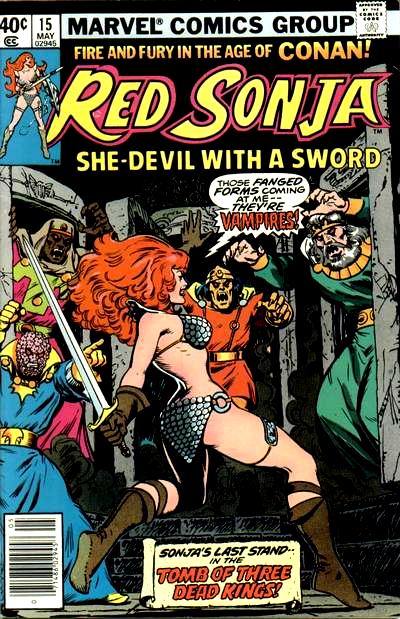 I know I’ve gone on about this before, but cover spoilers can ruin an otherwise great story. Seriously, click the cover to Red Sonja 15 and tell me if you can guess the secret of the three dead kings. Honestly, even the title (The Tomb of Three Dead Kings!) practically gives it away.
So it is a little surprising when we open to page one and find … a mummy. Just some guy wrapped in cloth strips, surrounded by a circle of swords in the snow. Sonja stops at the sight of him and is about to take a closer look when she sees three men dressed like kings (spoiler, they are) riding in the distance. So what’s an adventurer to do? Investigate the mummy or the three kings riding together in the dark?
Sonja opts for neither. Instead, she heads in the opposite direction to a sleepy little town where she finds a warm inn to relax in.
Of course, Red Sonja’s idea of relaxing includes beating everyone at dice until her satchel is full of coins and everyone at the inn is mad at her. She gets invited into the backroom by three of the losers, only to get attacked. Even though she’s expecting it, one of them gets a lucky shot and Sonja’s quickly stripped of her sword and purse, then thrown out in the snow.
Even with her cloak, that bikini isn’t helping much in the snow. And, honestly, why would she still be wearing a bikini in the dead of winter? In fact, a metal bikini would get even colder than a regular cloth one. Even her horse is wearing a blanket.
Fortunately, Red Sonja always keeps an emergency coin in her boot, so she has enough to cover a crappy inn on the other side of town. Before she goes, she manages to steal a sword by holding a passerby at knife-point. Near as I can tell, this is just one of the shlubs she beat at dice a few hours earlier. He’s not one of the guys who attacked her and he didn’t even try to hold out on what he owed. He just happened to be at the wrong place at the wrong time and now Sonja has a new sword.