Robert Silverberg on “Are the days of the full-time novelist numbered?”
 In a post on his blog last week, Canadian science fiction author Robert Sawyer asked “Are the days of the full-time novelist numbered?”
When I broke into the business 55 years ago you could count the number of full-time science fiction writers who could pay the rent and eat regular meals on the fingers of one oddly proportioned hand. Poul Anderson, Gordy Dickson, Robert A. Heinlein, Arthur Clarke, Robert Sheckley, maybe Jack Vance, and….well, who else? Jack Williamson? Perhaps he had begun teaching by then. Asimov was still a college professor who wrote s-f on the side. Ted Cogswell was a professor also. So was James Gunn. Phil Dick was a full-timer, but lived at the poverty level. Sturgeon didn’t do much better. Del Rey dabbled in editing and occasional agenting. Harry Harrison did editing work, wrote comics, whatnot. Leiber was an editor for Science Digest. Jim Blish wrote p-r stuff for the tobacco institute. Cyril Kornbluth worked for a wire service. Fred Pohl edited and agented. Alfred Bester wrote for the slicks and TV. I’m not sure what Phil Klass did for a living — he wasn’t teaching yet — but he couldn’t have lived on the proceeds of what he wrote. Kuttner and Moore — I don’t know; they did venture somewhat into television and mystery novels.Leigh Brackett was a part-time Hollywood writer and her husband Edmond Hamilton earned most of his living writing comic books. Mack Reynolds and Fred Brown had fled to Mexico, where a dime went as far as a dollar did here.
It just wasn’t a field for full-timers. I didn’t really know that, so I plunged right in and made a good living, but I did it by dint of writing and selling a couple of short stories a week, and even then the field vanished from under me by 1958 and I had to turn to all sorts of non-sf writing until things began to revive in the mid-1960s. The same happened to Harlan, and then he got drafted, and when he came out he went to Chicago to edit and on from there to Hollywood.
Now we are back to the same situation that obtained in the golden era of the Fifties — s-f is mainly a field for hobbyist writers, with just a few able to earn a living writing just the real stuff and nothing but. (It is different, of course, for those who write pseudo-Tolkien trilogies, vampire novels, zombie books, and other sorts of highly commercial fantasy.) For a while, in the late 70s and early 80s, the money flowed freely and all sorts of people set up in business as s-f writers full time. I remember Greg Bear, president of SFWA somewhere back in the mid-80s, warning the writers at the SFWA business session not to quit their day jobs, because the good times were just about over; and was he ever right!
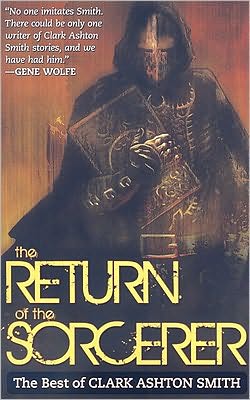 Confession: I am a fan of pulp fantasy who has, until recently, read very little Clark Ashton Smith. Yes, the man who comprises one of the equilateral sides of the immortal Weird Tales triangle has largely eluded me, save for a few scattered tales and poems I’ve encountered in sundry anthologies and websites.
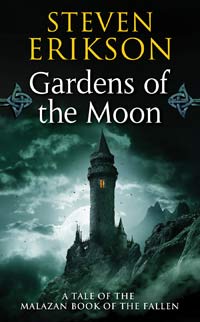 Over at Tor.com, bloggers Bill Capossere and Amanda Rutter have commenced an epic re-read of all ten volumes of The Malazan Book of the Fallen, starting with the first novel, Gardens of the Moon.
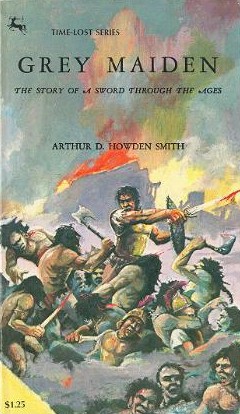 I have a habit of buying books — a compulsion, really. Older books, mostly, from book fairs and small used bookstores. Things that look unusual, and which, in the absence of an immediate reason on my part to read them immediately, often sit on my shelves for some time before I get around to them.
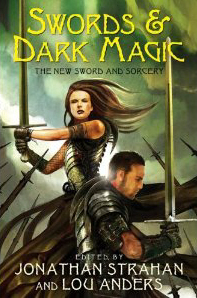 Lou Anders
 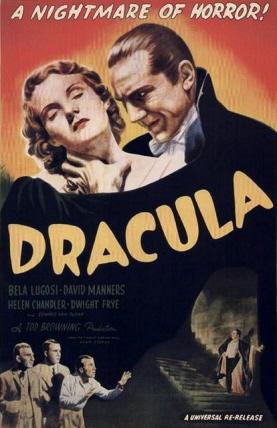 Dracula by Bram Stoker frequently vies with The Maltese Falcon by Dashiell Hammett as my favorite book.
 Okay, writers. Let’s say you have a short story idea or two, but you don’t know the best way to write it. Some sage writers with some sales under their belts tell you that you Must Outline. Other wisened authors tell you to just, “Go where the story takes you,” that you shouldn’t outline at all.
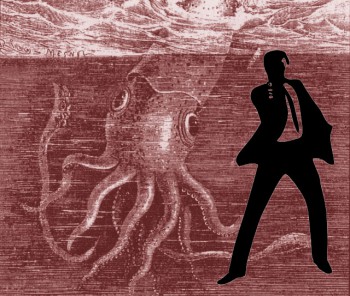 Mania, my dear Mister Bond, is as priceless as genius.