Catching Up With Arkady Martine
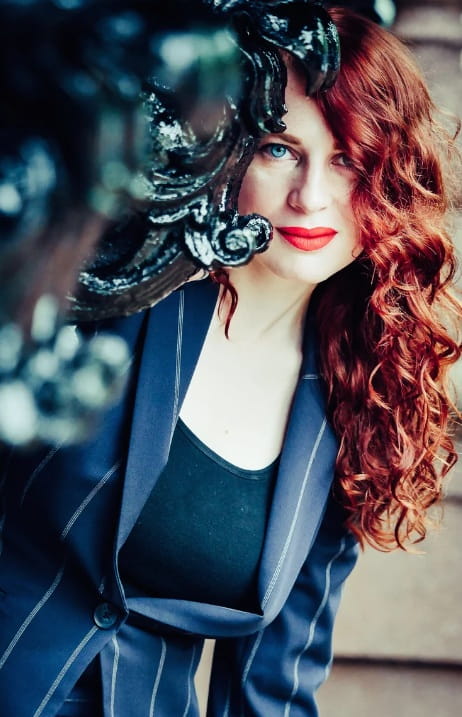
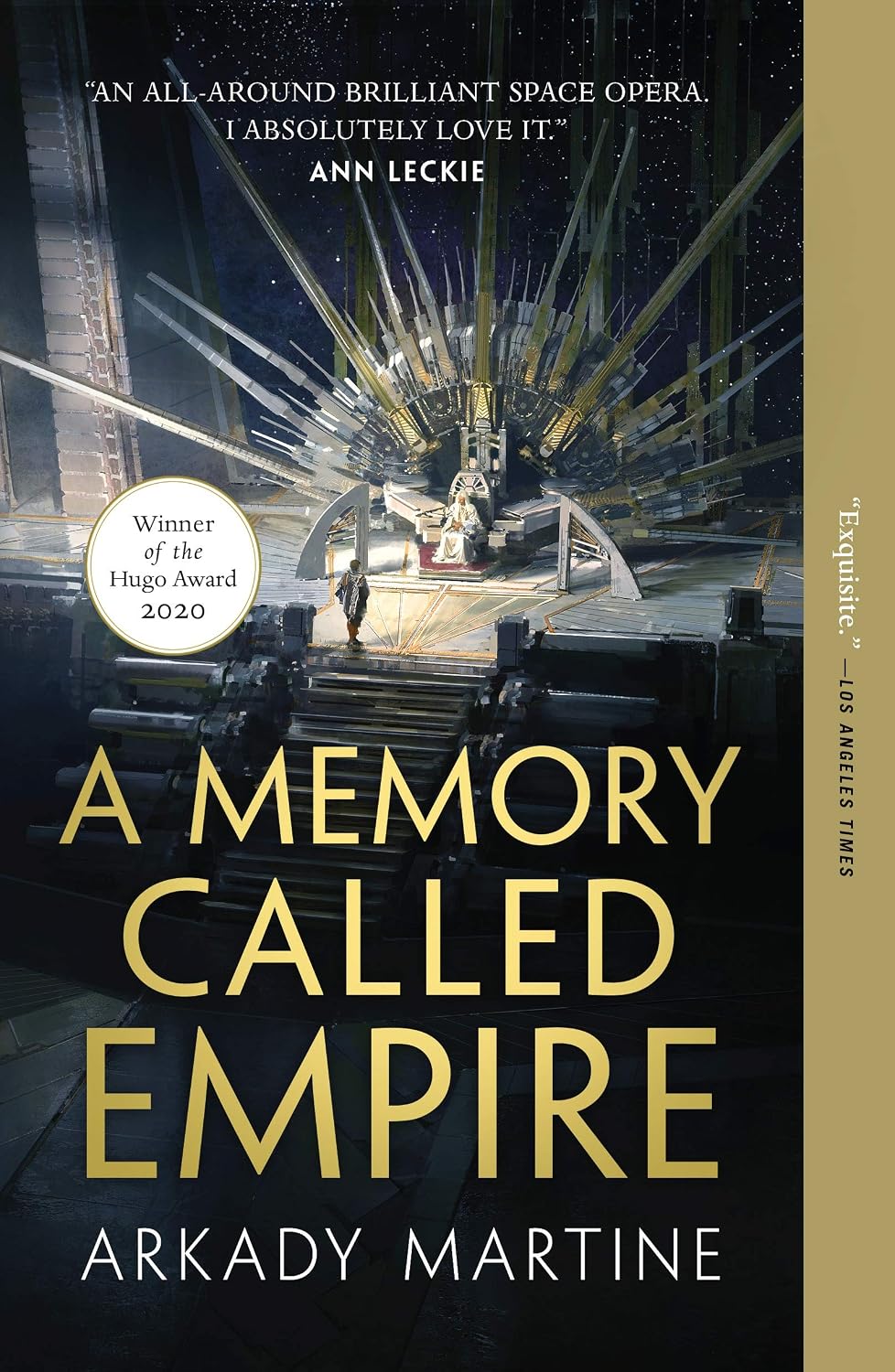
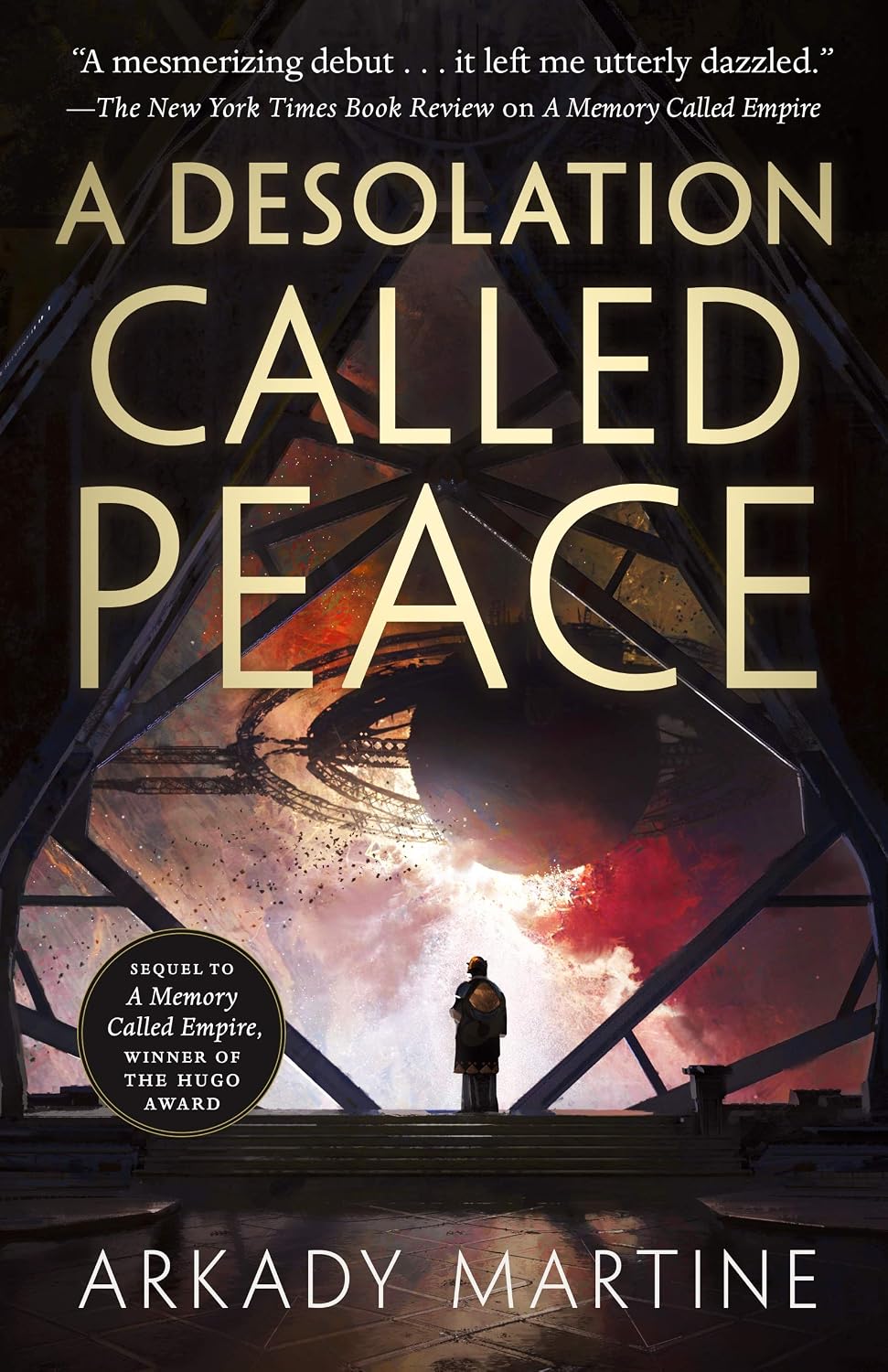
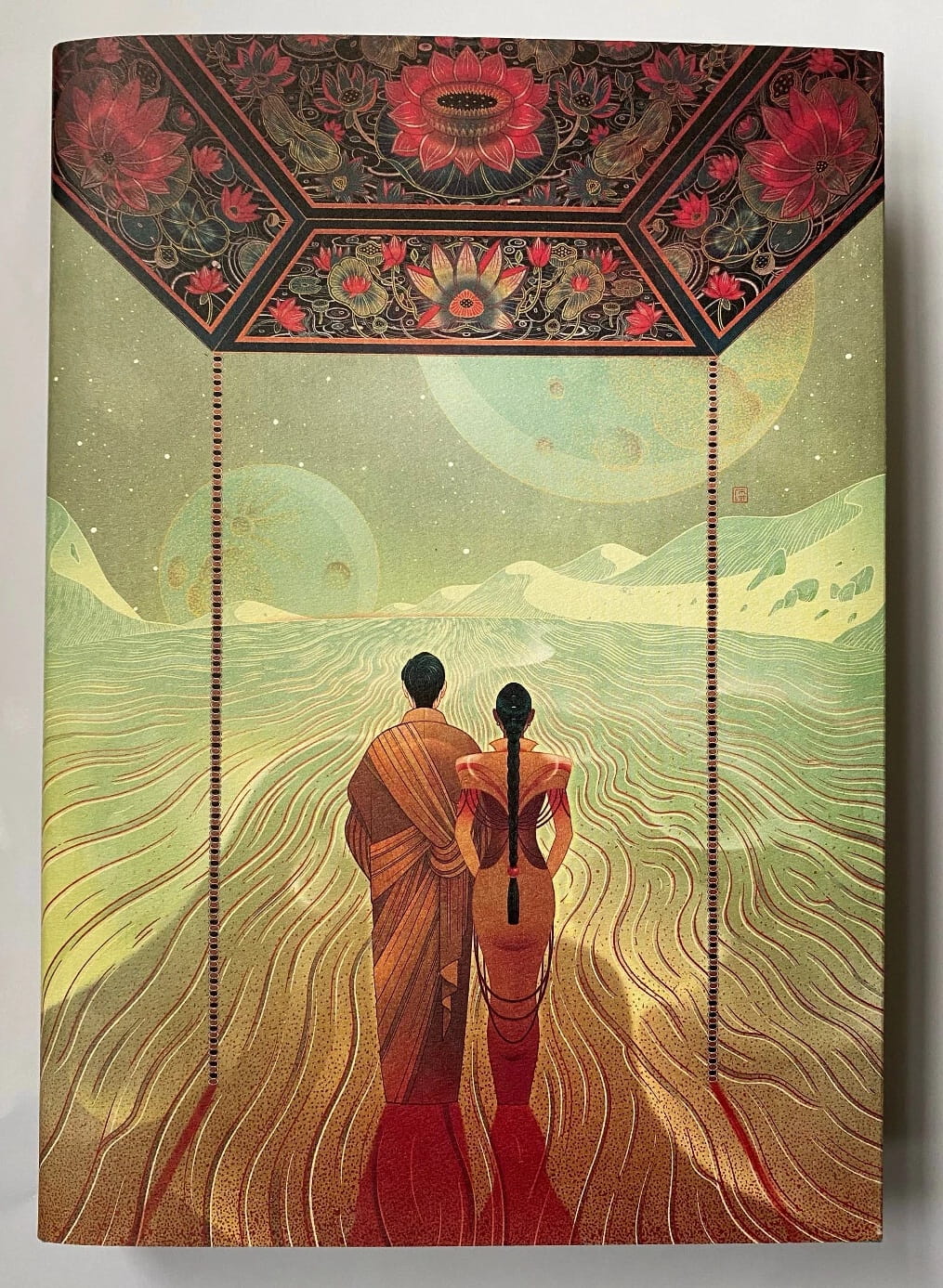
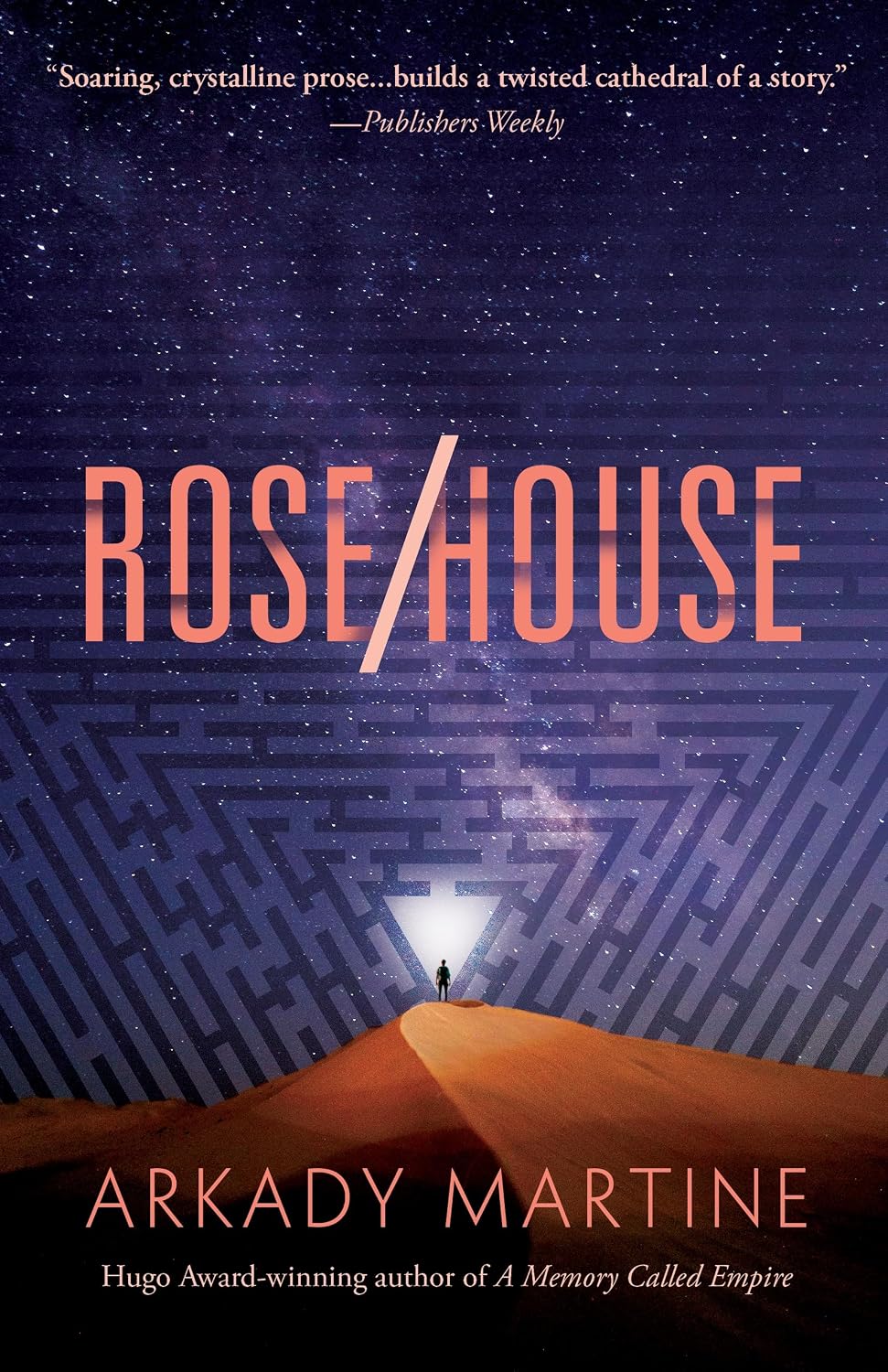
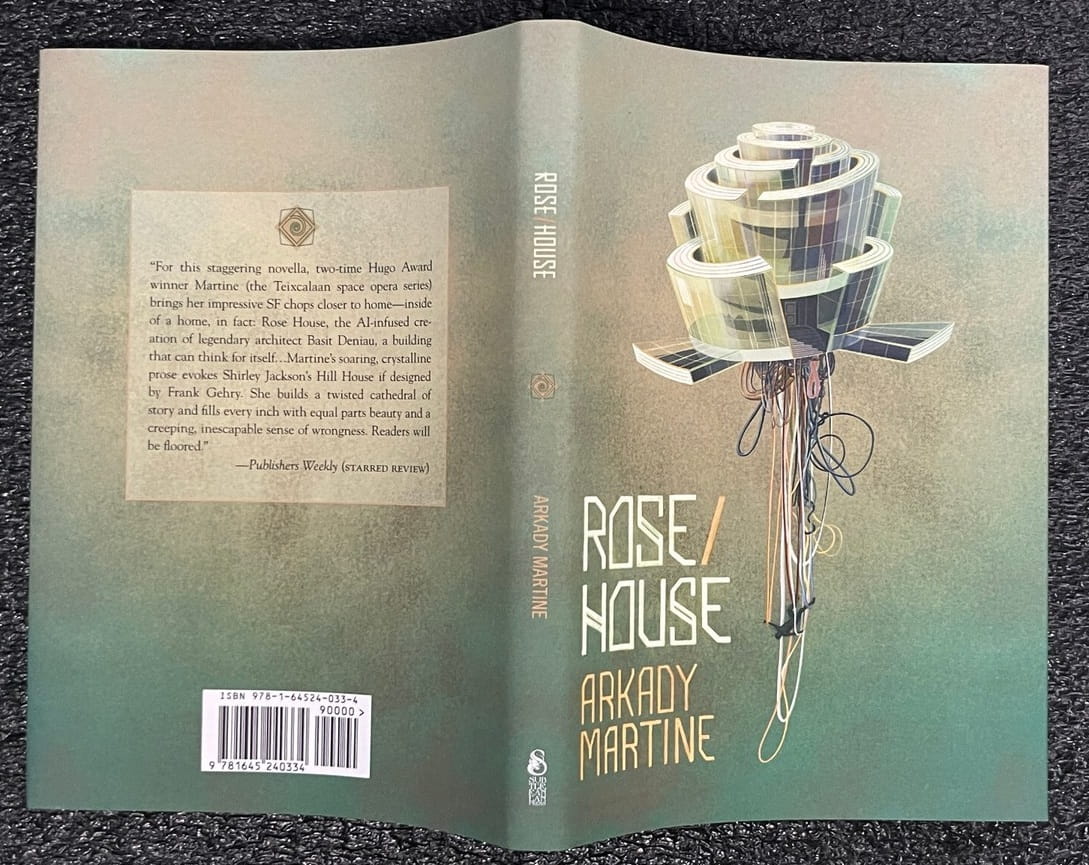
When Arkady Martine burst onto the scene with A Memory Called Empire in 2019 she did so with the type of debut that lives long in the memory. The novel pulled off something new authors dream of doing-injecting the genre with a style and characters that feel fresh. An award-winning sequel, A Desolation Called Peace, followed in 2022 as did multiple short stories and the novella Rose/House shortly in the years since.
Martine has stood out even more for her unique background, being a climate scientist, historian, and academic. Under her real name, Dr. AnnaLinden Waller, she’s written boatloads of essays about everything from Byzantine imperialism to the most pressing climate issues of our time.
Needless to say she is very, very busy. Thankfully, the author was more than happy to give her time to a wayward journalist writing for Black Gate. We caught up to talk about craft, empires, and where her writing will take us next.
 |
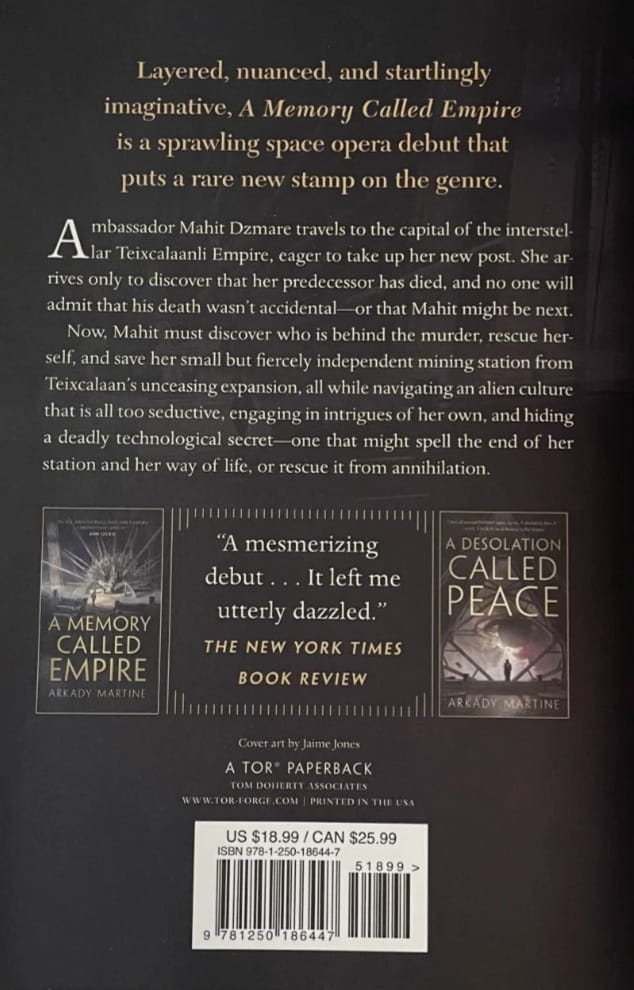 |
A Memory Called Empire (Tor paperback reprint, February 25, 2020). Cover by Jaime Jones
You’re a historian, scientist, a doctor- you wear many hats. You’re super busy. What attracted you to write speculative fiction?
Oh God, I’ve been writing speculative fiction for as long as I’ve been writing anything so maybe since I was like 8. I grew up in a family that read speculative fiction. My dad was a big sci-fi reader. Our house was full of all those paperbacks with the yellow edges. So I grew up reading it and loved it from the minute I did. So when I think of stories they are speculative unless I try really, really hard to make them not. And even then sometimes it doesn’t always work.
How has your work as a historian and scientist impact your writing?
Completely. The Teixcalaan novels really came out of the work I did as a historian. They were in some ways a version of a post-doctoral project I was working on except the ideas behind that post-doctoral project in fictional form. Another way of exploring the same things really.
I think the reason I will never not have a day job is in part because day jobs give you health insurance but also because I feel like the more I am exposed to ideas and ways of examining the world the more I work with them on a everyday basis that makes me familiar with them, the more interesting my writing gets, the more in-depth I can be.
The Teixcalaan novels seem to draw a lot on Central American culture and history, particularly with the Teixcalaanli themselves. How did that come about and did your knowledge of Byzantine history also play a role in shaping the empire?
So, there’s a lot of Central American history but there’s also equally as much Byzantine history if not more and other things too. There’s the history of the Mongol Empire, there’s a bunch of American imperial history. So I started thinking about empire as a comparative historian of the Middle Ages. I worked on Byzantium, I worked on Byzantine imperialism. But I don’t want to write historical fiction, that’s like the one thing I don’t write. Its because I’m a historian, I know too much. And I don’t know how to convey that, you don’t have the freedom you do when you’re making up your own world. Even when you are using a great deal from what you do know of what you studied, the level of precise recreation that is required for historical fiction, I as a historian feel that I would screw up.
So, I started with the things I was thinking about in terms of Byzantine modes of imperial ideology because those were the ones I had been obsessed with. But I didn’t want to write an empire that just felt like Byzantium for several reasons. One important one though was that I wasn’t interested in writing about a monotheistic religion. That wasn’t part of the culture complex of imperialism that was what I wanted to explore and the Byzantine empire was incredibly Christian in some deeply important ways. Like there’s this identification between having one god and one emperor and one empire that comes out of how the Roman Empire became Christian in the third century AD. Wasn’t interested, wanted something totally different. So I went looking for other places that I could draw inspiration and ideas from.
One of the peculiar facts about Central American and Mesoamerican history is how contemporaneous some of these big empires were. For example, the latter Byzantine empire, which existed until the 1400s, overlapped with the Aztecs, the Mexica. So I was thinking about what is different about the forms of imperialism that exists in pre-western contact Mesoamerica than the ones that develop in Central Asia, the Caucasus and Anatolia. And there’s lots of differences but one that really worked well for me was how ideologies of conquest work when you have multiple gods and that was one of the big inspirations I took from Central American imperial cultures.
And I was also very interested in some of the aesthetic inspiration for several reasons. One I knew that it wouldn’t be the familiar sort of space opera trope that a lot of my readers would be familiar with. I like pushing that boundary. I am very uninterested in having the worlds I create look like worlds that people expect them to. Like sometimes I do love some of those really traditional s0pace opera plotlines like you know space battles and negotiations on the bridges of starships. Love it, cannot do without. But I don’t always love the sort of sterile, sometimes hyper western only metal and glass thing. Why not flowers, why not gold, why not all of this over the top from a certain cultural perspective. Like efflorescence of culture. I wanted to design a space empire that relied on richness in visual life to do some of their cultural work. Because I find that really interesting when I encounter it as a historian or as a person in the actual world too.
That’s one of the things that immediately caught my attention when reading the first book was how unique their naming customs are. They reference clouds, flowers, all sorts of different phenomena that first and foremost feel authentic. It reminds of ancient Mesoamerican naming customs. But it also feels really unique and different because its unlike anything I’ve read in a sci-fi novel before.
There are definitely places where I took some inspiration from but I don’t think anyone else has built a name system like that, that’s writing science fiction anyway.
Another cool thing about the Teixcalaanli books is how you balance world-building and characterization. I know a lot of writers struggle with doing that. Are there any rules you follow that helps you maintain that balance?
I don’t think I have rules. This is something that I find relatively natural because to me, I’m not a person who sits down and builds the world before I do anything else. That feels really sterile. And for some people that works but for me I want my worldbuilding to respond to what I want the world to feel like, kind of in a thematic or aesthetic (or both because the two are very close) way. And also to the kinds of character dynamics and plot dynamics that I am interested in. When I start any writing project, whether it’s flash fiction or a multi book series, I know what it should feel like. A lot of my worldbuilding twists emerge out of that more than they emerge out of doing systematic worldbuilding.
But of course then I have to justify everything I’ve chosen. It has to all work together, it has to all be plausible given the rules of the universe that I get to set, and this is why speculative fiction is fun: I get to set the rules. But I do have to obey them after I set them and if I want to break them I have to have a good reason and be able to justify them in the world that I have built.
So for me, I think I spend a lot of time inside my characters heads. I’ve heard from readers that I do a lot of internality and that’s true. I definitely think about characters as having very complex internal lives. I thinks its probably harder for me to write ones that don’t. And that internality is one of the ways world-building happens because world-building emerges from character observation of the world, or if you are doing some kind omniscient narrator, what the narrator wants to say. Because everything is a pattern of noticing. So a character like Mahit Dzmare who is new but has a lot of cultural knowledge that she has gained from academic work and cultural work that she has done, she is going to pick up on things but she is also going to point out that she has picked up on them which made my job really easy in introducing readers to the world.
But a character like, in the second book, the imperial heir Eight Antidote, he has always been immersed in the culture that he lives in but he’s young. He’ll also notice things that are different or have changed and that’s a way of telling a reader what’s important. I feel like world-building is fundamentally about character and theme. At least the role of communicating the world to the reader is.
There are many reasons people write under a pseudonym and I was wondering why you do? Is it to draw a line between your Fiction and non-fiction work?
I chose to write under pseudonym and its always been an open pseudonym. I never tried to disconnect the pseudonym from my legal name which I also have a somewhat public life under, but at the time when I started publishing I believed that I would work in academia for the rest of my life. That ended up not being true.
While I didn’t really have qualms about my students or my colleagues knowing that I wrote fiction I wanted basically to do some disambiguation on a google search. That if you googled ‘Arkady Martine’ you would get all the science fiction first and then if you read the bio you’d be like ‘oh she does this other stuff’. Then if you were interested you could go look at that. And vice versa: if you google ‘AnnaLinden Weller’ you would find, at the time, all the academic work on Byzantium first. Now its academic work on Byzantium and a whole lot of work on clean energy policy because I’ve had a very weird life and continue to do so.
But, again, if you’re interested there’s that footnote of ‘also writes novels under the name Arkady Martine’ and you could go find her and read that if you’re interested in it. I wanted people to have an easy time to find what they’re looking for.
I would make a different choice now if I were starting brand new. Mostly because I think that the experience of having an open pseudonym has taught me that people are very comfortable with people who do multiple things especially in the fields I ended up in. I don’t know if it would be true in academia but, working in climate and energy policy, there’s really no reason to do the disambiguation so much.
So I probably wouldn’t have picked a pseudonym if I was just starting to publish now. On the other hand I’ve been Arkady for 15 years almost and I like her. I answer to Arkady as easily as I answer to AnnaLinden and I’m never going to give it up now.
What are some things that have changed in the world of speculative fiction since you entered the industry? As a reader for example I’ve noticed the selection of sci-fi and fantasy available is a lot richer and written from a lot more perspectives.
I agree with you. That’s definitely changed. There is a recognition of how wide the audience is for speculative fiction. It is not a new audience. Like, people of every color and gender and sexual orientation have always read science fiction. It is of interest to everybody in one way or another. But there is a lot more recognition that those audiences that are not straight white men or straight white boys, exist and are interested in things that might have more to say to their particular way of viewing the world.
I feel lucky in some ways that I came to the field during a period where the fact that I’m queer didn’t matter at all. I actually think that has changed for the worst in the past five years, that it is actually harder now to unquestioningly write queer stories. Its still happening , there’s plenty of queer stories that are being written and being published. But I think that now I would have to make more of a case for it than I did in 2018 when I sold my first book. And that is a sad commentary on the state of the world and how any industry, publishing included, responds to the political and social developments that have happened over the past couple of years.
I am equally frustrated with some of the difficulties that I have heard from my friends of color who have, not a closed door but it is a narrower one than it might have been a couple of years ago. So, these things are not guaranteed. But I do think, still, that the experience for the reader is so rich, nevertheless in a way that wasn’t true when I was kid, when you were a kid. That a reader can find a story to their liking, whatever that is.
I’m also pleased in some very real ways with how mainstream speculative fiction has gone. Both in things like Jeff VanderMeer’s Annihilation which has taken over the literary scene. People who read literary fiction, its literary fiction for them and I absolutely see how that can be true. It works as literary fiction. And, on the complete opposite end, something like Dungeon Crawler Carl which, my coworkers who don’t read, talk to me about. And that delights me. Like, neither of those books are for everybody but they have escaped the sci-fi and fantasy section of the bookstore and I think that’s valuable for the reading public in general and also to have a stream of new readers that are going to get to enjoy speculative fiction in all its varieties as they have had whatever entry point worked for them. Whether its something literary fiction or something really, really popular.
One thing about your writing that I and many other readers enjoy is how fresh your prose feels. What are some ways that writers can make their prose as consistently interesting and beautiful as yours? One thing speculative authors have struggled in the past with is prioritizing beautiful language or plot. You’re one of those writers that is able to do both. What’s the secret?
I feel like this is a false dichotomy. Beautiful language serves plot if you do it right. I’m trying not to be rude and say skill issue guys but…(*laughs*)
I love language. I love words. I love the effects that words can have on people when they are read, when they are spoken aloud too. It has been important to me since I began writing to make images and sound patterns that have an effect on readers.
I read very widely. A lot of science fiction, a lot of non fiction, a lot of literary fiction. I read terrible mystery novels, like the stuff you buy at airports because you need something to read on a plane. But I think this has allowed me to collect a lot of different ways of writing. And in general I think that the richness of language allows for precision in imagery. In meaning. And also in thematic arc and intention. If you are choosing very deliberately one word over another, one set of sort of… its not like a set of metaphors but a set of thematic notes that appear over and over again you can do a lot of work for the reader subconsciously in having them feel like: “well this story is super, super high and it feels grim and cold.” All of that can be done with figurative language without telling the reader ‘oh and yeah everything is happening in like a gloomy, iced over northern city’. You can say that but then how you say it matters.
I’m just in love with words and one of the things that I decided very early on in writing the Teixcalaan books was that I was not going to simplify for some hypothetical reader that might not enjoy complex language. That, if I was going to spend all this time writing a book-because they take forever writing a book, its annoying- I was at least going to love what I made. So as much figurative language as I liked. I mean I have pulled back a lot. If people read my juvenilia from when I was like 18 its fairly unreadable in its level of complex prose in which nothing happens. But I got better (*laughs*)
What does the future hold for you? Anything readers should be looking forward do?
There will be new things. There should be a bunch of short stories in the next year or so. I’m working on a novel. I’m not done with it so I don’t really have a good sense of a release date but I am hopeful that after a bunch of life stuff that’s happened to me this year has sort of settled down, which it is beginning to do, that that will start the wheels of publishing to turn on that project. And that (the book) is a second world fantasy but not in anyway a medieval fantasy, it is a modern fantasy. It’s a Cold War thing with luck magic and weird demons.
Will you ever return to the Teixcalaan universe?
Oh yeah, absolutely. I’m just not sure when but that world is so big and I love it very, very much so there will be more books of it at some point.
Ismail Soldan is an author, journalist, and poet from Seattle, WA. He invites readers to follow his musings on Substack, where his latest article explores the use of Arabic in Dune. His work has also appeared in Illustrated Worlds, Swords and Sorcery, and LatineLit. Check out his short story “Heavenfall” in JR Handley Presents: Contested Landing Vol. 2.