The Ship of Ishtar
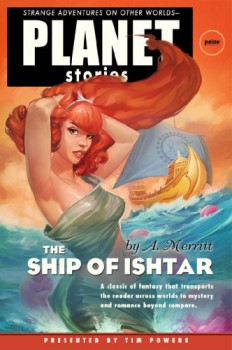 The Ship of Ishtar
A. Merritt (Paizo Publishing, 2009)
I first read The Ship of Ishtar in a 1960s Avon paperback I found in a used bookstore in Phoenix. This copy is so brittle that I have to specially brace the book each time I open it or else the spine will separate like the San Andreas fault and the pages flutter down in a yellow autumn fall.
What I’m saying is . . . I’m extremely glad that Paizo Publishing has brought my favorite A. Merritt novel back into print in an edition that doesn’t make me afraid of the physical act of reading it. (Go buy it here.)
It’s strange that Abraham Merritt, one the biggest sellers in the history of speculative fiction, should need an introduction at all today, but sadly he does. Merritt was a journalist by vocation, the editor of The American Weekly, but his forays into writing ornate “scientific romances” starting with The Moon Pool in 1918–19 made him one of the most popular authors of the first half of the twentieth century. Today, he’s the realm of specialists, collectors, and his work is found in volumes from university publishers and small presses. In his introduction to Merritt’s breakthrough novel, The Moon Pool, Robert Silverberg pondered this turn of events that made Merritt obscure. What happened?
Silverberg offers up his own wonderings, ultimately finding the author’s eclipse inexplicable; but I think Merritt’s unusual mixture of two-fisted stalwart heroes in epic action with grandiose, mind-bending worlds of wonder painted in prose arabesques (and millions of exclamation marks!) makes him an author who doesn’t speak to mainstream genre readers today, even if he invented the clichés of countless contemporary fantasy authors. Clark Ashton Smith started as a specialty author and has remained there. Abraham Merritt was a mainstream writer who managed to Clark Ashton Smith himself after his death, ending up as a specialty author as well. Unfortunately, such is often the way of unusual talents. At least The Ship of Ishtar is now only a few clicks away for you to purchase and enjoy.
 As some of you may know, I’ve been talking and thinking and blogging (not necessarily in that order) about reading more, and reading better over the course of the last year. Today being New Year’s Day, the day of resolutions and goal-setting, I thought I’d link to some of the posts I’ve written on the subject for those interested in focusing on ratcheting up their reading in the coming year.
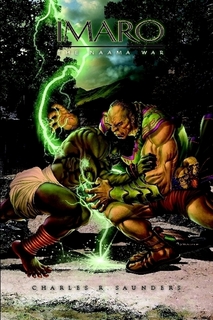 Back when Black Gate‘s editor John O’Neill lived in Ottawa in the early 80s, he was a member of a small SF fan club. His first meeting featured a reading from the editor of an excellent local fanzine, Stardock, who had just completed his first novel. The author was Charles Saunders, the novel was Imaro, and the reading he never forgot.
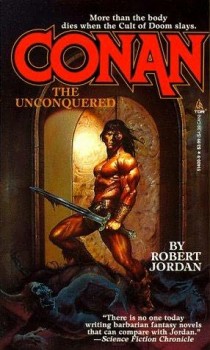 Conan the Unconquered
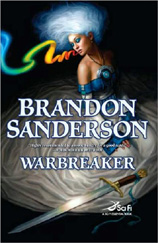 Anyone familiar with the Mistborn series knows Sanderson is expert at spinning fantasy stories packed with memorable characters, crisply detailed settings, unique magic, and major helpings of intrigue. Lately he’s been feted as the writer continuing Robert Jordan’s Wheel of Time series. While I realize that from a purely professional standpoint, the deal was a no-brainer, I hope cleaning up the WoT‘s loose ends won’t keep this talented author from giving us more of his own marvelous work.
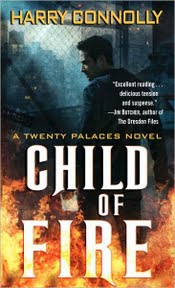 Harry James Connolly made his first fiction sale with “
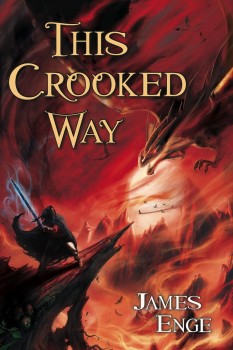
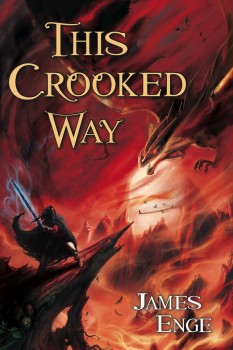 James Enge’s Morlock stories have been some of the most popular fiction we’ve published in Black Gate. His first Morlock novel, Blood of Ambrose, published by Pyr in April, was very warmly received, and described as “A future classic… this novel succeeds beautifully” (The Great Geek Manual) and “Like Conan as written by Raymond Chandler” (Paul Cornell).
 Linwood Vrooman Carter (1930-1988) was one of the heroes of my youth. In the decades since his death his reputation has wallowed in the aftermath of the Last Great Sword & Sorcery Boom. He helped start it, with the Conan books he and L. Sprague de Camp brought back into print, edited, and in many cases wrote, as with the Ballantine Adult Fantasy Series of works he edited and thus brought back into print. (Not adult fantasy as in sex, but adult fantasy as in great classic works that weren’t kid stuff). Books by Lovecraft and Clark Ashton Smith and James Branch Cabell; title I never would’ve read in a million years otherwise, but books which shaped the tastes of many another fantasy enthusiast, myself among them.
 I’ve been in reviewer overload lately, reading, taking notes, and penning reviews for the next issue of Black Gate. But, more than that, I’ve also been coordinating our crop of reviewers this time out, and thinking in terms of what exactly it is that ought to be in the review section of the magazine, not just in the reviews I put up on my own website. Having done over 50 reviews in the last year and a half or so, I think I’ve learned a few things, and I’d like to share my thoughts on what a good review should consist of. And at the end of this essay I’ll also offer some practical advice to anyone that wants to become a web reviewer themselves and share the reasons behind just why someone would want to take the time to review a book in the first place.