The Fantasist Manqué? Robertson Davies and The Deptford Trilogy
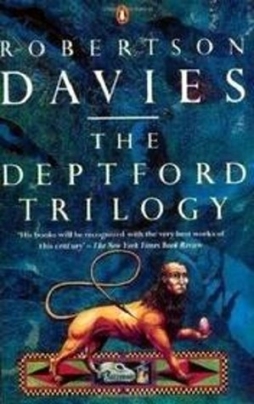 Normally, I write here about fantasy (which to me includes science fiction and horror). But some mimetic novels have a lot to say about the fantastic. Or a lot to say about related themes; wonder, for example, or the numinous. Those books are sometimes worth discussing at Black Gate, I think. Which is why I want to write now about Robertson Davies’s Deptford Trilogy — classics of Canadian literature, novels deeply concerned with wonder — and consider whether they should have been even more open to the fantastic than they in fact are.
For there are moments in these books that at least touch on the fantastic. They’re a set of three interrelated bildungsromans, life stories told in different situations to different audiences. Running through them are themes of magic (both stage magic and actual magic), of dreams, of sainthood and miracles. They’re books concerned with the transfiguration of the mundane by the perception of the numinous. That’s risky terrain, something that can easily come off as banal, but Davies avoids the easy romanticisation of the miraculous in favour of a more complex romanticism — a self-aware examination of the joy that comes with Romance, faced with the claims of the soi-disant Real.
The books are also an in-depth investigation of the subconscious, from a primarily Jungian standpoint; one of the novels, in fact, is essentially the record of a man’s therapy with a Jungian analyst. The trilogy seems to suggest that it’s important to dig a recognition of the magic of the world out of the subconscious. To an extent, it anticipates Urusla Le Guin’s idea in her essay “Why are Americans Afraid of Dragons?” of fantasy as threatening to the North American Puritan mentality, which reacts with censorship and repression. But reading Davies, I found myself wondering, in fact, whether he and his writing had been hindered by that drive to repress the fantastic; whether that repression had been internalised more than Davies and his early critics realised. To explore this, I’ll need to write a bit about Davies and his times and the Canada from whence he came. But it’s best to start with the books themselves.