Browsed by
Category: Books

Danger: Here There Be Dragons (and Clever Children!)
Danger: Here There Be Dragons (and Clever Children!)

paperbagPossibly the most rambunctious children’s author out there is Robert Munsch, whose characters drive bus loads of pigs to school, vanish beneath layers of permanent markers, and scream in the bath with sufficient volume to summon the police.

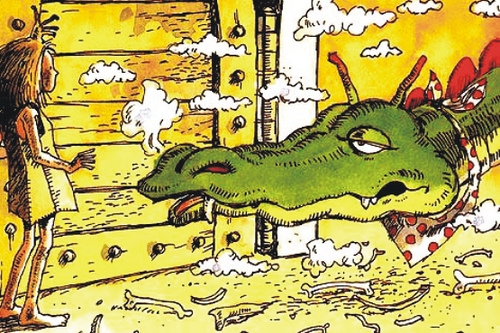
All of his (uniformly excellent) picture books employ elements of fantasy, but only once, to my knowledge, did he and his regular collaborator, illustrator Michael Martchenko, depart entirely our real and rational world long enough to include that nemesis of humanity: the green-scaled, fire-breathing dragon.

Yes, it’s The Paper Bag Princess, one of the best kids’ books I know, rife with hilarious prose, ebullient artwork, and the pluckiest heroine this side of Dorothy Gale. Who says girls can’t have adventures?

The plot is a model of efficiency. Princess Elizabeth lives in a castle, and she’s got riches and a boyfriend, Roland, whom she expects to marry. Curly blonde Roland sports a crown and a tennis racket, and just to be sure we get the idea, Martchenko adds a butterfly cloud of hearts around Elizabeth’s smitten head.
Read More Read More

Future Treasures: A Play of Shadows by Julie E. Czerneda

Future Treasures: A Play of Shadows by Julie E. Czerneda

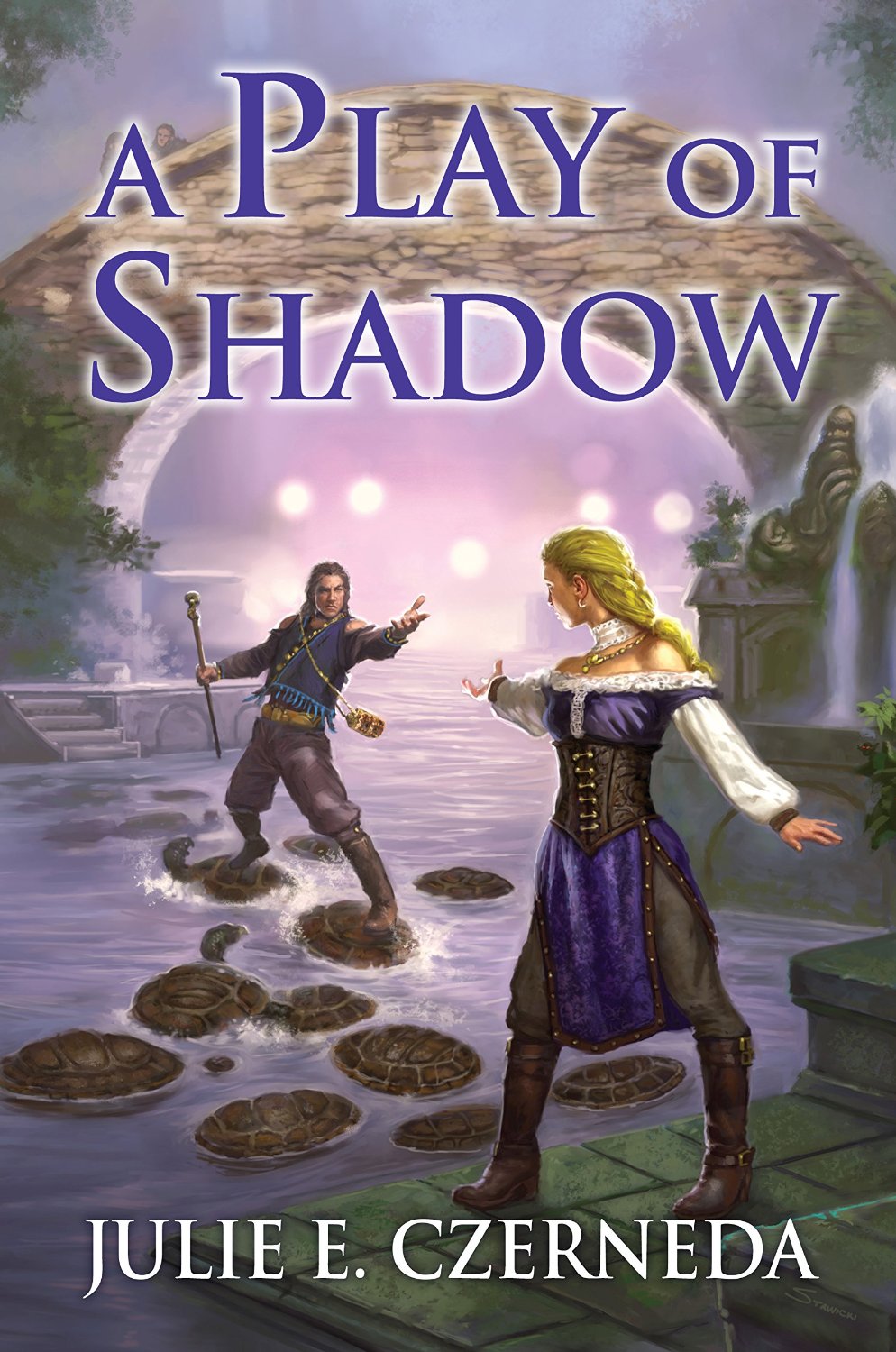
A Play of Shadows Julie Czerneda-smallCanadian writer Julie E. Czerneda has published over a dozen acclaimed science fiction novels and has rapidly built an enviable fan base.

She first dipped her toe into fantasy with Scott Taylor’s groundbreaking anthology Tales of the Emerald Serpent (announced right here back in March 2012), and its sequel, A Knight in the Silk Purse. She took the plunge with her first full-length fantasy novel, A Turn of Light, earlier this year.

The upcoming sequel, A Play of Shadows, returns to the pastoral valley of Marrowdell, home to a pioneer settlement of refugees, enigmatic house toads, and Jenn Nalynn, the turn-born who has always dreamed of exploring beyond the valley’s borders… and who finds that increasingly impossible.

What would you risk for family?

In the second installment of Night’s Edge, Bannan Larmensu, the truthseer who won Jenn Nalynn’s heart, learns his brother-in-law was sent as a peace envoy to Channen, capitol of the mysterious domain of Mellynne, and has disappeared. When Bannan’s young nephews arrive in Marrowdell, he fears the worst, that his sister, the fiery Lila, has gone in search of her husband, leaving her sons in his care.

The law forbids Bannan from leaving Marrowdell and travelling to Mellynne to help his sister. In this world. As a turn-born, Jenn Nalynn has the power to cross into the magical realm of the Verge, and take Bannan with her. Once there, they could find a way into Mellynne.

Read More Read More

The Public Life of Sherlock Holmes: Michael Stone’s Streeter

The Public Life of Sherlock Holmes: Michael Stone’s Streeter

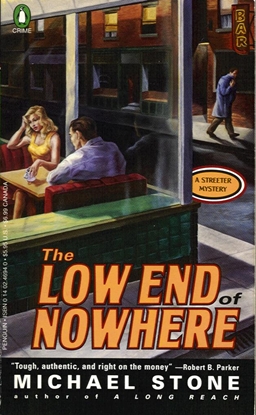
The Low End of NowhereJust after I moved to Colorado Springs, a Denver private investigator named Michael Stone released his first book about Streeter, a bounty hunter in the Mile High City. The Low End of Nowhere had a very cool cover by Owen Smith, who would provide three more for A Long Reach, Token of Remorse, and Totally Dead.

Then, nothing: After four very good novels, Stone simply quit writing. It was as if he’d suddenly passed away. Over the years, I tried to find some news of him on the web but came up empty. He just seemed to lose interest in being a writer in 1999.

That’s a shame, because the Streeter books are quite good. They are very much in the style of the old pulpsters, but with a light touch. Stone clearly appreciated those who had gone before him, like Hammett and Nebel. But his character was no Mike Hammer or Race Williams. There’s finesse in the writing that reminds me of Joe Gores and his DKA novels.

Steeter (we never learn any other name) is physically imposing, having played football at a small division one school for two years before a fight with tragic consequences derailed that life plan. He was working as a bouncer and an accountant (how many of those have you read about?) when he ended up getting a job as a bounty hunter.

He lifts weights daily, fighting a slowly losing battle against the aging process. He even buys some hair-restorer but promptly puts it in a bathroom drawer, afraid to use it. Streeter isn’t a superhero: he’s a guy who works hard at working hard.

Read More Read More

Discover the Best Short Fiction of the Year with Paula Guran’s The Year’s Best Dark Fantasy & Horror 2014

Discover the Best Short Fiction of the Year with Paula Guran’s The Year’s Best Dark Fantasy & Horror 2014

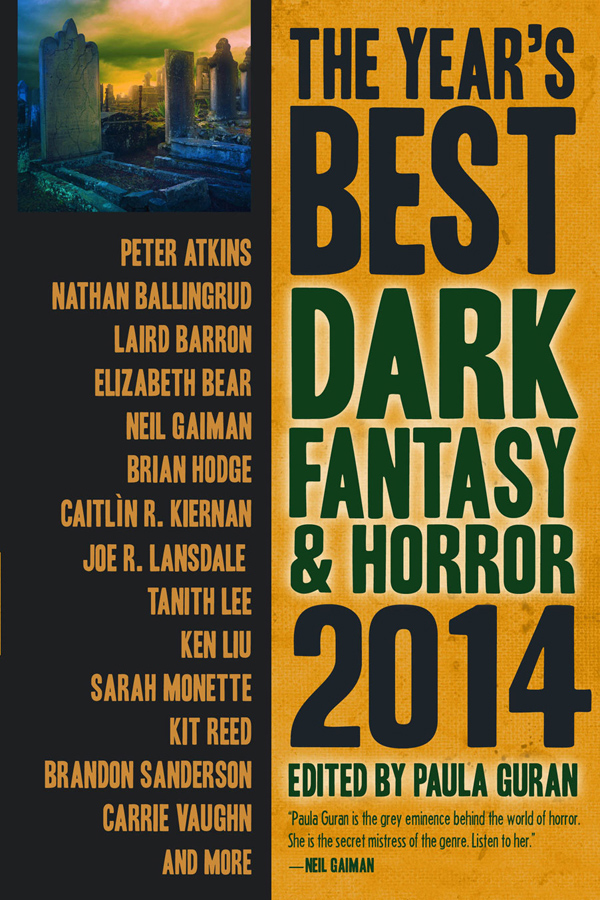
The Year's Best Dark Fantasy and Horror 2014-smallOver the last decade or so, I’ve watched the emergence of a new generation of leading anthology editors. Folks like Jonathan Strahan, John Joseph Adams, Rich Horton, Ian Whates, and Jonathan Oliver. These are the editors who are successfully defining the best in the genre, and whose books I order immediately.

And now, I’m very pleased to add Paula Guran to that short list. I sampled the fourth volume of her Year’s Best Dark Fantasy & Horror back in February, and was very impressed. The fifth volume arrived this summer, with an absolutely stellar line up of authors, and I nabbed it the first chance I could.

Year’s Best Dark Fantasy & Horror is the companion volume to The Year’s Best Science Ficiton and Fantasy, edited by Rich Horton and also published by Prime. We covered the 2014 edition of Rich’s series back in July. Together, these two volumes give you a comprehensive catalog of the best genre short fiction of the year.

This year, the book contains fiction from Dale Bailey, Nathan Ballingrud, Laird Barron, Elizabeth Bear, Neil Gaiman, Glen Hirshberg, Caitlín R. Kiernan, Tanith Lee, Joe R. Lansdale, Ken Liu, Brandon Sanderson, Steve Rasnic Tem, Lisa Tuttle, Carrie Vaughn, and over a dozen others.

It draws from the finest magazines in the field, including Clarkesworld, The Magazine of Fantasy & Science Fiction, Lightspeed, Subterranean Online, Interzone, Apex Magazine, Asimov’s SF, Strange Horizons, and Tor.com, and top-notch anthologies like Fearsome JourneysShadows of the New Sun: Stories in Honor of Gene Wolfe, Clockwork Phoenix 4Dangerous WomenQueen Victoria’s Book of Spells, and many others.

Read More Read More

Vintage Treasures: The Gods Hate Kansas by Joseph Millard

Vintage Treasures: The Gods Hate Kansas by Joseph Millard

The Gods Hate Kansas-smallWith my Vintage Treasures posts, I like to showcase the best overlooked fantasy of the past half century or so. American fantasy is an enormously rich genre, but it also has a notoriously short memory, and there are countless buried treasures to rescue from undeserved obscurity.

Of course, sometimes I like to forget all that and just showcase the weird.

Joseph Millard was an American pulp science fiction writer who published nearly a dozen short stories between 1941 and 1943, and then apparently gave up writing for good. Most of his stories appeared in magazines like Thrilling Wonder Stories, Amazing Stories, Fantastic Adventures, and other pulps. He died in 1989.

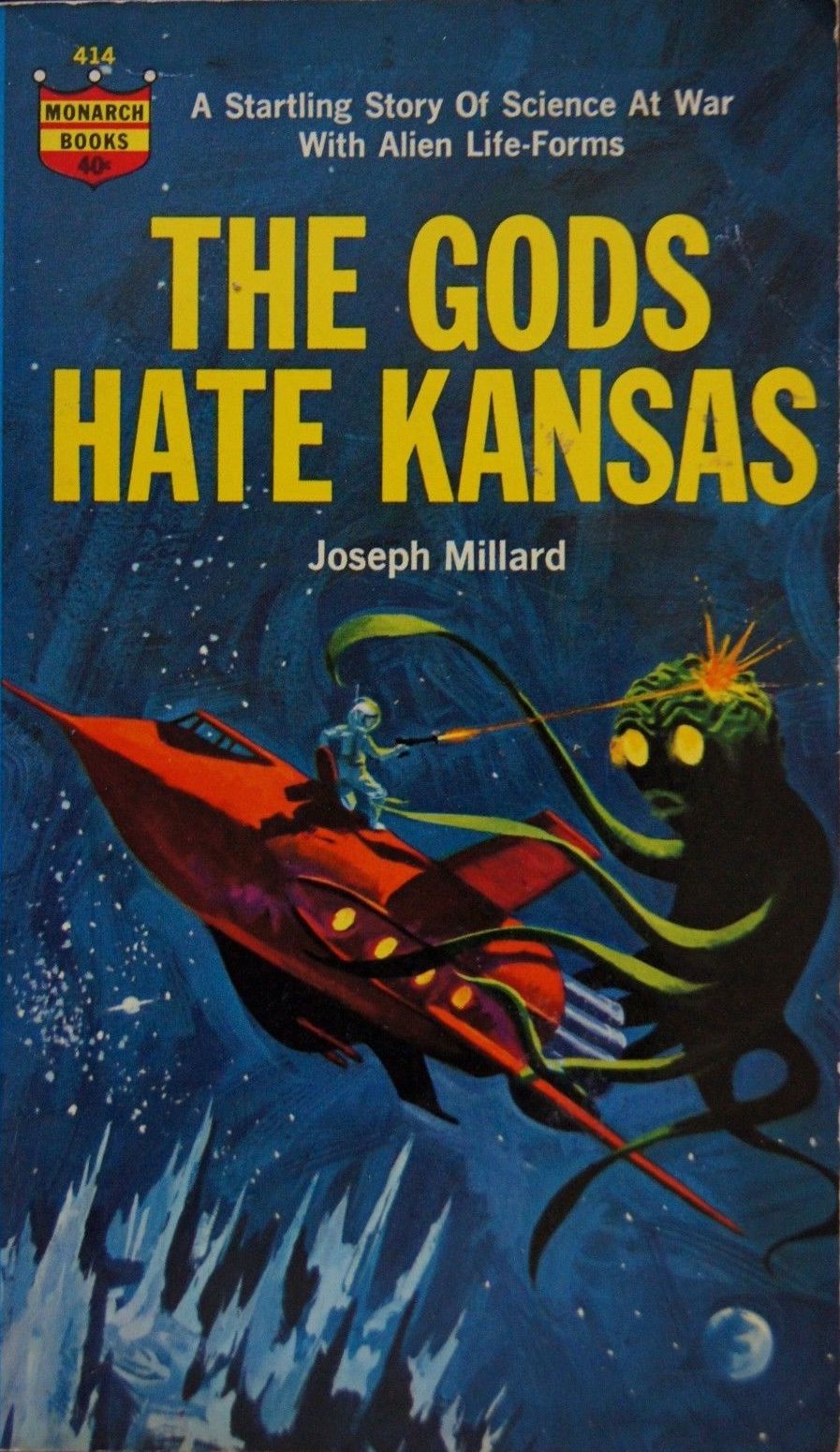
In November 1941, he published his only novel, The Gods Hate Kansas, in Startling Stories magazine. It was reprinted a decade later in the November 1952 issue of Fantastic Story Magazine, and then appeared in paperback in February 1964 from Monarch Books, with a brilliantly gonzo cover by Jack Thurston, featuring a raygun-wielding hero riding bareback on a little red number and giving the business to an earnest-looking bug-eye monster. I love this cover with a fierce passion, and I thank Joseph Millard for making it all possible. (Click the image at left for a mondo-sized version.)

The cover isn’t the only brilliant thing about this novel. There’s also the title. Why do the gods hate Kansas? What the hell did Kansas do, anyway? It’s one of those questions that brings you back to the paperback rack next to the checkout lane for a second look. Just 40 cents and the answer could be yours.

Read More Read More

New Treasures: Jani and the Greater Game by Eric Brown

New Treasures: Jani and the Greater Game by Eric Brown

Jani and the Greater Game-smallThis Eric Brown fellow is one of the most prolific of the new generation of SF and fantasy authors. He’s published a dozen novels in just the last five years, almost all of them with Solaris Books, including the Bengal Station trilogy, The Kings of Eternity (2011), Weird Space: The Devil’s Nebula (2012), Serene Invasion (2013), and Weird Space: Satan’s Reach (2013).

His latest is the opening book in a new steampunk action adventure series set in India in 1910, where the British rule with an iron fist thanks to a strange technology fueled by a mysterious power source… and their enemies covertly maneuver to discover its secrets in a political dance known as the Greater Game.

Eighteen-year-old Janisha Chatterjee, the Cambridge-educated daughter of an Indian government minister, is coming home to visit her father on his death-bed, when her airship is attacked and wrecked. Amid the debris, a stranger — monstrous but kind — saves her life and entrusts her with a mysterious device, which pitches her head-first into the “Greater Game,” the ongoing stand-off between British, Chinese and Russian powers in the Indian subcontinent.

Dodging British officers, Russian spies, and the dangerous priest Durga Das, Jani must bring the device to the foothills of the Himalayas; to the home of Annapurnite, the secret power source on which British domination was built. There she will learn the truth about Annapurnite — a truth that will change the world forever…

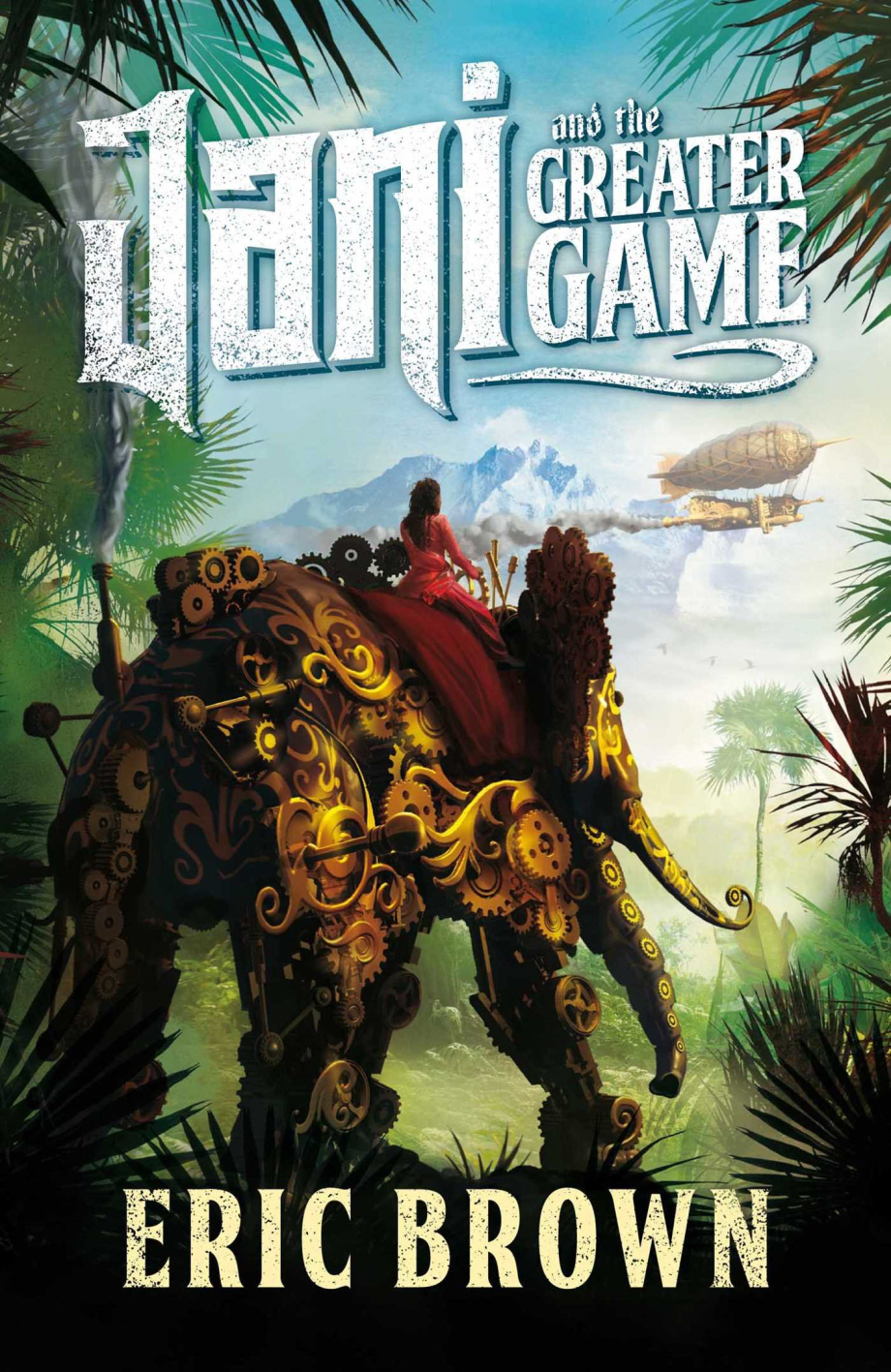
Jani and the Greater Game was published on July 29, 2014 by Solaris Books. It is 384 pages, priced at $7.99 in paperback and $6.99 for the digital edition. The cover art is by Dominic Harman.

Why Did I Say That? Or, The Perils of Writing a Series

Why Did I Say That? Or, The Perils of Writing a Series

Christie StylesA frequently heard complaint about a series, whether in book or TV form, is that the characters never change, and that they keep doing the same things over and over. Another frequently heard complaint is that the characters have changed out of all recognition from the ones we first knew and loved, and why do we never see them doing some of the things they used to do?

Why does this happen, you ask? Because writing a series is more complicated than it looks.

For one thing, you don’t actually know you’re writing a series until you’re on your third, or even your fourth, book. Sure, you may be planning to write a series long before that, but you’re not actually writing one until then. It probably isn’t until your third or fourth book that you have to consider one of the all important factors: will my characters age?

Agatha Christie famously regretted making Hercules Poirot a retiree when she wrote her first book about him, The Mysterious Affair at Styles, but she didn’t realize then that she’d be writing those novels for another 50 years. Rex Stout’s Nero Wolfe and Archie Goodwin, along with their recurring secondary characters, simply don’t age. Even though the world goes on around them, with very few exceptions each of their stories is told as if it was a single, stand alone novel.

Read More Read More

Frayling Tackles his own Yellow Peril

Frayling Tackles his own Yellow Peril

Yellow PerilSerialFuManchuThe centennial of Sax Rohmer’s Fu Manchu character is a topic I have covered both for the anniversary of the Devil Doctor’s first appearance in the story, “The Zayat Kiss,” in 1912 and the publication of the first novel (really a fix-up of stories), The Mystery of Dr. Fu-Manchu, in 1913.

While Rohmer and the character are largely forgotten outside of pulp circles today, the legacy of the criminal mastermind is alive and well in film and comics. The concept of the Yellow Peril from an era when the broad term Oriental grouped together people from parts of Eastern Europe with all of Asia and the Middle East may sound anachronistic, but given the continued delicate relations between the Middle East and the West, those same fears personified are still the stuff of fiction and paranoia well over a century on.

Sax Rohmer did not invent the criminal mastermind, nor was he the first to capitalize on the Yellow Peril for works of fiction. What he did do was create an archetype that managed to embody and transcend the fears of a “foreign other” to instead personify the fear of Western society falling to a superior intellect operating under a completely different set of values. Rohmer did this better than anyone before and while Fu Manchu as a name may seem ridiculous, the concept of the character is still with us from James Bond films to the media’s portrayal of terrorist leaders in the 21st Century.

Read More Read More

Win a Copy of The Madness of Cthulhu, edited by S.T. Joshi

Win a Copy of The Madness of Cthulhu, edited by S.T. Joshi

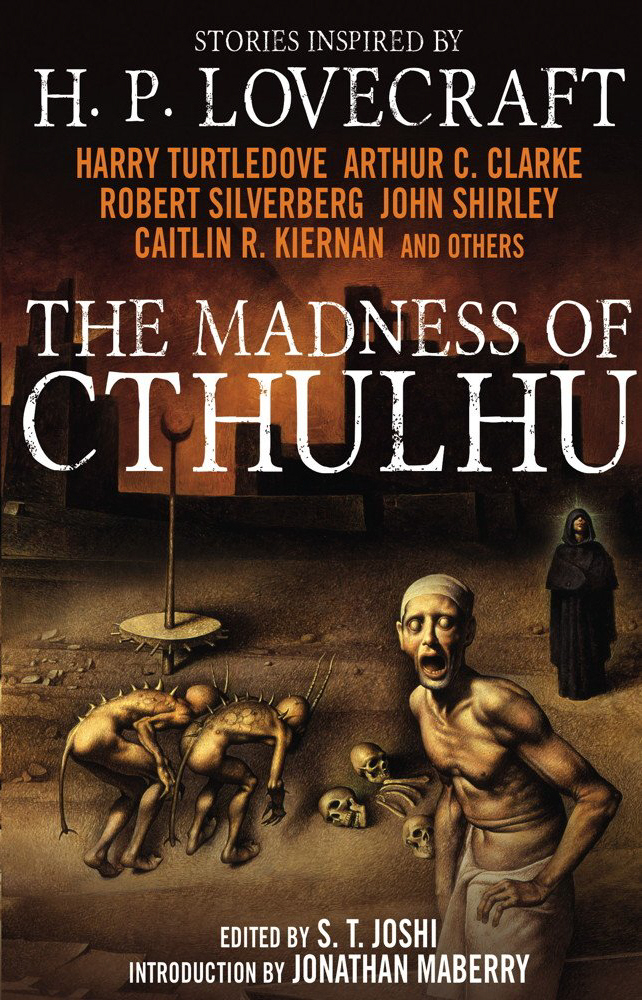
The Madness of Cthulhu-smallLast month, we reported on the upcoming release of a major new horror anthology, The Madness of Cthulhu, Volume One, edited by the tireless S.T. Joshi.

That brief article generated a lot of reader interest. No surprise there — this looks like a great book. The Madness of Cthulhu collects fourteen original tales, and two reprints, inspired by Lovecraft’s horror masterpiece At the Mountains of Madness. Arthur C. Clarke, Robert Silverberg, Caitlin R. Kiernan, John Shirley, Harry Turtledove, and others contribute their own takes on the master’s classic tale of a doomed Antarctic expedition that discovers an ancient metropolis built by mysterious alien creatures. This is the first of two volumes, with the second to be released Summer 2015.

We are very pleased to announce that we have two copies to give away to readers of Black Gate, compliments of Titan Books.

How do you enter? Just send an e-mail to john@blackgate.com with the subject “The Madness of Cthulhu,” and a one-sentence review of your favorite H.P. Lovecraft story (don’t forget to identify the story). That’s it — what could possibly be easier?

Two winners will be drawn at random from all qualifying entries. All entries become the property of New Epoch Press. No purchase necessary. Must be 12 or older. Decisions of the judges (capricious as they may be) are final. Not valid where prohibited by law. Or anywhere postage for a hefty trade paperback is more than, like, 10 bucks.

The Madness of Cthulhu, Volume One was published on Tuesday by Titan Books. It is 304 pages, priced at $15.95 in trade paperback and $9.99 for the digital version. Learn more at the Titan Books website.

Vintage Treasures: Down to a Sunless Sea by Lin Carter

Vintage Treasures: Down to a Sunless Sea by Lin Carter

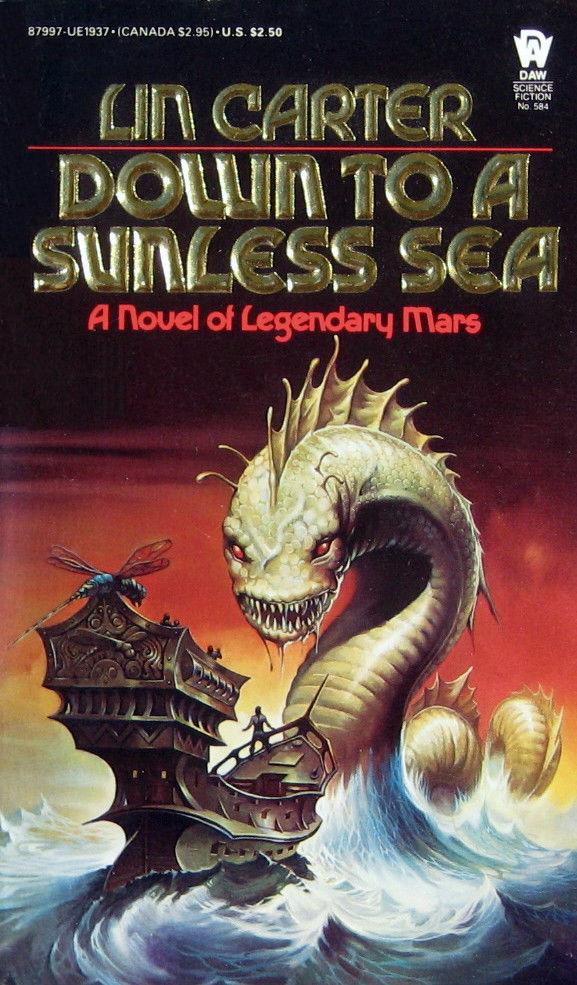
Lin Carter Down to a Sunless Sea-smallWe’re big fans of Lin Carter here at Black Gate. He was one of the most influential figures in 20th Century fantasy, chiefly as the editor of the Ballantine Adult Fantasy (BAF) line of paperback reprints, the six volumes of The Year’s Best Fantasy Stories, and the groundbreaking Flashing Swords! sword & sorcery anthologies. He was also one of the hardest working professionals in the genre. Carter edited a BAF volume every single month between May 1969 and April 1974 (65 total), and in the same time period produced over a dozen novels and numerous short stories.

Although his own fiction output was prodigious, Carter is remembered today chiefly as an editor rather than a writer. In his fond review of Carter’s 1984 novel Kellory the Warlock back in March, Fletcher Vredenburgh gave us a blunt assessment of his skill as a writer:

Poor Lin Carter: perhaps the greatest champion heroic fantasy ever had, an editor with few equals, one of the most knowledgeable fan boys in the world, but a poor writer. I think he would have liked his stories and novels to be remembered more fondly than they are. I believe Kellory the Warlock proves he had the potential to have been a better writer…

Most of his fiction, rarely more than pastiches of his favorite authors (Howard, Burroughs, Lovecraft, and Dent), never garnered enough attention to be republished… Carter was no master stylist and it can get a little irritating. Most of the time, he was trying to create fun, quick reads that were recreations of his favorite writers. In a way, he was writing fan fiction; it’s just that he got his published.

Personally, I’ve always been curious about Carter’s Mars novels, since they seem to be more fondly remembered today than much of his other fiction. I’ve always assumed they were Burroughs pastiches, but the Author’s Note to the final volume, Down to a Sunless Sea, makes it clear that they were actually inspired by the Queen of sword-and-planet fiction, the great Leigh Brackett herself.

Read More Read More