Browsed by
Category: Books

The 2016 Locus Award Finalists

The 2016 Locus Award Finalists

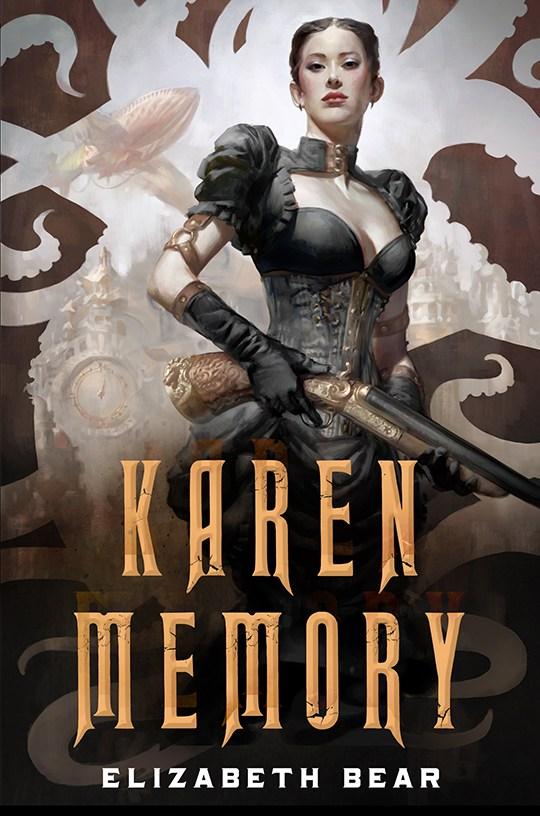
Karen Memory-smallerWith all the hubbub surrounding the Hugo Awards this week, I almost overlooked the 2016 Locus Award Finalists, announced on Tuesday. There’s plenty of terrific reading on this list, and the nomination process is done with an open online poll.

The Locus Science Fiction Foundation sponsors the awards, and the winners are selected by the readers of Locus magazine. The awards began in 1971, originally as a way to highlight quality work in advance of the Hugo Awards. The winners will be announced during the Locus Awards Weekend in Seattle WA, June 24-26, 2016. In addition to creators, the Locus Foundation also honors winning publishers with certificates, which I think is kind of neat.

The finalists are:

FANTASY NOVEL

Karen Memory, Elizabeth Bear (Tor)
The House of Shattered Wings, Aliette de Bodard (Roc)
Wylding Hall, Elizabeth Hand (Open Road)
The Fifth Season, N.K. Jemisin (Orbit)
Uprooted, Naomi Novik (Del Rey)

…

Read More Read More

Future Treasures: Company Town by Madeline Ashby

Future Treasures: Company Town by Madeline Ashby

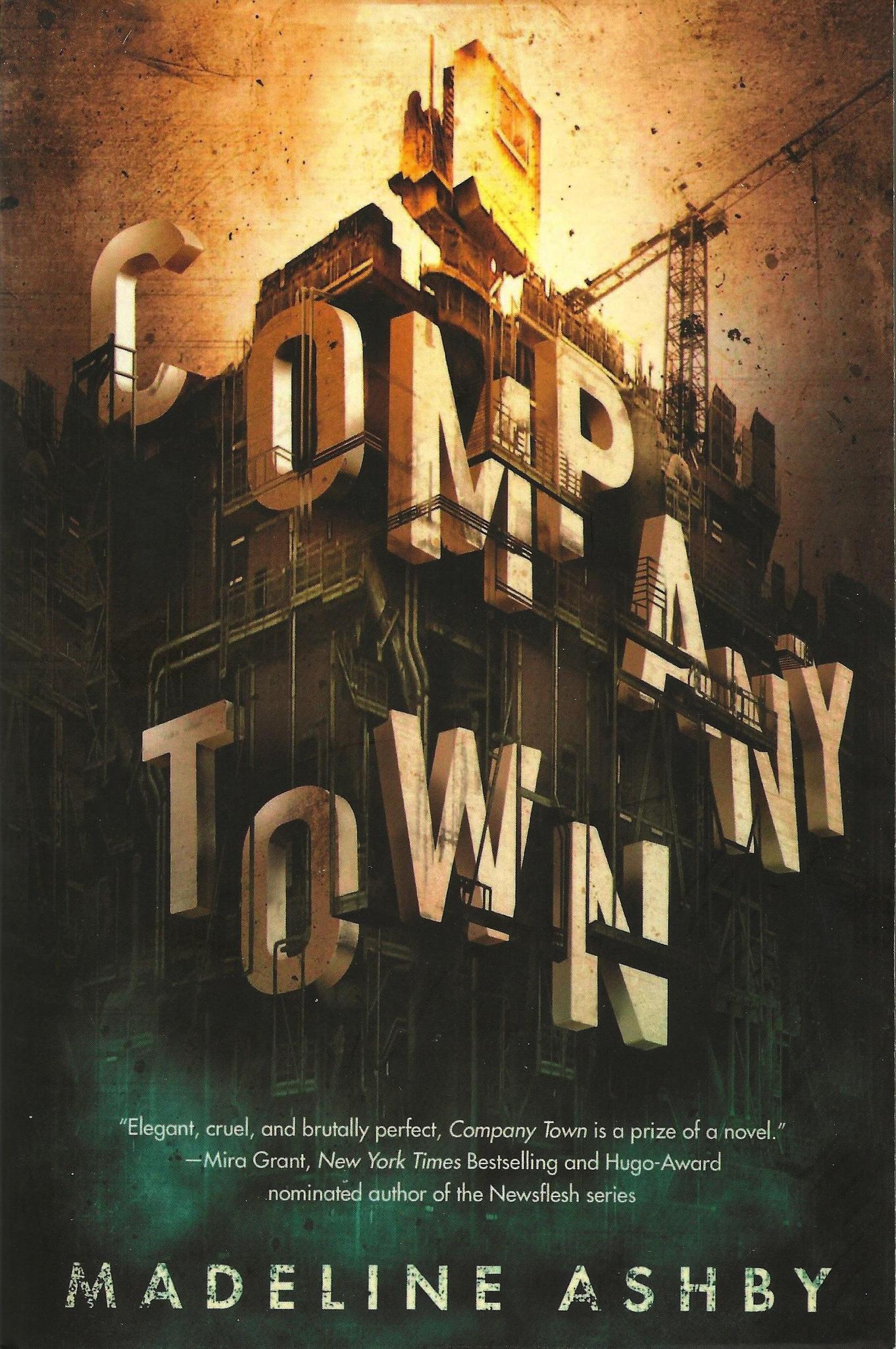
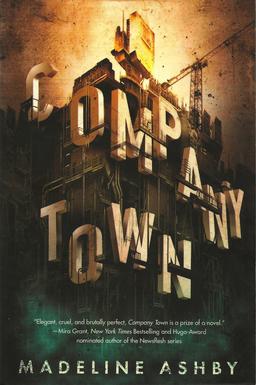
Company Town-smallMadeline Ashby is the author Vn and its sequel iD, the first two novels in the The Machine Dynasty trilogy from Angry Robot. She lives in Toronto and writes articles for my hometown paper, the Ottawa Citizen, which automatically makes her cool in my eyes.

Her third novel Company Town, a near-future mystery, is getting a lot of early attention. Locus calls it “Worthy of the best Heinlein…. a terrific ride,” and Chuck Wendig says “This is brave, bold, crazy storytelling.” Charlie Stross says “Madeline Ashby bludgeons cyberpunk to death with this post-climate change thriller about life aboard a gas platform, confronting an uncomfortable new future.” I’m sold.

New Arcadia is a city-sized oil rig off the coast of the Canadian Maritimes, now owned by one very wealthy, powerful, byzantine family: Lynch Ltd.

Hwa is of the few people in her community (which constitutes the whole rig) to forgo bio-engineered enhancements. As such, she’s the last truly organic person left on the rig — making her doubly an outsider, as well as a neglected daughter and bodyguard extraordinaire. Still, her expertise in the arts of self-defense and her record as a fighter mean that her services are yet in high demand. When the youngest Lynch needs training and protection, the family turns to Hwa. But can even she protect against increasingly intense death threats seemingly coming from another timeline?

Meanwhile, a series of interconnected murders threatens the city’s stability and heightens the unease of a rig turning over. All signs point to a nearly invisible serial killer, but all of the murders seem to lead right back to Hwa’s front door. Company Town has never been the safest place to be — but now, the danger is personal.

A brilliant, twisted mystery, as one woman must evaluate saving the people of a town that can’t be saved, or saving herself.

Company Town will be published by Tor Books on May 17, 2016. It is 341 pages, priced at $24.99 in hardcover and $11.99 for the digital version. The cover is by ChiZine’s genius designer Erik Mohr.
One More Time(Piece)

One More Time(Piece)

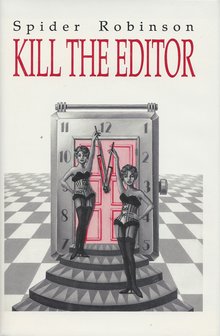
Robinson Kill EditorIn my last post I talked about John D. MacDonald’s The Girl, the Gold Watch and Everything, and today I’d like to take a look at Spider Robinson’s homage to that classic story, Kill the Editor.

I should begin by telling you that Kill the Editor was published separately as a limited edition (1991) but also appears as the first two thirds of his longer Lady Slings the Booze (1992), which is in itself a follow-up (avoiding the dreaded “s” word) to Callahan’s Lady. In Lady Slings Robinson tips his hat to several other mystery/crime writers in his acknowledgements, but it’s MacDonald’s watch that interests me here.

As you’ll recall if you read my last post, Kirby Winter inherited a watch that would stop time for the person holding it. A ton of other people wanted to get his secret from him – most without knowing exactly what the secret was – and defending himself and defeating the bad guys constitutes the plot of that story. (Or the plot of pretty much any story, I suppose.)

…

Read More Read More

The Series Series: Guile by Constance Cooper

The Series Series: Guile by Constance Cooper

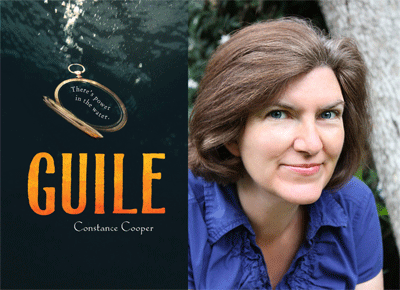
Guille with Constance CooperGuile begins with the girl, but here we must begin with the town.

First, posit a dream-logic variation on Louisiana, a region of lovely old towns sinking inexorably into swamp, linked along their river by villages of stilted cabins. People here live by their river, inevitably — subsistence fishing is the most common livelihood — but the river can’t be trusted. Not just because it floods, but because of the mysteries it carries from dangerous lands upstream.

Because this is a dream-logic Louisiana, the pollution the river carries is not a thousand miles of industrial effluent, but the residual magic of a civilization that collapsed long ago. It’s a pervasive, contaminating magic, full of advantages for those who understand it — but it also breaks down the dividing lines between humans, beasts, and objects. People cope poorly when such boundaries get blurred, so even though the effort to police them is futile, policing them nonetheless is one of the principal priorities of this world’s customs. The heroine’s high town relatives are what you might get if H.P. Lovecraft and his prissy Providence aunts had made their respectable home just a mile from a slumful of Deep Ones.

The river might make a tool so intent on the task it was cast for that anyone who touches it can do nothing else. It might warp the bodies of divers who gather old artifacts to sell, webbing their fingers and gilling their throats. Animals who narrowly avoid drowning in the river emerge in a new kind of danger, endowed with human intelligence and speech, to the sometimes violent horror of actual humans. And minds contaminated by the magic can detect the magic, come to recognize its forms and functions, and use it where they find it, while those who’ve kept clean remain magic-blind.

…

Read More Read More

New Treasures: Exile by Martin Owton

New Treasures: Exile by Martin Owton

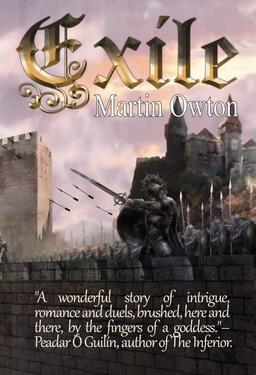
Exile Martin Owton-smallMartin Owton’s stories for Black Gate include the funny and suspenseful contemporary fantasy “A Touch of Crystal” (co-written with Gaie Sebold), in BG 9, and “The Mist Beyond the Circle,” in which a band of desperate men pursue the slave traders who stole their families, across cold barrows where a dread thing sleeps (BG 14).

So I was very inrigued to see his debut novel Exile arrive last month. Exile is described as a fast-moving tightly-plotted fantasy adventure story with a strong thread of romance, and it’s the first volume of The Nandor Tales. Here’s the full description.

Aron of Darien, raised in exile after his homeland is conquered by a treacherous warlord, makes his way in the world on the strength of his wits and skill with a sword. Both are sorely tested when he is impressed into the service of the Earl of Nandor to rescue his heir from captivity in the fortress of Sarazan. The rescue goes awry. Aron and his companions are betrayed and must flee for their lives. Pursued by steel and magic, they find new friends and old enemies on the road that leads, after many turns, to the city of the High King. There Aron must face his father’s murderer before risking everything in a fight to the death with the deadliest swordsman in the kingdom.

The cover boasts a terrific quote from no less an illustrious personage than BG author and occasional blogger Peadar Ó Guilín, author of The Inferior and the upcoming The Call:

A wonderful story of intrigue, romance and duels, brushed, here and there, by the fingers of a goddess.

Exile was published by Phantasia/Tickety Boo Press on April 15, 2016. It is 303 pages, priced at just $2.99 for the digital version. Black Gate says check it out.

The Iron Dragon’s Daughter: A Wholly Biased Review

The Iron Dragon’s Daughter: A Wholly Biased Review

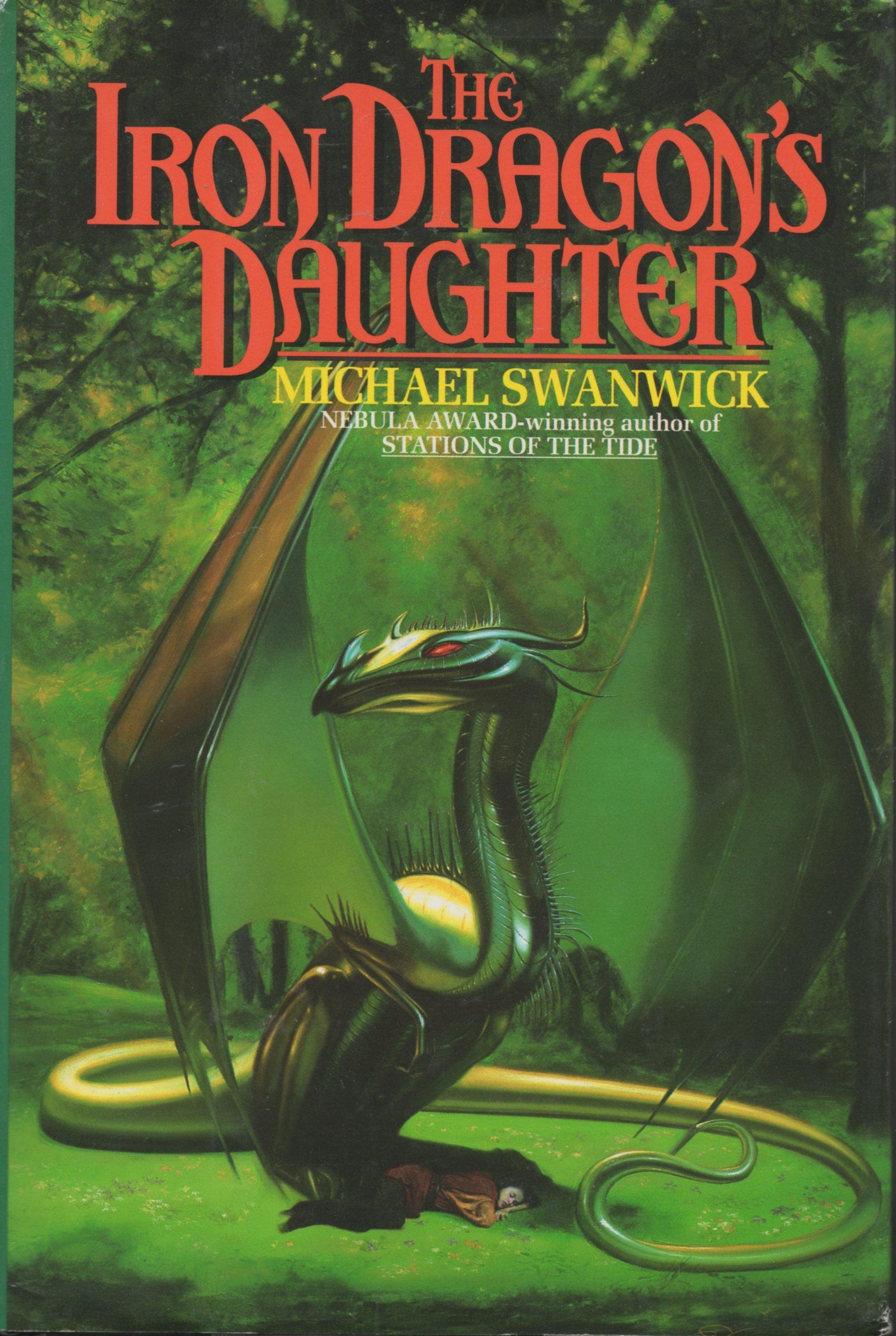
The-Iron-Dragons-Daughter-smallAh, The Iron Dragon’s Daughter. John O’Neill asked me for a review a few weeks ago, and I thought, “Really? You want me to be objective when she and I are so very much in love?”

Because it is love, you know? And it burns hot enough to turn all negative comments to ash.

I’ve driven friends away with this obsession. “What do you see in The Iron Dragon’s Daughter?” they ask. “She’s so incoherent. She has practically no… no character.”

Yes, all right, all right. We’re talking about a book here. I knew that. Ink and paper, rather than flesh and bone. Born — apologies! — published in 1993. To some, like myself, it became a classic, but others greeted it with bewilderment and it has collected a slew (31%) of apathetic reviews on sites like Amazon.

The book has flaws, you see? It takes the type of liberties that would have most sane reviewers flinging stars away like wasps found on a beloved child.

“Where’s the plot?” they cry.

“Why is the main character so bland?”

Both of these accusations ring true. Michael Swanwick’s story does have an arc that flows from the first page to the last, but rather than a rushing torrent, what we have here meanders across an exotic plain of wonders, leaving half-finished tales behind like so many oxbow lakes.

…

Read More Read More

Future Treasures: Roses and Rot by Kat Howard

Future Treasures: Roses and Rot by Kat Howard

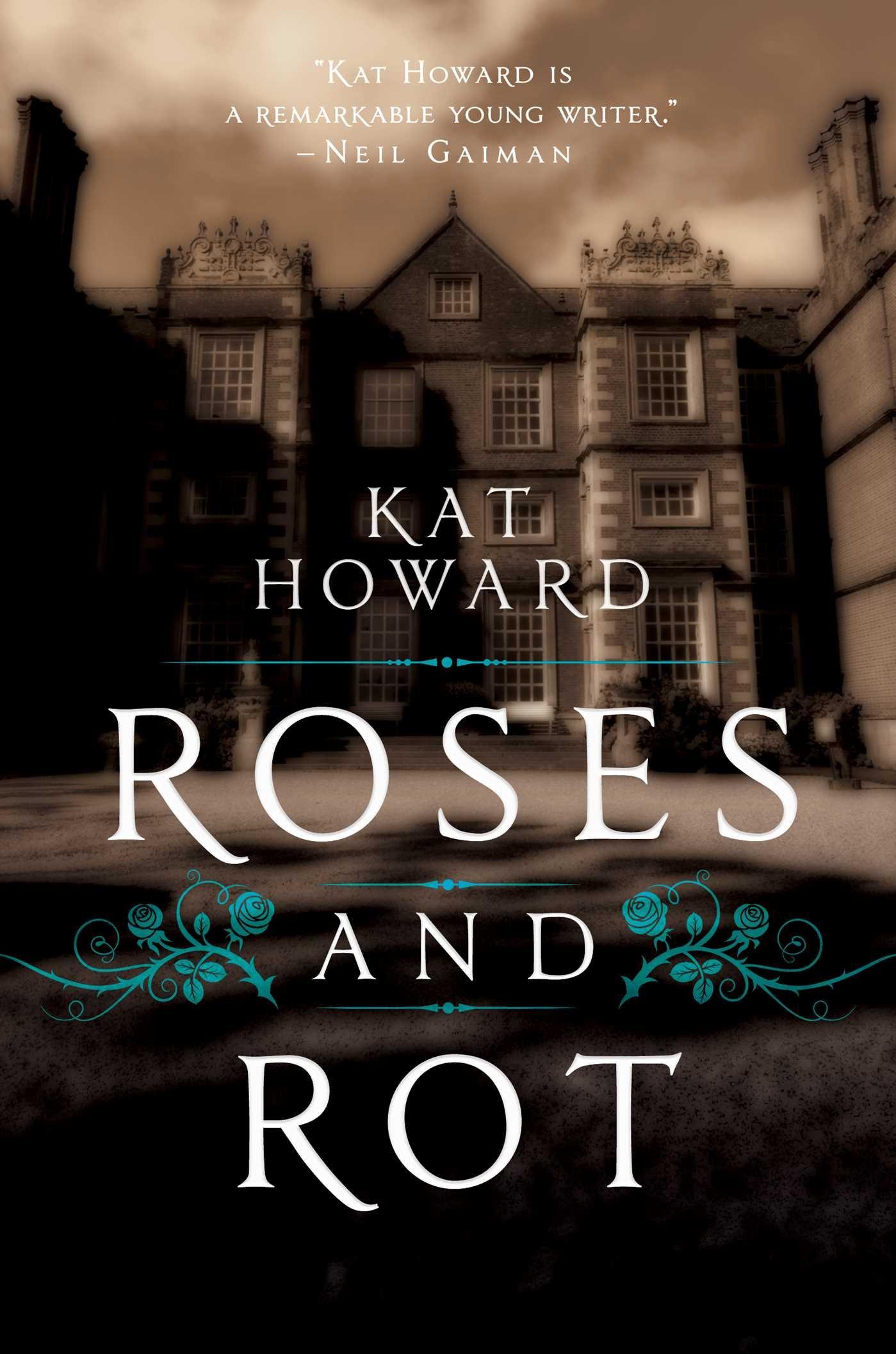
Roses and Rot-smallI enjoy a good fairy-tale retelling, especially those written with a modern sensibility — and a dark edge. Kat Howard’s debut novel, selected by Publishers Weekly as a Best Sci-Fi/Fantasy/Horror Novel of Summer 2016, looks like it fits my criteria nicely.

The marketing for Roses & Rot includes an enviable blurb from Neil Gaiman (“Kat Howard is a remarkable young writer”), and the promise that its main characters, Imogen and her sister Marin, find themselves living in a fairy tale as the story unfolds. But which fairy tale? Ah, that’s part of the mystery.

A prestigious artists’ retreat holds dark secrets as desire for art and love are within grasp for Imogen and her sister, Marin, but at a terrible price.

What would you sacrifice for everything you ever dreamed of?

Imogen has grown up reading fairy tales about mothers who die and make way for cruel stepmothers. As a child, she used to lie in bed wishing that her life would become one of these tragic fairy tales because she couldn’t imagine how a stepmother could be worse than her mother now. As adults, Imogen and her sister Marin are accepted to an elite post-grad arts program — Imogen as a writer and Marin as a dancer. Soon enough, though, they realize that there’s more to the school than meets the eye. Imogen might be living in the fairy tale she’s dreamed about as a child, but it’s one that will pit her against Marin if she decides to escape her past to find her heart’s desire.

Roses and Rot will be published by Saga Press on May 17, 2016. It is 307 pages, priced at $24.99 in hardcover, and $7.99 for the digital version.

Once More Into the Primal Land: Tarra Khash: Hrossak! by Brian Lumley

Once More Into the Primal Land: Tarra Khash: Hrossak! by Brian Lumley

oie_331744OeH2c07SWith Tarra Khash: Hrossak!, the British horror luminary Brian Lumley returns with six more stories of derring-do and magical skullduggery set in his primeval land, Theem’hdra. (Two years ago, I reviewed The House of Cthulhu, his first collection of swords & sorcery stories, here at Black Gate.) For those not familiar with the great island-continent, it’s another prehistoric land shoehorned into the Lovecraft Mythos timeline that includes Mu, Lemuria, Hyboria, Hyperborea, and several other forgotten places. It’s the sort of place endemic to tales of swords & sorcery, replete with strong-muscled heroes, conniving merchants, demon-haunted tombs, backstabbing villains, and dastardly wizards with faces hidden in deep cowls (all of which are found in this book).

Any moderately-read consumer of S&S will have experienced these elements, if not to the point of boredom, at least a whole bunch. To get away with the use of such hoary elements, an author must use them without a bit of irony, and with brio. Lumley does exactly that.

Lumley told Robert M. Price that his inspiration for The House of Cthulhu was the work of Clark Ashton Smith and Lord Dunsany, and it’s a claim only bolstered by the tales in this collection. While his prose is never as ornate or bejewelled as his models, there is a similar love for exotic, haunted landscapes draped in mystery and populated by ancient deities and uncanny magic.

…

Read More Read More

Blogging The Insidious Dr. Fu-Manchu by Sax Rohmer, Part Six – “The Call of Siva”

Blogging The Insidious Dr. Fu-Manchu by Sax Rohmer, Part Six – “The Call of Siva”

NOTE: The following article was first published on May 2, 2010. Thank you to John O’Neill for agreeing to reprint these early articles, so they are archived at Black Gate which has been my home for over 5 years and 260 articles now. Thank you to Deuce Richardson without whom I never would have found my way. Minor editorial changes have been made in some cases to the original text.

ColliersSivainsidious6“The Call of Siva” was the fifth installment of Sax Rohmer’s serial, Fu-Manchu first published in The Story-Teller in February 1913. The story would later comprise Chapters 13-15 of the novel, The Mystery of Dr. Fu-Manchu (initially re-titled The Insidious Dr. Fu-Manchu for its U.S. publication). Rohmer had built several of his Fu-Manchu stories on protracted paranoia and had previously made good use of a Limehouse opium den as a setting, but “The Call of Siva” sees him letting his plotline be dictated by the altered state of the waking dreamer for the first time and to great effect.

The story opens with our narrator, Dr. Petrie relating a strange dream which begins with him writhing on the floor in agony. Rohmer makes good use of Stygian darkness, Oriental tapestries, and Mohammedan paradise as suggestive imagery that Petrie’s queer dream, at once both mystifying and terrifying, is uniquely Eastern in origin. This point is confirmed as Petrie awakens with Nayland Smith as his cell mate. Only at this point does Rohmer resume something approaching a conventional narrative with Petrie’s murky recollection of he and Smith rushing to warn Graham Guthrie that he has been marked for assassination when they are abducted by unseen assailants from a passing limousine.

…

Read More Read More

GreyDogTales on Equation Thrillers

GreyDogTales on Equation Thrillers

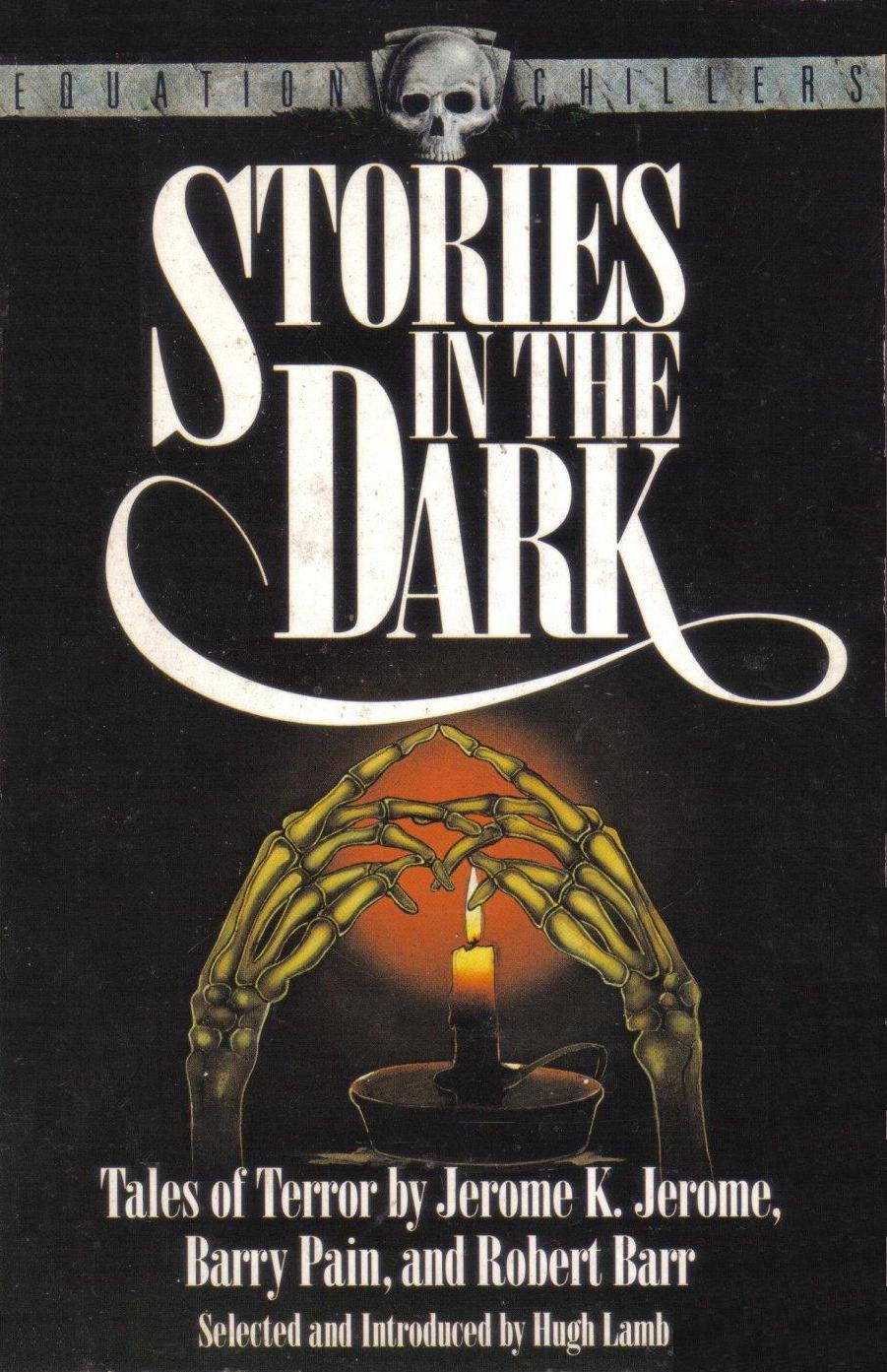
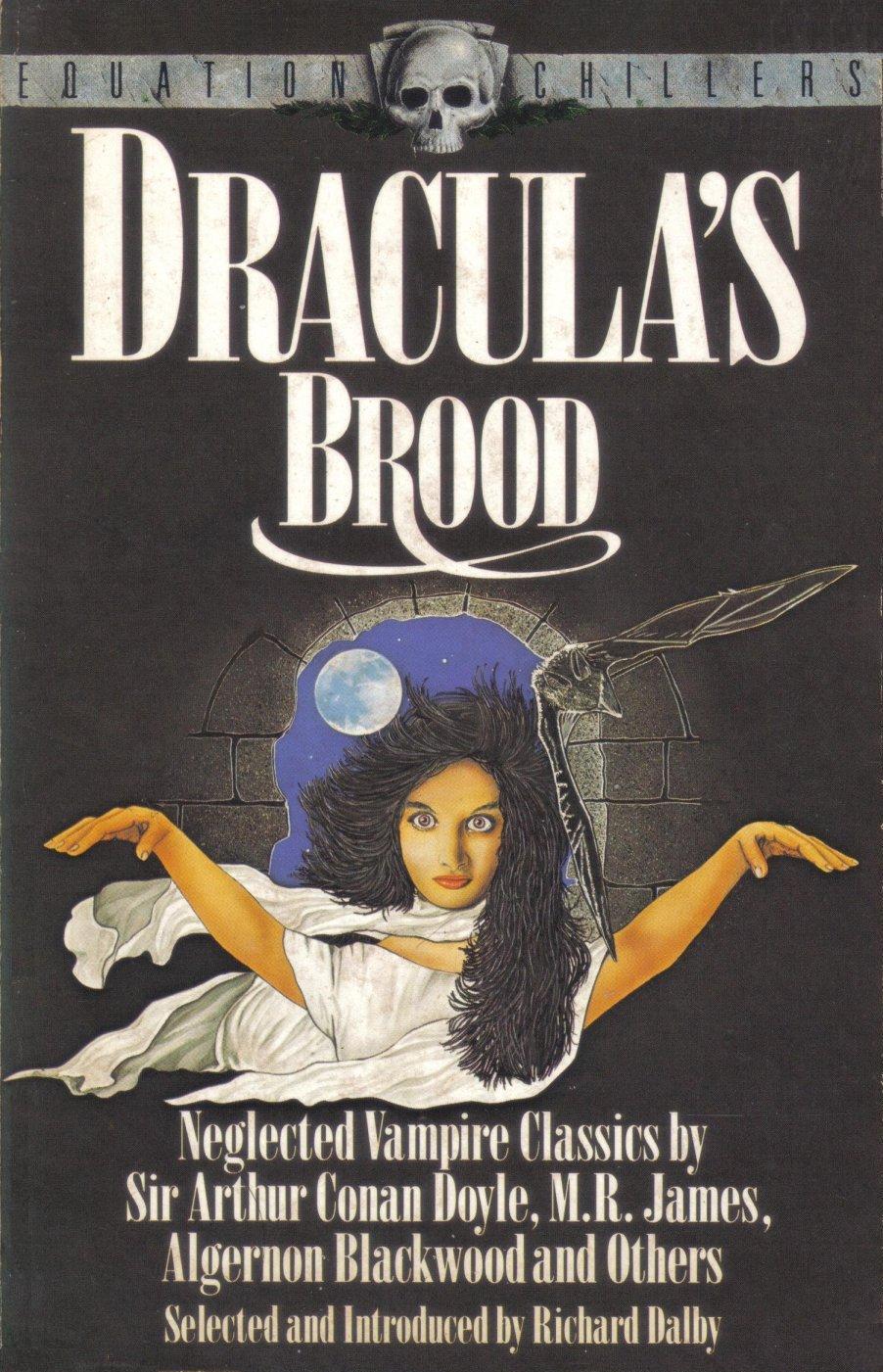
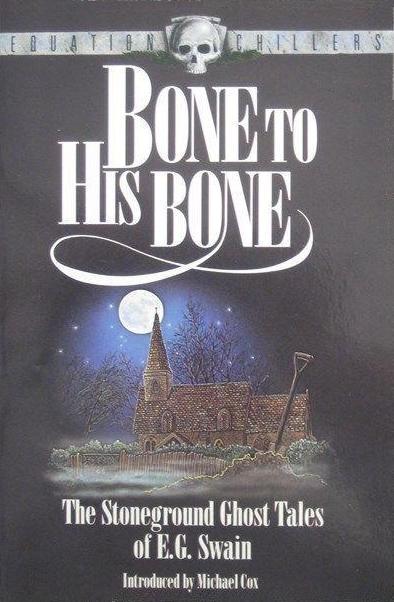
Stories in the Dark-small Dracula's Brood-small Bone to His Bone-small

Yesterday my friend Neil Baker, publisher at April Moon Books, introduced me to blogger John Linwood Grant, who blogs at GreyDogTales. I wandered over to his corner of the internet, and was delighted to find a fascinating discussion of the Equation Chillers, a line of British horror anthologies I’d never heard of.

Right, let’s go back a few years. Nearly three decades, in fact. One of our finds of the late eighties was the short-lived Equation Chillers series. Sadly, only eight books were ever produced directly under the imprint. We have battered copies of all of them which we bought at the time, thank goodness.

They were, in a way, the precursor of the Wordsworth Editions, where lost, rare or unusual stories of the supernatural suddenly became available at an affordable price. Equation revived a whole haunted house full of Victorian and Edwardian short stories, and it’s worth noting all eight volumes here, with the occasional comment from us.

Anything in the spirit of the delightful Wordsworth Editions Tales of Mystery and the Supernatural (or, as we prefer to call them, TOMAToS) has my immediate attention. Check out John’s full article — with plenty of marvelous cover scans — here. And it looks like I’ll be spending some quality time at his website.