Browsed by
Category: Books

Steampunk, Voodoo, and the Walking Dead: Something Strange and Deadly by Susan Dennard

Steampunk, Voodoo, and the Walking Dead: Something Strange and Deadly by Susan Dennard

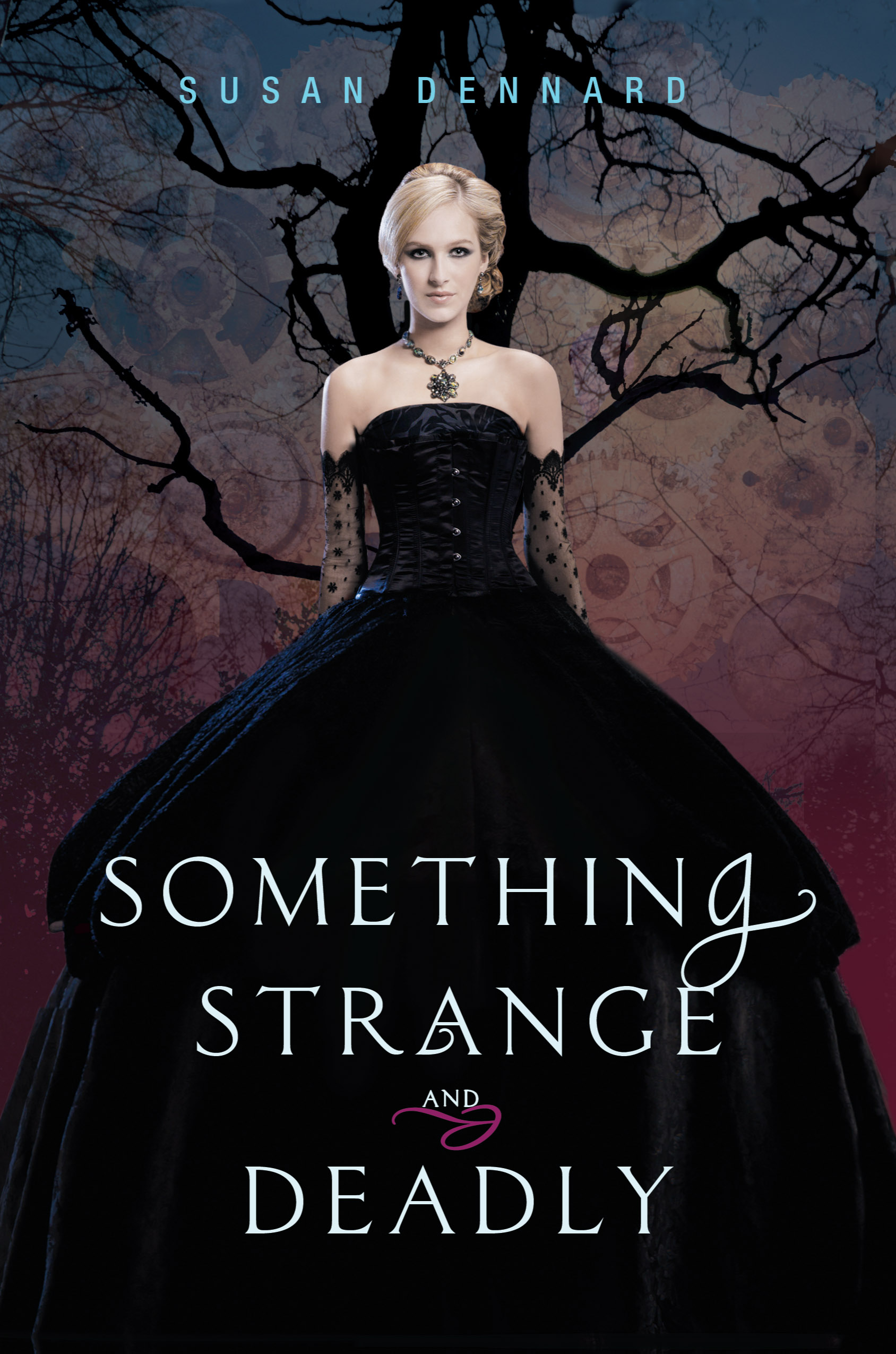
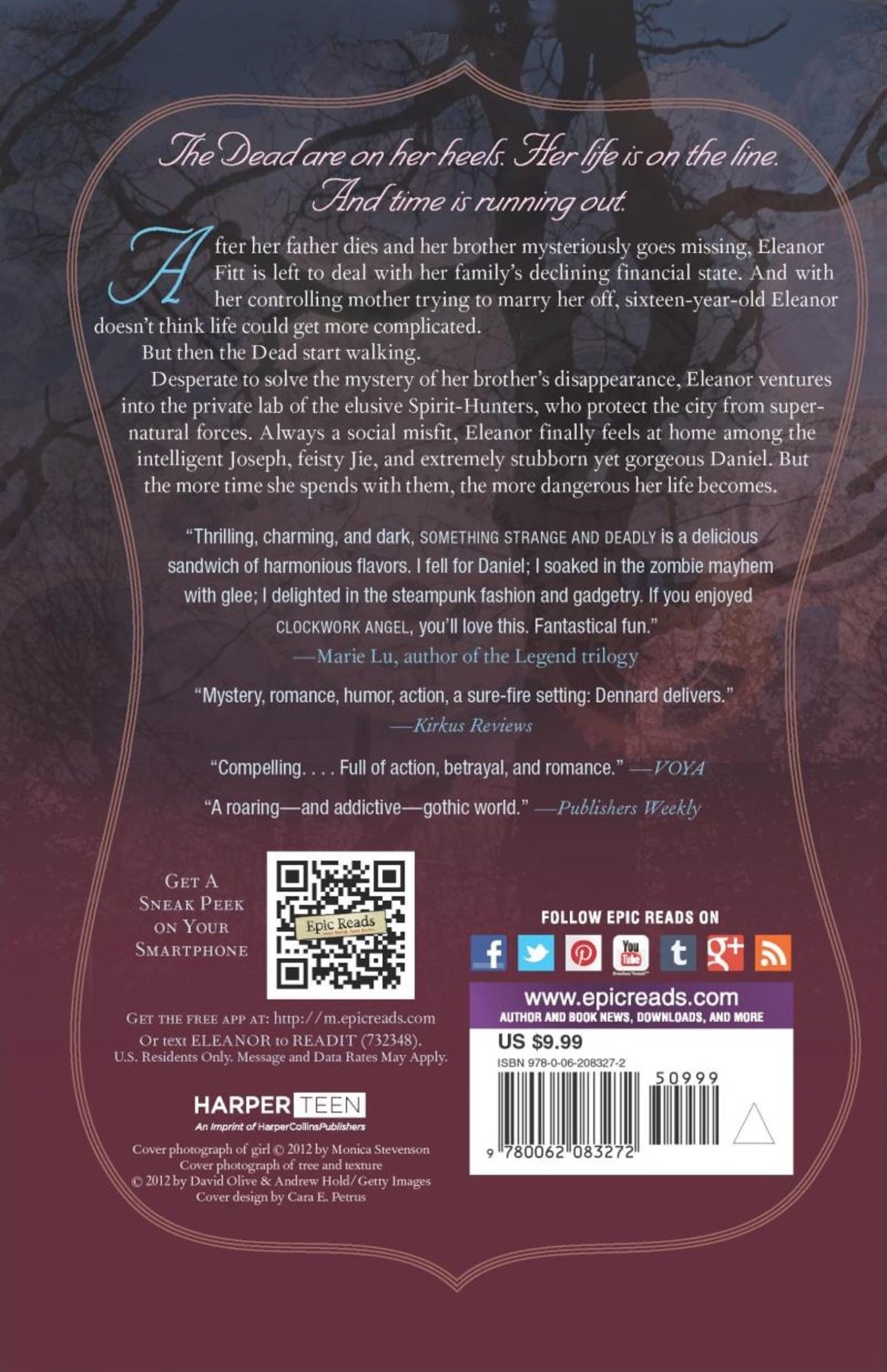
Something Strange and Deadly-small Something Strange and Deadly back-small

For readers with dark tastes and a deep-seated love for romance, I recommend Something Strange and Deadly, the first in a trilogy by Susan Dennard, author of Truthwitch.

Why, you might ask? Well, Dennard has a supreme understanding of how to enhance gothic themes with an addictive steampunk flourish, and captivate her readers with antagonists you come to enjoy more than the protagonists. (Okay, that’s a stretch. But she outdid herself with her villain). Do you know how to spend a blissful Saturday evening curled up under your favorite blanket drinking tea, while freezing rain crashes against your window in the coal black darkness of the night? Then you, my friend, know the right way to appreciate this diamond in the rough.

Eleanor Fitt, a ferociously intelligent sixteen year-old from a disgraced aristocratic family in Philadelphia, longs for the return of her older brother, Elijah. When she becomes entangled in a swarm of the walking dead at the famed exhibition, a harbinger of her brother’s possible doom delivers a telegram with a cryptic message that gives her a clue to his whereabouts.

Read More Read More

Future Treasures: Kangaroo Too by Curtis C. Chen

Future Treasures: Kangaroo Too by Curtis C. Chen

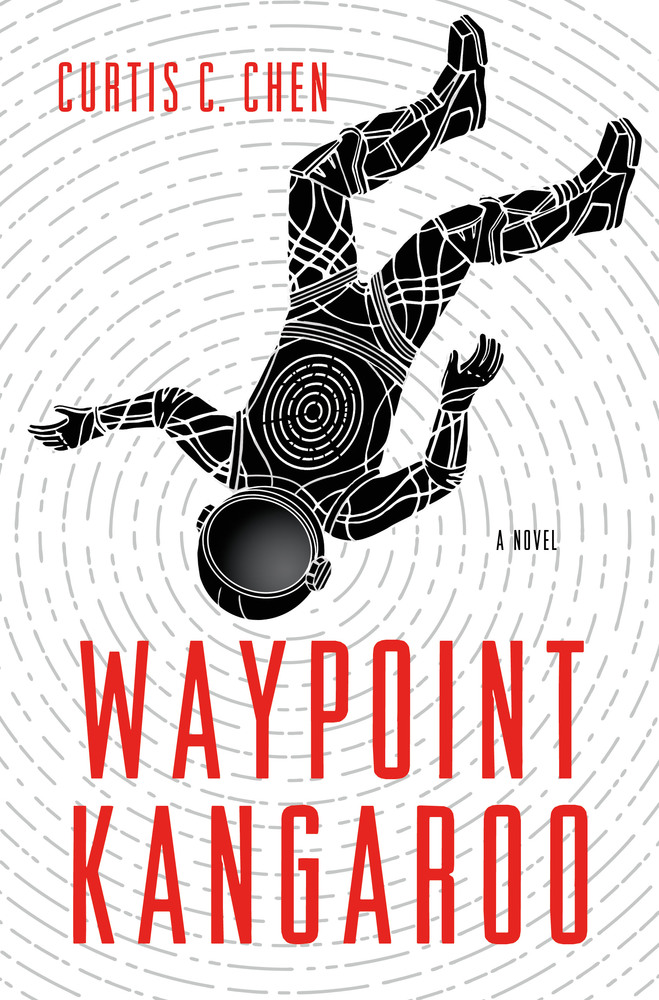
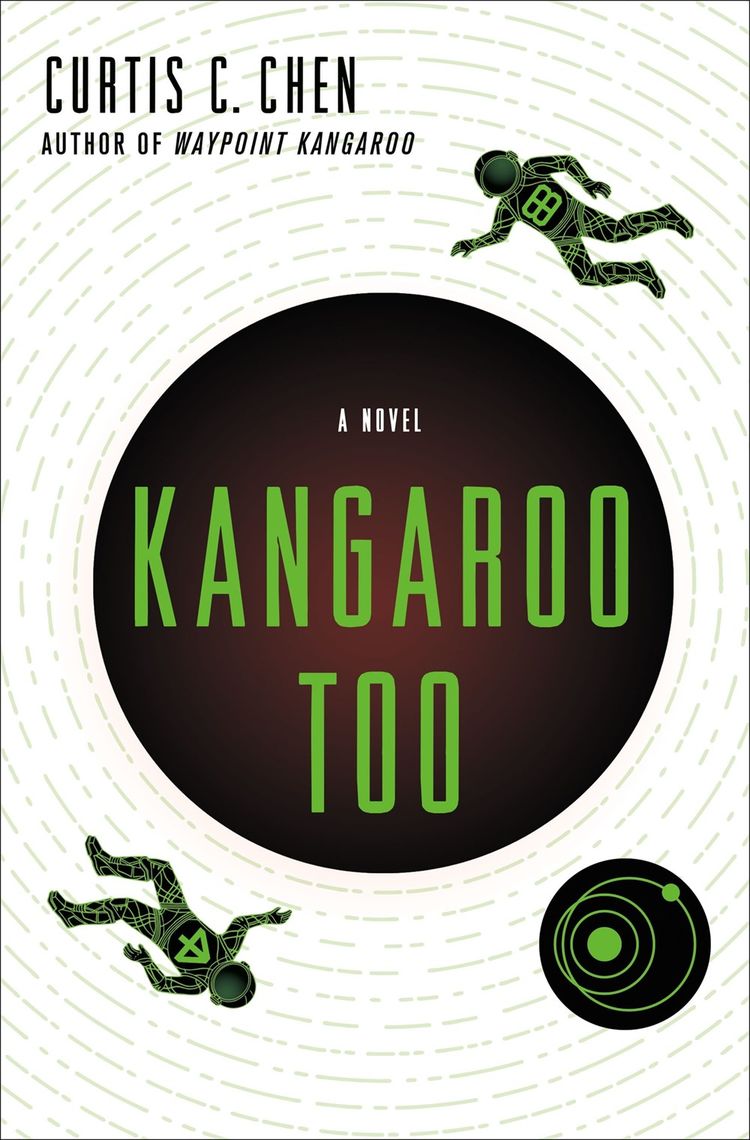
Waypoint Kangaroo-small Kangaroo Too-small

Curtis C. Chen’s debut novel Waypoint Kangaroo was a Locus Award finalist for Best First Novel. Not your typical SF adventure, it featured a secret agent sent on a forced vacation after screwing up once too often. James Patrick Kelly called it “A high tech thriller set on a passenger liner headed for Mars, featuring a wisecracking secret agent with a super power that will blow your mind,” and Charlie Jane Anders said “This Kangaroo could just be your new favorite wisecracking interplanetary adventurer.” The sequel, a brand new tale of outer space adventure, arrives in hardcover next week.

On the way home from his latest mission, secret agent Kangaroo’s spacecraft is wrecked by a rogue mining robot. The agency tracks the bot back to the Moon, where a retired asteroid miner — code named “Clementine” — might have information about who’s behind the sabotage.

Clementine will only deal with Jessica Chu, Kangaroo’s personal physician and a former military doctor once deployed in the asteroid belt. Kangaroo accompanies Jessica as a courier, smuggling Clementine’s payment of solid gold in the pocket universe that only he can use.

What should be a simple infiltration is hindered by the nearly one million tourists celebrating the anniversary of the first Moon landing. And before Kangaroo and Jessica can make contact, Lunar authorities arrest Jessica for the murder of a local worker.

Jessica won’t explain why she met the victim in secret or erased security footage that could exonerate her. To make things worse, a sudden terror attack puts the whole Moon under lockdown. Now Kangaroo alone has to get Clementine to talk, clear Jessica’s name, and stop a crooked scheme which threatens to ruin approximately one million vacations.

But old secrets are buried on the Moon, and digging up the past will make Kangaroo’s future very complicated…

Kangaroo Too will be published by St. Martin’s Press/Thomas Dunne Books on June 20, 2017. It is 308 pages, priced at $27.99 in hardcover and $14.99 for the digital edition. The cover is by David Curtis.

A Fairy Tale At The Heart Of The World: The Prince of Morning Bells by Nancy Kress

A Fairy Tale At The Heart Of The World: The Prince of Morning Bells by Nancy Kress

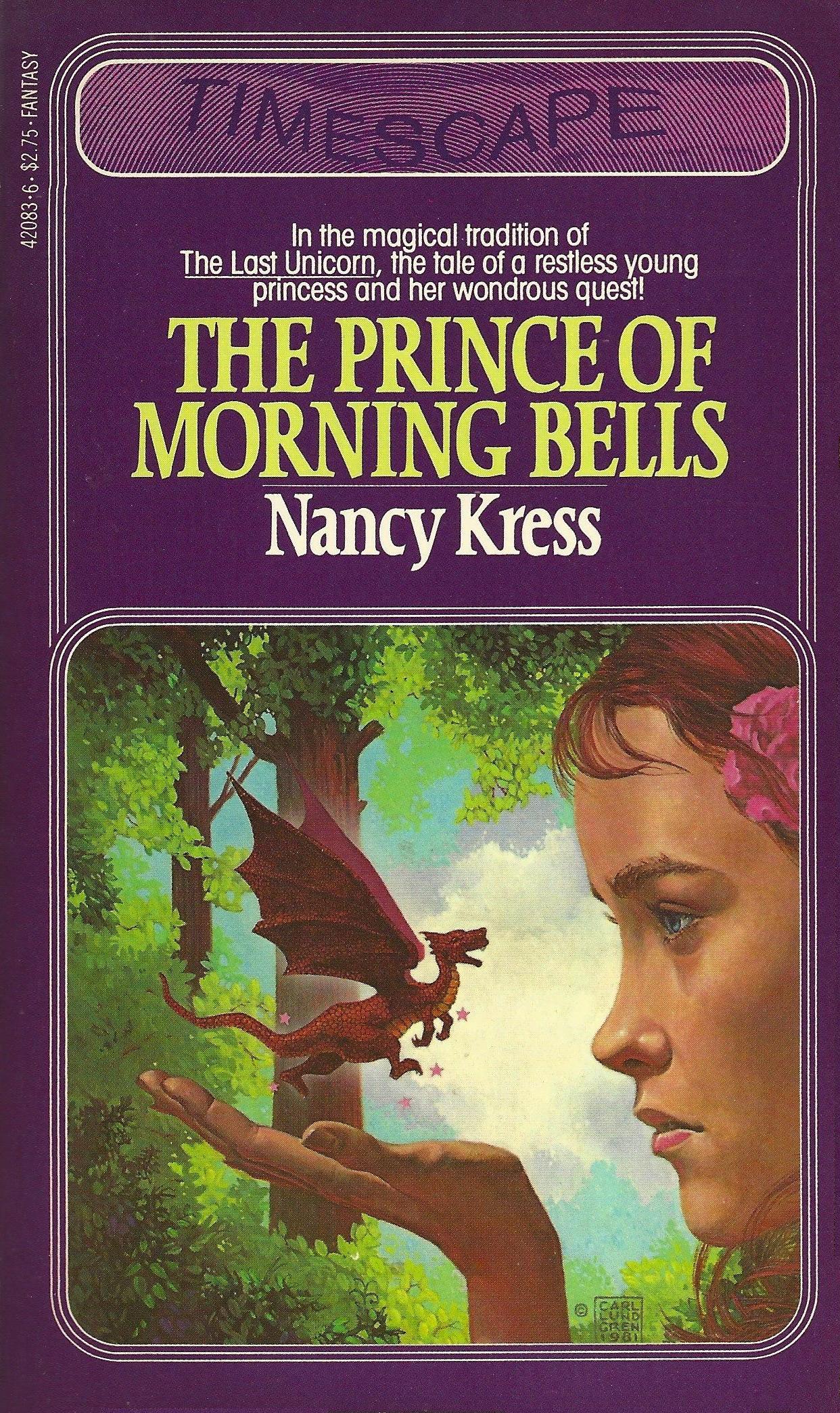
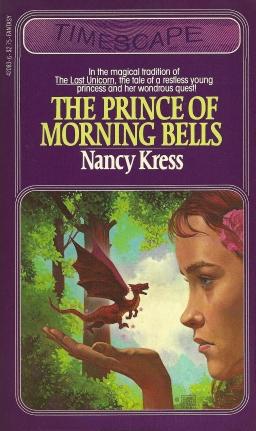
The Prince of Morning BellsContrary to conventional wisdom, sometimes a book’s cover gives matter enough for a fair judgment. The copy I read of Nancy Kress’ The Prince of Morning Bells is a 1981 first printing by Timescape; the book was reprinted in the year 2000 by Foxacre Press, and I learned from Black Gate supremo John O’Neill’s 2012 look at the title that a digital version came out in 2011. At any rate, the front cover of the Timescape edition promises: “In the magical tradition of The Last Unicorn, the tale of a restless young princess and her wondrous quest!” Parts of the blurb are only half-accurate, but the important part, the difficult-to-believe part, is quite correct. The Prince of Morning Bells is worth mentioning with The Last Unicorn, not just in terms of quality but in tone. It works with classic fantasy traditions, using a witty and often lightly-ironic style with a sprinkling of anachronism to tell a deep and profoundly moving tale. Kress has apparently noted the influence herself, though I don’t find the books excessively similar. Their bones are configured in different shapes. Distinctive, individual, The Prince of Morning Bells shows how a fantasy tale can transmute allegory into anti-allegory, telling a symbolic story that works as story while also working as symbol.

It is the story of Kirila, who begins as an eighteen-year-old princess discontented with what seems an increasingly unimportant life. She therefore decides to set out on a great Quest for the Heart of the World. She’s soon joined on her travels by a talking dog, Chessie, who claims to be a prince under a curse that can only be removed at the Heart of the World, which he tells her is to be found in the Tents of Omnium. Together they journey on, as Kirila encounters challenges and temptations; the story, which had opened on a comic note, gradually sounds bleaker tones and darker shades until, at the mid-point of the book, there is an unexpected structural turn. Kirila’s quest continues, but her resources and energy are taxed further than one might have imagined. The promised happy ending seems distant; and indeed the conclusion, although everything promised, is at the same time more equivocal than one might have imagined. Yet also satisfying, with real wisdom gained, Kirila thoroughly changed and developed, and a sense of both mystery and high majesty overriding all.

The book’s a fairy tale as much as fantasy, and if in the beginning it seems like a sending-up of fairy-tale cliches, it quickly grows more serious. As Kirila matures in the course of her adventures the quest gains in emotional intensity, giving the plot its centre without becoming episodic. Structurally, the book’s clever; although it divides into two halves, it’s so much of a piece it avoids a feeling of easy symmetry. Instead the midpoint does what a good midpoint’s supposed to, initiating the falling action in an unexpected way, leading through an increasing emotional intensity to an inevitable yet unpredictable conclusion. Kirila becomes an everywoman whose journey is a symbolic progress through life, yet if she begins as a generic spunky red-haired princess with a temper, she swiftly becomes an individual with distinctive gifts and flaws. While the quest defines the book, the shape of the quest follows the shape of her choices, prompted by who she is and what she wants. Fairy tale and characterisation combine.

Read More Read More

It’s Large: Ringworld by Larry Niven

It’s Large: Ringworld by Larry Niven

oie_1341223VTU50tGHBack in around 1980, when I read Larry Niven’s multi-award winning Ringworld (1970) for the first time, it totally blew my mind. I had never read anything that conveyed the feeling of BIGNESS so powerfully and so well. Rereading it yesterday, I was thrilled to discover it still does. It’s got its flaws, some pretty big ones in fact, but for much of its length it remains a terrific read. Despite having won numerous awards and a career that’s spanned over five decades, it remains the book he’s best known for.

Beginning with 1964’s “The Coldest Place,” Larry Niven began laying out the history of humanity’s expansion and exploits across a 30-light year bubble of of the Milky Way he dubbed Known Space. Over the next six years, he wrote about another twenty novels and stories that span from the late 21st century to the 32nd. Along the way he introduced some of the most iconic sci-fi aliens, including the cowardly Pierson’s Puppeteers and the ferocious Kzin (who now feature in their own unending series of shared-world anthologies).

Louis Wu is bored. Bored with an Earth where everywhere and everyone has blended into a bland homogeneity. In the past, he has taken what he calls “sabbaticals,” and gone on months-long solo deep space jaunts. The 1968 story, “There Is A Tide,” describes one of his voyages in great detail.

In 2850, while celebrating his 200th birthday, wandering the globe to avoid his own guests, stepping from one teleportation booth to another, Louis suddenly appears in an unexpected location with an even more unexpected host — a Pierson’s Puppeteer. Once, the three-legged, two-headed aliens maintained a vast commercial empire, trading in highly advanced technologies. Then, two hundred years ago, they pulled up stakes and left Known Space. Having learned the galactic core had exploded and the resultant wave front would reach Known Space in 20,000 years, they decided it was time to find safety. No human ever heard from them again or knew where they went.

Read More Read More

Andrew Liptak on 39 SF, Fantasy, and Horror Books to Read in June

Andrew Liptak on 39 SF, Fantasy, and Horror Books to Read in June

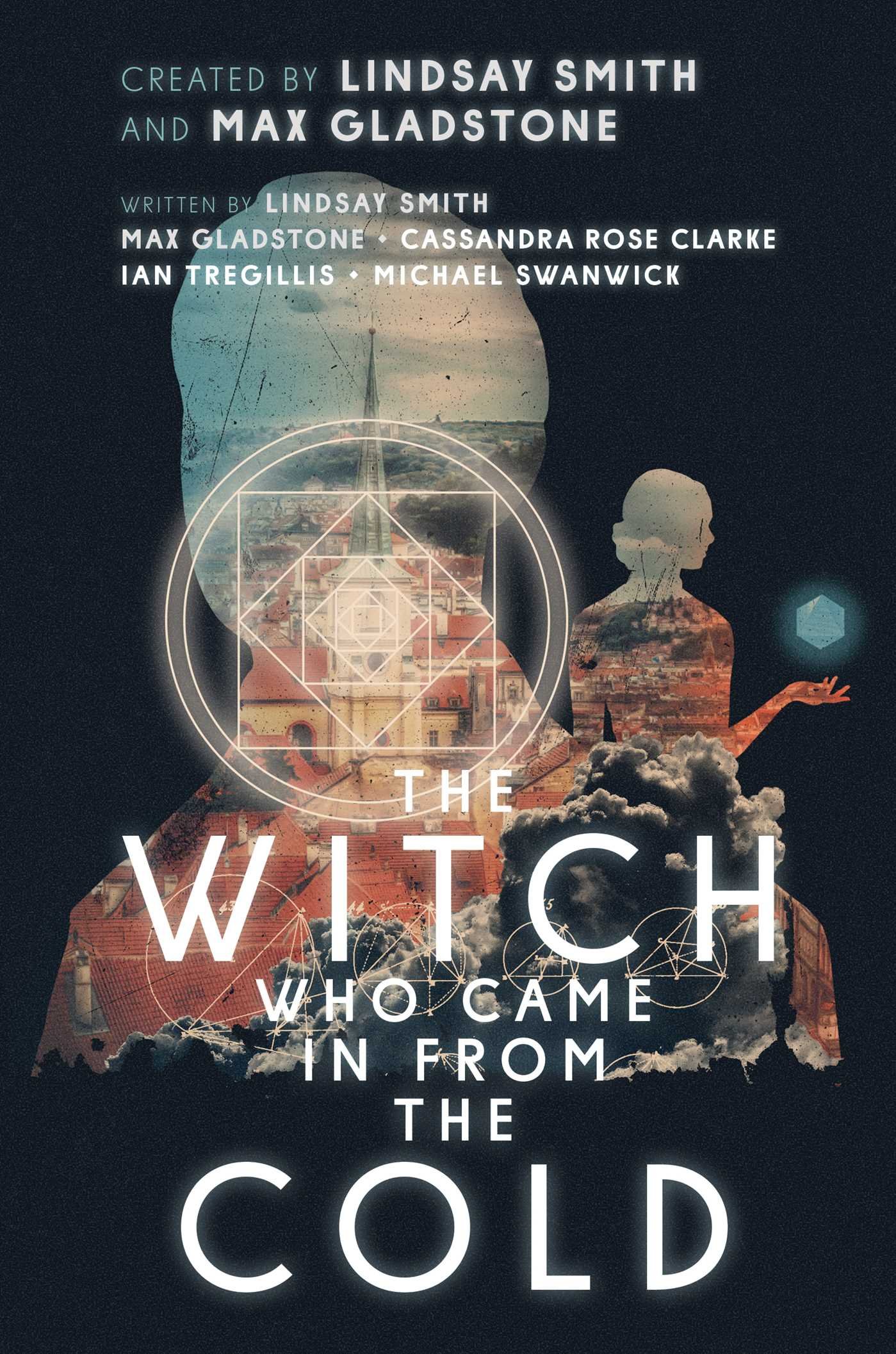
The Rebellion's Last Traitor-small Slaves of the Switchboard FINA FINAL.indd The Witch Who Came In From The Cold-small

Last January, over at The Verge, Andrew Liptak combed through publisher catalogs and countless press releases to produce 16 SF and fantasy books worth noting. He did the same thing in March and came up with 23 titles. His June report includes a whopping 39 books. I can see this month is going to take some serious reading time if I even want to pretend to keep up.

Andrew’s list includes new titles by Tanya Huff, Catherynne M. Valente, Terry Brooks, Brenda Cooper, Victor LaValle, Yoon Ha Lee, Seanan McGuire, Cindy Pon, Lilith Saintcrow, Victoria Schwab, Neal Stephenson and Nicole Galland, Theodora Goss, James Gunn, Stephen Graham Jones, Linda Nagata, Will McIntosh, Rachel Dunne, Daryl Gregory, Jason M. Hough, Karin Tidbeck, Tad Williams, and others. Here’s some of his selections that I found most interesting.

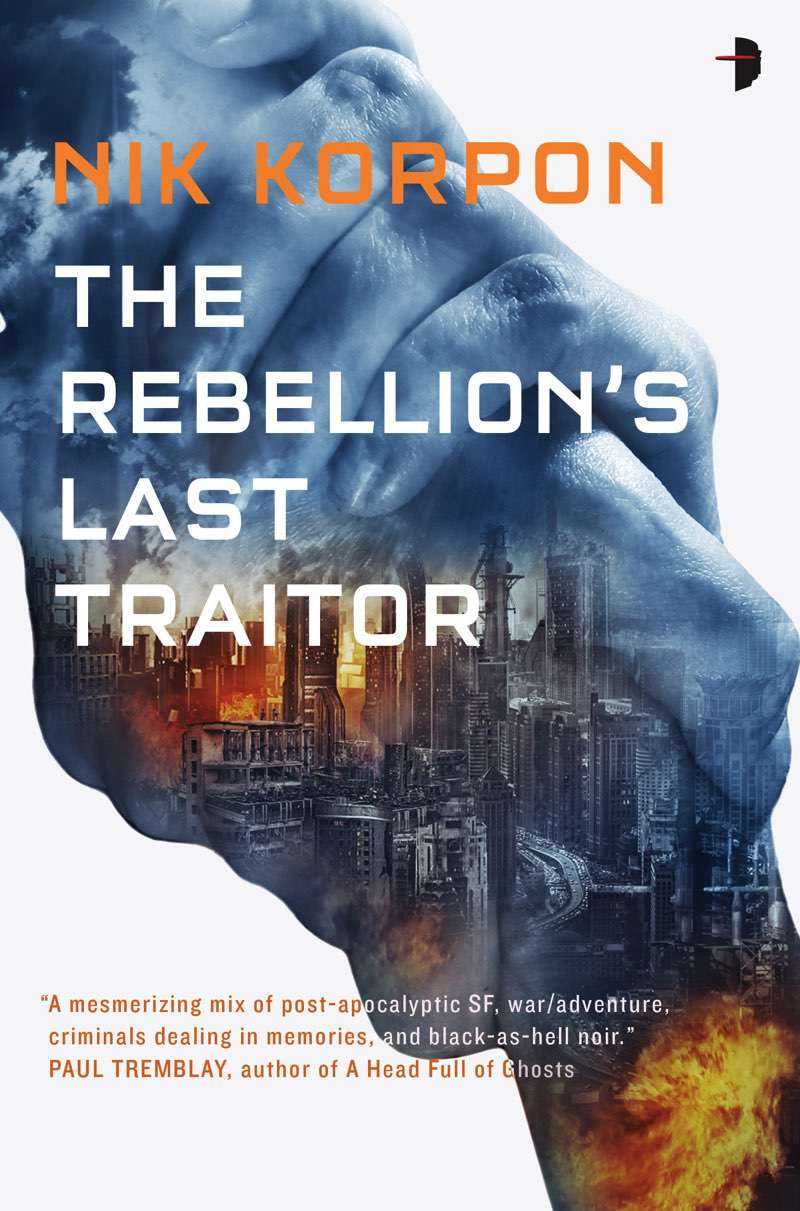
The Rebellion’s Last Traitor by Nik Korpon — Angry Robot (352 pages, $7.99 in paperback, June 6, 2017)

Decades of war has shattered Eitan City, and to help restore order, the Tathadann Party rewrites history by outlawing the past. One man, Henraek, is a memory thief, stealing memories from civilians, until he harvests a memory of his own wife’s death. Now, he’s going to do whatever it takes to discover the truth about her killing, even if it means turning on the people he was most loyal to.

Read More Read More

New Treasures: Skitter by Ezekiel Boone

New Treasures: Skitter by Ezekiel Boone

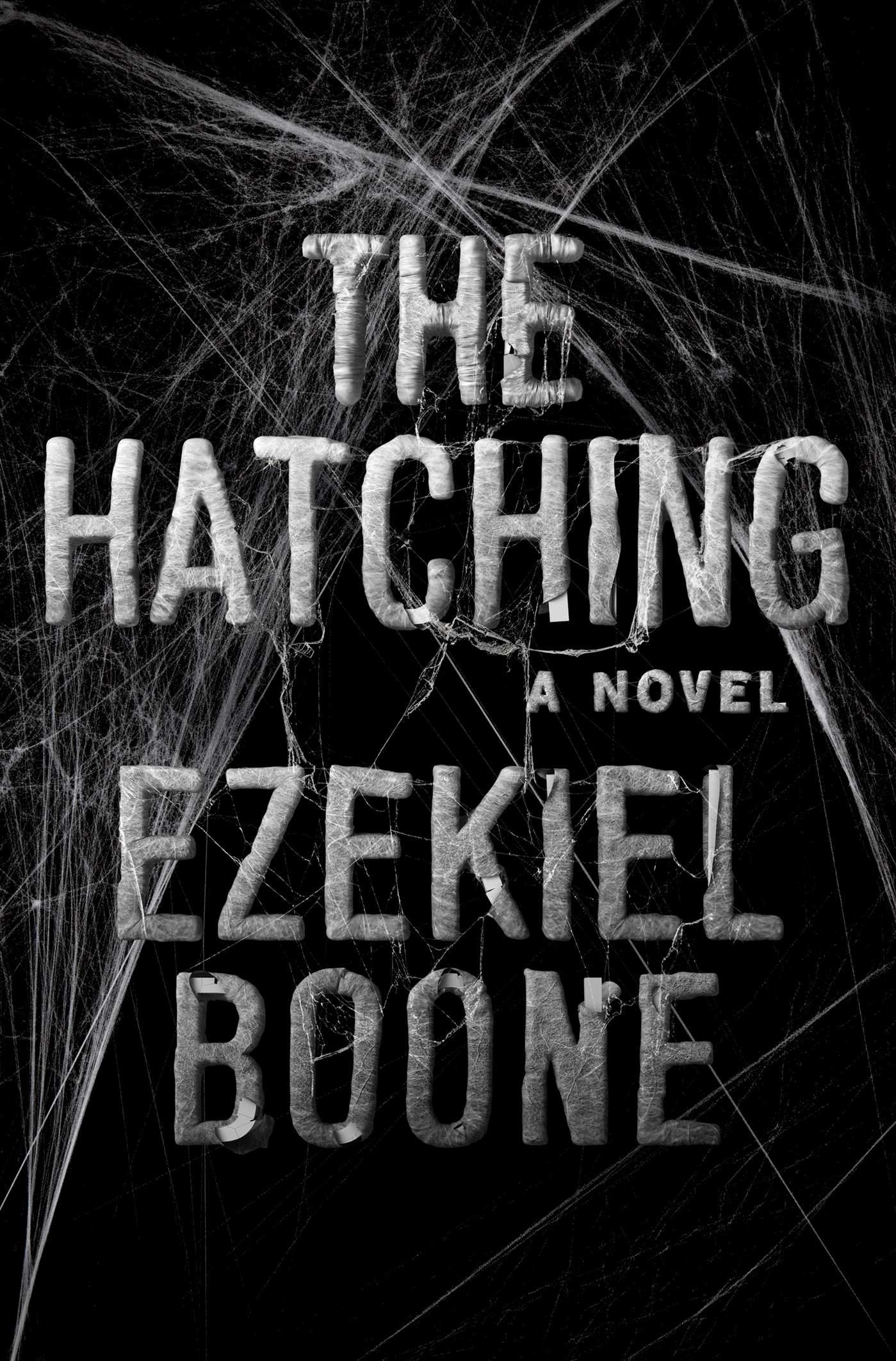
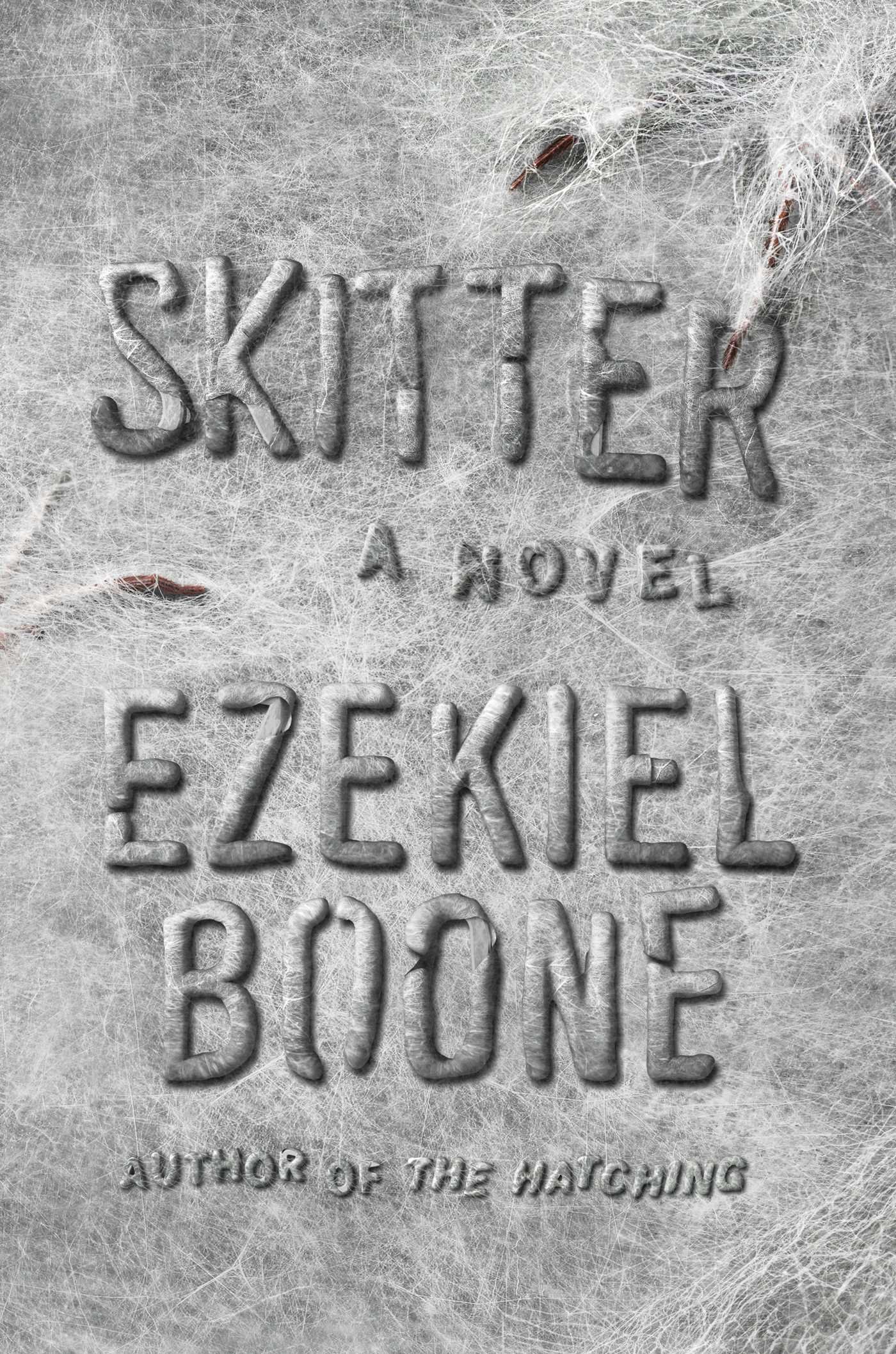
The Hatching-small Skitter Ezekiel Boone-small

Ezekiel Boone (who also writes mainstream fiction under the name Alexi Zentner) published his debut horror novel last July. The Hatching, the tale of an Earth overrun by spiders, was called Arachnophobia meets 2012, and Publishers Weekly praised it as “An apocalyptic extravaganza of doom and heroism… addictive.”

The sequel Skitter arrived in hardcover from Atria/Emily Bestler Books last month. What can you expect in the second volume of a spider apocalypse saga? Let’s say that things don’t look good for mankind, and leave it at that. Spider apocalypse. Yeee…. I get the jitters just thinking about it.

First, there was the black swarm that swallowed a man whole, the suspicious seismic irregularities in India that confounded scientists, the nuclear bomb China dropped on its own territory without any explanation. Then, scientist Melanie Guyer’s lab received a package containing a mysterious egg sac; little did Dr. Guyer know that, almost overnight, Earth would be consumed by previously dormant spiders that suddenly wanted out.

Now, tens of millions of people around the world are dead. Half of China is a nuclear wasteland. Mysterious flesh-eating spiders are marching through Los Angeles, Oslo, Delhi, Rio de Janeiro, and countless other cities. According to Dr. Guyer, the crisis may soon be over.

But in Japan, a giant, glowing egg sac gives a shocking preview of what is to come, even as survivors in Los Angeles panic and break the quarantine zone. Out in the desert, survivalists Gordo and Shotgun are trying to invent a weapon to fight back, but it may be too late, because President Stephanie Pilgrim has been forced to enact the plan of last resort.

America, you are on your own.

We covered The Hatching here last year. Skitter was published by Emily Bestler Books on May 2, 2017. It is $26 in hardcover, and $7.99 for the digital edition.

A Treasure Trove of Classic Science Fiction & Fantasy: The Collected Short Works of Poul Anderson

A Treasure Trove of Classic Science Fiction & Fantasy: The Collected Short Works of Poul Anderson

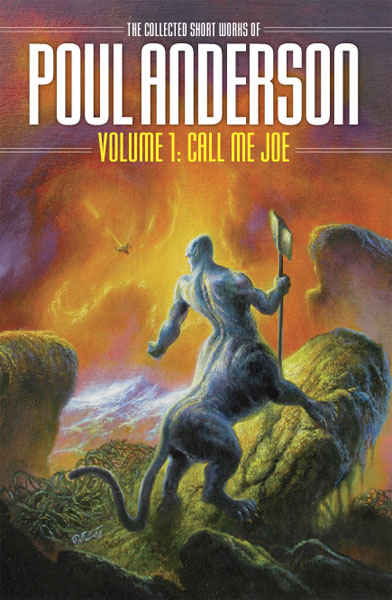
The Collected Poul Anderson 1 Call Me Joe-small The Collected Poul Anderson 2 The Queen of Air and Darkness-small The Collected Poul Anderson 7 Question and Answer-small

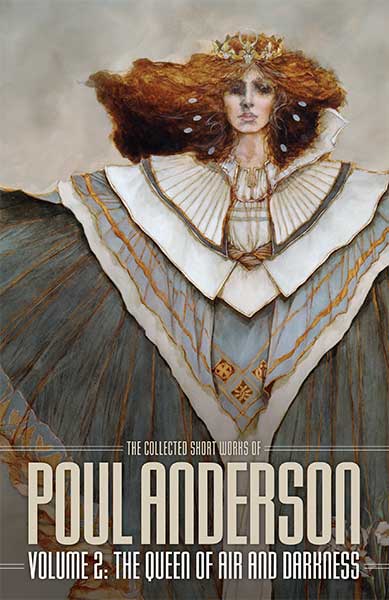
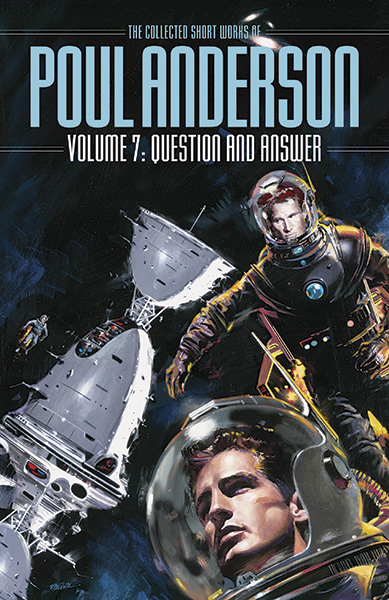
By the time of his death in 2001, Poul Anderson was at the top of the field, with over 70 novels and numerous short stories to his credit. He’d won virtually every award science fiction has to offer, including seven Hugos and three Nebulas. In the 16 years since, however, virtually all of his work has fallen out of print. And like most of the greats of 20th Century science fiction, he’s now in very real danger of being forgotten.

Thank goodness for NESFA Press. Their ongoing project, The Collected Short Works of Poul Anderson, currently at seven volumes and counting, gathers the very best of his short fiction, including all of his Hugo and Nebula nominated and winning short stories. NESFA has produced some stellar collections over the past few decades, celebrating the work of Roger Zelazny, John W. Campbell, Fredric Brown, Zenna Henderson, Cordwainer Smith, C.M. Kornbluth, and countless others, with gorgeous permanent edition hardcovers.

Like each of those, these new volumes have made hard-to-find fiction available and fresh all over again, introducing Anderson to a whole new generation. The latest installment, The Collected Short Works of Poul Anderson, Volume 7: Question and Answer, collects five novellas, two novels, and a smattering of short works, including six tales of Dominic Flandry, agent of the Terran Empire, and two stories of the far-ranging Psychotechnic League. It was released in hardcover in February.

Read More Read More

Vintage Treasures: The Ace Novels of Patricia C. Wrede

Vintage Treasures: The Ace Novels of Patricia C. Wrede

Lyra series Patricia C Wrede-small

On Thursday I was carefully stacking books in the vast subterranean treasure vault known locally as the Cave of Wonders (and which my wife calls, much more prosaically, our basement), when I found something unusual: a stack of unopened boxes. That’s a mystery worth investigating. I carted them back through winding tunnels and secret passageways until I reached our library, and pried them open with a crow bar.

Wonder of wonders! They were packed with vintage paperback and strange magazines. It’s like Christmas!

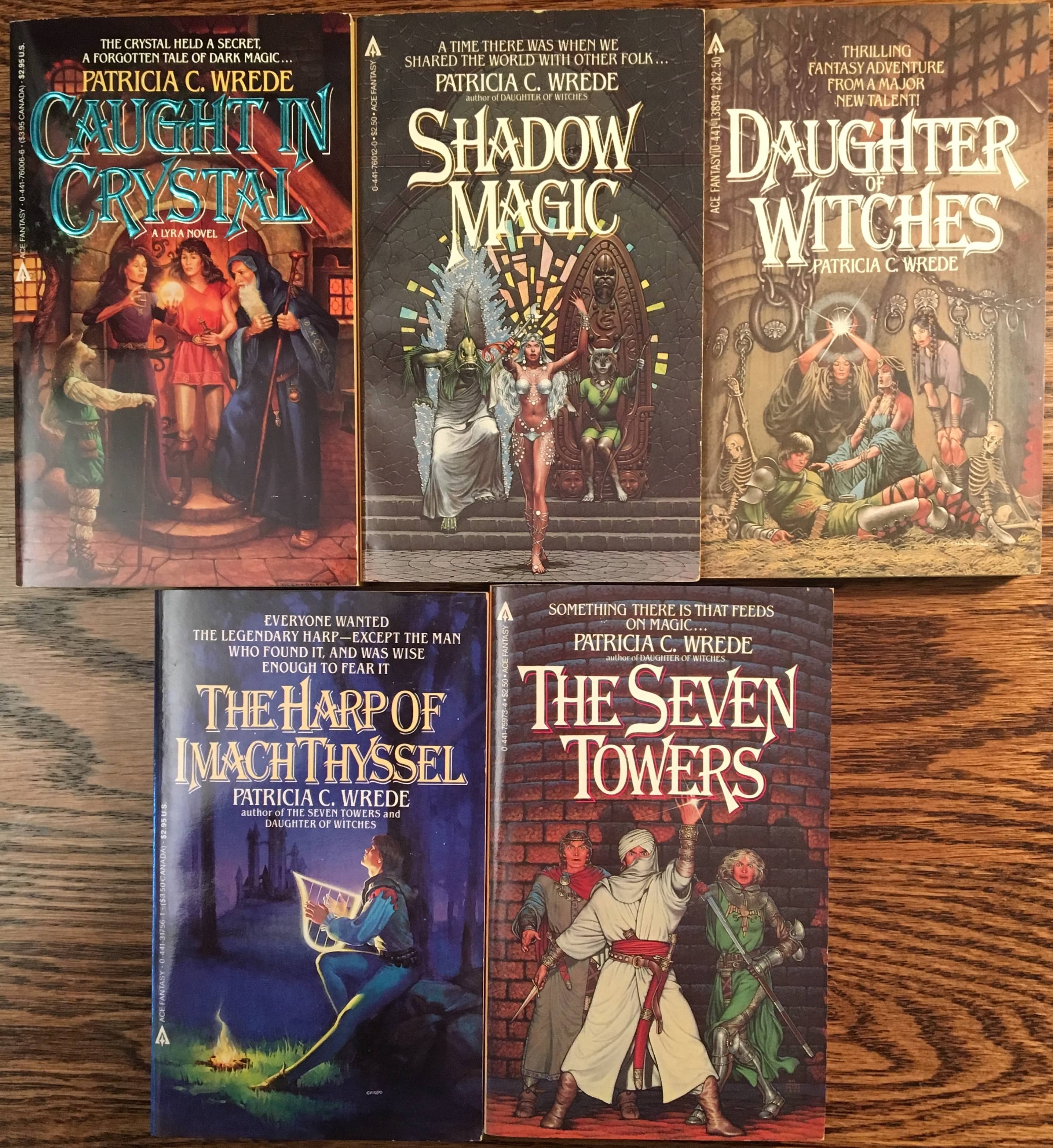
They were doubtless eBay booty that got hastily stashed in the basement because company was coming over five years ago, or something similar. Who knows. I have no recollection of them, so it’s like getting a surprise package from my former self. And, man. What great taste that guy has! There was an odd assortment of magic magazines from the early 1970s (chiefly The Linking Ring, which is packed with the most fabulous ads for trick cards, books, and neato magic books), a set of DAW volumes by Neal Barrett, Jr., and the collection of 80s Ace paperbacks by Patricia C. Wrede pictured above.

Read More Read More

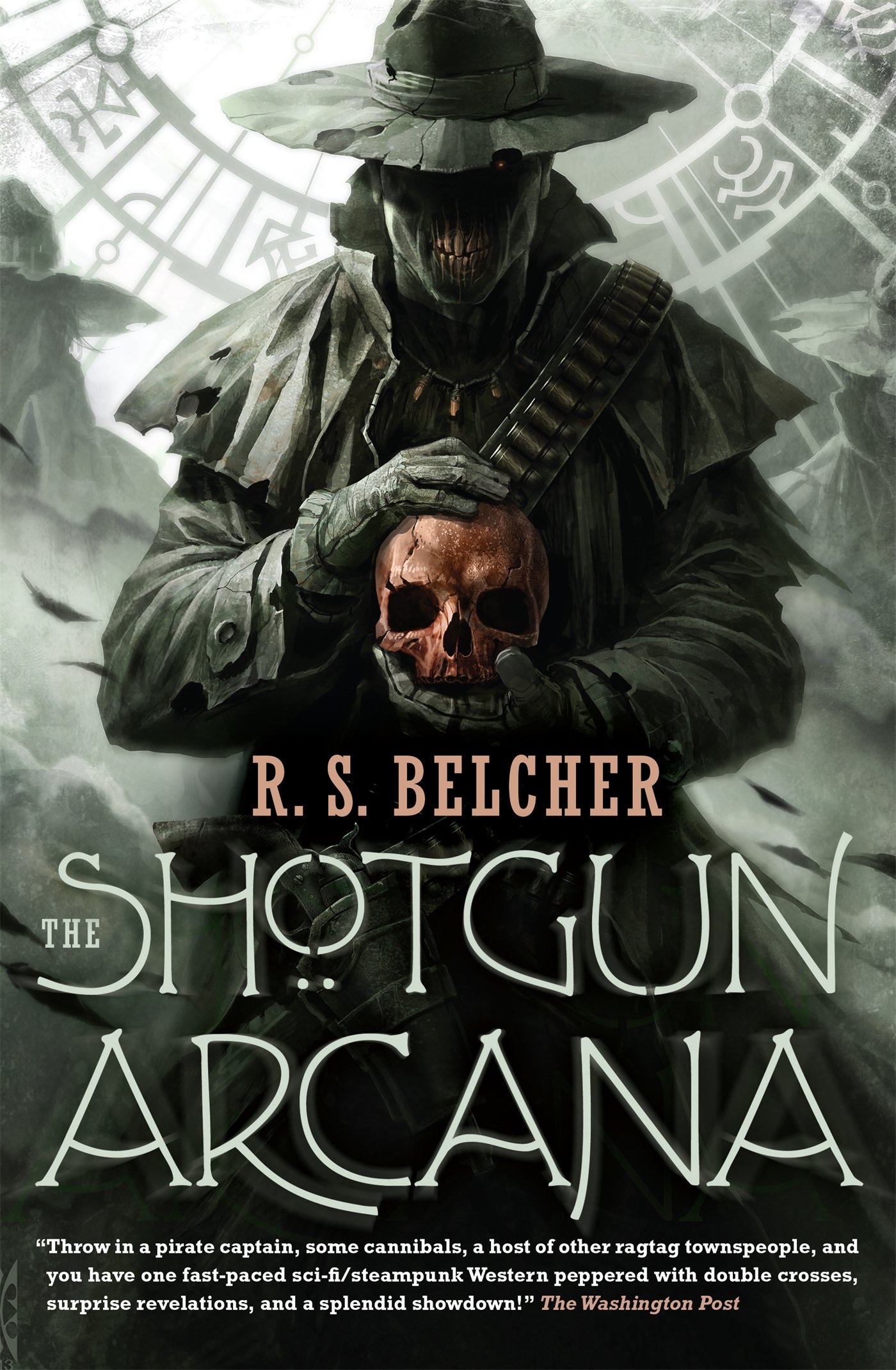
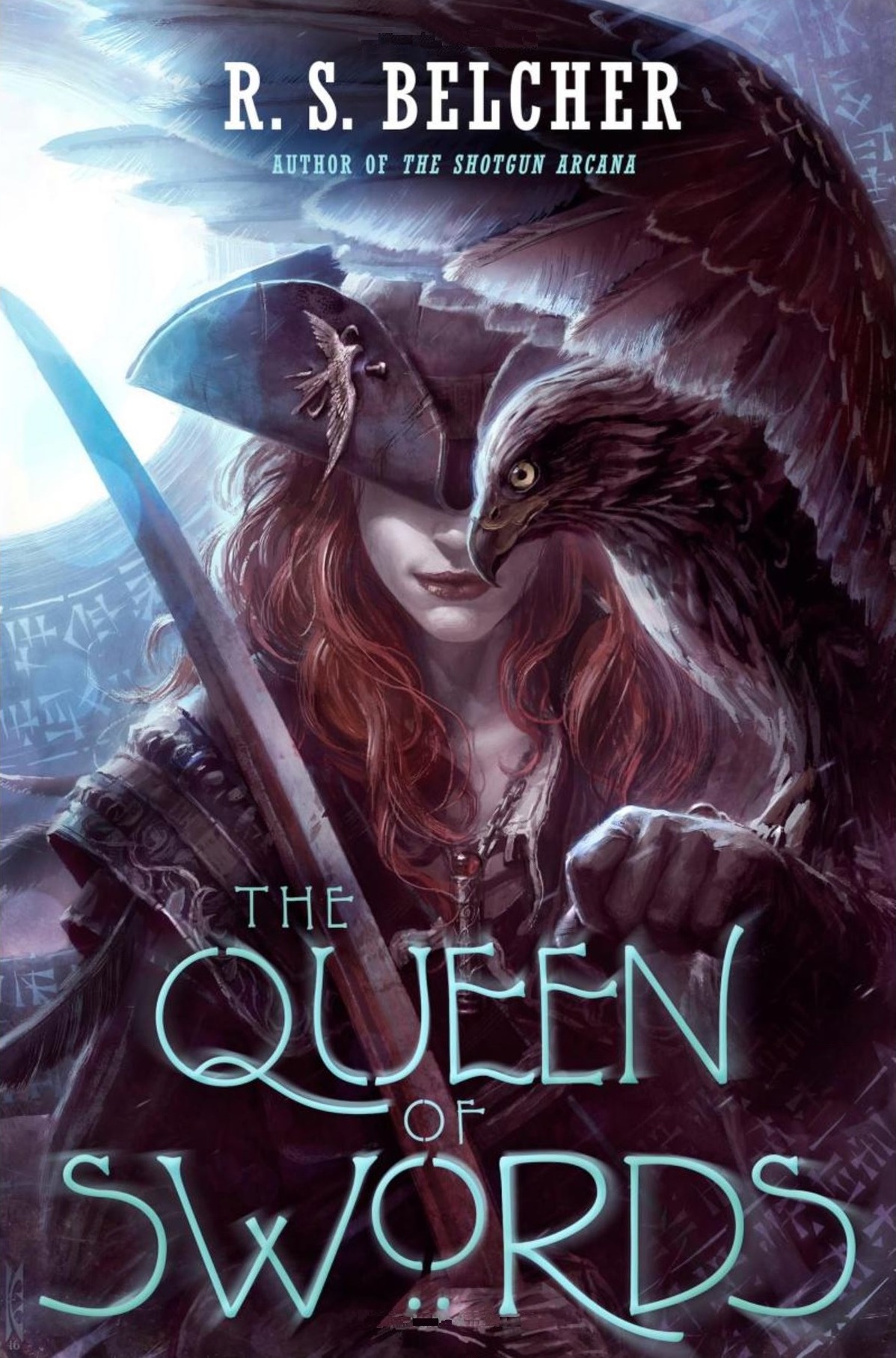
Future Treasures: The Queen of Swords, Book 3 of the Golgotha Series, by R.S. Belcher

Future Treasures: The Queen of Swords, Book 3 of the Golgotha Series, by R.S. Belcher

The-Six-Gun-Tarot-smaller The Shotgun Arcana-small The Queen of Swords RS Belcher-small

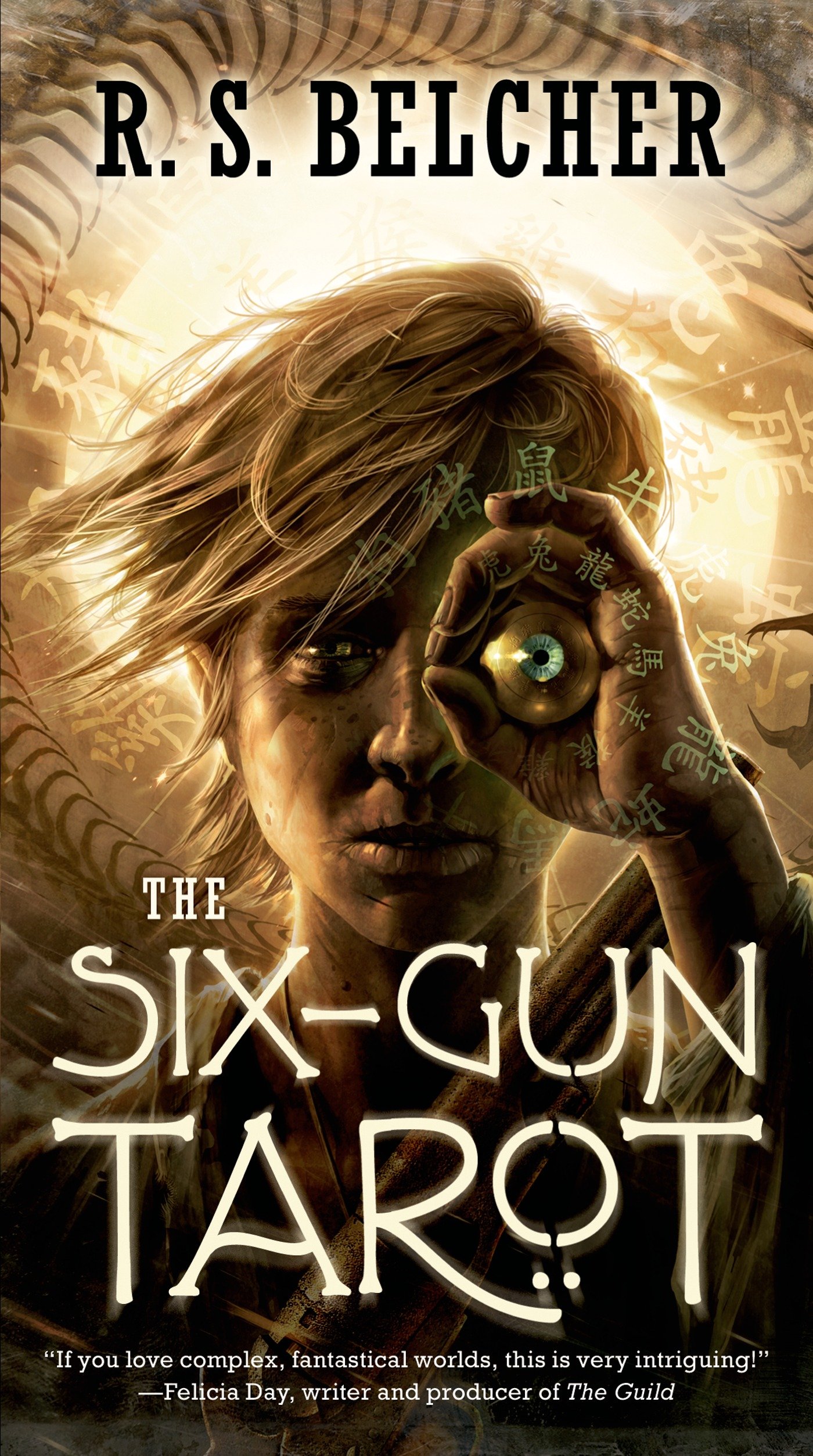
R.S. Belcher’s last novel, The Brotherhood of the Wheel, was selected as one of the best horror novels of the year by the Barnes & Noble Sci-Fi & Fantasy Blog. For his next novel, he returns to Golgotha, the Weird Western setting of The Six-Gun Tarot (which RT Book Reviews called “Fascinating… like a mashup of Buffy the Vampire Slayer and Deadwood,”) and The Shotgun Arcana (“Golgotha is the wildest of the Wild West, attracting mystics, minor deities, alchemists, seers, and fanatics in a fantastical romp” — Publishers Weekly). It arrives in hardcover from Tor later this month.

1870. Maude Stapleton, late of Golgotha, Nevada, is a respectable widow raising a daughter on her own. Few know that Maude belongs to an ancient order of assassins, the Daughters of Lilith, and is as well the great-great-great-great-granddaughter of Anne Bonney, the legendary female pirate.

Leaving Golgotha in search of her daughter Constance, who has been taken from her, Maude travels to Charleston, South Carolina, only to find herself caught in the middle of a secret war between the Daughters of Lilith and their ancestral enemies, the monstrous Sons of Typhon. To save Constance, whose prophetic gifts are sought by both cults, Maude must follow in the footsteps of Anne Bonney as she embarks on a perilous voyage that will ultimately lead her to a lost city of bones in the heart of Africa ― and the Father of All Monsters.

One of the most popular characters from The Six-Gun Tarot and The Shotgun Arcana ventures beyond Golgotha on a boldly imaginative, globe-spanning adventure of her own.

Read More Read More

The Play’s The Thing

The Play’s The Thing

Leiber Ghost LightHere at Black Gate we often have posts on films and TV shows as they connect with or pertain to our favorite genre(s). If we don’t talk as much (or at all) about live drama, it’s probably because there’s not as much SF or Fantasy happening on the stage as there is on the screen. I’d think we’d all agree that with a very few exceptions stage effects are simply not equal to the kind of special effects SF and Fantasy often need.

But if we don’t see our favourite novels and stories on the stage, we certainly do see the opposite: we see the stage in our novels and stories.

We’re all familiar with the “play within a play” concept since we had to read Hamlet in high school. After all, practically every Fred Astaire movie musical is about a musical production, and there can’t be anyone alive who doesn’t know that Singing in the Rain is about making a movie musical. But again, what I’m looking at here is play-within-the-story. We should note that if we follow in Shakespeare’s footsteps, the device has to have purpose. In Hamlet, the play was “the thing to catch the conscience of the king,” that is, it played an integral part of the plot. The same should be true if we see the device in a short story or novel.

Read More Read More