Browsed by
Category: Books

New Treasures: Zero Repeat Forever by G. S. Prendergast

New Treasures: Zero Repeat Forever by G. S. Prendergast

Zero Repeat Forever-smallThe flood of YA fantasy that washes up at the foot of my big green chair every week is starting to all sound alike. The covers look alike too, all these big fonts on stark, sculptured backgrounds.
It was the strikingly different cover to Zero Repeat Forever that first drew my attention. Enigmatic and beautiful, it stood out from all the other YA books I’ve seen this month. In fact, it doesn’t look like any book I’ve ever seen. The title, nearly as enigmatic as the cover, intrigued me too, and I flipped it open to read the inside jacket flap with real curiosity. It’s the tale of the end of the world, an invasion of deadly creatures… and a sixteen year old girl who doesn’t intend to take things lying down. I like it already.

He has no voice or name, only a rank, Eighth. He doesn’t know the details of the mission, only the directives that hum in his mind.
Dart the humans. Leave them where they fall.
His job is to protect his Offside. Let her do the shooting.
Until a human kills her…

Sixteen-year-old Raven is at summer camp when the terrifying armored Nahx invade. Isolated in the wilderness, Raven and her fellow campers can only stay put. Await rescue. Raven doesn’t like feeling helpless, but what choice does she have?

Then a Nahx kills her boyfriend.

Thrown together in a violent, unfamiliar world, Eighth and Raven should feel only hate and fear. But when Raven is injured, and Eighth deserts his unit, their survival comes to depend on trusting each other…

G. S. Prendergast is the Canadian author of two novels in verse, Audacious and Capricious. This is her first prose novel.

Zero Repeat Forever was published by Simon & Schuster on August 29, 2017. It is 487 pages, priced at $17.99 in hardcover and $10.99 for the digital edition. The marvelous cover was designed by Lizzy Bromley. Read an excerpt at Hypable.

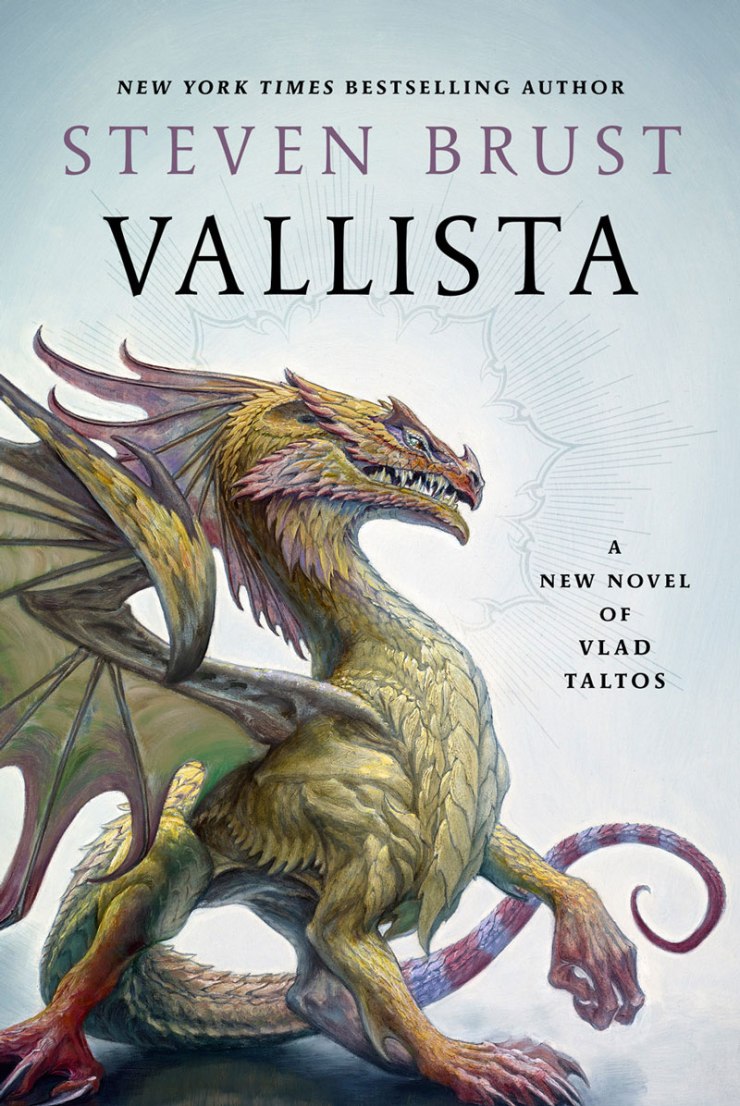
Future Treasures: Vallista by Steven Brust

Future Treasures: Vallista by Steven Brust

Vallista-smallI read Jhereg, the first book in Steven Brust’s long-running Vlad Taltos series, when my brother Mike thrust it on me in 1983. It was fun, fast-paced, and totally different from anything I’d ever read before.

Steven Brust was a fast-rising literary star in 1983, but Jhereg, and the series it spawned, established him as a major name. He’s produced numerous popular and acclaimed novels in the intervening years — including To Reign in Hell (1984), Brokedown Palace (1985), The Phoenix Guards (1991), and his ongoing Incrementalists series with Skyler White — but it’s the Vlad Taltos series that he remains most closely associated with. There have been thirteen additional novels in the series since Jhereg appeared 34 years ago, and this month marks the arrival of the fifteenth, Vallista, a deep dive into the mysteries of the world of Dragaera.

Vlad Taltos is an Easterner ― an underprivileged human in an Empire of tall, powerful, long-lived Dragaerans. He made a career for himself in House Jhereg, the Dragaeran clan in charge of the Empire’s organized crime. But the day came when the Jhereg wanted Vlad dead, and he’s been on the run ever since. He has plenty of friends among the Dragaeran highborn, including an undead wizard and a god or two. But as long as the Jhereg have a price on his head, Vlad’s life is…messy.

Meanwhile, for years, Vlad’s path has been repeatedly crossed by Devera, a small Dragaeran girl of indeterminate powers who turns up at the oddest moments in his life.

Now Devera has appeared again ― to lead Vlad into a mysterious, seemingly empty manor overlooking the Great Sea. Inside this structure are corridors that double back on themselves, rooms that look out over other worlds, and ― just maybe ― answers to some of Vlad’s long-asked questions about his world and his place in it. If only Devera can be persuaded to stop disappearing in the middle of his conversations with her…

The entire series has been kept in print by Ace in deluxe trade paperback omnibus editions — pretty extraordinary for a series that’s over three decades old.

Read More Read More

Self-published Book Review: A History of Magic by Scott Robinson

Self-published Book Review: A History of Magic by Scott Robinson

I’m back from my failed Kickstarter, and I’ll be looking for more books to review soon. If you have any, send them my way.

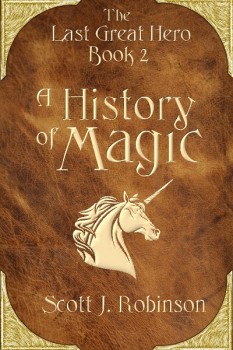
AHistoryOfMagicA History of Magic is the second book in Scott Robinson’s series about Rawk, the last great hero. I reviewed the first novel, The Age of Heroes, two years ago here at Black Gate.

Rawk is retired, but that doesn’t stop the exots–exotic monsters from other worlds–from randomly appearing in his city of Katamood. Technically, this should be his friend Weaver’s problem, as he’s the prince of the city, but the city guard that Weaver employs can’t be everywhere at once. And if a monster appears right in front of Rawk, he has to fight it. It’s expected, to judge from the crowds that materialize whenever that happens. But Rawk is getting slower, and he can’t save everyone, not even his audience, which doesn’t always have the good sense to keep its distance.

New heroes have been showing up from all over the world to fight the monsters. But heroes are lazy sorts, and they tend to hang out in taverns waiting for word of the monsters to come to them, and only then head out to kill the beast and collect the bounty. And very few of them have any interest in finding out where the monsters are coming from and stopping it–that would cause the bounties to dry up quick.

It must be caused by sorcerers, to judge from the magical portals producing the monsters. Weaver’s solution would be to send his guards from door-to-door hunting down sorcerers–real or imagined–but Rawk would rather avoid that. So he recruits Sylvia, half-elven sorceress and former enemy, current healer, to help him out. Together, they track down various sorcerers who have little real magic between them, trying to discover who’s behind the exots. Clearly, none of these sorcerers could light a candle with magic on their own, but if enough of them worked together . . .

Read More Read More

Tempus Takes Manhattan: Janet and Chris Morris’ Tempus Unbound

Tempus Takes Manhattan: Janet and Chris Morris’ Tempus Unbound

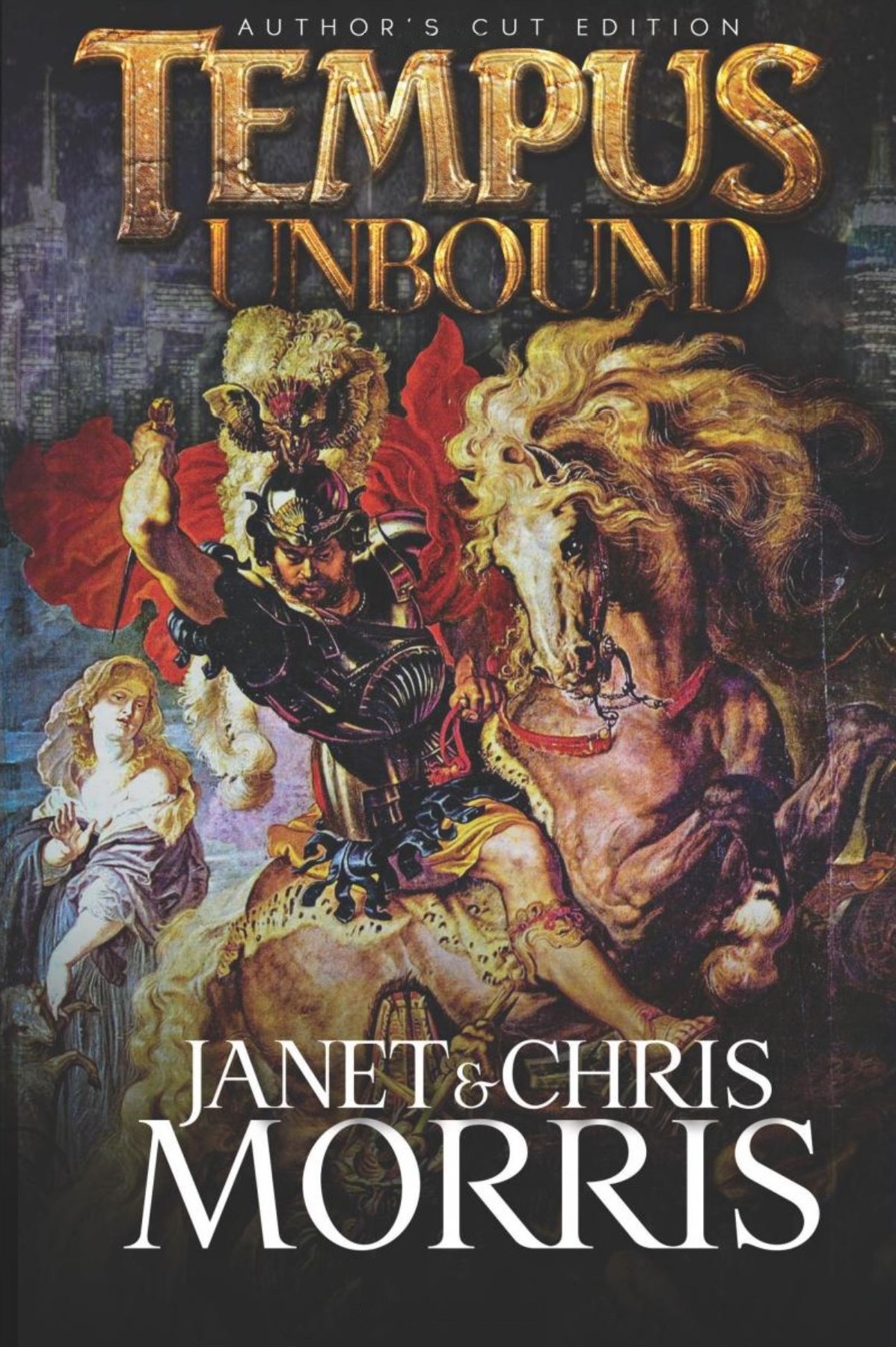
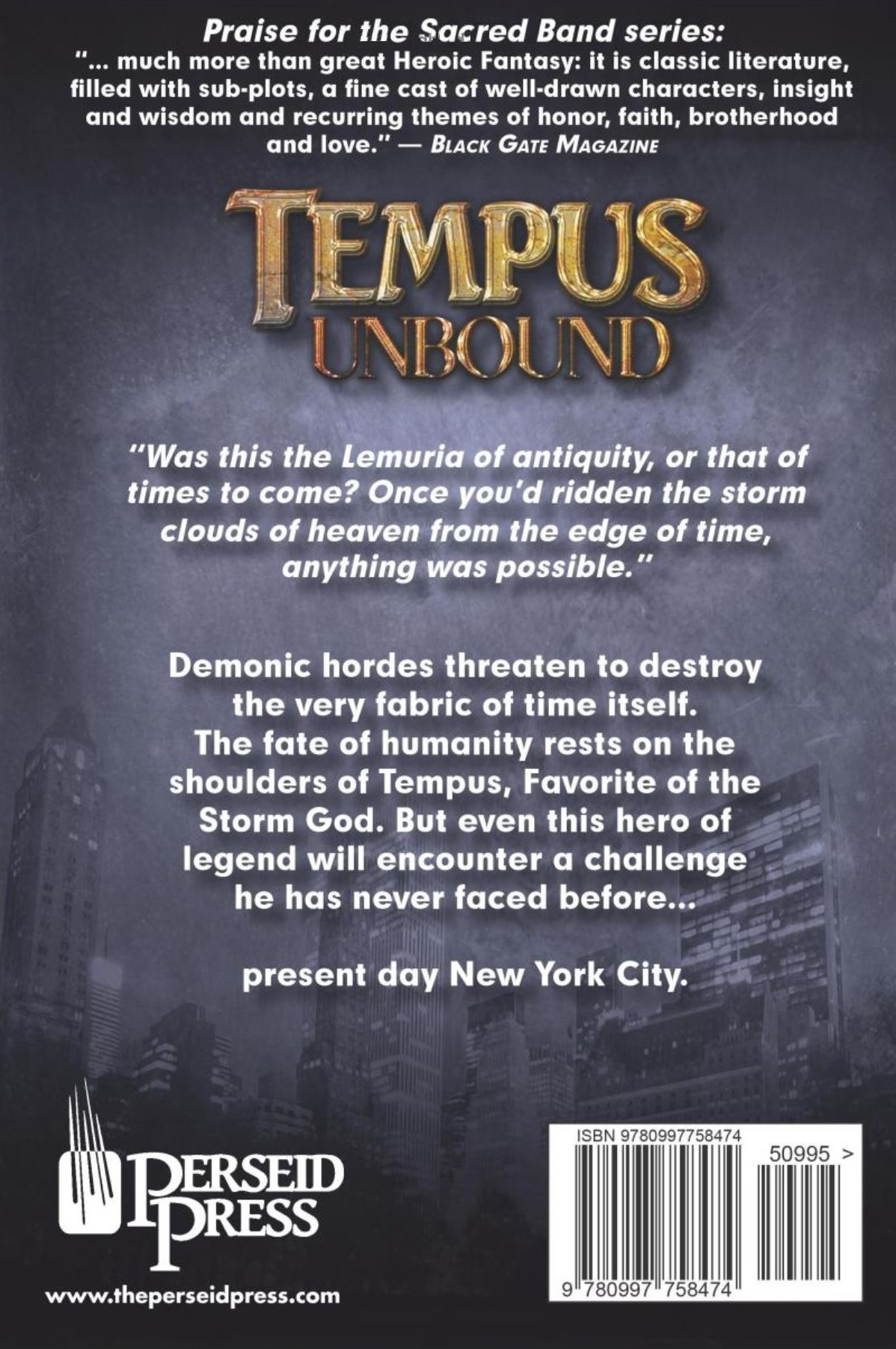
Tempus Unbound-small Tempus Unbound-back-small

“Was this the Lemuria of antiquity, or that of times to come? Once you’d ridden the storm clouds of heaven from the edge of time, anything was possible.”

Few are the writers who can successfully take their characters out of their “ancient setting” and transplant them in a story set in modern and even futuristic times, fighting numinous enemies, inimical foes and a capricious and dangerous theomachy. In my opinion, Janet and Chris Morris have brilliantly achieved just that with Tempus Unbound. This novel takes place after the events in City on the Edge of Time, and before those of Storm Seed, and it’s quite a departure from the other novels in starring Tempus the Black, Niko, Strat and the other warriors of The Sacred Band. It’s also quite a wild ride — an adventure that never lets you pause for breath.

The story begins after Tempus leaves the City at the Edge of Time and heads for Lemuria. But is this the Lemuria before or after the Fall of Man? Is it the Past or is it the Future? As events later play out in the novel, we find that out. Tempus is on a quest to find Cime, the Mage Killer who may or may not be his sister, who was forced into a marriage to Askelon, the Lord of Dreams. Cime has gone missing from Meridian, Askelon’s dream realm, and Tempus rides to Lemuria looking to find her. He suspects she’s gone after some mage who needs killing, and hopes she has her magical diamond rods with her, for without them she’s powerless.

Read More Read More

Undead Emperors and Cybernetic Rebels: The Succession Novels by Scott Westerfeld

Undead Emperors and Cybernetic Rebels: The Succession Novels by Scott Westerfeld

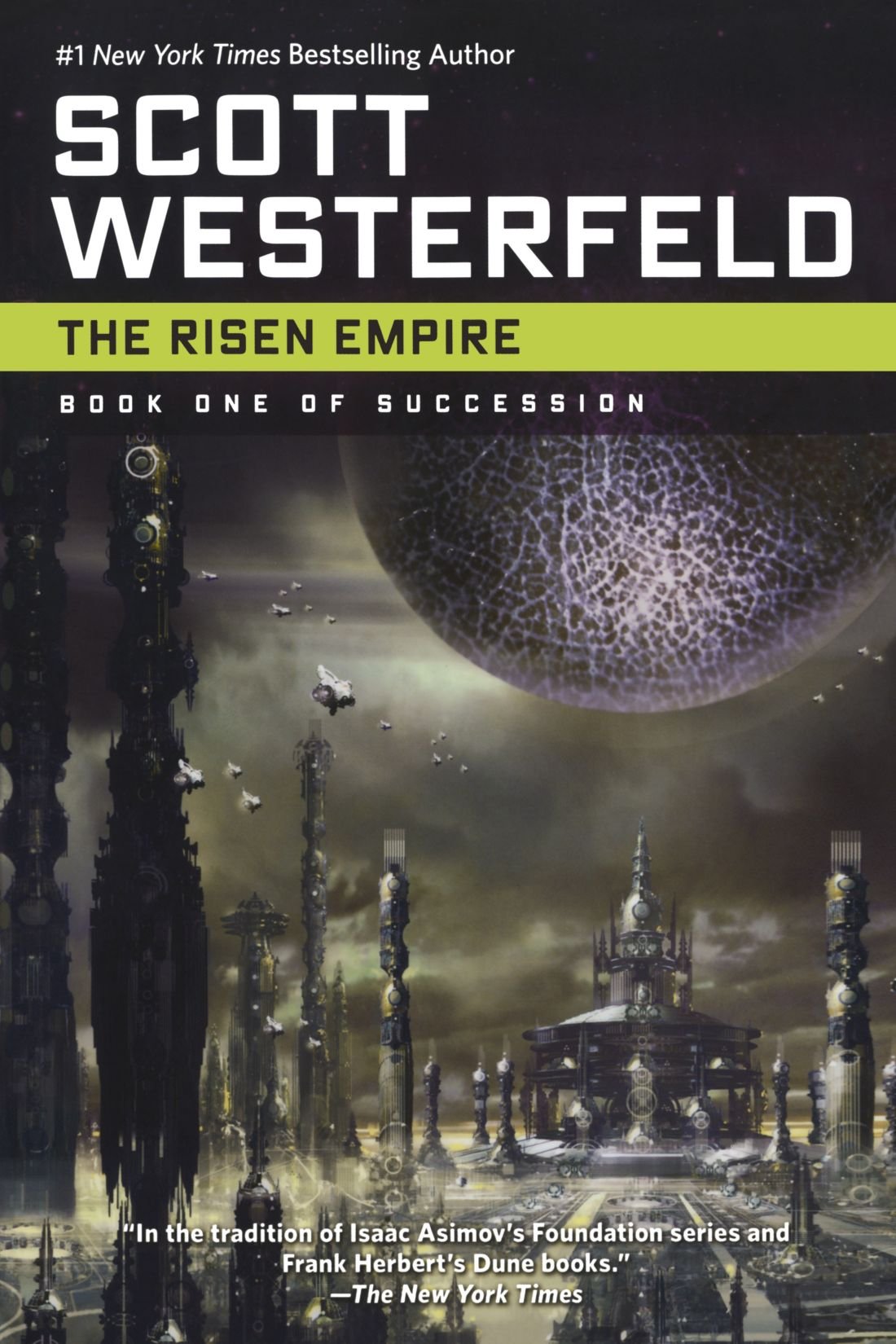
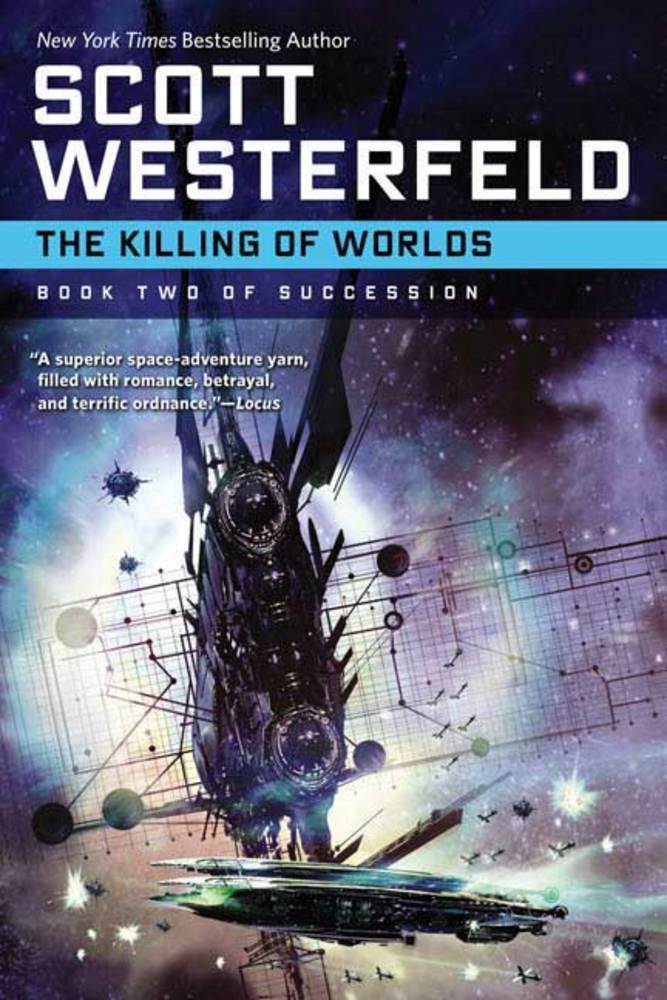
The Risen Empire-small The Killing of Worlds-small

Last month I bought a remaindered copy of The Risen Empire, the opening novel in Scott Westerfeld’s acclaimed Succession series. Of course that meant I had to track down the second and final volume, The Killing of Worlds. In the process I had a quick look through our archives to see ifBG reviewers had had anything to say about them over the years.

As usual, our staff didn’t let me down. Martin Page held up the first volume as an exemplary achievement in his post “How and Why You Should Withhold Information from the Reader,” saying:

For example, Scott Westerfeld’s marvelous The Risen Empire quickly turns out to be about a secret. We see one team try to expose the secret and another — who know what it is — ruthlessly try to preserve it.

Here’s the back covers of both volumes.

Read More Read More

New Treasures: The Core by Peter Brett

New Treasures: The Core by Peter Brett

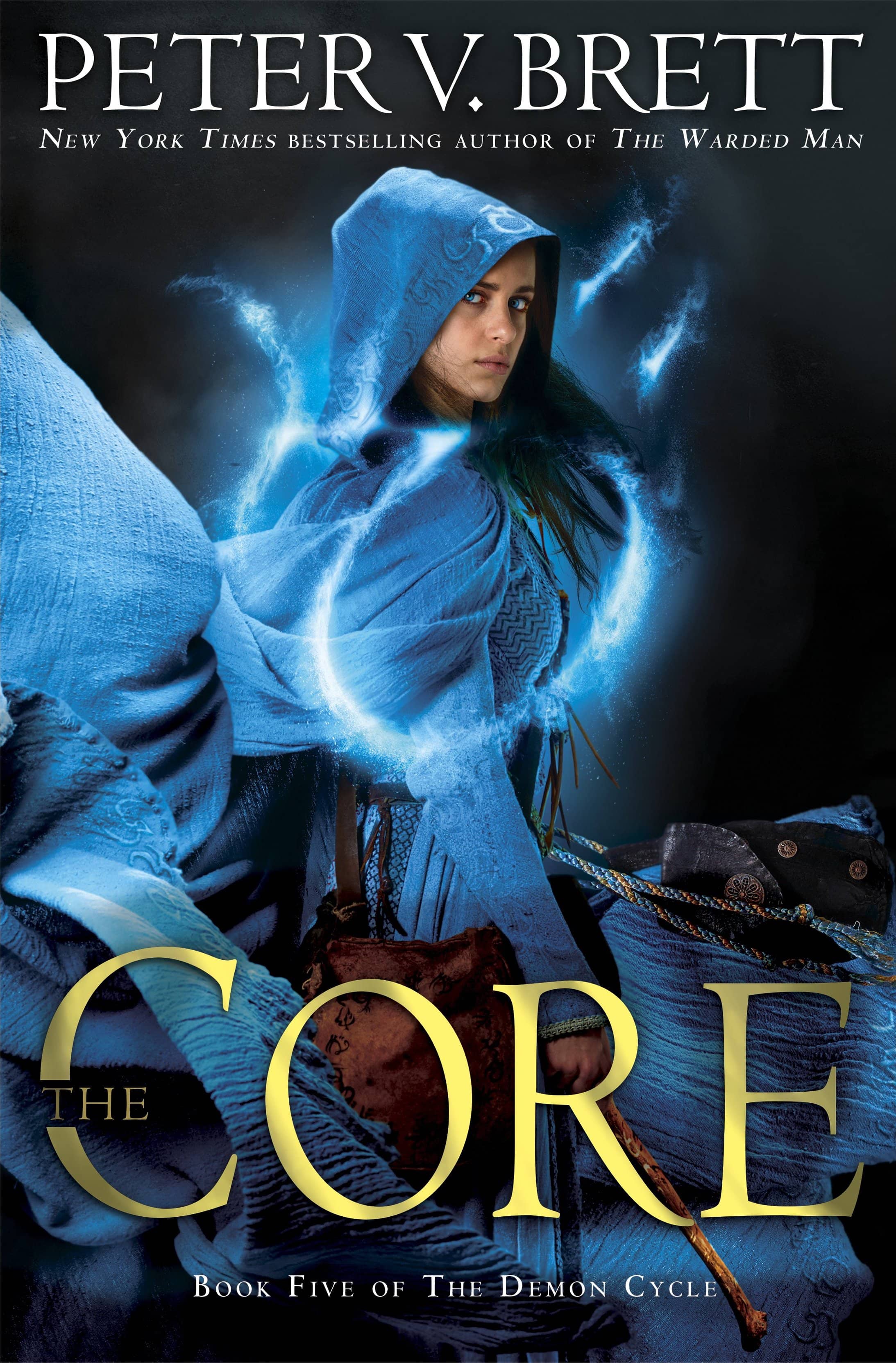
The Core Peter Brett-smallThe second book in Peter Brett’s Demon Cycle series, The Desert Spear, became an international bestseller, and the next two volumes catapulted him to the top tier in the industry. That’s a meteoric rise for someone with a single series to their name.

Anticipation for the final book, The Core, has been running high for two years, and it finally arrived  in hardcover from Del Rey this week. Here’s the description.

For time out of mind, bloodthirsty demons have stalked the night, culling the human race to scattered remnants dependent on half-forgotten magics to protect them. Then two heroes arose — men as close as brothers, yet divided by bitter betrayal. Arlen Bales became known as the Warded Man, tattooed head to toe with powerful magic symbols that enable him to fight demons in hand-to-hand combat — and emerge victorious. Jardir, armed with magically warded weapons, called himself the Deliverer, a figure prophesied to unite humanity and lead them to triumph in Sharak Ka — the final war against demonkind.

But in their efforts to bring the war to the demons, Arlen and Jardir have set something in motion that may prove the end of everything they hold dear — a swarm. Now the war is at hand, and humanity cannot hope to win it unless Arlen and Jardir, with the help of Arlen’s wife, Renna, can bend a captured demon prince to their will and force the devious creature to lead them to the Core, where the Mother of Demons breeds an inexhaustible army.

Trusting their closest confidantes, Leesha, Inevera, Ragen, and Elissa, to rally the fractious people of the Free Cities and lead them against the swarm, Arlen, Renna, and Jardir set out on a desperate quest into the darkest depths of evil — from which none of them expects to return alive.

At 800 pages, The Core brings the page count for the entire 5-volume series to an impressive 3,250 pages. This is an epic you can sink your teeth into, and no mistake. It began with The Warded Man, still available in paperback. Those of you looking for a new fantasy series, and who hate to start reading before it’s complete — your ship has finally come in.

Read More Read More

Future Treasures: The Book of Swords, edited by Gardner Dozois

Future Treasures: The Book of Swords, edited by Gardner Dozois

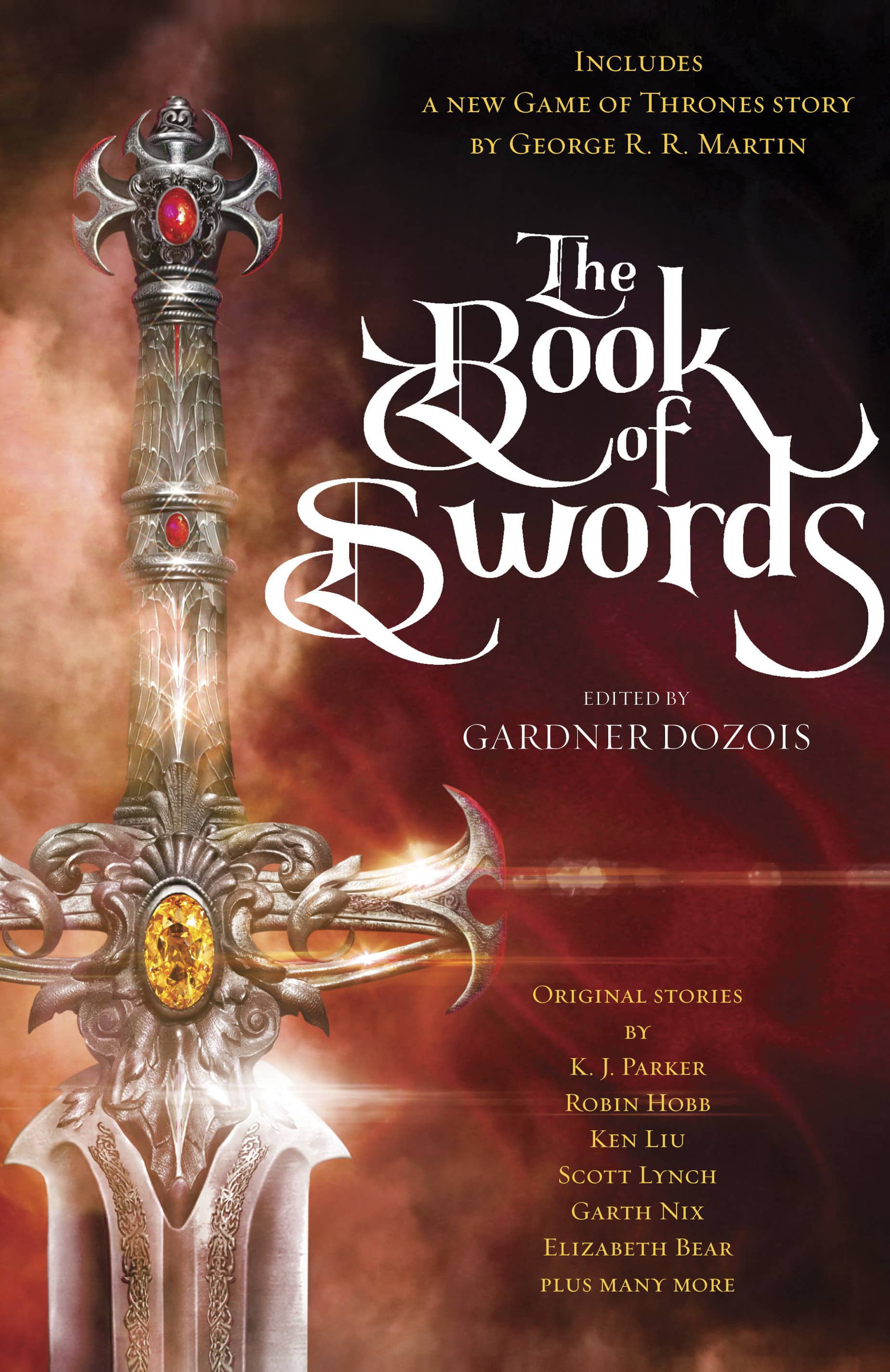
The Book of Swords-smallA while back Gardner Dozois asked if I wanted a review copy of his upcoming “Sword & Sorcery” anthology, The Book of Swords.

Now, Gardner does not do small anthologies — neither in the physical sense, nor in the sense of their impact on the field. If the premier anthologist in the SF community was putting his time and energy into a collection of original sword & sorcery tales, then clearly the genre still has some life in it.

It wasn’t that long ago that I thought the era of big-budget (or even modest-budget) S&S anthologies was long over. What’s changed? The global phenomena that is GRRM’s Game of Thrones, that’s what’s changed. I don’t consider GoT to be sword & sorcery… but there’s no denying that publishers (and film producers) are a lot more interested in adventure fantasy all of a sudden. If the results are anything like The Book of Swords, I’m all for it.

The Book of Swords arrives next week in hardcover from Martin’s Song of Ice and Fire publisher Bantam Books, with sixteen brand new stories by Lavie Tidhar, Robin Hobb, Ken Liu, Matthew Hughes, Walter Jon Williams, C. J. Cherryh, Garth Nix, Ellen Kushner, Scott Lynch — and, yes, a brand new Song of Ice and Fire story from George R. R. Martin.

Fantasy fiction has produced some of the most unforgettable heroes ever conjured onto the page: Robert E. Howard’s Conan the Barbarian, Michael Moorcock’s Elric of Melniboné, Fritz Leiber’s Fafhrd and the Gray Mouser. Classic characters like these made sword and sorcery a storytelling sensation, a cornerstone of fantasy fiction — and an inspiration for a new generation of writers, spinning their own outsize tales of magic and swashbuckling adventure.

Now, in The Book of Swords, acclaimed editor and bestselling author Gardner Dozois presents an all-new anthology of original epic tales by a stellar cast of award-winning modern masters — many of them set in their authors’ best-loved worlds. Join today’s finest tellers of fantastic tales, including George R. R. Martin, K. J. Parker, Robin Hobb, Scott Lynch, Ken Liu, C. J. Cherryh, Daniel Abraham, Lavie Tidhar, Ellen Kushner, and more on action-packed journeys into the outer realms of dark enchantment and intrepid derring-do, featuring a stunning assortment of fearless swordsmen and warrior women who face down danger and death at every turn with courage, cunning, and cold steel.

Here’s the complete Table of Contents.

Read More Read More

Invasion Fleets and Rogue Stars: Rich Horton on Who Speaks of Conquest by Lan Wright & The Earth in Peril, edited by Donald A. Wollheim

Invasion Fleets and Rogue Stars: Rich Horton on Who Speaks of Conquest by Lan Wright & The Earth in Peril, edited by Donald A. Wollheim

Who Speaks of Conquest-small The Earth in Peril-small

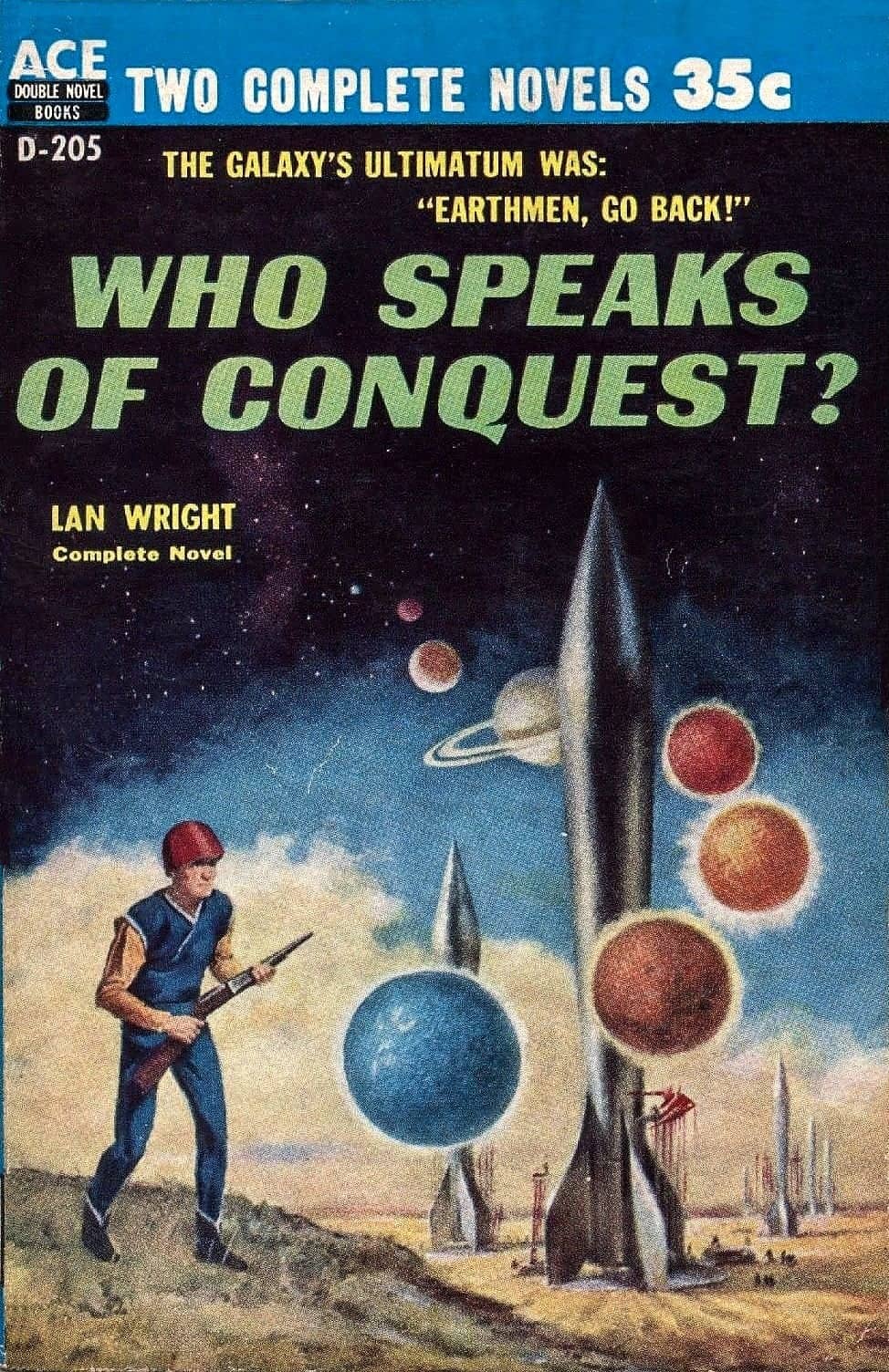
Over at his website Strange at Ecbatan, Rich Horton continues his survey of the Ace Double line of 50s science fiction novels with Who Speaks of Conquest by Lan Wright, paired with the anthology The Earth in Peril, edited by Donald A. Wollheim. It was originally published in 1957. Here’s Rich on the Wright novel.

The first Terran starship lands at Sirius (why they didn’t go to Alpha Centauri first is never explained — it turns out to be inhabited, so it can’t be for lack of planets). There they find a welcoming committee, from an intelligent race that has colonized these planets. They learn that the entire Galaxy is under the rule of the Rihnans, apparently a mostly benign rule, but an unquestioned one. Humans are expected to meekly accept their position. Of course, they don’t, and soon an invasion fleet is dispatched from Alpha Centauri. But to the invaders’ surprise, the plucky humans decide to fight back, and moreover they have been able to develop some surprisingly good tech, and the humans win.

The Rihnans don’t take that lying down, and begin plans for a much bigger fleet to suppress Terra. But the humans have their own ideas, and they decide to take the fight to the rest of the Galaxy…

The flip side is a little more interesting from my perspective — an anthology of tales focused on the invasion of Earth, edited by the founding editor of Ace, Donald A. Wollheim himself. The Earth in Peril contains short stories by Murray Leinster, A. E. van Vogt, C. M. Kornbluth, Edmond Hamilton, Bryce Walton, and H. G. Wells.

Read More Read More

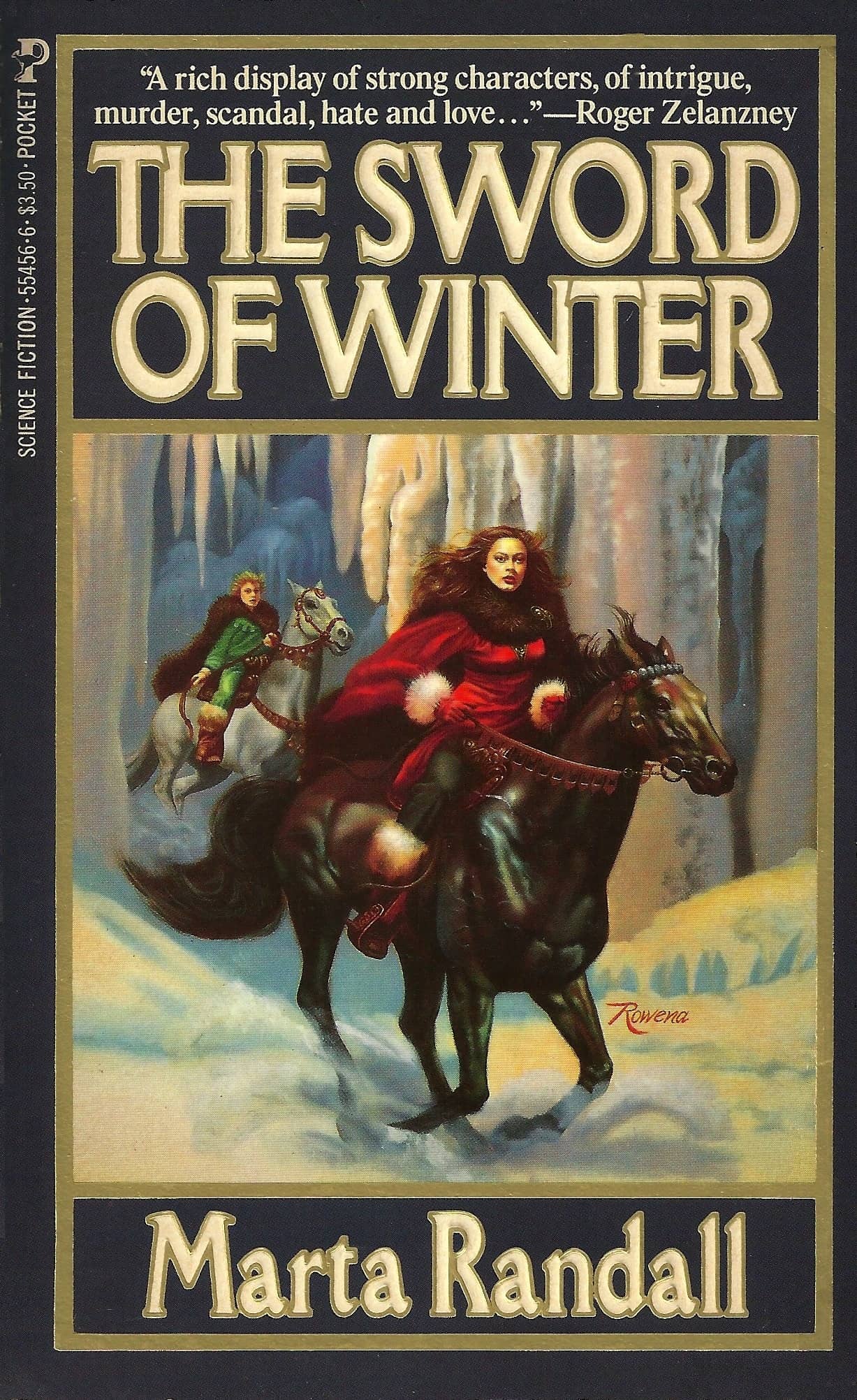
Vintage Treasures: The Sword of Winter by Marta Randall

Vintage Treasures: The Sword of Winter by Marta Randall

The Sword of Winter-back-small The Sword of Winter-small

Marta Randall is best known for her science fiction. That’s definitely how I knew about her, anyway — through SF epics like Journey (1978) and Dangerous Games (1980), and her Nebula-nominated Islands (1976). So I was surprised to come across a paperback copy of The Sword of Winter, her sole fantasy novel, published by Pocket Books in 1985. It didn’t get a lot of attention, even back in 1985 — the only review I could find was this one at Kirkus:

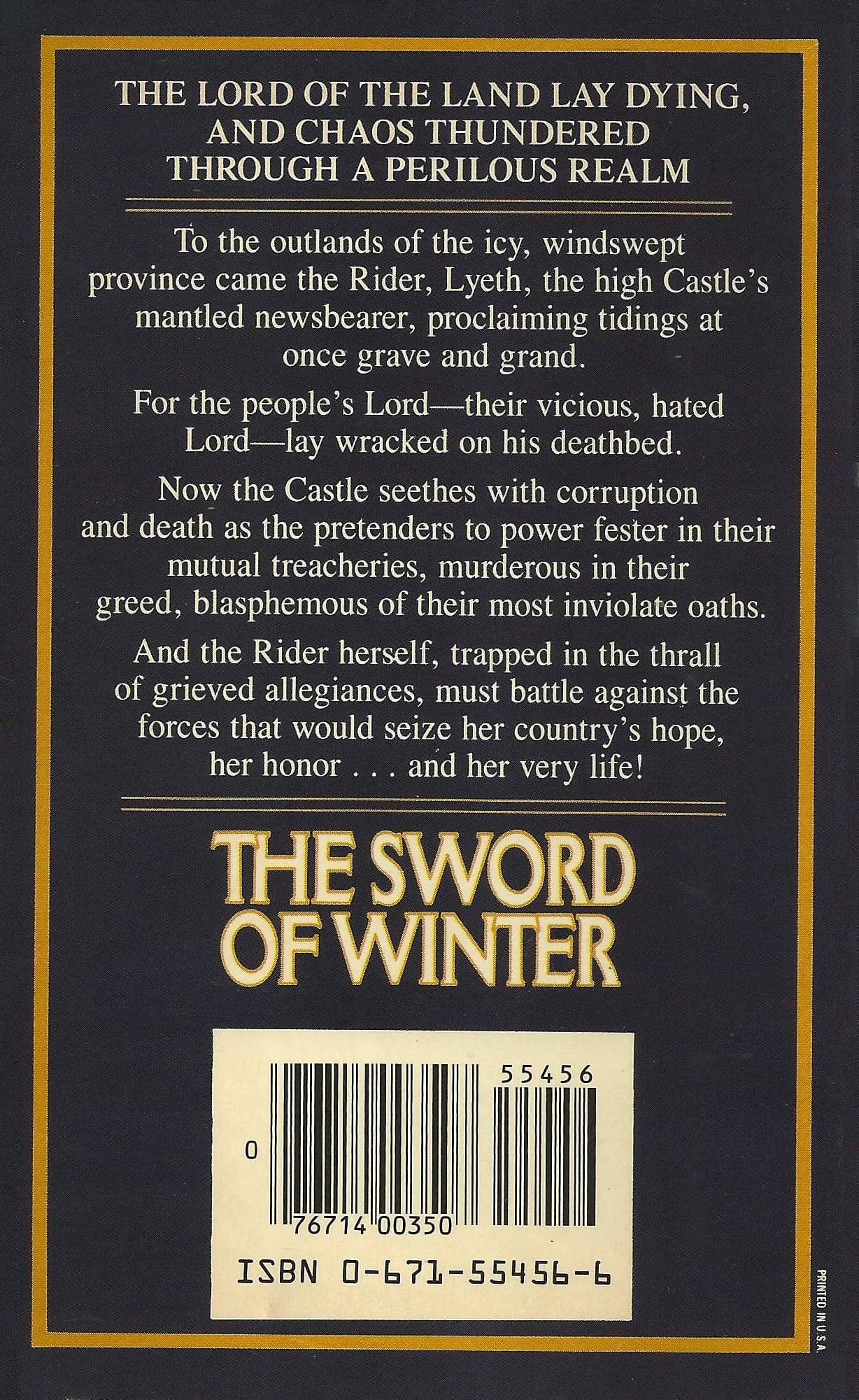
In the frigid winter, vile dictator lord Gambin lies at Jentesi castle dying slowly and painfully, while foolishly refusing to name his successor lest a power struggle ensue. So when bad-tempered protagonist Lyeth, Gambin’s sworn Rider (messenger), dutifully arrives with prickly orphan Emris in tow, she’s soon drawn into the confused spying, plotting, and squabbling of the repellent heirs — Culdyn, Coreon, Maranta, and Syne. Much later, the Riders’ guildmaster is murdered, putting Lyeth in danger and obliging her to investigate…

In addition to her highly acclaimed novels Randall also made a name for herself as an editor, particularly with the New Dimensions series (including the mysterious Volume 13, which never reached bookstores.)

The Sword of Winter was published in hardcover by Timescape in September 1983, and reprinted in paperback by Pocket Books in April 1985. It is 273 pages, priced at $3.50 in paperback. The cover is by Rowena Morrill. There is no digital edition, and it has been out of print for over 30 years.

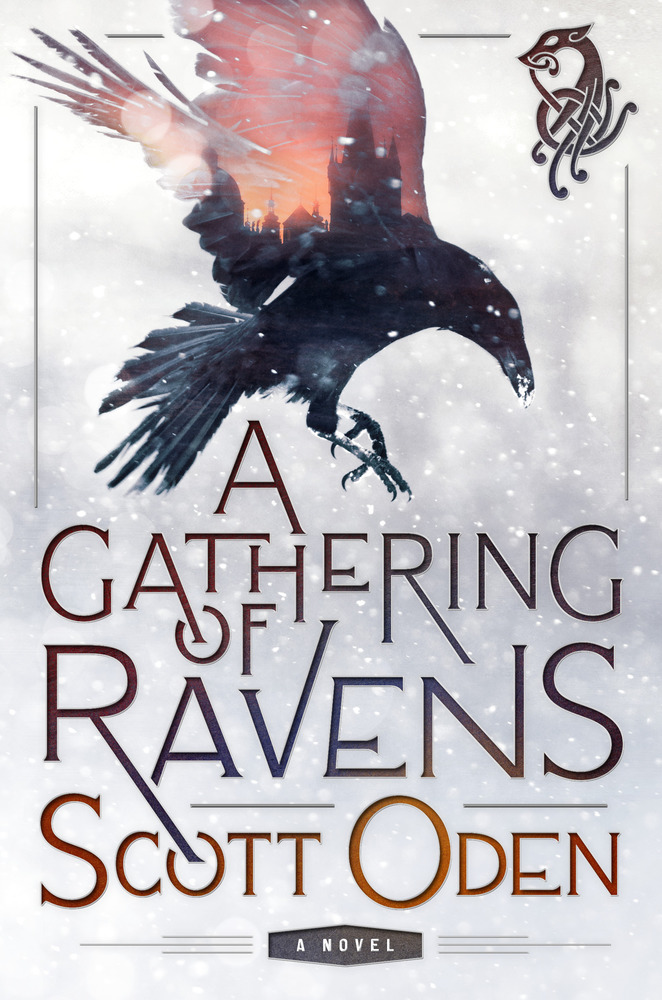
Another View: The Difficult Experiment of Scott Oden’s A Gathering of Ravens

Another View: The Difficult Experiment of Scott Oden’s A Gathering of Ravens

A-Gathering-of-Ravens-smallerI really wanted to like this book. With pleasure I listened to Oden speak on The Literary Wonder and Adventure Show. He talked at length about Tolkien (my own spiritual and literary master), and it seemed that Oden’s and my dials were approximately set. Oden’s book, like Tolkien’s most popular works, deals with “that northern thing” (though I just today learned that Tolkien objected, in part, to this characterization from W.H. Auden).

But Oden’s book is so grimdark that, while reading, I couldn’t find my feet. The work ostensibly is about an orc Hel-bent on revenge — and here is my first objection: the attitudes and actions of this orc, our “protagonist,” are indistinguishable from those of the larger majority of characters in the book. Grimnir, our orc, seems capable only of speaking and thinking in profanities. He murders even when there absolutely is no reason to. The only thing (in this book) we can’t accuse Grimnir of is the sin of rape. That assault remains to be committed by many of the other “human” characters you will find therein: your average male, in this portrayal, seems hardwired to enter rape mode the moment he lays eyes upon any “unprotected” female. Now, remember, Grimnir is supposed to be the “orc,” yet he doesn’t behave much differently from the novel’s many other human characters. Moreover, even when it doesn’t cost a character anything necessarily, few characters are liable to show any shred of kindness for one another. Oden’s narrator summarizes this world’s milieu thusly: “She [the character Etain] knew the score … and she knew sooner or later there would be a reckoning. Men did nothing — undertook no good deed, performed no kindness — without first attaching a price to it.” Oden’s characters, I suppose, are consummate Dark Age businesspersons.

“But that’s the Way It Was,” a number on Goodreads might say, defending Oden’s work from the very few negative reviews I can find there (here and here are two well-said assessments). What these apologists are claiming is that the worldview of the so-called Dark Ages is exactly this: murder whenever you can get away with it, rape whenever you like (for those who like it, I guess, who are all young pre-modern men). I don’t entirely agree with this representation. In the worst possible reading, this might represent the author’s views of the natural state of humankind freed from the fetters or checks thankfully supplied by modernity. In the best possible reading, this representation assumes that, at least in the area of moral development, humans who happened to live a mere millennia ago might be considered pre-human in these respects. Granted, the spread of more nation-building and socializing beliefs and philosophies such as Christianity might have a civilizing influence on a pre-modern worldview, might even be of some aid in the sense of an evolving moral consciousness. But this book barely acknowledges even this. It ostensibly presents two competing worldviews, that of northern paganism and that of Christianity, but, in this book, in practice adherents to either faith might as well be indistinguishable. They merely serve one team in a two-sided competition that is drawn as equal in every respect. Again, apologists should be quick to point to aspects of history that reveal a number of Christians as hypocritical and intolerant throughout their persecutions. Granted, but are you going to deny that there remain some fundamental differences and worldviews between the two perspectives, and therefore requisite actions and behaviors on behalf of the religion’s adherents? To this point Oden seems to relent, to some measure, in the second and much-preferred half of the book, in the figures of King Brian and his freed thrall Ragnar. But we’ll get to that in a moment.

Read More Read More