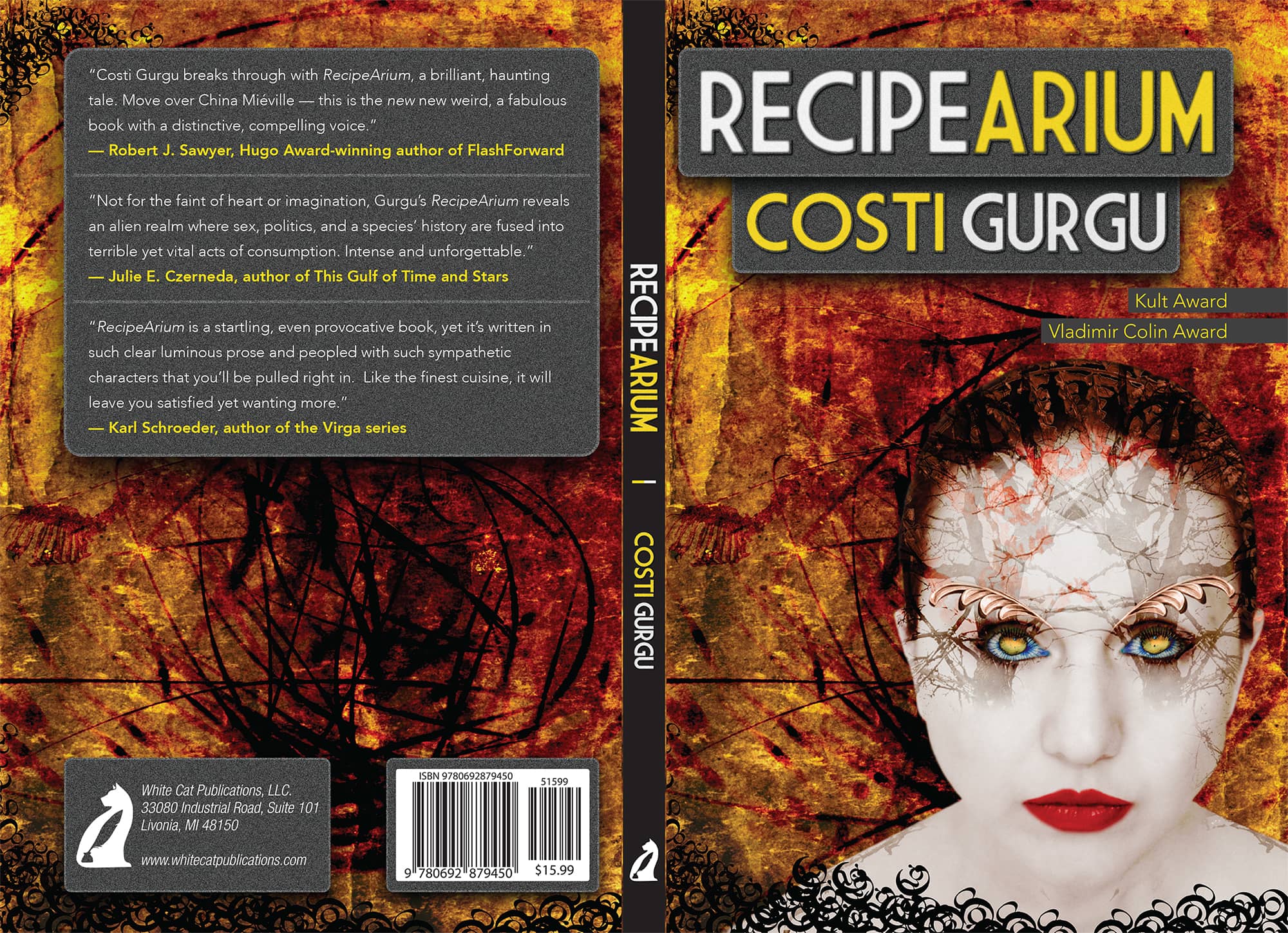
RecipeArium
By Costi Gurgu
White Cat Publications (312 pages, $15.99 paperback, 2017)
When my Toronto-based colleague Costi Gurgu launched RecipeArium last year, I read the blurbs and early reviews and really had no idea what to expect from it. It sounded either like a novel or a tongue-in-cheek alien cookbook, and I wasn’t able to make it to any of Costi’s events to figure out which it was (even when one was at a conference I help organize). Me and this book were like ships in the night. Or it was avoiding me, to hide its secrets.
Okay, maybe that sounds a little crazy. But now that I’ve finally read RecipeArium… the novel is a little crazy. And it turns out I was sort of right, since it’s a mashup of a novel and a cookbook.
Laura Frankos was born on February 9, 1960. She has written the historical mystery novel St. Oswald’s Niche, and The Broadway Musical Quiz Book. Frankos has also written several short stories. She is married to author Harry Turtledove and is the sister to author Steven Frankos.
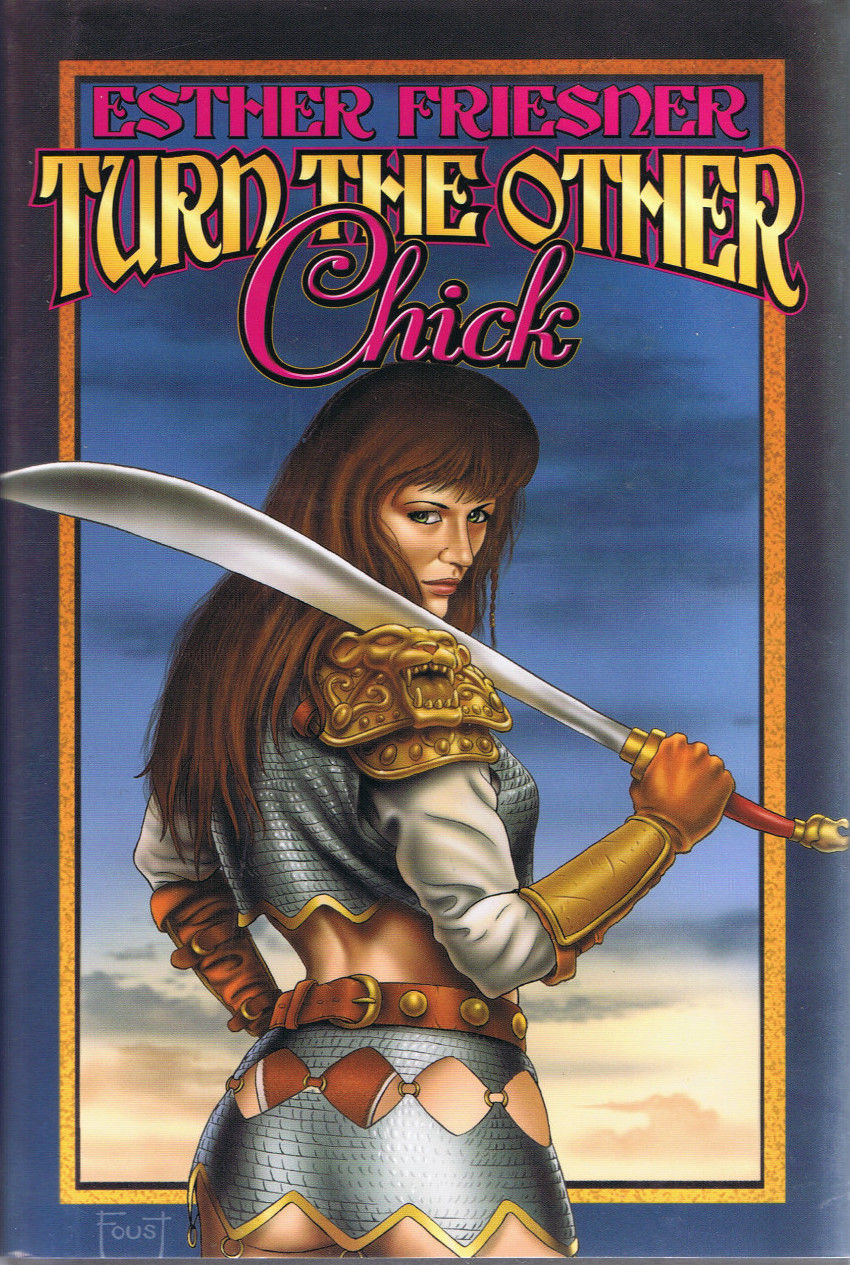
“A Late Symmer Night’s Battle” appeared in Esther Friesner’s Turn the Other Chick, part of her long-running Chicks in Chainmail series. It has not been reprinted.
As the title indicates, the story was inspired by the works of William Shakespeare. Frankos’s fairies are battlemaidens, currently living in a period of peace following their epic defeat of the reremice. They are working on their armor, training, and engaging in more amorous pursuits when their lands are unexpectedly attacked by bands of kobolds.
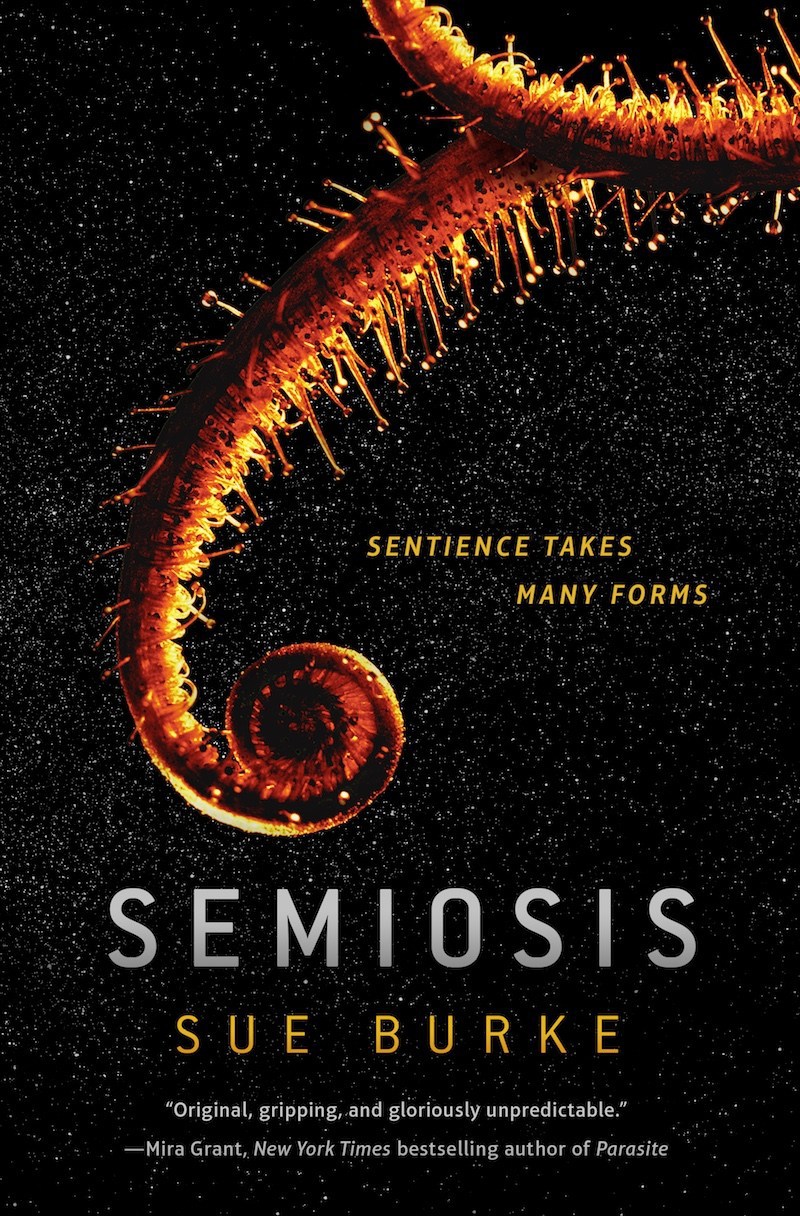
Sue Burke’s short fiction has been published in Interzone, Beneath Ceaseless Skies, Asimov’s SF, Clarkesworld, and many other fine places. Her first novel Semiosis, released this week by Tor, is the tale of a tiny human colony on an alien world of strange ruins and even stranger plants.
It’s already generated a lot of excited buzz from places like SyFy Wire, The Verge, Kirkus, and the Barnes & Noble Sci-Fi and Fantasy Blog. James Patrick Kelly says it’s “A first contact novel like none you’ve ever read… The kind of story for which science fiction was invented,” and Adrian Tchaikovsky calls it “top class SF, intelligent and engaging… I loved every moment of it.”
Semiosis is… an easy read, and a pretty compelling one. The novel opens with a small human colony — fifty-odd people set out, with a store of sperm and ova to avoid the problems of inbreeding — landed and settled, rather precariously, on a planet they have named Pax. They intend to create a utopia, free of the problems that dogged Earth: violence, religious oppression, inequality. But Pax is an older planet than Earth, and its biosphere has had longer to evolve. The colonists discover that some of Pax’s plants are intelligent in their own way. The first generation of colonists become, essentially, the servants of a plant they call the snow vine. Their story is recounted by Octavo, the colony’s botanist, as he investigates the mystery of their new environment and comes to hate and resent their new plant overlords…
Semiosis is a very strong debut, and well worth checking out.
Semiosis was published by Tor Books on February 6, 2018. It is 333 pages, priced at $25.99. The cover was designed by James Stafford-Hill. Read an excerpt here.
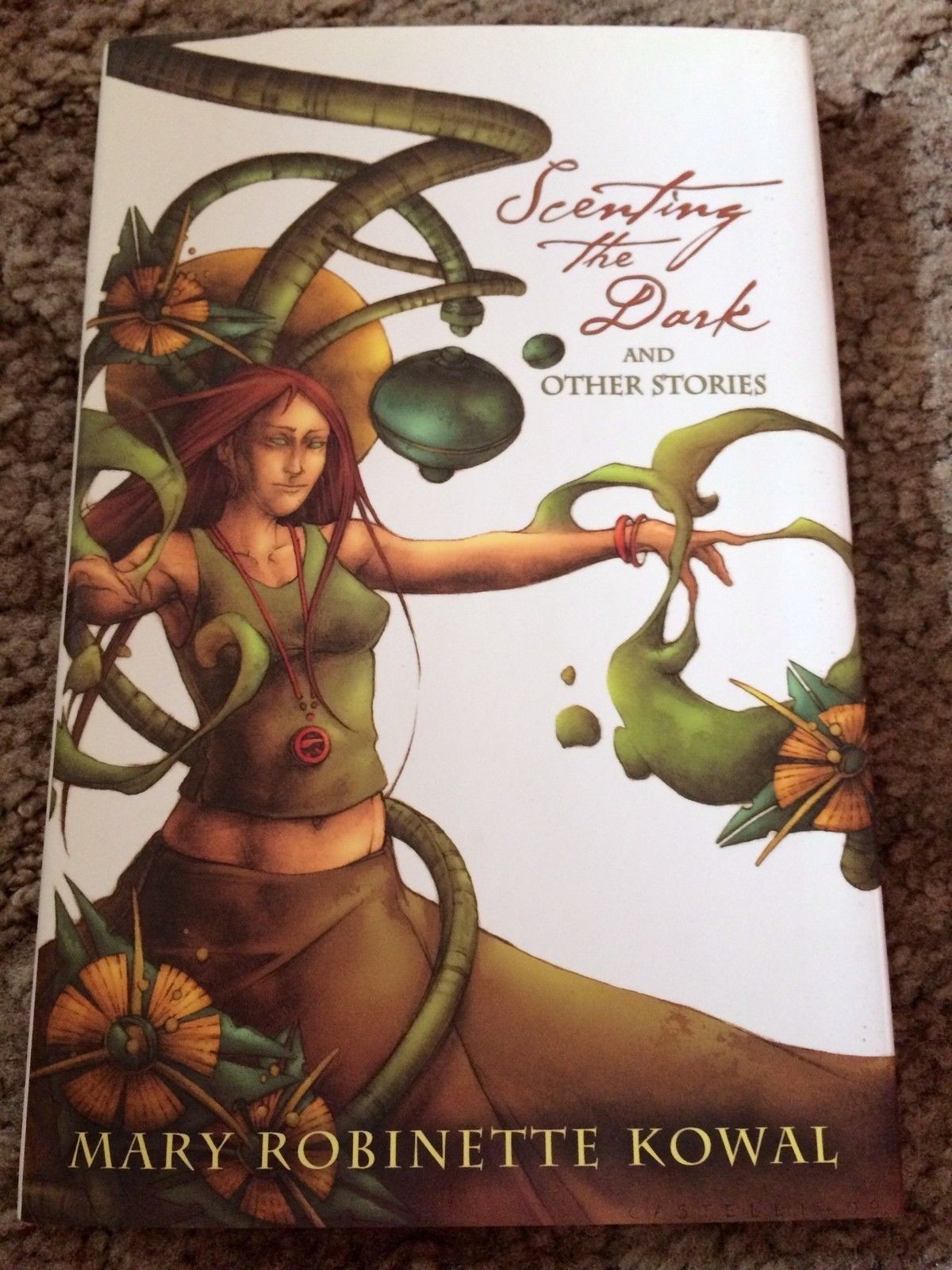
Mary Robinette Kowal was born on February 8, 1969. Originally a puppeteer, she began publishing fiction in 2004, with her first novel, Shades of Milk and Honey, arriving in 2010.
In 2008, she won the John W. Campbell Award for Best New Writers and has gone on to win the Hugo Award three times, each in a different category. In 2011, she won the Hugo for Best Short Story for “For Want of a Nail.” She won for Best Related work for season seven of Writing Excuses, a podcast she produces in collaboration with Brandon Sanderson, Dan Wells, Howard Tayler, and Jordan Sanderson, and in 2014 for her novelette “The Lady Astronaut of Mars.” She has served as both Secretary and Vice President of the Science Fiction and Fantasy Writers of America and continues to volunteer for the organization in various roles.
“Just Right” was Mary Robinette Kowal’s first sale, and it appeared in The First Line in Summer 2004.
On the surface it tells the story of a woman who is dealing with the strange eccentricities of her six year old son. Celia’s husband, Lou, usually handles the morning rituals because Celia leaves each day to teach school. With the start of Summer vacation, however, she has suddenly thrown into the morning domestic routine and learns that her son, Mason, likes to do things in very specific, seemingly childish ways. When Celia stop playing along, Mason throws a very atypical temper tantrum.
While “Just Right” seems like a slice of life tale, it really is a very effective short horror story. Celia doesn’t understand what is happening because she is missing a very basic piece of information.
The effectiveness of the story comes from the banality of Celia situation. Anyone with children has experienced the seemingly random meltdowns when a child doesn’t get its way and learns how to handle the child. In this case, Celia is learning that the typical methods of raising her son aren’t always effective, although she is unaware of the cause.
Usually I use a Vintage Treasure post to celebrate a book I enjoyed decades ago, or a tough-to-find artifact that I’ve finally tracked down. But not always. Sometimes they’re just surprises.
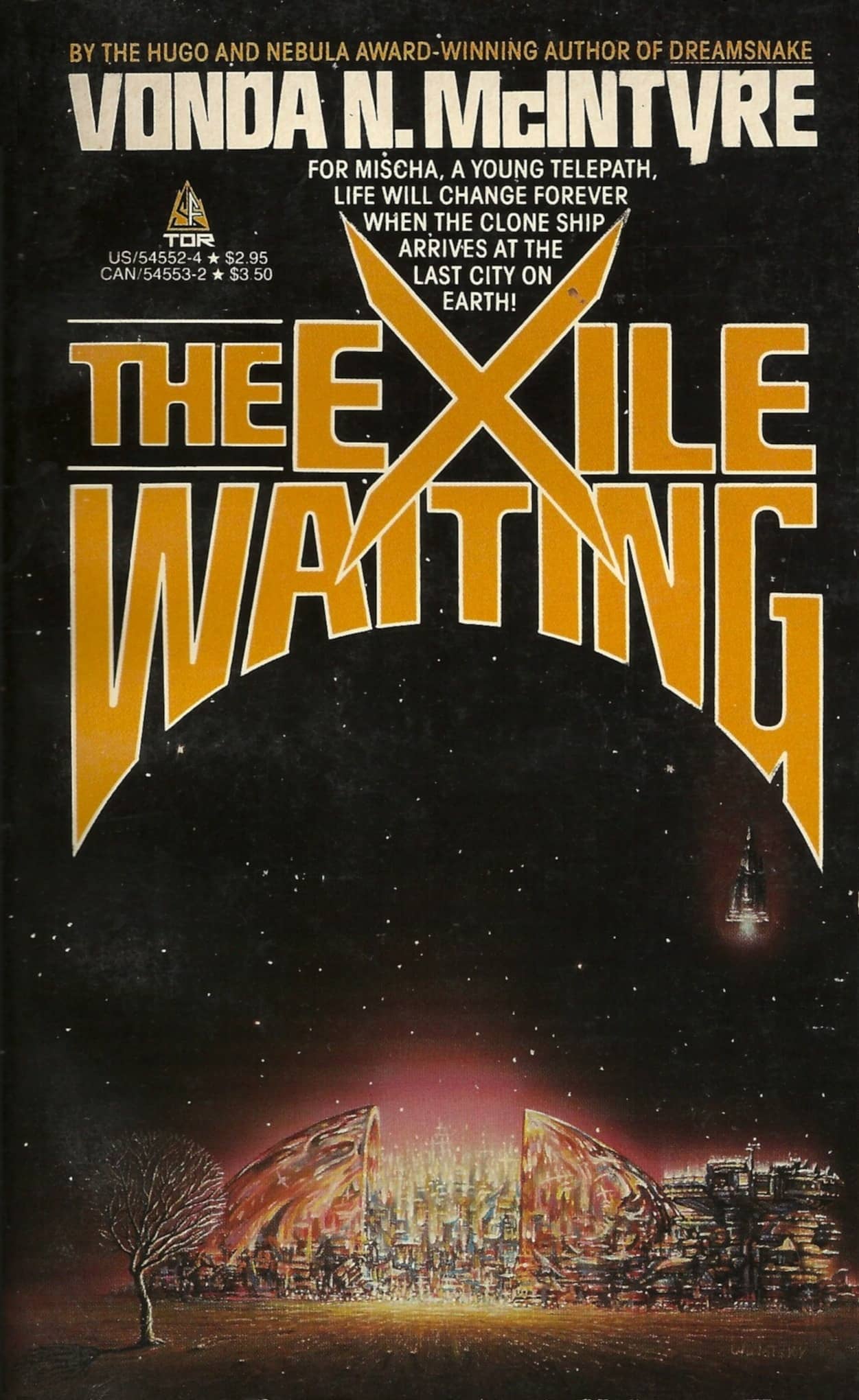
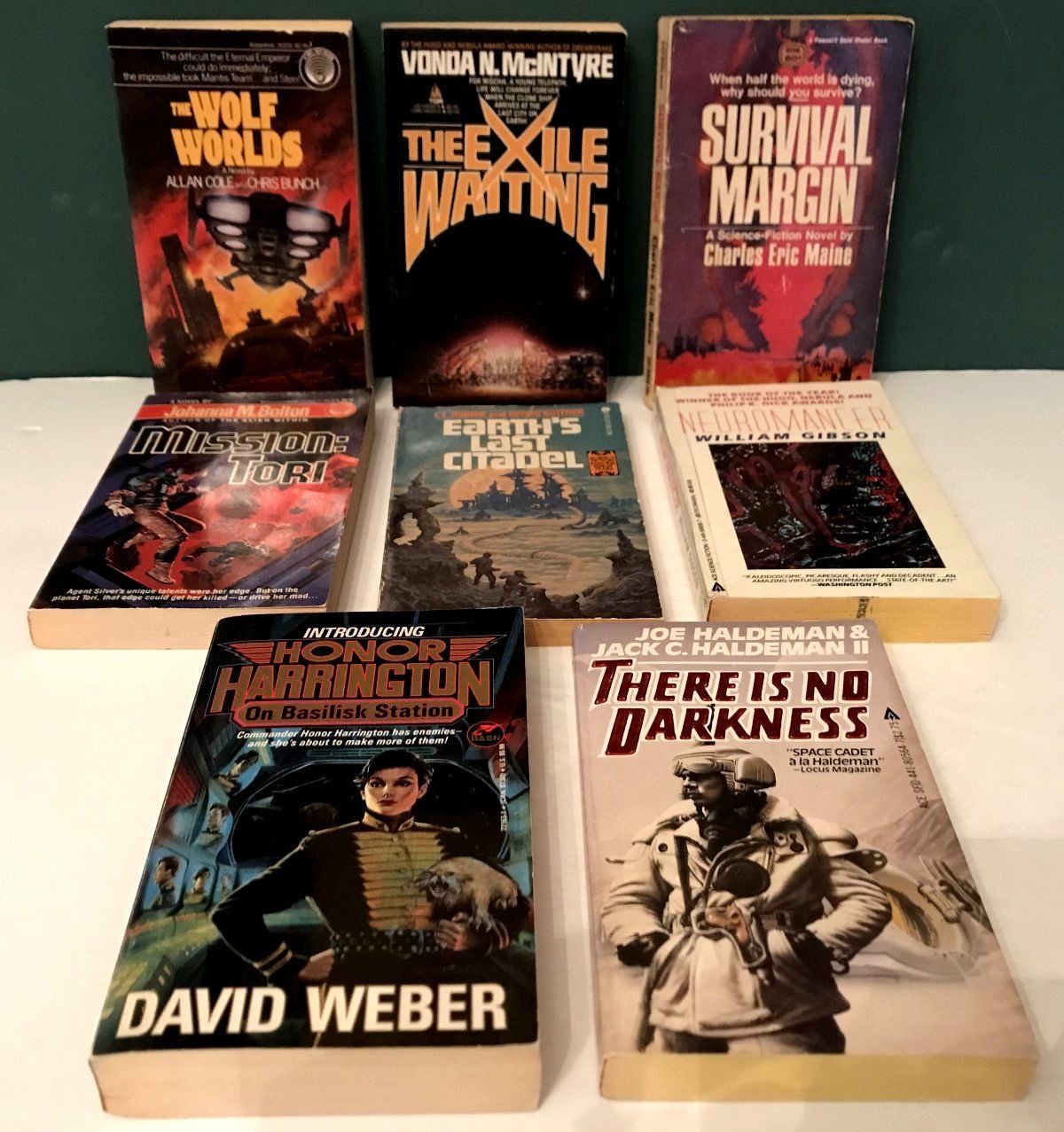
The 1985 Tor paperback The Exile Waiting is a fine example. It showed up in a small collection of vintage paperbacks I bought on eBay last week for $5.95. Until then, I had no idea it even existed.
This is a surprise because Vonda N. McIntyre was one of my favorite SF writers of the 70s, and I thought I was paying more attention. Her marvelous novelette “Of Mist, and Grass, and Sand” won the 1973 Nebula Award, and the novel it formed a part of, Dreamsnake (1978), won both the Hugo and Nebula Awards. And in 1997 her novel The Moon and the Sun won the Nebula, beating George R. R. Martin’s A Game of Thrones. That’s not something you see every day.
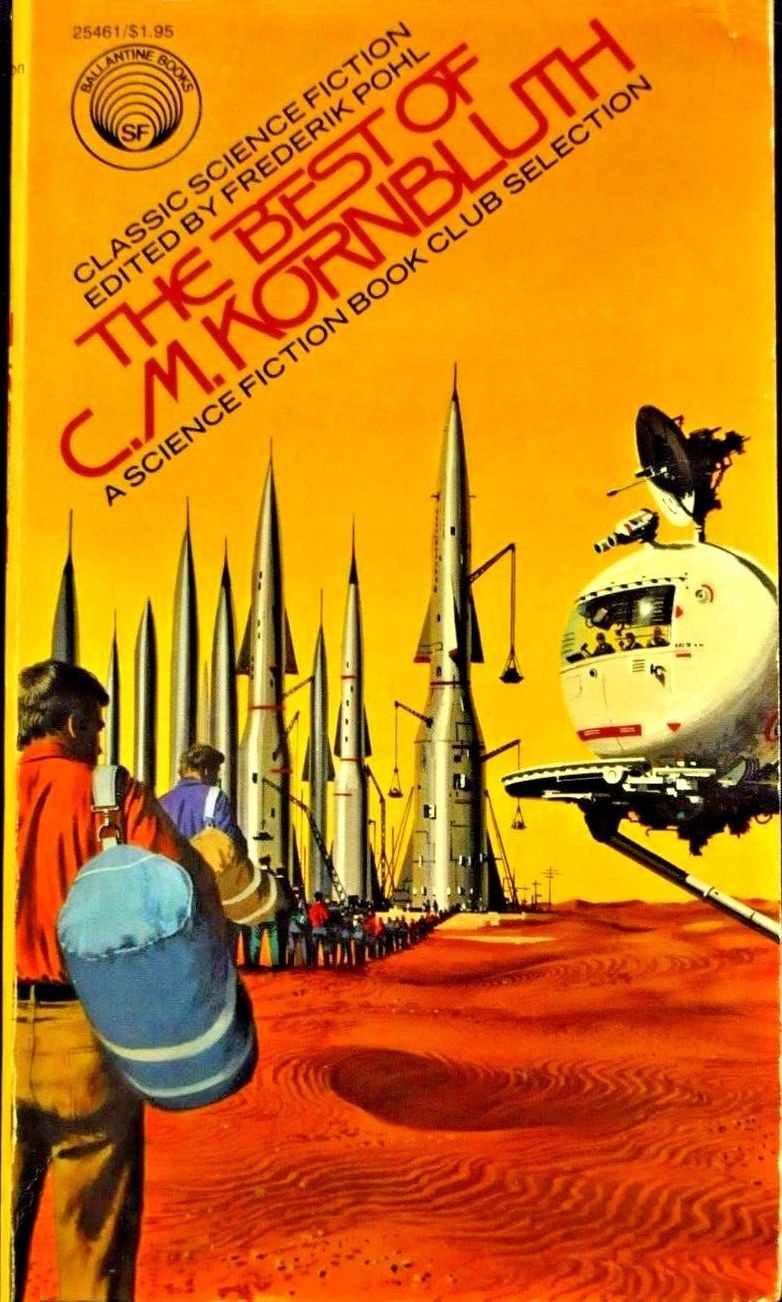
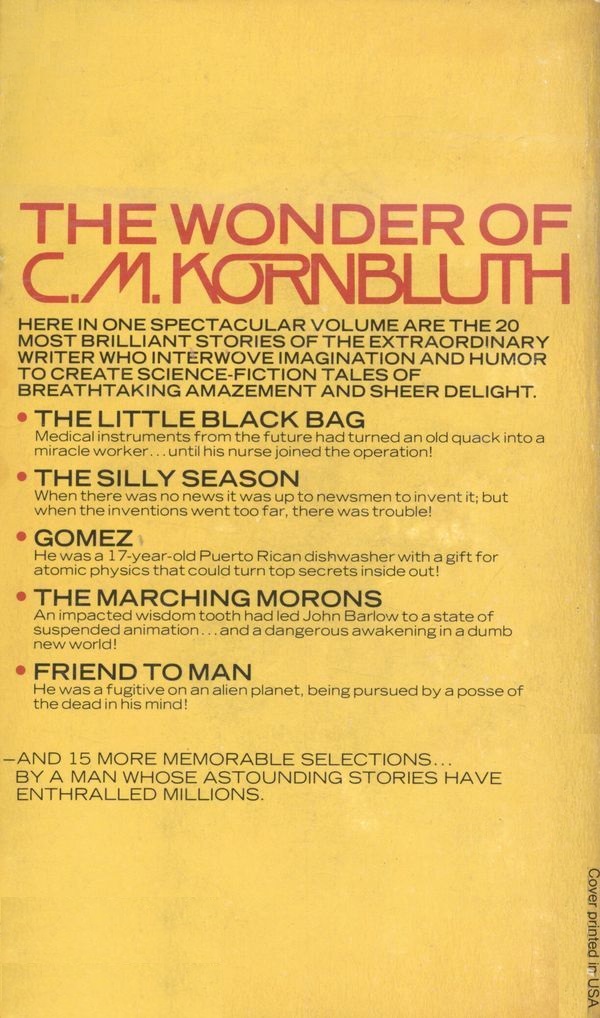
The Best of C. M. Kornbluth (1977) was the eighth installment in Del Rey’sClassic Science Fiction Series. Kornbluth’s long time friend and collaborator Frederik Pohl (1919-2013) served as editor; he also provided an introduction and brief intros to each story. Dean Ellis (1920-2009), who did the cover art for the first four volumes, returns to the series to do the cover art for this one —a scene from “Marching Morons.” Unlike previous volumes, there is no afterword.
Cyril M. Kornbluth (1923–1958) was an original voice in American science fiction. His middle initial “M” apparently stood for a non-existent name, and was meant to include his wife Mary, whom he hoped would eventually collaborate with him, but this evidently never materialized. Though he died at a very young age, his fiction corpus was long, varied, and lasting. He is probably most remembered today for his very influential novel The Space Merchants (1953), co-authored with Pohl. It’s strange to me that Korbluth and Pohl collaborated together since their writing styles seem almost polar opposites. But they were lifelong friends, which perhaps explains Pohl’s presence as editor here.
I’ve listened to most of the audible book His Share of Glory: The Complete Short Fiction of C. M. Kornbluth. Though that collection is clearly larger, I think Pohl did an excellent job choosing tales for The Best of C. M. Kornbluth. The stories here are truly representative of Kornbluth’s best.
Eric Flint was born on February 6, 1947. His first story, “Entropy and the Strangler” appeared in L. Ron Hubbard’s Writers of the Future Volume IX. He has collaborated with numerous authors, both established and new over the course of his career, including David Drake, Mercedes Lackey, S.M. Stirling, Ryk E. Spoor, Dave Freer, Gorg Huff, Paula Goodlett, Charles E. Gannon, Mike Resnick, etc. The list goes on and on.
His time travel novel 1632 has not only led to sequels from Flint, but to a thriving fanbase which he encourages to write their own stories and articles, many of which have been workshopped online and published in online zines and hardcopy books. These include not only short stories, but also novels.
Flint has worked to bring back into print the works of several classic science fiction authors, including Murray Leinster, James Schmitz, Keith Laumer, Tom Godwin, Christopher Anvil, and A.E. van Vogt. With Jim Baen, he established the Baen Free Library and he also served as editor of Baen’s Universe. He has edited various anthologies, including The World Turned Upside Down and When Diplomacy Fails.
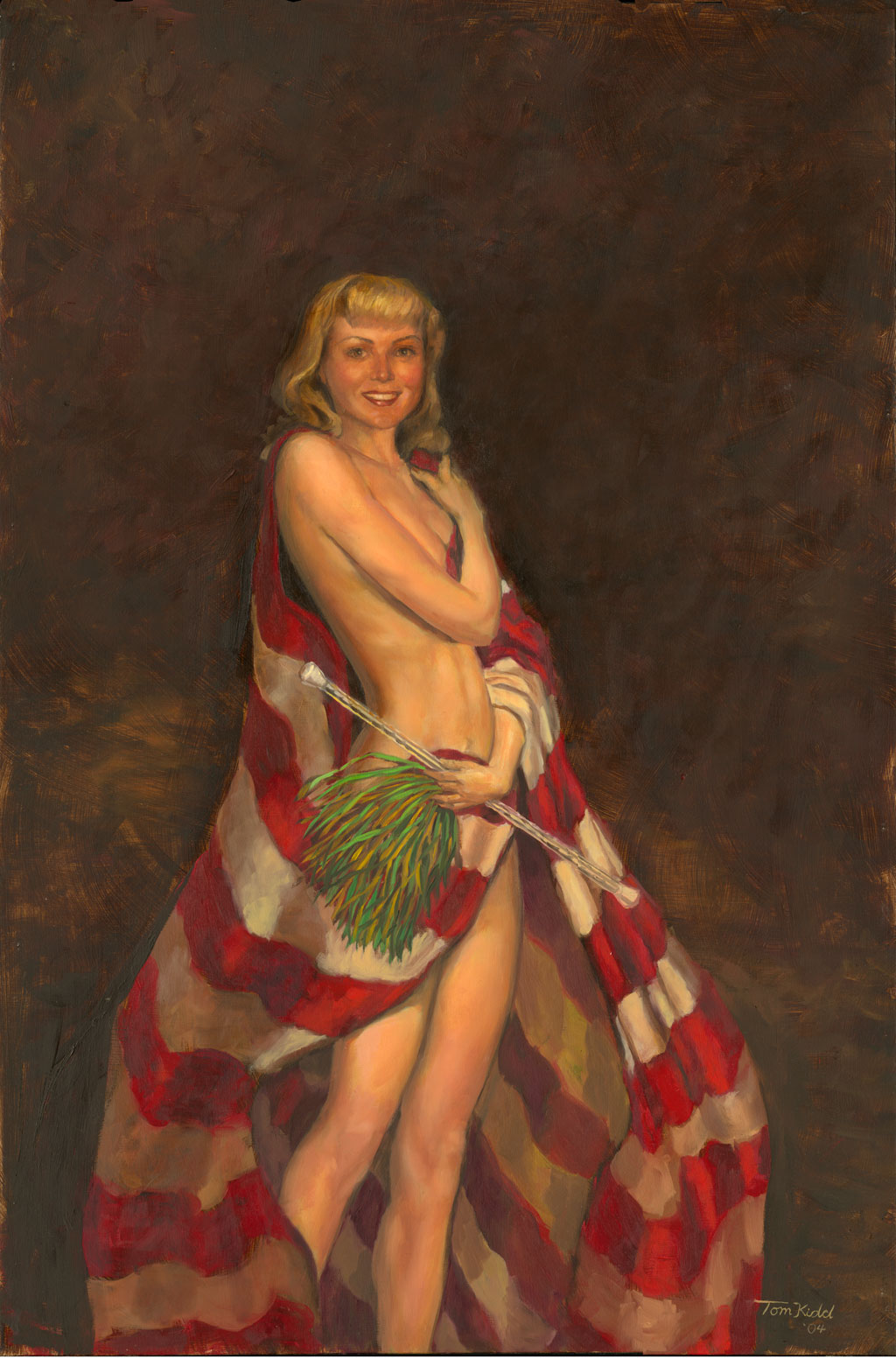
“Portraits” first appeared in The Grantville Gazette, an online magazine tied to Flint’s 1632series, which allows various authors to discuss the setting and try their hand at fiction. When Baen decided to publish hard copies of some of the articles and stories, “Portraits” was reprinted as the first story in Grantville Gazette Volume I (2004) and provided the volume with its cover art. It was subsequently reprinted in Flint’s collection Worlds.
“Portraits” tells the story of Anne Jefferson, an American nurse posing for the Flemish artist Pieter Paul Rubens. The story assumes knowledge of the 1632 situation and characters Flint introduced three years earlier. This is a story which relies on its published context to be fully appreciated.
In its few pages, however, Flint is able to demonstrate some of the differences between Anne Jefferson’s outlook as a twentieth century American trapped in 1635 and a native artist from that period. The scenes set between Jefferson and Rubens, or Rubens and his wife, can stand well on their own and hint at the larger world.
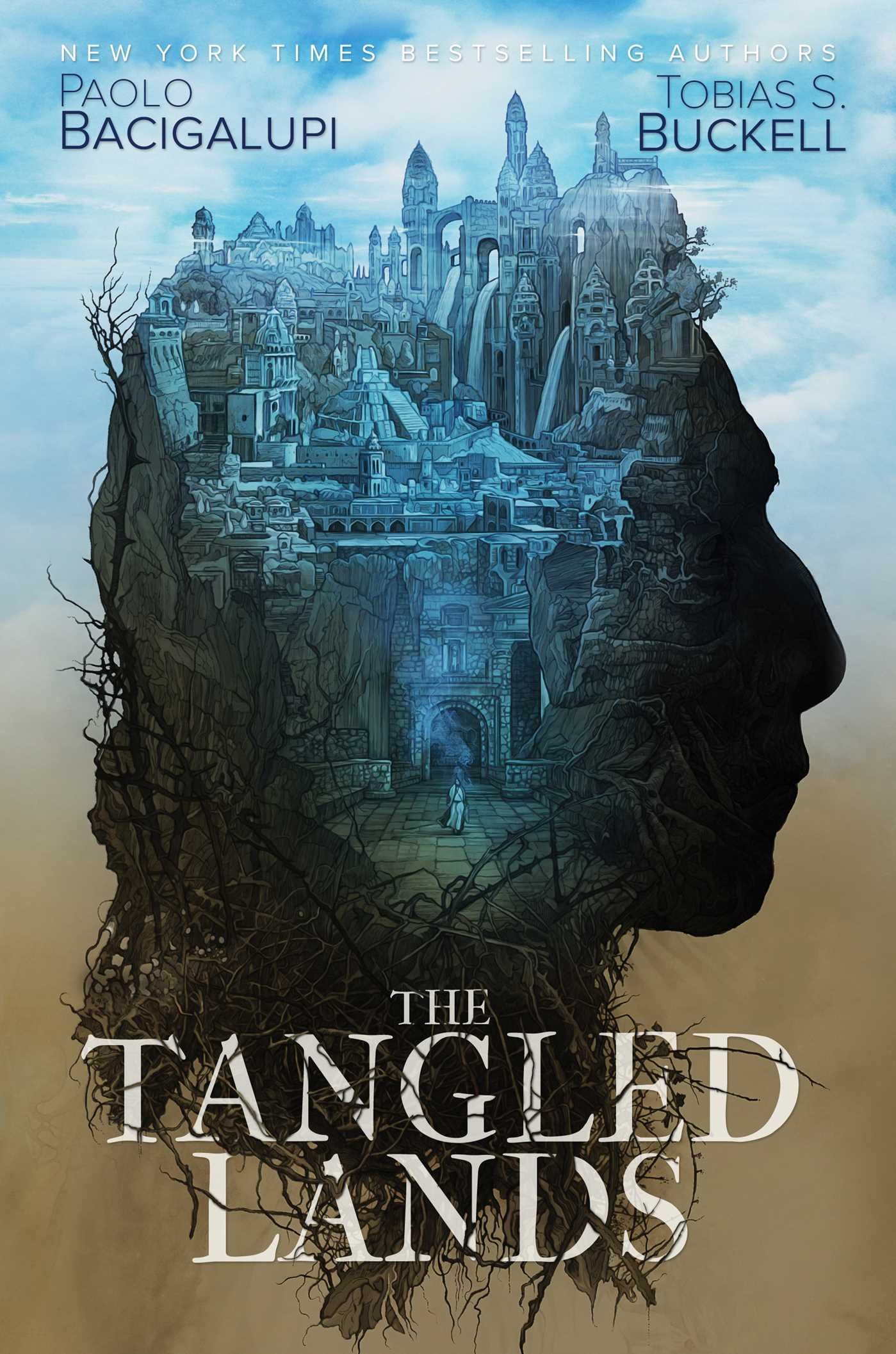
Well here’s an interesting superhero team up: The Tangled Lands, a collaboration between Paolo Bacigalupi, the Hugo Award-winning author of The Windup Girl and Ship Breaker, and Tobias S. Buckell, author of the Nebula nominee Ragamuffin and the best selling Halo: The Cole Protocol.
Bacigalupi and Buckell have collaborated before. They produced an audiobook anthology in 2011, The Alchemist and The Executioness, for Audible Frontiers. Subterranean Press eventually published their individual contributions as separate novellas. This is their first literary collaboration, and it looks very promising indeed.
From award-winning and New York Times bestselling authors Paolo Bacigalupi and Tobias Buckell comes a fantasy novel told in four parts about a land crippled by the use of magic, and a tyrant who is trying to rebuild an empire — unless the people find a way to resist.
Khaim, The Blue City, is the last remaining city in a crumbled empire that overly relied upon magic until it became toxic. It is run by a tyrant known as The Jolly Mayor and his devious right hand, the last archmage in the world. Together they try to collect all the magic for themselves so they can control the citizens of the city. But when their decadence reaches new heights and begins to destroy the environment, the people stage an uprising to stop them.
In four interrelated parts, The Tangled Lands is an evocative and epic story of resistance and heroic sacrifice in the twisted remains surrounding the last great city of Khaim. Paolo Bacigalupi and Tobias Buckell have created a fantasy for our times about a decadent and rotting empire facing environmental collapse from within — and yet hope emerges from unlikely places with women warriors and alchemical solutions.
The Tangled Lands will be published by Saga Press on February 27, 2018. It is 304 pages, priced at $26.99 in hardcover and $7.99 for the digital edition. The cover is by Krzysztof Domaradzki.
I love audiobooks. I’d go so far as to call them my favorite means of ingesting stories.
It’s partly because of a failing on my part: I am capable of reading incredibly fast, but much like speeding through the countryside in a jet, this causes me to miss a lot. I can read a standard length novel in a couple hours, but I can tell you very little about style, minor plot details, and descriptions. I can force myself to slow down and read carefully. But I usually won’t. Hearing a story forces me to slow down and really absorb all the details of setting and characterization that I would otherwise bolt past. Beyond that, there’s something about the simple joy of being read to that I love. Maybe it’s the happy memories associated with bedtime stories, or my restless mind’s ability to putter about while hearing a book.
Within that affection, it also must be confessed that some stories? Are made for audiobook. Just as not every story is suited to be read aloud (House of Leaves is not available on Audible for a reason), some stories are so fantastic as audiobooks that reading them on the page feels like a letdown.
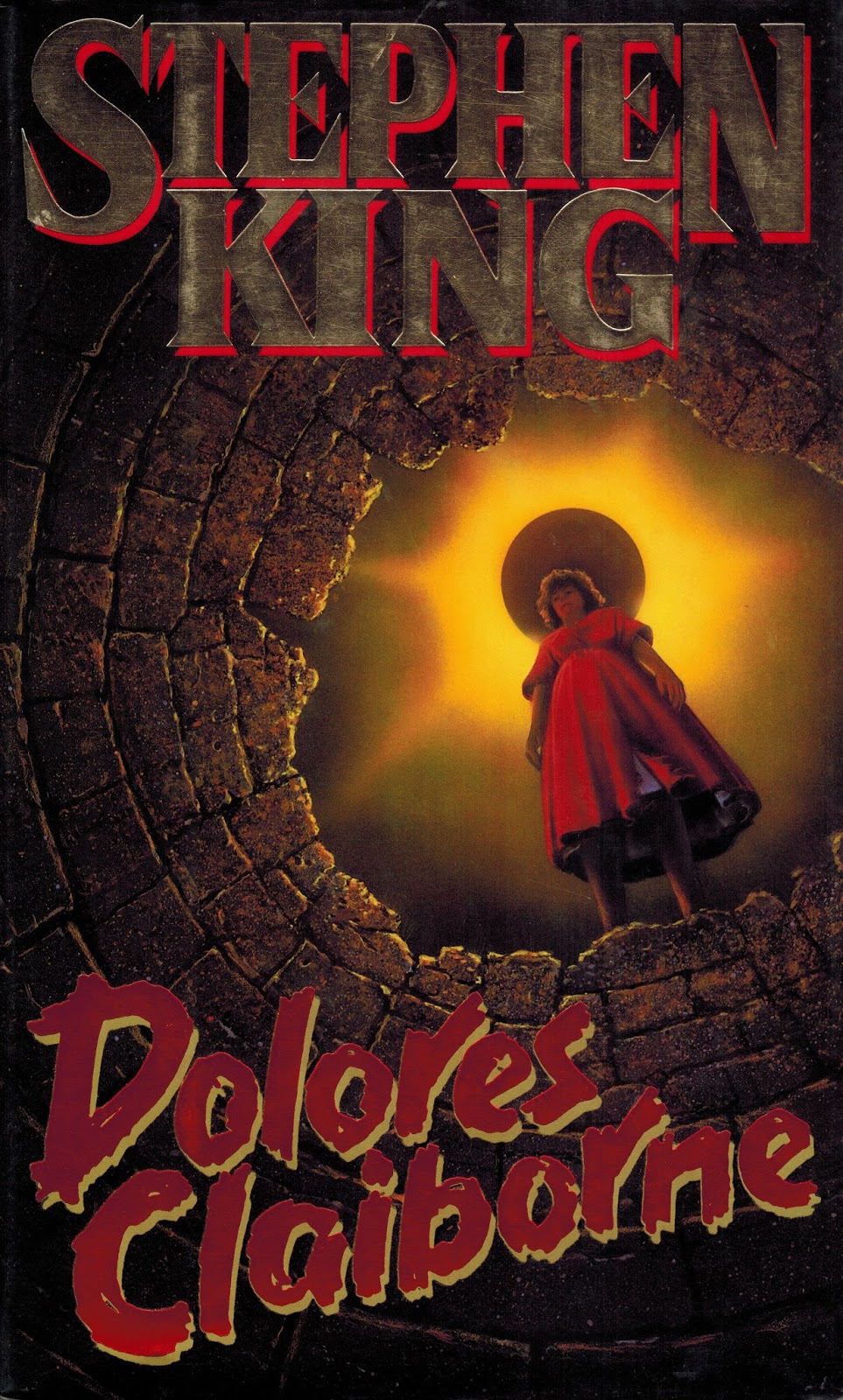
Dolores Claiborne comes to mind. Produced by Simon and Schuster Audio, Stephen King’s tale of domestic violence, murder, and friendship is narrated by Frances Sternhagen.
Sternhagen has the kind of Broadway and Hollywood resume most actors would murder for: people of a certain age :cough: probably best remember her as Cliff mother, Esther, on Cheers.
Dolores Claiborne is written as a monologue. The entirety of the book is conceived as Delores’ statement to the police on the death of her elderly employer. The circumstances under which Vera Donovan and Dolores are found upon the former’s death raise suspicion that Dolores has killed her. In addition, her fellow townspeople have long suspected that Delores had murdered her own husband decades before. The book is her attempt to set the entire story straight, from the 1950s to the present day.
Tim Powers is certainly best known as a novelist. His novels include two World Fantasy Award Winners, Last Call (1992) and Declare (2001), as well as the Philip K. Dick Award winners The Anubis Gates (1983) and Dinner at Deviant’s Palace (1985). He’s also the author of six collections, most published in limited edition hardcovers through William Schafer’s Subterranean Press.
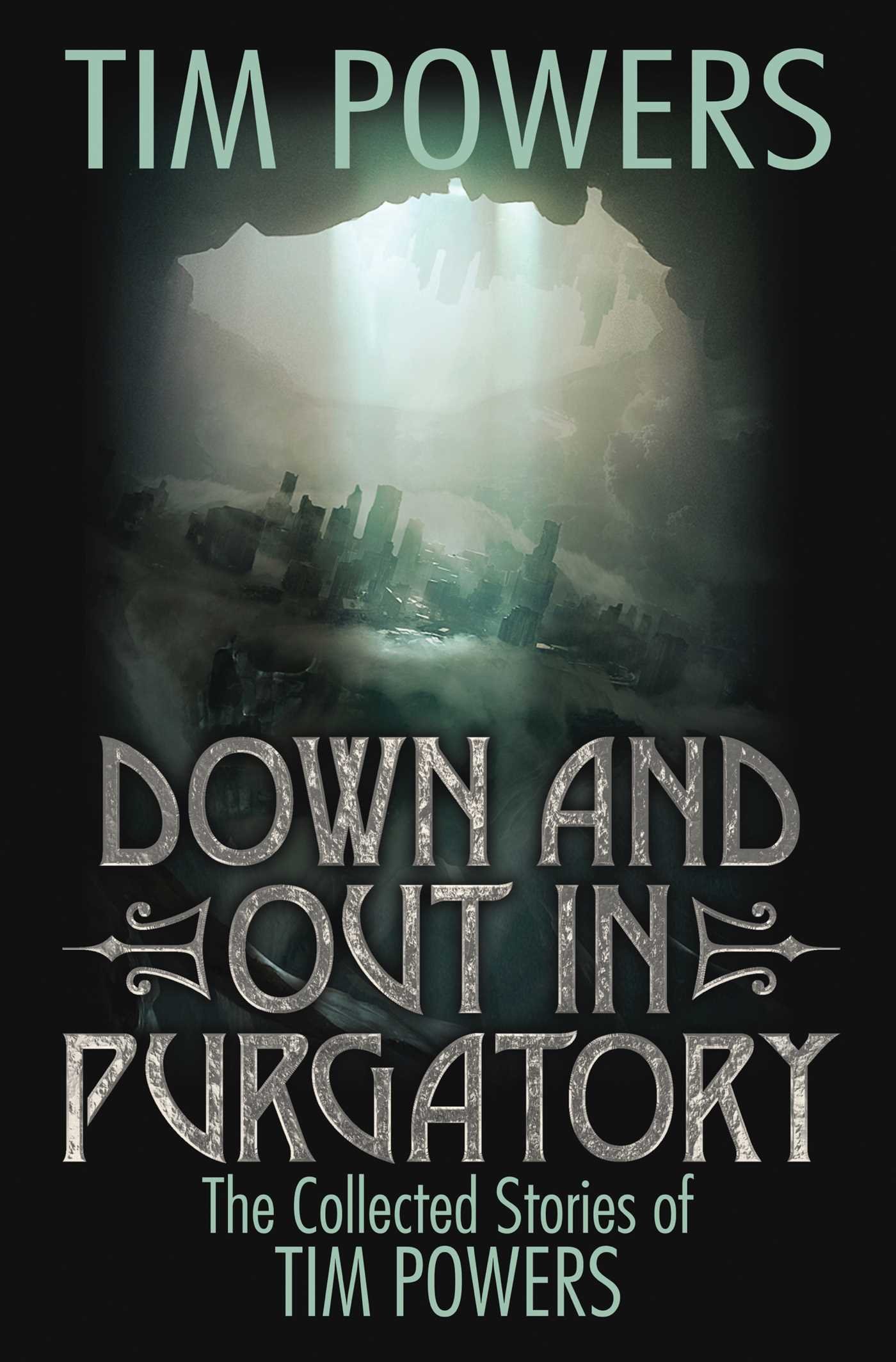
His newest collection, Down and Out in Purgatory: The Collected Stories of Tim Powers, is his first major short fiction retrospective and, at 488 pages, is more than twice the size of any of his previous collections. It contains twenty tales of science fiction and fantasy, including half a dozen previously uncollected novellas and stories originally published as limited edition hardcovers or chapbooks from places like Subterranean Press, Charnel House, Axolotl Press, and others. Most are now priced out of reach of any but the most determined collector, so finally having them in a mass market hardcover is a godsend to Powers fans.
Here’s the description.
Twenty pulse-pounding, mind-bending tales of science fiction, twisted metaphysics, and supernatural wonder from the two-time World Fantasy and Philip K. Dick Award winning author of The Anubis Gates and On Stranger Tides.
A complete palette of story-telling colors from Powers, including acclaimed tale “The Bible Repairman,” where a psychic handyman who supernaturally eliminates troublesome passages of the Bible for paying clients finds the remains of his own broken soul on the line when tasked with rescuing the kidnapped ghost of a rich man’s daughter. Time travel takes a savage twist in “Salvage and Demolition,” where the chance discovery of a long-lost manuscript throws a down-and-out book collector back in time to 1950s San Francisco where he must prevent an ancient Sumeric inscription from dooming millions in the future. Humor and horror mix in “Sufficient unto the Day,” when a raucous Thanksgiving feast takes a dark turn as the invited ghosts of relatives past accidentally draw soul-stealing demons into the family television set. And obsession and vengeance survive on the other side of death in “Down and Out in Purgatory,” where the soul of a man lusting for revenge attempts to eternally eliminate the killer who murdered the love of his life. Wide-ranging, wonder-inducing, mind-bending — these and other tales make up the complete shorter works of a modern-day master of science fiction and fantasy.