Browsed by
Category: Books

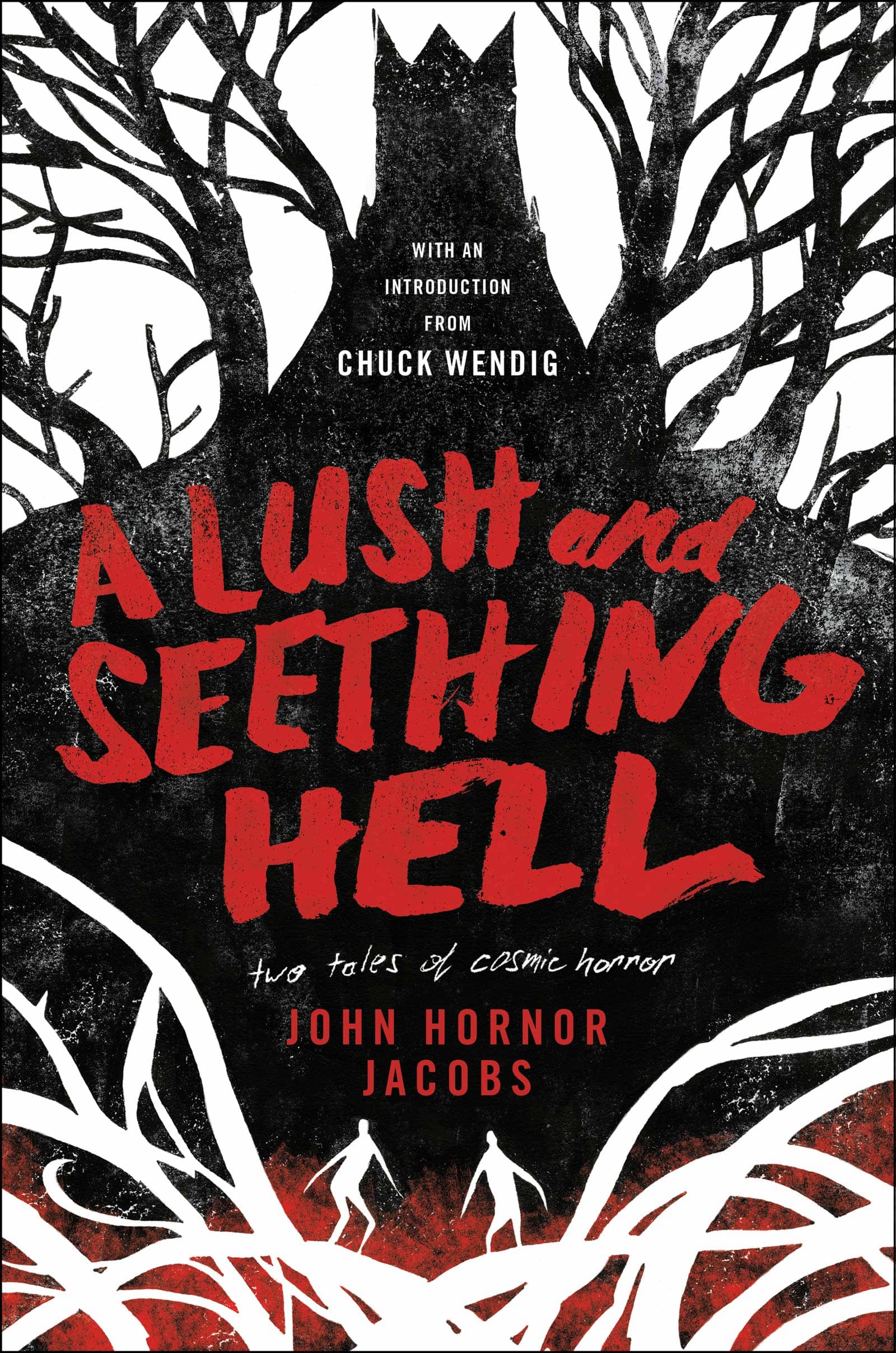
New Treasures: A Lush and Seething Hell: Two Tales of Cosmic Horror by John Hornor Jacobs
New Treasures: A Lush and Seething Hell: Two Tales of Cosmic Horror by John Hornor Jacobs

A Lush and Seething Hell Two Tales of Cosmic Horror-small A Lush and Seething Hell Two Tales of Cosmic Horror-back-small

I’m hearing a lot about John Hornor Jacobs’ new book, A Lush and Seething Hell. Like, a lot.

Like this starred review from Kirkus:

Two lush, sprawling novellas that are nothing like each other except that they’re both scary as hell… Two spectacular novellas. After a glowing foreword by Jacobs’ fellow fabulist Chuck Wendig, the book launches into “The Sea Dreams It Is the Sky,” a Lovecraft-ian horror story set in a fictionalized South American nation. In it, a young academic named Isabel Certa becomes involved with a famous one-eyed poet named Rafael Avendaño, a cavalier scoundrel who’s heading into a war zone… Then there’s the chill-inducing, artfully paced “My Heart Struck Sorrow,” in which we’re introduced to Cromwell, a librarian from the Library of Congress who specializes in oral tradition [who] accidentally stumbles upon a long-hidden treasure trove of blues recordings from the 1930s… Falling somewhere between House of Leaves (2000) and The Blair Witch Project, it is a terrifying, gothic descent into madness… This book has a fitting title if there ever was one, and these nightmares are worth every penny.

And Sam Reader’s rave review at The Barnes & Noble Sci-Fi & Fantasy Blog.
Read More Read More

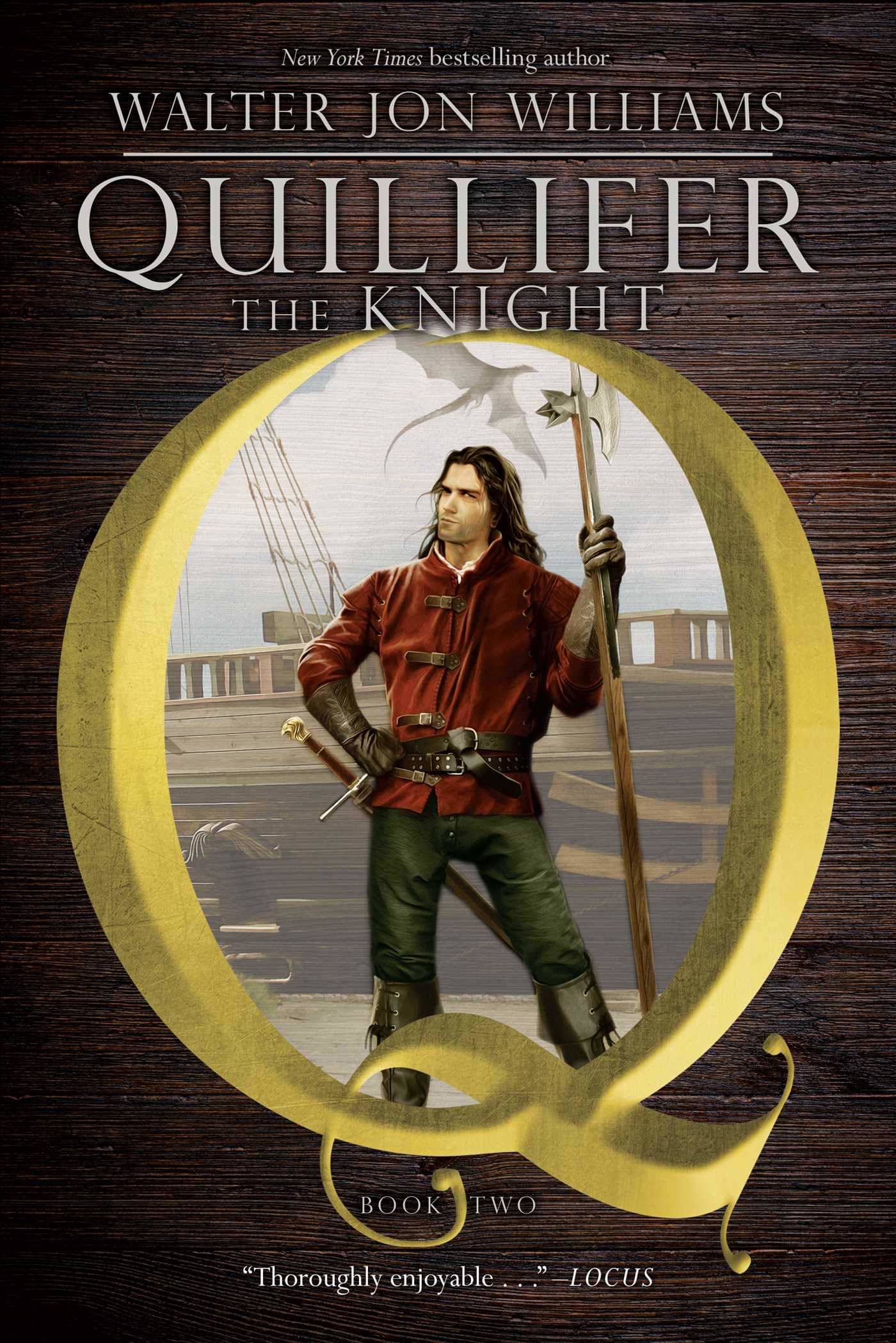
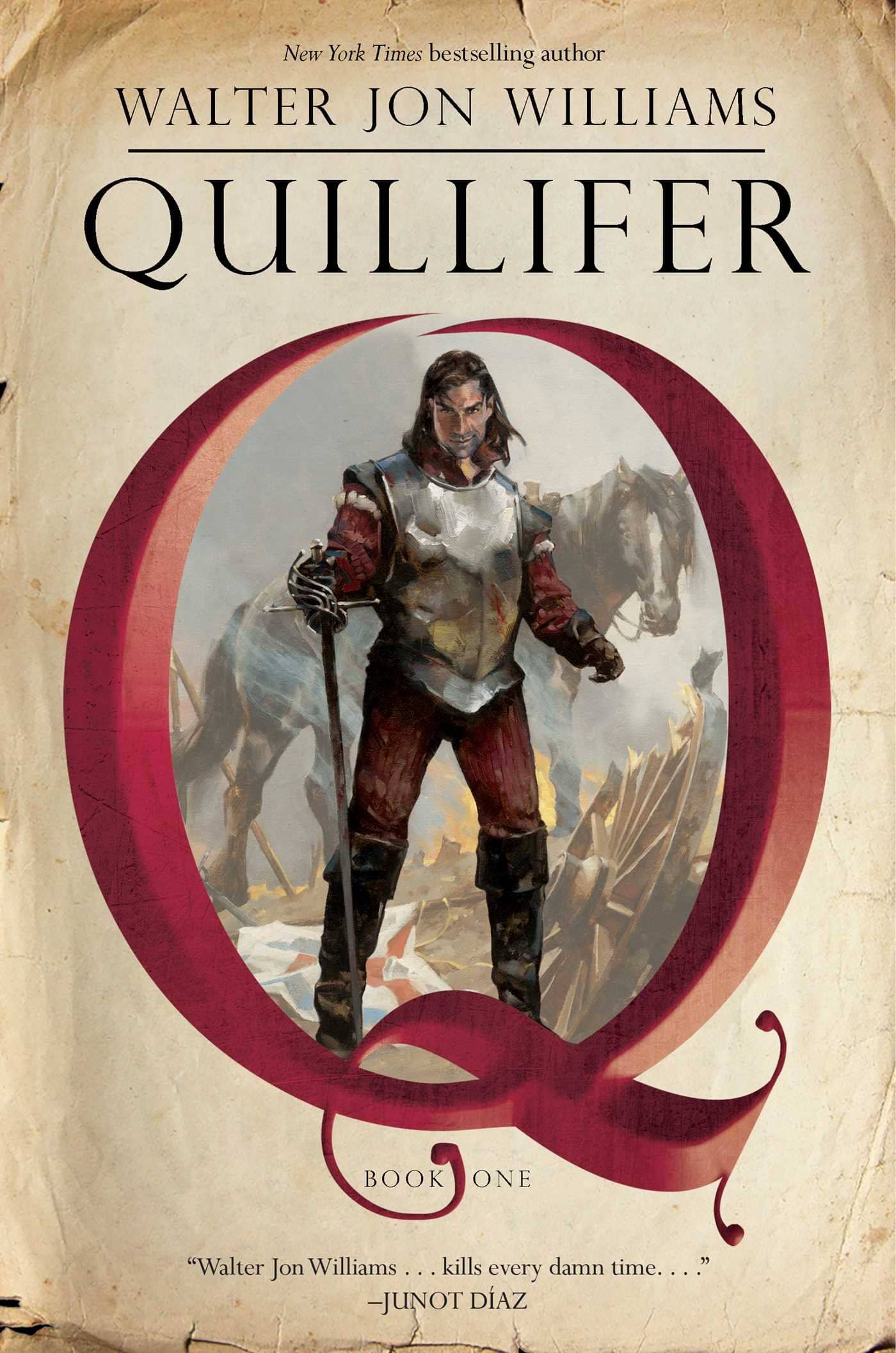
Future Treasures: Quillifer the Knight by Walter Jon Williams

Future Treasures: Quillifer the Knight by Walter Jon Williams

Quillifer-medium Quillifer the Knight-small

Covers by Gregory Manchess and Alejandro Colucci

Walter Jon Williams is one of the most versatile writers we have. Space opera, military science fiction, cyberpunk, alternative history, SF police procedural — you name it, he’s done it. He’s written historical adventures, disaster novels (The Rift) and even a Star Wars novel (The New Jedi Order: Destiny’s Way). In his Locus review of the opening novel in William’s ambitious new fantasy series, Quillifer, Gary K. Wolfe says “Williams has been cheerfully genre-hopping for most of his career, sometimes even in the same novel.”

Quillifer is worth a second look — and not just because it’s one of Williams rare attempts at historical fantasy. Booklist calls it a “swashbuckling tale reminiscent of George MacDonald Fraser’s Flashman.” The second novel in the series, Quillifer the Knight, arrives in three weeks. Here’s Gary on the first volume.

Quillifer belongs to the ranks of what we might call displaced historical fantasies, stories which make meticulous use of actual historical detail (Williams’s character quote Elizabethan poets, and his weapons and ships are all historically real), but which are set in imaginary nations or kingdoms, often with restrained use of fantasy elements – such as we see from writers like Ellen Kushner, K.J. Parker, or Guy Gavriel Kay (although Kay is far more specific in his historical analogues).

In classic adventure-novel tradition, Quillifer comes from modest beginnings: the son of a butcher, he studies law in the port city of Eth­lebight, but is also something of a classic 18th-century rake, and the novel opens with his comical escape out the window of the young woman with whom he’s currently in love… things quickly begin to change when Ethlebight is invaded, plundered, and destroyed by pirates from the rival empire of the Aekoi. Quillifer survives, but is later captured by a notorious bandit calling himself Sir Basil…

With the aid of a nymph-goddess who finds him appealing, he manages to escape again, but rejects her advances as he realizes that joining her in her kingdom might result in his returning to his world as much as a century later (one of the few classic fantasy motifs that Williams employs). Spurning her sets up a threat that will hang over Quillifer for the rest of the novel, which consists largely of fully realized independent episodes: Quillifer finds his way into the court of Duisland, where he assumes the title “Groom of the Pudding” and almost accidentally proves himself to be a champion stag-killer (drawing on his background as a butcher), later a brilliant naval strategist, and eventually an effective field-marshal in a crucial land battle to save the kingdom from usurpers…  a thoroughly enjoyable series of historical adventures in a faux-Europe that is as meticulous in its details as it is vague in time and place.

Here’s a look at the back cover.

Read More Read More

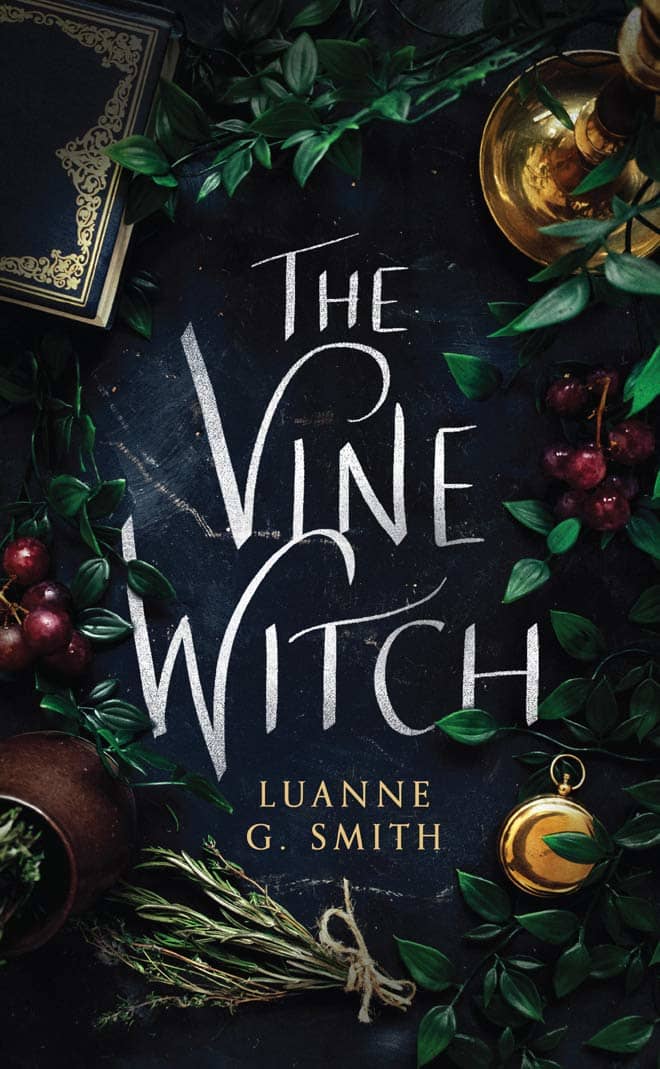
Sorcery, Romance and Wine: The Vine Witch by Luanne G. Smith

Sorcery, Romance and Wine: The Vine Witch by Luanne G. Smith

The Vine Witch-small The Vine Witch-back-small

Cover designed by Micaela Alcaino

A fantasy set in turn-of-the-century French countryside full of sorcery, romance and wine? I couldn’t wait to dive in to this debut novel from Luanne G. Smith.

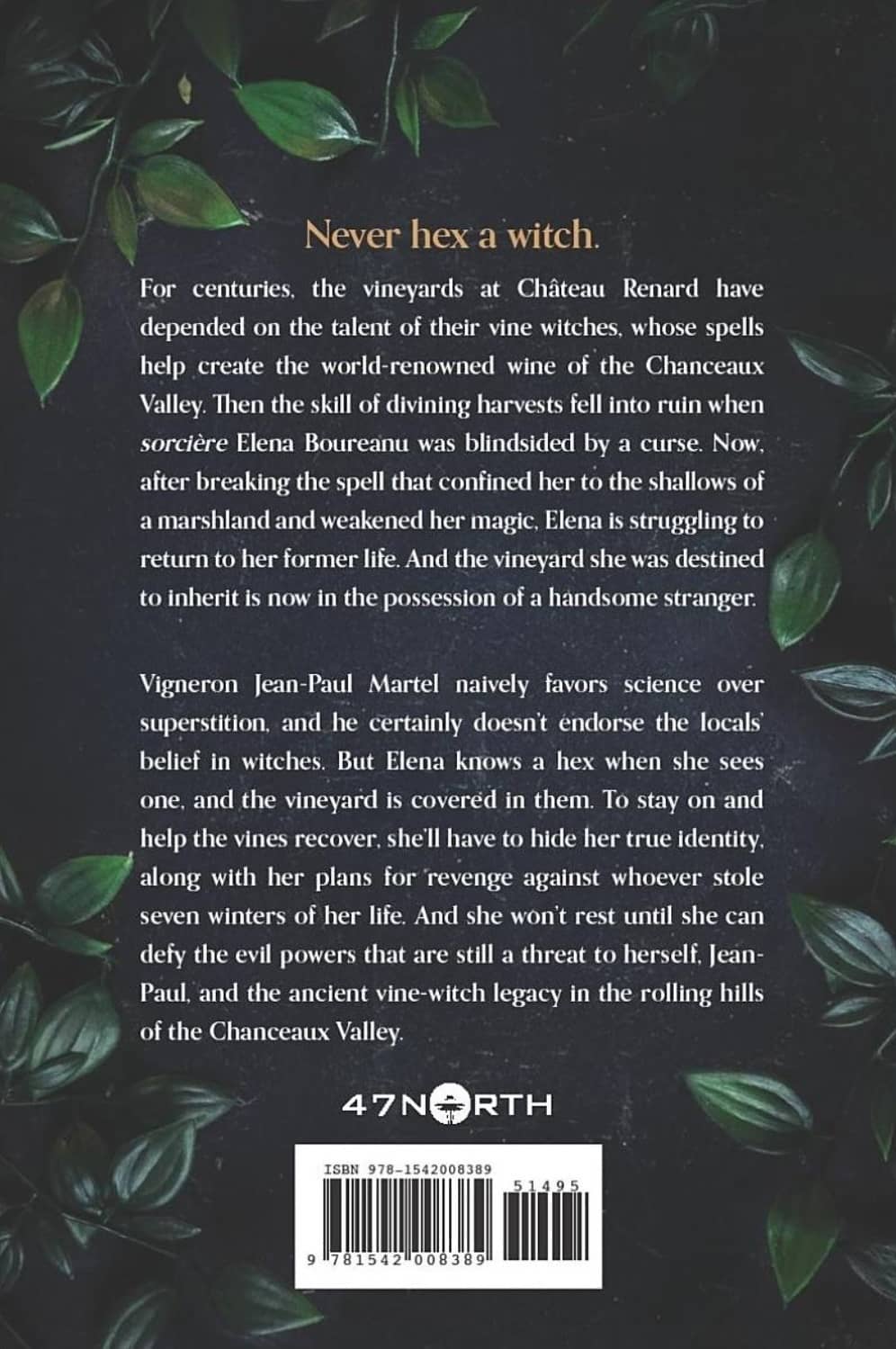
Elena Boureanu is a vine witch. Not familiar? Vine witches are responsible for curating the most delectable vintages of the Chanceaux Valley, in a fantasy version of rural France. Elena is responsible for Chateau Renard, well known for producing some of the best wine in the Valley. Elena, and the vine witches that have come before her, use their powers to harness the perfect weather, moon phase, and terroir. Paired with their creative tastes they hope to blend the perfect bottle.

Our story opens with Elena cursed, stuck in the body of a toad surviving off slugs, flies and having almost no memory of who she was, and much less who would inflict such a terrible sentence on her. After all, she was so engrossed in creating the world’s best wine, she rarely paid attention to anything but her work.

During the seven years Elena has been missing, Chateau Renard has been sold to Jean-Paul Martel, a city dweller with no knowledge of spells or witches. Instead, he is focused on science and has little use for the folklore and traditions of the Valley. To help with the daily operations of the Chateau, he allowed the previous proprietor, Ariella Gardin, to stay on. As much as she tries to influence him to be more open to the “old ways,” he dismisses her claims as nonsense.

Finally, Elena is able to break the curse return home to her beloved vineyard. She is greeted by Ariella (her Grand Mere), and discovers the truth about the sale of the only home she’s ever known. What’s more, she is able to see a terrible hex has been placed over the entire vineyard. With Jean-Paul’s aversion to magic, Elena must pretend to be someone she’s not, while trying desperately trying to fix things behind his back.

Read More Read More

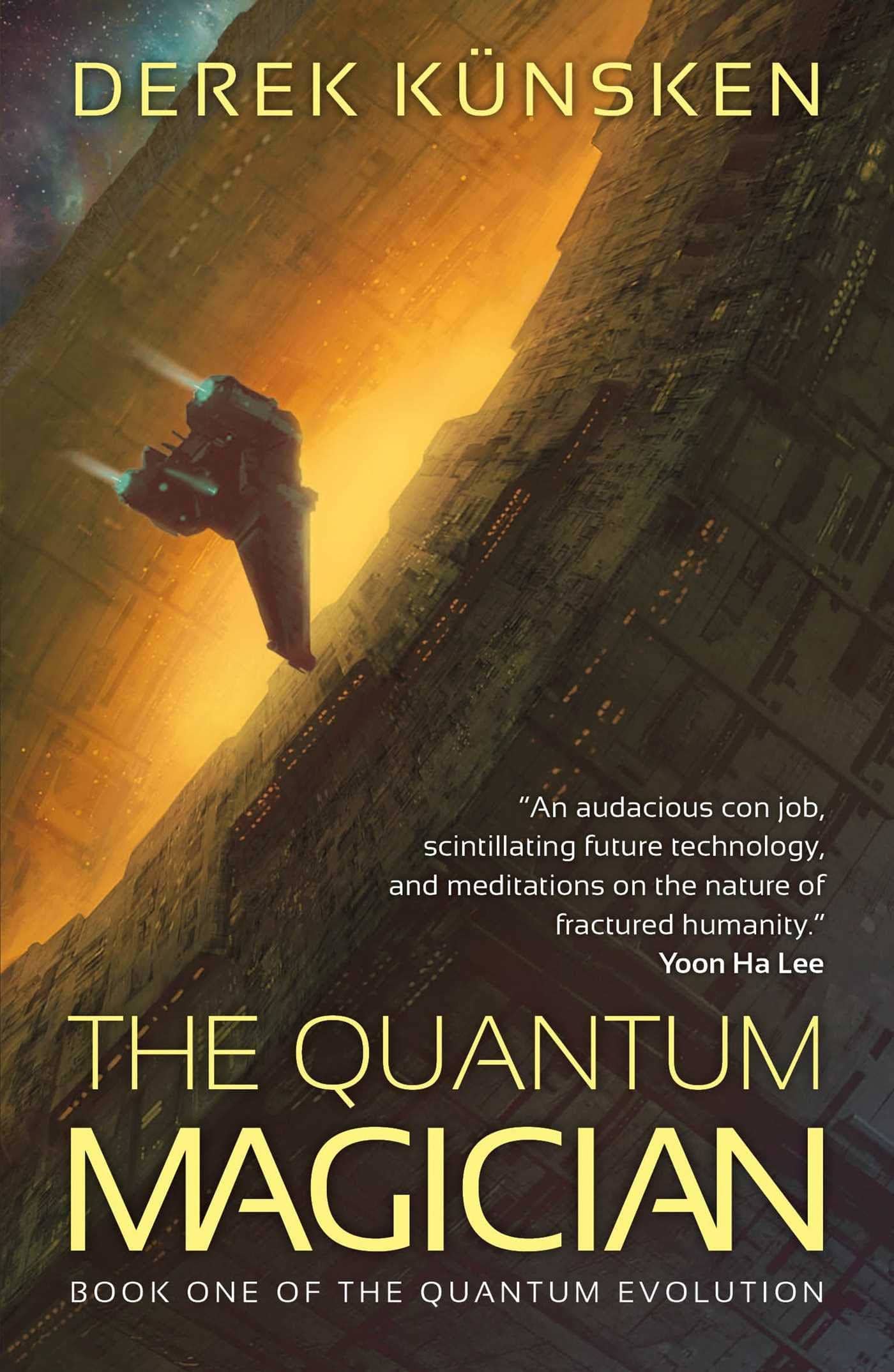
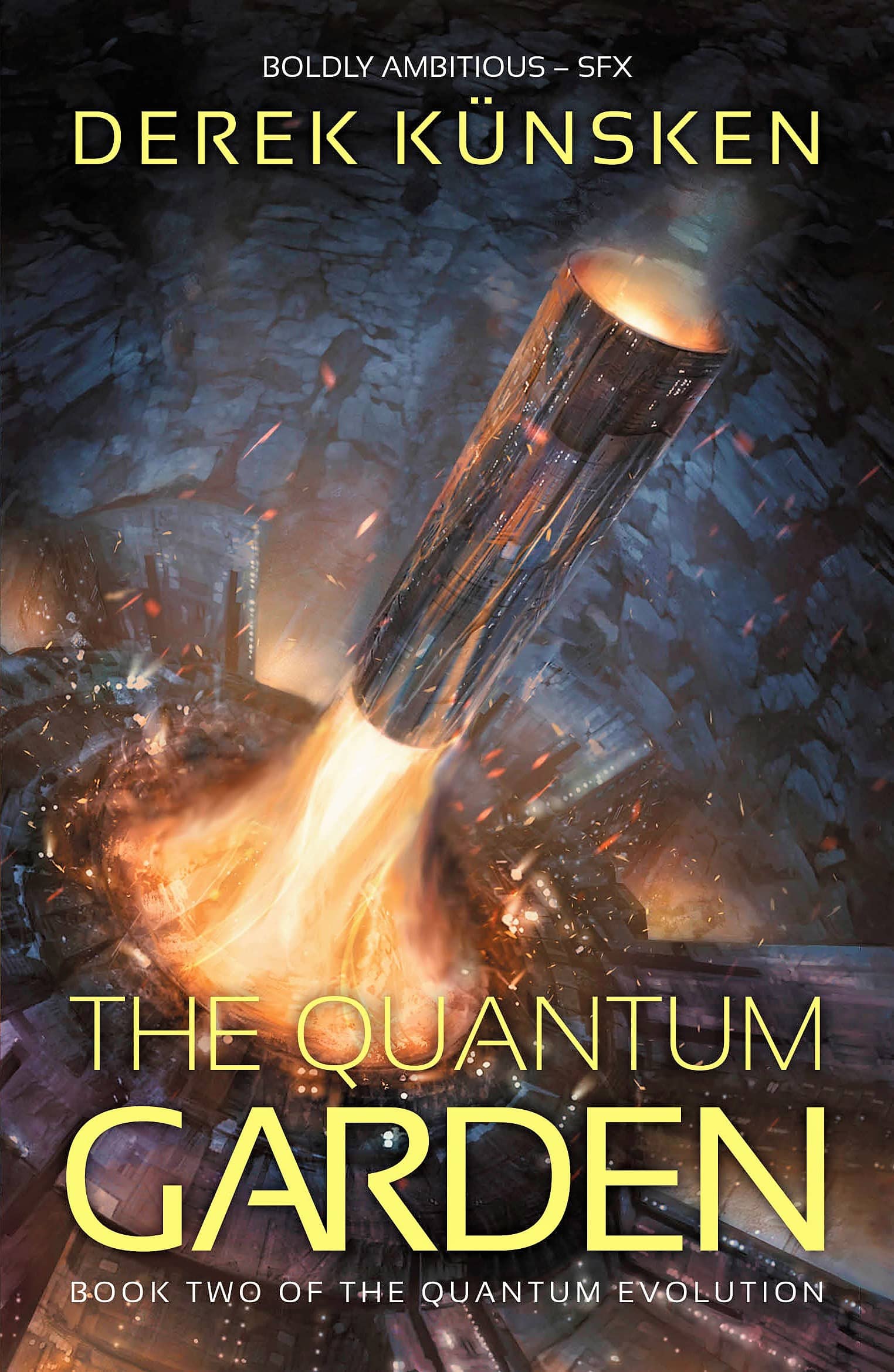
What Happens After the Greatest Con in History: The Quantum Garden by Derek Kunsken

What Happens After the Greatest Con in History: The Quantum Garden by Derek Kunsken

The Quantum Magician-small The Quantum Garden-small

Covers by Justin Adams

Derek first appeared in Black Gate in issue 15 with his short story “The Gifts of Li Tzu-Ch’eng.” He’s been our regular Saturday evening blogger since 2013, producing nearly 150 articles on diverse topics such as web comics, Alan Moore, Star Trek, New York ComicCon, Percy Jackson, Science Fiction in China, and much more.

His first novel, The Quantum Magician, was published by Solaris on October 2, 2018. In his Black Gate review Brandon Crilly said,

The worldbuilding here is intricate, compelling and absolutely fascinating. From the moment concepts were introduced I wanted to know more, especially the different subsets of humanity that Künsken presents, each the product of generations of genetic manipulation. I mean, an entire population of neo-humans nicknamed Puppets because of their diminutive size, who double as religious zealots worshipping their divine beings’ cruelty? Or an intergalactic political hierarchy based on the economics of patrons and clients, complete with the inequalities and social issues you might expect?…

The core plot is a con game perpetrated by a team of ragtag scoundrels, trying to sneak a flotilla of warships through a wormhole controlled by another government… but don’t ask me to explain more than that. Künsken does an amazing job of presenting a bunch of quirky protagonists who play off each other well, but the characters that stand out do so powerfully; between that and the rich worldbuilding of things like the Puppets, I forgot about that flotilla and the original aim of the con for a good third of the novel, until they came back into focus.

Much as I rooted for protagonist Belisarius (who would be the Danny Ocean of these scoundrels) and his partner/love interest Cassandra (who I suppose is Tess and Rusty from Ocean’s Eleven combined), the secondary characters stole the spotlight for me, particularly AI-on-a-religious-mission Saint Matthew and the creepily dangerous Scarecrow hunting these scoundrels down.

Solaris releases the sequel The Quantum Garden tomorrow. Here’s a look at the back cover.

Read More Read More

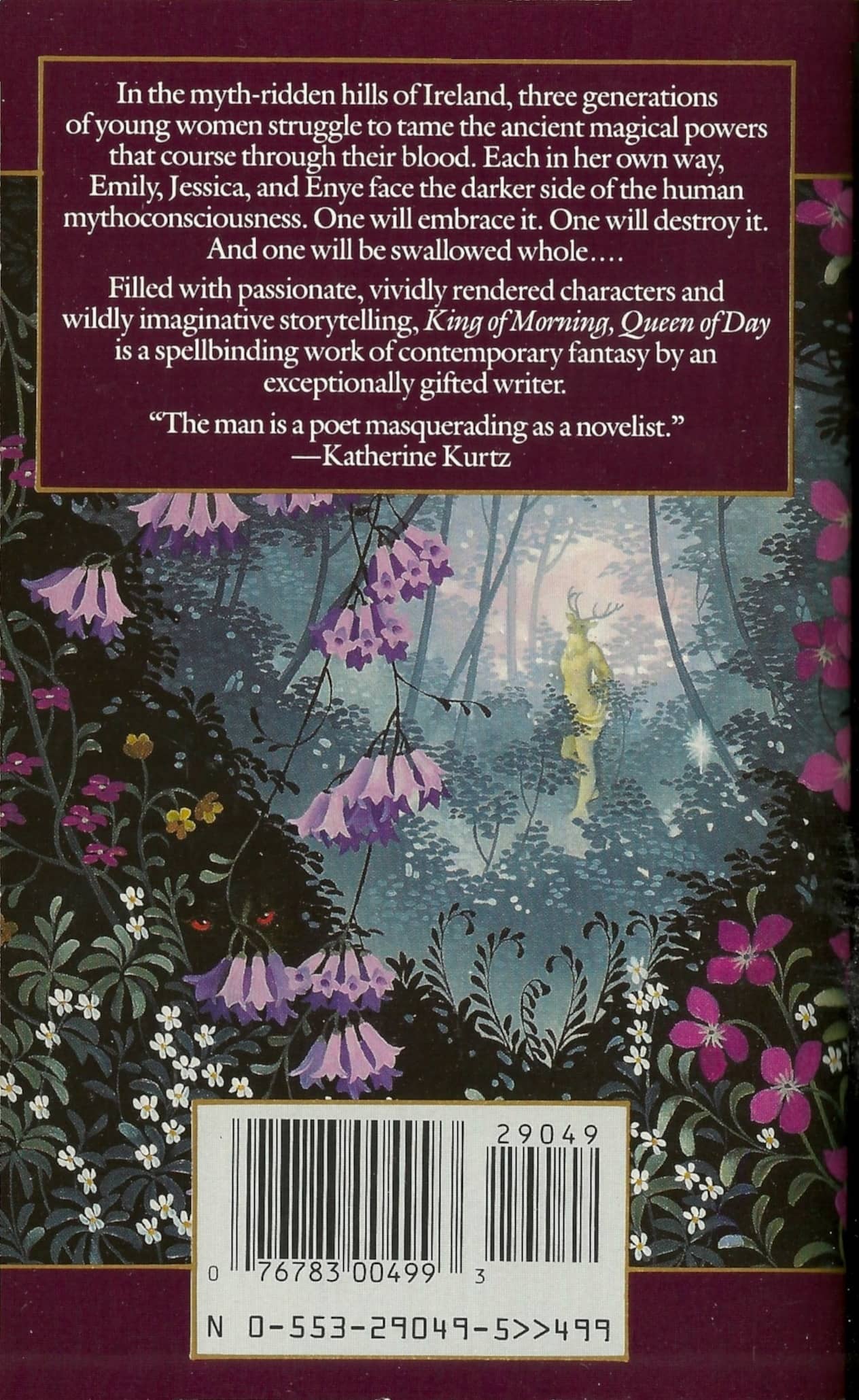
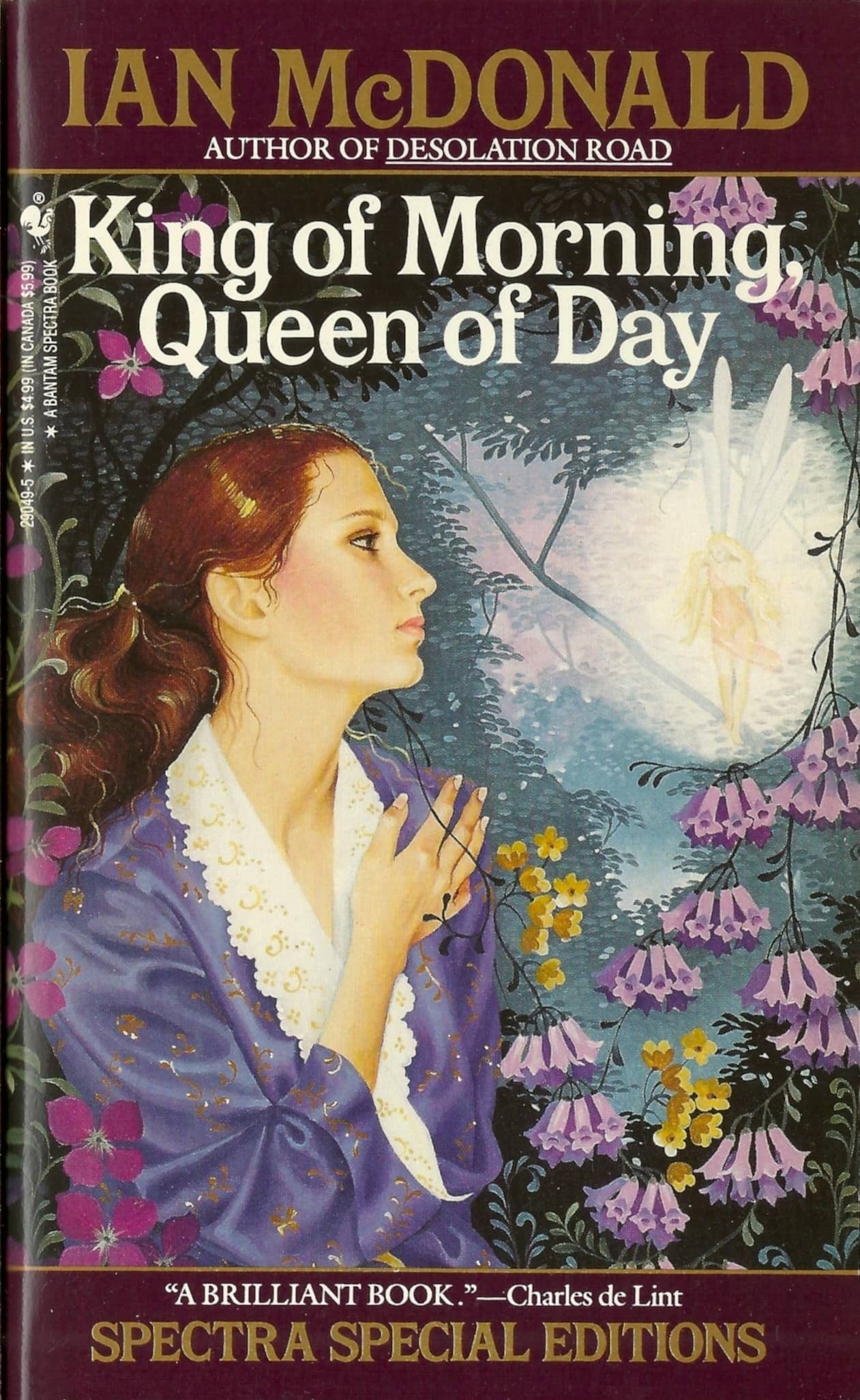
Vintage Treasures: King of Morning, Queen of Day by Ian McDonald

Vintage Treasures: King of Morning, Queen of Day by Ian McDonald

King of Morning Queen of Day-back-small King of Morning Queen of Day-small

British novelist Ian McDonald burst onto the scene in 1988 with his science fiction novel Desolation Road, set in an oasis town on a far future Mars. It won the Locus Award for Best First Novel, and was nominated for the Arthur C. Clarke Award in the same category. He followed that with Out on Blue Six (1989), the tale of pain criminals in a civilization where pain and unhappiness are illegal.

His third novel, and his first fantasy, was King of Morning, Queen of Day. Like his first two, it was published by the most prestigious SF imprint at the time, Bantam Spectra (which is now dead). It was nominated for the Locus Award, and won the Philip K. Dick Award for Best Novel. In her insightful 2009 review at Tor.com, Jo Walton observed that the book is about “the need to make new myths, dream new dreams, to have a new future. Astonishingly, it does this in Ireland, a country full of old myths, and it uses those old myths to wonderful effect.”

King of Morning, Queen of Day is, however, definitely fantasy. And it’s urban fantasy too, it’s set in modern Ireland between 1913 and 1990, and is about five generations of a family who have a propensity to “mythoconsciousness,” bringing archetypal mythic creatures into reality. It wasn’t part of the current wave of urban fantasy, and it would sit a little oddly with it. I don’t know if it was an influence or a precursor to it — it’s hard to think of it as influential when it seems as if only six people have read it and they’re all friends of mine, but maybe it was a stealth influence, a zeitgeist influence. Certainly this is a magical secret history, set in our world but with magical things going on below the surface.

The book falls into three distinct parts. The first section is set in 1913, in the Desmond family home of Craigdarragh. This part of the story is told in the form of diary entries, letters and newspaper clippings. Teenager Emily Desmond sees and photographs fairies while at the same time her father is convinced that aliens are approaching riding a comet. There’s all the background of 1913 Ireland, Yeats, paranormal investigators, the stirrings of independence, Freudian psychology, and a sepia photograph of Emily’s mother a generation earlier marked “Caroly, Wood nymph…” What the book’s really about is the need to make new myths, dream new dreams, to have a new future. Astonishingly, it does this in Ireland, a country full of old myths, and it uses those old myths to wonderful effect. This is a book that could only have been written by someone steeped in the culture and the country and the folk-mythology. McDonald has always been brilliant on sense of place—there’s a description here of Liverpool as a foreign city that’s one of the most beautiful things I’ve ever read. He makes the place and time entirely alive and three-dimensional. This is mythologically significant Ireland, but it is deeply rooted in the real changing growing country and the real Twentieth Century… This is a story about the dreams of the real Ireland, and they’re not pretty, even though they’re always beautifully written.

King of Morning, Queen of Day was published in June 1991 by Bantam Spectra. It is 389 pages. priced at $4.99. The cover is by Heather Cooper. See all our recent Vintage Treasures here.

Of Phibes and Androbots I Sing

Of Phibes and Androbots I Sing

phibes 5Phibes 4Dr. Phibes is far more than the evocation of the great thriller characters of its creator’s childhood; he is a character that stands proudly alongside Dracula, Moriarty, Nikola, Fu Manchu, Fantomas, and Mabuse as an equal in inventiveness and execution. William Goldstein, as screenwriter and novelist, created an immortal as only the best storytellers do. Phibes is a character who transcends his era, defines his own archetype, and is firmly established in his own mythology to pass from one generation, century, and millenium to the next. The best news for fans is The Master’s work continues with the fifth and latest book in the ongoing series, The Androbots – Book I of The Dr. Phibes Manifest.

Those who have read the first four books in the series or, at the very least, my other Black Gate articles covering these titles, are aware there is a significant tonal difference between the two Vincent Price Dr. Phibes films of the early 1970s and William Goldstein’s novels. The books retain the films’ eccentricities, but are far more tragic than comedic. I do revere the two AIP releases. Director Robert Fuest and his production crew imbued both pictures with a sardonic touch that allowed Vincent Price and several of his co-stars to turn in subdued performance that carefully balance extreme bursts of horror, tragedy, and comedy. One never knows quite what to expect as one scene ends and the next begins when watching the films.

Read More Read More

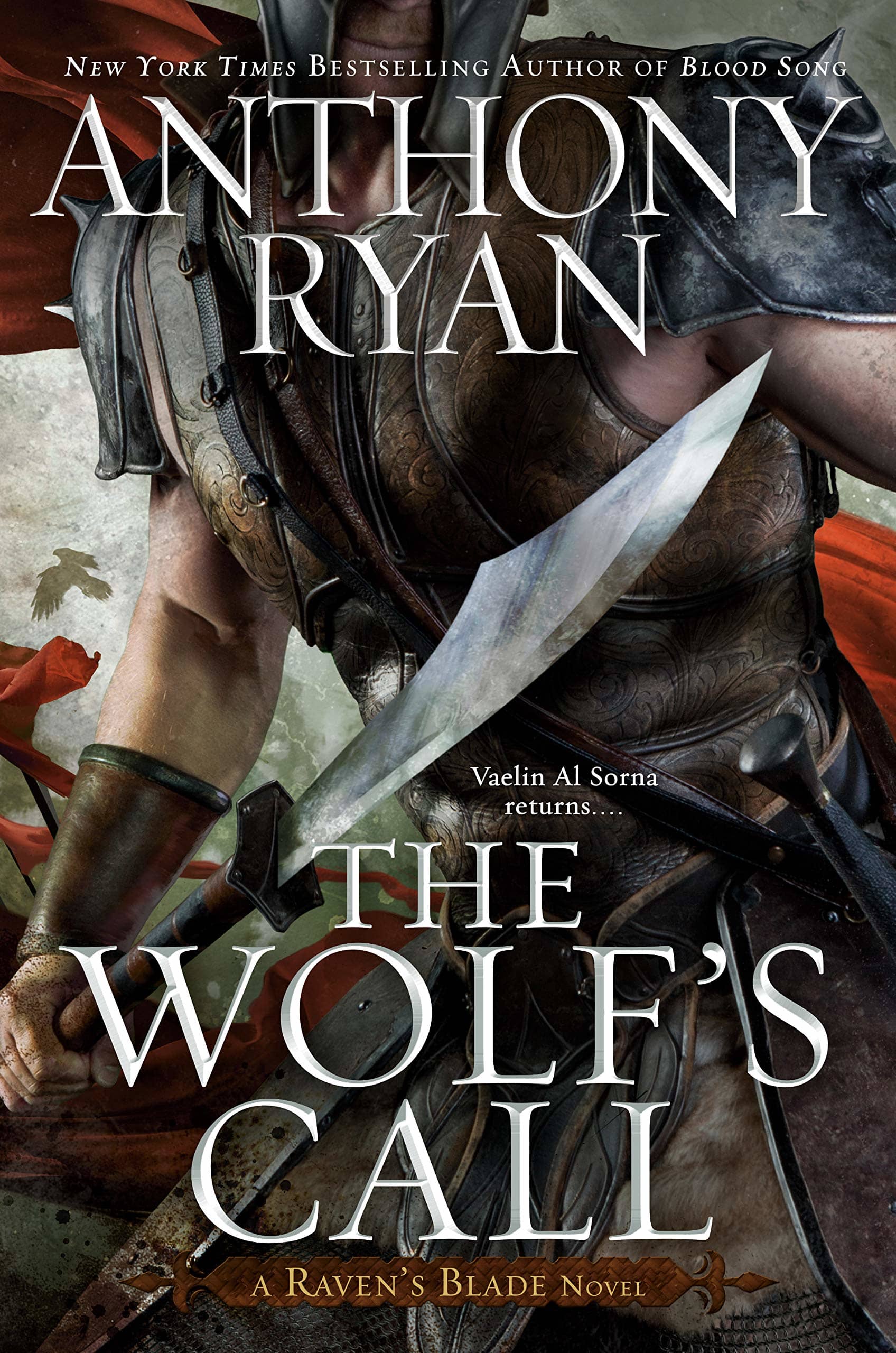
New Treasures: The Wolf’s Call by Anthony Ryan

New Treasures: The Wolf’s Call by Anthony Ryan

The Wolf's Call-smallAnthony Ryan arrived with a splash in 2012 with his debut Blood Song, the opening novel in the Raven’s Shadow trilogy. A little slow on the uptake, I didn’t discover the series until the second volume, Tower Lord — and even then mostly because of the title. For a week after I spotted it in the bookstore, I wanted to add a turret to our house and have all my children address me as Tower Lord. The books in the series were:

1 Blood Song (2012)
2 Tower Lord (2014)
3 Queen of Fire (2015)

I see now that Ace has released The Wolf’s Call, the first novel in a brand new series featuring Vaelin Al Sorna, the legendary blademan of Raven’s Shadow. In a comment on my Tower Lord article, Rogue Blades mastermind Jason M. Waltz said, “I read Blood Song last summer, enjoyed it, want to read Tower Lord. Not revolutionary but definitely fills the heroic-Gemmell-like niche.”

That’s enough of an endorsement for me. Here’s the description for The Wolf’s Call.

Peace never lasts.

Vaelin Al Sorna is a living legend, his name known across the Realm. It was his leadership that overthrew empires, his blade that won hard-fought battles – and his sacrifice that defeated an evil more terrifying than anything the world had ever seen. He won titles aplenty, only to cast aside his earned glory for a quiet life in the Realm’s northern reaches.

Yet whispers have come from across the sea – rumours of an army called the Steel Horde, led by a man who believes himself a god. Vaelin has no wish to fight another war, but when he learns that Sherin, the woman he lost long ago, has fallen into the Horde’s grasp, he resolves to confront this powerful new threat.

To this end, Vaelin travels to the realms of the Merchant Kings, a land ruled by honor and intrigue. There, as the drums of war thunder across kingdoms riven by conflict, Vaelin learns a terrible truth: that there are some battles that even he may not be strong enough to win.

The Wolf’s Call was published by Ace on July 23, 2019. It is 414 pages, priced at $28 in hardcover, and $14.99 in digital formats. The cover is by Cliff Nielsen.

See all our recent New Treasures here.

Giving People What They Want: James Nicoll on The Traveler in Black by John Brunner

Giving People What They Want: James Nicoll on The Traveler in Black by John Brunner

The Traveler in Black John Brunner-small The Traveler in Black John Brunner-back-small

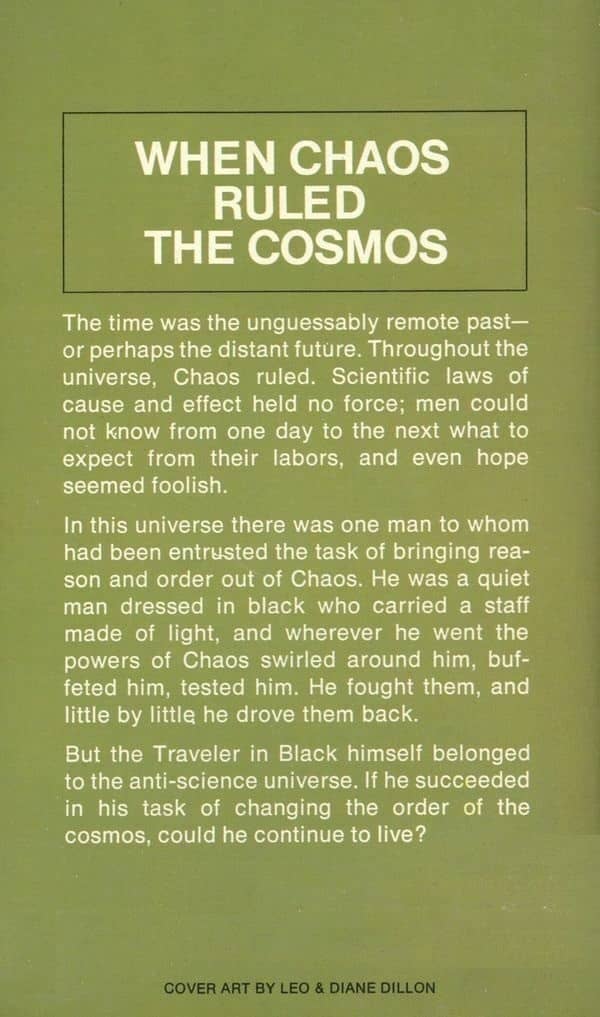
The Traveler in Black (Ace Books, 1971). Cover by Diane Dillon and Leo Dillon

Outside of Robert E. Howard, Fritz Leiber, and Michael Moorcock, the 20th Century didn’t produce a great many enduring Sword and Sorcery series. Which is why we cherish those we have, like John Brunner’s The Traveler in Black.

The Traveler in Black first appeared in a short story in Science Fantasy in 1960. He was a captivating and enigmatic figure, and he proved popular enough that Brunner returned to his creation four more times in the next two decades. The first four tales were collected in The Traveler in Black, a 1971 paperback original from Ace Books, part of Terry Carr’s famed Ace SF Special series. James Nicoll turned a fresh eye to them this summer, saying:

Chaos is losing its grip on reality. The Traveller in Black does his humble best to accelerate the process. In most cases he does this by using his power to warp reality to give people what they want — at which point they find they didn’t really want it after all…

There are parallels between the Traveller stories and Tanith Lee’s later Flat Earth books. While Brunner might have influenced Lee, I think it more likely that both are playing in a sub-genre of fantasy now unfashionable, in which fantastic worlds evolve towards the mundane.

Where Lee’s Flat Earth revels in decadence, the world of the Traveller in Black is one in which one finds a sardonic pleasure in watching people get their just desserts. The delight is redoubled in that one can predict a catastrophe, but one cannot predict just HOW foolish choices will backfire. If that’s the way your sense of humour rolls, you’ll enjoy this book.

It’s always great to read a thoughtful review of a nearly 50-year old S&S vintage paperback (and it’s especially great that we’re not the only ones writing them.)

Read More Read More

Future Treasures: The Name of All Things by Jenn Lyons

Future Treasures: The Name of All Things by Jenn Lyons

The-Ruin-of-Kings-medium The Name of All Things-small

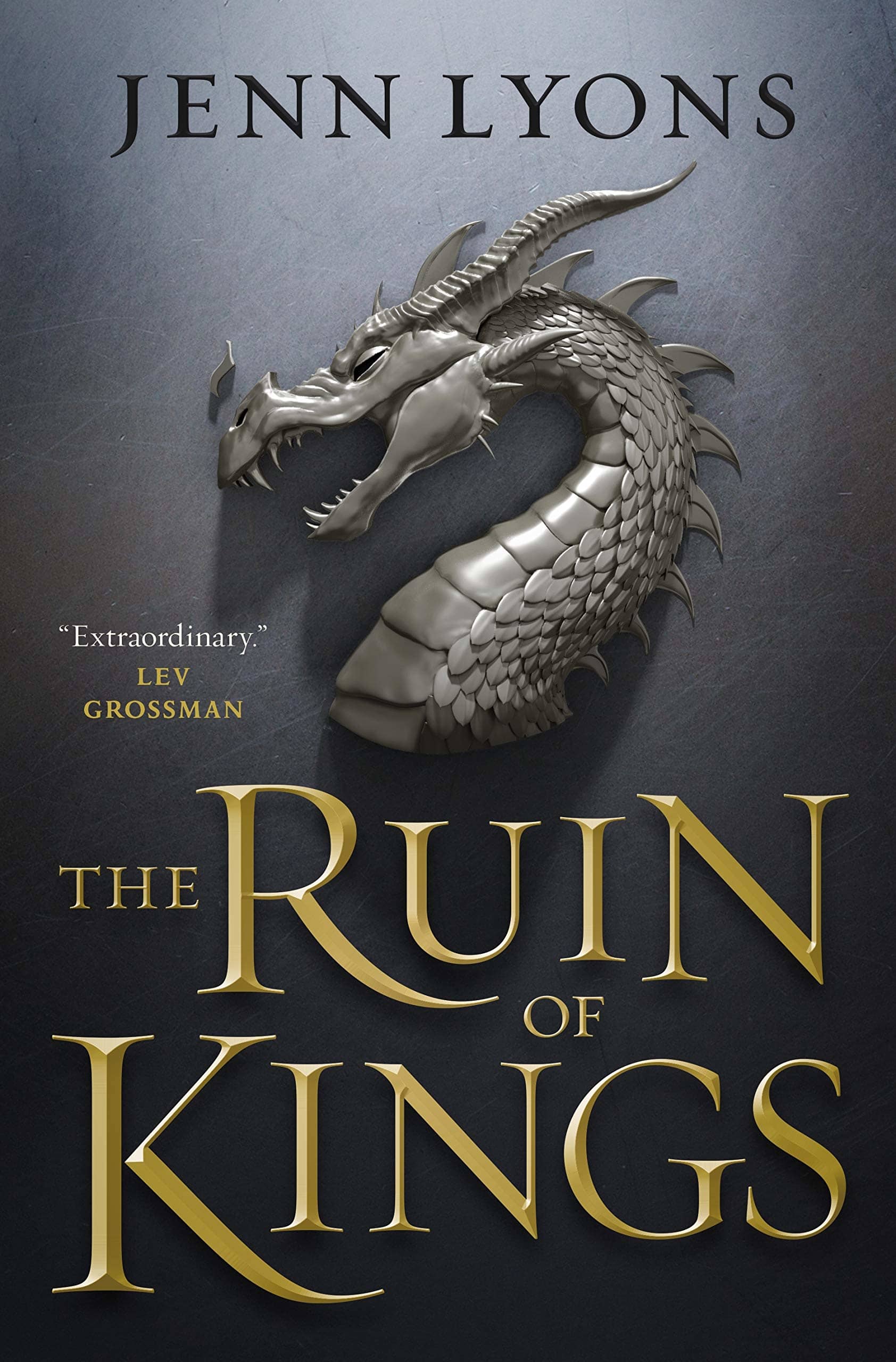
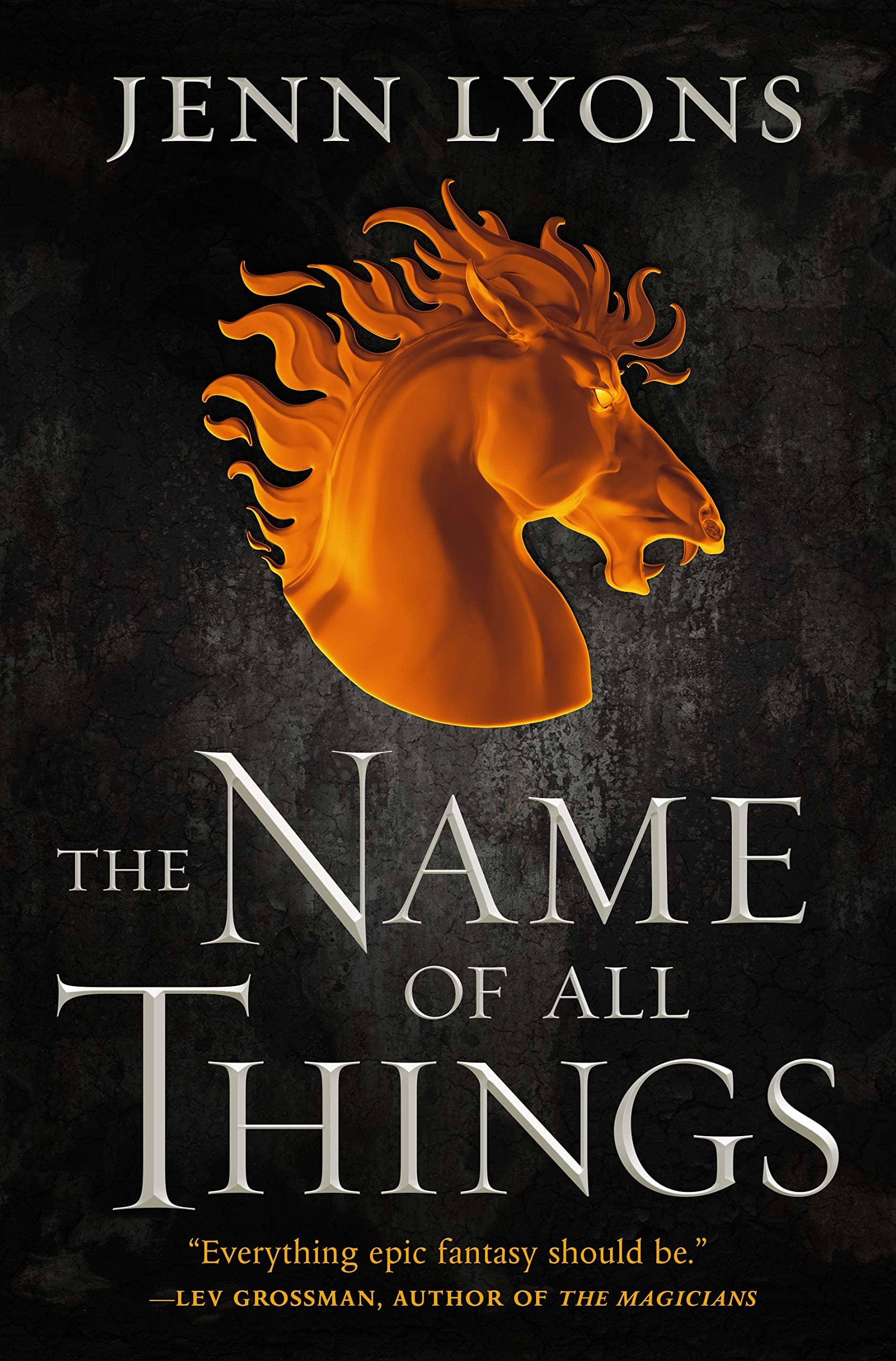
You can learn a lot about the publishing industry by watching what they spend money on. And this year Tor is spending a lot of money and energy promoting the debut fantasy novel by Jenn Lyons, The Ruin of Kings, released this February, and its sequel, The Name of All Things, due in bookstores in three weeks.

It seems to have paid off. The Ruin of Kings scored a rare quadruple crown, with starred reviews from Library Journal (“Stunning”), Booklist (“Dazzling”), Publishers Weekly (“intricate epic fantasy”) and Kirkus Reviews (“Un-put-down-able”). Kirkus calls the new installment “top-notch adventure fantasy written for a 21st-century audience.” Here’s the description.

You can have everything you want if you sacrifice everything you believe.

Kihrin D’Mon is a wanted man. Since he destroyed the Stone of Shackles and set demons free across Quur, he has been on the run from the wrath of an entire empire. His attempt to escape brings him into the path of Janel Theranon, a mysterious Joratese woman who claims to know Kihrin.

Janel’s plea for help pits Kihrin against all manner of dangers: a secret rebellion, a dragon capable of destroying an entire city, and Kihrin’s old enemy, the wizard Relos Var. Janel believes that Relos Var possesses one of the most powerful artifacts in the world― the Cornerstone called the Name of All Things. And if Janel is right, then there may be nothing in the world that can stop Relos Var from getting what he wants.

And what he wants is Kihrin D’Mon.

The Name of All Things is Book 2 of A Chorus of Dragons. On her website Lyons says that, if everything goes according to plan, “Tor will be releasing a book in the series every nine months or so. Two this year, one next year, two the year after that.” That’s a grueling publication schedule, but it should keep fans happy. The Name of All Things will be published by Tor on October 29, 2019. It is 587 pages, priced at $26.99 in hardcover and $13.99 in digital formats. The cover is by Lars Grant-West. Read a lengthy excerpt at Tor.com.

The Golden Age of Science Fiction: Barlowe’s Guide to Extraterrestrials, by Wayne Barlowe

The Golden Age of Science Fiction: Barlowe’s Guide to Extraterrestrials, by Wayne Barlowe

Cover by Wayne Barlowe

The Locus Awards were established in 1972 and presented by Locus Magazine based on a poll of its readers. In more recent years, the poll has been opened up to on-line readers, although subscribers’ votes have been given extra weight. At various times the award has been presented at Westercon and, more recently, at a weekend sponsored by Locus at the Science Fiction Museum (now MoPop) in Seattle. The Best Art or Illustrated Book Award was only given in two years, 1979 and 1980 and was won by Ian Summers for Tomorrow and Beyond. In 1994, Locus introduced the Best Art Book Award, which was won by Michael Whelan for The Art of Michael Whelan: Scenes/Vision. The category has been dominated by the Spectrum series, which has won in all except six subsequent years. In 1980. The Locus Poll received 854 responses.

Wayne Douglas Barlowe and Ian Summers have created a catalog of aliens as described in numerous works of science fiction, by authors as diverse as Larry Niven, Ursula Le Guin, and Jack Vance. Each alien is according a two page spread in which the author and artist provide the name of the alien’s race, the author who created them and the work in which they appear and a full page image of the creature. The aliens are also described and frequently Barlowe has illustrated details of their hands, textures, or other things that make each race unique.

The book includes a fold-out centerfold that shows 48 of the aliens more or less at their relative sizes, from the wormlike Mesklinites from Hal Clement’s novel Mission to Gravity to Jack Williamson’s jellyfish-like Medusians from The Legion of Space. Summers admits that in many cases the size comparisons are approximate since the authors often just gave hints about an alien’s size relative to humans, who are also included in the comparison chart.

Read More Read More