Browsed by
Category: Blog Entry

The Golden Age of Science Fiction: “Enemy Mine,” by Barry B. Longyear
The Golden Age of Science Fiction: “Enemy Mine,” by Barry B. Longyear

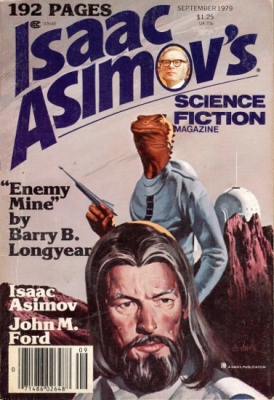
Cover by Vincent di Fate

The Best Novella category was not one of the original Hugo categories in 1953. I twas introduced in 1968, when it was won by Philip José Farmer for “Riders of the Purple Wage” and Anne McCaffrey for “Weyr Search.” Since then, some version of the award has been a constant, with the exception of 1958. In 1980, the awards were presented at Noreascon II in Boston.

The Nebula Award was created by the Science Fiction Writers of America (SFWA) and first presented in 1966, when the award for Best Novella was won by Brian W. Aldiss for “The Saliva Tree” and Roger Zelazny for “He Who Shapes.” The award has been given annually since then.

The Locus Awards were established in 1972 and presented by Locus Magazine based on a poll of its readers. In more recent years, the poll has been opened up to on-line readers, although subscribers’ votes have been given extra weight. At various times the award has been presented at Westercon and, more recently, at a weekend sponsored by Locus at the Science Fiction Museum (now MoPop) in Seattle. The Best Book Novella Award dates back to 1974, when the short fiction awards were split into Short Fiction and Novella lengths. Frederick Pohl won the first award. In 1980. The Locus Poll received 854 responses.

In January, I wrote about Barry B. Longyear, the winner of the John W. Campbell Award in 1980 and explored the vast amount of fiction he published in 1978 and 1979. At that time, I dismissed his biggest hit with a single line, “His breakout story, of course, was “Enemy Mine,” which will be covered in more depth in the article on that novella’s various awards for the year.” Now is come the time to discuss that story.
Read More Read More

The Public Life of Sherlock Holmes: Holmes on the Range

The Public Life of Sherlock Holmes: Holmes on the Range

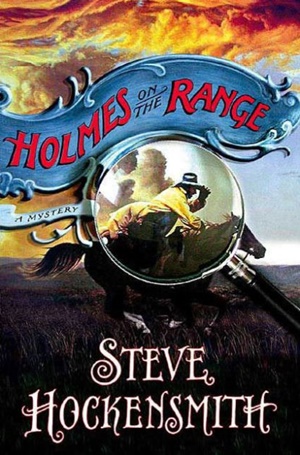
Hockensmith_HoRCoverEDITEDThat’s right: The Public Life of Sherlock Holmes is back! Well, for one week, anyways. A (Black) Gat in the Hand will resume next Monday. There were quite a few topics I never got around to covering during TPLoSH’ 156-ish week run. (Wow!) And one was Steve Hockensmith’s Holmes on the Range series. I recently got around to finishing the short story collection that I bought for my Nook back in 2011 (I’ve got a bit of a reading backlog, ok?!), and I decided I needed to finally write a post about it, before it got buried in the To Write list again. So, here we go!

There are a lot of ways to go about writing a Sherlock Holmes story. Some folks attempt to very carefully emulate Sir Arthur Conan Doyle’s own style, and turn out a tale that feels as if it might have been done by the creator of the great detective himself. Of course, success varies greatly. Hugh Ashton and Denis O. Smith are the best I’ve found in this regard. You can find stories ranging from pretty good to not suitable for (digital) toilet paper. I’ve had three of my own stories published with ‘meh’ results.

Some folks write whatever the heck they want, often with the name of Holmes being the only similarity to the famed detective. It is possible to find good Holmes stories that sound nothing like Dr. Watson’s narrative style, of course. And Holmes has been placed in different eras, and even worlds.

There have been Holmes parodies around for over a hundred years. I’ve written a couple myself, and they were fun!

There are Holmes-like successors out there, of whom August Derleth’s Solar Pons is the best. Yes, I’m aware that’s a subjective judgement, but it’s mine, and I’m the one writing this essay, so it stands. I’ve written about Pons more than once (here’s a good overview), and even contributed introductions and pastiches to anthologies.

But today I’m going to talk about one of Sherlock Holmes’ contemporaries; albeit, quite different and far away. Steve Hockensmith had been writing short stories for Ellery Queen’s Mystery Magazine Christmas issue, and wanted to sell more to the venerable magazine. EQMM does an annual Sherlock Holmes issue, so he figured that was the way to go. But he wanted to write more than just another Holmes story.

Read More Read More

Blogging Marvel’s Master of Kung Fu, Part Six

Blogging Marvel’s Master of Kung Fu, Part Six

Master_of_Kung_Fu_Vol_1_33Master of Kung Fu #33 sees writer Doug Moench continuing to build upon the series’ new direction while also continuing to deploy offbeat humor sparingly to great effect. This first installment of a three-part storyline begins when Shang-Chi thwarts an assassination attempt on Clive Reston by a highly-advanced automaton. The reader and Shang-Chi learn from MI5 that the automaton is one of the toys of Mordillo, a robotics genius and master assassin who, it transpires, was the force behind Carlton Velcro.

Shang-Chi is provided with his own swank London townhouse (courtesy of MI5). While Clive Reston is showing him around his new digs, they encounter Reston’s former lover, seductive MI5 agent Leiko Wu. Her introductory scene, taking a bubble bath and shamelessly dressing (barely) in front of Reston and Shang-Chi establishes her not only as a Bondian seductress, but also signals her as a confident and capable woman who is content to leave a string of broken hearts in her wake. Doug Moench excels at establishing a sense of fatalism in his work. Just as the reader understands that Shang-Chi compromising his principles in working for MI5 will only lead to regret; so too the reader understands that the innocent and somewhat naive Shang-Chi falling for the far more worldly Leiko Wu is also fated to end in pain and suffering. Shang-Chi, in his professional and personal choices, chooses the short-term good and ignores the fact that the long-term can only lead to misery.

Read More Read More

Feet: Pedipulator, Walking Truck

Feet: Pedipulator, Walking Truck

1962-01-31 [Pittsfield MA] Berkshire Eagle 1 pedipulator headline

1962-07-24 Allentown [PA] Morning Call 21 pedipulator illus cropped - Copy

“Machine Walks on Moon” doesn’t have nearly the headline power as “Man Walks on Moon,” but for a short time in the early 1960s the U.S. Army funded a project for a moon walker.

The “Pedipulator,” as General Electric’s ordnance department in Pittsfield, MA, called it, was a concept vehicle. The concept, all but admitted in so many words by ordnance GM Gene R. Peterson, was to pump money into GE. Cold war spending in the US/USSR missile race had boosted employment in the department by 250%. They needed something to do. So they turned, once again, to the incredibly fertile mind of Ralph Mosher, whose Man-Mate, Handyman, and Hardiman I talked about in my last column.

Read More Read More

A (Black) Gat in the Hand: Hugh B. Cave’s Peter Kane

A (Black) Gat in the Hand: Hugh B. Cave’s Peter Kane

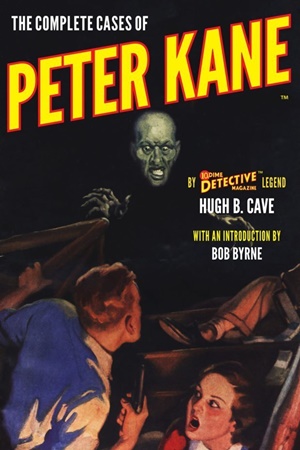
Cave_KaneCoverEDITED“You’re the second guy I’ve met within hours who seems to think a gat in the hand means a world by the tail.” – Phillip Marlowe in Raymond Chandler’s The Big Sleep

(Gat — Prohibition Era term for a gun. Shortened version of Gatling Gun)

Matt Moring of Steeger Books (and Altus Press, and Black Mask, and…) allowed me to write the introduction to Hugh B. Cave’s The Complete Cases of Peter Kane. Matt has kindly let me reproduce that intro as an entry here for A (Black) Gat in the Hand.

Hugh B. Cave was the last of the great pulpsters. From hundreds of short stories in the pulp magazines of the thirties, to his final novel in 2004, Cave wrote over a thousand shorts and over three dozen novels. He was also a war reporter and later even owned and managed a coffee plantation in Jamaica.

While H.P. Lovecraft, Clark Ashton Smith, August Derleth and Robert E. Howard are better remembered for weird menace/horror stories, Cave is worthy of standing alongside them. But early in his career, Cave also wrote extensively in the mystery field.

He was one of the few to write for the last three (named) editors of the king of mystery pulps, Black Mask: the legendary Joseph ‘Cap’ Shaw, Fanny Ellsworth and Kenneth S. White.

Black Mask’s major competition came in the form of Dime Detective Magazine, which touted itself as “twice as good – for half the price” (Black Mask cost 20 cents at the time; though the price would shortly drop to 15 cents, in part due to Dime Detective’s success at the cheaper cost).

Editor Kenneth White (the same mentioned above) was instructed to lure as many writers from Black Mask as he could, paying an extra penny a word as enticement. And with a going rate of one to two cents for pulp writers (Black Mask’s three cents a word was indicative of its standing and quality in the field), the four cent rate made a significant difference to writers. As the prolific Erle Stanley Gardner supposedly replied to observations that he always seemed to use his hero’s last bullet to knock off the story’s antagonist:

“At three cents a word, every time I say ‘Bang’ in the story I get three cents. If you think I’m going to finish the gun battle while my hero still has fifteen cents worth of unexploded ammunition in his gun, you’re nuts.”

Writers were forbidden from doing novel serializations (The Maltese Falcon was first a serial) and were also instructed to create their own characters, which could not appear elsewhere, for the magazine. The onslaught was successful, with many of the era’s most popular writers switching to Dime Detective. Carroll John Daly (who brought the iconic Race Williams with him), Erle Stanley Gardner, Frederick Nebel and Norbert Davis (whose humorous stories were frequently rejected by Shaw but who flourished at his new home) were among those lured to Dime Detective.

Read More Read More

John W. Campbell was a Racist and a Loon: A Response to Jeannette Ng’s Campbell Award Acceptance Speech

John W. Campbell was a Racist and a Loon: A Response to Jeannette Ng’s Campbell Award Acceptance Speech

JEANNETTE NG

Jeannette Ng

I don’t think I have anything much to add to the commentariat’s discussion of Jeannette Ng’s Campbell Award acceptance speech. But why should that stop me?

The simplest thing to note is this — however you parse the word Fascist (and I would parse it differently than many), John W. Campbell was a racist, and a loon. (However you parse THAT word.) His ideas about how we should best be governed were, if not Fascist by a strict definition, not exactly democratic, to say the least. He cheered on the Kent State massacre, for goodness’ sake. He was sexist too, though in that case I think maybe he was just “a man of his time” — his racism, however, was definitely more virulent than the norm. And loonier! (See his editorial suggesting that black people preferred to be slaves.)

And on those grounds I have no complaint with Ng’s speech. Yes, she misidentified the magazine Campbell worked for (and has apologized for that) — but, heck, she was excited and nervous — these things happen.

The real point is — and I think Alec Nevala-Lee deserves tremendous credit for clarifying this — that “we”, as the SF field, especially those of us who’ve been around a lot longer, kind of ignored how whacko — and downright harmful — Campbell’s views could be. It’s not that they weren’t known — he trumpeted them in the pages of Astounding! — but people tended to sort of excuse them — “Oh, John was just trying to stir conversation,” that sort of thing. It’s pretty clear that he really did believe many or most of the things he wrote. And we should have, collectively and individually, been more forceful in standing against those ideas.

Read More Read More

Fantasia 2019, Days 7-8, Part 1: Maggie

Fantasia 2019, Days 7-8, Part 1: Maggie

MaggieJuly 17 for me was a day of rest and running errands; then for my first film at Fantasia on July 18 I went to the De Sève Theatre to watch Maggie (메기). Directed by Yi Ok-seop from a film she wrote with star Koo Kyo-hwan, it’s the story of Yeo Yoon-young (Lee Ju-young), and her boyfriend Sung-won (Koo). Yoon-young’s a nurse at Love of Maria Hospital in Seoul. One day, an X-ray surfaces showing a man and a woman having sex in the X-ray room. The next day almost nobody comes in to work; the X-ray room’s a popular site for assignations, and everyone thinks they’re one of the figures in the X-ray. Yoon-young’s the only one who dares show her face, along with Doctor Lee (Moon So-ri). They end up forming an unlikely partnership as Maggie helps Lee learn to trust other people. Meanwhile, Sung-won finds work filling in sinkholes opening up in Korea, following an earthquake predicted by a catfish named Maggie — who also turns out to play an important role within the film.


This is only roughly a description of the movie, indicating just a few of the plot strands. Maggie unfolds through a series of vignettes, with flashbacks and chapter titles and an unseen narrator. It’s a consciously quirky approach to a film that isn’t afraid of punching up its plot with a certain amount of surrealism. You wonder what happens to the patients at a hospital with no staff, for example, and though we do see a few people left in the empty building, by and large the question’s unanswered.

What is most interesting, and I think in the long run surprisingly effective, is the contrast between the surface tone of light comedy and a deeper sense of abiding bleakness. The conclusion suggests hidden depths to people we think we know, and not always abysses into which we would choose to gaze. While the pacing and general approach seem to aim at a gentle comfort, much of what actually transpires depicts some real pain.

The vignette structure seems to ask the viewer to see the humour of events, and the surrealism is at first distancing, but the subject matter (of trust, of violence) has a weight that in the end can’t be ignored. This could have been a significant disconnect, and at first I felt it was. The more I thought about it — and after having seen at least one movie that tried something similar to Maggie and in my judgement failed — the more I came to appreciate this film, and suspect that I hadn’t been sensitive enough at first viewing to what it was trying to do.

Read More Read More

The Games of Gen Con 2019

The Games of Gen Con 2019

WarChickenIslandThe summer conventions are winding down, as school starts back up. I have previously mentioned games I discovered at Origins Game Fair earlier this summer, and our intrepid leader John O’Neill has hinted at some of his own exploits in the wilds of Gen Con. John and I usually run into each other when we’re both at the same convention, but Gen Con is massive enough that it’s no surprise our ships didn’t cross paths, particularly since I’m usually busy enough moving through the exhibit hall and participating in demo games that I rarely make it these days to many of the Writer’s Symposium activities … held in an entirely different hotel, as Gen Con has spread tendrils, Cthulhu-like, throughout all of downtown Indianapolis.

This year I’d like to begin my discussion of Gen Con gaming discoveries on the weird end of the spectrum, with War for Chicken Island. This successful Kickstarter funded with over $160,000 and is slated for an October 2019 release. They had a prototype at the Draco Studios booth, but weren’t running complete demos, so I can’t speak to the game play. But this is a game where you fight for control of an island of chickens, using miniatures of crazy battle-ready chickens. I don’t need a full demo to know that I’m interested.

Read More Read More

Hands: Yes Man, Handyman, Hardiman

Hands: Yes Man, Handyman, Hardiman

Ralph Mosher Handyman with hula-hoop

Who was the first to land on the moon? A man? How could he? Even the most “steel-like sinews” would shrink before the magnitude of the task. Only a robot, whose “sinews” were literal steel, could stand up to the crush of 50G’s during acceleration. Only a robot could stand up to the moon’s harshness. That was the idea of moon-obsessed Emil Peters, confined to a wheelchair after a childhood injury, for whom “standing up” by proxy was a lifelong dream.

“My proxy, [he explained], thanks to radio, possesses both voice and hearing. Radio television provides it with sight; that is, it enables me, sitting in this chair, to see through its artificial eyes. Radio telemechanics, or wireless control at a distance, guides its legs, arms – in fact, every movement of the body.”

“To the Moon by Proxy,” by the young writer Joseph Schlossel, appeared in the October 1928 Amazing Stories. A mere three decades later, General Electric had the same thought, unveiling “a science-fiction robot that it said conceivably could be the first ‘man’ on the moon.” And then another, and another, a string of proxies and exoskeletons that promised to allow humans to become virtual superheroes.

Read More Read More

Opinion: It’s Not Magic. Sort Of.

Opinion: It’s Not Magic. Sort Of.

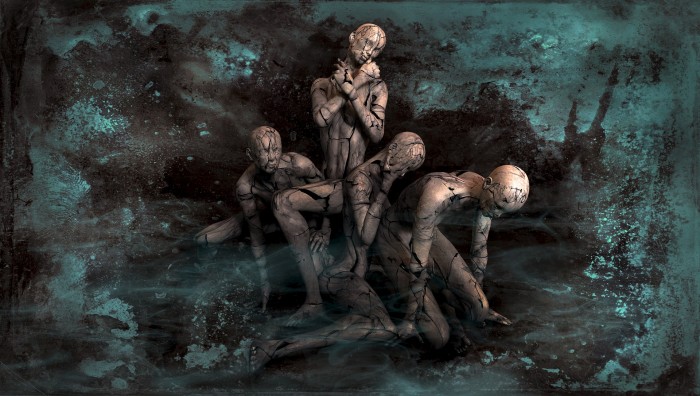
broken amnnequins

Image by Stefan Keller from Pixabay. If you think about it, the Muses are incredibly creepy.

Good morning, Readers!

Back in the day, just a bit before my time, creativity was once thought to be an external force. It was a supernatural intervention, the whispering of a deity in the ear of her fortunate unfortunate, compelling them to create in a fugue of mystical madness… probably. It’s likely I made that up. I have no citation.

It’s a myth that appears to have a rather oddly long life. Still to this day, people talk of creativity as if it’s some strange external thing. They do the same with talent, as if either are some kind of divine gift… or curse (some days, folks. Some days). The fact of the matter is, it’s not some strange magic. There are no spirits whispering in one’s ear, commanding creation, directing creativity.

Creativity, and talent for that matter, is a skill. It is a muscle that has been exercised relentlessly. From youth, creativity is fed on a steady supply of stories of the impossible, mind-bending images, and lots of time to ponder and play. Talent’s diet consists simply of practice. Hours and hours of practice. These things, when given freely and often in a person’s youth, creates a solid foundation for creativity.

This skill must be nurtured, the muscle flexed often, or it is lost. Like most things that are done in this manner, creativity as part of a routine can appear effortless to the outside eye. No one really sees the years of effort, practice and failure that goes into the effortless exertion they are witness to. The creative knows.

Read More Read More