Browsed by
Category: Blog Entry

Worlds Within Worlds: The First Heroic Fantasy (Part III)
Worlds Within Worlds: The First Heroic Fantasy (Part III)

William MorrisThis is the third in a series of posts looking at the question of who wrote the first otherworld fantasy: that is, the first fantasy to be set entirely in its own fictional world, with no connection to conventional reality at all. It’s an innovation traditionally ascribed to William Morris, but I think I’ve found an earlier writer who deserves that honor.

In the first post, I considered how to identify a fictional otherworld. I suggested four characteristics, of which a story’s fictional world needed to have at least three to be a true otherworld: its own logic (which might involve, say, the existence of magic), characters who we identified as residents of another world than our own, a coherent history, and a coherent fictional geography. In the second post, I considered ways in which older fantasies were linked to reality — by being set in the past, or in a place beyond contemporary knowledge, or being established as a dream, or as a story within a story, or as a myth. I concluded by discussing what I felt was significant about the idea of otherworld fantasy.

Before going on to present my suggestion for the writer of the first otherworld fantasy, though, I’d like to take a closer look at some past fantasies I thought came very close to presenting self-contained otherworlds. These are works which I don’t think are true otherworld fantasies, but which other people might choose to see as such.
Read More Read More

Of Policed Identities and Public Urination: A Review of The City & The City

Of Policed Identities and Public Urination: A Review of The City & The City

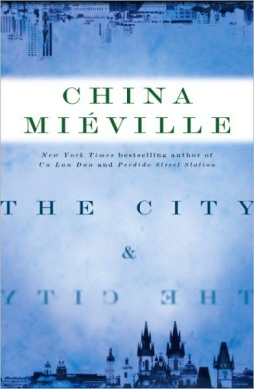
city2The City and the City is a murder mystery. That is the first thing. Miéville makes it perfectly clear: the book explicitly follows the rhythms of this genre, the steps as strictly defined as the rules of a sonnet: the death, the jaded, world-weary but still tender-hearted investigator, the discovery that the victim was not quite what she seemed, the additional deaths, the dead ends and red herrings, the gathering momentum, the Explanation between murderer and detective, slotting all the puzzle pieces together in front of all the characters assembled, the wry denouement.

And the fact that an almost superciliously correct mystery can blend so perfectly with the surreality of a fantasy of superimposed cities is due to the fact that, as Miéville says in the Random House Reader’s Circle interview at the end of the book, the crime novel is “at its best, a kind of dream fiction masquerading as a logic puzzle. All the best noir – or at least I should say the stuff I like most – reads oneirically. Chandler and Kafka seem to me to have a lot more shared terrain then Chandler and a true-crime book.”

Spoilers below the cut. Don’t read them. It just tied for the 2010 Best Novel Hugo – just go read the book!

Read More Read More

Short Fiction Roundup: And the winners are…

Short Fiction Roundup: And the winners are…

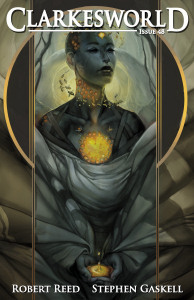
cw_48_3001

The 2010 Hugo Award winners for various short fiction categories:6a00d8341ce22f53ef0105365ac432970c-200wi1

Best Novella: “Palimpsest” by Charles Stross (Wireless)

Best Novellette: “The Island” by Peter Watts (The New Space Opera 2)

Best Short Story: “Bridesicle” by Will McIntosh (Asimov’s 1/09)

And the best semiprozine goes to an online pub: Clarkesworld, edited by Neil Clarke, Sean Wallace, & Cheryl Morgan, the current issue of which features stories by Robert Reed and Stephen Gaskell.

Dragon*Con Report Part 2

Dragon*Con Report Part 2

dragonconlogoI said a few words about Dragon*Con itself in Part 1 of my con report.  In this one, I’d like to share our experiences at the largest science fiction and fantasy convention in North America.
After a long  journey,  Black Gate publisher John O’Neill and I reached  Atlanta late Thursday afternoon. Reviews Editor Bill Ward acted as our elite scout, and was not only waiting with con badges, but had scoped out the route we’d need to follow to unload our boxes and boxes of Black Gate magazines and vintage science fiction paperbacks. While John and I have been corresponding with Bill Ward for several years, we’d never before met him in person, and it was a pleasure to be able to do so. Bill proved to be just as indispensable, organized, and articulate as he is online, and possessed a dry, quick wit as well.

Jason Waltz, owner of Rogue Blades Entertainment, shared a quarter of the booth with us, and although he and his friend John Whitman had driven down from Milwaukee and we had driven down from Illinois and Indiana, we somehow arrived within a few minutes of each other without coordination. I doubt it would have worked out as well if we’d actually planned it. Between the five of us we managed to get all the Black Gate gear and RBE gear unloaded within an hour. Unpacking it and putting it on display took a bit longer, and required additional time the following morning.

Read More Read More

English Gothic: Britain Goes to the Movies

English Gothic: Britain Goes to the Movies

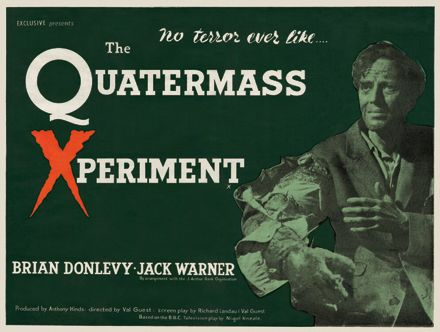
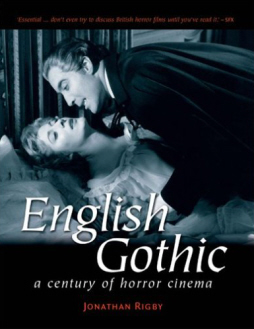
english-gothic2Jonathan Rigby’s ENGLISH GOTHIC (2000) is an excellent survey of British horror and science fiction films. Misleadingly subtitled A CENTURY OF HORROR CINEMA; the book focuses instead on the 20 year period from THE QUATERMASS XPERIMENT (1955) through TO THE DEVIL, A DAUGHTER (1976) when British production companies like Hammer, Amicus, and Tigon consistently outperformed the Hollywood majors in producing the finest and most influential genre films.
Part of the book’s strength is not just Rigby’s detailed and chronological survey of nearly every genre film to come from the British Isles during these two decades, but the fact that he captures the social and economic factors that helped shape the pictures and, more importantly, the public’s reception to them.

The rise of the horror genre in film started with the German Expressionist classics of the silent era and the contemporary Lon Chaney and John Barrymore efforts in the States. The genre solidified with the phenomenal impact of Universal’s horror franchises of the 1930s and 1940s.

The interesting thing here is that the majority of these films remained unscreened or else limited to adult-only audiences in the UK where censorship was extremely puritanical in the first half of the last century.

Read More Read More

Goth Chick News: Would You Like Some Wine With That Cheese?

Goth Chick News: Would You Like Some Wine With That Cheese?

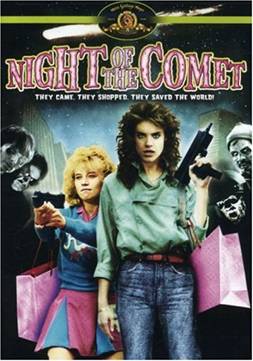
image006Before this, I was already obsessed with my Wii gaming system. On evenings following particularly stressful bouts at my “day job,” I can generally be found playing House of the Dead 3 on two-person mode; armed with the pistol in one hand and the machine gun in the other. Nothing says “stress relief” like laying waste Rambo-style to a seemingly endless parade of the undead.
Needless to say, everyone knows better than to ring my cell phone during “killing dead things” time, which is a lot like “story time” if I had kids, only different.

But obsession went a step further to borderline mania when Netflix introduced their “instant download” option using gaming systems like the Wii and Xbox. With a bit of simple programming, a wireless modem and a $2 monthly subscription, you can choose from an impressive menu of movie options, downloading with the lightening speed I can only dream about for my laptop internet connection; such as a two hour movie in under 15 seconds.

Add this to my wet bar and bathroom, and frankly I see no compelling reason to ever come out of the basement.

Read More Read More

The Weird of Cornell Woolrich: “Kiss of the Cobra”

The Weird of Cornell Woolrich: “Kiss of the Cobra”

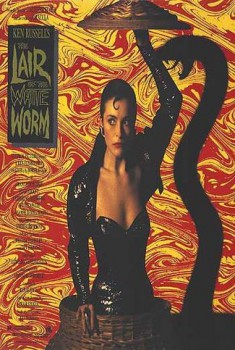
lair_of_the_white_wormNo, this isn’t a review of the Ken Russell film The Lair of the White Worm. The poster just fits so well with Cornell Woolrich’s 1935 story “Kiss of the Cobra” that I had to use it. You would almost think Russell was adapting Woolrich, not Bram Stoker.
My three previous installments exploring the fantasy and horror tales of suspense author Cornell Woolrich have all looked at classic works from his typewriter: “Jane Brown’s Body,” “Dark Melody of Madness,” and “Speak to Me of Death.” However, Woolrich was a prolific pulpster, and sometimes he pounded out sub-par work because the hotel room bill had to be paid. Any Woolrich fan can whip out a list of the writer’s suspense stories that simply made him or her cringe—and not positively. I’m as hardcore a Woolrich aficionado as you will likely find, and even I have to admit that some of his lesser stories are dreadful. His exploration of vampires, one of his potentially intriguing side trips into the supernatural, “Vampire’s Honeymoon” (later revised and retitled “My Lips Destroy” so Woolrich could sell it as a “new” piece), is the single most clichéd work about vampires I’ve ever read. Only the staking of a vampire using a broken hockey stick makes it remotely interesting. I can’t imagine Woolrich spent more than two hours cranking it out and then sending it off. It’s an indication of the power of Cornell Woolrich’s name on the front of pulp magazines of the time that it sold on its first try.

But some of Woolrich’s mid-level work deserves attention, and “Kiss of the Cobra” falls solidly into his opus of “weird stories.” It examines the concept of “foreign other” with fantasy displays that hint at black magic, contains richly sensual prose, and has a liminal sense of a were-creature. The suspense and hard-boiled crime aspects are also well executed, even if the mesh of the two sides isn’t that smooth. Much greater work was to come, but with all its flaws (such as the standard pulp era’s Euro-centric view of India and a protagonist given to generic wise-crack dialogue) the story remains worth visiting for horror and suspense enthusiasts.

Read More Read More

Dare We Dream? – The Sandman Coming to Television?

Dare We Dream? – The Sandman Coming to Television?

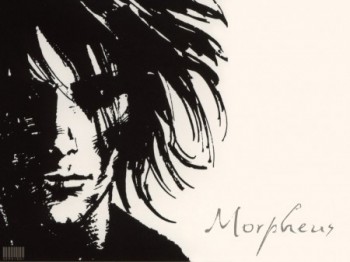
morpheusMany of my contemporaries believed that one of the most amazing comic book series ever was Neil Gaiman’s The Sandman, which ran from 1989 through 1996 – formative teenage years for me and my peers – originally by DC Comics and (from issue #47) under their Vertigo imprint. Now it looks like The Sandman has been re-optioned for consideration as a television series. Though the series creator isn’t associated with the show, there’s still reason to be hopeful.
A Current Dearth of Viewing Pleasures

The last few years haven’t been great for science fiction and fantasy on television. Heroes started out great, but quickly collapsed for a variety of reasons. The quirky series Pushing Daisies – about a man who could re-animate dead people for 60 seconds – never quite found its audience, despite critical acclaim. Legend of the Seeker was pushing out some impressive storylines toward the end, but was ultimately canceled with its season 2 finale.

Among harder science fiction, great concept shows like Dollhouse and FlashForward suffered from some awkward initial storytelling and were ultimately cancelled, while the lackluster V will return for a second season.

In fact, going into this season there isn’t much in the way of science fiction or fantasy on television.

Read More Read More

Mortals, Meet Goblins: A Review of Goblin Fruit Magazine (Part I)

Mortals, Meet Goblins: A Review of Goblin Fruit Magazine (Part I)

gobspr08cropIt was a cool November night in 2007. It was, in fact, All Souls Night.
Two friends and I had driven all day from Chicago, Illinois to Saratoga Springs, New York for the World Fantasy Convention. The Open Mic Poetry Reading I wanted to attend started at 10 PM, so there was barely enough time to dump our things in our room and slide into Broadway 1, all bedraggled and a bit unnerved.

The room was crowded, the poets plenteous and eager. I’d planned to recite “Sedna,” which is one doozy of a story-poem, but as the moderator was looking slightly harassed at her list of readers, I assured her I’d go at the end, and only if there was time. The mood I was in, I’d probably have been happy just to tuck tail and run.

Then the poetry began.

Read More Read More

Worlds Within Worlds: The First Heroic Fantasy (Part II)

Worlds Within Worlds: The First Heroic Fantasy (Part II)

William MorrisThis is the second post in a series trying to answer what looks like a simple question: who wrote the first fantasy set entirely in another world? As I found in my first post, to answer that question you first have to decide how to define a fantasy otherworld. I came up with a list of four characteristics: whether the world has a distinct logic to it, such as the use of magic; whether the people in the world are meant to be perceived as residents of this world; whether the world has its own history; and whether it has its own geography. It seems to me most otherworlds have all four characteristics, with a few interesting cases getting by with three. Any less than three, and you don’t have an otherworld.
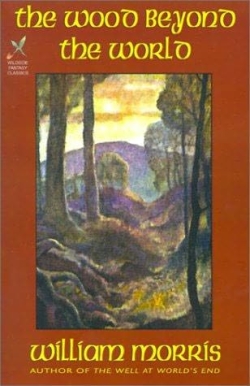
Now, traditionally, William Morris has been considered to be the first writer to have set a story entirely in a fantastic otherworld; that is, to write a story in which the real world as we know it never appeared. His was the name suggested by Lin Carter and L. Sprague de Camp, it was accepted by John Clute and John Grant in their 1997 Encyclopedia of Fantasy, and it’s found a place in the repository of all human knowledge, Wikipedia. I, however, am disagreeing; I’ve found an a writer from a few decades before Morris who wrote something that seems to me to be an otherworld fantasy.

Before naming that writer, though, I’d like to tackle a related question. And that is: why did it take so long for somebody to come up with the idea?

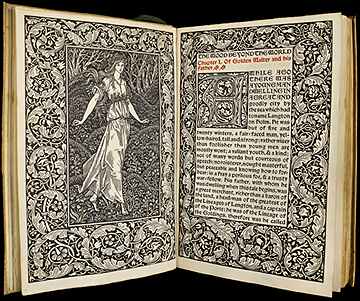
Consider: Morris’ The Wood Beyond the World was published in 1894. Even if the first otherworld fantasy was in fact a few decades earlier, then people were still telling tales for thousands of years before coming up with the idea of an independent world (it would be interesting to see when the term ‘world’ began being used in criticism, as in ‘the world of Dickens’ or ‘Shakespeare’s green world’). Why the long delay?

Read More Read More