Browsed by
Category: Blog Entry

Game Review: Conquest of Nerath

Game Review: Conquest of Nerath

No matter if its the cover or the interior shots, this game's art is off the hook
No matter if its the cover or the interior shots, this game’s art is off the hook

In my lifetime I’ve played a lot of games, some more than others, but if any board game stands out above the rest as eating away massive chunks of my time it’s the WWII classic Axis and Allies. In the 80s, upon the game’s release, I fell in such deep infatuation with this game that I actually left it out on a table in my living room and played against myself for the length of an entire summer. Yeah, you know how you see ‘smart people’ in movies playing chess against themselves? Well, that was me and Axis and Allies.

I was so devoted to it, that I’ve actually only lost a single game in twenty-six years, and that was the first one I ever played [although I do have a draw in there someplace].

Now, you might be wondering why I’m bringing Axis and Allies up in a post concerning Wizard’s of the Coast’s new epic game Conquest of Nerath. Well, quite simply, because in all my years of gaming, and all the games I’ve played, I’d yet to find something in the same realm of awesome as A&A until I sat down to play Conquest.

Read More Read More

Goth Chick News: Kolchak Stalks Again

Goth Chick News: Kolchak Stalks Again

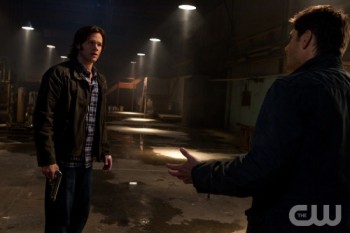
image0101You remember him, I know you do.

A wise-cracking, would-be-hard-bitten newsman in a battered seersucker suit and straw hat looking like he just stepped out of a 1940’s gumshoe flick — except for that slick, yellow Ford Mustang convertible he’s tooling around in.

But Carl Kolchak took a wrong turn somewhere and ended up in a couple of 1970’s TV movies and a short-lived TV show in which he kept stumbling across increasingly outrageous news stories that not only put his life in imminent danger, but inevitably involved horrific supernatural or paranormal beings.

Cue the distinctive, whistled theme music and pull up a 1970’s faux leatherette lounge chair (orange preferably); it’s time for The Night Stalker

Read More Read More

The New Kid

The New Kid

tsAs one of the new recruits here at Black Gate, I’ll be bringing you a series of what I hope you’ll find to be interesting posts soon enough. But first I wanted to say howdy and tell you a little bit about myself.

I’m Liz. I’m an Academic by training: a Classicist to be precise, and a philologist to be downright pedantic. (My dissertation was written on ancient cognitive theory, the philosophy of emotion, ethnography, and Lucan, but I promise if I bring up Aristotle here it will be purely for the “COOL!” factor.) Words are what I do. I’m a writer by hobby and a geek out of sheer passion. Above all else I love story, in all its forms. Told over a set of dice, in verse, interactively through a video game, on the big screen, small screen, or in ink and paper, it’s the blood in my veins.

So what will I be doing here?

Every story needs a setting, and before Narnia, Middle Earth, and Wonderland there was Aeaea, Asgard, Hyperborea, and the Land of the Lotus-Eaters. As long as we have been telling stories we’ve been inventing new worlds to set them in, and my goal is to spend some time exploring these worlds. I’ll begin with my own bailiwick, which is the Greco-Roman world, and go from there. I am, of course, eager to hear any suggestions any of you might have.

Walk with me, if you’re so inclined, and let’s see what we shall see.

Art of the Genre: Leiber, Mignola, and Graphic Novels

Art of the Genre: Leiber, Mignola, and Graphic Novels

Mignola... when doves fly...
In 1991 I wasn’t a fan of the Mike Mignola. To be frank, I actually couldn’t stand his artwork, but again I was twenty and my taste in art leaned much toward the polished standard and less toward the truly talented.

At that time I also wasn’t much of a reader. Sure, I read almost every day, taking in as much fantasy as I could, but for the most part it was also commercially driven stuff that in the final call of ‘what matters in fantasy’ it would almost all be found woefully lacking.

So it was with great interest that I discovered Epic Comics rendition of Fritz Leiber’s Fafhrd and the Gray Mouser on my comic shop’s shelves. It was noteworthy because it featured art by Mike Mignola, was adapted by Howard Chaykin, and had a kind of darkness to it that was antithesis to the flare of most superhero books coming out of the early stages of the comic boom.

For me this series created a kind of enigma, that being that I loved fantasy but had only associated with Fritz Leiber in the TSR gaming supplement Lankhmar: City of Adventure. [Note: At the time I role-played in TSR’s Lankhmar, the song ‘One Night in Bangkok’ was on the radio and to this day I can’t say the world Lankhmar without setting it to a British vocal intonation accompanied by the words ‘City of Adventure’, just as Murry Head would began his song with ‘Bangkok, Oriental Setting’. BTW, it has to be the only Top 10 song in history that makes Chess seem downright cool.]

Read More Read More

Masterpiece: The Sword of Rhiannon by Leigh Brackett

Masterpiece: The Sword of Rhiannon by Leigh Brackett

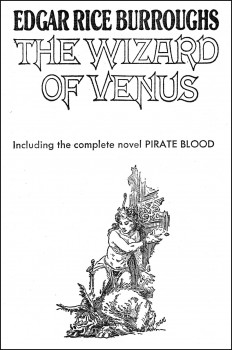
PZO8005-Cover.inddI committed a major heresy, in public and on record, against the sword-and-sorcery community when I stated on the recording for a podcast that, in the realm of “sword-and-sorcery” fiction, I prefer Leigh Brackett over Robert E. Howard. Although at least one participant on the podcast seconded my opinion, I do understand why most sword-and-sorcery readers cannot go with me on this. Howard is, after all, the Enthroned God of the genre. And, strictly speaking, Brackett did not write fantasy or historicals. Her specialty was action-oriented science fiction with heavy fantasy influences, the sub-genre of science-fantasy known as “planetary romance.” (Sometimes called “sword-and-planet.” I hate that term.)

I love Robert E. Howard’s work; it’s foundational for me. But, it’s “not that I love Howard less, but that I love Brackett more.” To that extent, I want to promote the sheer awesomeness that is Leigh Brackett whenever I can. And in her 1949 novel The Sword of Rhiannon (buy it here!) she reached what I believe is her apex: a planetary romance set across an ancient version of Mars, crammed with sword-swinging action, pirate-style swashbuckling, alien super-science, a hero as flinty as granite, an alluring and surprising femme fatale warrior, and an overarching theme of redemption, loss, and futility that ends up pushing what sounds like a standard adventure into a work of intricacy and overwhelming emotion.

Leigh Brackett (1915–1978), a long time resident of the same neighborhoods in Los Angeles where I grew up and still live, was a student of Howard’s work and an immense admirer. However, she didn’t copy him when she started her own career, but infused his passionate style with her own passions. Brackett shows the influence of other predecessors — Clark Asthon Smith, A. Merritt, C. L. Moore, Henry Kuttner, Otis Adelbert Kline, Edgar Rice Burroughs — but her mixture is blended so perfectly that all of it feels fresh and driven. I just finished another re-reading of The Sword of Rhiannon, and I am as thunderstruck as ever with how damn great Leigh Brackett was at what she did. Even more, I am awed at how modern her tale feels, even though the outer hull shows it as an old-fashioned pulp romance. Not that there’s anything wrong with the old pulp style; I still read Edgar Rice Burroughs avidly. But Brackett to this day stands in a class of her own.

Read More Read More

Game Review: Dragon Dominoes in Looney Labs’ Seven Dragons

Game Review: Dragon Dominoes in Looney Labs’ Seven Dragons

sevendragons_1Two of my favorite card games come from Looney Labs: Fluxx and Chrononauts.  One of the major selling points of these games, for me, is that they’re creative games that have victory conditions that can change on a dime. You can be close to winning and then, with a lucky and well-played turn by an opponent, you can find yourself on the losing end.

Seven Dragons captures this chaotic feel, mixing it with some great fantasy artwork by Larry Elmore. The name comes from two different aspects of the game:

  • There are seven different colors of dragons represented in the the game: red, black, gold, blue, green, silver, and rainbow
  • The goal of the game is to create a chain of seven dragons of your designated color

Read More Read More

Apex Magazine #26 Released

Apex Magazine #26 Released

bigcover-239x300Apex Magazine is a monthly on-line publication of science fiction, fantasy and horror edited by Catherynne M. Valente.

The issue features three stories: “The Neighborly Thing to Do” by T.J. Weyler, “The Widow and the Xir” by Indrapramit Das and “The Rapid Advancement of Sorrow” by Theodora Goss. Paul Jessup’s non-fiction piece is “The Top 10 Experimental Genre Books You’ve Never Heard Of.”

Apex Magazine is sold online for $2.99; it’s also available in Kindle, Nook, and a downloadable format through Smashwords. Previous issues are available through their  store. We last profiled Apex with Issue 23.

You can subscribe and get 12 issues for just $19.99.

Art of the Genre: The Critical Hit Update

Art of the Genre: The Critical Hit Update

tank_the_dragon_-_text_beneath_box-300Well now, I’m making this special appearance because I promised Zachary, who I haven’t seen in some time actually, that I’d post up news on The Critical Hit. News, you see, has finally happened, although it all seems very mixed at the moment.

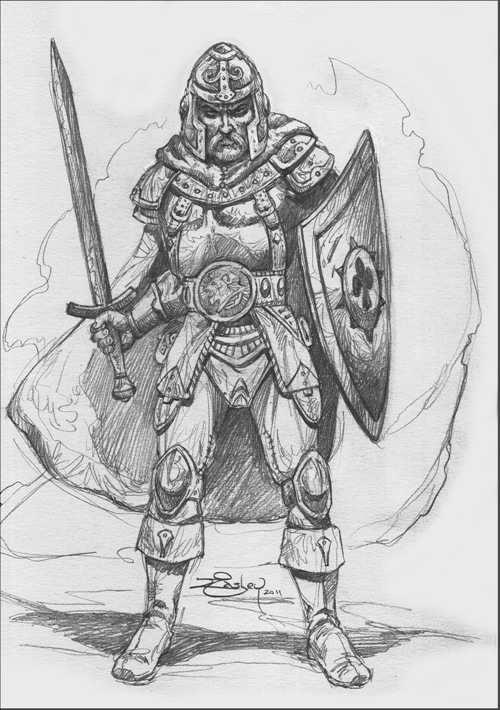
A few months back, after posting several comics here in Black Gate, Jeff Laubenstein and I sold our comic, The Critical Hit, to Wizards of the Coast for a new website comic launch they were going with this summer. It was a kind of veneration to the old Dragonmirth comics found in the back of Dragon Magazines, so I thought The Critical Hit fit very nicely with that concept. So did Jon Schindehette the Creative Director at Wizards, and so Black Gate’s loss was to be Wizards gain.

Today, Friday the 8th, the test of The Critical Hit went live over at the Wizards D&D website so I hope that all of you who enjoyed the few comics I posted here will journey on over and take a look at it here. We’ve been getting beaten up a bit in the comments section, so if you do like the piece and would like to see it continue, please sign in and comment yourself. Otherwise, I guess I won’t see you in the funny papers!

The Nightmare Men: “A Doctor, Darkly”

The Nightmare Men: “A Doctor, Darkly”

800px-carmillaIt’s always best to begin at the start, to quote no one in particular. We’ll start with the introductions: my name is Josh Reynolds and I wanted to be a detective when I grew up…no, not just a detective.

I wanted to be an occult detective. I wanted to be Donald Pleasance hunting down the Horse of the Invisible, or Peter Cushing making a cross out of candlesticks and shoving them right all up in Christopher Lee’s fang-y mug. I wanted to be Carl Kolchak, Thomas Carnacki and Dr. Strange. I wanted to bust up eldritch cults, Draculas and devil-worshipping biker gangs.

Unfortunately, my wife won’t let me. So, instead, I scratch the monster-hunting, ghost-busting itch by writing…well, stuff like this. ‘This’, of course, being ‘The Nightmare Men’ (of which this is the first installment, natch), a series of semi-regular essays on the subject of occult detectives; one part introduction, one part analysis, all awesome, all the time. Basically, if you’ve ever wanted a primer on occult detectives, the Nightmare Men is for you. And we begin with the granddaddy of them all…

Sheridan Le Fanu’s Dr. Martin Hesselius.

Read More Read More

Blogging Marvel’s The Tomb of Dracula, Part Nine

Blogging Marvel’s The Tomb of Dracula, Part Nine

tod-44The Tomb of Dracula #44, “His Name is Doctor Strange” kicks off the series’ crossover with Marvel’s flagship occult title, Doctor Strange. The crossover was a natural choice given the characters and the fact that artist Gene Colan had a past association with Marvel’s Master of the Mystic Arts. Admittedly, the physical resemblance between Colan’s rendition of Stephen Strange and the Lord of Vampires is a bit too close for comfort, but Marv Wolfman delivers a solid script that makes the crossover fun despite failing to live up to the potential of what the meeting between these two characters might have been.

The story gets underway with Strange retrieving his faithful manservant, Wong from the crystal ball he had mystically disappeared into only to find his valet has been bitten by a vampire. Strange enters the crystal ball and visits the past to see Wong interrupting Dracula’s attack on an innocent woman and then watches through Wong’s eyes as the vampire turns on his manservant. This intriguing set-up sets Strange off to put an end to Dracula’s reign of terror. From here, we segue to a largely pointless comic relief subplot where tabloid journalist Harold H. Harold is incensed to learn that his publisher’s sexy, but dimwitted receptionist Aurora Rabinowitz has sold her story about their encounter with Dracula and earned a byline.

ds-14From there, we move to the much more interesting subplot involving the white-haired vampire who is being sought by both Blade and Hannibal King. The actual conflict between Dracula and Dr. Strange comes off rather well with the sorcerer tracking the vampire to his coffin and entering an astral battle with the vampire in 15th Century Wallachia. Unsurprisingly, Strange underestimates the vampire’s hypnotic powers and is attacked and bitten by Dracula. The issue’s real climax sees Blade and Hannibal King meeting for the first time on the trail of the white-haired vampire who ruined both of their lives.

Doctor Strange #14, “The Tomb of Doctor Strange” concludes the crossover with Steve Englehart’s script fitting as seamlessly into Wolfman’s storyline as Wolfman did with his in the first part. This uncommonly effective crossover can be contributed to the fact that Wolfman edited both titles. As the story gets underway, we learn that Strange’s astral form is still free while his physical body has fallen victim to the vampire. More significantly, Dracula first stumbles upon the deconsecrated Boston church in this issue which will play such an important role in the next story arc. Englehart also begins a continuing storyline with Dracula being pursued by an unseen spirit who taunts him with visions from his past. Dracula returns to feast on Strange and the magician’s astral form re-enters his body, awakening him. Strange calls on Jehovah and creates an astral cross which causes the vampire’s death. The effects of Strange and Wong’s vampire bits are reversed with Dracula’s death at the issue’s rushed conclusion.

Read More Read More