THE ART OF RICHARD ANDERSON: Princes, Kings, and Sorcerers
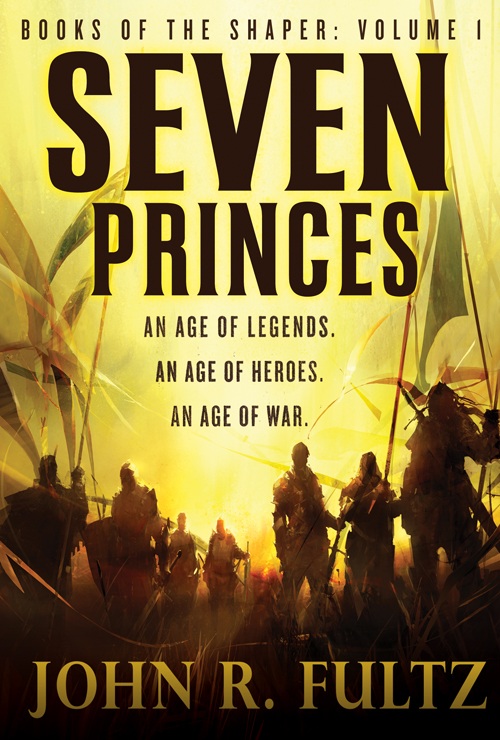
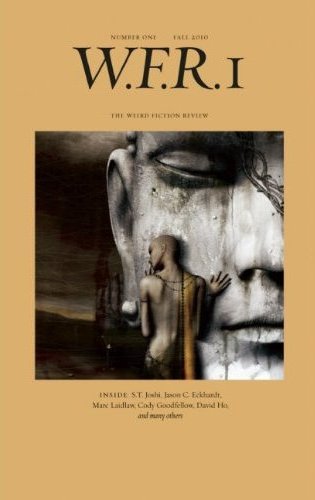
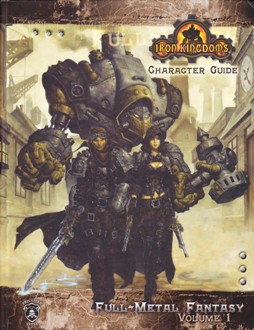
Rich Anderson grew up in Montana, moved to Seattle in 2000, and went on to revolutionize the field of fantasy art by incorporating classic concepts with digital virtuosity. He’s been an illustrator for Wizards of the Coast, Guild Wars, Tor, Random House, and this year Orbit Books tapped him to do the cover for SEVEN PRINCES.
Praise for the book’s striking cover has been both loud and frequent. Rich’s “golden sunset” silhouette approach provides an iconic image that is perfect for the novel. I’ve also seen his advance sketch for the cover to SEVEN KINGS–it’s going to be another masterful vision. He will also be doing the cover for SEVEN SORCERERS, the Third Book of the Shaper.
Rich’s art is turning heads everywhere, so I thought I’d probe the mind of the Artist Himself in a brief yet enlightening interview. More of his work can be found at his web site and blog: http://www.flaptrapsart.com/
JRF: Who are your biggest artistic influences?
RA: I would have to say John Singer Sergent. Love the way you can almost see his decision-making in his paintings. Frank Frazetta is another one of course, so much style and knowledge. There really is so many. I find so many people around me inspiring me probably the most [and] I’ve been very lucky to work with some amazingly talented people.
JRF: What is your typical day like? How often do you create pieces of art?
RA: I recently worked at The Moving Picture Company in London, doing concept work for visual effects and film work. In the beginning of January I’ll be starting at Framestore, working on pre-production concepts for film. Concept work is a lot different than my illustration work. It’s a lot more functional. My illustration work, like your cover, is where I get to play a lot more and just get into the “art mode” if you know what I mean. I love it.
JRF: Your art is such a terrific blend of classic fantasy imagery and modern digital style. How in the world do you achieve this unique and eye-popping blend of techniques? (Do you do part of the work by hand, or is every step done on the computer?)
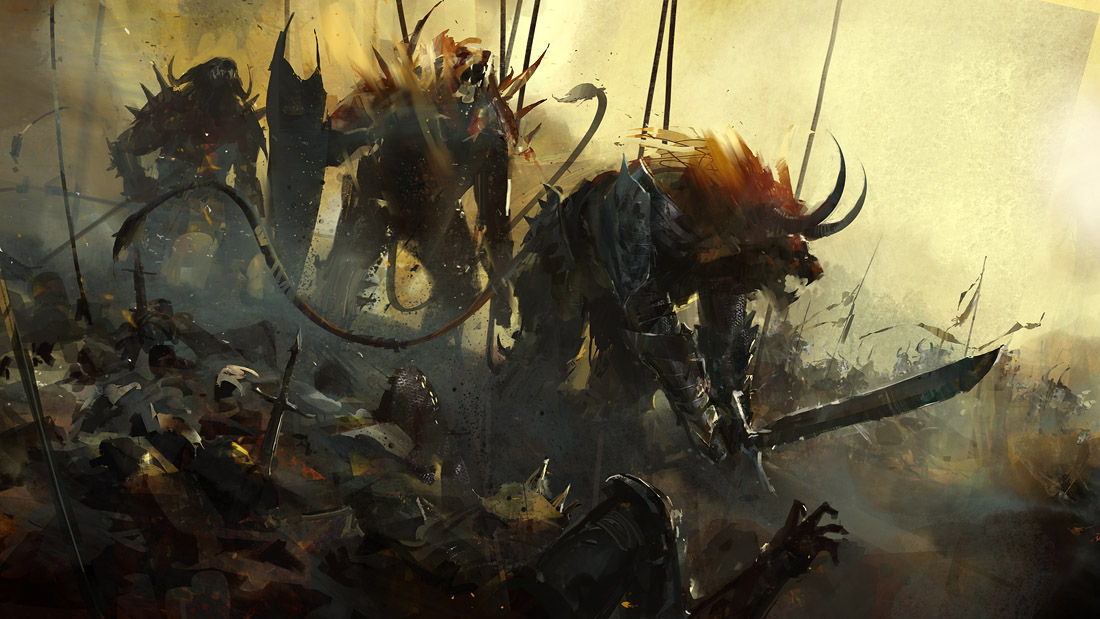
RA: Ha! Thanks. Yeah, everything is drawn right in Photoshop. I love playing with textures and blending things and trying to get stuff closer to what I love seeing in traditional pieces.
 The November
 Three years ago this week I posted my fist official article on the new Black Gate blog. I was one the original seven bloggers who answered John O’Neill’s call to make Black Gate online a place people wanted to visit again and again.