Browsed by
Category: Blog Entry

The Nightmare Men: “The Haunted Wanderer”

The Nightmare Men: “The Haunted Wanderer”

thumb_john_kirowanWhile Robert E. Howard is perhaps best known for creating Conan, he had his share of occult investigators of one stripe or another. There was Steve Harrison of River Street, Solomon Kane with his fiery Puritanism and cat-headed ju-ju staff and, of course, John Kirowan.

Kirowan is of an age and appearance with a number of Howard’s other characters, being tall, slender, brooding, and black haired — a Celt of the modern age. Sorrow hangs about him like a shroud, and his history is tragic. Though few agree on what form said tragedy might have taken, all believe that it has something to do with the years that he spent studying the occult arts in the black hills on Hungary and the secret places of Inner Mongolia.

What is known for certain is that Kirowan renounced these studies, and assumed the guise of a sceptic. But, when the nightmarish denizens of diabolical realms intrude upon the lives of his friends and companions, John Kirowan shows his true colours, and the haunted wanderer once more thrusts himself between the innocent and the devils in the dark.

Read More Read More

Blogging Alex Raymond’s Flash Gordon, Part Eighteen – “Jungles of Mongo”

Blogging Alex Raymond’s Flash Gordon, Part Eighteen – “Jungles of Mongo”

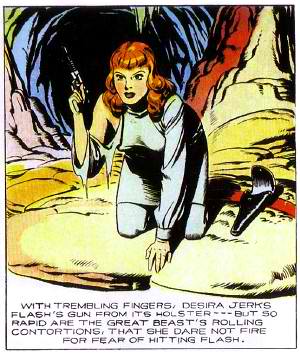
queendesira21jungles-of-mongo“Jungles of Mongo” was the eighteenth installment of Alex Raymond’s Flash Gordon Sunday comic strip serial for King Features Syndicate. Originally published between June 21 and November 1, 1942, “Jungles of Mongo” picks up where the preceding installment, “Queen Desira” left off with the seductive Queen and a bare-chested Flash riding the local steed, a gryph through the lush jungles of Tropica with Dr. Zarkov and Dale Arden bringing up the rear. Prince Brazor, who has usurped the throne of Tropica from Desira, releases a pack of bloodwolves to hunt them down.

Alex Raymond captures the beauty of Tropica’s flora and fauna with the same care and attention to detail that he demonstrated in some of his earliest Mongo strips. Flash fells a great tree so that the fugitives can travel down the river and, in a move that is now unthinkable, our hero deliberately sets fire to the forest to aid in their escape from Brazor and his bloodwolves. Of course, the cliffhanger nature of the serial demands constant peril and the fugitives quickly find themselves facing the Whirlpool Falls. Zarkov and Dale survive the falls, but Desira (whose top is provocatively torn going over the falls) is sucked into the whirlpool with Flash apparently sharing her fate in his attempt to rescue her.

Flash and Desira are carried by an underwater current into a cavern beneath the river. Flash climbs astride the prostrate form of Desira to perform artificial respiration to revive her when they are attacked by a giant cavernosaur, a cross between a seal and a plesiosaur. Flash kills the creature after a dramatic struggle. Don Moore’s script and Alex Raymond’s art wring every last bit of sexual tension out of the final panel with a trembling Desira in her torn clothes nestled against Flash’s heaving bare chest after his exertions against the carnivorous mammal. Moore notes that Desira ceases to be a Queen at that moment and is only a woman as she pleads with Flash to hold her.

Read More Read More

Goth Chick News: It’s All One Big, Dark Side to Me

Goth Chick News: It’s All One Big, Dark Side to Me

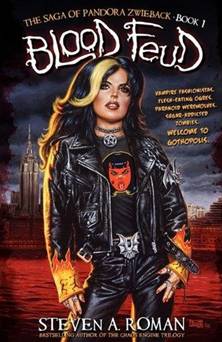
image0062I am not a huge fan of Star Wars.

Now, wait.  Before you start sending me emails of an aggressive variety allow me to say that there are aspects of the movies I like; quite a few actually.

However, I have to say that Lucas lost me with the whole militant teddy bear angle, and being that story line was fairly early on in the series, I never really got my Jedi mojo going.

But if there was one part of Star Wars that did consistently attract my attention it was…

Bet you can guess.

The Sith.

I suppose it’s the whole shadows – darkness – evil thing.  It resonates.

And you can bet George Lucas is well aware that even if there are people like me, who aren’t hard-core acolytes that can speak Wookie, he can still find a way to get me to buy in.

Literally.

Read More Read More

Revisiting The Chronicles of Amber

Revisiting The Chronicles of Amber

amberIn my never-ending quest to bring heroic fiction and sword-and-sorcery to a wider audience, I have been writing essays for National Public Radio. Last May they carried an article I drafted about three books reprinting pulp (and slick)  magazine treasures.

Today, as part of their Guilty Pleasures series, I waxed on about one of my very favorite series, Roger Zelazny’s Chronicles of Amber. I can’t say as I feel especially guilty about loving the first Amber series, although I do always have to mention a few caveats when I recommend it. For instance, I usually emphasize that I didn’t care nearly as much for the later sequel volumes.

I discovered Zelazny’s Amber at about the same time I read Fritz Leiber’s Swords Against Death and a whole slew of Michael Moorcock novels. As a young teenager, those stories effectively blew my mind. I can honestly say that there’s no fantasy series that had as great an impact upon me. Even today, some twenty years after my last reading, I can still quote portions extensively. If you’re a fan of heroic fiction and sword-and-sorcery, you really owe it to yourself to give it a try

If you want to know more about Amber, check out the article, and if you’re wanting to see more coverage of genre work at NPR I hope you’ll Like, Tweet, Recommend, or whatever else the page.

Art of the Genre: The Age of Perfect Creation

Art of the Genre: The Age of Perfect Creation

martin-300Perhaps some of you know of my utter disdain for George R.R. Martin. There are various reasons for this feeling, but this week I had a friend call me to complain about A Dance of Dragons, a book which I’ve refused to read. I must say, however, that I felt a great deal of satisfaction at his ire toward the novel because somehow that made my own dislike of Martin’s post-2000 work all the more valid. My friend’s thoughts were echoed by the bulk of Amazon reviews, and as I did a bit of research on what people were thinking about A Dance of Dragons I remembered my own experience with its predecessor in the Song of Ice and Fire series.

You see, the last Martin book I read was A Feast for Crows. I took it with me on vacation to St. Croix and read it under the tranquil skies of the Caribbean just a few months before my son was born. When I got to the end of the book, there was a note of apology placed there from Martin concerning the text I’d just read. Now I’m no rocket scientist, but if an author has to apologize to a reader AFTER they read his book, then you know you’ve been taken for a ride.

At that point I swore I’d never read anything by Martin again, no matter how much I loved A Game of Thrones, A Clash of Kings, and A Storm of Swords. In that promise to myself, I was vindicated by my friend’s words concerning A Dance of Dragons. Yes, at last a true victory for being a stubborn ass was mine to enjoy!!!!!!

However, after hearing this news concerning the latest volume, a couple of remembered quotes I’d read concerning writing started doing the rockem sockem robot dance in my head.

The first of these random quotes concerns Martin’s publication dates, and his extreme time lag between.

I like to get ten pages a day, which amounts to 2,000 words. That’s 180,000 words over a three-month span, a goodish length for a book — something in which the reader can get happily lost, if the tale is done well and stays fresh.

– Stephen King, On Writing.

Read More Read More

Patty on Podcastle!

Patty on Podcastle!

bgpatty2Don’t you love it when alliteration works out like that? I do.

You know what else I love? Patty Templeton’s story, “Fruit Jar Drinkin’, Cheatin’ Heart Blues.” On Podcastle. Right now.

Templeton is one of our bold and bonny bloggers here at Black Gate Magazine. (Here is her recent interview with Jeff VanderMeer.) Templeton herself was recently interviewed about her story “Fruit Jar Drinkin’, Cheatin’ Heart Blues” (which title I will repeat as often as possible, because isn’t it a FRIKKIN GREAT TITLE???) on Silver Goggles.

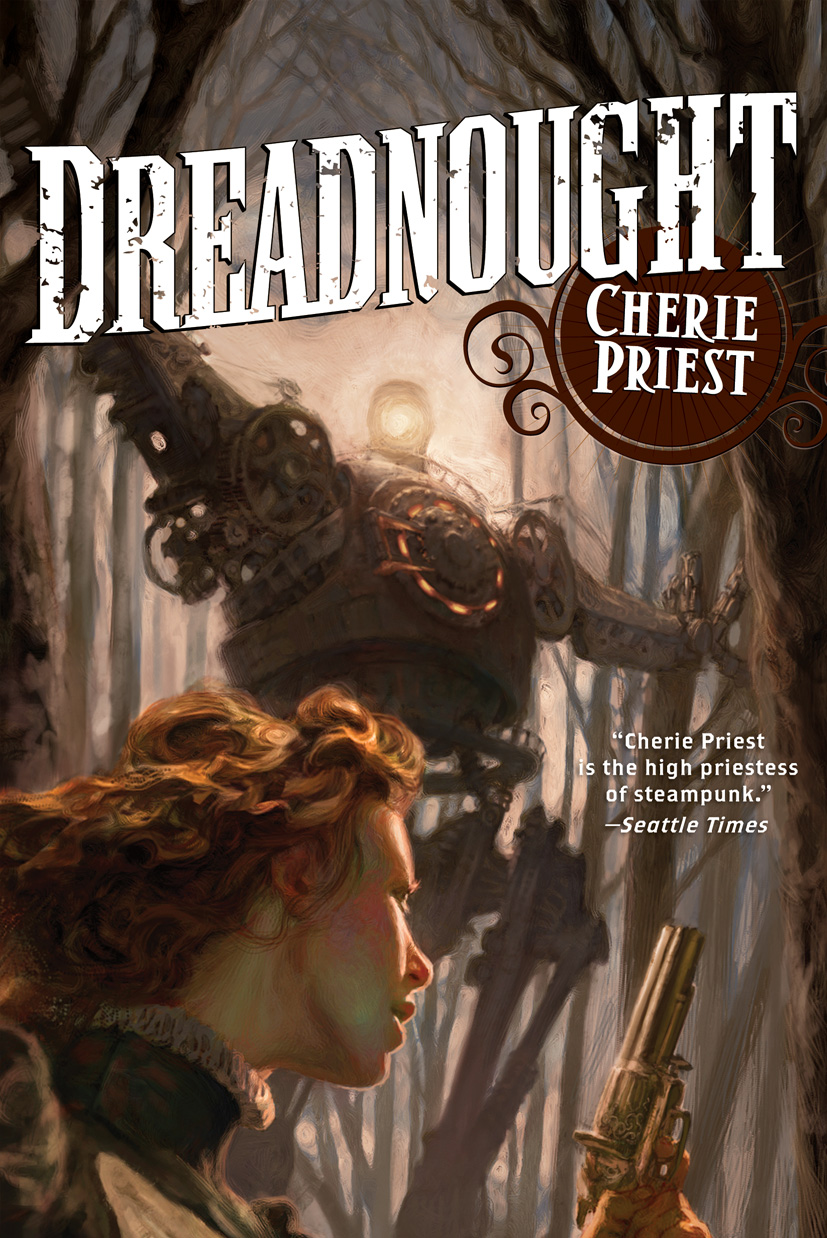
“Fruit Jar Drinkin’, Cheatin’ Heart Blues” is one of fifteen “thrilling and ingenious tales” in the new anthology Steam-Powered II. I can’t say too much about the anthology; after all, Yours Truly is one of the authors featured therein, so you’ll never be able to believe a word I say!

Just kidding — it’s great! Of course it is! Patty’s in it!  So is S.L. Knapp, Jaymee Goh, Sean Holland, Jeannelle Ferreira, A.M. Tuomala, Nisi Shawl, Stephanie Lai, Alex Dally MacFarlane, Rebecca Fraimow, Nicole Kornher-Stace, Shveta Thakrar and Zen Cho. What’s not to like, man? Or, more appropriately in this case: WOMAN?

Edgar Rice Burroughs’s Mars, Part 3: The Warlord of Mars

Edgar Rice Burroughs’s Mars, Part 3: The Warlord of Mars

the-warlord-of-mars-1st-editionAlthough there are still eight more books to go in the Mars series, with The Warlord of Mars I can bring to a conclusion Phase #1 of the saga: this completes the “John Carter Trilogy,” and the books that follow it take different paths with new heroes. John Carter will not return to the protagonist role until the eighth book, Swords of Mars, published twenty-one years later.

At the end of the thrill-ride of The Gods of Mars, John Carter lost his love Dejah Thoris in the Chamber of the Sun within the Temple of Issus. A whole year must pass before the slow rotation of the chamber will allow Dejah Thoris to escape. She may not even be alive, since the last moments that John Carter witnessed, the jealous thern woman Phaidor was ready to stab Carter’s love. Did she kill Dejah Thoris? Or did the noble Thuvia take the blow instead?

Readers hung on through the middle of 1913 until Burroughs brought a conclusion to the John Carter epic at the end of the year and made his hero into The Warlord of Mars.

Our Saga: The adventures of Earthman John Carter, his progeny, and sundry other natives and visitors, on the planet Mars, known to its inhabitants as Barsoom. A dry and slowly dying world, Barsoom contains four different human civilizations, one non-human one, a scattering of science among swashbuckling, and a plethora of religions, mystery cities, and strange beasts. The series spans 1912 to 1964 with nine novels, one volume of linked novellas, and two unrelated novellas.

Today’s Installment: The Warlord of Mars (1913–14)

Previous Installments: A Princess of Mars (1912), The Gods of Mars (1913)

The Backstory

With a cliffhanger ending to The Gods of Mars, Burroughs was ready to roll with the conclusion. It was a ferociously busy time in his life: All-Story rejected his second Tarzan novel — one of the most comically blockheaded decisions in the history of magazine fiction; he quit his day job and became a full-time author; his third son John Coleman Burroughs was born; days later, his father George Tyler Burroughs died. In the middle of all this, ERB plunged back to working on Mars. He never developed an outline for the trilogy, and so he took the wrap-up of John Carter’s story as it came, daydreaming down on paper.

Read More Read More

Book Review: Orson Scott Card’s Keeper of Dreams

Book Review: Orson Scott Card’s Keeper of Dreams

keeperdreamsKeeper of Dreams (Amazon, B&N)
Orson Scott Card
Tor (656 pp, $16.99, 2008)
Reviewed by Andrew Zimmerman Jones

Orson Scott Card’s novels (in hardcover, several autographed) own the lion’s share of the top shelf in my main bookcase. Though he is one of my favorite authors, I’ve read enough of his work to know that it can be, at best, inconsistent. Ender’s Game and Speaker for the Dead are science fiction classics and also modern classics of children literature. As a teenager, in tears when Ender and Valentine bid each other farewell in Speaker, I thought, “I want to write like this someday.”

But Card does not always hit the mark, either. Xenocide and Children of the Mind are nowhere near classics, even though they are part of the same series. While I have enjoyed all of the Ender’s Shadow books (featuring the secondary character, Bean, from Ender’s Game), they don’t possess the same magic, either. In some ways, they are better than the originals – better character motivation, better structure, better dialogue – but they are not classics. They are not better stories, just better plots.

Read More Read More

The Last Dragonslayer (if only it were true)

The Last Dragonslayer (if only it were true)

laOf potential interest to readers of this space is my review of The Last Dragonslayer by Jasper Fforde over at the SF Site.

This is one of those books where you know exactly what to expect. Which is not necessarily a bad thing. I know what to expect from Häagen-Dazs rum raisin ice cream and just because the high-fat content is not necessarily the best thing to consume doesn’t make the experience of eating it any less enjoyable.

If you’ve somehow managed to miss the Jasper Fforde juggernaut, he is the author of several serial parodies that variously poke fun at super agents and literary theory (Thursday Next), detective noir and kid stories (Nursery Crime Division) as well as dystopias and Wizard of Oz allusions (Shades of Grey). Think whimsical. Think smart-ass. Think about that unkempt guy in college who never attended classes but was obviously pretty smart and never at a loss for a wisecrack.

You’re thinking Jasper Fforde.

Art of the Genre: The Art of Kickstarter

Art of the Genre: The Art of Kickstarter

Abandon Hope... and yet we enter anyway... certainly one of the most iconic images from artist Jeff Easley

Kickstarter… the name in itself is evocative. I’m sure many of you have heard of this new website that supports creative people by giving them a place to ask for pledges in return for project assistance. It’s really an incredible took, and I blogged recently about a Kickstarter project done by former TSR artist Jeff Dee. His initial work with the fan-based pledge site got me thinking about what I wanted to accomplish in 2012.

I mean I had art contacts, right? In fact I had loads of them, so why not try to use some of the old school nostalgia I loved so dearly and market it toward others who felt the same way? In a sense, it’s kind of what Black Gate already does with each and every post on this site.

We get to relive awesome stuff from our past here all the time with stores about classic horror flicks, adventure movies, venerable series books, and comic book heroes. Black Gate, for all intents and purpose is a portal into a lost generation, or perhaps several lost generations.

So for all of you out there who have ever thought about doing something creative, and I mean anything, I’m going to run down how Kickstarter works and how it might apply to your dreams.

First, you have to come up with an idea, in my case I decided to do a project with legendary fantasy artist Jeff Easley. The concept was simple, I would write a short book like those found on dime store shelves in the 60s, 70s, and even the 80s that we all loved. You know the books I’m talking about, 45K words, 180 pages or so that you could read in 5 hours, and then get Jeff to cover it with an awesome old school Swords & Sorcery image. If we got enough pledges, he’d also do some original black and white interior work to help capture the tone. Simple, right?

Read More Read More