Browsed by
Category: Blog Entry

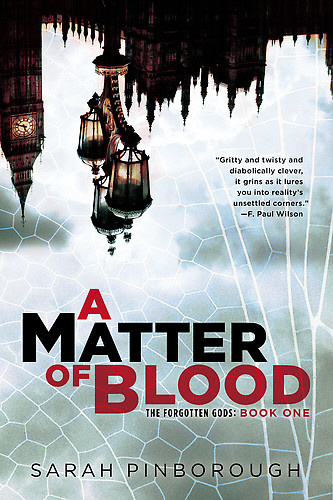
New Treasures: A Matter of Blood by Sarah Pinborough
New Treasures: A Matter of Blood by Sarah Pinborough

A Matter of BloodYou can’t judge a book by its cover.

But you know what you can judge by the cover? The cover. And since that’s an important part of a book, I guess you can make a successful partial judgment just by holding a book at arms length for a few seconds. Admit it — you do it all the time, I’m just giving you some air cover here.

Come to think of it, it’s a pity you can’t judge books by their covers. Because, man, that would save me a lot of reviewing time that I could put to good use playing Mass Effect.

Until that happy day, we’re stuck doing things the old fashioned way, with hours of bleary-eyed reading late into the night. Unless you’re like me, of course, picking through the weekly new arrivals until you find a cover that makes you say, “Whoa. That looks cool. I should tell people about it.”

Which brings us nicely to Sarah Pinborough’s new novel A Matter of Blood, the first volume of The Forgotten Gods trilogy. Which, if you haven’t guessed, has a great cover, with an upside-down London skyline and a cracked overlay that looks like reptilian skin.

And the book description sounds pretty intriguing too.

Read More Read More

Teaching and Fantasy Literature: Battles, Reluctance, and Service to the Sea of Stories

Teaching and Fantasy Literature: Battles, Reluctance, and Service to the Sea of Stories

We’ve come to the last installment of my review of Writing Fantasy Heroes: Powerful Advice from the Pros. It’s a peculiar book, different in several ways I have talked about before from other books on writerly craft. It’s specialized by both genre and cluster of techniques, and each chapter shows a noted author using examples from his or her own work to demonstrate how to use a particular technique well (or, in the case of early drafts, badly, followed by advice on revision). Although the book is, by design, most useful for the newcomer to writing fantasy, it has something to offer more seasoned writers, and it’s of great value to teachers of writing who specialize in, or are at least willing to engage with, genre fiction.

Paul Kearney’s piece on large-scale battle scenes is just what I hoped it would be. You know all the familiar gripes about fantasy warfare that fails the suspension-of-disbelief test: the army never seems to eat or excrete, never needs to get paid, charges its horses directly into walls of seasoned enemy pikemen, and so on. “So You Want to Fight a War” addresses all those mundane things an author must get right if the fantasy elements of her story are to feel real to the reader, and then Kearney pushes past the gripes into solutions that any conscientious author can learn to implement. It’s that last bit that I found truly refreshing — many discussions of military verisimilitude get bogged down in griping. Kearney assumes throughout that it’s possible for his reader to get this stuff right, with enough good models, research, and practice.
As in Brandon Sanderson’s chapter on “Writing Cinematic Fight Scenes,” the reader is urged to map the combatants’ positions in space. Of course, with at least two armies’ worth of combatants, what one does with the map is a little more complicated this time around:

Keep the map beside you as you write, and as the narrative progresses and the lines move and break and reform, annotate your map. By the end of the battle it should be covered in scrawls, but you will still see the sense within it. It should also have a scale, so that if you want one character to see another across that deadly space, you can gauge whether it’s possible or not. Battlefields can be large places, miles wide. Our ten thousand men, standing in four ranks shoulder to shoulder, will form a line over a mile and a half long, and that’s close-packed heavy infantry such as Greek spearmen or Roman legionaries. If your troops are wild-eyed Celtic types who like a lot of space to swing their swords, it will be even longer.

Okay, that’s a little daunting, but Kearney also offers things like a breakdown of pre-gunpowder tactics into a set of relationships that he likens, persuasively, to rock-paper-scissors. If you can remember how that kindergarten game works, you can avoid some of the biggest beginner blunders in the genre.

Read More Read More

Sean T. M. Stiennon Reviews Child of Fire

Sean T. M. Stiennon Reviews Child of Fire

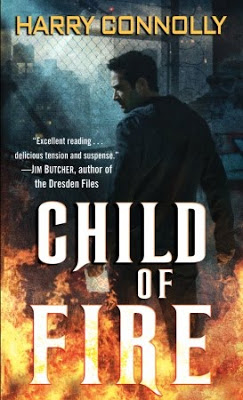
Child of FireChild of Fire
Harry Connolly
Del Rey (357 pages, mass market first edition September 2009, $7.99)

When we first meet Ray Lily, he’s in unpleasant circumstances. He’s less than 48 hours out of prison, driving a junker van through a Seattle rainstorm, and serving as chauffer to a boss who a.) is a powerful sorcerer, b.) wants to see him dead at the first possible opportunity, and c.) is paying him a wage of zero dollars per hour. Ten minutes after we meet him, he’s watched a boy die in front of his parents by exploding into sorcerous flame and melting into a swarm of silver worms. And then he’s watched the boy’s parents immediately forget they ever had a son, and drive away only vaguely confused.

It only goes downhill from there.

Child of Fire is a dark book. Sometimes shockingly, disturbingly dark, as is apparent right from the opening. That said, it’s also hugely entertaining, with noir-styled prose, a likeable narrator, and one of the most imaginative and horrifying monstrous adversaries I’ve ever encountered in fiction of any medium.

Our hero, Ray Lily, narrates the book in first person, and he bears comparison to hardboiled heroes like Philip Marlowe and Archie Goodwin, as well as the fantasy genre’s own Harry Dresden. He’s not quite as, well, heroic as Harry, though.  He’s a criminal, recently out of a prison sentence that came at the tail end of a car-jacking career in L.A. county, and he still has a tendency to sort everyone he meets into two categories: victim and dominant.

But mysterious circumstances surrounding the death of his childhood friend have pulled him into the shadowy world of the Twenty Palaces, a league of sorcerers formed to protect the secrets of magic from outsiders and to hunt down the supernatural entities known only as “predators.” These are hungry creatures from an extra-dimensional world called the Empty Spaces, who exist in a constant state of hunger. When summoned to our world, they can offer terrible power in return for a chance to sate that hunger on humans.

Read More Read More

Sword and Soul Revisited

Sword and Soul Revisited

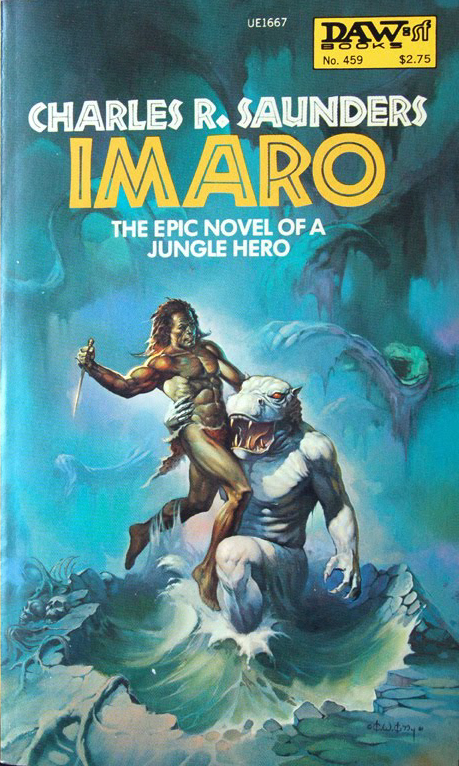
Imaro Charles SaundersFive years ago, I embarked on a writing and publishing journey, finally fulfilling a lifelong dream. By doing so, I unknowingly became a part of a legacy that began long before I decided to set fingers to keys to write my first novel.

Decades earlier, Charles R. Saunders sat before a different type of keyboard to create a character that added an important perspective to sword and sorcery, Imaro.  His motivation was similar to mine, although we came to the same conclusion years apart.

After falling in love with Robert E. Howard’s Conan and other stories and heroes that comprised Sword and Sorcery, he began to see the inequities. So to rectify the situation, he created Imaro, a man whose skills rivaled that of Conan’s, but whose world was grounded in African culture, history, and tradition.

My journey was sparked in a similar way, leading me to create my first Sword and Soul novel, Meji. Meji is a celebration of the diversity of the African continent, told through the story of twin brothers Ndoro and Obaseki.

It was coincidence that Charles and I were sparked to create characters from the same source; but it was fortuitous that we met through a mutual friend. It was Charles’s positive review of my Meji manuscript that convinced me that my decision to self-publish was the right thing to do.

But enough about me.  What’s been happening with Sword and Soul in the five years since my publishing company MVmedia hit the ground running?

A hell of a lot.

Read More Read More

New Treasures: Solaris Rising 2: The New Solaris Book of Science Fiction

New Treasures: Solaris Rising 2: The New Solaris Book of Science Fiction

Solaris Rising 2You’re not reading enough great short fiction.

You know it’s true. The question is, what are you going to do about it?

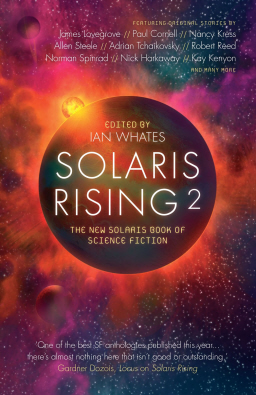
I have a suggestion (I know — when do I not?) You should read Solaris Rising 2: The New Solaris Book of Science Fiction.

Solaris has been a fast-rising brand in science fiction and fantasy for the past six years, since they were founded in 2007. Just in the past few weeks, we’ve covered several recent titles of note, including Juliet E. McKenna’s Dangerous Waters and The Good The Bad and the Infernal by Guy Adams. See? These guys are serious.

They’re serious about great short fiction, too. They started with three annual volumes of The Solaris Book Of New Science Fiction, edited by George Mann and published between 2007 and 2009. They relaunched the series last year as Solaris Rising, under new editor Ian Whates, and the book was a significant critical success.

Solaris Rising 2 looks like one of the best volumes yet. It includes stories by Mike Allen, Kay Kenyon, Nancy Kress, James Lovegrove, Robert Reed, Norman Spinrad, Liz Williams, Allan Steele, Kristine Kathryn Rusch, Paul Cornell, Eugie Foster, Nick Harkaway, Adrian Tchaikovsky, Vandana Singh, and many others.

Editor Ian Whates is no newbie to SF and fantasy. His novels City of Dreams & Nightmare and City of Hope & Despair were published by Angry Robot and The Noise Within and The Noise Revealed were released by Solaris. You should take advantage of expertise like that, and let him guide you to some quality fiction.

Solaris Rising 2: The New Solaris Book of Science Fiction was published by Solaris Books on March 26. It is 448 pages, priced at $8.99 in paperback. There is no digital edition.

Weird of Oz Reminisces: A Friend of the Imagination

Weird of Oz Reminisces: A Friend of the Imagination

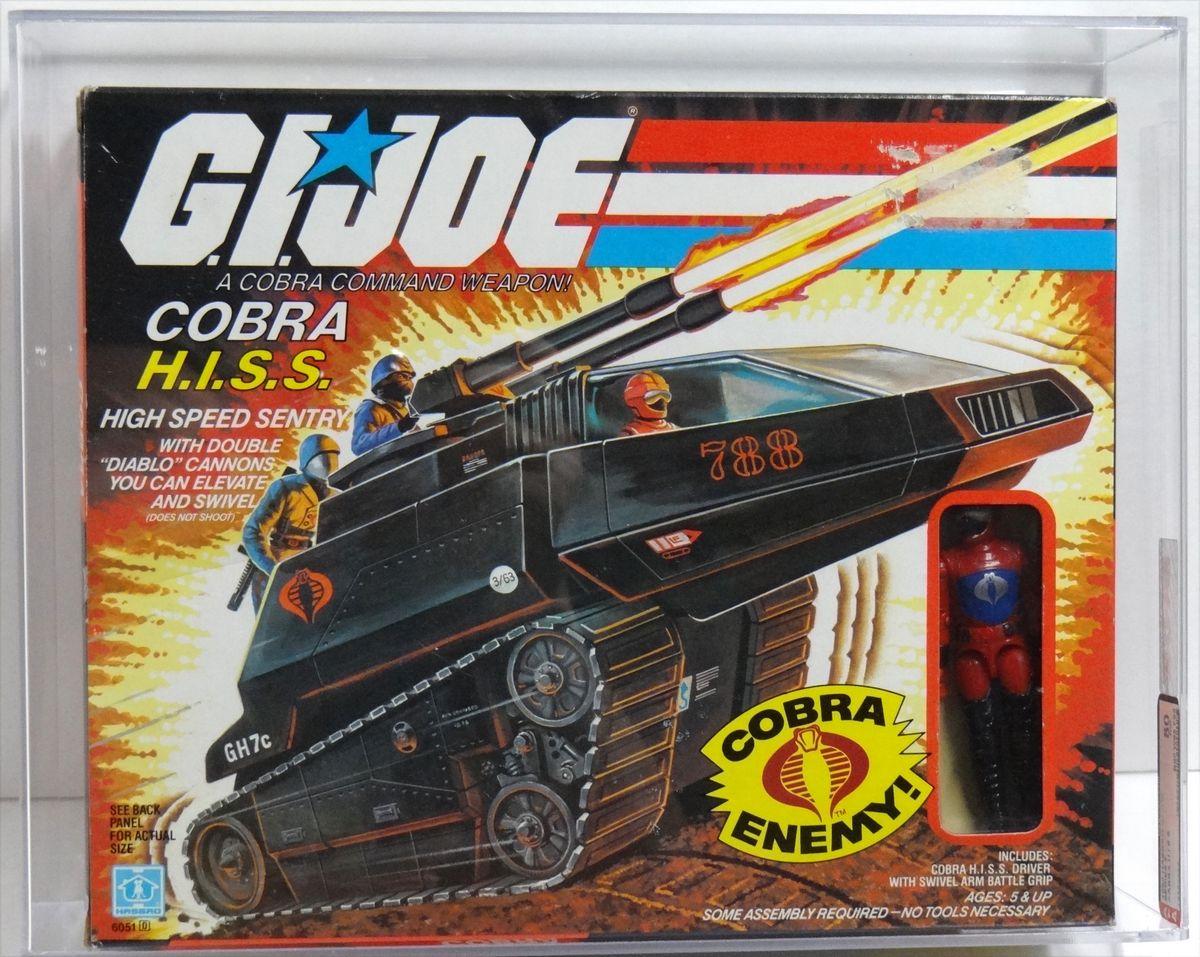
cobra_hiss_When I say “a friend of the imagination,” I do not mean an imaginary friend. Shane was, and is, real. The only son of one of my mom’s dear friends, he loomed large in the first decade of my life, though I only saw him about once a year.

I’m sure that when you cast your mind back to that first, formative era — to the halcyon days of youth that began your journey and shaped its course in ways both obvious and subtle — you recall some friend or acquaintance who holds a special place in your own private history’s pantheon of important people. Perhaps he or she first introduced you to something — an idea or hobby or sport — that would prove to be a lifetime love, a lifelong pursuit.

Shane was one such person, a boy who unwittingly (and, perhaps to this day, unbeknownst to him) enriched my creativity and broadened my imagination. I can’t help but think his example had some impact on my career as a creative writer; it was, at least, one branch in the confluence of influences that brought me here to this moment, writing a blog for Black Gate.

Shane’s mom had grown up with mine but moved to California, so about once a year she and her son came to visit us in Arizona. These visits account for some of my earliest and fondest memories. To them I can trace important moments in the unfolding path I have followed. Granted, some of these imaginative leaps might have come in other circumstances had Shane never come from that faraway country sung about by the Beach Boys. There were many other seminal formative events, particular authors and movies (it is a time of life that is littered with such discoveries, naturally), but Shane happened to be the one who nudged my imagination along on almost an annual basis throughout my grade-school years, like a sensei who periodically appears and says, “All right. You’re ready for the next level. And this one is particularly rad and gnarly.” (Okay, I can’t recall if he actually used ‘80s surfer slang, but I think he did use some. We all did. It was in the air.)

Read More Read More

For Want of a Nail… Jack Campbell on The Lost Fleet: Beyond the Frontier: Guardian

For Want of a Nail… Jack Campbell on The Lost Fleet: Beyond the Frontier: Guardian

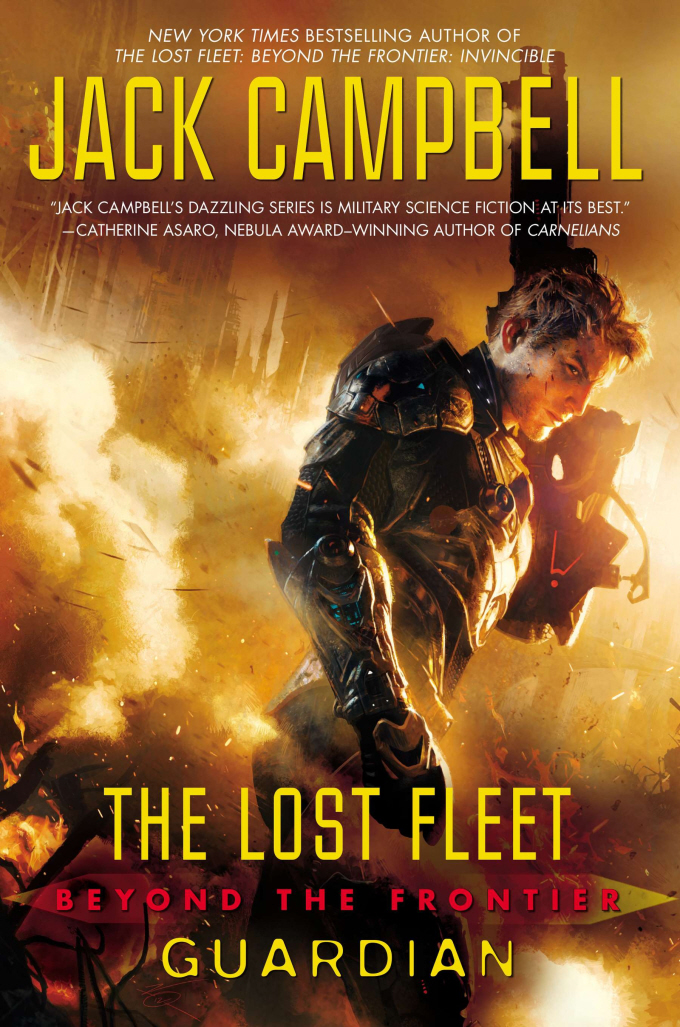
The_Lost_Fleet_Beyond_the_Frontier_GuardianThere’s an old poem in which the lack of a nail in a horseshoe causes the loss of a battle and a kingdom. The poem is usually seen as a proverb about how small things can cause major outcomes. But it also contains an important lesson for storytellers. In SF and fantasy, we create worlds that can include anything that we want them to have. That can produce cool stories, or it can create traps that ruin stories.

What is any story about? A problem. Whether it is one ring that has to be destroyed or a love triangle that threatens a kingdom or an invasion by aliens who really don’t like humans, the problem drives the story. The characters have to figure out how to solve that problem, which might require a lot of walking down the yellow brick road, the occasional detour, and numerous dangers, threats and other opportunities to excel.

As characters face all of the obstacles in their path, the writer faces the trap. Because, you know, if your hero only had a nail right now, that horseshoe would stay on, the battle would be won for certain and the kingdom saved. If your spaceship only had a means to counter that alien weapon, maybe by recalibrating the frequencies on the thingamajig, then the aliens would be defeated just like that.  Or if someone invents just what they need just when they need it, or someone finds a bottle with a magic genie inside, or God decides to intervene…

There’s a phrase for that trap. Deus ex machina (literally “god from the machine”). Ancient playwrights came up with the idea when they couldn’t figure out how to fix their plots.

No predicament is impossible when a god can step in. Got a dilemma that you can’t resolve? The Deus appears and fixes everything. The horseshoe has the nail. The thingamajig can destroy all of the aliens. It’s all happily-ever-after.

And readers are left feeling cheated. Where was the conflict? Where were the tough decisions? The sacrifices, the drama, the pain that we all know from real life are required to fix serious problems? The truth is that easy solutions make for bad stories.

Read More Read More

Black Gate Online Fiction: “Devotion” by Robert Rhodes

Black Gate Online Fiction: “Devotion” by Robert Rhodes

Robert Rhodes-smallA resourceful swordsman find himself very far from home indeed, caught up in a sorcerous trap with a surprising twist.

Piran’s blood ran cold, and his vision dimmed. But the numbness passed like a chilling wave, and he cut down through the witch’s cloak. She screamed and crumpled to the ground.

On the bloodstained leaves of the forest, she seemed pitiful. A sunken cheek bore a sinuous brand, marking her not as a spy but as the slave — escaped? — of a lich-lord in the cruel South. Something glistened beside her gnarled fingers — an arc of silvery liquid spilling from a milkglass phial.

Piran closed his eyes and gave thanks. He’d struck before she finished her devilry. But only just, for his muscles ached with a strange weariness.

“She’s dead,” he said over his shoulder to Amara and Ferris. He grinned and reached for the phial.

Until he realized he was alone.

Robert Rhodes has appeared in Heroic Fantasy Quarterly and other markets. He was the author of the “20 Heroes in 2010” series at FantasyLiterature.com, and his essay “Servants of the Secret Fire: Why Fantasy & Science Fiction Matter” won second-place in Pyr’s fifth anniversary contest. Most recently, his story “The Dead Travel Silently” won first-place in the forthcoming Stealth: Challenge anthology from Rogue Blades Entertainment. He is an attorney who lives in Spartanburg, South Carolina, and prosecutes child and elder abuse cases.

The complete catalog of Black Gate Online Fiction, including stories by Jason E. Thummel, Ryan Harvey, Steven H Silver, Nina Kiriki Hoffman, Emily Mah, C.S.E. Cooney, Howard Andrew Jones, Harry Connolly, and many others, is here.

“Devotion” is a complete 5,000-word tale of adventure fantasy offered at no cost.

Read the complete story here.

New Treasures: Firebrand by Gillian Philip

New Treasures: Firebrand by Gillian Philip

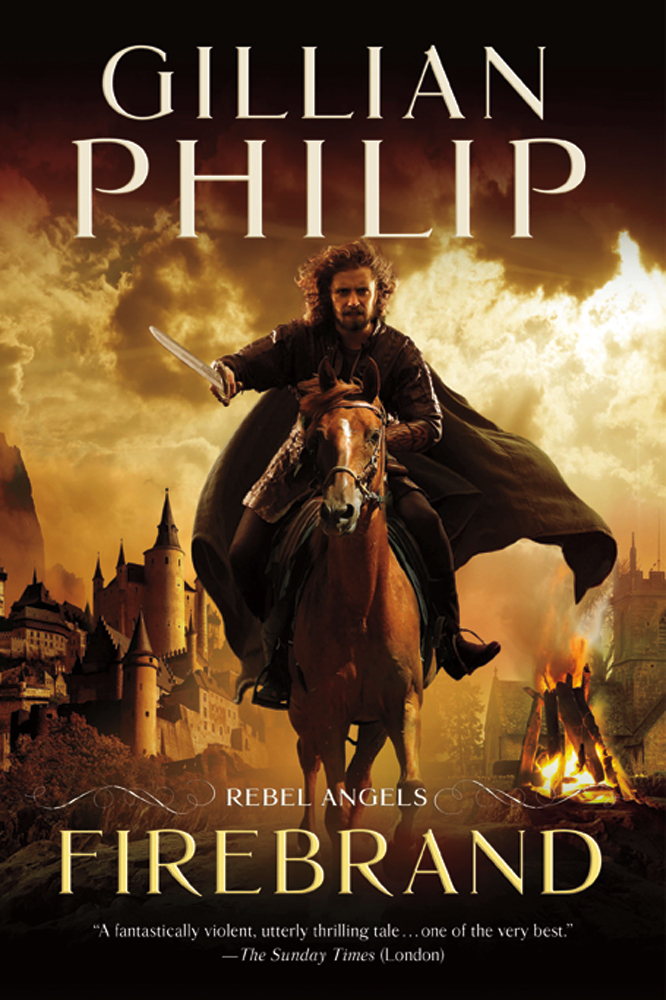
Firebrand Gillian PhilipHere in the U.S., Gillian Philip is known primarily for her Carnegie Medal–nominated contemporary novel, Crossing the Line, and the YA dystopian title, Bad Faith. In the UK however, she’s also known for her popular YA fantasy series, Rebel Angels, which the Sunday Times of London called “The best fantasy of 2010.”

Filled with twisted court intrigue — and even more twisted monsters from the realm of faery — Firebrand seems like exactly the kind of fast-paced adventure Black Gate readers are interested in.

Now Tor has brought the first volume, Firebrand, into print on this side of the pond, in a handsome hardcover edition with a new cover by Steve Stone.

At the end of the sixteenth century, religious upheaval brings fear, superstition, and doubt to the lives of mortals. Yet unbeknownst to them, another world lies just beyond the Veil: the realm of the Sithe, a fierce and beautiful people for whom a full-mortal life is but the blink of an eye. The Veil protects and hides their world… but it is fraying at the edges, and not all think it should be repaired.

Discarded by his mother and ignored by his father, sixteen-year-old Seth MacGregor has grown up half wild in his father’s fortress, with only his idolized older brother, Conal, for family. When Conal quarrels with the Sithe queen and is forced into exile in the full-mortal world, Seth volunteers to go with him.

But life beyond the Veil is even more dangerous than they expected, and Seth and Conal soon find themselves embroiled in a witch-hunt—in which they are the quarry. Trapped between the queen’s machinations at home and the superstitious violence of the otherworld, Seth must act before both of them are fed to the witch-hunters’ fires…

The second and third volumes, Bloodstone and Wolfsbane, are already in print in the UK. Interestingly, while all three books are marketed as YA there, Tor has mainstreamed them here in the US. It’s an interesting switch, and I’m curious to see how the market reacts.

Firebrand was published by Tor Books on February 19. It is 365 pages, priced at $24.99 in hardcover and $11.99 for the digital edition.

The Kids Are Alright: The Fate of the Novel lies in the Hands of Teenagers

The Kids Are Alright: The Fate of the Novel lies in the Hands of Teenagers

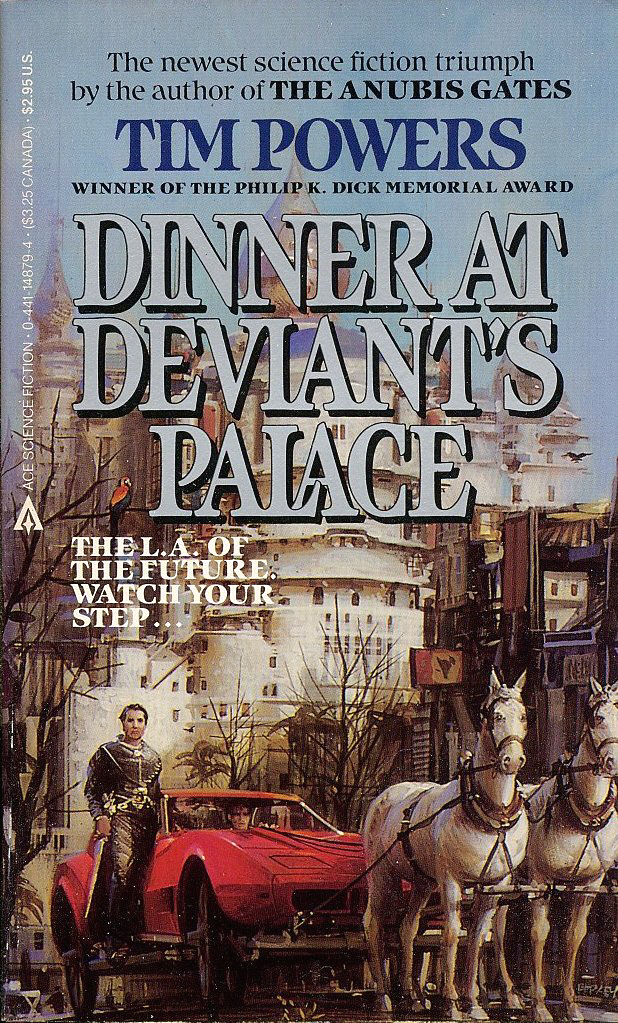
Dinner at Deviant's PalaceLike many authors, I teach writing to help make ends meet. Teaching part-time at a college and an arts high school doesn’t exactly make you rich, but I for one find it very satisfying. One of the obvious perks for me is getting to teach alongside steampunk progenitors Tim Powers and James P. Blaylock, both of whom are fascinating, brilliant men.

The other perk — the less obvious one — is the students themselves.

On one hand, I often find myself wringing my hands like an old fuddy-duddy about how this youthful generation is enslaved by technology. I’ve had two college students this year write about how they were “catfished,” for example, and it’s hard to understand a generation that has made the act of duping someone into having a phony online relationship so commonplace.

And then there’s their obsession with smart phones, providing a constant distraction in the classroom and leading students to shamble mindlessly down the hallways between classes with their phones in their faces, heedless of who or what they bump into. The zombie apocalypse is here already, I tell you!

On the other hand, I’m constantly inspired by my students, both by their creativity and their exuberance for crossing genres and mediums. And really, it all stems from the ubiquity of technology in their lives. Yes, even those damned smart phones.

At the behest of a handful of my high school students this year, I taught a class called Writing for Alternative Mediums (WAM), meaning writing for video games, phone apps, web comics, and whatever else the kids could dream up.

Like any savvy teacher who has no expertise or experience on a given topic, I “taught” the course as a seminar, meaning the students were forced to perform their own self-guided research, develop a project, and then present their work to the class.

The big winner ended up being me.

Read More Read More