Browsed by
Category: Blog Entry

Tales of the Wold Newton Universe, Part 4 of 4
Tales of the Wold Newton Universe, Part 4 of 4

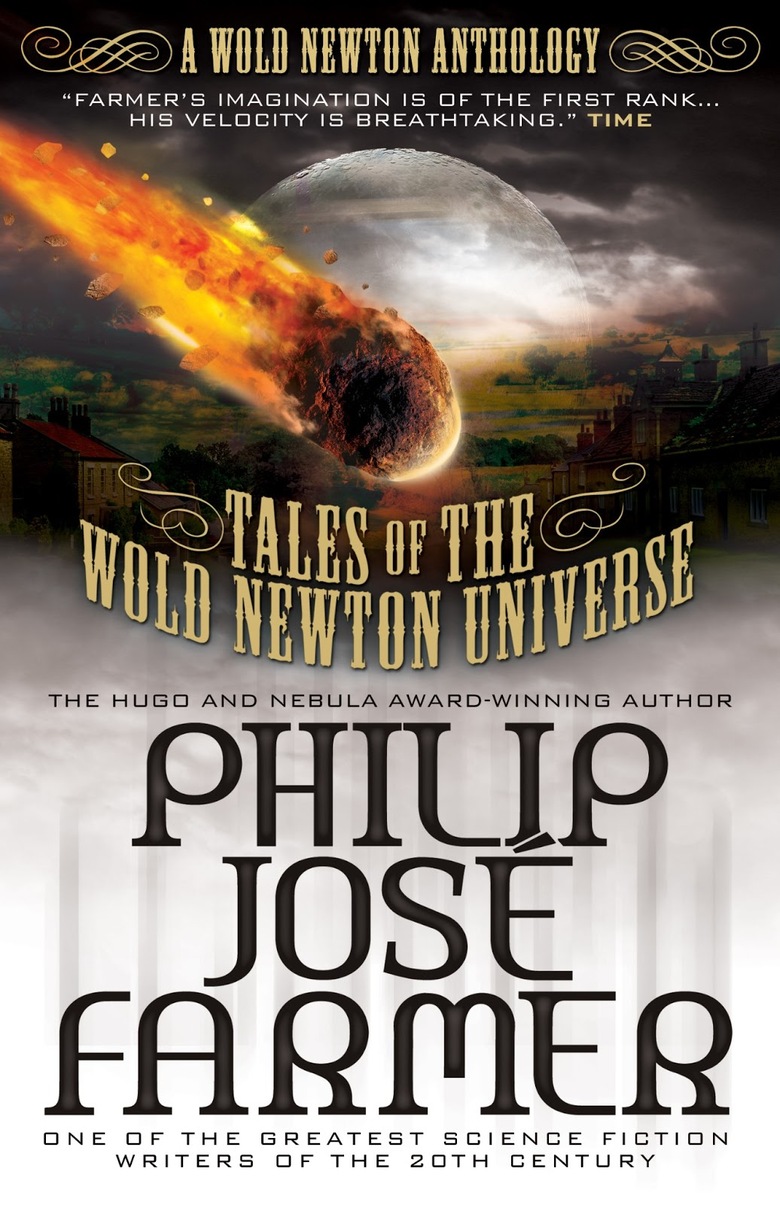
Tales of the Wold Newton Universe-smallOctober marked the release of Tales of the Wold Newton Universe, a new anthology from Titan Books that collects, for the first time ever in one volume, Philip José Farmer’s Wold Newton short fiction, as well as tales set in the mythos by other Farmerian authors.

The Wold Newton Family is a group of heroic and villainous literary figures that science fiction author Philip José Farmer postulated belonged to the same genetic family. Some of these characters are adventurers, some are detectives, some explorers and scientists, some espionage agents, and some are evil geniuses. According to Mr. Farmer, the Wold Newton Family originated when a radioactive meteor landed in Wold Newton, England, in the year 1795. The radiation caused a genetic mutation in those present, which endowed many of their descendants with extremely high intelligence and strength, as well as an exceptional capacity and drive to perform good, or, as the case may be, evil deeds. The Wold Newton Universe is the larger world in which the Wold Newton Family exists and interacts with other characters from popular literature.

To celebrate the release of the new anthology, we’ve asked the contributors to discuss their interest in Philip José Farmer’s work and to tell us something about how their stories in the book specifically fit into the Wold Newton mythos.

For today’s installment, please welcome author and co-editor of Tales of the Wold Newton Universe, Win Scott Eckert.

Christopher Paul Carey
Co-editor, Tales of the Wold Newton Universe

Read More Read More

Some Comments on the SFWA Rate Increase

Some Comments on the SFWA Rate Increase

SFWA logoSo, I saw that SFWA (the Science Fiction and Fantasy Writers of America) is raising their qualifying payrate from 5 cents/word to 6 cents/word. This rate is part of SFWA’s formula for determining whether a market or an individual sale is a professional sale for the purposes of qualifying for SFWA membership. With some other minor details, a writer can qualify for full SFWA membership with three professional short fiction sales, or the sale of one novel at professional pay.

The last time SFWA raised its qualifying rate was nine years ago, when social media was less developed than now, and I’ve already seen some reactions about what this will mean for magazines that qualify right now at 5 cents/word. Short fiction economics being what they are, a few magazines will be at a decision point. Do they incur the costs of raising their pay rates and remaining SFWA-qualifying markets, or do they remain at 5 cents/word and possibly lose out on that part of the author population that is looking for SFWA membership? Many magazines are volunteer-run operations (bless them!) and/or are running losses, and/or are making ends meet with grants and kickstarter campaigns. Publishing is not a business you go into to make money. Hayden Trenholm, publisher of Bundoran Press, often tosses out the old saw that the way to make a small fortune in publishing is to start with a big fortune.

Writers (and publishers) are human beings. They pour their hearts into acts of creation in defiance of odds and common sense (once again, bless them, and me, who participates in the insanity of creation against all advice just as much as anyone else). We all ache for acceptance and recognition of our art, and SFWA is powerful professional recognition. Someone is saying “You are good, we welcome you to our group.” Heady stuff for any artist, although that’s not exactly the wording on the acceptance note. Whether or not you subscribe to the whole professional association thing, our reactions as artists are very much human.

Read More Read More

Satellite, December 1956: A Retro-Review

Satellite, December 1956: A Retro-Review

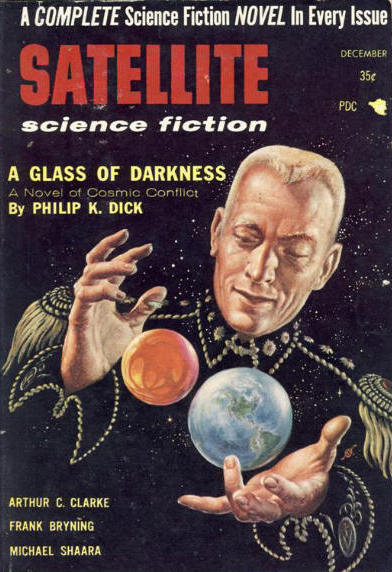
Satellite Science Fiction December 1956-smallThis is one of a great many ’50s digests. It began publication in October 1956 as a bimonthly, and became a monthly in 1959 for its last four issues (the last was May). 18 issues total. (Apparently the June and July issues were assembled at least to some degree.)

The publisher was Leo Margulies, and the editor for the first two issues was Sam Merwin, who had done good work with Startling Stories/Thrilling Wonder Stories.

According to the Science Fiction Encyclopedia, Margulies took over after that– although the ISFDB credits Cylvia Kleinmann for a number of the later issues. I tend to trust the SFE here, especially with Malcolm Edwards and Mike Ashley responsible for the entry.

That said, Kleinmann (Margulies’ wife) was also for a time editor of Mike Shayne’s Mystery Magazine (also published by Margulies) so very possibly she was the editor, or perhaps it was a collaborative effort, and, as Todd Mason notes, Margulies had a long history of fronting anthology projects (under his name) that were actually edited by others.

Frank Belknap Long edited the final four 1959 issues, which were letter-sized instead of digest.

For most of its run, Satellite featured “A Complete Novel in Each Issue” (according to the SFE, to compete with paperback novels). Based on the TOCs I’ve seen, these really were reasonable-length novels for the day – in the range of 40,000 words.

The December 1956 issue, the magazine’s second, has a promising TOC – stories by the likes of Philip K. Dick, Arthur C. Clarke, Gordon Dickson, Algis Budrys, and Michael Shaara among others. Indeed, the first few issues of the magazine were pretty promising, though it never really became a top market.

Read More Read More

New Treasures: The Shambling Guide to New York City by Mur Lafferty

New Treasures: The Shambling Guide to New York City by Mur Lafferty

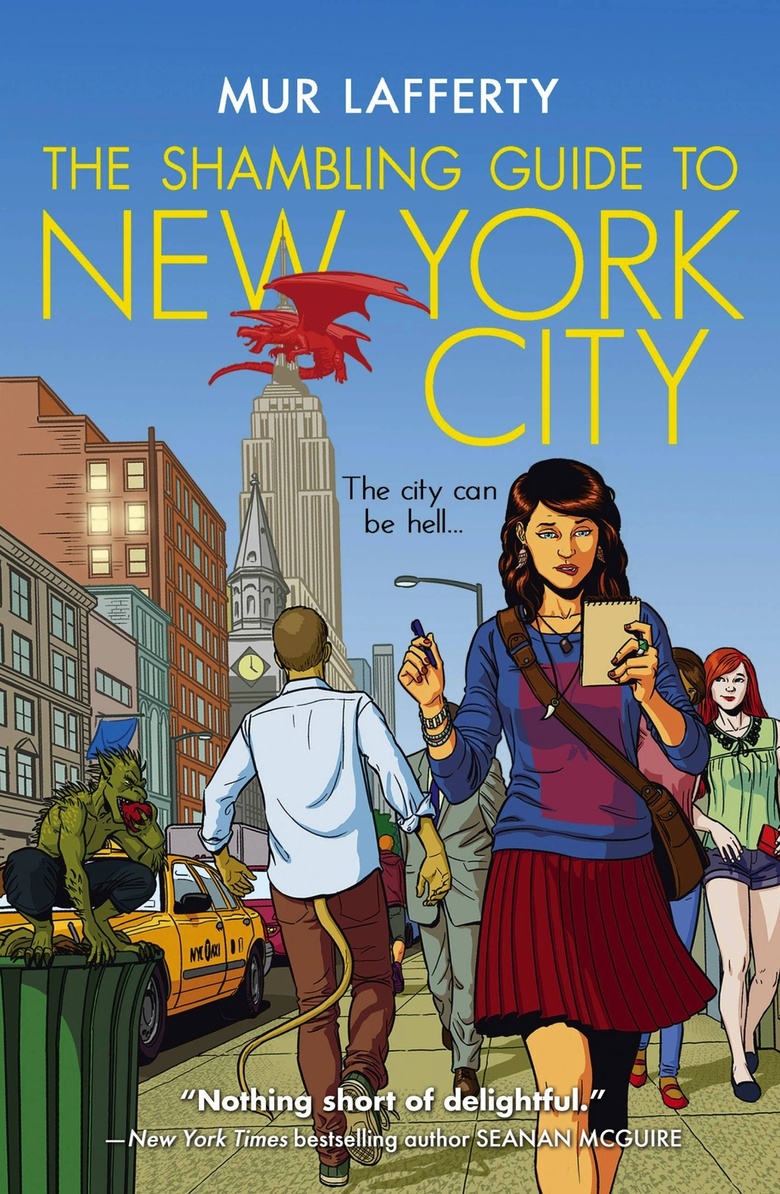
The Shambling Guide to New York City-smallMur Lafferty is something of a renaissance woman. She was the host and co-editor of the horror podcast Pseudopod until July 2007; in 2010 she became the editor and host of the weekly SF podcast magazine Escape Pod. She’s also the host of I Should be Writing (when does she find time to actually write?), and a winner of the Podcast Peer Award and the Parsec Award.

Apparently, she must make time somehow. She’s the author of two previous novels (Playing for Keeps, and Nanovor: Hacked), and her third novel is out from Orbit Books. Zoe Norris is a travel writer forced to take a job with a shady publishing company in New York, only to discover she’s been tasked with writing a tour guide for the undead. Scott Sigler said of The Shambling Guide to New York City, “If Buffy grew up… moved to New York and got a real job, it would look a lot like this.” Sounds plenty intriguing to me.

Because of the disaster that was her last job, Zoe is searching for a fresh start as a travel book editor in the tourist-centric New York City. After stumbling across a seemingly perfect position though, Zoe is blocked at every turn because of the one thing she can’t take off her resume — human.

Not to be put off by anything — especially not her blood drinking boss or death goddess coworker — Zoe delves deep into the monster world. But her job turns deadly when the careful balance between human and monsters starts to crumble — with Zoe right in the middle.

The Shambling Guide to New York City is the first novel in The Shambling Guides series; the second volume, Ghost Train to New Orleans, is due March 4, 2014.

The Shambling Guide to New York City was published by Orbit Books on May 28, 2013. It is 358 pages, priced at $15 in trade paperback and $9.99 for the digital edition. The marvelous cover is by Jamie McKelvie (click for a full-size version).

Why Did the Genre Cross the Road?

Why Did the Genre Cross the Road?

Red Plant Blues Last week I was talking about dystopias and satires, urban fantasy and paranormal romance, and further thought has led me to observe that genre can be a tricky thing. Of course, I was really talking about how definitions change and evolve, and how we all fight the changes we don’t agree with. I didn’t really talk about the difference between nouns and adjectives. I didn’t mention that something can be dystopian, without being, actually, a dystopia. Or that something can have satirical elements, without being, technically, a satire.

After all, practically everything we read – or watch for that matter – has a romantic element, but that doesn’t mean we’re reading romance novels, or watching rom-coms.

Total aside: is there a rom-trag genre? Wuthering Heights, maybe? Rebecca? Truly, Madly, Deeply?

Anyway. I’ve actually had a romance novel published, so I think of myself as someone uniquely qualified to talk about that aspect of crossing genres.

As with any other genre, romance has characteristic conventions, but what really makes a romance novel a romance novel is that it tells the story of a very precise portion of the protagonists’ lives. Specifically, it tells the story of how they met the person they love, and began spending the rest of their lives together. Other things are very likely happening to the characters at the same time. They have work lives, social lives, family obligations. They may have crimes to commit or solve. But if the main plot concerns their love life, then it’s a romance. If there’s also a mystery/crime, that means there’s a mystery element, one that exists only to allow the characters to meet, interact, and so forth.

Read More Read More

The Shadow of Fu Manchu Falls Upon Me

The Shadow of Fu Manchu Falls Upon Me

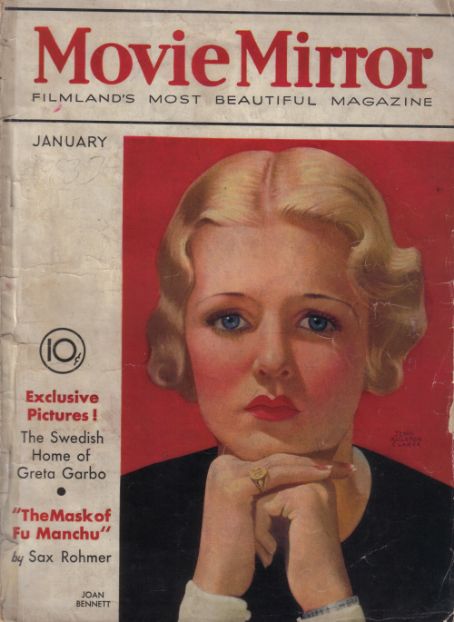
MaskMoviePortraitMovieMirrorMaskofFuManchuWithout Fu Manchu in my life, I would never have started down the path of penning these articles. One thing I was certain of was that there were no more surprises. I had found every official appearance of Sax Rohmer’s master villain and would, in due course, cover all of them in this blog eventually. So it seems appropriate that in this the year that marks the centennial of the first Fu Manchu novel, my 200th article covers a hitherto unknown official piece of Fu Manchu history.

A few weeks ago, I attended Classicon in Michigan and convention organizer, Ray Walsh handed me the January 1933 issue of Movie Mirror with Joan Bennet on the cover. The second feature was The Mask of Fu Manchu by Sax Rohmer. I suspected it was an excerpt from or serialization of the book I was unaware of and found it intriguing that it had eluded both Bob Briney and Larry Knapp, the two foremost Rohmer scholars who have done a phenomenal job of compiling bibliographical information on the author.What the issue actually contained was something far more valuable: an 11-page “fictionization” of the 1932 MGM film starring Boris Karloff and Myrna Loy, fully illustrated with stills from the movie, some of which were quite rare. The adaptation was credited to Constance Brighton, an author I have found no other information concerning which made me suspect the name was a pseudonym.

Read More Read More

Heroic Historical and Uncomfortable Truths

Heroic Historical and Uncomfortable Truths

large_towton
A winter battle. How positively…

People often quote LP Hartley (without having any idea they’re quoting him, or who he was, me included) — “The past is a foreign country: they do things differently there.”

To an extent you can take a tourist attitude and go, “Look at the funny foreigners. How romantic!”

Distance in time fosters distance in morality, making it — for example — entirely acceptable to offer Battle of Towton greetings cards. A winter battle. How positively Christmassy!

Or for the Scottish Borders Council to adopt the Border Reiver as a logo.

Read More Read More

Try Out Spellbound Magazine

Try Out Spellbound Magazine

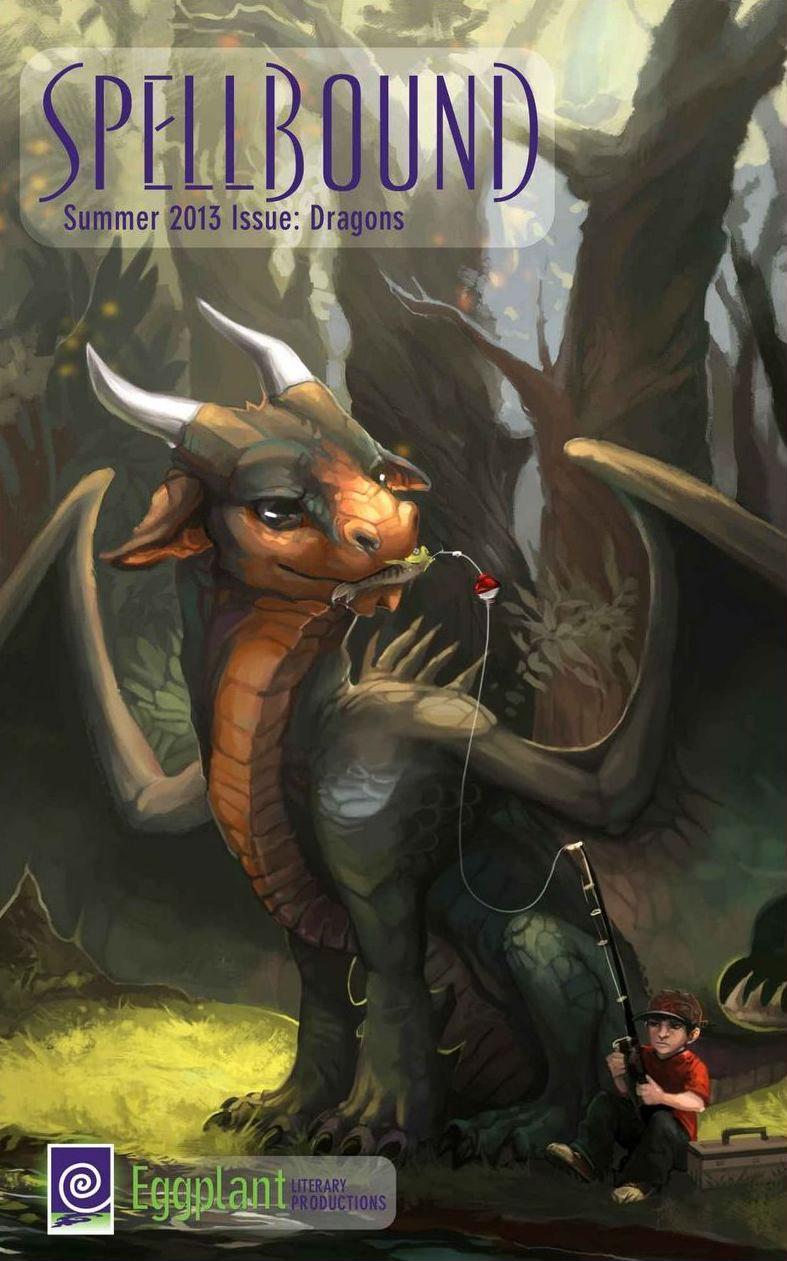
Spellbound Summer 2013-smallTwo weeks ago I reported on the great work editor Raechel Henderson was doing with Eggplant Literary Productions. The impetus was dropping by her booth at Windycon, where I saw the fabulous array of new fantasy novels and novellas she’d recently released, including new e-books from Lenora Rose, Laura J. Underwood, Lori Ann White, Patricia Russo, Martin Clark, and many others.

Eggplant is effectively a one-woman show, so I was tremendously impressed to see so many new titles. I know what it’s like to finance, edit, art direct, design, layout, produce, market and distribute one issue of a genre magazine every year… so just seeing the host of new releases Raechel had published in the last 12 months meant I needed to go have a bit of a lie down.

It’s not just her surprising accomplishments in the area of e-books, which are only a small part of Eggplant. On top of the book line, Raechel also produces the excellent Spellbound, a thriving new magazine that has published 19 issues since 1999.

Spellbound is a children’s fantasy e-zine  for kids 8-12 years of age, which makes it almost unique in the marketplace. It was originally launched in Fall 1999 and went on hiatus after 15 issues, after  the Spring 2003 issue. It was re-launched in Winter 2012 with greatly increased production values, including gorgeous color covers; so far Raechel has released four new issues like clockwork.

If you enjoy children literature — or have an inquisitive or imaginative child in your life — Spellbound makes a great value. Each issue contains original stories, poetry, art, and a Recommended Reading list, all centered around a special featured creature. The Fall 2013 issues showcased Creatures of the Deep, Dark Woods, with gorgeous cover art by Francesca Resta; the Summer 2013 issue focused on Dragons (click on the image at right for the full-sized cover art).

Individual issues of Spellbound are $5.00 (US) each; a four-issue, one year subscription is $20.00 (US). Order directly from the Eggplant website.

What’s next for Raechel and Eggplant Production? I’m not certain, but I’m looking forward to seeing what they produce next. Ignore them at your peril.

Vintage Treasures: The Coming of the Rats by George H. Smith

Vintage Treasures: The Coming of the Rats by George H. Smith

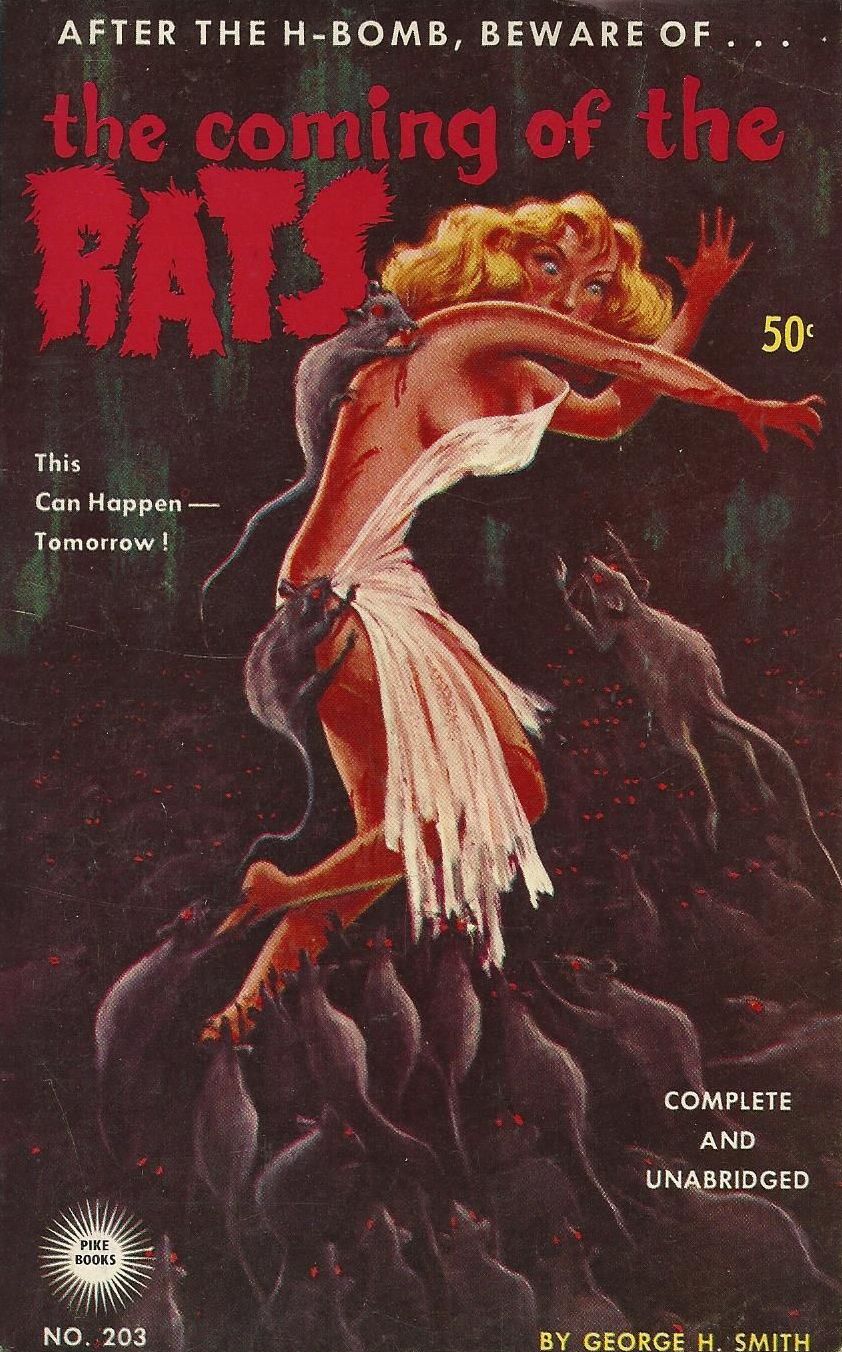
The Coming of the Rats-smallA lot of post-apocalyptic novels and films appeared in the 50s and 60s. World War II was still a recent memory, and the threat of the H-Bomb was very real, even if most folks didn’t understand exactly what the “H” stood for. Publishers and filmmakers played on the very real terrors people faced every day. Fear of another war. Fear of atomic radiation.

And, going by the cover of George H. Smith’s The Coming of the Rats, the deep-seated fear that rats would attack our women and strip their clothes off.

Now, I’m not sure how our parents and grandparent dealt with these crippling fears, but from what I understand their coping mechanism involved a lot of cheap paperbacks, and multiple Saturday matinees (which seems like a stable strategy, when you think about it).

This is how that generation learned the facts about atomic radiation. And how the logical result would be mutants, and lots of ’em. Giant mutant ants. Mutant town-eating blobs. And horrible, women-chewing mutant rats.

Which brings us to The Coming of the Rats, and its hallowed place in the post-apocalyptic fiction canon.

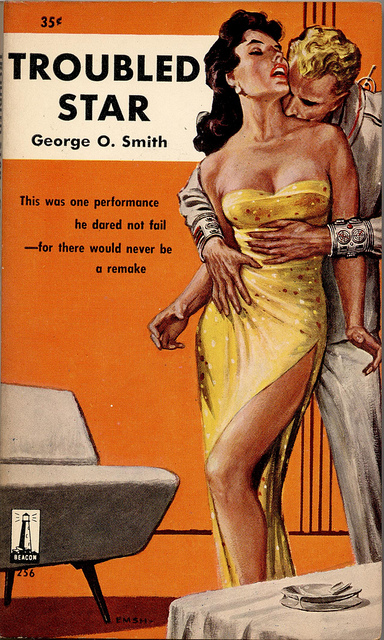
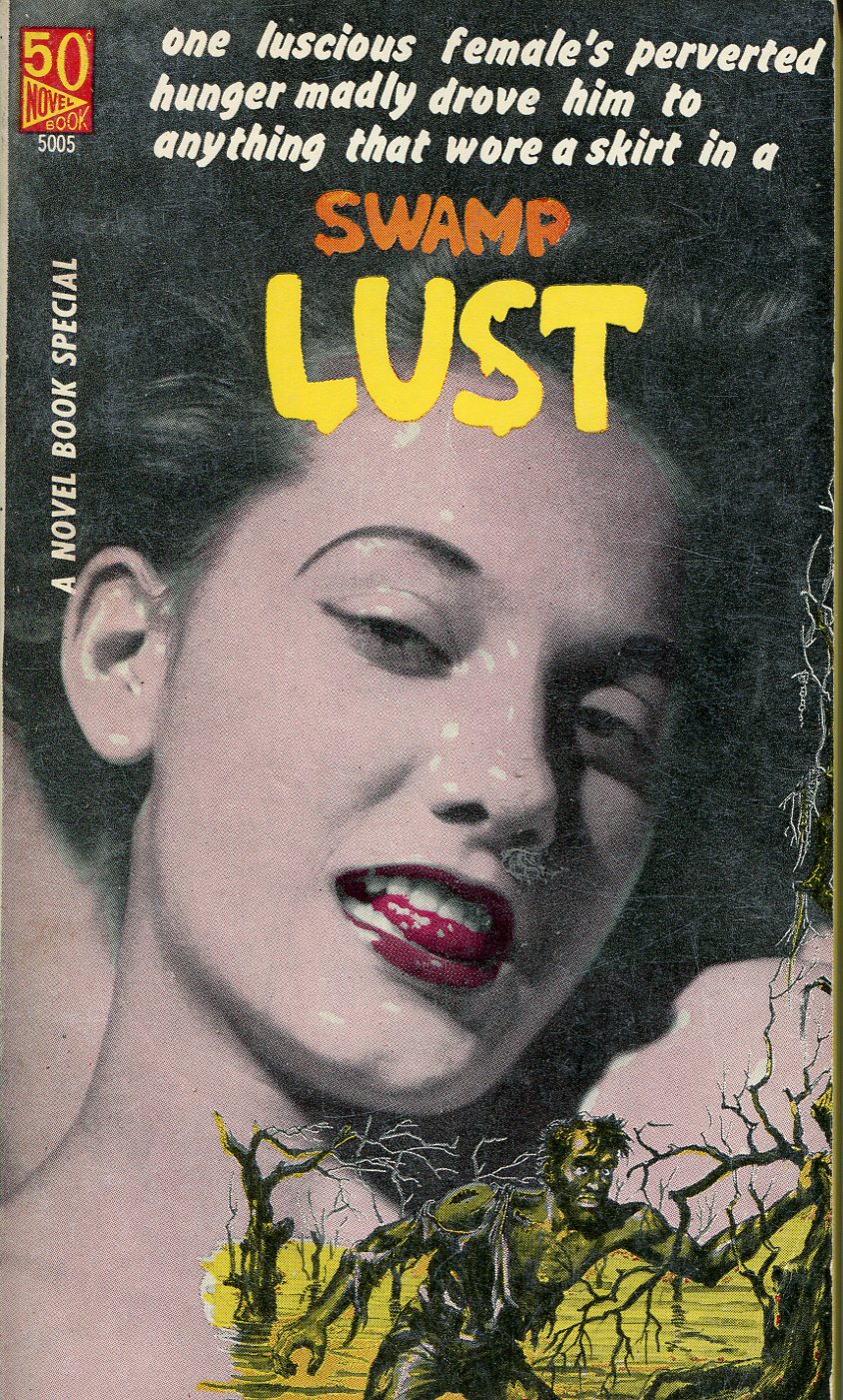
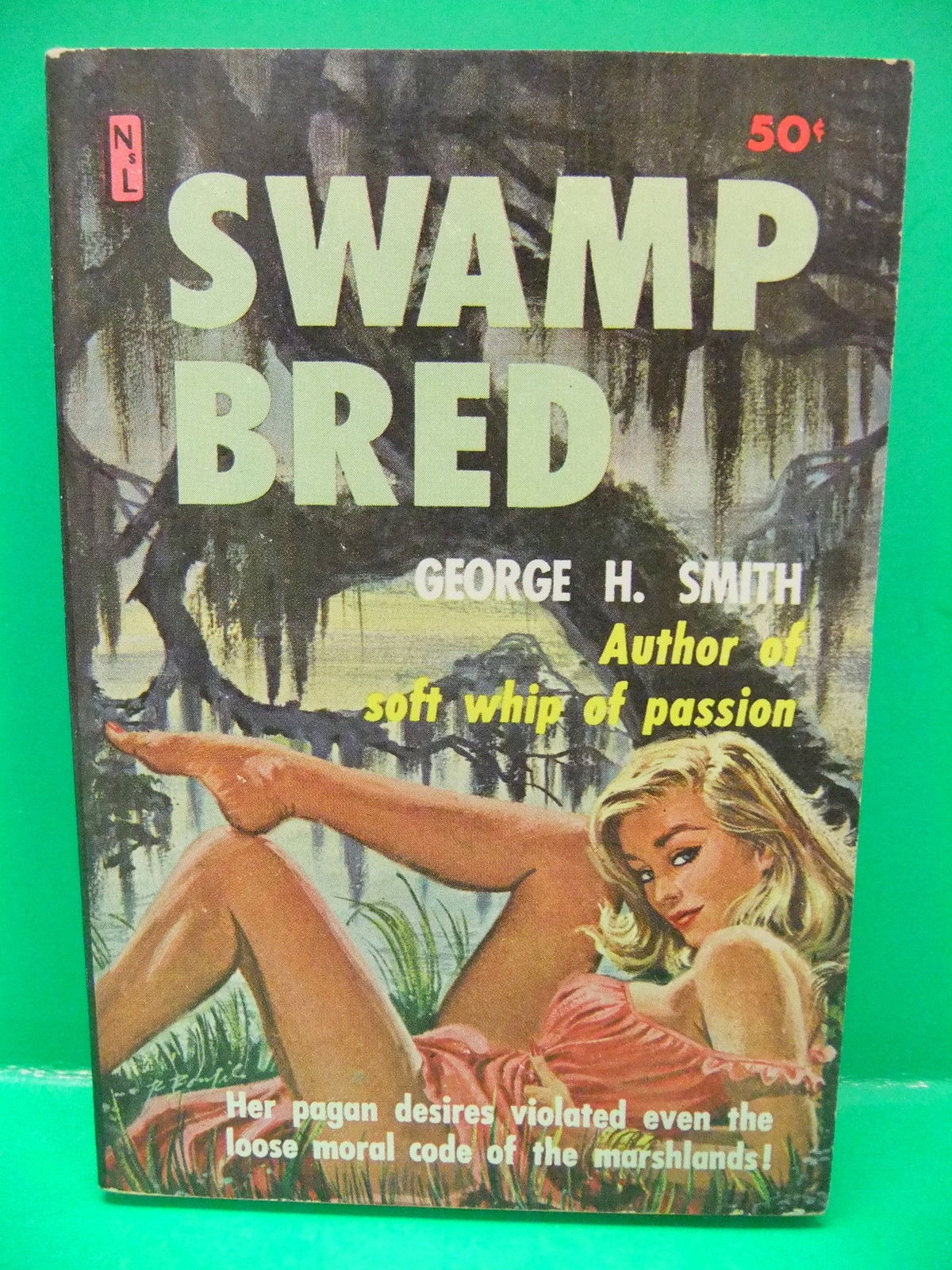
Author George H. Smith (not to be confused with George O. Smith, author of Venus Equilateral and Troubled Star, or the George H. Smith who wrote Swamp Lust, Swamp Bred, and other swamp love classics) had a checkered career as a paperback writer in the 60s. His first publication was a short story in Startling Stories in 1953, and he sold a number of stories to SF magazines throughout the fifties before graduating to novels. He’s mostly remembered today for a line of soft-core erotica written under various pseudonyms.

His first attempt at more serious SF was The Coming of the Rats. But nobody told the cover artist, who cheerfully went the soft-core route, depicting a toga-party victim unsuccessfully fending off high-jumping rats.

Of course, the best covers intrigue readers and make them ask questions, and this cover made me ask questions. Chiefly, “Why are you wearing a dish towel?”

Read More Read More

New Treasures: Copperhead by Tina Connolly

New Treasures: Copperhead by Tina Connolly

Copperhead-smallI first met Tina Connolly at the World Fantasy Convention in San Diego in 2011. She was charming, witty, and very entertaining — precisely the kind of person you want to follow around to all the good parties. I tried this enthusiastically for a while, until someone from the con committee patiently explained to me that this was called “stalking” and was, like, illegal.

Fortunately, Tina Connolly is also a very talented writer. And reading her novels (I’ve discovered) is exactly like hanging out with the author at a great party. The same sparkling wit, the same penetrating intelligence. Except, unlike at parties, I can pause the conversation to look up words without looking stupid.

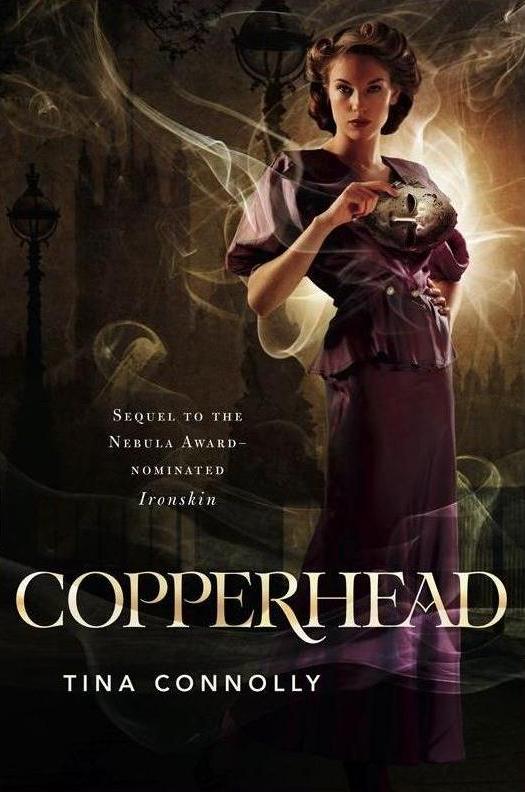
Tina’s first novel Ironskin was an historical fantasy set in an alternate version of early 1900s England, and was nominated for a Nebula Award last year. The sequel Copperhead has finally arrived, and it looks just as delightful as the first volume.

Helen Huntingdon is beautiful — so beautiful she has to wear an iron mask.

Six months ago her sister Jane uncovered a fey plot to take over the city. Too late for Helen, who opted for fey beauty in her face — and now has to cover her face with iron so she won’t be taken over, her personality erased by the bodiless fey.

Not that Helen would mind that some days. Stuck in a marriage with the wealthy and controlling Alistair, she lives at the edges of her life, secretly helping Jane remove the dangerous fey beauty from the wealthy society women who paid for it. But when the chancy procedure turns deadly, Jane goes missing — and is implicated in a murder.

Meanwhile, Alistair’s influential clique Copperhead — whose emblem is the poisonous copperhead hydra — is out to restore humans to their “rightful” place, even to the point of destroying the dwarvven who have always been allies.

Helen is determined to find her missing sister, as well as continue the good fight against the fey. But when that pits her against her own husband — and when she meets an enigmatic young revolutionary — she’s pushed to discover how far she’ll bend society’s rules to do what’s right. It may be more than her beauty at stake. It may be her honor… and her heart.

Copperhead was published by Tor Books on October 15th. It is 318 pages, priced at $24.99 in hardcover, and $11.99 for the digital edition.