Browsed by
Category: Blog Entry

What Would it Look Like to Pull a Watchmen on Planetary Romance? Part I
What Would it Look Like to Pull a Watchmen on Planetary Romance? Part I

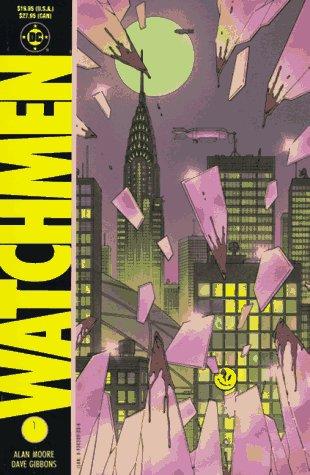
watchmencoverI’ve been musing lately about the conventions of the comic book form we’ve inherited from the past and how they match to the sensibilities of the present. They don’t easily fit without suppressing either the core superhero conceits or the realities of the modern world.

Perhaps the most famous crashing of the two was Alan Moore’s Watchmen, which slammed the conventions of the superhero genre into the hard, hard wall of modern, adult sensibilities. It made a pretty mess of the superhero genre.

Most of the traditions of the superhero genre were born in a very brief period between 1938 and 1945, a time which birthed Superman, Batman, the Justice Society, Captain America, the Submariner, and the Human Torch, as well as many other less memorable characters.

The idea of the secret identity, of defending truth, justice and the American way, of the repeated conflict with the nemesis villain, and of just relentlessly defeating crime, were all in those first seven years. The only idea I can think of that seems to me essential to the superhero genre that was not formed in those times is the idea that the characters never really die (except for Uncle Ben, Gwen Stacy, and Bucky, as the famous rule inaccurately goes).
Read More Read More

New Treasures: Neil Gaiman’s The Graveyard Book, Volume One, Adapted by P. Craig Russell

New Treasures: Neil Gaiman’s The Graveyard Book, Volume One, Adapted by P. Craig Russell

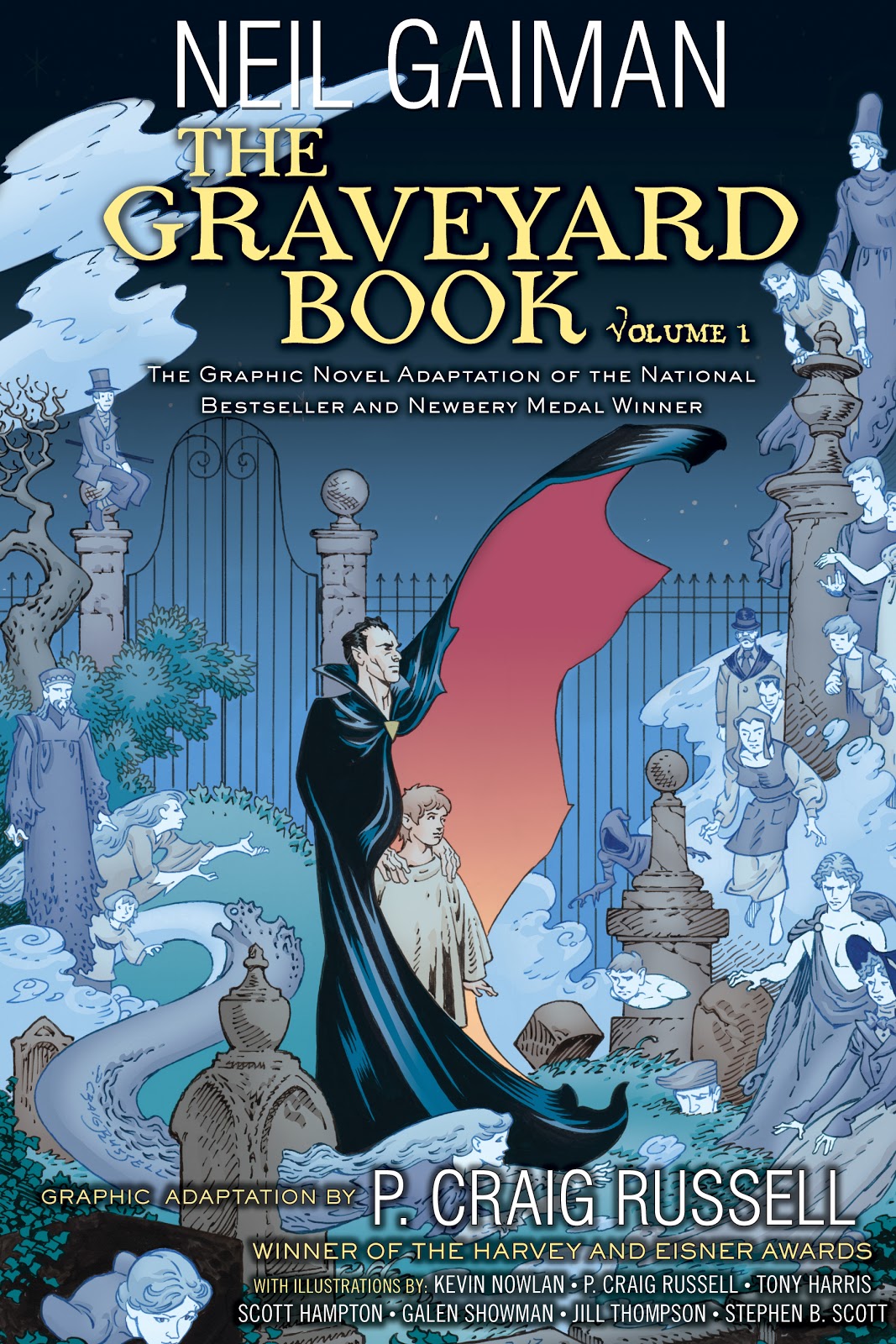
The Graveyard Book Volume One-smallI’ve been a fan of P. Craig Russell’s comic work since his adaptation of Michael Morcock’s Elric: The Dreaming City first appeared in Epic magazine way back in 1979.

Russell did a lot of attention-getting work for Marvel, including Doctor Strange Annual #1 (1976) and a lengthy run on Killraven (1974–1976), before branching out as an independent artist. He returned to Elric several times, first with While the Gods Laugh (Epic, 1981), and Elric of Melniboné (1982–84), a limited series scripted by Roy Thomas from Pacific Comics.

He brought the character to First Comics with Elric: Weird of the White Wolf, and in 1993-95 he worked directly with scripter Michael Moorcock on Elric: Stormbringer (Dark Horse Comics). He also worked with my friend Mark Shainblum on The Chronicles of Corum, an ongoing series from First Comics, in the late 80s.

Russell’s first collaborations with Neil Gaiman were the famous “Ramadan” issue of Sandman (issue #50, 1992), which helped inspire Howard Andrew Jones to create Dabir & Asim, and a story in the Sandman graphic novel Endless Nights. That led to Russell’s first graphic adaptation for Gaiman, his novel Coraline (2008).

Now he’s produced his most ambitious collaboration with Gaiman yet: a two-volume graphic adaptation of The Graveyard Book, the tale of a boy who’s raised by ghosts in a graveyard. The first volume, just released, contains Chapter One through the Interlude, while the upcoming Volume Two contains Chapter Six through to the end.

Here’s the book description.

Read More Read More

Vintage Treasures: City Under the Sea by Kenneth Bulmer

Vintage Treasures: City Under the Sea by Kenneth Bulmer

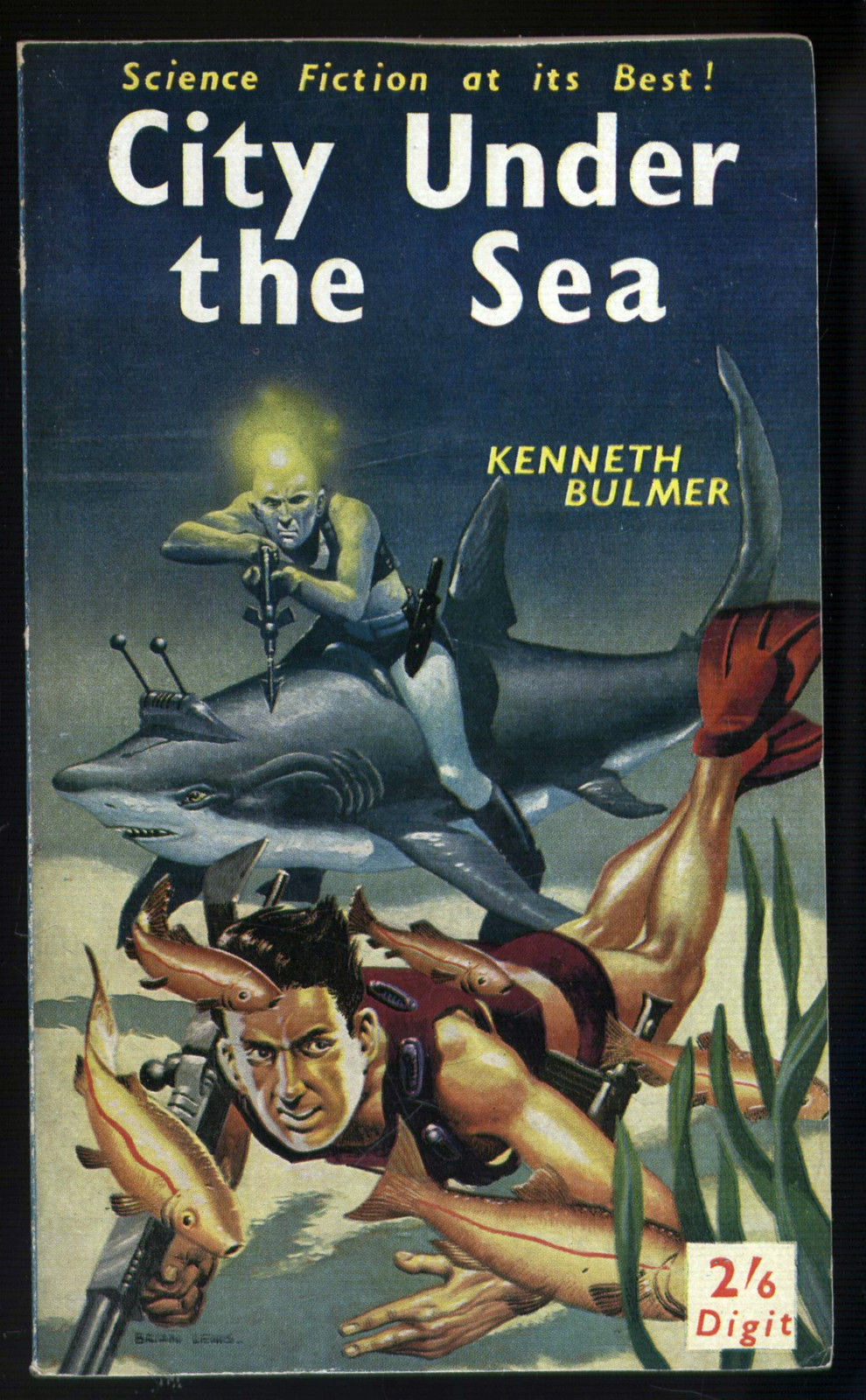
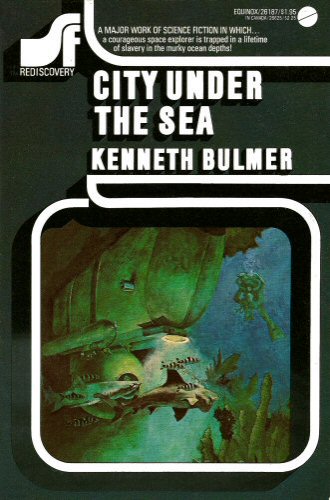
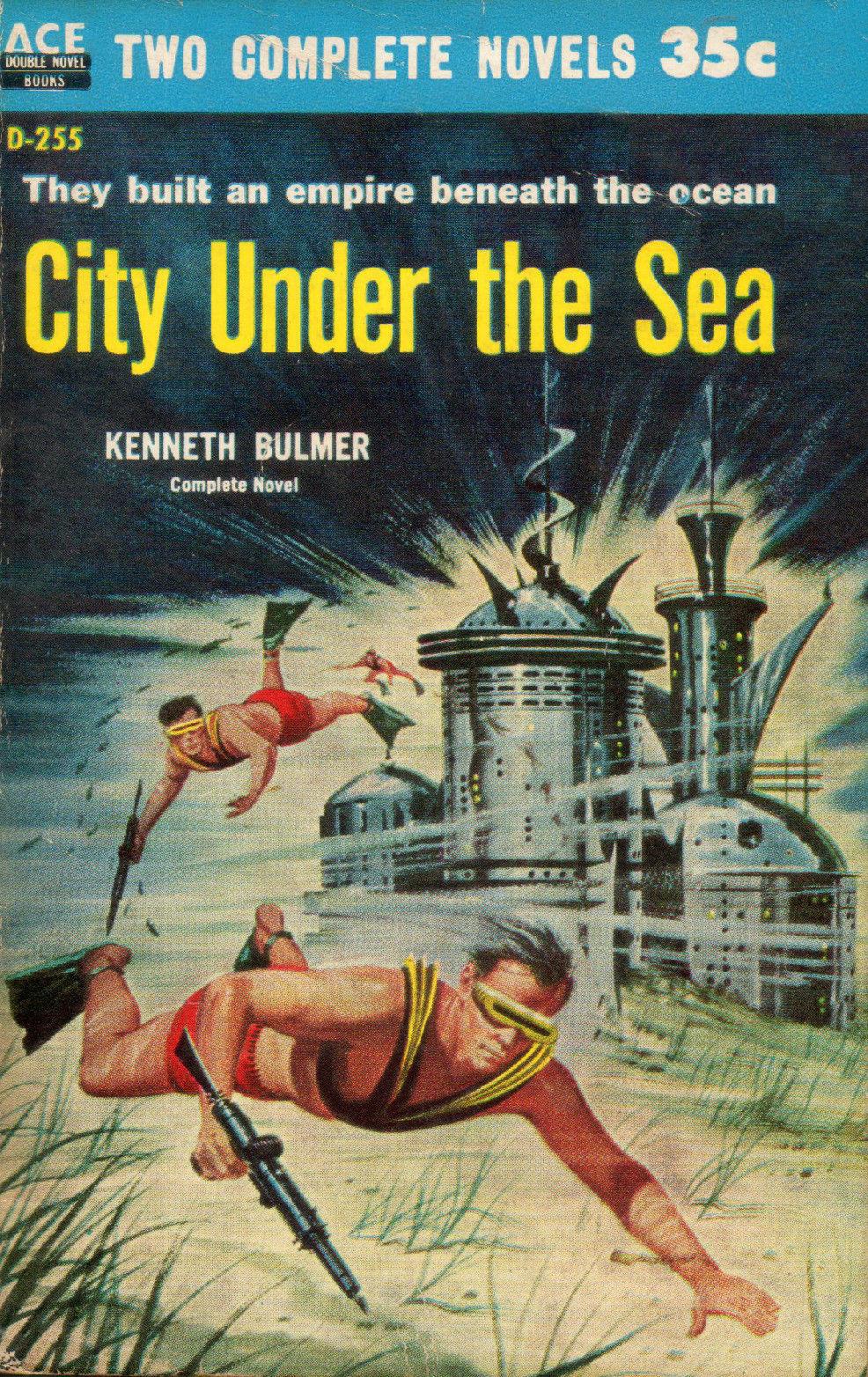
City Under the Sea Kenneth Bulmer Ace-small City Under the Sea Kenneth Bulmer UK-small City Under the Sea Kenneth Bulmer Avon

As you may have noticed if you’ve been following my Vintage Treasures posts since I returned from the Windy City Pulp & Paper show, I’ve been time-traveling back to the early 1980s in my big green chair, courtesy of some newly acquired vintage magazines, paperbacks, and fanzines.

Al those ads, editorials, and reviews have rekindled an interest in the forgotten books of the era. I find myself browsing my library, shopping for titles from the early 80s. Last night, I picked up a handsome Avon paperback from January 1980, the very threshold of the decade, and settled back into my chair to try it out.

Of course, when I finally bothered to look at the copyright, I discovered that City Under the Sea wasn’t written in the 80s. It first appeared three decades earlier in 1957 as an Ace Double, back-to-back with Poul Anderson’s Star Ways, and it was reprinted multiple times in the intervening years.

Above is a sample of some of the various editions over the years (click for bigger versions). If I owned these editions, I wouldn’t be the clueless reader you see before you. This is why a huge paperback collection is so essential.

Read More Read More

Lord Dunsany and the Billiards Club

Lord Dunsany and the Billiards Club

Jorkins1I’ve always thought that “Lord Dunsany” has to be one of the more perfect names for a fantasy author. You might argue that this isn’t his name, merely his title, and that Edward Plunkett might not sound quite so perfect, fantasy-wise. But on the other hand, it’s really Edward John Moreton Drax Plunkett, and growing up I always believed that the “Drax” must somehow derive from “draco.” While I’ve never been able to confirm that, I still feel that it should be so, and that in a perfect world, someone in his lordship’s family was named for a dragon – which really would make it the perfect name for a fantasy author.

All of which would work out quite well, not just for his lordship, but for us, since Dunsany is one of the leading figures in 20th-century fantasy, whose work predates that of Lewis and Tolkien. The quality that I’ve always associated with Dunsany’s writing is an air of sublimity. There’s always the feeling in his work of great immensity, of something just outside of our reach, that we’re only being shown a part of a much greater whole. A couple of posts ago, I was talking about types of magic, and in those terms, Dunsany’s falls into the category of the mysterious, rather than the quantifiable.

Read More Read More

A Must for Sax Rohmer Fans – A Rohmer Miscellany

A Must for Sax Rohmer Fans – A Rohmer Miscellany

Rohmer Miscellanysumuru-cover-final+flapsJohn Robert Colombo is a Canadian author and poet with over 200 titles to his credit. Apart from the acclaim his creative work has brought him, he is also a lifelong Sax Rohmer fan and collector, who has distinguished himself in this rarefied circle. A charter member of the now-defunct Sax Rohmer Society and early contributor to the society’s official publication, The Rohmer Review, Colombo never lost his passion for the weird fiction of this former bestselling thriller author. Rather late in his prestigious literary career, Colombo decided to contribute to Rohmerania by expanding the author’s catalogue in conjunction with Dr. George Vanderburgh’s Battered Silicon Dispatch Box imprint.

Colombo edited the definitive collection of Rohmer’s female variation on Fu Manchu with The Sumuru Omnibus, a massive tome which brought together all five Sumuru novels, penned during the author’s last decade, and preserved them in their original unexpurgated text. Colombo also compiled a monograph of Sumuru’s aphorisms direct from Rohmer’s original text with Tears of Our Lady. The unique feature of the monograph being that this same title exists within the fictional universe of the books and is referred to and quoted from frequently. Now, thanks to Colombo’s efforts, Sumuru’s fictional monograph exists as a real world collectible. Colombo and Vanderburgh also competed (unknowingly at first) with Will Murray and Altus Press in publishing the first book to collect all of Rohmer’s tales of The Crime Magnet. Still later, they teamed to produce the first anthology of Rohmer’s non-fiction articles and autobiographical essays, Pipe Dreams, spanning the author’s entire career.

Read More Read More

Goth Chick News: Adam Nevill Knows What Scares Us: The House of Small Shadows

Goth Chick News: Adam Nevill Knows What Scares Us: The House of Small Shadows

Anne Rice and her DollsSome years ago, when Anne Rice was still in residence in New Orleans, I had the opportunity to tour one of her Garden District properties. St. Elizabeth’s was a 47,000 square foot Catholic orphanage built in the 1860’s and after it was purchased by Rice in 1993, one of its many uses was to house Rice’s extensive doll collection. A devotee for nearly twenty years, Rice had dolls from all over the world, including one-of-a-kind antiques and commissioned works, numbering over 2,000 individual pieces.

Now, I have been to some decidedly creepy places in my travels. I’ve spent an embarrassing number of hours hunkered down in dilapidated buildings or picking my way through damp, dark places clutching one ectoplasmic sensing device or another.

But in the rooms of Rice’s 19th century New Orleans monolith, crowded wall-to-wall with black-eyed, porcelain-faced dolls, was by far the most skeeved out I have ever felt.

Dolls rank right up there with clowns, which is probably why the movie Poltergeist featured a clown doll.

It knew what scared us, all right.

And so apparently does UK bestselling horror novelist, Adam Nevill.

Read More Read More

Writing a Fantasy Series

Writing a Fantasy Series

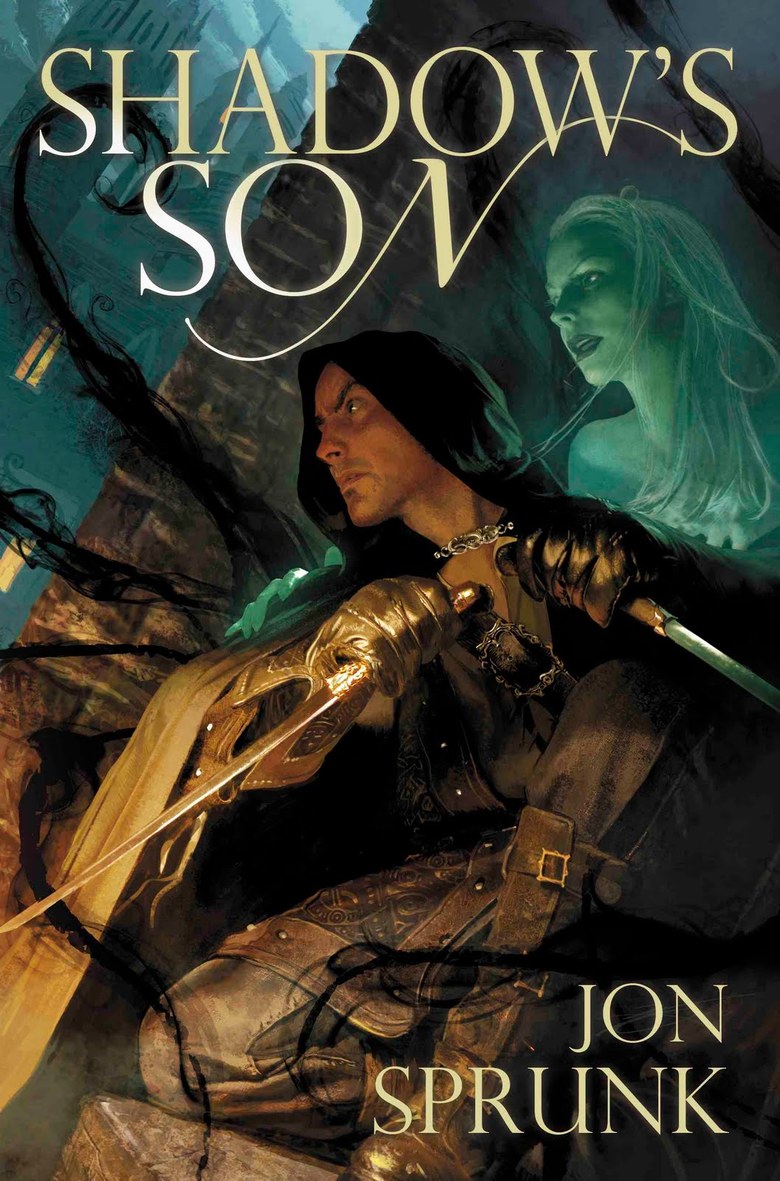
Shadows Son Jon Sprunk-smallThe fantasy genre loves series (especially trilogies.) As a fantasy reader, I love them, too.

However, my first published novel, Shadow’s Son, was originally written as a stand-alone. I suppose I had an idea that publishers would be more inclined to take a chance on a single book from an unknown writer, so I was shocked when my agent came back with a deal for a three-book series that would become the Shadow Saga. I’m not ashamed to admit I was also a wee bit terrified.

How in the seven hells was I going to write a trilogy? I had never written anything longer than a single book before.

And each of the sequels has a contractually-agreed deadline? AND they want outlines for books two and three right away? Gulp.

Despite my trepidations, the adventure of reaching out into unknown territory was also thrilling, so I dove in head-first. What was the big deal, right? Writing a series is probably just like writing three separate books, isn’t it?

Well, yes and no.

My personal philosophy is that every novel must contain a complete story. That means my books each have their own plot that begins and ends within those pages. However, with a series there is also a series arc in play, another plot (super plot?) that starts in the first book and continues to develop through each subsequent novel to the very end.

Read More Read More

Norman and Pagan Traces near Oxford

Norman and Pagan Traces near Oxford

Iffley Church from the southwest, showing hte main west entrance. The yew is to the right.
Iffley Church from the southwest, showing the main west entrance. The yew is to the right.

Oxford is a popular destination in England thanks to its famous university and fine architecture, which includes a rare Saxon tower. What’s less well-known is the pleasant stroll along the River Isis two miles down to Iffley village. The walk will take you past the university boathouses, a pasture, an excellent pub, and some fine river views. Just past the pub, you’ll come across a lock and bridge taking you to a small village that contains one of the best-preserved Norman churches anywhere.

St. Mary’s Iffley Church was built c.1170-80 in the High Romanesque style. Early in its history, ownership passed from the local lord to an absentee lord. This distant owner continued to maintain the church, but did little to “improve” it, thus leaving it in much its original state.

Read More Read More

The Scorpion Revealed: The Adventures of Captain Marvel, Chapter Twelve: Captain Marvel’s Secret

The Scorpion Revealed: The Adventures of Captain Marvel, Chapter Twelve: Captain Marvel’s Secret

The Adventures of Captain Marvel tom_tyler-smallHurry up and get in here! Be careful you don’t trip walking down the aisle — the lights have already gone down and they’ll be ready to start any minute. You’re late, but still in luck, because there’s one last seat left, over there on the right — see it? Now that we’re all in our places with bright shining faces, we’re ready for our story’s finale. Sit tight because here it comes — The Adventures of Captain Marvel, last chapter: “Captain Marvel’s Secret.”

Three title cards semi-coherently sum up last week’s action. “Captain Marvel — Rescues the Malcolm Expedition from a trap set by the Scorpion.” “Billy Batson — Refuses to enter the tomb to get Dr. Lang’s lens.” “Rahman Bar — Plans to arouse the natives against the expedition.” And now, for the final time, let’s shout together the mystic syllables that will bring down the magic lightning bolt and transform you into one of the greatest of all superheroes, Captain Marvel — Shazam!

Returning to the conclusion of last week’s chapter, Malcolm and Bentley, having recovered the hidden lens, stand outside the tomb chamber where Betty and Whitey are trapped, while Billy and Tal Chotali dither outside the tomb itself. The whole place is being shaken to pieces due to the eruption of the volcanic mountain Scorpio. “Scorpio is angry because unbelievers have entered the tomb,” Tal Chotali tells Billy. Actually, we know that Rahman Bar has caused the eruption by diverting a river into the crater, which, as everyone knows, acts as a volcano emetic.

As the shaking increases in intensity, Billy tries to run into the tomb to help his friends inside, but is held back by Tal Chotali. Everyone in the tomb — Malcolm, Bentley, Betty, Whitey — is doomed, hopelessly doomed!

Read More Read More

New Treasures: The Year’s Best Science Fiction: Thirty-First Annual Collection

New Treasures: The Year’s Best Science Fiction: Thirty-First Annual Collection

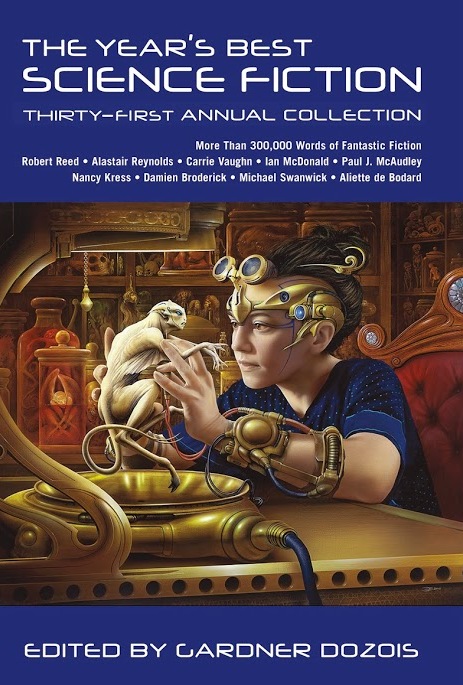
The Year's Best Science Fiction 31-smallIt’s that time of year again. I’ve been reporting here on the annual crop of Year’s Best SF and Fantasy anthologies as they’ve arrived over the summer — including Rich Horton’s sixth (published in June), the eighth volume from Jonathan Strahan (May), and David Hartwell’s eighteenth volume (December 2013).

And now at last the great granddaddy of them all arrives: Gardner Dozois’s The Year’s Best Science Fiction: Thirty-First Annual Collection. Arguably the most essential of the lot, it is certainly the most comprehensive and the most irreplaceable. Gardner, the Hugo Award-winning editor of Asimov’s SF for two decades, has been compiling and editing this volume every year without fail since 1984, and his richly detailed annual summation is required reading for anyone who expects to really understand science fiction.

In the new millennium, what secrets lay beyond the far reaches of the universe? What mysteries belie the truths we once held to be self evident? The world of science fiction has long been a porthole into the realities of tomorrow, blurring the line between life and art. Now, in The Year’s Best Science Fiction: Thirty-First Annual Collection the very best SF authors explore ideas of a new world in the year’s best short stories.

This venerable collection brings together award winning authors and masters of the field such as Robert Reed, Alastair Reynolds, Damien Broderick, Elizabeth Bear, Paul McAuley and John Barnes. And with an extensive recommended reading guide and a summation of the year in science fiction, this annual compilation has become the definitive must-read anthology for all science fiction fans and readers interested in breaking into the genre.

The Year’s Best Science Fiction: Thirty-First Annual Collection was published by St. Martin’s Press on July 15. It is 750 pages, priced at $40 in hardcover, $22.99 in trade paperback, and $10.99 for the digital edition. The cover is by Jim Burns.