Browsed by
Category: Blog Entry

Is This Where John Norman Got His Inspiration?

Is This Where John Norman Got His Inspiration?

DSC_1549

I spotted this in the classifieds at the back of the March 1962 issue of Amazing. Too bad I didn’t know about this when I met John Norman!


Sean McLachlan is a freelance travel and history writer. He is the author of the historical fantasy novel A Fine Likeness, set in Civil War Missouri, and the post-apocalyptic thriller Radio Hope. His historical fantasy novella The Quintessence of Absence, was published by Black Gate. Find out more about him on his blog and Amazon author’s page.

From Poul Anderson’s Vault of the Ages to the End of All Things

From Poul Anderson’s Vault of the Ages to the End of All Things

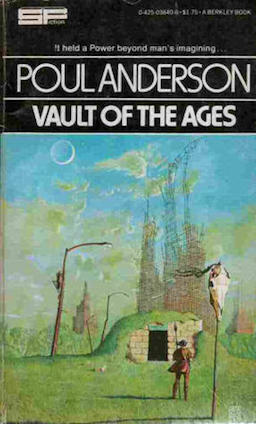
VaultoftheAgesEven though this survey seeks to showcase, specifically, Anderson’s fantasy works, I want to begin with what may be argued to be his first novel: Vault of the Ages.  It moreover wouldn’t be all that hard to argue that this work is fantasy, anyway. Perhaps it’s historical fantasy – a kind that anachronistically depicts a medieval northern tribal culture in the future. It’s undeniably post-apocalyptic, and many of these works are not only fantasy but escapist fantasy at that. Who hasn’t been locked into a frustrating, mind-numbing job – a stereotypical office job, for instance – and thought, “If only I had some real problems with which to deal with right now, like zombies, or road warriors, or radioactive mutants”? Who hasn’t secretly yearned for the chance to see what they truly are capable of, to pit their meager store of talents against all that the dangerous world might offer, and who hasn’t secretly concluded that they would do just fine – they would just have to get a gun, of course, and stockpile some food – and take out that weirdo next door, first thing!

Not only would I classify Anderson’s first novel as belonging to the species of post-apocalyptic literature, but I’d also call it mundane science fiction, because none of the science in here is extrapolative. In fact, it can be argued that there is no “science” here at all, because the gist of the science is the salvage of iron, to be hammered into common swords and shields, out of radioactive cities. And gunpowder which is hidden in the – you guessed it – Vault of the Ages.

I also might classify this as a boy’s novel, because it begins with an overly informational account of actual time capsules in Atlanta, Georgia and in New York City. It’s hard to see what purpose this introduction might serve other than didacticism, and this consequently suggests an audience that often is perceived to be in need of didacticism. Moreover, the main characters are routinely called “boys,” which, intentionally or not, because of the way in which these characters gleefully and energetically hurl themselves into very scary, very potentially fatal situations, lends this work the character of an adventure novel aimed at Boy Scouts. In other words, for me, this book is short in emotional realism. We shall have to talk about Viking age perspectives in time, but even taking this into account, the boys’ worldviews and actions seem wantonly cavalier.

Read More Read More

January Short Story Roundup

January Short Story Roundup

oie_1743017Z1jBJggOHere we are again with a new batch of short stories for your reading pleasure. Some were good, some were alright, you know, the usual. Remember, though, whatever I write about these stories, take the time to go check them out yourself and let the writers and magazines know what you think.

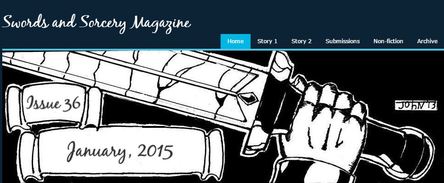
Swords and Sorcery Magazine Issue 36 marks three years of continuous publication and is one of its best in a while. The first tale, “The Fourth River” by Brandon Ketchum, is a good old bit of monster-fighting set in the forests of a magical land called Ohio, in a seventeenth century filled with fantastical beasts. The story tells of the violent encounter between a party of colonial traders and a bunch of Shawnee with a Kinepikwa — a giant serpent with antlers and the power to paralyze any unlucky enough to view the evil gem embedded on its brow.

“The Fourth River” is good example of the continuing movement by some writers away from the too, too common medieval trappings of much fantasy. There’s not much to the characters — they’re too busy struggling to save the Ohio Territories from destruction — but Ketchum does a good job limning out his alternate reality in six thousand words.

Issue #36’s second story is “Warden’s Legacy” by Daniel Moley. It’s only his second published story, but it feel like it’s part of a much longer tale. Dane is a talented soldier hoping to join up with an elite unit, the Phantoms. They are the frontline in a war against a force of wizards bent on resurrecting the Forshai, a race of reptilian beings who once ruled mankind. Not a bad story at all, with enough tantalizing refrences to a larger world to make me want to read more.

Read More Read More

Destination Barsoom, Nehwon, Narnia: A Few Thoughts in Defense of Escapism

Destination Barsoom, Nehwon, Narnia: A Few Thoughts in Defense of Escapism

wardrobe
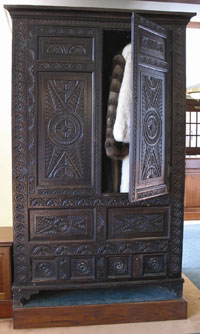
The wardrobe that inspired C.S. Lewis. Collection of Marion E. Wade Center, Wheaton College.

I memorized all of John Carter and Tarzan, and sat on my grandparents’ front lawn repeating the stories to anyone who would sit and listen. I would go out to that lawn on summer nights and reach up to the red light of Mars and say, “Take me home!” I yearned to fly away and land there in the strange dusts that blew over dead-sea bottoms toward the ancient cities. — Ray Bradbury (“Take Me Home,” The New Yorker June 4, 2012)

A couple weeks ago, friend and fellow Black Gate blogger Gabe Dybing texted me with a proposition. “Read chapter one of Maker of Universes,” he typed, “and if you’re interested let’s talk about doing a survey of the series together.”

World of Tiers is probably Philip José Farmer’s most renowned series next to Riverworld, which I read a few years back. Currently I’m reading the Dungeon books, a shared-author series of six novels set in another world created by Farmer. Did I want to add this to my plate? Gabe piqued my interest by noting that the protagonist is an older English professor, somewhat disillusioned, who wants to escape — a character with whom we would feel some personal sympathies.

And so I read the first chapter, and the survey is on. In coming weeks we will be reviewing the books together — interspersed, I’m sure, with Gabe’s own Wednesday survey of the fantasy works of Poul Anderson and my own eclectic ranging far and wide across the spec-fic landscape.

But before we begin that undertaking, here is a prologue of sorts, a few thoughts I jotted down after reading the first chapter of Maker of Universes (1965). My thoughts, you will see, apply broadly to all “escapist” fiction…

Read More Read More

Book Tour Tips for (Self-Published) Authors

Book Tour Tips for (Self-Published) Authors

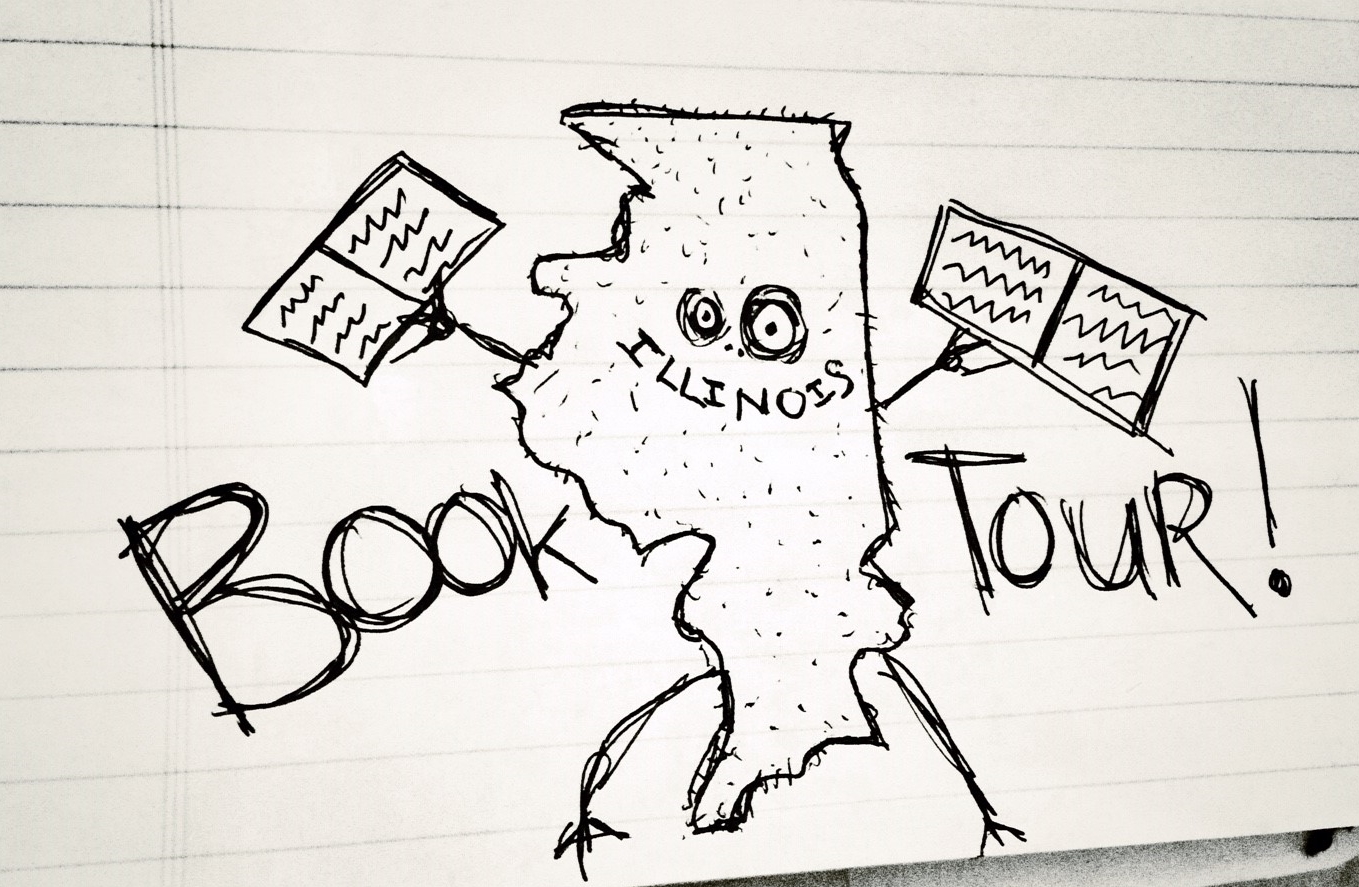
book tourMy adventure begins sixteen tons of sundowns ago… maybe say, November-ish, when the Clarendon Hills Public Library in Illinois asked me to be a featured reader at their No-Shush Salon. They wanted an author for early 2015. My first response (which I thankfully didn’t send) was no. Grateful that they thought of me, but no way. Who can afford to travel 5 hours one-way for one reading?

And then, THEN! In a cosmic crapshoot of hell yeah, another Chicago reading series, Tuesday Funk, contacted me. They wanted me for a reading several days after No-Shush.

When the universe shimmies at you, you wink back. I said yes to both.

Read More Read More

The Public Life of Sherlock Holmes: The Case of George Edalji

The Public Life of Sherlock Holmes: The Case of George Edalji

Doyle_EdaljiIn the Old Testament, Nehemiah is the cupbearer to the king of Persia. His people, the Israelites, had been conquered by the Babylonians and sent into captivity years before. Groups of exiles had been allowed to return to Jerusalem, but the walls, which signified security and nation in those days, hadn’t been rebuilt.

When Nehemiah learned of the plight of his brethren, he wept, mourned, fasted and prayed. Such was the depth of his feeling for them.

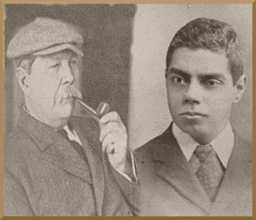
In December of 1906, Sir Arthur Conan Doyle came across the case of George Edalji. Though he had no ties whatsoever to the disbarred solicitor from the village of Great Wyerly, Doyle was so outraged at the obvious injustice he perceived, that for over half of a year, he dedicated himself to exonerating the recently freed man.

There had been a series of cattle, horse  and sheep maimings in the Wyerly area in 1903. Based on specious circumstantial evidence, the twenty-seven year old Edalji (son of the local reverend), poor of vision and with a spotless record, was convicted and sentenced to seven years in prison. Edalji’s father was from Bombay and there is no doubt that prejudice played a huge part in the story. The Dreyfus Affair comes to mind. Edalji was released after three years with no pardon, no explanation and no recompense.

Read More Read More

The Middle Child of Editorial: An Interview with Jake Thomas, Associate Editor at Marvel Comics

The Middle Child of Editorial: An Interview with Jake Thomas, Associate Editor at Marvel Comics

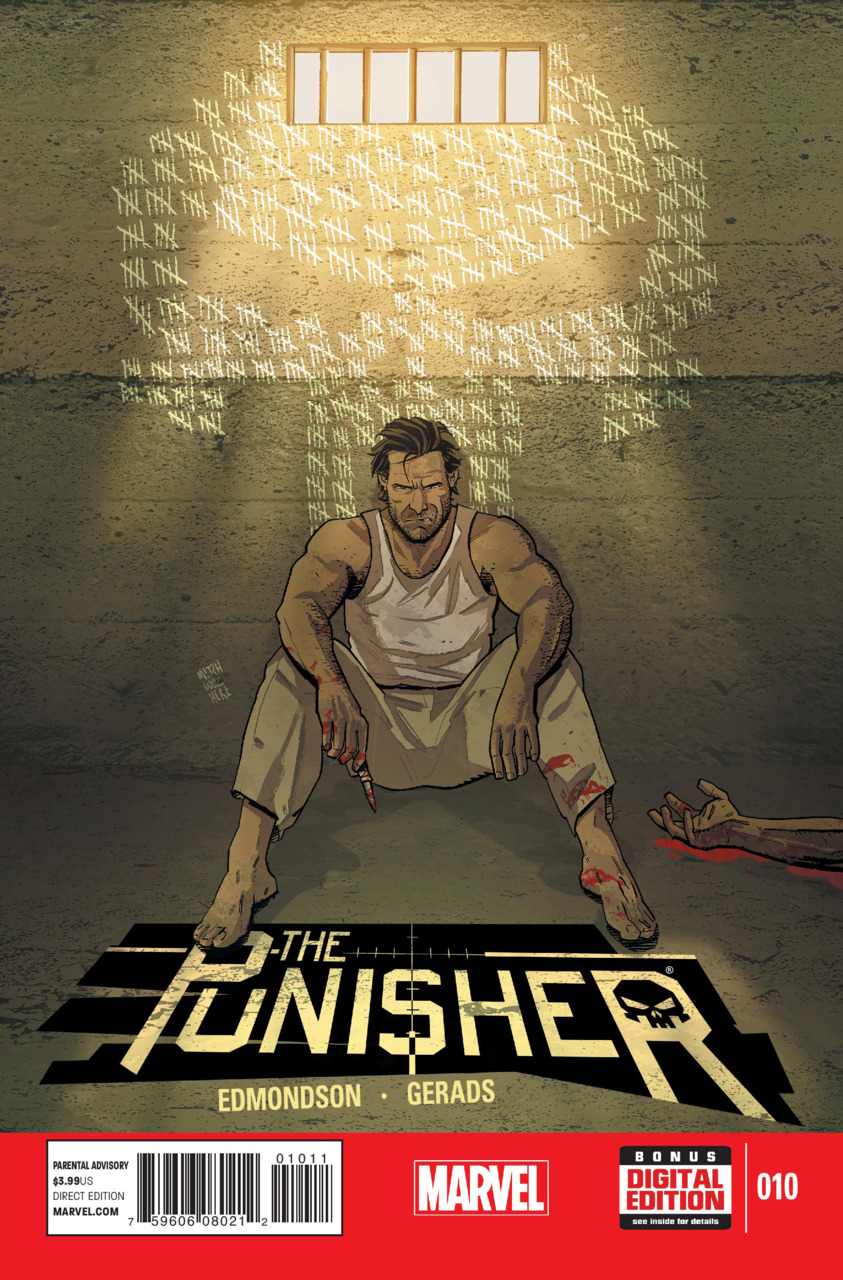
I’m having an e-conversation with Jake Thomas, an Associate Editor at Marvel Comics. punisherHe’s got a ton of editorial credits, as Assistant Editor on titles like Captain America, Avengers, Age of Ultron, and many others, as well as Editor on Iron Fist the Living Weapon, Deadly Hands of Kung Fu, The Punisher and others.

Let’s cover some of the basics first. Jake, you started at Marvel as an Assistant Editor. Editors oversee production. What do Assistant Editors do for the production process?

Marvel editors are involved in a lot more than just production.

A main Editor helps develop projects, gives story and art notes, helps with the marketing of the books, all kinds of things. The nuts and bolts of production are by and large the purview of the Assistants. Assistant Editors keep files moving, track schedules, write recaps, do ad lineups, gather reference, run proofs through our various checks and balances, a bunch of the behind-the-scenes work that allows the machinery of comics to keep functioning.

They also act as another set of eyes; they can give script feedback to their editors, check the art as it comes in to make sure the storytelling is solid and everyone’s in the correct costume. Important stuff!

Read More Read More

Five Things Better Than Handing In Your Manuscript

Five Things Better Than Handing In Your Manuscript

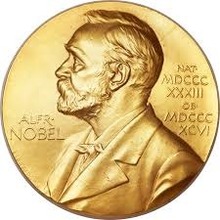
Nobel prizeThis is in the forefront of my brain this week because – you guessed it – I’ve just handed in a manuscript. Now even though this is only the current draft of the work-in-progress, it feels pretty good, so I started to wonder, is there anything better than this?

Here are some of my thoughts:

Winning the Nobel Prize. It’s true you get to call yourself a Nobel Laureate, but I’ve asked around, and apparently this isn’t as wonderful as you might think. To start with, you have to go to Stockholm in February. Nothing against Stockholm, but really, February. It sometimes gets given to people years, and even decades after the work it’s being awarded for was done – which means their thank-you speeches frequently have a heavy subtext of “what, that old thing?” The money’s nice, but again, it so often comes later than you’d like it. In fact, more than one Nobel Laureate has been overheard to murmur, “Great, something else to dust.”

Winning the Superbowl. This one I confess I just don’t get. I keep asking what’s in the bowl, and all I get are funny looks. I mean, there’s a big difference between a super bowl of popcorn, and a super bowl of sauerkraut. I’m just saying, I’d need more details to be able to tell whether winning one is better than handing in a manuscript.

Read More Read More

Writing: Why You Shouldn’t Tinker With the Beginning Until You’ve Written to the End

Writing: Why You Shouldn’t Tinker With the Beginning Until You’ve Written to the End

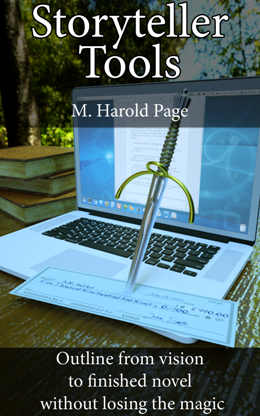
Storyteller-Tools-New-Cover 255
Outliners like me, we write in layers.

The beginning of your novel is… Important. Vital. Critical.

It’s the bit that grabs the reader, and if the reader is your dream agent or an editor, then it can potentially grab you a career instead.

So, important, vital, critical. So much pressure to get it right. A nagging fear that it’s wrong.

And yet, you need to hone your beginning last. Here’s why…

Read More Read More

Writing Through February

Writing Through February

120px-Girl_with_stylus_and_tablets.Fresco_found_in_PompeiI have a bad case of February.

I know I’m not the only one, because I live with two small girls and a husband who are suffering from the same malaise. You know it: it’s cold. It’s dark. It has been cold and dark for a long time. Christmas is over, spring is a long way off, and everything is just… hard.

If you live in one of the particularly snow-covered zones this is doubly true. Crossing the street is hard. Getting out the door is hard. Heck, getting out of bed in the morning is hard.

So writing? Pffft. The irony is that, like exercise, I know that writing is one of the things that keeps me healthy, whole, and sane.  Keeping the commitment to myself and to the page is necessary. But like everything else at this time of year it is so terribly, terribly hard.

I know what helps me:

Read More Read More