Browsed by
Category: Blog Entry

Art of the Genre: The Art of Sad Puppies

Art of the Genre: The Art of Sad Puppies

What is the Wizard's First Rule?
What is the Wizard’s First Rule?

Before I get into this, I want to first make it clear that John O’Neill goaded me into writing today. When I mentioned that I found myself siding with Larry Correia, and God forbid Vox Day, on the hot topic of the week [Hugo vs Puppies, which we recently summarized here], John baited me with this gem:

And I’m fascinated to hear that you take the Puppies side in this…. hard as I try, I’m not able to warp my head into their liberals-have-stolen-the-Hugos-year-after-year-with-their-lies-and-secrets way of thinking. I’ve been trying to find someone to do a Puppy-friendly take to counter my posts… you interested?

I told him, and I quote:

LOL, I’ve no real depth to anything I would write, just a gut feeling, and in the end I’d probably alienate the bulk of any fellow BG bloggers I’ve come to know over the years. Now obviously that doesn’t mean anything to me as my fans are gamers who don’t give a rat’s ass about the Hugo, but still, it could get very ugly, very fast.

And it’s true, I write Art of the Genre, not Words of the Genre, so I’ve really no dog in this fight, but as someone who is on the outside, and enjoys breaking down numbers, my opinion did provide some puppy love. So I started thinking a bit more on my view.
Read More Read More

Return to the Witch World: The Crystal Gryphon by Andre Norton

Return to the Witch World: The Crystal Gryphon by Andre Norton

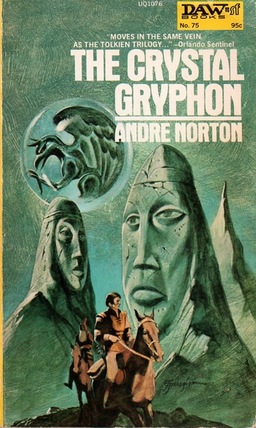
oie_14001ZDaNwY6NI started slowly working my way through Andre Norton’s splendid Witch World series three years ago. I’ve written several reviews for my site and Black Gate that you can read at the links.

In The Year of the Unicorn (reviewed here) we saw the end of the great war between High Hallack and Alizon. We go back in time to the war’s vicious start in The Crystal Gryphon (1972), the seventh published novel in the series.

The Crystal Gryphon is the first volume of a trilogy about Joisan and Kerovan, a young noblewoman and her husband, a prince tainted at birth by strange magics. Married in absentia when they were only six and eight respectively, the book is told in chapters narrated by one then the other. They hail from two distant parts of High Hallack, and are not to meet for ten years, when Kerovan comes of age. As the years pass, each must struggle to forge his and her way in a conservative land wracked by local power politics and a brutal invasion.

Kerovan of Ulmsdale was born in the ruins of a building erected by the Old Ones, the magically powerful race that lived in and vanished from High Hallack long before the arrival of men. The forces that still lingered in the place changed him, giving him slanted eyebrows over yellow eyes and cloven hooves instead of feet. His mother refuses to see him ever and his father, while declaring Kerovan his heir, gives him over to a crippled soldier to raise and train.

The orphaned Joisan lives with her childless uncle, Cyart, lord of Ithkrypt, and his widowed sister, Dame Math. Together, her aunt and uncle teach her to run an estate. When war with the raiders from the land of Alizon becomes imminent, basic sword and archery skills are added to her education.

Read More Read More

Adventures In Straw Polls: Fear, Lovecraft, and Me

Adventures In Straw Polls: Fear, Lovecraft, and Me

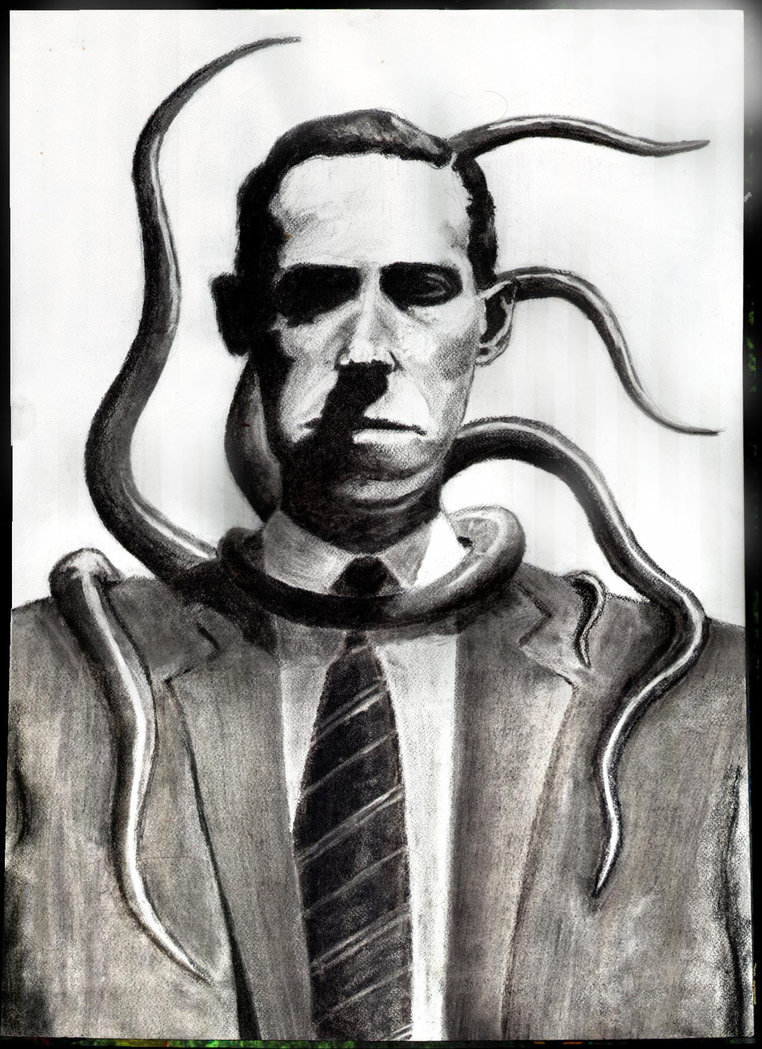
howard_philips_lovecraft_by_harsht-d48pzaoOnce upon a time, H.P. Lovecraft, he of the vaunted Cthulhu party set, set down his principles for crafting scary stories. He opined that terror is the oldest and most basic emotion available to humankind, and then went further, stating that those things unknown to we mortals are that which are most fearsome. His exact phrase, from the essay “Supernatural Horror In Literature,” (last revised 1935) reads: “The oldest and strongest emotion of mankind is fear, and the oldest and strongest kind of fear is fear of the unknown.”

I disagree.

So far as I can discern, it’s the fear of what is known (or at least readily imagined) that is most terrifying. For example, being wounded and then dismembered by a lunatic straight out of The Texas Chainsaw Massacre or Hostel, or being attacked by a shark while swimming.

Curiously enough, I’m getting set to either torpedo or defend this idea in public. I’ve been asked to be on a panel at April 25th’s Ohioana Book Festival in Columbus, Ohio. The panel topic is “Horror, Suspense, and the Supernatural,” and my fellow panelists include Julie Flanders, Debra Robinson, and all-around horror vet Tim Waggoner, with whom I share a publisher (Samhain).

Some brave audience member is sure to ask “What is horror, anyway?” even though “What isn’t horror?” might make for a better question, and then they’ll move on to asking about how authors scare people. Our tricks and devices. Do we, for example, rely on the known or the unknown to conjure our effects?

Read More Read More

The Public Life of Sherlock Holmes: Peter O’Toole as Holmes

The Public Life of Sherlock Holmes: Peter O’Toole as Holmes

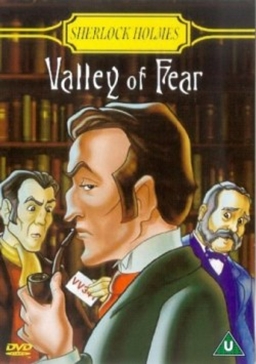
O'Toole_ValleyCoverAs famous a (costumed) character as Sherlock Holmes is, it is no surprise that he has lent himself to animation. Of course, you’ve seen images of Daffy Duck, Snoopy and Mickey Mouse, among many others, imitating Holmes: usually with an oversized magnifying glass.

Actual Holmes characters can be found in such animated efforts as Sherlock Holmes in the 22nd Century (Watson is a robot) and Tom and Jerry Meet Sherlock Holmes. Of course, Disney’s The Great Mouse Detective features Basil of Baker Street, an excellent, if tiny, Holmes.

In 1983, Burbank Films produced forty-five minute animated versions of Doyle’s four Holmes novellas: A Study in Scarlet, The Sign of Four, The Hound of the Baskervilles and The Valley of Fear. To voice the great detective for the television movies, they tapped eight-time Academy Award nominee Peter O’Toole (he did receive an Honorary Award in 2003).

O’Toole, who passed away in 2013, had a long, successful career in films, was best known for his sweeping performance in Lawrence of Arabia.

He was a solid, if not inspired, choice for these four productions. O’Toole’s manner and delivery, while rather flat, fits the animated Holmes well. An antic, Jeremy Brett portrayal wouldn’t have worked as well. I can see how some folks don’t like O’Toole’s almost constant monotone. But for me, it works here.

It’s Elementary – Billy Wilder envisioned a Holmes/Watson pairing of O’Toole and Peter Sellers for his The Private Life of Sherlock Holmes, but could not pull it off.

Read More Read More

There Will be Blood Books

There Will be Blood Books

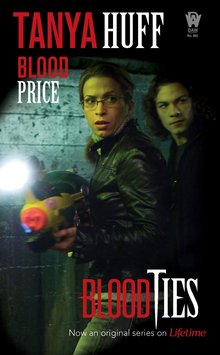
Huff PriceThe great thing about the people in Tanya Huff’s Blood Books is that they act like… well, like people. This is remarkable for two reasons. First, not all of them are people; second, not all authors allow their characters to act like themselves all the time. Huff insists on it. Even when it makes writing the story difficult.

Let me qualify. All the characters in the Blood Books are people. Not all of them are human. They do act like themselves all the time, which isn’t to say that they act the way you expect them to. Not at all. More often than not, they’ll surprise you. But they’ll surprise you in a way that makes you go “Oh! Wow!” And not in a way that makes you go “Huh? What?”

The human protagonist, Vicky Nelson, was an extremely successful police detective, the kind who doesn’t suffer fools, and therefore doesn’t make a lot of friends among her peers. When she develops night blindness, she has two options, take a desk job, or leave the force. Being who she is, she chooses to leave the force and start her own detective agency. She’s stubborn, arrogant, and strong – exactly the kind of person you’d need if you were in trouble. Immanent blindness doesn’t change that.

The vampire protagonist, Henry Fitzroy, is the Duke of Richmond, the bastard son of Henry VIII. He doesn’t act like a young man living at the end of the 20th century. He acts like the son of a king, who’s been around for 450 years, has actually lived through all the changes that took place in those years, and who subsequently knows how to pretend that he’s a man living in the 1990’s. He’s a vampire, but he’s also the son of a powerful king, so for him, “territory” always has two meanings.

Read More Read More

Into the Pits: Ody-C Issues 3 and 4

Into the Pits: Ody-C Issues 3 and 4

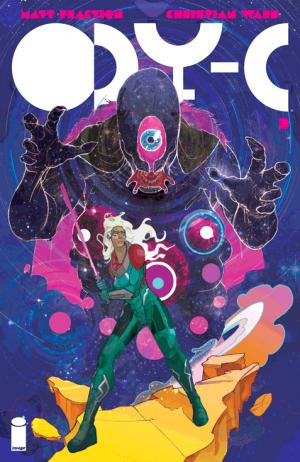
ODY-C issue 3-smallOdysseus’ encounter with the Cyclops is (and has consistently been for several thousand years) one of the best known episodes from the Odyssey. It’s exciting, it’s graphic, and it displays Odysseus’ most notable quality: his cunning. So I was eager to see what Ody-C would do with this episode when it reached that point. It did so fairly quickly, and issues 3 and 4 span the telling of this encounter for Odyssia and her crew.

The results were mixed. There are things I loved, and a few I really didn’t. But first, to touch on what Homer did first. Not because it’s the meter by which we should judge Ody-C but because I like some of the ways Matt Fraction is playing with the prototype here.

For those who don’t remember, Odysseus and his crew wash up on the shores of the island of the Cyclopes. They find a large, empty cave, and help themselves to cheese and milk while waiting for the inhabitant to return. When he does, he isn’t a human but the massive Cyclops Polyphemus. Polyphemus proceeds to eat many of the sailors, until Odysseus gets him drunk and gouges out the Cyclops’ eye with a massive pole. The men then tie themselves beneath Polyphemus’ sheep in order to escape the cave when the flocks are let out to graze.

In Ody-C, the fundamentals are all here but the differences are significant. Odyssia and her women arrive on the planet Kylos. They find a massive fortress, and rather than looking for sustenance, Odyssia orders a break of the citadel in the hopes of finding treasure.

Read More Read More

Return of the Master Cheeser: The Disappearing Dwarf by James P. Blaylock

Return of the Master Cheeser: The Disappearing Dwarf by James P. Blaylock

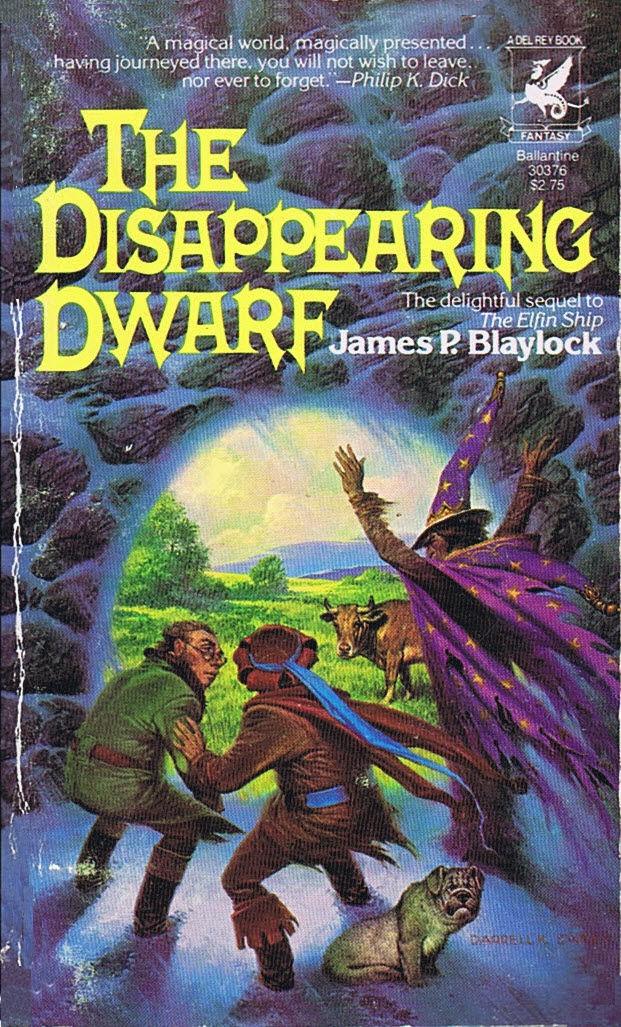
The Disappearing Dwarf-smallPublished in 1983, The Disappearing Dwarf is James P. Blaylock’s second novel, the sequel to his first, The Elfin Ship. Along with The Stone Giant (1989) they form the Balumnia Trilogy. If you have any love for Kenneth Grahame’s The Wind in the Willows, or mouth watering descriptions of all sorts of food and drink, then these books are for you.

The Elfin Ship (reviewed here last year) is filled with constant comical digressions and expends pages on delightful, superfluous details. It’s filled with oddball characters and deliriously silly escapades. The plot is wonderfully complicated. The Disappearing Dwarf has all of those things — save the plot. It’s not that it doesn’t have a plot, it’s just not much of one.

Bored with his new life as man of leisure (allowed by the success of his travels in the previous volume), Jonathan Bing, master cheesemaker, agrees to take a trip down the Oriel River with Professor Wurzle to explore the abandoned castle of their foe, Selznak the dwarf. The castle, they quickly learn, is not empty — and definitely not safe.

From there they meet Miles (pronounce Meelays), the Magician who is hunting Selznak. He tells them that their old nemesis has reappeared, and is certainly up to no good. The magician suspects the dwarf is looking to steal a great magical orb from their friend, Squire Myrkle. Upon reaching the squire’s estate, they discover that he has vanished through a magical door that appeared in his library. The next thing we know, Jonathan, the Professor, and Miles (along with Ahab the dog), are back on board the elfin airship and headed for a doorway to the parallel world, Balumnia.

Narrative drive is nearly absent in The Disappearing Dwarf. Jonathan’s goals switch from one thing to another several times throughout the book. The adventurers spend much of the book traveling from one place to another without ever really knowing what they’re trying to achieve, other than their rather vague plan to find the squire before he falls into Selznak’s clutches. Balumnia has its own villain, a mysterious figure called Sikorsky, but as with the rest of the characters, we never get a clear sight of him or what he’s actually up to. Several characters fade away. One vanishes only to suddenly reappear with little explanation. The book moves haphazardly from one incident to another. Fortunately, most of those incidents are terrific fun.

Read More Read More

The Top 50 Black Gate Posts in March

The Top 50 Black Gate Posts in March

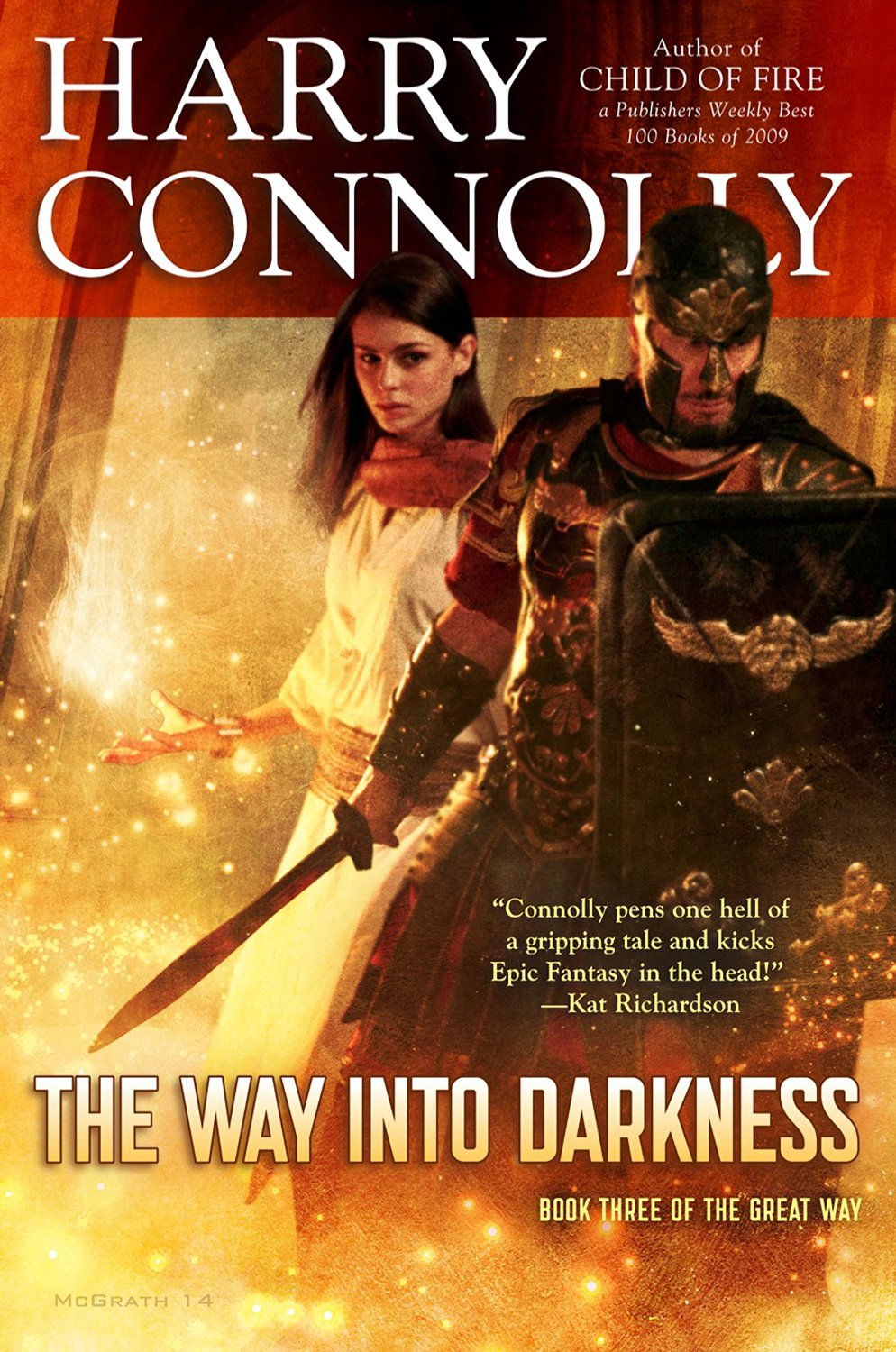
Great-Way-Final-Cover-eBook-3-copyI keep hunting for themes when I tabulate the most popular articles on this website every month. But you Black Gate readers, you’re inscrutable. One month you want all the secrets of writing fantasy trilogies, the next it’s all about the origins of Dungeons and Dragons. Seriously, I’d love to know what articles I should be planning for this blog… but after seven years like this, I give up.

Well, I suppose it’s good that you have diverse interests, anyway. And you sure have great taste in writers and books.

Take last month for example. The number one article for the month was a guest post from author Harry Connolly, author of “The Whoremaster of Pald” and Game of Cages, examining Attack Novels — those story ideas that a writer can’t stop thinking about.

Number two on the list was M Harold Page’s review of Campaign Cartographer 3 Plus, a terrific new fantasy cartography tool for creating your own magical kingdom.

And the number three article at BG last month was M Harold Page’s look at history as the bedrock of fantasy: “The History Manifesto and Sweeping Histories.”

Fourth on the list was our report on a recent attempt to reboot SSI’s famed Gold Box games using Kickstarter, followed by Thomas Parker’s heartfelt remembrance of a great American actor, “Leonard Nimoy Saved My Life.” And sixth was Elizabeth Cady’s detailed look at the new film Jupiter Ascending, “Capitalism Ascending.”

Read More Read More

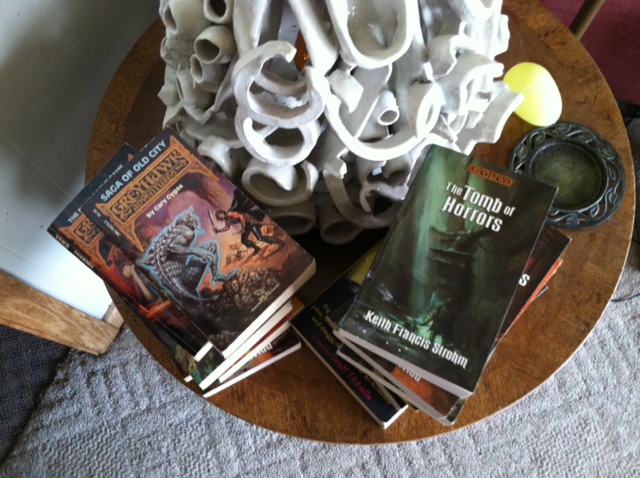
Thrift Shop Adventures 1: Wherein I Find Fantasy Treasures in Secondhand Stores (Greyhawk Classics and More!)

Thrift Shop Adventures 1: Wherein I Find Fantasy Treasures in Secondhand Stores (Greyhawk Classics and More!)

photo 3-2

“I’m gonna pop some tags / Only got twenty dollars in my pocket / I — I — I’m hunting, looking for a come-up / This is ******* awesome”
— Sir Macklemore of the Order of Thrift

When I go into town — to the nearest keep on the borderlands, say — I find it hard to pass up a quick pop-in to a thrift store. Last Friday I did my rounds in the city, hitting the trifecta: Salvation Army, Savers, and Goodwill. As with any type of hunting excursion — for instance, my single days hunting for a date at the college bars — there are highs and lows, ups and downs, mind-blowing flights of rapture and soul-crushing disappointments.

First up was Salvation Army. I always make a beeline for toys first, then books. I’ve never had much luck with toys in this particular outlet, although I did come close to a good score once: an elderly lady came up behind me at the check-out line carrying a vintage SIX FOOT LONG rubber jiggler snake! It had just been stocked on the shelf somewhere in between the time when I had looked and when I was checking out, so I’d missed it by mere minutes. It was tagged $1.99, and I immediately offered the lady ten bucks for it. She shook her head. “No, I want this. I’m thinking of putting it in my garden to keep kids out.” She actually said that.

The thought flashed through my mind “Are you crazy? That thing will be a kid magnet!” But I did not persist, just politely demurred, mentally accepting defeat. Some consolation was the fact that I had one already (they do come up on eBay occasionally, typically fetching about $20-$30).

Strike up the old Army Marching Band, though, because today was going to be a thriftastic day. Mostly thanks to a coloring book (which I’ll get to in a bit), but that wasn’t all: I was also about to unearth a tomb-full of Greyhawk.

Read More Read More

The Public Life of Sherlock Holmes: What Story Should You Read First?

The Public Life of Sherlock Holmes: What Story Should You Read First?

FirstStory_LionsMane
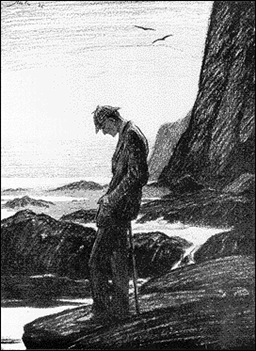
One of my favorites: Frederic Dorr Steele for The Lion’s Mane

Recently a post in a Holmes Facebook group caught my eye. A woman was a fan of one of the current TV shows (I don’t recall if it was Elementary or BBC’s Sherlock), but she loved it and wanted to read the stories. She wondered where to start.

First, I think it’s a bit interesting that there are Holmes fans that have never read Sir Arthur Conan Doyle’s stories. They only know the detective through television shows set in the modern day. I suppose this also happened a bit with the first Robert Downey Jr. movie, but that had a shorter shelf life. Anyhoo…

There’s a bit of a divide in the Holmes community these days between the ‘old school’ and the newer generation. One characterization is between those who study the stories and those who write speculative fan fiction that has little to no relationship with Doyle’s actual writings. To some extent, there’s always been an old guard/new fans distinction, but social media has exploded it.

While I’ve long been a fan of Holmes pastiches and enjoy most movies and films, I do look askance at all the doey-eyed swooning over Benedict Cumberbatch as Holmes. And they’ll pry my calabash pipe from my cold, dead hands before I recognize merit in this Sherlock Meta stuff.

But moving off the grumpy old man ruminations, the question the woman asked was a good one. The initial responses seemed to go with the standard ‘read them in the order they were written.’ That’s logical. But I don’t think it’s the best way to go.

Read More Read More