Browsed by
Category: Blog Entry

The Woman Who Was a Man Who Was a Woman: Alice Sheldon and James Tiptree Jr.

The Woman Who Was a Man Who Was a Woman: Alice Sheldon and James Tiptree Jr.

Tiptree Biography-smallAlice Hastings Bradley Davey Sheldon was a remarkable person — world traveler, painter, sportswoman, CIA analyst, PhD in experimental psychology… and one of the greatest of all science fiction writers. If you don’t recognize her name, that’s partly by her own design.

Born in 1915, from an early age Alice was a lover of this new genre that was in those days still called “scientifiction,” devouring every copy of Weird Tales, Wonder Stories, and Amazing Stories that she could find, but it wasn’t until the mid 60’s that she tried her hand at writing any SF herself. After some false starts, she completed a few stories and in 1967, when she was 51, she sent them off to John Campbell at Analog, not really expecting anything to come of it. As she considered the whole thing something of a lark, she submitted the manuscripts under a goofy pseudonym that she and her husband, Huntington (Ting) Sheldon, cooked up one day while they were grocery shopping — James Tiptree Jr. The Tiptree came from a jar of Tiptree jam; Ting added the junior.

To Alice’s professed surprise, Campbell bought one of the stories, “Birth of a Salesman.” A new science fiction writer was born, one who would, in the space of just a few years, make a tremendous impact on the genre (as two Hugos, three Nebulas, and a World Fantasy Award attest, to say nothing of the James Tiptree Jr. Award, which is given to works which expand or explore our understandings of gender).

Alice Sheldon never looked back. She also never let anyone know that James Tiptree Jr. wasn’t a man; all of her many contacts and correspondents in the SF field assumed that the courtly “Tip” who had had such a wide-ranging life and wrote such witty letters was an all-American male. (Who wouldn’t take phone calls or meet anyone — including his agent — in person and would never show up to accept any awards. What began as a joke became, without Alice’s really planning it, an elaborate deception worthy of… well, of the CIA, and a banana peel that countless readers and critics would embarrassingly slip on.)

Read More Read More

Alcalá de Henares: Visiting the Birthplace of Cervantes

Alcalá de Henares: Visiting the Birthplace of Cervantes

Yours truly hanging out with Don Quixote outside the Cervantes' old home. Sancho Panza looks unimpressed. I actually had to stand in line for this shot, it's that touristy. Copyright Almudena Alonso-Herrero.
Yours truly hanging out with Don Quixote outside the Cervantes’ old home. Sancho Panza looks unimpressed. I actually had to stand in line for this shot, it’s that touristy. Copyright Almudena Alonso-Herrero.

Spring has finally sprung here in Madrid. The sidewalk cafes are full, and those who can’t find a seat have set off to the countryside to go hiking. It’s a good time to leave the museums and galleries behind and take a look at what the surrounding area has to offer.

This past weekend my family and I visited Alcalá de Henares, a small city 40 minutes on the suburban train outside of Madrid. Its main claim to fame is being the birthplace of Cervantes, who has been in the news recently because Spanish archaeologists discovered his tomb.

Like many Spanish cities, it has its roots in prehistory and came to prominence in Roman times, when it was called Complutum. After the fall of the empire it was a Visigothic settlement and was later taken over by the Moors, who built a citadel (“al-qal’a” in Arabic, a common place name in Spain). During the Moorish period it was a thriving town with large Christian and Jewish quarters.

Read More Read More

The Tears of Ishtar by Michael Ehart

The Tears of Ishtar by Michael Ehart

oie_351436BG5v7xydWhen my renewed interest in swords and sorcery was sparked a few years ago, one of the first and best books of new writing I found was The Return of the Sword, edited by Jason M. Waltz (reviewed at BG by Ryan Harvey). It’s filled with a passel of great stories and turned me on to several writers I follow closely to this day. Among them are Bill Ward, James Enge, and Bruce Durham. It’s the book that convinced me that there was a renaissance in heroic fiction and that it was worth blogging about.

One of the most intriguing stories, with imagery that’s stayed with me over the years, is “To Destroy All Flesh” by Michael Ehart. I wasn’t surprised to learn it was part of an ongoing series of linked stories. “Flesh” references characters and quests that clearly predate the action at hand.

Ehart’s protagonist, Ninshi, a woman from Ugarit in Bronze Age Syria, is enslaved by a flesh-eating demon, the Manthycore. She must provide corpses of warriors for the beast to devour. Her terrible master gave her immortality, great strength, and enhanced healing in order to carry out this task.

By the time I could see again, it had already begun to feed. As always, it started with the soft parts. The belly and the face were its favorites and because it fed so seldom, it showed little restraint. This time it chose to wear the head of a lion, which seemed to be well suited for the task.

It felt the force of my gaze, but did not react right away, engrossed in some particularly savory morsel from the belly of one of the corpses. I took care not to take note of which one. It is a matter of pride that I not look away, but I long ago learned to look without seeing.

She is sustained over the centuries of her servitude by the dream of freeing herself and forcing the Manthycore to restore her lover to life. That quest sets the stage for the tales collected in The Tears of Ishtar.

Read More Read More

Ode to a J.R.R. Tolkien Coffee Mug

Ode to a J.R.R. Tolkien Coffee Mug

photo 1-7I’ve been drinking coffee from this mug since way back in the twentieth century. It was a gift, of that I’m pretty sure, but I’ve had it so long I can no longer tell you who I got it from or when.

It survived my first marriage, a move from Arizona to Minnesota and several subsequent moves all over the Land of 10,000 Lakes, and being left through one brutal winter in a cow pasture (I lost it on a walk late in the fall; the following spring it was still there where I’d left it, sitting on the hood of a rusted old jalopy!).

It is a little worse for wear — a chip on the rim and another one on the base. The litho, though — incredibly — is pristine and unfaded, even though it’s been through hundreds of cycles in the dishwasher.

The caricature of Tolkien as a hobbit, which is repeated on either side of the mug, was done by Steven Cragg. The text, which is attributed to “Largely Literary Designs, Inc.,” reads as follows:

Ever since we were no bigger than a billiard ball we’ve wanted something important we could call our own — a yacht, for example, or a cottage in the Bahamas, or a marriage counselor who could go an entire hour without saying the word “feelings,” or, well, a mythology of Middle-Earth, to be perfectly honest with you, a unique vision of history and pre-history, good and evil, gods, devils, the whole shebang, the sort of thing J.R.R. Tolkien devised more than a half a century ago, which means we’re lucky as Frodo, of course, because thanks to modern printing technology and a newfangled bartering system called “money,” we now need go no further than our corner bookstore, pick up a copy of The Hobbit and suddenly we’re there, chucked head over heels into Tolkien’s magical kingdom, thankful that when our own world becomes too much for us, we can always turn to his.

Read More Read More

The Public Life of Sherlock Holmes: Adventures With Jeremy Brett

The Public Life of Sherlock Holmes: Adventures With Jeremy Brett

Brett46For several decades, Basil Rathbone, star of fourteen Holmes films in the thirties and forties, was generally the most recognizable and popular screen Holmes. And of course today, Benedict Cumberbatch and Robert Downey Jr are internationally recognized for their turns as the master detective.

But in between Rathbone and Cumberbatch, one actor (with apologies to Peter Cushing) stood above all other portrayers of Sherlock Holmes. And that was Jeremy Brett.

This is number one of a three part series looking at the first part (The Adventures) of the Granada television series, which ran in full from 1984 to 1994. To many fans, Brett is simply THE Holmes. So…

In 1980, Michael Cox was a producer at Granada, one of the Independent Television (ITV) contractors in England. At the same time in America, Charlton Heston was starring as Sherlock Holmes in the stage play, The Crucifer of Blood. His Watson was a handsome Englishman named Jeremy Brett.

The following year, Cox proposed an authentic Sherlock Holmes series; one that was as true to the original tales as could commercially be done in the television format. His idea was received positively, but Cox was told that an essential element of the deal would be a pre-sale agreement with American television. This would secure “up-front” money, which would be invested into the series. WGBH in Boston, host of the popular PBS series, Mystery!, was an ideal candidate for the partnership.

Read More Read More

Self-published Book Review: The Shard by Ted Cross

Self-published Book Review: The Shard by Ted Cross

If you have a book you’d like me to review, please see the submission guidelines here

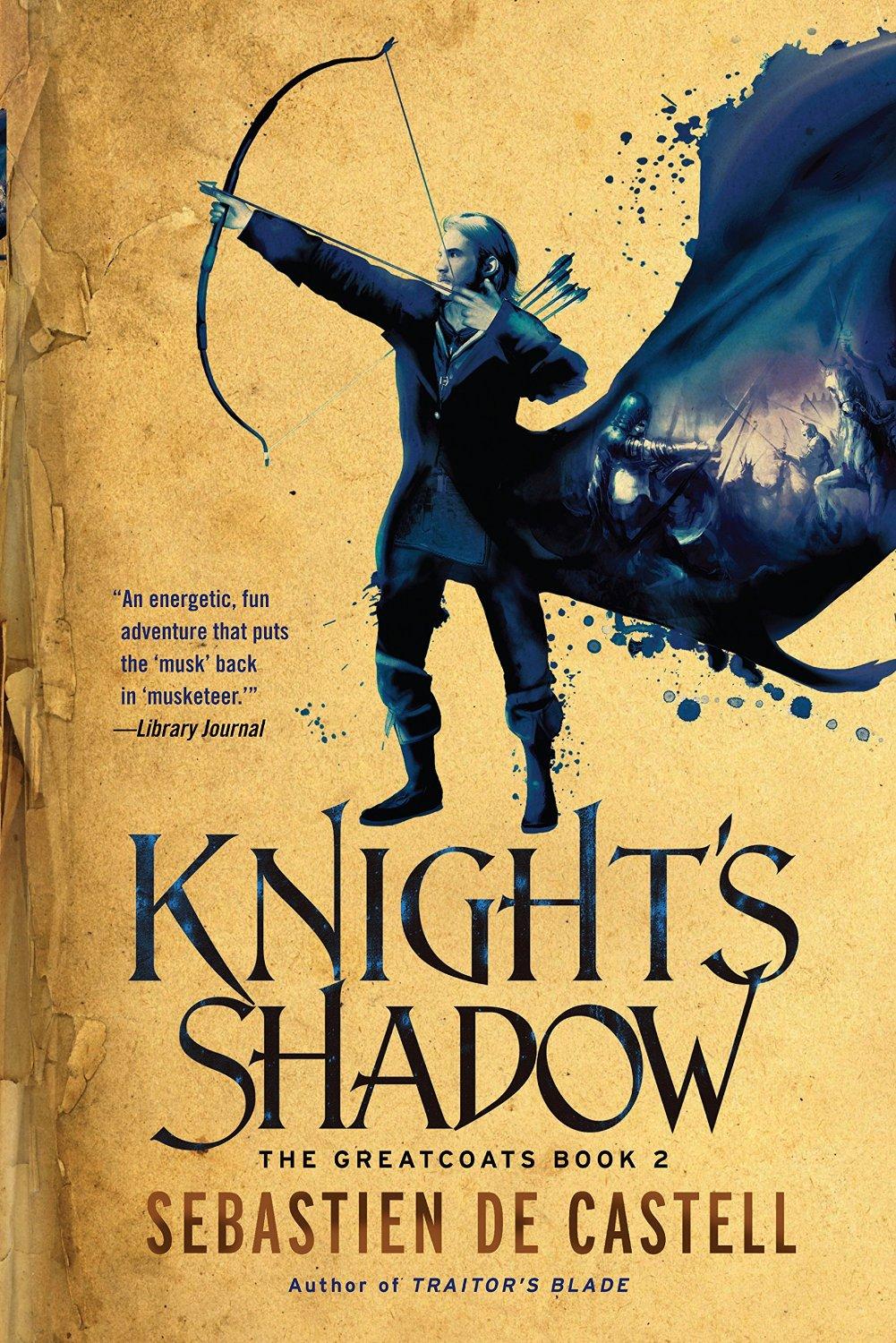
Shard coverTed Cross’s The Shard takes place in a world of elves, dwarves, and humans. Millenia ago, dwarves and elves warred against one another with devastating losses on both sides. Only when it was almost too late did they realize that they had been tricked by the corrupted wizard Bilach, leaving themselves vulnerable to his conquering armies. They combined forces and defeated Bilach. Afterward, the remaining wizards created a tower called the Spire of Light, with a great crystal atop enchanted to encourage peace. Centuries later, the dragon came and destroyed the tower and the crystal. Now a new threat has appeared, and the only way to defeat it is to find the sole remaining shard of the crystal, hidden in the lair of the dragon who destroyed it.

Wisely, the author doesn’t lay out the ancient history quite so directly as I’ve done here. Told this way, it seems too simple, too familiar. Instead, the history is told in bits and pieces, not through the eyes of the elves or the dwarves, but through the perspective of the humans, who came late to the region and saw the coming of the dragon, but know little of the history behind what it destroyed. In a sense, the story is told backward, each new story a revelation farther into the past, shedding light on a new person’s or people’s origin and role.

At the center of the large cast of characters is Midas. A lord of a minor holding, he is still mourning the loss of his son Miros when he discovers that someone is attempting to spark a war between the humans and the elves. He knows right away that such an act is foolhardy, and he makes contacts with the elves in order to try to ease tensions. The elf lady Alvanaria is eager to help keep the peace, but ultimately it’s the appearance of a new threat that prevents humans and elves from going to war. An army of wyrmen is rapidly approaching, and it will take humans, elves, and dwarves to stop them. But first, Midas, his sons, Alvanaria, the wizard Xax, and their companions will need to retrieve the shard of the Spire of Light from the dragon’s lair.

Read More Read More

Odysseus: An Original Barbarian Badass

Odysseus: An Original Barbarian Badass

As a performing storyteller (think bard), I’ve had the chance to participate in some epic tellings. And I mean EPIC! Up to three days of multiple tellers from across various countries telling a long and ancient story, one chapter at a time. It’s, well, it’s epic.

"I could string his bow, too, but everyone would just say the Hulk could have done it faster... It's not easy being me."
“I could string his bow, too, but everyone would just say the Hulk could have done it faster… It’s not easy being me.”

I’ve had the chance to tell The Odyssey twice, once in my hometown of Ottawa, the other time on the West Coast in Nanaimo, BC. The last telling was two weekends ago, and it struck me that you could take Odysseus out of his story and plop him into a sword and sorcery adventure and voilà! You have a perfect barbarian hero. Let me, in fact, count the ways:

He Has Super Strength
He’s so badass that he’s the only one who can string his ash bow. The only one! People try, fail and then go drink wine while mumbling.

He Knows How to Keep a Story Going
Okay, so we encounter him in The Iliad (bloody fun stuff). That war lasted ten years. Ten years! Then he takes another nine years to get home, while partaking of multiple adventures. Kind of makes you understand why Epic Fantasy is so, well, Epic.

Read More Read More

Blade Runner: Edmond Hamilton’s Tears in the Rain?

Blade Runner: Edmond Hamilton’s Tears in the Rain?

HamiltonReturnToTheStars
“I’ve… seen things you people wouldn’t believe…”

Get this:

I heard the sunrise music that the crystal peaks make above Throon when Canopus comes to warm them. I feasted with the star-kings in the Hall of Stars. And at the end, I led the fleets of the Empire against our enemies, the men from the League of Dark Worlds. I saw the ships die like swarming fireflies off the shores of the Hercules Cluster. I’ve shot the Orion Nebula. I’ve been into the Cloud, where the drowned suns burn in a haze of darkness. I’ve killed men, Doctor. And in that last battle, I —

Oddly familiar? Actually, that’s Gordon’s monologue to his shrink in Edmond Hamilton’s Return to the Stars.

How about this one?

I’ve… seen things you people wouldn’t believe… Attack ships on fire off the shoulder of Orion. I watched c-beams glitter in the dark near the Tannhäuser Gate. All those… moments… will be lost in time, like [small cough] tears… in… rain. Time… to die…

Of course, that’s Roy Batty’s dying monologue in Blade Runner. Hauer is supposed to have improved on the original script, which had…

I have known adventures, seen places you people will never see, I’ve been Offworld and back… frontiers! I’ve stood on the back deck of a blinker bound for the Plutition Camps with sweat in my eyes watching the stars fight on the shoulder of Orion… I’ve felt wind in my hair, riding test boats off the black galaxies and seen an attack fleet burn like a match and disappear. I’ve seen it, felt it…!

Read More Read More

The 2015 Hugo Nominations

The 2015 Hugo Nominations

Loncon 3 Hugo statue-smallI am I suppose coming a little bit late to the party, but I wanted to join in and express my views on the Sad Puppies/Rabid Puppies slates, and their effect on the Hugos. I will mention up front that of all the points of view I have seen expressed, I am most in sympathy with George R. R. Martin’s … you can read his views at his Not a Blog.

I should add as well that I do have a horse in this race. I am a Hugo nominee again as part of the editorial team for Lightspeed, which was nominated for Best Semiprozine. (We were fortunate enough to win last year, one of my biggest thrills in my time in the field.) I’ll be honest: one of the things that bothers me about this whole kerfuffle is that I’ll be at Sasquan as a nominee, my first time to be at the Hugos in person as a nominee. (I was unable to make it to London last year.) And I can’t help but think that the whole experience will be, certainly not ruined, but marred, by the aftermath of the whole mess. (For example – it would have been pretty darn cool to receive a Hugo from Connie Willis, if we were so lucky!) But you have every right not to care about that – that doesn’t matter at all in reality.

Anyway, here’s a quick summary of my positions:

Bloc voting is wrong. Making recommendations is not wrong. Promoting your own work strikes me as distasteful, but I’m not going to condemn those who do so. Promoting other people’s work is good.

Read More Read More

The Proxy Culture War for the Soul of Middle Earth

The Proxy Culture War for the Soul of Middle Earth

Culture War-smallThe culture war has been going on for a while. We’re used to it played out large. Trying to boil down 50 years of social history and politics into a paragraph is going to lose some nuance but, in broad strokes, you’ve people for whom established mores work, usually from homogenous communities, and people for whom they don’t — who are frequently labeled with various flavors of moral degeneracy. Usually to the scorn of history.

It’s played out in government, often in schools. We’re used to that. But now it’s also playing out in our fandom, our games, our conventions. This year the Hugo Awards took some collateral damage from being a battlefield in a war that is part of that narrative but is also somewhat removed from how we’ve been used to thinking of this fight.

Safe Space and the Geek Social Fallacy

There is a social movement of, largely, white male nerds misusing the concept of safe space to exclude people from geekdom.

Safe space is an area where anyone can be comfortable in who they are without recrimination, without bullying and without threat.

Most of our society isn’t safe. The litany of violence, abuse, and microaggression thrown at people because of fundamental aspects of their person is well documented

Read More Read More