Browsed by
Category: Blog Entry

The Public Life of Sherlock Holmes: Wrapping up Jeremy Brett’s Adventures

The Public Life of Sherlock Holmes: Wrapping up Jeremy Brett’s Adventures

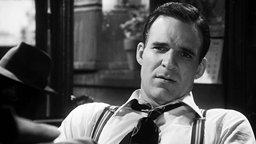
Brett3_RucastleClick here for parts one and two of this look at Jeremy Brett’s The Adventures of Sherlock Holmes.

The second installment of Granada’s The Adventures of Sherlock Holmes kicked off on August 25, 1985 with The Copper Beeches. Tapped for the role of one of the Canon’s most dastardly villains, Jephro Rucastle, was veteran actor Joss Ackland. Back in 1965 he had starred opposite Douglas Wilmer’s Holmes in The Disappearance of Lady Frances Carfax, playing her former suitor, Philip Green.

Other tangential Holmes-related efforts had included John Cleese’s disastrous parody, The Strange Case of the End of Civilization as We Know It and an episode of the BBC series, The Rivals of Sherlock Holmes, based on the anthologies edited by Hugh Greene.

And in 1989 he would play the King of Sweden in Christopher Lee’s Sherlock Holmes & The Incident at Victoria Falls. Ackland’s Rucastle is one of the most memorable evildoers in the entire Granada series; menacing in a creepy but understated way.

Read More Read More

Professor Patrice Caldwell on Exploding Cows, Peanut Buster Parfaits, and Why Grand Masters Flock to Portales, New Mexico

Professor Patrice Caldwell on Exploding Cows, Peanut Buster Parfaits, and Why Grand Masters Flock to Portales, New Mexico

JackW1photo patrice 600The Jack Williamson Lectureship is a little known, hidden gem of science fiction. Taking place every April in Portales, New Mexico, it always attracts an impressive list of authors, who gather in an unnaturally high concentration in places such as the local Dairy Queen.

I’ve attended the Lectureship for over a decade, so I remember the days when Jack was alive and we held events in his house. He was a brilliant, unassuming man who was one of the founding fathers of science fiction. Words such as “psionics,” “terraform,” and “genetic engineering” had their first appearance in his fiction, and he also coined concepts such as The Prime Directive and androids. He was the second ever SFWA Grand Master and holds the record for publishing stories in more consecutive decades than any other author (nine decades in total!)

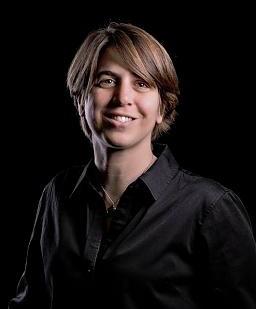
This year I sat down with Professor Patrice Caldwell (far right in the picture above, next to Connie Willis and Betty Williamson, Jack’s niece). Patrice coordinates the Lectureship every year, and we took a moment to discuss Jack’s legacy, and this annual event that honors him. If you’ve never heard of the Jack Williamson Lectureship, listen up! It’s an event you won’t want to miss.

Read More Read More

Galaxy Science Fiction, September 1952: A Retro-Review

Galaxy Science Fiction, September 1952: A Retro-Review

Galaxy Science Fiction September 1952-smallWith this issue, Galaxy completed its second year of publication. That’s 24 issues of top-notch science fiction. It’s tough to match that stamina, and I applaud H.L. Gold, his staff, the authors, and the artists for staying the course.

“Delay in Transit” by F. L. Wallace — Denton Cassal is a sales engineer, traveling toward the center of the galaxy to solicit a top scientist to work for his company on an instant communication device. His journey takes him through Tunney 21, a planet inhabited mostly by Goldophians, who look somewhat like seals. Equipped with an AI device named Dimanche, Cassal is able to read people based on their body chemistry and temperature. He’s being pursued, but Dimanche’s intelligence and advice give Cassal confidence, provided he’s willing to listen.

This piece was reprinted in Bodyguard and Four Other Short Science Fiction Novels From Galaxy edited by H. L. Gold in 1962. In this issue, however, it was credited as a novella. I liked the use of the AI as well as the setting of Tunney 21. Wallace also does a nice job with the pacing.

“The Snowball Efect” by Katherine MacLean — To prove the value of sociology (and his own department), Wilton Caswell meets with the university president to create a list of rules for an organization to employ in order to grow membership. If an organization adopts the rules and shows growth, then the president has quantitative proof of the depatment’s value; the underlying principles of philosophy can promote success to all graduates. Caswell and the president choose the Watashaw Sewing Circle for their experiment and then withdraw to see what happens. It turns out that the rules work. They work so well, in fact, that the sewing group expands into a broader organization — one focused on civic welfare and politics.

Read More Read More

Dragonfly: A Tale of the Counter-Earth at the Cosmic Antipodes by Raphael Ordoñez

Dragonfly: A Tale of the Counter-Earth at the Cosmic Antipodes by Raphael Ordoñez

oie_113524h6c8tSPCMuch of my reading is for sheer entertainment. It’s like a carnival ride: you pay your money, get whipped around a little, then deposited back on the ground. The next day a fond memory of the overall experience lingers on but the details have faded away. And that’s cool. I have never regretted the time or money spent on an Agatha Christie or Stephen King novel. I’ve passed many an enjoyable hour reading (or watching) a decent bit of fiction for a transient thrill. But sometimes, there’s something so compelling about about a book that I’m drawn to it again and again over the years.

There are certain books on my shelf that have an aura around them. Three that leap to mind are The Master and Margarita by Mikhail Bulgakov, The Last Coin by James Blaylock, and Faces in the Crowd by William Marshall. In each, the combination of prose, plot, and character drew me in so deeply that I feel the desire, for various reasons, to revisit them from time to time.

With the first, I’m looking each time to absorb and understand a bit more of Bulgakov’s dense work. It’s a great story, rich with ideas on art, politics, love, and religion. With the second two I recapture a bit of the sheer joy I felt the first time I encountered the vivid characters and utterly bonkers plots. When it comes to books in this class, I can remember when I first read them, under what circumstances, and where I got them (Science Fiction Book Club, The Forbidden Planet (NYC), and borrowed from the St. George Public Library, Staten Island). I suspect Raphael Ordoñez’ Dragonfly will get added to this list.

Dragonfly is the first of a planned tetralogy. In this day of calculated, mass-marketed, trend-following books, here is a self-published adventure, practically handcrafted, with cover, map, and interior art all done by Ordoñez himself. It tells of a young prince let loose in a world of steam engines, complacent aristocrats, and tunnel-dwelling workers, and a social order on the verge of being overthrown. Ordoñez’ style hearkens back to the likes of A. E. van Vogt and Jack Vance, as well as Edgar Rice Burroughs. Heck, as you can see from the cover, Dragonfly would look right at home on a shelf full of volumes from the Ballantine Adult Fantasy series.

Read More Read More

Adventures in RPGs: Long Arc or Short Arc?

Adventures in RPGs: Long Arc or Short Arc?

Scan 11AD&D carried me from middle school right through college, and about seventy-five percent of the time, I wound up as the referee. The core group with whom I played continued right on getting together for another fifteen years or so after graduation, engaging in annual reunions all over the country.

And I kept right on refereeing. After all, I had unfinished stories to “tell.” These story arcs played out over weeks, months, semesters, and then years. Many remain unfinished to this day. In the main, the rest of the group enjoyed my epic, often convoluted approach. For better or for worse, we weren’t much for hack-and-slash, in-and-out heroism.

Or were we? I’ll never forget Eric S. musing, as one reunion year wound down, that it sure would be nice if for once we could storm the castle, rescue the maiden, and be done.

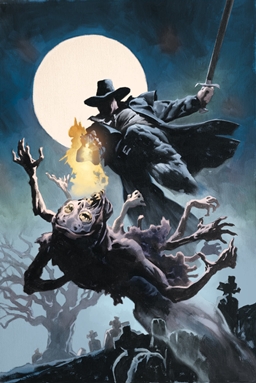
His wistful comment stemmed in part from my having that very year posed a variant on that longed-for maiden-in-the-tower paternalistic standby: Orcus hired the party to rescue a damsel in distress, but this particular blushing violet turned out to be a truly enormous, deformed frog that had to be kissed in order to… well. Let’s just say there aren’t enough kisses in creation to make the wife of Orcus any more desirable.

Read More Read More

The Public Life of Sherlock Holmes: Jeremy Brett’s Adventures Begin

The Public Life of Sherlock Holmes: Jeremy Brett’s Adventures Begin

Brettstrand1Last week I posted part one of our look at Granada’s The Adventures of Sherlock Holmes, starring Jeremy Brett.

The Adventures were divided into two parts; seven episodes in the first; six in the latter. A Scandal in Bohemia aired on April 24, 1984. Can it be thirty-one years since Jeremy Brett first graced television sets as the great detective? Scandal was actually the third story to be filmed.

Producer Michael Cox wanted Brett and his Watson, David Burke, to become comfortable with their roles before filming one of the most famous tales in the Canon, so he didn’t start taping with this one.

Watson enters their Baker Street lodgings, having been gone on a trip. He sees the empty syringe case and fears his flat mate has turned to cocaine. Shortly after our first vision of Holmes, Brett gives the “My mind rebels at stagnation” speech. It is completely understated but still paints a portrait of Holmes’ need for work (compare it to the over-the-top reading of Matthew Frewer).

The script is remarkably faithful to the story and is filled with original dialogue from Doyle. The influence of Sidney Paget is blatantly obvious. The King of Bohemia’s unmasking is a replica of the original drawing, and Brett’s ‘drunken groom’ disguise is nearly identical to Paget’s drawing. We even get the famous “Good Night Mr. Holmes” scene.

David Burke is as far from Nigel Bruce as one can imagine. He is thoughtful, intelligent, amusing without being a buffoon and utterly dependable. There is a valid film reason for Bruce’s un-Canonical portrayal as comic relief, but Burke reinvents Watson as his original self: the way Doyle wrote him.

Read More Read More

Want to Break Into Comics?

Want to Break Into Comics?

onibk_292  If you want to break into the big comic publishers, a bit of internet research, or visiting a local comic-con will reveal the accepted wisdom pretty quickly:

  • If you’re an artist, show your portfolio to editors at a con, or establish an online portfolio and email the editors. There’s lots of advice in different places about breaking in as an artist, and lots of places to learn (the comicsexperience.com podcast seems to me to be a great place to start).
  • If you’re a writer, pair up with an artist, make a comic, sell to the smaller comic presses to show your abilities and then approach bigger publishers, who, of course, offer a bit more money.

There isn’t really an advertised direct route in for writers either way. The submission guidelines at DC are pretty clear that they’re only looking for artists.

Marvel does let on that they’re looking for writers and artists, but mostly through the process laid out above.

Read More Read More

The March of the 10,000

The March of the 10,000

WeberRingoMarchUpCountry
The mercenaries that became heroes. The heroes that became a trope.
Holy ****! Scythed chariots!!!
Holy Cow! Actual scythed chariots.

The mercenaries that became heroes.

The heroes that became a trope.

401 BCE and Cyrus the Younger draws up his rebel army on the banks of the River Euphrates near Cunaxa.

We’re in what will be modern Iraq, deep inside the Persian Empire. Even so, the right flank belongs to 10,000 Greek mercenaries, mostly heavily armoured hoplites and veterans of both sides of the brutal Peloponnesian War.

At midday, a white cloud of dust rises over the the horizon, a cloud so vast that it casts a shadow on the plain. At last, the sun flashes on bronze spear points and the army of King Artaxerxes trundles into view; 40,000 men drawn from the reaches of the empire… heavy infantry, archers, exotic skirmishers, armoured cavalry… oh and — Holy Cow! — actual scythed chariots.

Chanting their paen, rattling spear on shield, the Greeks dress their ranks and march into action…

Read More Read More

The Top 50 Black Gate Posts in April

The Top 50 Black Gate Posts in April

Hugo Award Black GateLooking over our traffic stats for last month, I want to give a shout-out to M Harold Page, who managed to heroically crack the Top 10 without once mentioning the Hugo Awards or Rabid Puppies. Well done, Mr. Page!

He was the only one to accomplish that extraordinary feat, however. Every other article in the Top 10 for April (and more than a few in the Top 25) directly addressed the ongoing Hugo Awards controversy, which began on April 4th when Worldcon announced the nominees for the 2015 Hugo Awards — a group which usually represents the finest science fiction and fantasy of the year, but this year was largely dictated by a single individual, Vox Day (Theo Beale), and his Rabid Puppy supporters, who crammed the slate with 11 nominees from Theo’s tiny publishing house, Castalia House, and nominated Vox Day personally for two Hugo Awards.

Not coincidentally, Black Gate received the first Hugo nomination in our history, and one of our bloggers, Matthew David Surridge, was nominated for Best Fan Writer, both as a direct result of being included on the Rabid Puppy slate. We declined those nominations, for reasons that I think should be fairly obvious.

The most popular article on the BG blog last month — indeed, one of the most popular posts in our history — was Matthew’s “A Detailed Explanation,” in which he analyzed the extraordinary events around this year’s Hugo nominations, and enumerated the reasons why he declined science fiction’s highest honor. It the few weeks since it has been posted, it has been read over 50,000 times.

Read More Read More

Knock, Knock: Or, The Portal Fantasy Revisited

Knock, Knock: Or, The Portal Fantasy Revisited

Moonheart-smallThis week I participated in a Mild Meld over on SFSignal on the theme of portal fantasies. I’m not the only person who did, and you can see the whole post here, but, as is so often the case when you’re asked to consider an intriguing idea, I’m still thinking about it. Warning: For the sake of clarity I repeat some of my SFSignal observations, but I don’t overlap much.

Working on that post, and thinking about classic portal fantasies such as the The Wizard of Oz or the The Chronicles of Narnia, or the more recent Chronicles of Thomas Covenant (though even they aren’t particularly “recent,” are they?) got me wondering about the evolution of the portal fantasy over the last 35 years.

Let me review the classic version: Human beings from our world find an entrance to a secondary world where magic works, the supernatural exists, etc., and adventures are undertaken. Often there’s a kind “quest” element involved as well, in that the protagonists have to complete a task in order to be able to return to our world. These are often called “primary world fantasies” even though most or all of the action takes place in the other world.

Again, in the classic version of the portal fantasy, the reader is riding the shoulder of the protagonist, seeing and learning everything about the new world at the same time the protagonist does. CS Lewis even introduced new protagonists, so that he could keep explaining things in later books without seeming repetitious. Of course we all recognize this as a use of the stranger-in-a-strange-land trope (SISL), which is invariably interdependent with the portal trope.

Read More Read More