Browsed by
Category: Blog Entry

Death Angel’s Shadow by Karl Edward Wagner

Death Angel’s Shadow by Karl Edward Wagner

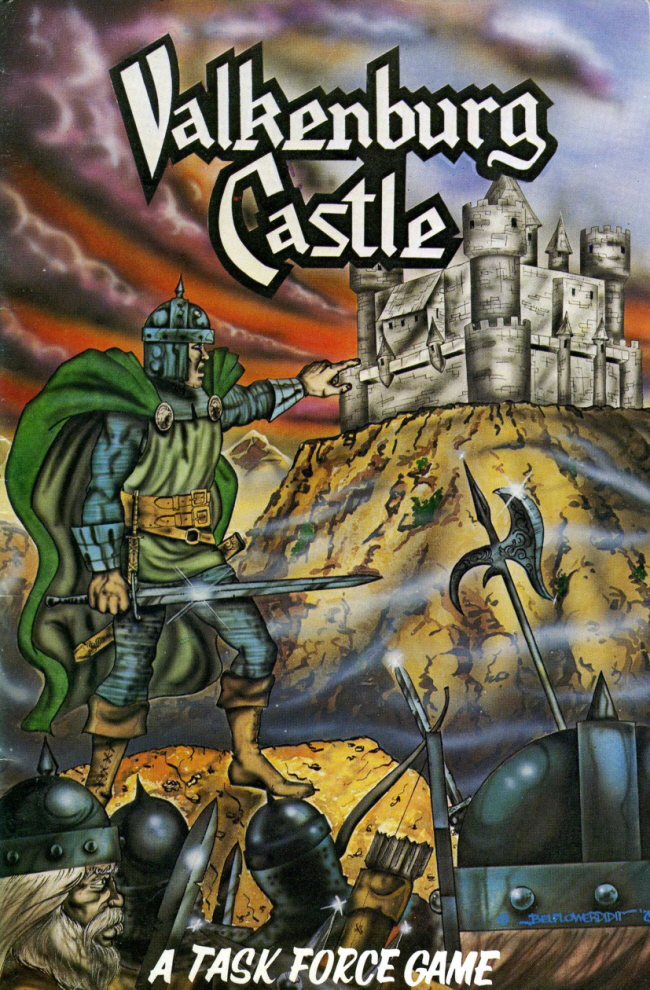
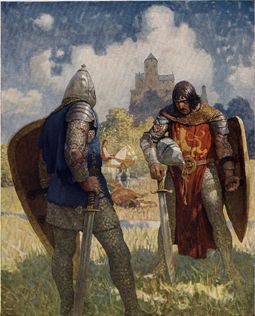
Best Kane cover ever – by Stan Zagorski

I’ve read  Karl Edward Wagner‘s Death Angel’s Shadow (1973), with its three stories of Kane, the Mystic Swordsman, numerous times since first finding it in my attic in the 1970s. Before Conan’s or Elric’s, Kane’s adventures sparked my interest in swords & sorcery. Only a few years ago, I wrote a long piece about Wagner and this book over at my site, Swords & Sorcery: A Blog. I figured it was time to give it a reread and review here at Black Gate.

For the uninitiated, Kane is, in Wagner’s own words, a villain-hero. Cursed with immortality, over the course of his career he’s been an evil wizard, a crime lord, a bandit, and the general of a demon cult’s army. Sometimes he’s up against someone more diabolical than he is, but he’s never the good guy, never the hero.

This description of him gives you a sense of the wrongness that clings to him even when he’s not embarked on some nefarious plan:

It was his eyes that bothered Troylin. He had noticed them from the first. It was to be expected, for Kane’s eyes were the eyes of Death! They were blue eyes, but eyes that glowed with their own light. In those cold blue gems blazed the fires of blood madness, of the lust to kill and destroy. They poured forth infinite hatred of life and promised violent ruin to those who sought to meet them. Troylin caught an image of that powerful body striding over a battlefield, killer’s eyes blazing and red sword dealing carnage to all before it.

The three Kane novels, Darkness Weaves, Bloodstone, and Dark Crusade, are decent enough, but it’s in the short stories that Wagner’s immense talents shine most brightly. Two years ago I reviewed the collection, Night Winds (1978) at Black Gate. That book contains some of the best and darkest S&S stories ever set to paper. I cannot recommend it highly enough.

Read More Read More

Review of Pathfinder Tales: Plague of Shadows by Howard Andrew Jones

Review of Pathfinder Tales: Plague of Shadows by Howard Andrew Jones

Pathfinder Tales Plague of Shadows-smallI just read my second Howard Andrew Jones novel: Plague of Shadows (2011), which was the first of his two Pathfinder novels (I read them out of order). In my review of Stalking the Beast (2013) for Black Gate, I raved that it delivered everything I crave from such a tale. It did so with skill and panache, introducing me to characters who have stayed with me. So I was pleased to go back and read the true introduction to Elyana, the Forlorn elven ranger raised by humans, and Drelm, the half-orc who values honor and loyalty more than most humans (let alone most orcs) do.

Knowing that it was a first outing, I went in expecting it to be not quite as good — not as polished or assured, maybe — as its follow-up (indeed, I gave Stalking the Beast a perfect 5-star rating, arguing that sword-and-sorcery RPG tie-in novels just don’t get any better than that).

But then I finished the book: And I felt that peculiar sense that only certain works of art engender, as the last sentence echoes away or the curtain falls or the credits roll. It has impressed itself upon you, and you feel enriched but tinged with a bittersweet sadness — the characters have left, and you miss them. The characters have, in some sense, become more real; they have joined your own personal pantheon. With this second visit, Elyana and Drelm grew from being fun, engaging characters in a standalone book into characters about whom I want to read many books!

Read More Read More

Adventures In Shape-Shifting: Robert Stallman’s The Orphan

Adventures In Shape-Shifting: Robert Stallman’s The Orphan

The Orphan Robert Stallman-smallI write this on an emotional high, a plateau from which I never wish to descend, for I’ve just managed the impossible: I’ve gone back in time. The vehicle employed? A book, prose, a worn paperback. It’s Robert Stallman’s The Orphan.

I first encountered this title somewhere in the Dark Ages, probably around 1980. I re-read it perhaps two years later, along with its two sequels, The Captive and The Beast. Even though large swaths of plot have faded from my mind over the years, I have never, ever forgotten the book’s opening lines.

I am and will be. There is no time when I am not.

This is the first lesson.

My need creates myself.

This is the second lesson.

Alone is safe.

This is the third lesson.

I’ve spent the last thirty-five years considering those quotes (and the ideas behind them), polishing each like a gem-cutter finishing off a jewel. I’ve road-tested them, too, as a survival mechanism when, in my earliest teens, I tried out (as actors might try a cape) the attitude of Kipling’s cat, the one that walked by himself. It was necessary, in a way, but also foppish, affected. Even so, I found in The Orphan echoes of that chilly, solo stance — the same adopted in Westerns by virtually every gunslinger known, from Joel McRae to John Wayne and back again.

So once upon a time, my time, these lines held great personal weight. They were talismans, of a sort, and in picking up this gorgeous, dangerous title afresh, I was face to face with my past and the self I have since become.

For a moment, I had to look away.

Read More Read More

Dear Prudentia: Why Should I Include a She-Babe?

Dear Prudentia: Why Should I Include a She-Babe?

Dear PrudentiaThere are so many questions around inclusivity lately that I’ve opened up my very own inbox to questions from the community on how to deal with females. The initial response was so big that Black Gate has allowed me to have my letters run for an entire week! I’m very excited and look forward to providing advice in these rather difficult times, to both warlords and young ladies.

Always properly yours,

Prudentia

DEAR PRUDENTIA,

New political allegiances with lesser beings lead me to necessitate including more She-Babes in my conquest, regardless of the fact that I have a full harem AND my serving staff is composed entirely of She-Babes. Plus, I always replenish staff by adding more She-Babes from conquered nations, and I’m quick with my blade when I behead the Non-Babe-She-Babes. Despite all of this, I’m informed that I’m not up to “code.” Should I simply murder all the heathens?

Signed,

Incensed in Bloodbath

Read More Read More

The Public Life of Sherlock Holmes: Why Solar Pons?

The Public Life of Sherlock Holmes: Why Solar Pons?

The full painting by Les Edwards. It was seriously cropped for the cover of Basil Copper's 'Solar Pons: The Final Cases.'
The full painting by Les Edwards. It was seriously cropped for the cover of Basil Copper’s ‘Solar Pons: The Final Cases.’

I am a major fan of Solar Pons, The Sherlock Holmes of Praed Street. I wrote about him for Black Gate here and here. Fu Manchu expert William Patrick Maynard wrote about Pons and an unnamed but clearly Manchu here.

We know that Sir Arthur Conan Doyle gave us 56 short stories and 4 novels (novellas, really) featuring Sherlock Holmes. And there have been many television shows and movies with the world’s first private consulting detective. And the number of books and short stories written about Holmes by other authors is virtually uncountable in our modern age.

So, with an endless supply of options to get our Holmes fix (albeit, ranging from atrocious to excellent), why in the world would we need to read about a Holmes imitator dreamed up nearly ninety years ago?

‘Why Solar Pons?’ was the first essay in the first issue of my free, online newsletter, The Solar Pons Gazette. I believe that the Pontine Canon is a treasure trove for Holmes fans (of which I am most definitely one). So, read on and maybe you’ll get an itch to read a Pons story or two (sadly, the books are out of print and you’ll have to find some used copies, like I did).

I harbor a somewhat silly hope that this essay will someday be used as an introduction to a Pons collection.  So…

Read More Read More

Dave Gross on Pitching and Pinching

Dave Gross on Pitching and Pinching

Pathfinder Tales Lord of Runes-smallYou know, of course, we love us some Pathfinder (the role playing game, not the Viking-American Indian movie) here at Black Gate. And I don’t just say that because Managing Editor Howard Andrew Jones has written two novels (with a third coming in October) for their excellent fiction line, Pathfinder Tales.

There have been 30 novels in the series so far. The first (Prince of Wolves), the most recent (The Lord of Runes) and three in between (Master of Devils, Queen of Thorns, King of Chaos) have come from the prolific pen of Dave Gross.

With his tales of half-elven Pathfinder Varian Jeggare and his devil-blooded bodyguard Radovan, Gross has successfully blended the fantasy and mystery genres. Dave has taken some time out of his busy schedule to share some thoughts. Of course, I love the ‘Holmes and Watson’ references.

You can find more info on the Pathfinder Tales line here, including free web fiction. And here’s a link to some Black Gate coverage of the line, including The Lord of Runes. Check out the fine fantasy writing that’s taking place in Pathfinder’s world of Golarion. Take it away, Dave…


As a writer, I hate throwing what Hollywood calls elevator pitches — you know, those snappy “X meets Y” descriptions of a screenplay. We do the same thing in publishing, often still referencing movies rather than books. “It’s Star Wars meets Sixteen Candles,” or “Ocean’s Eleven meets Ghostbusters,” or “Casablanca with orcs as the Nazis.”

Read More Read More

Things Your Writing Teacher Never Told You: Ignore the Market Guidelines at Your Peril – How (Not) to Build a Career

Things Your Writing Teacher Never Told You: Ignore the Market Guidelines at Your Peril – How (Not) to Build a Career

Book of Dead Things edited by Tina Jens and Eric Cherry-smallI was the editor of a small press that published genre anthologies and short story collections for about 13 years, and I’ve been writing, submitting, and selling my fiction for about 25 years. So, I’ve been on both sides of the editorial desk, at least in a small way. I now teach fantasy fiction writing at Columbia College — Chicago.

One of the questions that comes up every semester is, “What should I put in my cover letter?” Students, and many new writers, are afraid of cover letters.

What they don’t know is, that many editors are afraid of cover letters, too.

Way too many writers torpedo their chances at making a sale by saying ridiculous things in their cover letters – things so out of bounds that the editor has no choice but to reject the story without even reading it, or risk losing all self-respect if they don’t. Getting ready in the morning is hard enough without having to avoid meeting your own eyes in the mirror.

The small press that I ran was tied to Twilight Tales: a weekly reading series in Chicago. We also ran the reading track or open mics at many local and national genre conventions, and published national and international authors monthly on our website. The point of that was to make it possible for authors out of Chicago to participate in a Twilight Tales event. To submit to our anthologies, you had to have taken part in at least one of those activities. In the 17 years that the show ran, through those combined projects, we estimated that we dealt with more than 1,000 authors, from pretty close to all 50 states, seven countries, and across the full spectrum of genres.

Read More Read More

On Becoming a Full-Time Writer

On Becoming a Full-Time Writer

23121915In five days, on Thursday, June 25th, I’m very happy to be making a life transition. I’m taking a 2-year leave from my job to spend more time with my son. And while he’s in school, I’m going to write. I know more than a few people who have become full-time writers. For some it has worked. So I did a lot of thinking about how to make this work for me, and also why now is the right time.

Stage of Life

I turned 44 a few months ago. My son is 10 years old now. He loves being with me and vice versa. That may not be the case in a few years, so I’ve now got the next three summers to skip rocks with him, go camping yard-saling, bike-riding, tree climbing, fort-building ad exhaustium. During the school year, I’ll pick him up every day after school to go sledding or swimming or play MTG or video games or do homework or go to museums or science centers whatever is right. That’s a good plan for where I am in life.

And there’s the writing. I’ve been dreaming of being a writer since I was ten. When I was twenty-five, I dreamed of being a best-selling author by the time I was twenty-eight. Since that super-realistic dream, I’ve mused about different ways to write full-time, including retiring early. But really my choice is doing this while I’m young or doing this much later.

Read More Read More

Lightspeed 61: Queers Destroy Science Fiction! Special Issue

Lightspeed 61: Queers Destroy Science Fiction! Special Issue

Lightspeed 61-smallJohn Joseph Adams shook this town to its roots with his groundbreaking Women Destroy Science Fiction! issue of Lightspeed, released last June. Funded by an enormously successful Kickstarter campaign, WDSF! spawned a two successful sequels, Women Destroy Fantasy! and Women Destroy Horror!

In January of this year, John invited his readers to take a sledgehammer to the tight strictures of the genre once again, by funding a special Queers Destroy Science Fiction! of Lightspeed. The Kickstarter campaign closed on February 16; with an initial goal of $5,000, the campaign successfully raised $54,523 from 2,250 backers, surpassing even the lofty success of WDSF!

John and his team delivered the issue right on time this month. Lightspeed 61: Queers Destroy Science Fiction! is guest-edited by Seanan McGuire, and the magazine contains the following stories:

Emergency Repair” by Kate M. Galey
勢孤取和 (Influence Isolated, Make Peace)” by John Chu
Bucket List Found in the Locker of Maddie Price, Age 14, Written Two Weeks Before the Great Uplifting of All Mankind” by Erica L. Satifka
Melioration” by E. Saxey
Rubbing is Racing” by Charles Payseur
Helping Hand” by Claudine Griggs
The Lamb Chops” by Stephen Cox

Read More Read More

Do Fantasy Characters Poop in the Woods? Or, Real-Life Things That “Never” Happen in Fantasy

Do Fantasy Characters Poop in the Woods? Or, Real-Life Things That “Never” Happen in Fantasy

Goldman ScreenWilliam Goldman isn’t the first person to comment on this phenomenon, but he’s the first person I ever came across who had an explanation. You know what I’m talking about: The difference between real reality and fictional reality. We all know about the lists of occurrences that happen only in the movies, or on TV – and the real life things that never seem to happen in movies or TV.

Like, the protagonist always finds a parking spot right in front of where she needs to be. She always has the right amount of money for the taxi already in her hand. She can always find a taxi when she needs one. And there’s always cell phone reception.

My personal favourite is how no one ever says “goodbye” on the phone. Not even so much as a “seeya.” Just try that some time in real life. Go ahead, hang up without saying “goodbye.” I dare you. Though the one I really wonder about is that people on TV don’t watch TV.

William Goldman, the screenwriter and novelist, is likely best known to us genre people as the creator of The Princess Bride – both the novel and the screenplay. It shouldn’t surprise us that, as an Oscar-winning screenwriter, he has an explanation for these phenomena. As he sees it, they’re essentially – and essential – short cuts. As those of us who are writers know, there are all kinds of real-life occurrences, that happen all the time, but that don’t advance the plot, or reveal character, and are therefore useless from the point of view of storytelling.

Read More Read More