Longtime Black Gate visitors and readers might remember a time, long ago, when I gushed about a great new FATEpowered science fiction role-playing game, Mindjammer. Back then, it was an expansion for the excellent space opera setting Starblazer Adventures.
Now it’s an animal on its own, and was nominated for two Ennies (the role-playing award handed out each year at GenCon) just this year. I can see why.
I was already impressed with Mindjammer. Back in 2010 Sarah Newton did a fabulous job creating strange new societies and making the far future gameable, including the concepts of neural implants, synthetic humanoids with thanograms (deceased human personalities), sentient starships, and other impressive ideas.
NOTE: The following article was first published on February 28, 2010. Thank you to John O’Neill for agreeing to reprint these early articles, so they are archived at Black Gate which has been my home for over 5 years and 250 articles now. Thank you to Deuce Richardson without whom I never would have found my way. Minor editorial changes have been made in some cases to the original text.
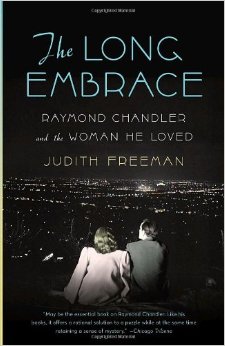
Literary biographies can sometimes prove to be a peculiar form of torture. I suppose their purpose is to see if the reader is still capable of mustering the same affection for the author’s work after reveling in every personal flaw the biographer was able to uncover. Biographies are the ultimate way of evening the score with those whose talent we will never equal. They reassure us that the gifted individuals who gained immortality through their work were certainly no better and frequently even worse human beings than those of us who admire them. Thanks to literary biographies, many view the father of sword & sorcery as a clinically depressed mama’s boy angry at the world and the father of hardboiled fiction as…well, let’s face it… there was nothing you could ever say about Hammett he didn’t already tell you about himself. This article concerns itself with Judith Freeman’s biography of Raymond Chandler, The Long Embrace.
I would not say that the book is unworthy of attention. Judith Freeman is an exceptional writer. She traces Chandler’s footsteps (even though it has been more than half a century since his death) by visiting every place he lived, worked, and vacationed and describes what she finds in a voice that Chandler fans will frequently recognize. It is a voice that is as evocative of Chandler’s work as the book’s title. The trouble is that Freeman isn’t writing a new Philip Marlowe mystery so much as transposing herself in Chandler’s shoes as a fellow author and kindred spirit. As the book unravels, she comes to share Chandler’s devotion to his wife and muse of over thirty years. The result is a bit like watching Otto Preminger’s classic film noir, Laura (1944) in that The Long Embrace shifts its focus and unfolds into a growing love story between a living person and a dead woman the narrator never met. Some readers will find the result enchanting, others will just find it creepy.
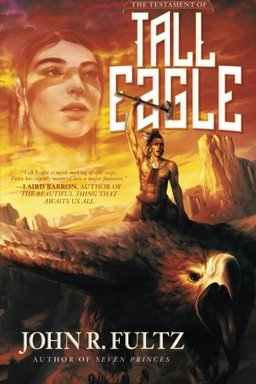
In his 1978 essay “On Thud and Blunder,” Poul Anderson pointed out that heroic fantasy was “overpast for drawing inspiration from other milieus — Oriental, Near Eastern, North and Black African, Amerindian, Polynesian.” While I’m still looking for Polynesian swords & sorcery, Black Gate alumnus John R. Fultz, has written the first full Native American novel of heroic fantasy that I’m aware of: The Testament of Tall Eagle (2015).
I must admit I’ve corresponded and debated with John several times about heroic fantasy. He’s as deeply conversant with the history of S&S as anybody I know. He brings that knowledge plus a deep love for the genre to his writing. I recommend his collection The Revelations of Zang as well as his Books of the Shaper trilogy — both are wildly inventive and fun. So I went into his new book expecting good things and I was not disappointed.
Fultz’s novel is a wonderful throwback to the golden days of swords & sorcery of the 1970s. In only 324 pages, Testament recounts the adventures of Tall Eagle, a young man of a Great Plains Indian tribe in the days just before the introduction of horses to his people. It’s possessed of a straightforward narrative that’s as lean and fierce as a wolf. Instead of the Clark Ashton Smith-like prose of his previous books, much of Testament reads like a brutally realistic historical saga of 17th century Plains Indian life… until the monsters show up. And they do, in great, slimy droves.
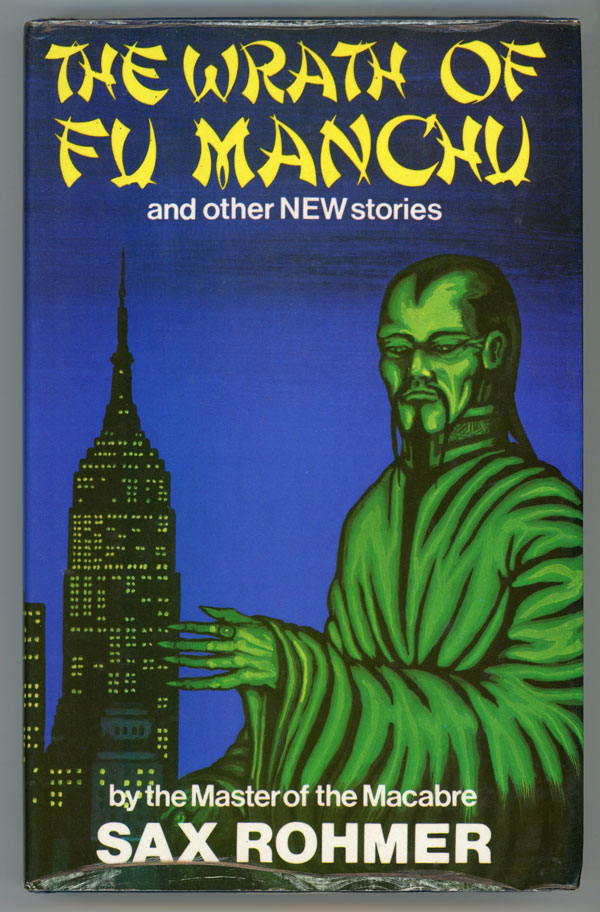
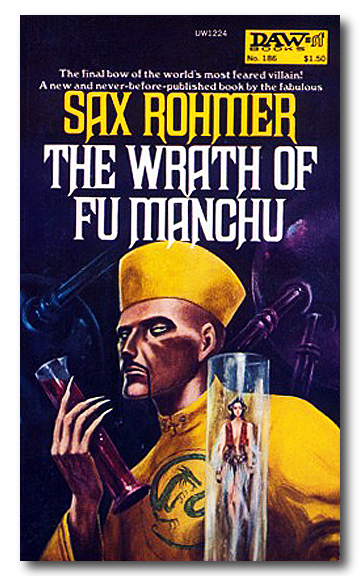
When Rohmer scholar, Dr. Robert E. Briney compiled a posthumous hardcover collection of the author’s rare and previously uncollected short fiction in the early 1970s, he included three short stories that were first published in This Week magazine in between Rohmer’s last two Fu Manchu novels. The stories were subsequently reprinted in sequence in Edgar Wallace Mystery Magazine between January and March 1966 where the latter two stories were retitled. The hardcover collection, The Wrath of Fu Manchu and Other New Stories was first published in the U.K. in 1973 by Tom Stacey. A U.S. mass market paperback edition from DAW Books followed in 1976. The collection was subsequently reprinted in 2001 as part of Allison & Busby’s Fu Manchu Omnibus – Volume 5. Titan Books will reprint the original collection as a trade paperback in March 2016.
“The Eyes of Fu Manchu” was serialized in two installments in This Week magazine on October 6 and 13, 1957. It first appeared in book form when Dr. Briney added it to the 1970 Ace paperback collection, The Secret of Holm Peel and Other Strange Stories. The story opens with Sir Denis Nayland Smith attending a lecture at the Sorbonne by an American scientist, Dr. Gregory Allen. Dr. Allen is a specialist in the possible chemical means of halting or even reversing the effects of aging. Sir Denis correctly believes Dr. Allen’s research will draw him to the attention of Dr. Fu Manchu. He makes plans to attend Dr. Allen’s upcoming lecture at King’s College in London with Dr. Petrie who is flying in from Cairo.
Rohmer mines one of his own life’s episodes when he encountered and began an extramarital affair with a young bohemian woman while on a voyage to Madeira. Here, Gregory Allen meets a young bohemian woman named Mignon while crossing the English Channel. Mignon is an artist and, upon learning Gregory abandoned his study of art for science, she makes some pointed remarks about his abandoning the bohemian life of freedom and truth for one of compromised values as part of the Establishment. Her words seem to sting Dr. Allen as much as her beauty and youth charm him just as Rohmer, the former bohemian turned established bestselling author and husband must have felt when he began his own affair with a younger free spirit on his voyage to Portugal years before.
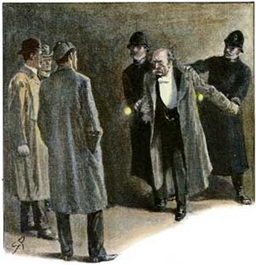
The most common official police force encountered during Holmes’s sixty cases was Scotland Yard. One can safely say that Doyle’s portrayal of the men of the force was somewhat less than flattering. None ever outsmarted Holmes (though one came pretty close) and most of them are adrift until Holmes reveals all at the end of the story.
Scotland Yard was actually the descendant of an earlier police force in London. In 1748, Henry Fielding succeeded Thomas de Veil as Court Justice for Middlesex and Westminster, with headquarters on Bow Street. Fielding hired nine men to go out and catch criminals. This was, in essence, the first police force in London.
These ‘Bow Street Runners’ wore red vests and carried pistols. For eighty years, they were the only thief takers in London. Since there were never more than fifteen at a time, they were slightly outnumbered by the criminals.
In 1829, backed by Home Secretary Robert Peel, the Metropolitan Police Improvement Bill passed, creating an Office of Police for metropolitan London. It did not, however, include the one-square mile City of London, bounded by the ancient Roman walls. ‘The City’ retained that independence, which did not prove useful during the Jack the Ripper killings.
A nightstick and a rattle for summoning help were standard issue; guns were not. They were servants of the public and their power was to be based on the respect of the people, not fear.
It’s Elementary – ‘Peelers’ and ‘bobbies’ are nicknames for the London police and come from Sir Robert Peel’s name.
At 11:10 a.m., on October 25, 1854, one hundred sixty-one years ago, the almost seven hundred men of the Light Brigade stood waiting. The Brigade moved forward when the officer’s trumpeter sounded the “Walk.” It was immediately taken up by the regimental trumpeters to the right and left, so that it could be heard by the whole body of cavalry. When the first line was clear of the second, the order came to “Trot.” The bugles sounded again and the regiment increased its pace to about eight miles an hour. The more experienced cavalry men were adept at judging distances and knew at this pace, it would take them at least seven minutes to reach the enemy.
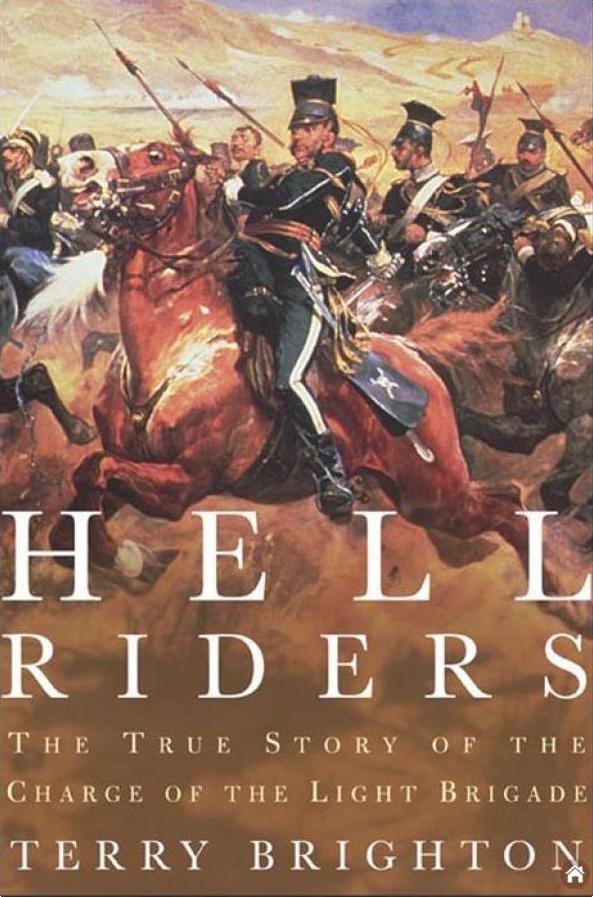
Hundreds, perhaps thousands, of volumes have been written about the events during and leading up to that seven minutes. An in-depth analysis of the battle is beyond the scope of this article. The story for this anniversary is told as much as possible in the voices of the men who rode down that valley. Unless otherwise noted, all quotes and facts are from Hell Riders The True Story of the Charge of the Light Brigade by Terry Brighton (2004). This is possible because the author, Terry Brighton, a British military history, using his unique access to regimental archives, draws on twenty years of research to tell the story of the survivors, in their own words. Only a small portion of their stories can be told here. This fascinating book is available online and is highly recommended.
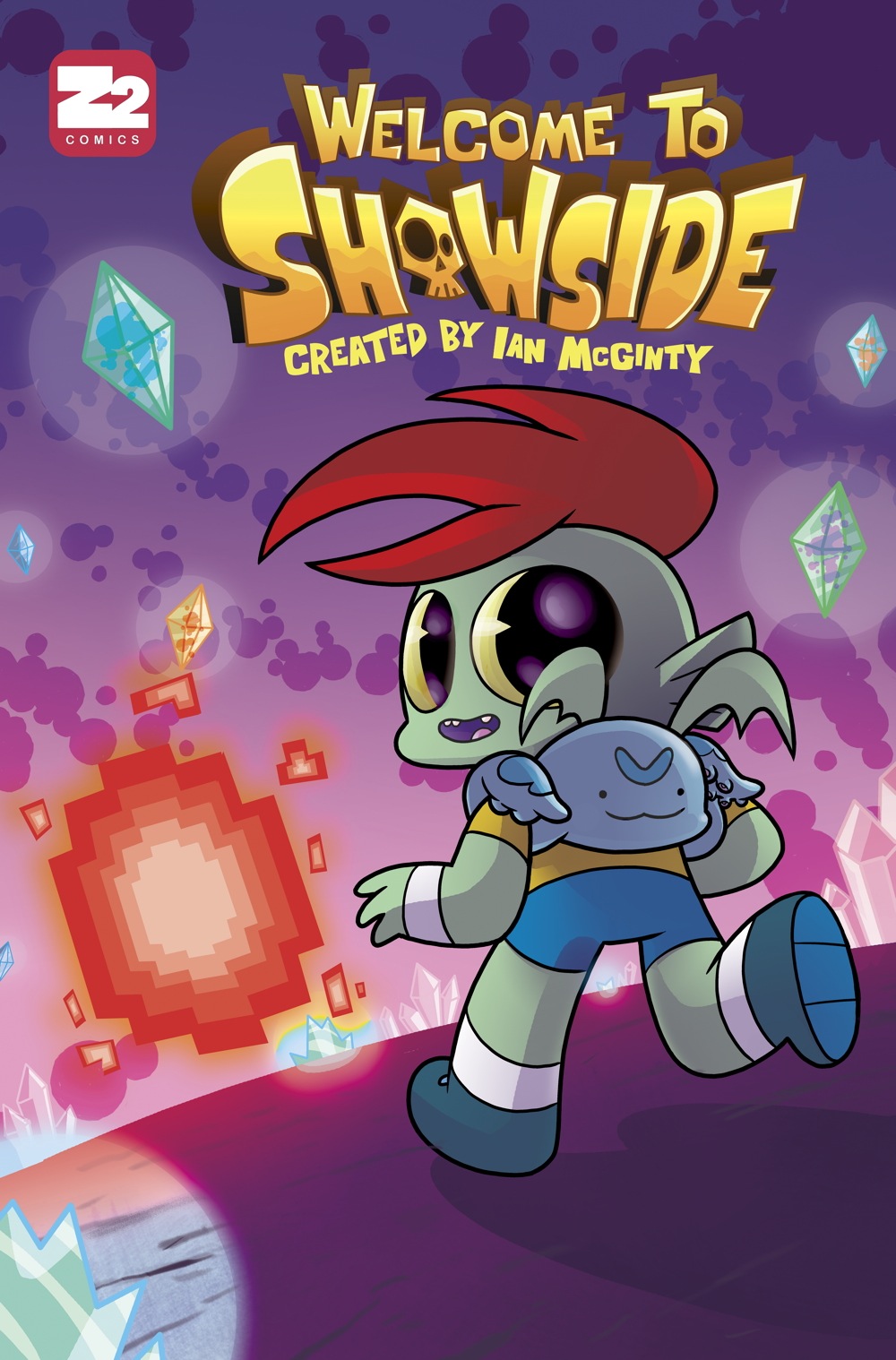
Comic artist Ian McGinty has worked on Adventure Time, Hello Kitty, Fraggle Rock and many other titles, for publishers such as Archaia, BOOM!, Dynamite and now Z2. Ian is making his creator-owned debut with Welcome to Showside at Z2 Comics 28 October, 2015.
Not only that, but Welcome to Showside has also been developed into an animated series, with McGinty serving as showrunner and one of the voice actors. I wanted to e-interview Ian to chat about his successes.
Thanks for the chance to chat, Ian! You must be crazy busy in these last days of October!
Haha, yeah it’s definitely been pretty insane on this end, but it’s also been super rad and exciting to see everything coming together. A lot of hard work on many people’s parts have gone into Welcome to Showside, both the comic and the animated show, and to finally be seeing the end result, it’s like, damn, you know? I never expected such a great response from people, and it’s still sort of sinking in.
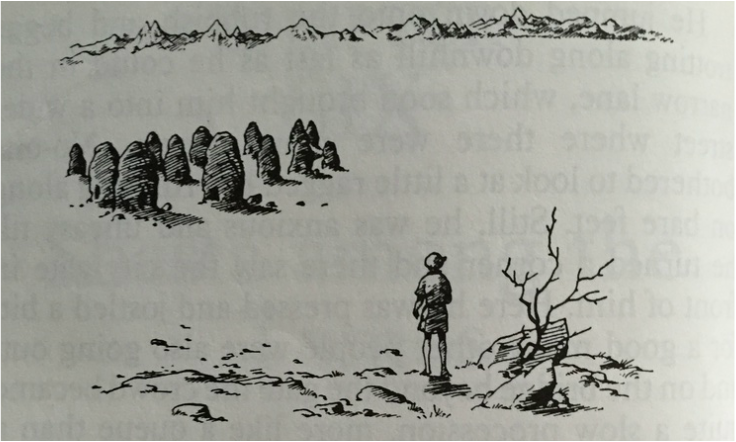
“Houses of the dead” Illustration by Pauline Baynes
“When that churl Death my bones with dust shall cover” — Shakespeare, Sonnet 5
I was in the middle of writing up a review of Goosebumps, which I wanted to finish this week while it is timely — it is the number one film at the box office. But I find myself sidetracked by a real encounter with fear, and so today I shall not write about a fun, sanitized entertainment but instead about the terror I felt last night.
Beneath all fears — the greatest fear of all, as Lovecraft so eloquently informed us — is fear of the unknown. The most primal fear for any of us creatures both blessed and cursed with the ability to think is the thought of our own annihilation. Running deep below the fear of how we might be taken out — running like the impenetrably black, charnel waters of the River Styx — is the fear of the fact that we will be taken out.
Like Winter, NaNoWriMo is coming and aspiring writers are even now planning to do a Frazetta on the whole business of writing a novel. This is great — momentum is all — but it’s way too easy to grind to a halt or lose time going round in circles trying to reinvent the wheel.
I wrote a book on all this, but some of my previous blog entries might also help you avoid dead ends and rampage through your novel to the very end — I promise you both an affirming and life changing experience.
So, here they are in digest form:
Some Writing Advice That’s Mostly Useless (And Why): The following writing advice is mostly useless — “Work on your motivation,” “Revise, revise, revise,” “Have a chaotic life,” “Just write,” “Know grammar and critical terms,” “Practice skills in isolation.”
World Building Historical Fiction using Military Thinking: Don’t fall down the rabbit hole of research or worldbuilding. Instead use a layered approach, focussing your world building as you descend from Strategic (villas exist and can be raided for supplies), through Operational (this villa sits on this ground amidst these fields), to Tactical (here is the ground plan of the villa and here are the people guarding it) level.
“Aliosha Popovich” by Kate Baylay, from a collection of Russian Fairy Tales. Used by kind permission of the artist.
Back in the age of print magazines, I made my first professional sale to a fellow named John O’Neill who published a gorgeous quarterly called Black Gate. We went through three deep revisions on that manuscript, a process we both enjoyed enough that, after I finally produced a version of “The War of the Wheat Berry Year” good enough for John to buy, he asked if I had anything else featuring that heroine. And I did. To our surprise, my novella “The Imlen Bastard” needed only a little polish to be ready for print. And so it took its place in the publication queue. Forthcoming from Black Gate, I said of it in my author bio all over the internet, for a few years.
Those years were hard on print magazines, and they weren’t much kinder to online fiction markets. “The War of the Wheat Berry Year” appeared in BG‘s last print issue. Ultimately, John stopped publishing fiction online before “The Imlen Bastard” could make its debut here.
But to me it’ll always be a Black Gate story.
So when I found an artist, Kate Baylay, whose work felt like my favorite old BG print covers — luscious, menacing, full of subtle story implications — I knew I’d found the right cover artist for “The Imlen Bastard.” Everything else I wanted to do with the self-publishing project that has grown up around the novella came together for me quickly after that. Best of all, Kate Baylay embraced the manuscript, and we’ve had so much fun going over the story together to find the most iconic moments for interior illustrations.
Then I enlisted superstar editor Betsy Mitchell — now retired from Del Rey after a career of editing people like Naomi Novik, Michael Chabon, William Gibson, and Octavia Butler — to give the novella an editorial boost. I figured, there’s a difference between standing as the longest piece in a magazine issue and standing alone as a book. I’m still kind of amazed that she took me on as a freelance client, when she’s in a position to work only on manuscripts she really enjoys. So that boded well.
At first, we all agreed that I’d launch a Kickstarter campaign over the summer, but then I got shortlisted for the Mythopoeic Fantasy Award. I held off on self-publishing for a few months so I’d know whether to say Finalist or Winner in my promotional material. After the award, I needed to readjust my hubris levels — a story that’s done me the kindness of coming to me to be written deserves the best promotion I can give it, and now I had to work up more brazenness than ever before on my stories’ behalf. Brazenness is harder than it looks. This month, with the thank-you notes for the award all written and sent out, and a trophy to feature in my Kickstarter video, it was finally time.
I clicked on the launch button at noon. You can find the campaign here.
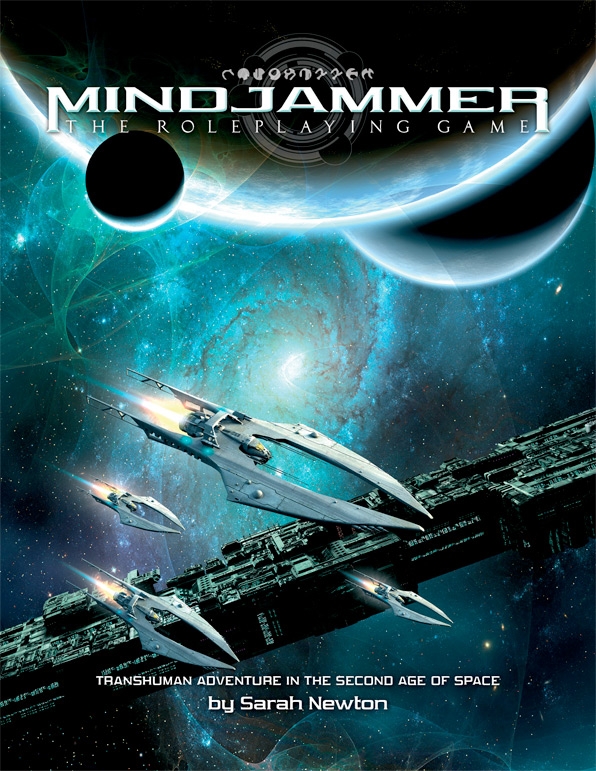 Longtime Black Gate visitors and readers might remember a time, long ago, when I gushed about a great new FATE powered science fiction role-playing game, Mindjammer. Back then, it was an expansion for the excellent space opera setting Starblazer Adventures.