Fantasia 2017, Day 4: Urban Spaces (The Final Master and Tokyo Ghoul)
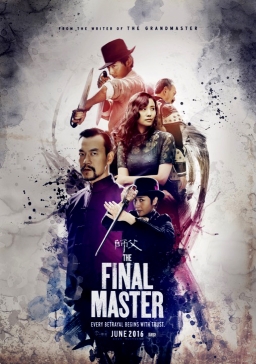 I had an odd schedule on Sunday, July 17. There were two movies I wanted to see. The first was a Chinese historical martial-arts film called The Final Master (Shi Fu), which played at noon. The second was a live-action Japanese manga adaptation, Tokyo Ghoul (Tôkyô gûru), and that played at 9:35 in the evening. I eventually decided to go to the Hall Theatre for the first movie, spend the afternoon doing errands, and return for the second movie in the evening. In the end, this turned out to be a good plan.
The Final Master was written and directed by Haofeng Xu, based on his original novel. It follows Chen Shi (Fan Liao), a martial-arts master, who arrives in the city of Tianjin in 1932. He wants to establish a school there of his own but faces opposition from the major schools already in the city. He has to overcome a series of challenges from his scheming rivals, political as well as physical. He begins a romance with Zhao Guohui (Jia Song, also at Fantasia this year in the Hong Kong action film Shock Wave), a beautiful woman with a scandal behind her, and begins training a rickshaw driver named Geng (Yang Song, who was also in both of Xu’s previous movies, Judge Archer and The Sword Identity) who may have even more talent for fighting than Chen himself. But if Geng may help him overcome some of the trials set by the other schools, yet other levels of politics come into play as the military plans a takeover of the martial-arts world.
This really only scratches the surface of the intricate film. There’s a novelistic feel to it in the accumulation of incident and character, but it’s remarkably effective because Xu keeps things moving at a rapid if not unforgiving pace. Plans are hatched, betrayals accumulate, and the scope of the film increases bit by bit. It’s not quite an epic, but characters who seem minor develop into major figures, and the city of Tianjin acquires a character of its own.
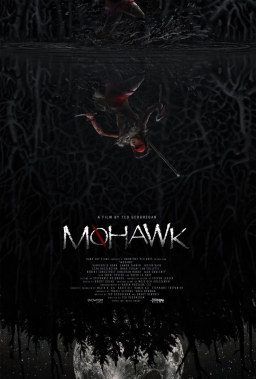 After seeing two showcases of short films on the afternoon of Saturday, July 15, in the evening I went to my first movie of the 2017 Fantasia festival to screen in the 400-seat D.B. Clarke Theatre. That was a film called Mohawk. Directed by Ted Geoghegan, his second film after 2015’s We Are Still Here, with a script by Geoghegan and
 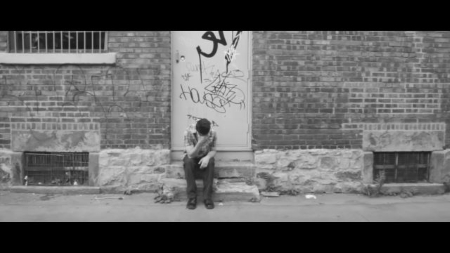 Saturday, July 15, looked like an unusual day for me at Fantasia: I’d mostly be seeing short films. It’d begin a bit after noon, with a set of shorts called SpectrumFest: Films from the Autism Spectrum, a collection of pieces from young filmmakers on the autism spectrum. Then would come this year’s edition of the International Science-Fiction Short Film Showcase, featuring eight science-fictional short films from around the world. Both showings looked fascinating, if in different ways. SpectrumFest was new to me, but I’d seen the SF showcases in previous years, and been impressed both by the individual films and by the way they worked together — if short films are loosely equivalent to prose short stories, the SF short film showcases make excellent anthologies.
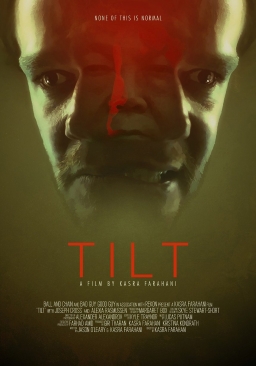 Friday, July 14, felt like my first real day at the 2017 Fantasia Festival. After only one film the night before, I had three movies I wanted to see that afternoon and evening. First would come Tilt at the 175-seat J.A de Sève Theatre, a thriller that was drawing attention on the festival circuit for its political subtext. After that, at the 700-seat Hall, would come A Ghost Story, a movie about loss; I thought it looked slightly more interesting than the comedic manga adaptation Teiichi: Battle of the Supreme High because A Ghost Story depicted its ghost in the form of an actor with a sheet over his head. The sheer brazenness was appealing. Besides, after that my last film of the day would be another manga adaptation at the Hall, Museum (Myûjiamu), directed by Keishi Otomo. I’d seen and enjoyed two other adaptations by Otomo before, the third Rurouni Kenshin film two years before and then last year The Top Secret: Murder in Mind. The odds seemed good for Museum, a crime thriller about a cop tracking down a frog-masked serial killer.
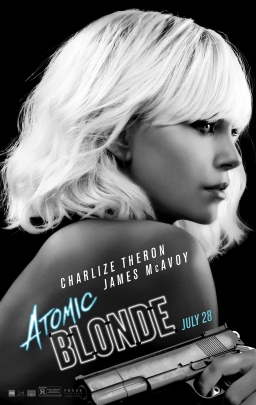 I’ve been swamped by movies since the 2017 Fantasia International Film Festival began, and that’s left me with no time to write about the things I’ve seen. It looks like those reviews will start coming next week, after the festival ends. But on Wednesday I saw a movie that’s getting a wide release this weekend, and on the off chance what I have to say might be useful to anybody trying to plan their weekend, I thought I’d abandon my usual diary format to say a few words about Atomic Blonde.
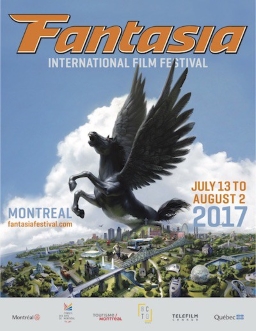 The body has a memory, memory activated by the time of year and the weather and the repetition of physical activity. Every year now as summer passes its midpoint, walking through Montreal evokes for me a sense of wonder and anticipation: a physical remembrance of the Fantasia International Film Festival. I’ve covered Montreal’s genre film festival for Black Gate the
 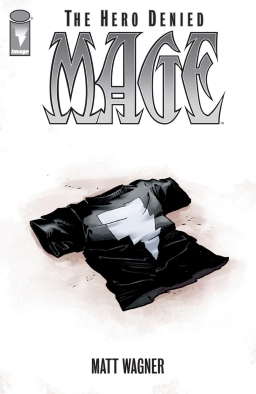 At the Emerald City Comicon in early March, Image Comics announced that starting in August they’d be publishing writer/artist Matt Wagner’s Mage: The Hero Denied, a 15-issue series with a half-length 0 issue and a double-sized conclusion. Hero Denied will be the final part of a trilogy Wagner began over thirty years ago, and I want to prepare for that last installment by looking back here at the first parts of the saga. The Mage books are two of the finest works of a great comics talent, urban fantasies mixing excellent action storytelling, a mastery of plot beats, and a sense of the mythic into gripping stories — and stories with a semi-autobiographical slant, no less.
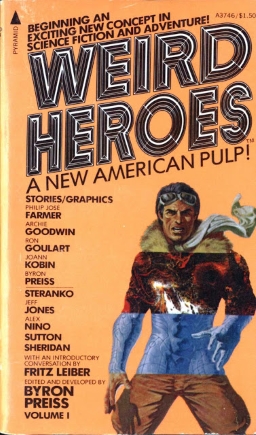 Weird Heroes was a series of eight books put out by Byron Preiss Visual Publications from 1975 through 1977, a copiously-illustrated mix of novels and short stories that aimed at creating a new kind of pulp fiction with new kinds of pulp heroes. The series had a specific set of ideals for its heroes, linked with an appreciative but not uncritical love of pulp fiction from the 1920s through 40s. Well-known creators from comics and science fiction contributed to the books, and one character would spawn a six-volume series of his own. And yet Preiss’ long-term plans for Weird Heroes were cut short with the eighth volume, and today it’s hard to find much discussion of the books online (though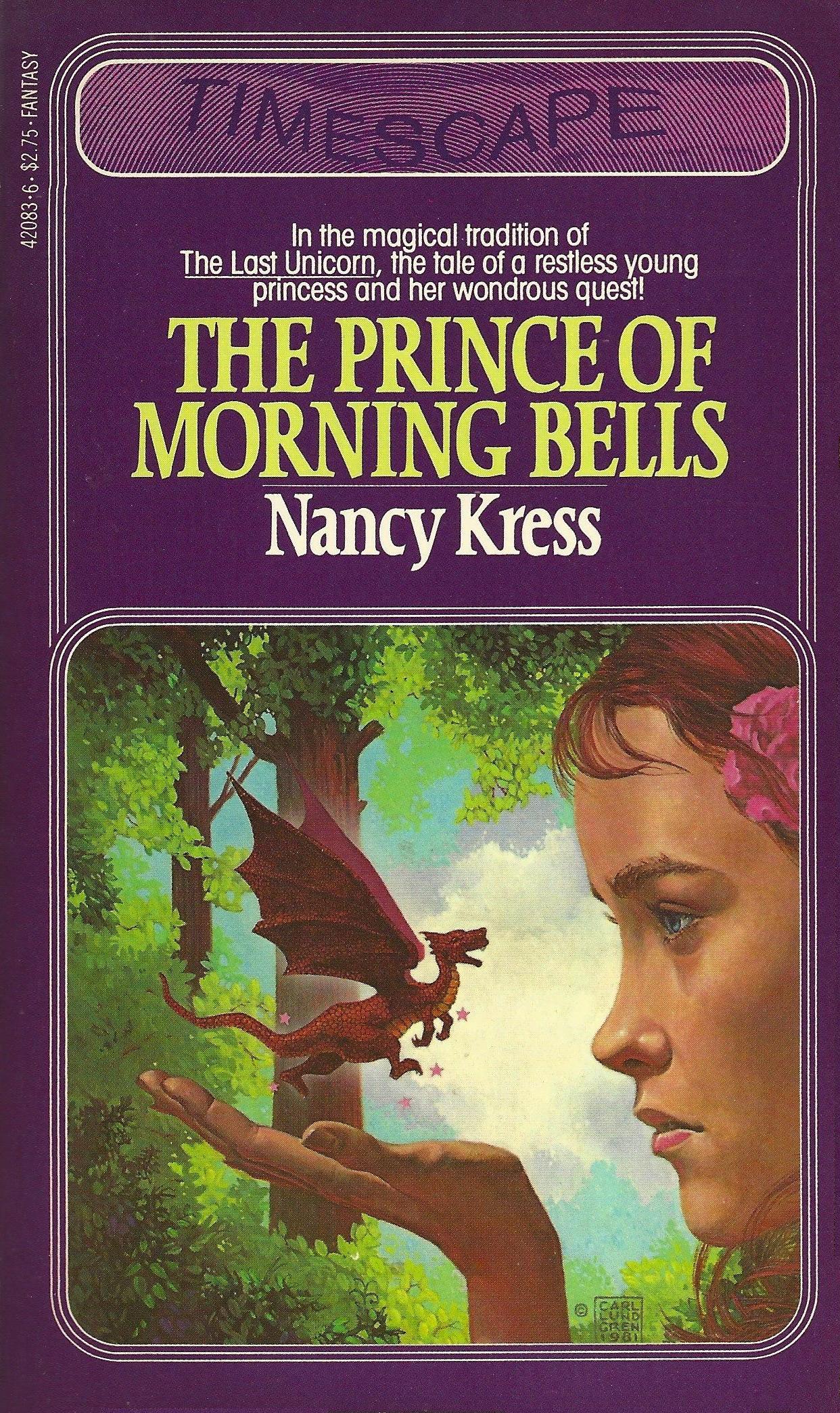
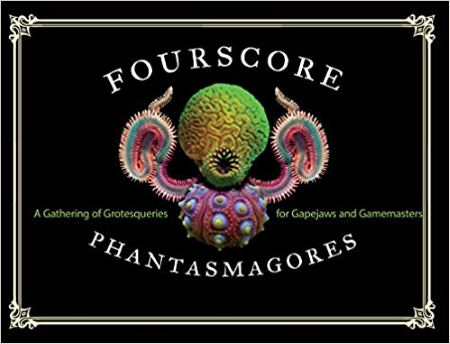 There’s a paradox in the nature of a dictionary of monsters. The medieval bestiaries at least claimed to be compendia of actual knowledge. But books like Jorge Luis Borges and Margarita Guerrero’s Book of Imaginary Beings (Manual de zoología fantástica) and perhaps even Katharine Briggs’ Dictionary of Fairies are only superficially rational collections of information. Though alphabetised and cross-referenced, the logical framework’s a way of presenting wild fantasy and dream: basilisks and baldanders, brownies and banshees, sylphs and sphinxes. The Monster Manual, and the role-playing handbooks it inspired, take this contradiction to a new level — detailed statistics for each creature described along with the avowed intent of inspiring new stories featuring the legendary or imaginary entities. Quantified, numerically precise, the monsters in these enchiridia still crack open the inside of the head, driving readers to imagine worlds big enough to hold dungeon-dwellers and dragons. Rupert Bottenberg’s Fourscore Phantasmagores is the newest volume of these wonders for gamers and monster-lovers of all stripes, presenting, as it says on the cover, “A Gathering of Grotequeries for Gapejaws and Gamemasters.” And, conscious of its predecessors, the book’s a rich source of inspiration; a grimoire seeding new myths.