The Gestation of Cape and Cowl: Thoughts On Jess Nevins’ The Evolution Of The Costumed Avenger
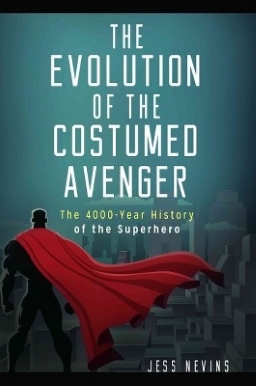 Though he’s written short stories and three self-published novels, Jess Nevins is likely best known as an excavator of fantastic fictions past: an archaeologist digging through the strata of the prose of bygone years, unearthing now pieces of story and now blackened ashes of some once-thriving genre long since consumed and built over by its lineal successor. Across annotated guides (three to Alan Moore and Kevin O’Neill’s League of Extraordinary Gentlemen, one to Bill Willingham and Mark Buckingham’s Fables) and self-published encyclopedias (of Pulps and of Golden Age Superheroes with Pulp Heroes soon to come, as well as 2005’s Monkeybrain-published Encyclopedia of Fantastic Victoriana) Nevins has reassembled old pieces of fantastika, indicating direct influences on modern writing and establishing directories of almost-forgotten story. He’s one of the people broadening the history of genre, in his books, and in articles such as his pieces for io9 on the Victorian Hugo Awards that never were.
Now he has a new book about the development of the superhero and what came before. The Evolution of the Costumed Avenger is subtitled The 4000–Year History of the Superhero, and delivers what it promises. Much that has fallen into obscurity is brought to light in this book. Precedents are unearthed. Archetypal forms are catalogued. But more than that, and perhaps more valuable, known things are recontextualised. Four thousand years of the Western heroic tradition, if not of Western literary tradition, are here imagined in a new way: as prologue to the coming of the superhero. The superhero, lately so central to popular fiction on page and screen, here finds a new apotheosis as the lens through which all preceding heroes are to be perceived. As the end-point of evolution.
And that’s fair enough. That’s what a history often does, foregrounding its subject, putting it at the centre of things. Nevins does his job well, writing in a style that’s academic in its rigour and its careful references to other scholars, while avoiding the jargon and convoluted syntax that mars much academic writing. His prose is clear, yet dense with information, moving quickly while constantly introducing new facts and new ideas. Given the vastness of his subject the book’s quite brief and indeed perhaps too brief: barely 300 pages, though those (like me) who relish discursive and tangential footnotes will appreciate the further 50 pages of endnotes. Nevins’ research is excellent throughout, particularly in the chapters covering the last two or three centuries. As is perhaps inevitable I have some questions and some doubts; most of them revolve around the way that Nevins defines the book in its opening chapter, and around the concluding chapters where Nevins presents a brief history of post–Golden Age superheroes. But The Evolution of the Costumed Avenger is clearly a success, not just an entertaining book but one vital for its field; a work that provides much food for thought to any reader with an even marginal interest in its subject.
 Having finally posted reviews of all the movies I saw at the 2016 Fantasia International Film Festival, I want by way of conclusion to think about what I’ve learned. I don’t just mean about film, or about the film industry. But about genre, and what genre does, and how it works on film.
 Wednesday, August 3, was the last day of the Fantasia International Film Festival. Three full weeks of genre films would wrap up here, and I was looking forward to the three last films of the year. The day would begin with the Chinese martial-arts film Judge Archer (Jianshi liu baiyuan). After that came the independent American movie If There’s a Hell Below, promising a paranoid thriller about whistleblowers and government surveillance. Finally came a movie I’d been eagerly anticipating since the start of the festival, the Polish science-fictional classic from 1977 On the Silver Globe (Na srebrnym globie), a space opera about colonization and war on an alien planet. All three were rewarding, and all three were pleasantly (and increasingly) elliptical.
 Tuesday, August 2, was the next-to-last day of the 2016 Fantasia festival. I had two movies lined up. First would come The Arbalest, at the De Sève Theatre: a period fantasy about a man who made an addictive puzzle in a slightly alternate 1970s. That would be followed by The Piper (Sonmin), a Korean film that reimagined the Pied Piper story as set in a postwar Korean village. Both looked promising. One delivered on that promise.
 By Monday, August 1, the end of the 2016 Fantasia Film Festival was in sight. Two more days, and it’d be over for another year. Bearing that in mind I was determined to pass by the Festival’s screening room and catch up with some films I’d missed earlier in the festival. First, though, I was headed to the De Séve Theatre for a showing of the American-Polish science-fiction movie Embers, about a world struck by a plague of forgetting. After that I’d go to the screening room, where I’d watch the French absurdist comedy L’Élan and the Mexican horror-fantasy We Are the Flesh (Tenemos la carne).
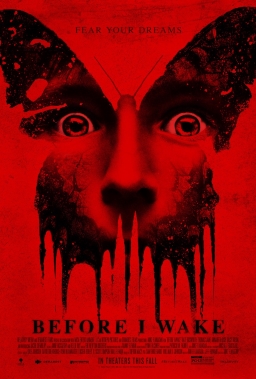 As the evening of Sunday, July 31, began I was looking forward to two films I planned to see at the Hall Theatre. The directors of both movies had interesting track records. Before I Wake, following the strange events surrounding an orphan boy whose dreams cross over into reality, was a new film from Oculus director Mike Flanagan. After that would come The Top Secret: Murder in Mind (Himitsu the Top Secret), a science-fiction murder mystery from Keishi Otomo, maker of the
 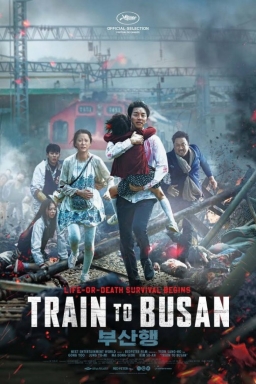 On the morning of Sunday, August 1, I was in no particular hurry to get to the Hall Theatre. I planned to see the Korean zombie movie Train to Busan, but knowing it had already played the large room of the Hall once I didn’t anticipate I’d have difficulty finding a seat. I intended after that to go across the street to the De Sève Theatre, where I’d watch Operation: Avalanche, a found-footage fiction about filmmakers who’d faked the moon landing in 1969. Then I’d go have a bite to eat and come back for two more movies. It sounded like a nice well-spaced day, but when I got to the Hall ten minutes before Train to Busan was scheduled to start I found I’d radically underestimated the film’s popularity. As the doors opened to let the ticket-holders in, the line stretched around the corner, up to the next street, and then around the corner there. Luckily enough, I was able to find a good seat in the back of the Hall, where I watched the auditorium fill up with an enthusiastic crowd.
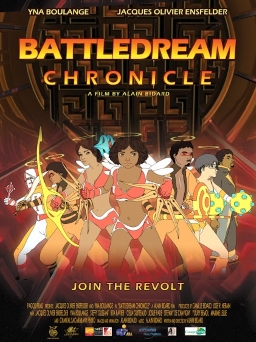 Saturday, July 30, I had hopes of seeing four shows at Fantasia. In the event, I saw three — and ended up with an interesting chat after the last one. First came an animated teen dystopia from Martinique, Battledream Chronicle, in which a young woman fights to free her homeland from digital colonialism. After that came a collection of short films, the International Science Fiction Short Film Showcase 2016 (one of the shorts being an adaptation of Ken Liu’s short story “
 Last July, I was lucky enough to see Anna Biller’s film The Love Witch at Montreal’s Fantasia International Film Festival. After screening there and at various other festivals, it opens today in New York, with more cities to follow. Here’s how I described it back in August:
 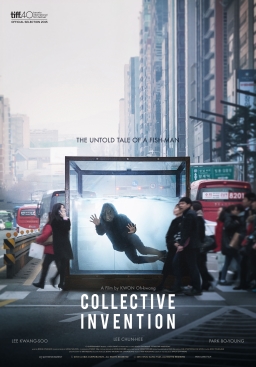 By July 29, the sixteenth day of the Fantasia Festival, I was beginning to feel exhausted. I’d had some thoughts of watching three movies that Friday, but in the end could only manage two. I made it down to the Hall Theatre in the afternoon to watch the Korean satire Collective Invention (Dolyeonbyuni), then came back right after for the raucous Japanese comedy Too Young To Die! (Too Young To Die! Wakakushite Shinu). Neither struck me as flawless, but both in different ways were interesting experiences.