Fantasia 2016, Day 15: Ghosts and Djinns (Lace Crater and Under the Shadow)
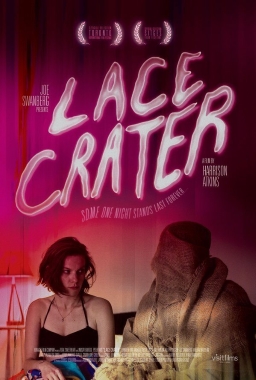 At 7:30 PM on Thursday, July 28, I was in a seat in the De Sève Theatre waiting to see a screening of an American independent horror-comedy called Lace Crater, about a woman who catches a venereal disease from a ghost. After that I’d cross the street to the Hall theatre for a showing of the Iranian horror movie Under the Shadow. I wasn’t entirely sure what to expect from either film, which from experience I knew was often the best way to come to a screening at Fantasia. I was pondering this when the lights went down and Adam Kritzer, producer of Lace Crater, was introduced to the crowd. He thanked us for coming, and urged all of us in the audience to turn to our neighbours, whether we knew them or not, and say whether we believed in ghosts. There was an aisle to my left. I glanced to my right. The man beside me shrugged. “Not particularly,” he said in French. “Same here,” I replied.
One’s personal beliefs aside, Lace Crater is an intriguing film. Written and directed by Harrison Atkins, it starts with a group of young friends who go to a house in the Hamptons, owned by the family of Andrew (Andrew Ryder), one of the bunch. Low-key sexual banter ensues. One of the women, Ruth (Lindsay Burdge, of The Midnight Swim and The Invitation), ends up sleeping alone in a guest house, which Andrew has warned her may be haunted. It is, by a ghost named Michael (Peter Vack). Michael, clad in burlap wrappings, isn’t very scary. He and Ruth end up talking, and connecting. And sleeping together. But back in the city, Ruth finds her one-night stand has consequences. She’s caught something that looks a lot like an STD from Michael, and it makes her increasingly erratic, putting increasing strain on the small network of her friends. Will she find a cure? Or will she have to face Michael again?
Kritzer’s introduction had promised a sexy ghost story, which I assume now was a joke; Lace Crater is, when you get down to it, a movie about a woman who has a one-night stand and contracts a nasty social disease. Which doesn’t strike me as the most sexually charged story in the world. On the other hand, there’s an engaging low-key aspect to the whole affair, a sense of normality, of mundanity, that reasserts itself through the whole tale. It’s a movie that resolutely refuses to let its supernatural aspects dominate.
 I had errands keeping me away from the Fantasia film festival on Monday, July 25. Now, interruptions are a sad fact of life, but sometimes it’s easy to get back into the swing of things; and as it happened the next day I made it back to the De Sève theatre to watch an American horror film called We Go On, which served to get me back into the Fantasia spirit. Then the day after that I saw two more movies at the De Sève, an odd Swiss romance called Aloys followed by a French horror film called Therapy. The latter had been directed by 16-year-old Nathan Ambrosioni — his second feature film. Together the movies made an odd meditation on life, death, and horror.
 Impossible to predict some things. Notably: you can’t know how you’ll react to a work of art until you’ve experienced it. Looking at the movies Fantasia offered on Sunday night, July 24, I thought I’d try If Cats Disappeared from the World (Sekai kara neko ga kietanara), which promised a tale about a terminally ill man who makes a surreal Faustian bargain. After that, I decided I should watch Superpowerless, as it was a genre piece about an aging superhero who’d lost his powers. In truth, I had my doubts about both movies; Cats looked it might suffer from excess of romanticism and forced whimsy, while Superpowerless seemed like some kind of mumblecore satire treading ground comics had worked over decades past. In the event, I was wrong to doubt. If Cats Disappeared from the World would be likely the best movie I saw at Fantasia, and probably my favourite. Superpowerless, meanwhile, turned out to be the festival’s most pleasant surprise, the film which most greatly exceeded all my expectations.
 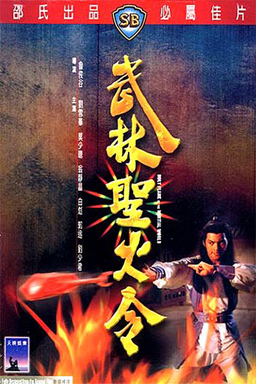 I’d marked four screenings on the Fantasia schedule to attend on Sunday, July 24. The first two were both at the small De Sève Theatre: a presentation of the 1983 Shaw Brothers film Holy Flame of the Martial World (Wu lin sheng huo jin), followed by a short film showcase. The showcase, Fragments of Asia 2016, promised half-a-dozen pieces from across Asia, both animated and live-action. Afterward I’d have time for food, and then two more movies would follow. Before all that, though, came one of the films I’d immediately highlighted when I first saw what was playing at this year’s Fantasia.
 The evening of Saturday, July 23, was going to be busy for me, with three shows at the De Sève Theatre. First, a showcase of short films called Born of Woman, which the Fantasia program told me would feature nine films by women directors “centred largely around themes of the body and interpersonal malaise.” Then after that two science-fiction features. The first would be Realive, about a man from our time (or close to it) who dies and is cryonically revived in 2083. The second would be Tank 432, about a squad of soldiers seeking shelter from a surreal battle within a battered tank. It looked like a promising night, and it got off to a good start in the late afternoon with the Born of Woman showcase.
 Saturday, July 23, was going to be a long day for me at the Fantasia film festival, filled with some tough choices about what to watch. Some of those choices were clarified early on, when thanks to the good work of the people at Fantasia I was able to watch a screener of Assassination Classroom: The Graduation. That resolved a schedule conflict later in the day, and just after noon I’d see my first theatrical screening: Nova Seed, a Canadian animated feature that was playing with an almost half-hour-long short film from Mexico, Revoltoso. After that I had a couple hours until the next set of movies, and I planned to get a good meal. This did not happen. Instead I’d end up taking a test drive of the future — or what seems to me like the future, or at least like a future.
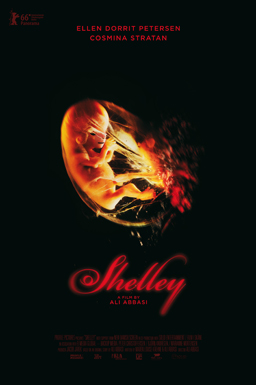 Weekends are busy at the Fantasia International Film Festival, and Friday, July 22, saw things beginning to ramp up for me after a slow few days. After much internal debate, I decided to see three movies, all of them horror films of different kinds. First came the Danish film Shelley, at the Hall theatre, about sinister events around a surrogate mother in an isolated household. Then would come a Japanese film, The Inerasable (Zange —Sunde wa Ikanai Heya), about two women investigating a ghost manifesting in an urban apartment. Finally would come an animated Korean zombie movie, Seoul Station (Seoulyeok). They promised three very different tones. And, as it turned out, delivered nicely.
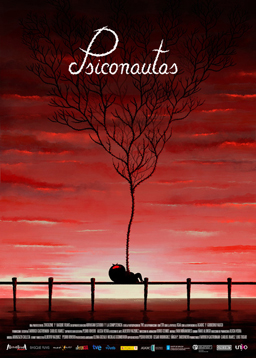 There was one movie scheduled at Fantasia on Thursday, July 21 that I was determined to see: a science-fiction anime called Harmony (Hamoni). Since I had time free beforehand, I decided I’d first head to the festival’s screening room to watch something I’d missed or would be unable to see later. There, I looked over the selection available and settled on Psychonauts, the Forgotten Children (Psiconautas, los niños olvidados), an animated film from Spain. I liked the idea of a double feature of two very different cartoons.
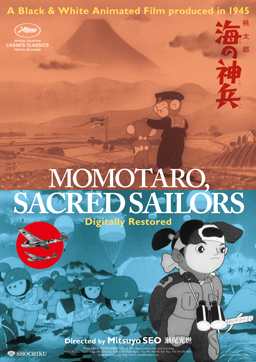 As I’ve said before, sometimes the movies I see at Fantasia on a given day have a common theme. And sometimes they don’t, however much it might look like they ought to. On Wednesday, July 20, I’d go downtown to the Hall Theatre to watch an oddity: a restored Japanese propaganda cartoon from World War II, Momotaro, Sacred Sailors (Momotaro, Umi No Shinpei). Then I planned to head across the street to the De Sève and watch an independent American horror film, The Alchemist Cookbook. I hoped to make it back to the Hall after that in time to watch the second in a series of Japanese science-fiction action movies, Library Wars: The Last Mission (Toshokan Sanso: The Last Mission). It looked like a packed day, and I wondered how the movies would play off of each other.
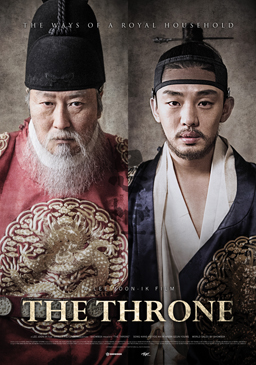 Sometimes the movies I get to see on a given day at Fantasia have an obvious common theme. Sometimes not. Sometimes there’s a commonality binding two otherwise different movies, but it’s tenuous. So it was that on Tuesday, July 19, I watched a Korean historical drama called The Throne (originally Sado), and followed it with a Polish musical-fantasy-tragicomedy called The Lure (originally Córki dancingu). They’re both films based on older stories, in the first case recorded history from the eighteenth century, and in the second Hans Christian Andersen’s fairy tale “The Little Mermaid.” As you might imagine from those two very different source materials, these are very different movies in very different genres. But it also seemed to me that the process of retelling the stories was very different as well.