Fantasia 2017, Day 12: Junk Head
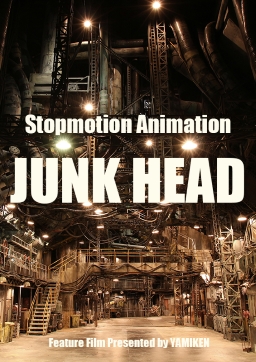 I had two events on my Fantaisa Festival schedule for Monday, July 24. First, I planned to see a stop-motion film from Japan called Junk Head. Then, I’d go to see a presentation by author Grady Hendrix of his book Paperbacks From Hell, about the boom of horror paperbacks in the 70s and 80s. I’d end up speaking briefly with Hendrix after his presentation, which led to my interviewing him for Black Gate; you can see that interview here. So in this post I’ll be talking about Junk Head, an astonishing achievement in science-fiction that well deserves an article to itself.
Junk Head was written and directed by Takahide Hori, who also edited the film, created the soundtrack music, and handled sound effects. He also, with only one or two others (principally Atsuko Miyake), animated the film, did the voice work, and made the puppets and props and sets. By any measure the film’s an accomplishment, and as a near-one-man labour of love, it’s spectacular. Hori uploaded an early version of the film, when it was a half-hour long, to YouTube; you can see it here. The version I saw at Fantasia went on for another hour and 24 minutes, and whether he ends up adding more to it or not — I heard different things, all at second- or third-hand — it tells a complete story. (Thanks to a heads-up from Sandro Forte of Cinetalk.net, I can add that Hori and his team are working on a prequel they’re funding through Kickstarter; I strongly recommend checking the campaign out.)
Title cards at the start of Junk Head give us the background: it’s the far future, when human beings have become effectively immortal by making their bodies inorganic, but as a result cannot reproduce. And now a terrible plague is striking down the world’s population. There’s only one hope. Someone has to be sent into the abysses upon which this future civilization’s built, a labyrinth of tunnels and spaces long since abandoned to clones once used for labour. In the centuries since, the clones have mutated in strange ways, and built their own cultures among the concrete of the lower levels. To save humanity, genetic material from the clones has to be recovered — but how to get genetic material from the seemingly sexless clones? And how are beings not designed to reproduce accomplishing the feat, anyway?
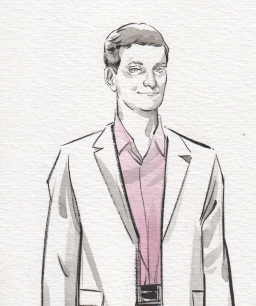 Grady Hendrix is a man who knows his horror. I saw him speak about horror paperbacks from the late 60s through the early 90s at the Fantasia International Film Festival, where he previewed his then-upcoming book Paperbacks From Hell. His passion and knowledge were clear at once. So was his wit — he clearly took these books seriously, but also knew when to take them lightly. His presentation was a powerful and slightly manic guide to a weird world of which I’d known nothing: a paperback world of mutilated dolls, of killer clowns, of diversely-talented skeletons, and, of course, of
 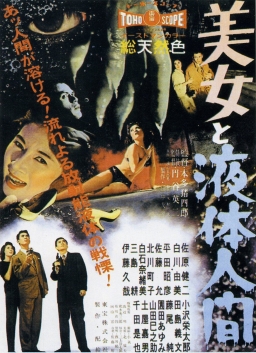 Sunday, July 23, I was down at Fantasia’s De Sève Theatre before noon to see a screening of the 1958 film The H-Man (Bijo To Ekatai-Ningen). I intended to follow that up with another vintage movie, the Shaw Brothers–produced 1983 film Bastard Swordsman (Tian can bian). Finally, I’d wrap up the day with a contemporary movie, the manga adaptation Gintama, which promised a mix of action and comedy. I liked the variety the films seemed to represent, and I was especially curious about The H-Man, which had been directed by Ishiro Honda, director of Godzilla.
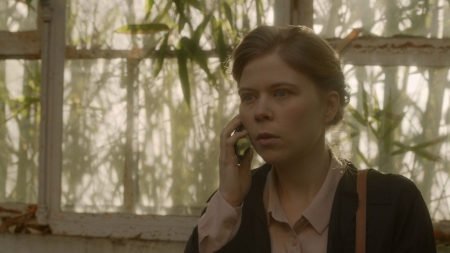 In 2016, the Fantasia International Film Festival created a showcase of short films by women directors:
 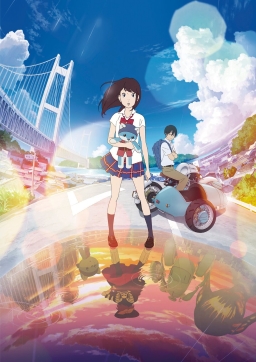 On Saturday, June 22, I reached Fantasia’s Hall Theatre before noon to see a screening of the anime Napping Princess (Hirune Hime: Shiranai Watashi no Monogatari), a story about dreams, technology, and the 2020 Olympics. After that, I had a short film showcase to see, then another feature. But before either of those, I planned to pass by the Fantasia Samsung VR 360D Experience, which, as the name implies, gives people the chance to experience VR by watching one of a selection of short films. I’d tried out the technology
 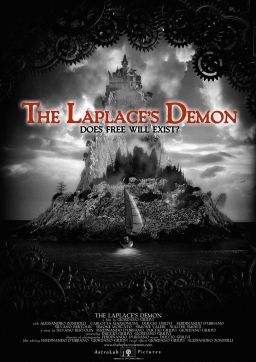 After two days off, I returned to Fantasia on June 21 fit, trim, and rested. Randomness defines my festival schedule — it happened that the previous two days had nothing I wanted to see. But that Friday afternoon I was looking forward to one of the most intriguing movies listed in Fantasia’s catalogue: The Laplace’s Demon, directed by Giordano Giulivi.
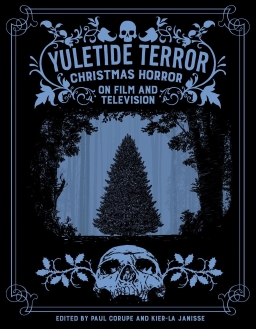 As the year begins to burn itself out, as the light of summer gives way to long ghoul-ridden nights, as the cold grows a little more each day like spadefulls of earth slowly burying a coffin, what better time to think ahead to the horrors of Christmas? Not the pedestrian horrors of shopping and family, but the deeper terrors of knifemen and ghosts and dark-souled elves: the traditions of the season. Publisher Spectacular Optical’s planning a celebrate of exactly those kinds of Christmas frights, with their upcoming volume Yuletide Terror: Christmas Horror on Film and Television.
 Tuesday, July 18, I set off for Fantasia with another full day before me. I planned to watch three films for which I had three different expectations. First was Animals (Tiere), a German film promising surrealism and artfulness. Then the Chinese big-budget special-effects blockbuster Wu Kong. Finally, and perhaps most intriguingly, House of the Disappeared (Si-gan-wi-ui-jip), a Korean horror movie based on a Venezuelan movie called The House at the End of Time (La casa del fin de los tiempos) which I’d seen three years ago during my first year covering Fantasia; I couldn’t help but wonder how that film would translate across cultures.
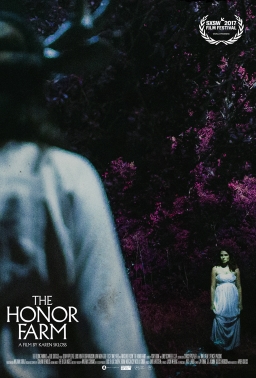 Sunday, July 16, felt in some ways like the day Fantasia 2017 really began for me. I had three movies I planned to watch, of three very different kinds, though all at the De Sève Theatre. The first was a horror-inflected American independent film called The Honor Farm. The second was a Hong Kong action movie called Shock Wave (Chaak Daan Juen Ga). The third was a Chinese art movie called Free and Easy (Qīng sōng yú kuài). That mix of approaches, genres, and countries was characteristic of the festival. I looked forward to each movie individually, and to how they’d work together.