Browsed by
Author: Matthew David Surridge

Fantasia 2017, Supplemental: Satires and Wars (Japanese Girls Never Die, Broken Sword Hero, and God of War)

Fantasia 2017, Supplemental: Satires and Wars (Japanese Girls Never Die, Broken Sword Hero, and God of War)

Japanese Girls Never DieAfter the Fantasia festival had officially concluded I still had three movies to watch. During the festival I’d requested links to view screening copies of three films I couldn’t see in theatres due to schedule conflicts, but it wasn’t until Fantasia ended that I had time to sit down and watch them. These movies were a Japanese comedy-drama called Japanese Girls Never Die (also released under the English title Haruko Azumi Is Missing, in romanised Japanese Azumi Haruko wa yukue fumei); a Thai historical martial-arts movie called Broken Sword Hero (also Legend of the Broken Sword Hero, from the romanised original Thong Dee Fun Khao); and a Chinese blockbuster historical war movie called God of War (Dang kou feng yun, now on Netflix). They made for an interesting mix.
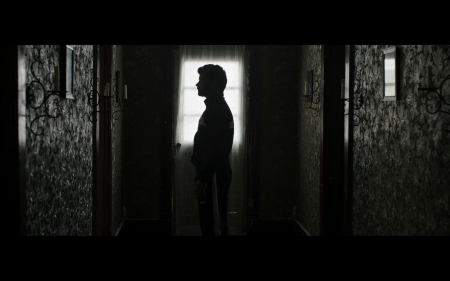
Japanese Girls Never Die was directed by Daigo Matsui (whose earlier film Wonderful World End I quite liked), from a script by Misaki Setoyama based on the 2013 novel by Mariko Yamauchi. I can find out nothing about the novel, but the film is wondrously, deliriously complex, bristling with different timelines, subplots, and minor characters who send the film spinning off in different directions. It’s quick, challenging, and engaging.

There is Haruko Azumi (Yu Aoi, of the Rurouni Kenshin movies), an office worker in her 20s who has an unrequited love for her neighbour. There are two young grafitti artists (Shono Hayama and Taiga), at a later point in time, who find a poster of the missing Haruko and make street art from it. There is a gang of teen girls who terrorise the same streets, so that men are advised not to walk those streets at night. There is an older woman at the office where Haruko works, mocked by the men there for not having children and not being young and not being their fantasy image of a woman. There is a girl who is involved with one of the graffiti artists, who in turn are using her more than she realises. There is a clerk at a convenience store. There is a park called Dreamland. There are characters who may or may not attain their dreams. There is an unexpected beginning.

Read More Read More

Fantasia 2017, Day 21: The Last Breath (Indiana, Fashionista, and Suspiria)

Fantasia 2017, Day 21: The Last Breath (Indiana, Fashionista, and Suspiria)

IndianaOn the last day of the 2017 Fantasia film festival I planned to watch three movies. First, at the De Sève Theatre, Indiana: a movie about a pair of ghost-breakers in the Midwest who may or may not deal with actual paranormal events. Second, I’d go to the festival’s screening room, where I’d see a dark psychological thriller called Fashionista. Finally, I’d close out the festival with a screening of a restored version of Dario Argento’s classic 1977 horror film Suspiria.
Indiana began the day for me, a film directed by Toni Comas from a script by Comas and Charlie Williams. It follows Michael (Gabe Fazio) and Josh (Bradford West), two ghost hunters in early middle-age who travel the roads of the Midwest hunting for spirits and people suffering hauntings. They’ve carved out a level of fame for themselves as the Spirit Doctors, doing radio call-in shows and occasionally arguing with skeptics — which latter role the more extroverted Josh takes to more naturally than the quieter Michael. Michael’s got another higher-paying job and is thinking about quitting his ghostbusting days, while Josh is dedicated to the profession, and even takes his son Peter (Noah McCarty-Slaughter) on the road with them. Meanwhile, a parallel narrative track follows Sam, an old man on a seemingly-nefarious mission. What drives him, and how his story links up with the Ghost Doctors, becomes part of the mystery of the film.

Read More Read More

Fantasia 2017, Day 20: Human and Inhuman (Lu Over the Wall, Spoor, and Nomad)

Fantasia 2017, Day 20: Human and Inhuman (Lu Over the Wall, Spoor, and Nomad)

Lu Over the WallTuesday, August 1, was the next-to-last day of Fantasia. I had three films I wanted to see as the festival raced to its end, all at the De Sève Theatre. Lu Over the Wall (Yoake Tsugeru Lu no uta) was an animated young person’s adventure about indie rock and mermaids, from the mind of Masaaki Yuasa. Spoor (Pokot) was a Polish-Czech co-production of a mystery-horror film about animals that may or may not be turning against human beings. And Nomad (Göçebe) was a Turkish science-fiction/fantasy film that promised mythic overtones.

Lu Over the Wall was the second movie directed by Masaaki Yuasa I saw at Fantasia this year, having watched Night Is Short, Walk On Girl just the day before. This one, written by Yuasa and Reiko Yoshida, is an original story about Kai (Shota Shimoda), a middle-schooler in a provincial fishing town, whose indie rock band draws the attention of a curious young mermaid named Lu (Kanon Tani). The mermaid’s fascinated by their music, and becomes more human the more she hears their songs: for as long as the band plays, her fish-tail becomes a pair of legs, which she uses for enthusiastic acrobatic dancing. But the town has reason (they think) to be suspicious of mermaids and the creatures of the deep. Still, when Lu joins Kai’s band, success for the group seems assured — but forces both above and below the water threaten the developing harmony.

The images here are bright and colourful, the linework loose yet clear while backgrounds remain detailed. Faces bulge and distort, pushing cartoon reality. Movement is appropriately fluid, and the whole film feels energetic, young, and vital. At the same time, it evokes atmosphere when it needs to; Kai broods, at times, and has much to brood about. Lanky, shaggy-haired, he’s a visual contrast of the brightly-coloured always-moving always-smiling Lu, and so out of the interplay of the two of them we get the movie.

Read More Read More

Fantasia 2017, Day 19: Heightened Realities (Night Is Short, Walk On Girl, Deliver Us, and Blade of the Immortal)

Fantasia 2017, Day 19: Heightened Realities (Night Is Short, Walk On Girl, Deliver Us, and Blade of the Immortal)

Night Is Short, Walk On GirlOn Monday, July 31, I had three movies I wanted to see at the Fantasia Festival. First up was a surreal Japanese animated comedy, Night Is Short, Walk On Girl (Yoru wa Mijikashi Arukeyo Otome) in the De Sève Theatre. Then I’d stay at the De Sève to see an Italian documentary, Deliver Us (the English translation of the Latin title Libera Nos), about real-life exorcisms. The day would wrap up in the Hall Auditorium with a screening of Takashi Miike’s adaptation of the best-selling supernatural samurai manga Blade of the Immortal (Mugen no Junin). It looked, all told, like a lovely day.

Night Is Short, Walk On Girl was written by Tomohiko Morimi from a novel by Makoto Ueda, and directed by Masaaki Yuasa. Yuasa’s previously overseen an animated TV adaptation of another Ueda novel, Tatami Galaxy; the stories share a setting and some minor characters, but there’s nothing obtrusive to someone like me who has neither seen nor read Tatami Galaxy. Walk On Girl takes place in Kyoto, following a group of university students through a long night of seeking love, of seeking a long-lost and beloved book, and of encountering supernatural and near-supernatural entities. It mainly centres on a male student, called only Senpai (‘senior,’ voiced by Gen Hoshino), who is in love with a girl called Kurokami no Otami (literally, ‘the girl with black hair,’ here played by Kana Hanazawa). Senpai’s been arranging seemingly-accidental meetings, hoping Otami will notice him; on the night the film follows them, she goes partying and ends up looking for a copy of a beloved storybook from her childhood. This swiftly leads into a proliferation of subplots and genuinely zany characters — from the God of the Old Books Market (Hiroyuki Yoshino), to the School Festival Executive Head (Hiroshi Kamiya) who keeps the University campus under constant surveillance, to ‘Don Underwear’ (Ryuji Akiyama) who will not change his drawers until he finds (through the medium of pop-up theatrical happenings) the girl he once saw and fell in love with. The film whirls along through the night in a delirious whirl of pub crawling, dancing, philosophers (dancing and otherwise), guerilla theater, used book fairs, surveillance, cross-dressing, wishes, bad colds, punching technique, clocks, night, and true love.

I was worried for most of the film that Senpai’s obsession with Otami, which at least borders on stalking, would be glossed over. In fact it is at least addressed toward the end of the film, and the constant humiliations Senpai brings on himself throughout the movie certainly can be seen as a kind of poetic justice for his actions. In this as in much else the film is aware of its dark undertones, but maintains a generosity of spirit despite them. It’s a movie that maybe more than any other I’ve seen captures the university experience — or what one might hope the university experience would be like. It does this without naivete; it is clearly the product of older creators telling a tale of youth, but doing it without either speaking down to the young in any way or, conversely, romanticising the experience of youth.

Read More Read More

Fantasia 2017, Day 18, Part 2: Invasions Past, Present, and Yet To Come (Mumon, Bushwick, and S.U.M.1)

Fantasia 2017, Day 18, Part 2: Invasions Past, Present, and Yet To Come (Mumon, Bushwick, and S.U.M.1)

MumonI ran up the steps in the Hall Building, hurrying from the basement where I’d just seen Geek Girls in the D.B. Clarke Theatre to reach the big Hall Auditorium in time to catch my second film of the day. The doors of the auditorium were still open, and I raced in and found a seat just as the movie began. It was called Mumon: The Land of Stealth (Shinobi no kuni), and I settled in knowing I had two more movies to see afterward. Mumon was a period film about ninjas fighting an invasion, and following that would come Bushwick, about residents of a Brooklyn neighbourhood fighting an invasion, then S.U.M.1, a German movie about people in a dystopian future fighting a (possible) invasion. A theme appeared to be emerging. (Two notes: one, Bushwick is now on Netflix in Canada and the US, so for those looking for a quick take on the film I’ll say that it’s a good enough movie I wish it were better; two, S.U.M.1 has now been given an expanded title, Alien Invasion: S.U.M.1.)

Mumon: The Land of Stealth was directed by Yoshihiro Nakamura (whose previous film The Inerasable I quite liked) and written by Ryou Wada based on Wada’s novel Shinobi no Kuni. It’s the sixteenth century, and Nobunaga Oda is trying to unify feudal Japan. Standing in the way is the Iga Province, home to the Iga ninjas who will kill anyone for hire. Most prominent among them is one Mumon (Satoshi Ohno), who is as lazy as he is skilled. But his amoral actions lead to a revenge-driven betrayal, setting up a battle between Oda’s forces and the ninjas of Iga. But who is one to cheer for in a battle of soldiers and contract killers?

There are some weighty elements to Mumon, posing questions about morality and loyalty and community spirit. Ninjas kill people for money, and being purely mercenary, the ninjas of Iga don’t immediately come together to make any kind of effective resistance to Oda. Mumon’s no exception, except perhaps insofar as his drive for financial reward comes about in part to keep his beloved wife Okuni (Satomi Ishihara, Hange in the live-action Attack On Titan films) in the style to which she is accustomed. The overall challenge, then, is for Mumon to grow as a person and rally his people as a community to fight off their invaders. That sounds like a fairly lightweight, if not simple, theme; but the movie goes some unexpected places.

Read More Read More

Fantasia 2017, Day 18, Part 1: Geek Girls

Fantasia 2017, Day 18, Part 1: Geek Girls

Geek GirlsSunday, July 30, was going to be a big day. I had four movies I hoped to see, some of them scheduled so tightly I wasn’t sure I could get to all of them in time despite the convenient proximity of the Fantasia theatres one to another. Still, I at least knew I’d start my day in the D.B. Clarke Theatre, where I would see Geek Girls, a documentary by Gina Hara.

The film’s narrated by Hara herself, a Montrealer of Hungarian birth. We see her reflecting in voiceover on her status as a self-identified geek, and hear interviews with a number of women in geekish fields who talk about their lives and their experiences as women in geek spaces and geek communities. The interviews aren’t presented as give-and-take conversations, Hara instead absenting herself from the film and allowing her interviewees’ words to shape the piece. We hear from a scientist, a game designer, from cosplayers and bloggers and manga makers, from gamers professional and otherwise. Hara’s film becomes about her own search for a place, and for an understanding of what it means to be a geek. We’re told that there’s no word for “geek” in Hungarian, but even in North America, what does it mean for her as a woman to be a geek?

Hara avoids any journalistic reliance on facts and figures, making her film much more of a personal memoir. This is a series of discussions and reflections, not infodumps; even Hara’s interviewees are each introduced, cleverly, with the camera showing a physical sign with their name on it rather than by using subtitles. The interviews are edited so that the film progresses through a rough series of themes, examining the issues of women in geek-related fields. Overall the focus here is on the sense of community among women (especially); that is, the film’s more about the value of fandom rather than an investigation of what pulls one in to being a fan.

Read More Read More

Fantasia 2017, Day 17: Futures Human and Otherwise (Attraction, “Valley of White Birds,” “Scarecrow Island,” and “Cocolors”)

Fantasia 2017, Day 17: Futures Human and Otherwise (Attraction, “Valley of White Birds,” “Scarecrow Island,” and “Cocolors”)

AttractionThere were two screenings I wanted to attend at the Fantasia Festival on Saturday, July 29. First was the Russian science-fiction film Attraction (Prityazhenie). After that was a triple-bill of animated shorts: “Valley of White Birds,” from China; “Scarecrow Island,” from Korea; and “Cocolors,” from Japan. All together, a promising day of fantastic imagery on the big screen in the 400-seat D.B. Clarke Theatre. (In addition, a long short film preceded Attraction, “Past & Future Kings”; as it happens I know some of the local creators, and so feel it would be inappropriate to write about the movie here.)

Attraction was directed by Fedor Bondarchuk from a script by Oleg Malovichko and Andrey Zolotarev. It is an epic (132 minutes, though the IMDB claims there’s a 117-minute version as well) story about an alien spacecraft that crashes into a neighbourhood in the south of Moscow. I saw a trailer before going in that made the film look like an Independence Day–like story about humans rallying to fend off an invasion; I don’t think it’s giving away a major twist to say the movie’s nothing like that at all. Instead, it’s about the Russian government trying to negotiate a first contact situation while assorted everyday Muscovites react with more or less suspicion — and one of the aliens (Rinal Mukhametov) ends up making contact with the young daughter (Irina Starshenbaum) of the army officer (Oleg Menshikov) overseeing the crash site. They fall in love, but he has to get back to his ship as the hate and fear of the humans reaches a boiling point.

Attraction has some very definite echoes of Starman and (by the end) of The Day The Earth Stood Still. Like those movies, it’s about idealism and human nature; about both the good and bad of the human condition and human emotional terrain. Like those movies, it derives tension from pitting the stupidity, fear, and violence of humans against human generosity and the human ability to love. If the result isn’t really in question, it’s a reasonably convincing trip getting there. There’s romance and action and character beats and a few laughs, and all are managed reasonably well, even if the movement from one to another can come as a swerve.

Read More Read More

Fantasia 2017, Day 16: Control and Resistance (Fritz Lang and The Crazies)

Fantasia 2017, Day 16: Control and Resistance (Fritz Lang and The Crazies)

Fritz LangOn Friday, July 28, I had two films on my schedule at the Fantasia Festival. The first was a German period crime film with biographical aspects, a movie called Fritz Lang that imagined the great director of the title mixed up with the killings that would shape his now-classic film M. The second was a screening of George Romero’s 1973 film The Crazies, arranged quickly by the festival’s organizers as a tribute following Romero’s death only 12 days before. Together the movies would make for a day that, to me, exemplified much of what is best in Fantasia: a profound appreciation of film history of every kind, mixed with challenging genre artistry.

Fritz Lang was directed by Gordian Maugg from a script he worked on with Alexander Häusser. Opening in 1929, the black-and-white film follows director Fritz Lang (Heino Ferch) in the wake of the relative failure of a string of Lang’s films, including his pioneering science-fiction movies Metropolis and Frau im Mond (Woman in the Moon). Casting about for a new idea for a film that will satisfy him artistically and also make money, Lang hears about a series of murders in the city of Düsseldorf. He grows fascinated by the killings, and travels to Düsseldorf to take a hand in the investigation. But why is he so drawn to the lurid crimes?

There’s a kernel of reality in Fritz Lang. Lang did research the Düsseldorf killings, and they did partially inspire his next film, M (though at times Lang would downplay the link, pointing to other murders he researched). The movie at hand greatly expands Lang’s involvement with the murders, and invents any number of scenes in which he interacts with the police and killer. That’s fair enough for a historical drama, but at the same time the film’s primarily interested in what makes Lang tick — why he’s drawn to make a story of the killings, and how those killings parallel events in his life. In order to make those parallels dramatically forceful, the movie then has to dramatise certain events in Lang’s life which in reality are to an extent mysterious. Again there’s nothing wrong with that. But it does make for an odd and at times uneasy blend of period mystery and biopic.

Read More Read More

Fantasia 2017, Day 15: Solving Mysteries, Or Not (Town In A Lake and Let There Be Light)

Fantasia 2017, Day 15: Solving Mysteries, Or Not (Town In A Lake and Let There Be Light)

Town In A LakeOn Thursday, July 27, I planned to watch two films at the Fantasia International Film Festival. First, an artistically ambitious movie from the Philippines called Town In A Lake (Matangtubig). Then, later in the evening, a documentary about the quest to develop nuclear fusion technology called Let There Be Light. Both looked to be about the mysteries of the universe, in very different ways.

Directed by Jet Leyco and written by Brian Gonzales, Town In A Lake takes place in a small isolated town in the Philippine jungle with an official crime rate of zero. Until, as the movie opens, two girls are abducted. One is later found dead. The crime draws the attention of the national and international media, which descends on the town, disrupting the locals’ lives and mourning. Meanwhile, the investigation into the crime goes on. Who committed this evil, and why? Can there be a wholly natural explanation for it, coming on the heels of so much peace?

Watching Town In A Lake is only part of the experience of the film. It’s a story that doesn’t provide easy explanations, or even that much in the way of conventional character-centred drama. There are characters, and there is what is effectively a mystery story that ultimately takes on aspects beyond the merely rational. But these things emerge over the course of the film’s 88 minutes; we assemble the bits we’re given, the sounds and images we experience, and make the pieces make sense even as we’re absorbed by the sensory depth of the movie. This is a meditative experience, with long takes and subtle camera moves and a rich soundscape. Still, I found it took some pondering to understand (and I want here to express my thanks to filmmakers Shelagh Rowan-Legg and Gabriela MacLeod as well as critic Kurt Halfyard for a useful discussion after the film that clarified many things for me). There is a good argument that in attempting to understand what we see rationally, in attempting to work it out like a logic puzzle, one does not take the best approach to the film — that in so doing we come like the outsider media, imposing our own frames of understanding on matter that is richer and more allusive than can be explained by words and reason. “Relax,” runs one line of dialogue, “thinking won’t get you anywhere.” On the other hand, there is a counter-argument that if this is so, any explanation will be self-evidently insufficient, that the emotional and sensory resonance will naturally and necessarily dwarf the meaning of the logic. So it is here, I think. You can work out a perfectly sound explanation of what’s happening onscreen. But there is always more than the explanation can resolve. There are always more mysteries.

Read More Read More

Fantasia 2017, Day 14, Part 2: Folklore and Fans (November and Tokyo Idols)

Fantasia 2017, Day 14, Part 2: Folklore and Fans (November and Tokyo Idols)

NovemberI wrote the other day about 78/52, the first movie I saw at Fantasia on Wednesday, July 26. It played at the De Sève Theatre, the smaller of the two main Fantasia cinemas, and as it happened I’d see two more movies there the same day. The first was an Estonian movie (technically an Estonian-Dutch-Polish co-production) called November, a period piece set among Northern forests, rich in folklore and cinematic beauty. The second was a documentary called Tokyo Idols, about the Tokyo-centred industry of young female pop singers.

November was written and directed by Rainer Sarnet from the novel Rehepapp by Andrus Kivirähk. Shot in a sumptuous black and white, it shows us an Estonian peasant village in the late eighteenth or early nineteenth century, isolated among the deep woods, ruled by a family of Germans. We see the grinding poverty of pre-industrial village life and we see the German lords in their rich but decaying manor house. More significantly, perhaps, we see the world of spiritual forces and witchcraft within which the peasants live. Dead souls return to share a feast. Witches can teach a girl to take the shape of a wolf. Hidden treasures lurk under floorboards. Plagues take human form. And you can sell your soul to the devil to get a servant made of scraps of wood and other leftovers, a thing called a kratt; if you’re really cunning, if you know the trick of it, maybe you can cheat the devil and get away with your soul intact.

Against this rich background we see a love triangle develop. Liina (Rea Lest) is love with Hans (Jörgen Liik) who himself has his heart set on the German baroness. In and around this are other subplots and anecdotes of village life. A man becomes obsessed with the maid of the manor house. Older people see what might have in their own lives as Liina pursues Hans. Hans, meanwhile, also aspires to be a poet. But if he sells his soul for love, can he ever become the writer he wants to be?

Read More Read More