Browsed by
Author: John ONeill

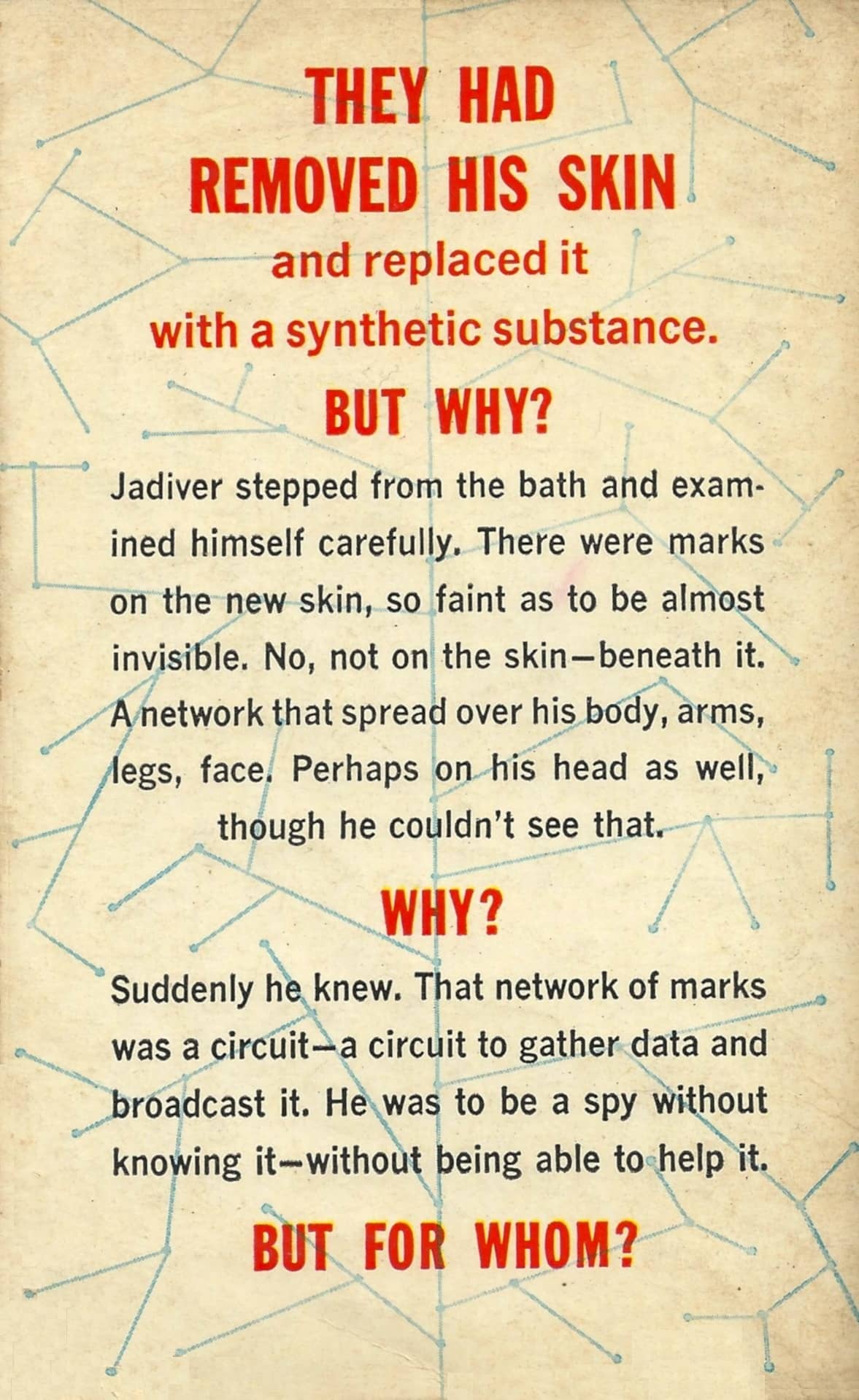
Vintage Treasures: 5 Galaxy Short Novels, edited by H.L. Gold

Vintage Treasures: 5 Galaxy Short Novels, edited by H.L. Gold

5 Galaxy Short Novels-small 5 Galaxy Short Novels-back-small

Cover by Edward Valigursky

I love novellas. They’re the perfect length for idling away those long fall evenings. I miss them in the online magazines I read today, virtually all of which have a submission cap somewhere around 10,000 words (the exception is Neil Clarke’s Clarkesworld, which recently began accepting stories up to 16,000 words. Way to go, Neil!)

It was Matthew Wuertz’s Saturday review of the April 1954 issue of Galaxy Science Fiction, including Fred Pohl’s classic “The Midas Plague,” that reminded me just how many great novellas appeared in those old print magazines. Matt’s piece made me want to read the story all over again. In fact, it made me wish there was an easy way to sample Galaxy’s  novellas. Galaxy editor H.L. Gold had an appetite for meaty SF epics, and his authors took ready advantage of that market. Gold showcased dozens of top-notch writers at novella length in the early days of the magazine, and it would be great to have easy access to those hard-to-find tales.

Yeah, that was dumb. As I was sorting paperbacks this morning it finally occurred to me that what I was wishing for already existed. Gold produced nearly a dozen mass market anthologies during his eleven years as Galaxy‘s editor, including six volumes of the Galaxy Reader of Science Fiction. He knew what his readers wanted, and he paid special attention to longer fiction, with Galaxy Science Fiction Omnibus (1955), The World That Couldn’t Be and 8 Other Novelets From Galaxy (1959), Bodyguard and Four Other Short Novels from Galaxy (1960), Mind Partner and 8 Other Novelets from Galaxy (1961), and especially 5 Galaxy Short Novels, which appeared in 1958.

5 Galaxy Short Novels reprints stories by Theodore Sturgeon, Damon Knight, James E. Gunn, J. T. McIntosh, and F. L. Wallace. Even today, it makes a great introduction to the magazine.

Read More Read More

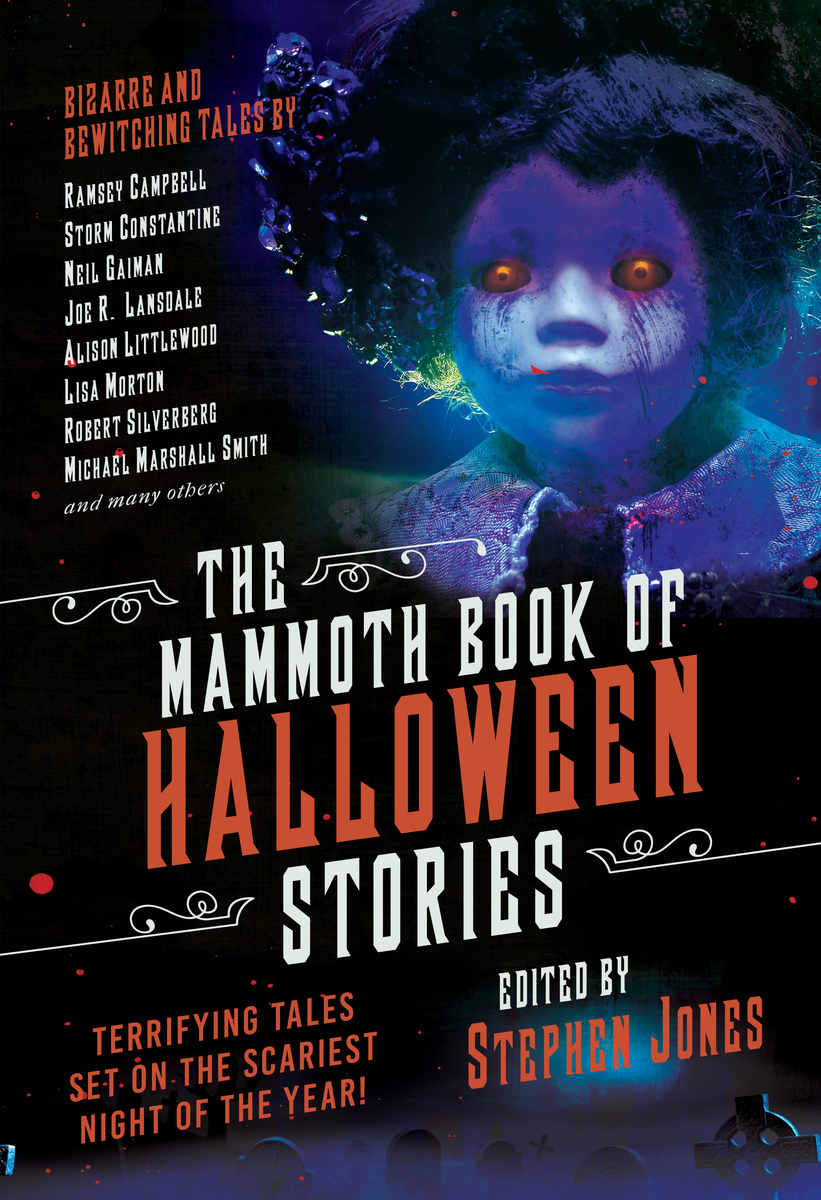
New Treasures: The Mammoth Book of Halloween Stories edited by Stephen Jones

New Treasures: The Mammoth Book of Halloween Stories edited by Stephen Jones

The Mammoth Book of Halloween Stories-smallI love these Mammoth anthologies. Because they’re mammoth! You can curl up with them for an entire weekend. Or use them as a stepladder to get to those dishes in the top cupboard. They have countless uses around the house.

Stephen Jones’ latest, The Mammoth Book of Halloween Stories, arrived earlier this month, and it looks like an essential fall purchase. It’s 528 pages of new and reprint stories from Ramsey Campbell, Steve Rasnic Tem, Joe R. Lansdale, Helen Marshall, Angela Slatter, Neil Gaiman, Storm Constantine, Alison Littlewood, Robert Silverberg, Michael Marshall Smith, Adrian Cole, Christopher Fowler, Scott Bradfield, Robert Shearman, and a dozen more — plus a spooky new poem by Jane Yolen.

Here’s the complete Table of Contents.

“Introduction: When Churchyards Yawn”
“October in the Chair” – Neil Gaiman (Conjunctions: 39, The New Wave Fabulists, 2002)
“Reflections in Black” – Steve Rasnic Tem
“The Halloween Monster” – Alison Littlewood
“The Phénakisticope of Decay” – James Ebersole
“Memories of Día de los Muertos” – Nancy Kilpatrick (Dead of Night #8, Fall/Winter 1993)
“Fragile Masks” – Richard Gavin
“Bone Fire” – Storm Constantine
“Queen of the Hunt” – Adrian Cole
“The October Widow” – Angela Slatter (The Spectral Book of Horror Stories, September 2014)
“Before the Parade Passes By” – Marie O’Regan

Read More Read More

When Philip K. Dick Reports You to the FBI: Thomas M. Disch’s Camp Concentration

When Philip K. Dick Reports You to the FBI: Thomas M. Disch’s Camp Concentration

Camp Concentration-small Camp Concentration-back-small

Thomas M. Disch is a tragic figure. An enormously talented writer who won the enduring respect of his peers — with nine Nebula nominations and two Hugo nominations to his credit, plus a John W. Campbell Award and Rhysling Award, among many other accolades — his work was long ignored by the public. Success eluded him for virtually his entire career, and he gave up writing almost entirely near the end of his life. After the death of his partner in 2005 he lost his house, fought eviction from his apartment, and eventually killed himself in 2008. In the Science Fiction Encyclopedia John Clute wrote of Disch:

Because of his intellectual audacity, the chillingly distanced mannerism of his narrative art, the austerity of the pleasures he affords, and the fine cruelty of his wit, Disch was perhaps the most respected, least trusted, most envied and least read of all modern sf writers of the first rank.

Certainly his most commercially successful work was the novella “The Brave Little Toaster,” which appeared first in the August 1980 issue of The Magazine of Fantasy and Science Fiction and was nominated for both a Hugo and Nebula. Famed animation director John Lasseter (Toy Story, A Bug’s Life) recalls how he was fired from Disney ten minutes after making a pitch for a film version; Hyperion Pictures eventually produced animated versions of The Brave Little Toaster (1987) and Disch’s sequel, The Brave Little Toaster Goes to Mars (1998).

Perhaps his most successful adult novel was Camp Concentration, which has seen nearly a dozen editions in English since it first appeared in 1968. Alongside On Wings of Song (1979) it’s one of his most acclaimed novels, anyway, and I figure it makes a solid starting point to start reading Disch. It’s interesting for another reason as well — the novel figures prominently in one of the most infamous incidents involving Philip K. Dick, who was so alarmed by Camp Concentration that he wrote a letter to the FBI about it.

Read More Read More

Uncanny as a Ventriloquist’s Doll: Nothing is Everything by Simon Strantzas

Uncanny as a Ventriloquist’s Doll: Nothing is Everything by Simon Strantzas

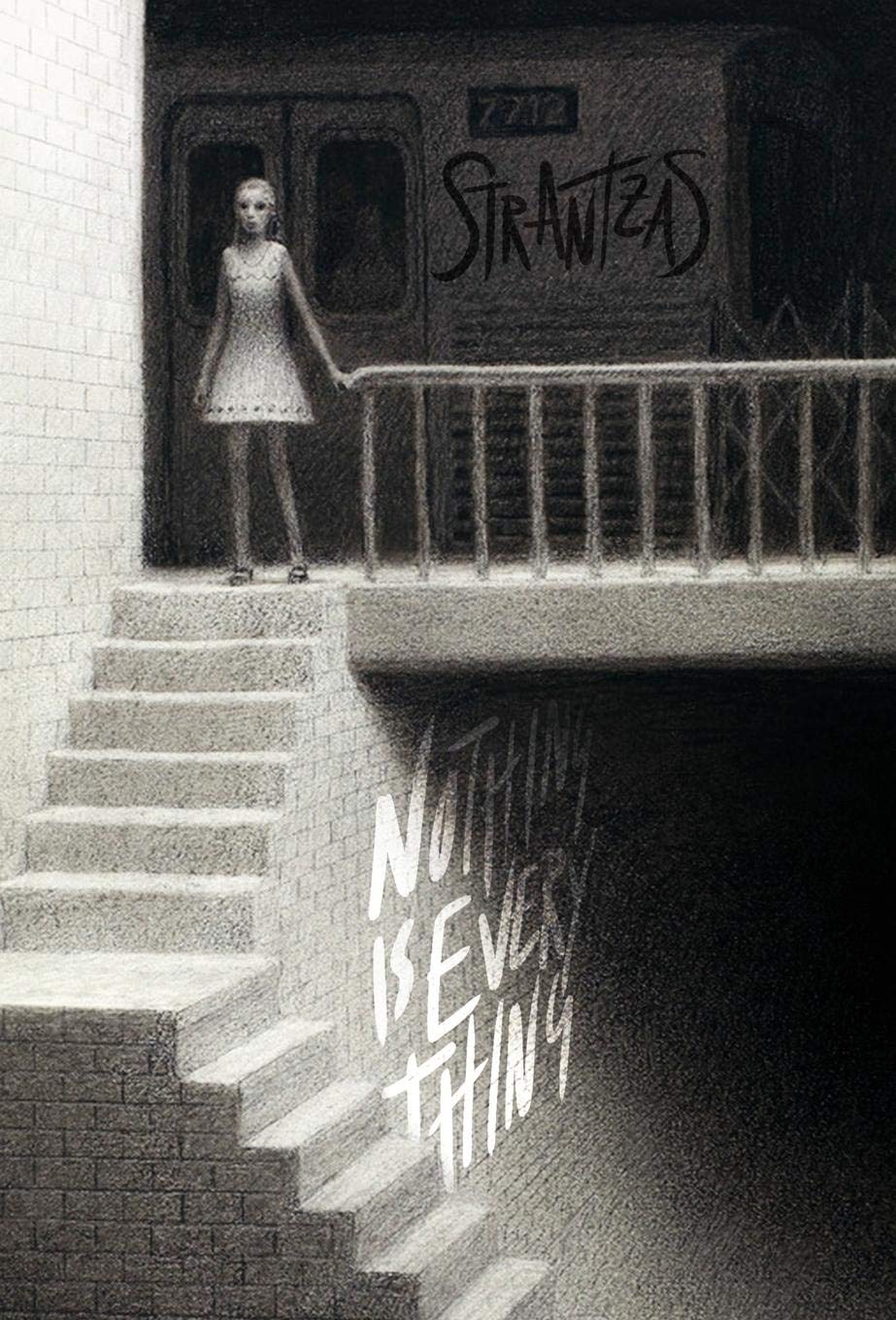
Nothing is Everything Simon Strantzas hc-small Nothing is Everything Simon Strantzas hc-back-small

Art by Aron Wiesenfeld

In 2014 I wasn’t familiar with the work of Simon Strantzas, but I bought his collection Burnt Black Suns mostly on the reputation of its lead story “On Ice,” a grim novella of arctic horror. By 2018, however, Simon is the one with the reputation, and it’s growing steadily with every story.

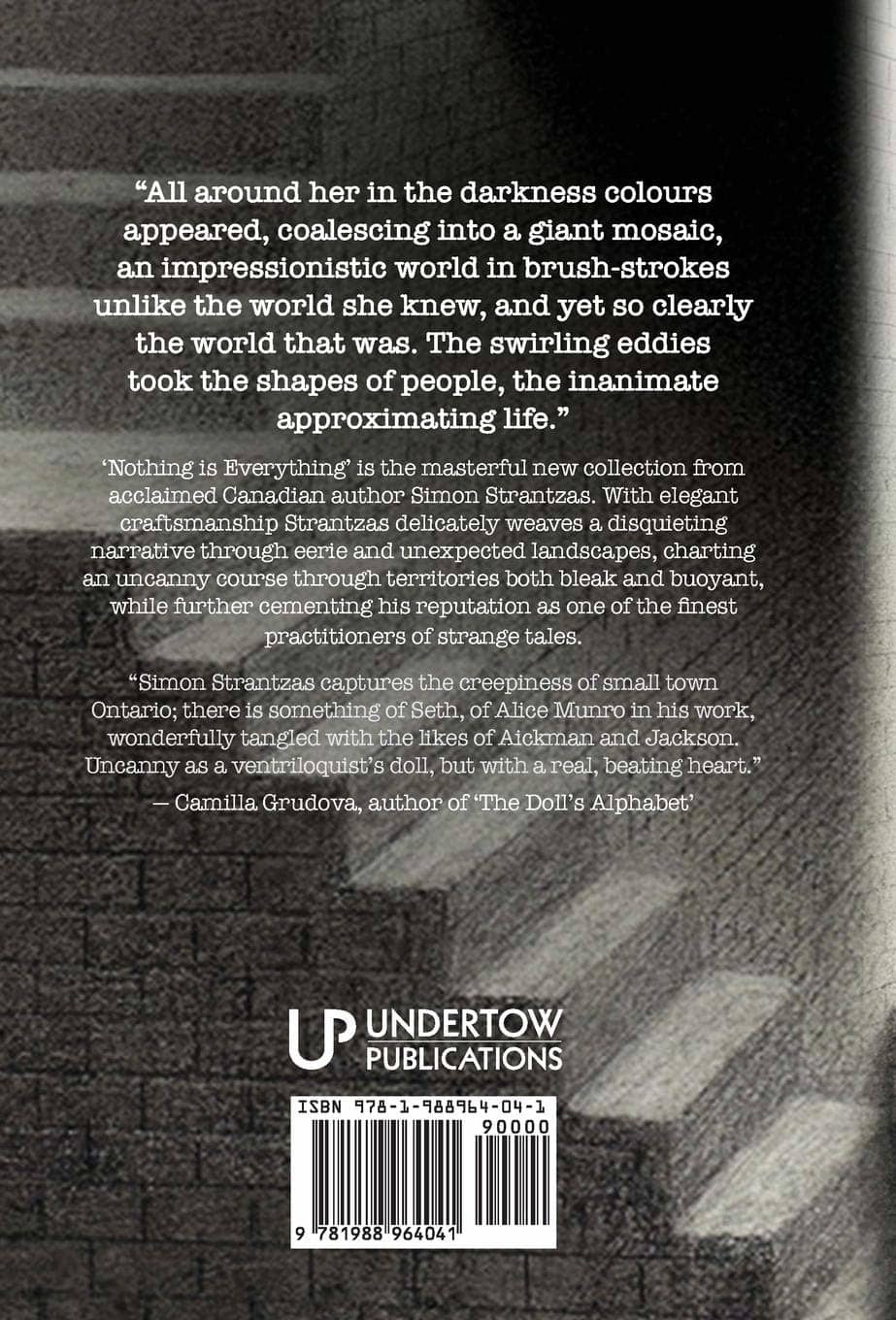
His new collection Nothing is Everything, on sale in hardcover and trade paperback from Michael Kelly’s Undertow Press next month, has already drawn a lot of attention. Kij Johnson says “Simon Strantzas is Shirley Jackson-grade eerie,” and Camilla Grudova, author of The Doll’s Alphabet, says:

Simon Strantzas captures the creepiness of small town Ontario; there is something of Seth, of Alice Munro in his work, wonderfully tangled with the likes of Aickman and Jackson. Uncanny as a ventriloquist’s doll, but with a real, beating heart.

Undertow is simultaneously releasing hardcover and trade paperback editions with different covers. Both are very fine, but the hardcover, with art by Aron Wiesenfeld (above), is particularly arresting. The trade paperback (below) features art by Tran Nguyen. Both were designed by Vince Haig.

Read More Read More

The Priceless Treasures of the Barbarian Prince

The Priceless Treasures of the Barbarian Prince

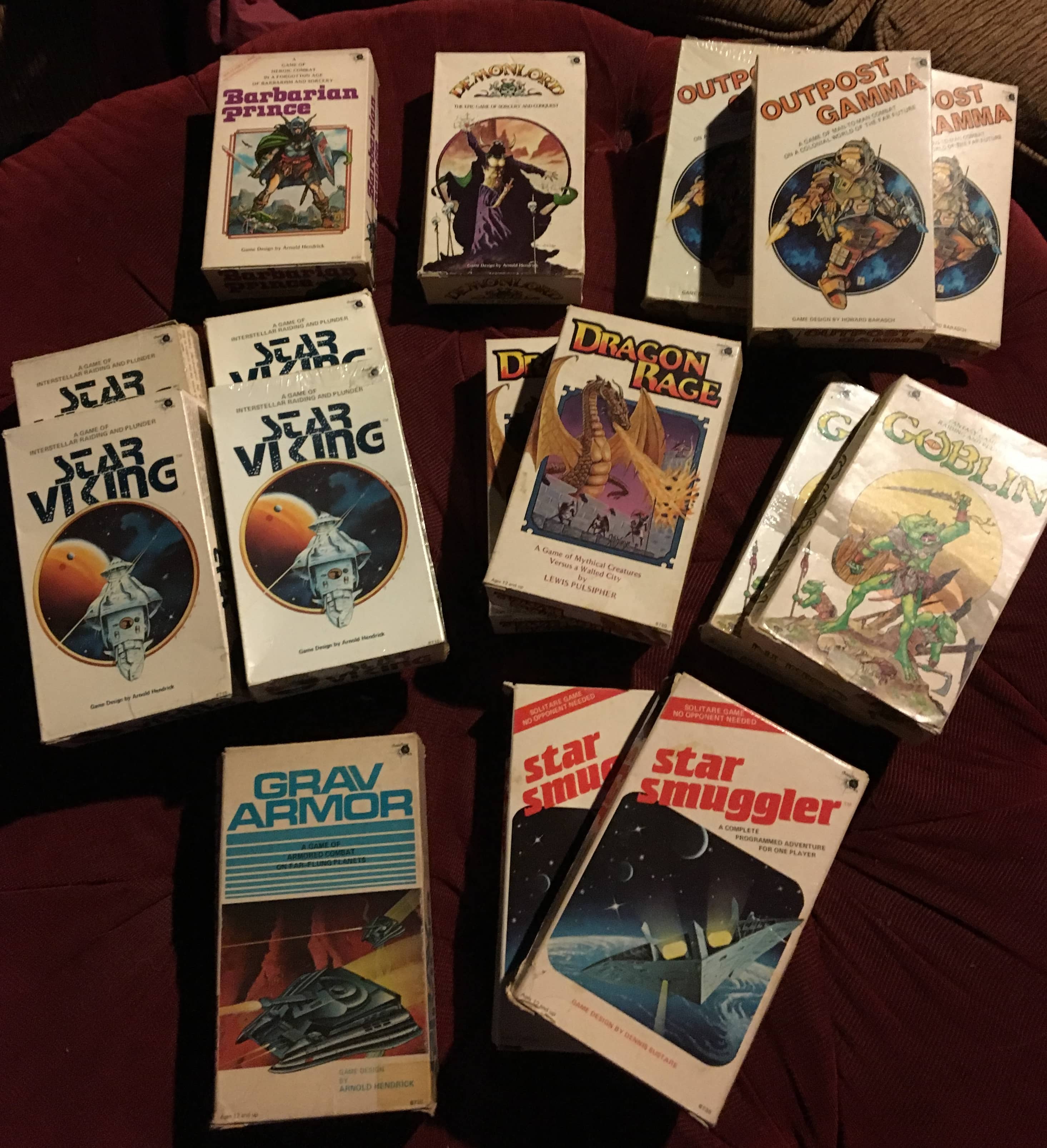
Dwarfstar games-small

A complete set of Dwarfstar games. Probably worth more than my house.

I enjoyed Sean McLachlan’s Black Gate post last month, Wargaming with my Twelve-Year-Old. Sean and his son played Outpost Gamma, a 1981 science fiction board game of man-to-man combat on a distant colony world. You don’t see a lot of coverage of early-80s science fiction microgames these days, so I appreciated being able to share the fun.

Outpost Gamma was published by Heritage Models in 1981, under their celebrated Dwarfstar imprint. Dwarfstar, like Metagaming, Steve Jackson, and Task Force Games, produced a rich catalog of microgames aimed at younger players. Well, budget-conscious players anyway. Metagaming, who pioneered the concept of the microgame with their first release, Steve Jackson’s runaway hit Ogre, charged $2.95 for a two-color game in a small baggie. Dwarfstar did away with the baggie and upgraded to a slim box, added full color, and charged a lordly $3.95.

As a business, the Dwarfstar line wasn’t a success. Unlike Metagaming and Task Force, who released dozens of titles over the years, they produced only eight games between 1981-82. But from a creative perspective, they were a magnificent hit. Their titles included Arnold Hendrick’s classic Demonlord, simulating the desperate struggle against the Demon Empire, Lewis Pulsipher’s Dragon Rage, a game of giant monsters attacking a walled medieval city, Dennis Sustare’s Star Smuggler, a marvelous solitaire programmed adventure following the adventures of a star trader on the frontier, and the peak achievement of Western Civilization, Arnold Hendrick’s Barbarian Prince, a solitaire game of heroic action in a forgotten age of sorcery.

Superbly well-designed as they were, Dwarfstar games had one great weakness: they weren’t built to last. Paper-thin boxes and flimsy components helped keep the cost down, but did nothing for their longevity. More than 35 years later these eight games have a nearly mythical reputation among collectors, but there aren’t a lot of copies to be had. And you know what that means: the scarce copies still in good condition are very, very expensive.

Read More Read More

Future Treasures: Strange Ink by Gary Kemble

Future Treasures: Strange Ink by Gary Kemble

Strange Ink Gary Kemble-small

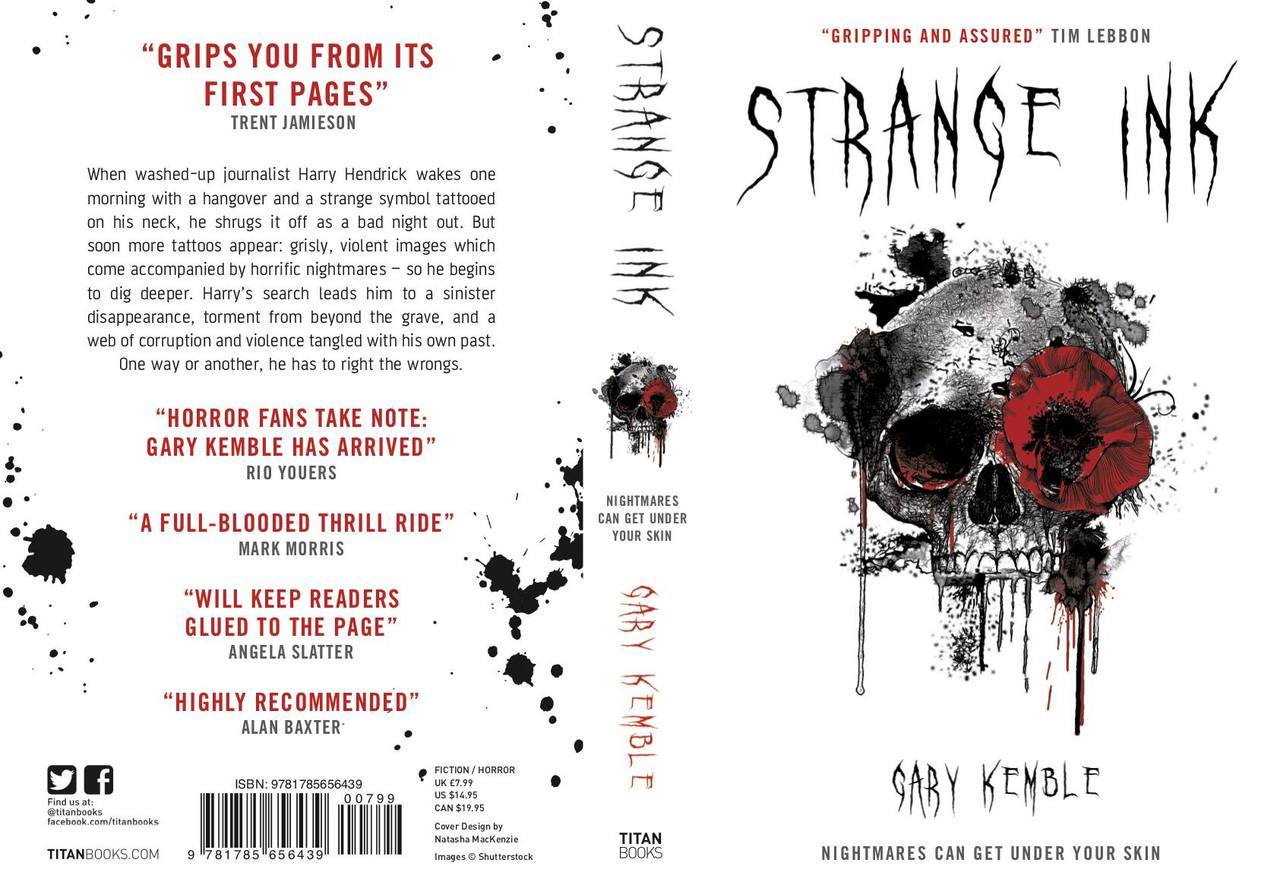
No surprise that as we slip into Fall, publisher schedules start to fill up with more horror volumes. What is surprising is the number of intriguing debuts I’m seeing, like Gary Kemble’s Strange Ink, arriving in trade paperback from Titan next month. Publishers Weekly thought very highly of the book; here’s a snippet from their review.

In Kemble’s taut, suspenseful debut set in Brisbane, Australia, local and international concerns combine with the supernatural. Small-time journalist Harry Hendrick wakes up after a stag party with a hangover and a new tattoo he has no memory of getting. When he starts having intense nightmares, he quickly realizes his new tattoo is far from ordinary. More inexplicable tattoos begin appearing, bringing more nightmares, which Harry suspects may actually be someone else’s disturbing memories. Those memories have strong political implications, and Harry must solve the mystery they present before a depraved villain becomes prime minister. The novel’s gritty realism viscerally and effectively conveys the discomfort of new ink, the oppressive heat of the Queensland summer, and the horrors of war and murder… This is a strong debut by a promising new voice.

Strange Ink will be published by Titan Books on October 9, 2018. It is 391 pages, priced at $14.95 in trade paperback and $7.99 for the digital edition. The cover art is by Studio London.

See all our recent coverage of the best in upcoming fantasy here.

Explore the Outer Rim with Space Pioneers, edited by Hank Davis and Christopher Ruocchio

Explore the Outer Rim with Space Pioneers, edited by Hank Davis and Christopher Ruocchio

Space Pioneers full cover-small

Back in June I wrote a brief piece about Hank Davis’s upcoming Baen anthology Space Pioneers, a collection of new and classic SF tales of space exploration. Hank recently sent me an update on the book, and it keeps looking better and better. In June Baen listed it as 304 pages, but the PDF copy Hank sent me is a whopping 512 pages, packed with fiction by Clifford D. Simak, Poul Anderson, Fredric Brown, Larry Niven, Murray Leinster, Edmond Hamilton, Manly Wade Wellman, Robert A. Heinlein, Theodore Sturgeon, Jerry Pournelle, Tony Daniel, and many more.

For a mass market paperback priced at $7.99, this is a real treasure trove. Here’s Hank:

I’m presently proofing the pages for Space Pioneers, coming from Baen around Turkey Day. Figuring you would like to see those pages, I’m passing them on to you, with the warning that this is the virtually unproofed version, so please keep that in mind.

Some of the typos I’ve seen so far, such as “Frederik Brown,” “Lester del Ray,” and other reasons-to-slit-editorial-wrists will be fixed, but I’m sure I’ll miss something until it is in cold, dry, unforgiving print for all the world to see…

And also attached is the nearly final version of the paperback’s wraparound cover. Aside from the back cover and spine now being visible, it differs from the one I sent you a few months back in having Robert A. Heinlein’s name on the front, replacing Jerry Pournelle, who will now be on the back cover. If it isn’t too late (and I won’t know that until the survivors return from DragonCon), I’m going to add Clifford D. Simak to the names on the back cover.

Hank’s co-editor for the project is Christopher Ruocchio, whose first anthology for Baen was Star Destroyers, (co-edited with Tony Daniel), and whose debut novel Empire of Silence has been getting lots of acclaim.

Here’s a peek at the updated table of contents for Space Pioneers.

Read More Read More

Future Treasures: In the Night Woods by Dale Bailey

Future Treasures: In the Night Woods by Dale Bailey

In the Night Wood Dale Bailey-smallI’ve been writing about short fiction at Black Gate for over a decade, and over those years the name Dale Bailey keeps popping up.

He’s had a successful series of tales inspired by 50s monster movies (“I Married a Monster from Outer Space,” “Teenagers from Outer Space,” “I Was a Teenage Werewolf,” and “Invasion of the Saucer-Men”) in Asimov’s, Nightmare and Clarkesworld, and his fiction has appeared in many Year’s Best volumes. His novels include The Fallen (2002), House of Bones (2003), and The Subterranean Season (2015).

His latest is In the Night Woods, forthcoming from John Joseph Adams Books. The Kirkus review is pretty tantalizing:

Bailey’s novel has every aspect of gothic horror: the drafty manor, the shady servants, the tortured protagonists. The writing is dense with allusions and details, the narrative twisting and turning in the same way the Night Wood distorts the senses of anyone who wanders into it. The writing does get a bit convoluted and hard to follow at times, but it’s in keeping with the atmosphere of subtle dread that permeates the novel. The book is surprisingly short, and there’s a lot of buildup to a very quick climax… The succession of reveals in the frantic last 30 or so pages, however, is tense and disturbing, satisfying for any horror fan.

A modern gothic horror done right.

We previously covered Bailey’s 2015 collection The End of the End of Everything.

In the Night Woods arrives from John Joseph Adams/Houghton Mifflin Harcourt on October 9, 2018. It’s 224 pages, priced at $23 in hardcover, and $12.99 for the digital edition. The cover is by Andrew Davidson. Read more here.

Here’s the publisher’s description.

Read More Read More

The Valancourt Book of Horror Stories is a Master’s Course in Classic Horror

The Valancourt Book of Horror Stories is a Master’s Course in Classic Horror

The Valancourt Book of Horror Stories Volume Three-small The Valancourt Book of Horror Stories Volume Three-back-small

I’m a huge fan of Valancourt Books, ever since I stumbled on their eye-popping booth at the 2014 World Fantasy Convention. They’re an independent small press specializing in rare, neglected, and out-of-print Gothic, Romantic and Horror fiction, and two years ago they had a brilliant idea: why not assemble an annual anthology showcasing stories by some of their authors, modern and otherwise? The Editor’s Forward to the first volume gives you the idea:

The idea behind this anthology was, “What if we distilled the best of each part of our catalogue into a single volume? What would a horror anthology spanning two centuries, and featuring only Valancourt authors, look like?”

Pretty darn good, it turns out. These are substantial and attractive volumes, with terrific covers by M. S. Corley. The series has proven very successful, and the third volume arrives next month, with brand new fiction by Steve Rasnic Tem, Eric C. Higgs, and Hugh Fleetwood, and thirteen blood-curdling reprints from R. Chetwynd-Hayes, Helen Mathers, Charles Beaumont, J. B. Priestley, Robert Westall, and many more.

The series is edited by James D. Jenkins and Ryan Cagle. Here’s the details on all three books.

Read More Read More

New Treasures: Halls of Law, Book 2 of Faraman Prophecy by V.M. Escalada

New Treasures: Halls of Law, Book 2 of Faraman Prophecy by V.M. Escalada

Halls of Law-small Gift of Griffins-small

Halls of Law, the first book in the Faraman Prophecy series, introduced a world of military might and magical Talents on the brink of destruction. It’s especially interesting to me because “V.M. Escalada” is also Black Gate‘s long-time Friday blogger Violette Malan, who took on a pen name for this switch to epic fantasy. Rob H. Bedford at SFFWorld had some fine things to say about the novel.

In Halls of Law, V.M. Escalada brings together familiar fantasy elements of a nation being invaded, a rigid military, people with supernatural mental abilities, a race of lost creatures returning, and of course, prophecy. Familiar elements when handled well, make for an entertaining, enjoyable story… Escalada is no stranger to fantasy, she’s published several enjoyable Sword and Sorcery novels as Violette Malan. This novel and series is a slight switch to a more large scale story of Epic Fantasy from those intimate Sword and Sorcery tales and launches a promising series…

There’s a sense of fun to the novel… There’s a lot of myth in the background of the worldbuilding, as well as just wanting to know what happens next for Kerida, that I’m greatly looking forward to the second book in the series. Sometimes a book lands in your lap at exactly the right time, and Halls of Law was precisely the kind of book I didn’t realize I needed when I opened the first few pages. I was drawn in by the comforting prose and stayed fully invested because of the characters and world. Halls of Law is a fun, optimistic Epic Fantasy that proved a welcome change of pace from some of the more grimdark fantasy I’d been reading.

The second novel, Gift of Griffins, was released in hardcover by DAW last month. Here’s the description.

Read More Read More