The Public Life of Sherlock Holmes: Magnifying Glass, Pipe and Deerstalker
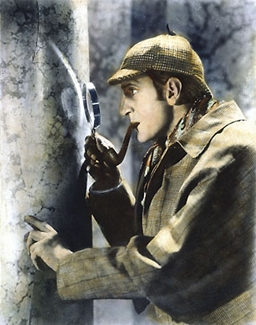 The curved pipe. The magnifying glass. The deerstalker cap. These three objects are intimately associated with the enduring image of Sherlock Holmes. Sir Arthur Conan Doyle was quite astute to use these rather uncommon devices for his singularly uncommon detective.
Well, not quite. In addition to Doyle, we should also credit three other men for creating the picture we see of Sherlock Holmes, over a century later.
Along with Doyle, we must tip our deerstalker (and puff on our pipe in honor of) illustrators Sidney Paget and Frederic Dorr Steele, a well as the great stage performer, William Gillette.
It is the contributions of the latter three upon which Eille Norwood, Arthur Wontner, Basil Rathbone, Jeremy Brett and others based their portrayals. Of course, since Rathbone’s Universal films were set in the 1940’s, his wardrobe was contemporary to the times. But his two films for Twentieth-Century Fox fit the classic image.
Let’s take a look at three “props” that have been commonly associated with Holmes for over a century.
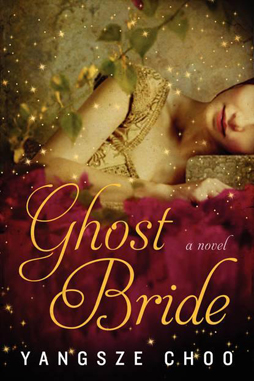 Yangsze Choo’s 2013 book The Ghost Bride starts out very much like a gothic novel. Li Lan, the beautiful young daughter of an impoverished scholar in the Chinese community of Malacca in the year 1893, draws a sinister marriage proposal from the rich and powerful Lim family: a ceremonial spirit marriage to Lim Tian Ching, the recently-deceased heir to the Lim wealth. But Li Lan finds herself drawn to Tian Ching’s cousin, Lim Tian Bai — and then Tian Ching begins to appear in her dreams, eager for their upcoming nuptials. She tries to exorcise him, and then what started as a gothic becomes broader and stranger. Li Lan enters a world of ghosts where she uncovers hints of corruption among the judges of hell, and then must undertake a quest into a further and yet more fantastical world, a Campbellian hero(ine)’s journey of dangers and guardian allies and magic items.