The Public Life of Sherlock Holmes: Don’t Piss Off Sherlock Holmes
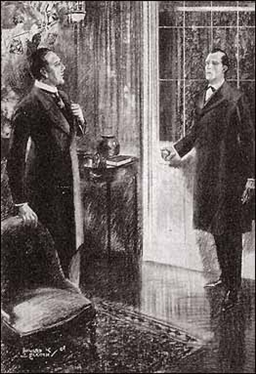 A few weeks ago, I speculated a bit on what might have really happened in “The Problem of Thor Bridge.” I had already offered you, good reader, a few alternatives to Watson’s recorded accounts, such as this one for “The Abbey Grange.” I believe that “The Illustrious Client” is one of Doyle’s better tales. Granada also made a fine version for their Jeremy Brett series. This week, I again veer from Watson’s (dare I say, ‘fawning’) view of matters.
SPOILERS SPOILERS SPOILERS
I feel silly putting spoiler alerts before discussing stories that were often written a century or more before. But if you haven’t read the story yet, click here before continuing on. Okay, back? Pretty good story, eh? Now, let’s have an alternate take:
The vile Baron Gruner had illy used and cast aside many women, including Kitty Winter. She says to Holmes, “Let me see this man in the mud, and I’ve got all I worked for – in the mud with my foot on his cursed face. That’s my price. I’m with you tomorrow or any other day so long as you are on his track.”
Clearly, Winter is willing to help Holmes bring down Baron Gruner. She certainly seems dedicated to the task. When it is time to sneak into Gruner’s house and steal a book that will expose his vile ways, Holmes brings Winter with him. Presumably, this was so she could show him where it was. He tells Watson that he couldn’t know “what the little packet was that she carried so carefully under her cloak.”


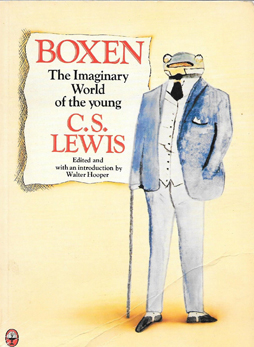 C.S. Lewis loved walking, and in one letter to his friend Arthur Greaves he wrote of a fifty-mile three-day expedition he undertook alongside other friends: walking by day through woods and river valleys, at evenings stopping at local houses where the company might discuss the nature of the Good. Bearing this image in mind I’ve decided to begin wandering through the terrain of Lewis’ fiction. It is well-trodden ground, as many others have done this before me. But there’s a certain charm in seeing things for oneself. It is also just possible that another pair of eyes may spot something new in even the most familiar landscape, if the terrain is varied enough. And Lewis’ writing, as a whole, stands out as heterogeneous indeed.